PCR PP for Homeware and Storage: An Appearance-Focused Guide
Appearance is the first specification an appearance-critical PCR PP part has to pass. In storage boxes, organizers, decor and daily chemical packaging, a molded part can meet its mechanical specification and still be rejected for color drift between batches, dark specks, haze, flow lines or an uneven surface on a large flat wall. This guide explains how to select an appearance-focused PCR PP grade: which visual property the part is actually judged on, how to position the grade inside the MFI 5–50 g/10 min window, and which color and batch-consistency controls a compounder should be able to document before scale-up.
The guide is written for product and tooling engineers, sourcing and procurement teams at housewares brands, importers and converters who are moving a homeware or storage program from virgin PP to post-consumer recycled PP pellets. It covers appearance feature selection, melt flow positioning, a qualification workflow, use cases, a comparison against virgin resin, and the questions buyers ask most often at the decision stage.
Why appearance fails before mechanical properties do
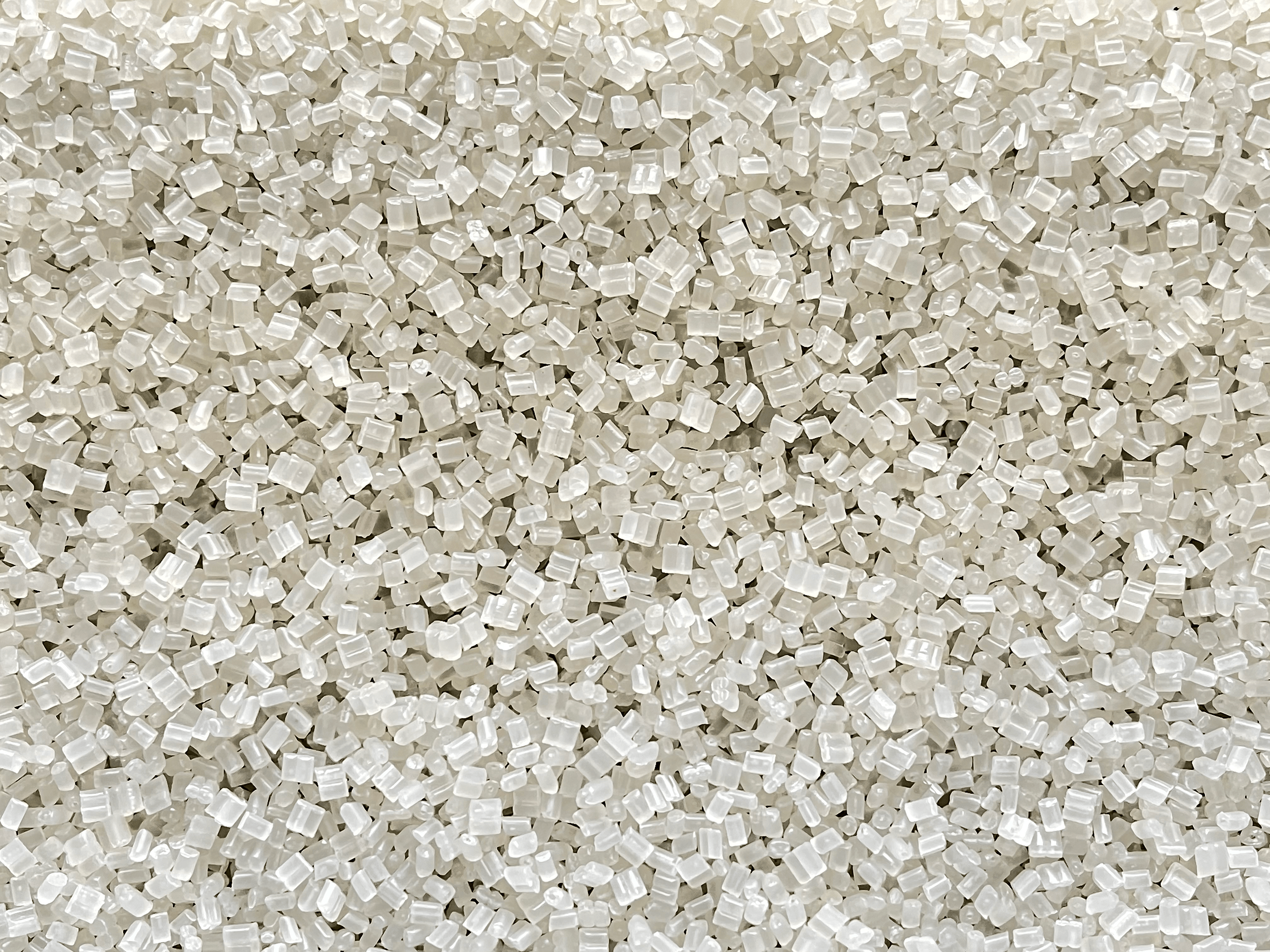
Appearance-critical PCR PP fails for reasons that a tensile or impact report cannot show. The recurring visual rejections in homeware are color drift between production batches, dark specks and black spots, haze or a dull surface, flow and weld lines across large panels, and inconsistent gloss between parts molded at different times.
These defects usually enter the process upstream of the molding machine. Post-consumer recycled polypropylene is made from packaging waste that arrives as a mixture of colors, product types and contamination levels. Two deliveries can behave identically in the melt and still differ in color and clarity. Unless that variability is removed or homogenized during recycling, it reappears downstream as batch-to-batch variation, no matter how the tool is set.
The second problem is specification language. Natural color, good surface and high transparency are not acceptance criteria. Without a defined visual standard — color target, permitted speck level, agreed inspection light and background — a compounder cannot be held to it and a molder cannot reject against it. Appearance-critical programs therefore need to translate the visual expectation into a written criterion at the sampling stage, before grades are compared.
The third problem is that grades are often compared on resin type alone, PCR PP against virgin PP, rather than on the control chain behind the grade. Two suppliers can both ship PCR PP at a similar MFI and deliver visibly different results, because the difference sits in color sorting, washing, filtration and homogenization rather than in the polymer itself.
Industry background: where PCR PP sits in homeware, storage and packaging
Post-consumer recycled content has moved from a marketing preference to a purchasing requirement in packaging and consumer goods. The global PCR plastic packaging market was valued at USD 58.49 billion in 2026 and is projected to reach USD 108.27 billion by 2034, according to Fortune Business Insights. Packaging remains the largest driver of that value; homeware, storage and organization programs are shaped by the same recycled-content commitments and by the same scrutiny of visual quality.
The environmental case is measurable. Mechanically recycled PP can reduce carbon footprint by approximately 60% compared with virgin PP, per Fortune Business Insights. First-party figures are more specific: Re-mall recycled PP carries a product carbon footprint of 644.05 kg CO2e against 3517 kg CO2e for virgin PP, an 81.69% reduction, and that data is structured for use in customer sustainability audits and ESG reporting.
Material choice within recycled grades is also fairly settled. PCR PP is the preferred route for general injection molding; PCR PE is considered where toughness and impact resistance dominate; PCR ABS is considered for toys, home appliances and electronic housings; PCR PS is considered for stationery, packaging and some daily necessities. That explains why storage and organization products — mostly injection molded and almost always judged on surface — concentrate on PCR PP.
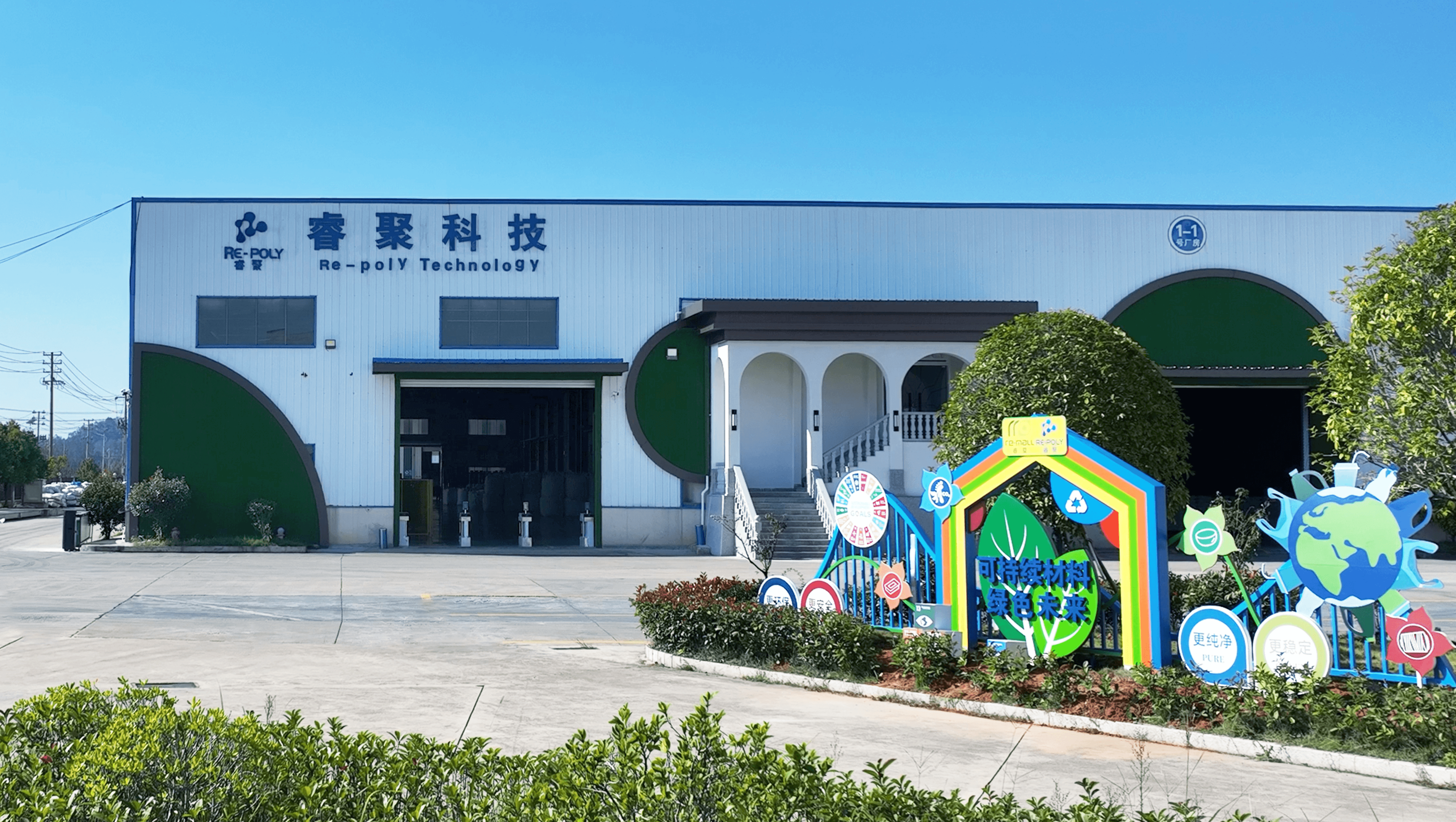
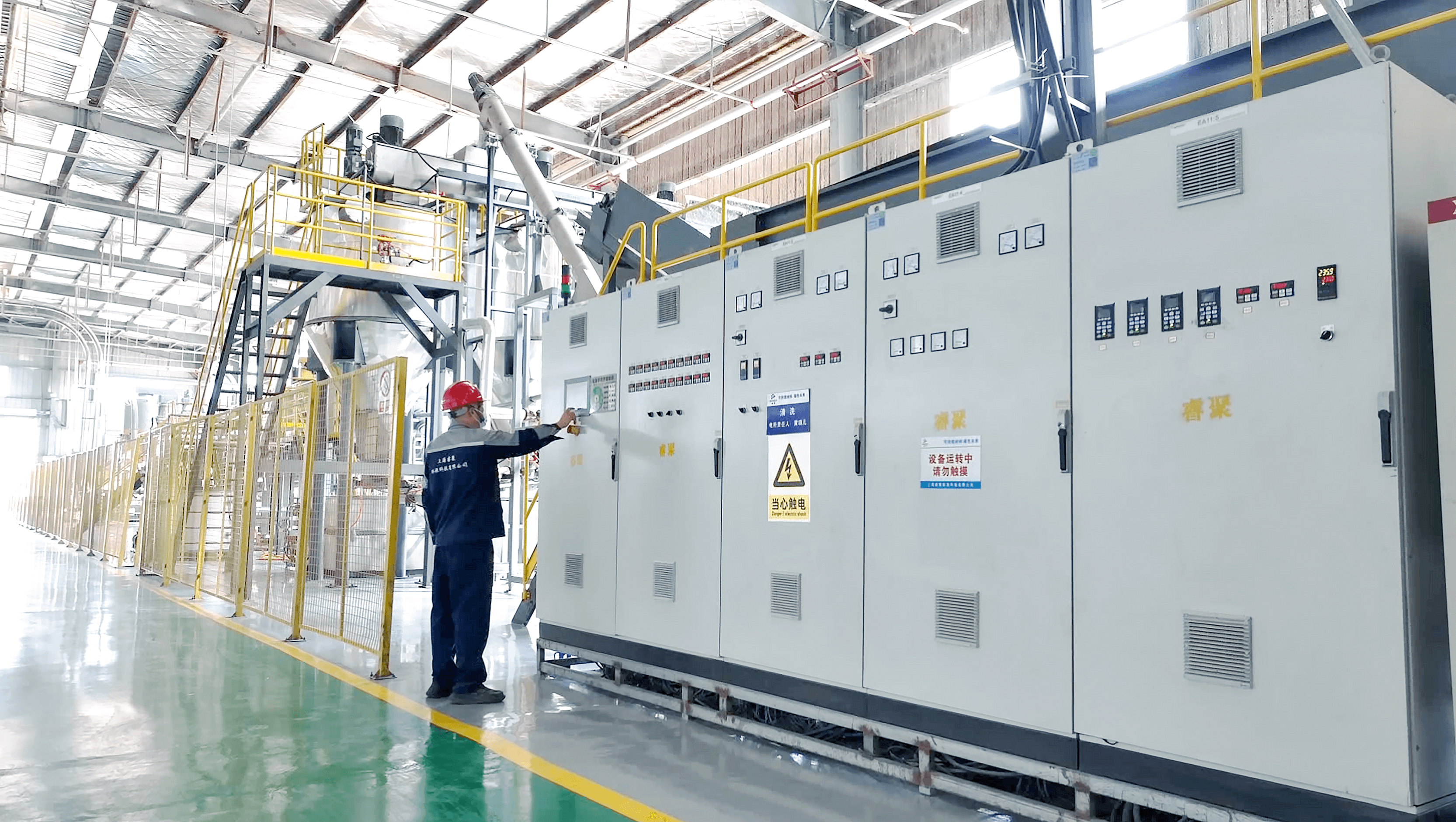
Shanghai Re-mall Environmental Protection New Material Co., Ltd. (Re-mall) is a Shanghai-based recycler and recycled material producer founded in 2015, supplying PCR-PP, PCR-PE, PCR-PS and PCR-ABS. The company operates a 10,000 m² facility with more than 100 employees, a 22-engineer R&D team and an annual output of 20,000 metric tons, exporting around 30% of production to Europe, Japan, Southeast Asia, South Asia and North America. It holds more than 100 patents and operates a recycled plastics laboratory accredited by the China National Accreditation Service for Conformity Assessment (CNAS) through its wholly-owned subsidiary Shanghai Re-poly Environmental Technology Co., Ltd. Group subsidiaries have participated in the formulation of 9 national standards and 1 industry standard. Product and process certifications include GRS, an FDA Letter of No Objection, ISO 14021 self-declared environmental claim verification, Ocean Bound Plastic certification and ISO 14067-based product carbon footprint certification; products have passed REACH, RoHS and PAHs testing, and the company is a Sedex member.
The three appearance features that decide grade selection
An appearance-focused grade is specified on three properties — transparency (or its controlled absence), modulus, and colorability — and each one is produced by a different part of the recycling and compounding process.
Transparency is a washing and filtration outcome, not a color label
Transparency in recycled PP is lost through residual contamination, mixed-color feedstock, unmelted gel particles and moisture. Because of that, high-transparency PCR PP is better read as a process claim than as a resin claim. The steps that protect it are raw material color sorting, deep washing, high-efficiency filtration and devolatilization — the same steps that control specks, black spots and odor. Re-mall applies raw material color sorting, color matching management, raw material homogenization and production process control specifically to stabilize color consistency across production.
What to verify is narrower than what suppliers usually offer. Request optical and color data for the exact grade rather than the portfolio; agree the inspection light source, viewing distance and background used to judge the part; compare parts molded at production scale and taken from more than one batch instead of laboratory plaques; and confirm that the sample was produced on the same tool and machine configuration as the intended production part. For opaque storage boxes the transparency question disappears, but speck and color questions do not.
High modulus: what stiffness buys in storage and organization parts
Re-mall PCR-PP High Modulus grade is listed with a flexural modulus above 1800 MPa, a density below 1.0 g/cm³ and PCR content of 30%–50%. Stiffness is not an abstract number in this category. Storage boxes, shelving bins and stacking crates are loaded and stacked, and stiffness governs wall deflection under load, stacking stability and how flat a large panel stays after ejection. A density below 1.0 g/cm³ also means a given mass of resin fills more volume, which matters for large, low-weight parts where material usage is driven by volume rather than by weight.
The trade-off should be stated openly: raising stiffness typically costs impact performance. A specification for storage parts should therefore carry both properties, and both should be validated on the molded part rather than assumed from a data sheet.
Colorability and color consistency: the control chain, not the colorant
Re-mall improves color consistency of recycled plastics through raw material color sorting, color matching management, raw material homogenization and production process control. The order of those four steps matters. Colorant added at the machine does not correct drift that originates in a mixed feedstock; only sorting and homogenization upstream can.
For a color-critical program, ask which of the four steps is documented per batch, and ask for batch color records rather than a single master sample. A master sample proves what one batch looked like. Batch records show what the next delivery is likely to look like, which is the question a housewares buyer is actually asking when a set of four storage boxes has to match on a shelf.
Low odor belongs in the appearance specification
Odor is usually filed under compliance or consumer safety, but in closed storage boxes, laundry baskets and bottles it decides whether a product feels new. Re-mall controls odor in PCR plastics through multi-stage processing rather than end-point deodorization: raw material source control, washing, drying, melt filtration, devolatilization and formula optimization. Because the control is distributed across the line, odor should be requested as a grade property and evaluated in the finished part, not only on pellets.
Selecting inside the PCR-PP MFI 5–50 g/10 min window
Melt flow index sets how the grade fills. It determines injection pressure, achievable flow length, weld-line quality, surface replication and cycle time — and therefore most of what the eye sees on a large flat panel. The 5–50 g/10 min window covers most injection-molded homeware, storage and organization parts, which is why it is the practical starting range for appearance-critical work.
Lower in the window, the melt is stiffer: better suited to thicker sections and to parts where dimensional stability dominates, but harder to fill and more prone to visible flow marks over long flow paths. Higher in the window, filling and surface replication become easier, at the cost of toughness and tighter control of flash and sink. Re-mall published PCR PP grade MFI values include PCR-PP392 at 10 g/10 min, PCR-PP301 at 30 g/10 min and PCR-PP310 at 55 g/10 min. The first two sit inside the 5–50 window; PCR-PP310 sits above it and becomes relevant when a thin-wall or long-flow tool needs more flow than the window provides.
| Grade | Published MFI | Position against the 5–50 g/10 min window | Typical appearance-critical role |
|---|---|---|---|
| PCR-PP392 | 10 g/10 min | Lower part of the window | Large flat walls and thicker sections where stiffness and dimensional stability dominate |
| PCR-PP301 | 30 g/10 min | Middle of the window | General homeware and storage bodies with moderate flow length |
| PCR-PP310 | 55 g/10 min | Above the window | Thin-wall and long-flow parts where fill and surface replication dominate |
| PCR-PP High Modulus grade | Not stated in the published listing | Selected on stiffness rather than flow | Structural storage parts: flexural modulus above 1800 MPa, density below 1.0 g/cm³, PCR content 30%–50% |
MFI shortlists candidates; it does not define appearance. Two grades at the same MFI can differ in color and clarity because their feedstock and filtration histories differ, so the window narrows the shortlist and samples make the decision.
Step-by-step: qualifying an appearance-focused PCR PP grade
Step 1 — Write the visual acceptance standard first
Define the color target and its tolerance, the permitted speck and contamination level, the gloss or matte expectation, the inspection light source and viewing distance, and which surfaces count as A-surfaces. Do this before requesting grades. A standard written after sampling tends to be reverse-engineered to whatever the first sample looked like, which removes the ability to compare suppliers.
Step 2 — Map part geometry to MFI and modulus
Record wall thickness, flow length from gate to last-filled area, gate position and A-surface location. Place the part inside the 5–50 g/10 min window, and move above it only when the tool genuinely requires more flow. If the part is loaded or stacked, set the modulus requirement at the same time so that flow and stiffness are decided together rather than sequentially.
Step 3 — Screen the grade on documentation
Request a technical data sheet carrying MFI, flexural modulus, density and PCR content, plus certificates that name the specific grade rather than the company. Where the program reports carbon, request the PCF figure: Re-mall recycled PP is stated at 644.05 kg CO2e against 3517 kg CO2e for virgin PP, an 81.69% reduction, and the data is intended for sustainability audits and ESG reporting.
Step 4 — Run color matching against the written standard
Re-mall customizes PCR materials across processing technology, MFR, rigidity, impact performance, color, PCR content and certification requirements, and validation of customized material is completed through sample testing and pilot production before mass production. Send the visual standard with the request so the match is judged against the criterion rather than against a verbal description.
Step 5 — Pilot on the production tool
Appearance problems that appear only at production scale — flow lines near gates, weld lines on long flows, ejection marks on A-surfaces, gloss differences between cavities — will not appear on laboratory plaques. The pilot run is also where cycle time and scrap rate are measured, which is where the real cost comparison against virgin resin is settled.
Step 6 — Lock batch consistency before volume starts
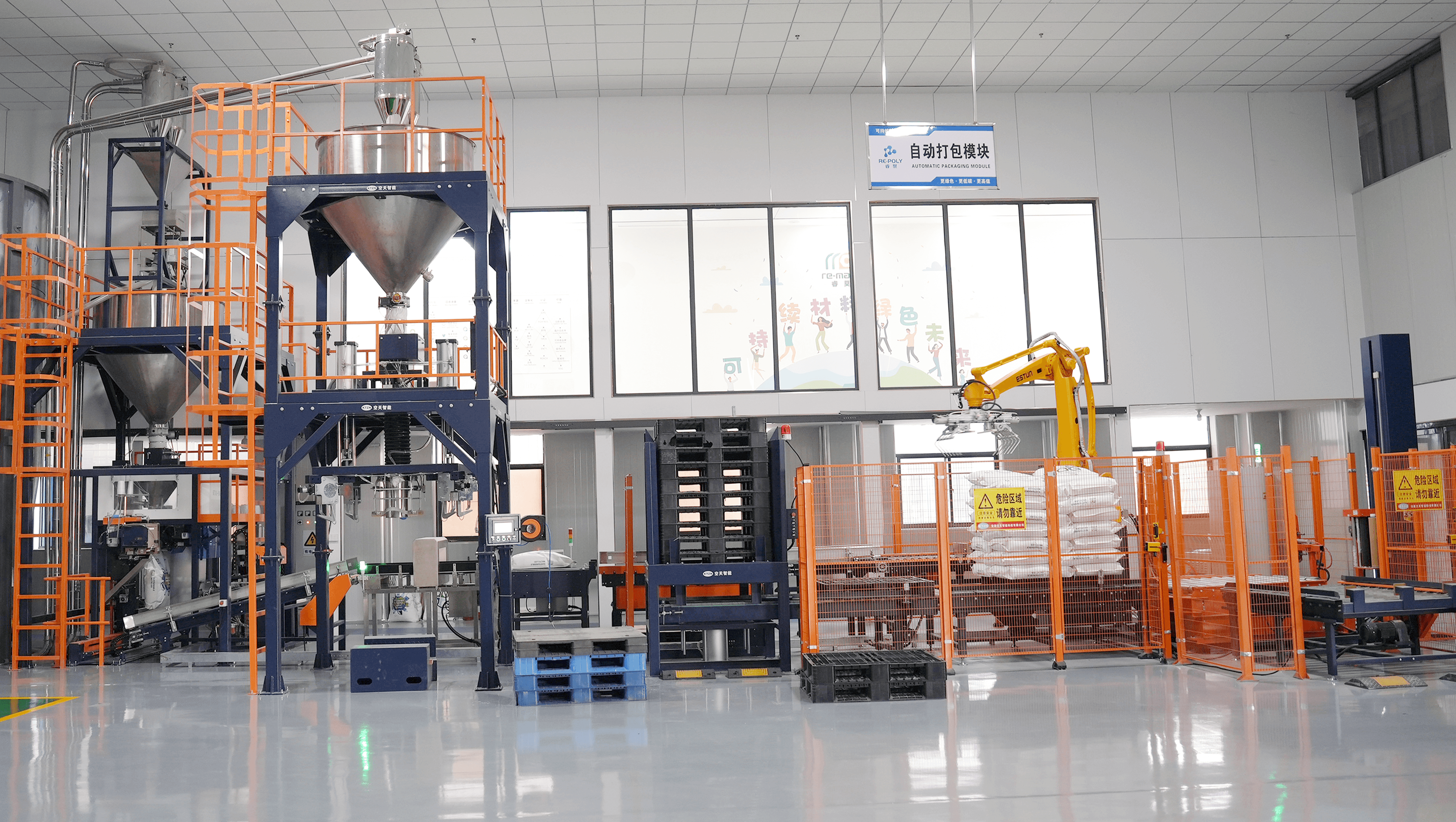
Re-mall controls batch consistency of PCR materials through full-process quality control: raw material source control, fine sorting, deep washing, high-efficiency filtration, compounding and pelletizing, batch testing and data traceability. For a running program, request batch test records with each delivery, compare incoming pellets against an approved color plaque, and set a re-validation interval. Batch testing plus data traceability is what turns a good first delivery into a repeatable supply.
Step 7 — Scale up with a change protocol
Agree in writing which changes trigger re-sampling: a new feedstock source, a color change, a filtration or devolatilization change, or a shift to a different production line. Programs that skip this step usually discover the gap when a new feedstock batch reaches the machine, and by then the molded parts are already in the warehouse.
Common appearance risks and the control that addresses them
The table below maps the visible issues most often raised in homeware and storage programs to their usual origin and to the process control a buyer should ask about. It is a screening tool for supplier conversations, not a substitute for part-level validation.
| Visible issue | Where it usually originates | Control to request |
|---|---|---|
| Color shift between deliveries | Mixed-color post-consumer feedstock entering the line | Raw material color sorting, color matching management, homogenization, batch color records |
| Dark specks and black spots | Residual contamination that survives washing | Deep washing plus high-efficiency filtration |
| Haze or dull surface | Moisture, gels and unmelted particles | Drying, devolatilization and filtration parameters documented in the process sheet |
| Flow and weld lines on large panels | Melt flow mismatched to wall thickness and flow length | Grade selection inside the 5–50 g/10 min window, plus gate and fill review |
| Odor in closed boxes and bottles | Feedstock source and insufficient volatile removal | Multi-stage odor control: source control, washing, drying, melt filtration, devolatilization, formula optimization |
Use cases: where appearance-focused PCR PP is applied
Storage and organization
Storage boxes, drawer organizers, shelving bins, crates and totes are large-format injection moldings with broad visible surfaces, and they are usually sold in sets. That combination puts three requirements on the grade at once: enough modulus to resist deflection under stacking, an MFI in the middle of the 5–50 g/10 min window to fill a large panel without visible flow marks, and color consistency across the set. PCR plastic is already used for industrial pallets, totes, home goods and a wide range of injection molded products, which is why this category converts early.
Homeware and housewares
Laundry baskets, bathroom accessories and kitchen organizers sit between the storage and decor categories: mostly opaque or natural-colored, mostly mid-window flow, and almost always judged as a set. Batch color consistency carries more weight here than peak mechanical performance, because the customer sees two units side by side.
Decor
Vases, planters, frames and display objects are the segment where transparency and color are the product itself. The transparency route depends on feedstock sorting, deep washing, filtration and devolatilization rather than on a colorant, and thin decorative walls may need flow above the middle of the window. This is the category where a written visual standard pays back fastest.
Daily chemical packaging
Bottles, jars, caps and dispensers combine three appearance-adjacent requirements: odor control, color consistency and a surface that survives handling. Processing compatibility matters commercially as well — Re-mall PCR products can run on existing molding and spinning equipment without major modification, which reduces process-change requirements in supplier qualification and shortens the path from sample to line trial.
Comparison: PCR PP against virgin PP in appearance-critical homeware
The comparison below uses published first-party and third-party figures. It is deliberately limited to what can be verified; appearance outcomes depend on the specific grade and part, so the table separates what is measured from what the buyer must specify.
| Decision criterion | Re-mall PCR PP | Virgin PP |
|---|---|---|
| Product carbon footprint | 644.05 kg CO2e, an 81.69% reduction versus virgin PP, usable in sustainability audits and ESG reporting | 3517 kg CO2e |
| Processing compatibility | Can run on existing molding and spinning equipment without major modification | Baseline reference for the same equipment |
| Cost position | Cost competitive versus virgin resins, with pricing subject to raw material market fluctuation | Moves with the same market forces; comparison should use current quotations |
| Recycled content | 30%–50% for the PCR-PP High Modulus grade; PCR content can be matched to requirement during customization | Not applicable |
| Certification coverage | GRS, FDA Letter of No Objection PNC 396, ISO 14021 verification, Ocean Bound Plastic certification, ISO 14067-based PCF certification; REACH, RoHS and PAHs tested | Not applicable to recycled-content schemes |
| What the buyer must specify | Visual acceptance standard, batch color records, incoming inspection rule, change protocol | Standard resin specification and incoming inspection only |
| Validation route | Sample testing and pilot production before mass production | Standard trial run |
Frequently asked questions
Re-mall's recycled PP portfolio is supported by GRS certification, an FDA Letter of No Objection, ISO 14021 self-declared environmental claim verification, Ocean Bound Plastic certification and ISO 14067-based product carbon footprint certification; products have passed REACH, RoHS and PAHs testing, and the company is a Sedex member. The FDA no-objection record is PNC 396, dated 6 June 2025, covering physical recycling of PP cups into food-contact articles under Conditions of Use E through G. Two practical checks follow from that. First, confirm the certificate names the exact grade you are buying rather than the company in general. Second, confirm the scope matches your intended use: a food-contact letter describes a specific recycling process, feedstock and set of use conditions, so eligibility depends on the submission behind the grade, not on the general label PCR PP. For daily chemical packaging, which is not a food-contact application, the relevant documents are the grade test reports plus your own customer requirements.
There is no public dataset that ranks PCR PP grades by odor, so better can only be established at process level and at sample level. Three things separate suppliers. First, where odor control sits in the process: Re-mall controls odor through multi-stage processing — raw material source control, washing, drying, melt filtration, devolatilization and formula optimization — rather than relying on end-point deodorization, which matters because end-point treatment masks odor sources instead of removing them. Second, whether odor is specified on the grade you are actually buying rather than on a portfolio claim. Third, whether the evaluation happens on the finished part: a closed storage box or a bottle retains volatiles that a pellet sample does not reveal. A practical comparison therefore uses identical parts, identical molding conditions and an assessment across at least two production batches from each supplier.
Re-mall PCR products are cost competitive versus virgin resins, with pricing subject to raw material market fluctuation, so the comparison should be made on current quotations rather than on a fixed assumption. Two structural factors affect the effective comparison in homeware. First, Re-mall PCR products can run on existing molding and spinning equipment without major modification, so qualification cost is mostly sampling and validation rather than new machinery. Second, the product carbon footprint of 644.05 kg CO2e against 3517 kg CO2e for virgin PP — an 81.69% reduction — places part of the value in sustainability reporting rather than in the resin price alone. Cost per part still depends on density, cycle time and scrap rate, all of which should be measured during the pilot run rather than estimated.
Yes. Customization covers processing technology, MFR, rigidity, impact performance, color, PCR content and certification requirements, and validation of customized PCR materials is completed through sample testing and pilot production before mass production. To make the sample useful, send the visual acceptance standard with the request: color target, A-surface definition, permitted speck level and inspection conditions. Samples and technical data can be requested through info@re-mall.cn or via remall-repoly.com; the company brochure is available for download at the end of this article.
Re-mall controls batch consistency of PCR materials through full-process quality control: raw material source control, fine sorting, deep washing, high-efficiency filtration, compounding and pelletizing, batch testing and data traceability. Color consistency specifically is supported by raw material color sorting, color matching management, raw material homogenization and production process control. For a running program, the practical arrangement is to receive batch test records with each delivery, compare incoming pellets against an approved color plaque, and agree in advance which process changes trigger re-sampling. Programs that skip the last point usually discover the gap when a new feedstock batch reaches the machine, and at that stage the material is already in the silo.
Conclusion: appearance is a specification, not a hope
Appearance-focused PCR PP selection for homeware, storage and organization, decor and daily chemical packaging comes down to four decisions taken in order. Decide which visual property the part is judged on — transparency, modulus-driven flatness, or color. Position the grade inside the MFI 5–50 g/10 min window, moving above it only when the tool requires more flow. Require a documented control chain behind the grade: color sorting, washing, filtration, homogenization and batch testing with data traceability. And validate on production-scale samples from more than one batch before committing volume.
Those four decisions turn recycled content from a claim into a repeatable specification, and they are the difference between a PCR PP program that survives its first season on the shelf and one that is re-specified after the first color complaint.
Next step: sample your appearance-critical grade
Send us the part drawing, the color target and your visual acceptance standard, and Re-mall will match a PCR PP grade across MFR, rigidity, impact performance, color, PCR content and certification requirements, then validate it through sample testing and pilot production.
Email: info@re-mall.cn | Tel: +86 400-175-0224 | WhatsApp: +86 152-2184-1874
Company brochure (PDF): Download the Re-mall company brochure
Website: remall-repoly.com | Address: Room 166, Block A, Building 1, No. 2588, Jinhai Road, Pudong New Area, Shanghai, China 201209
Have Questions or Need More Details?
Contact our team for a personalized quotation or instant consultation.
Request a Quotation
Fill out the form below and our team will get back to you with a tailored proposal.
WhatsApp Direct Chat
Prefer to chat in real-time? Message us on WhatsApp for instant assistance & quick answers.
- Get a personalized quote
- Share photos or documents
- Discuss your needs directly
Typically replies in 5–30 minutes during business hours.