
Electric Toothbrush Compliance Guide: IPX7, Material Claims, and Sourcing Documentation
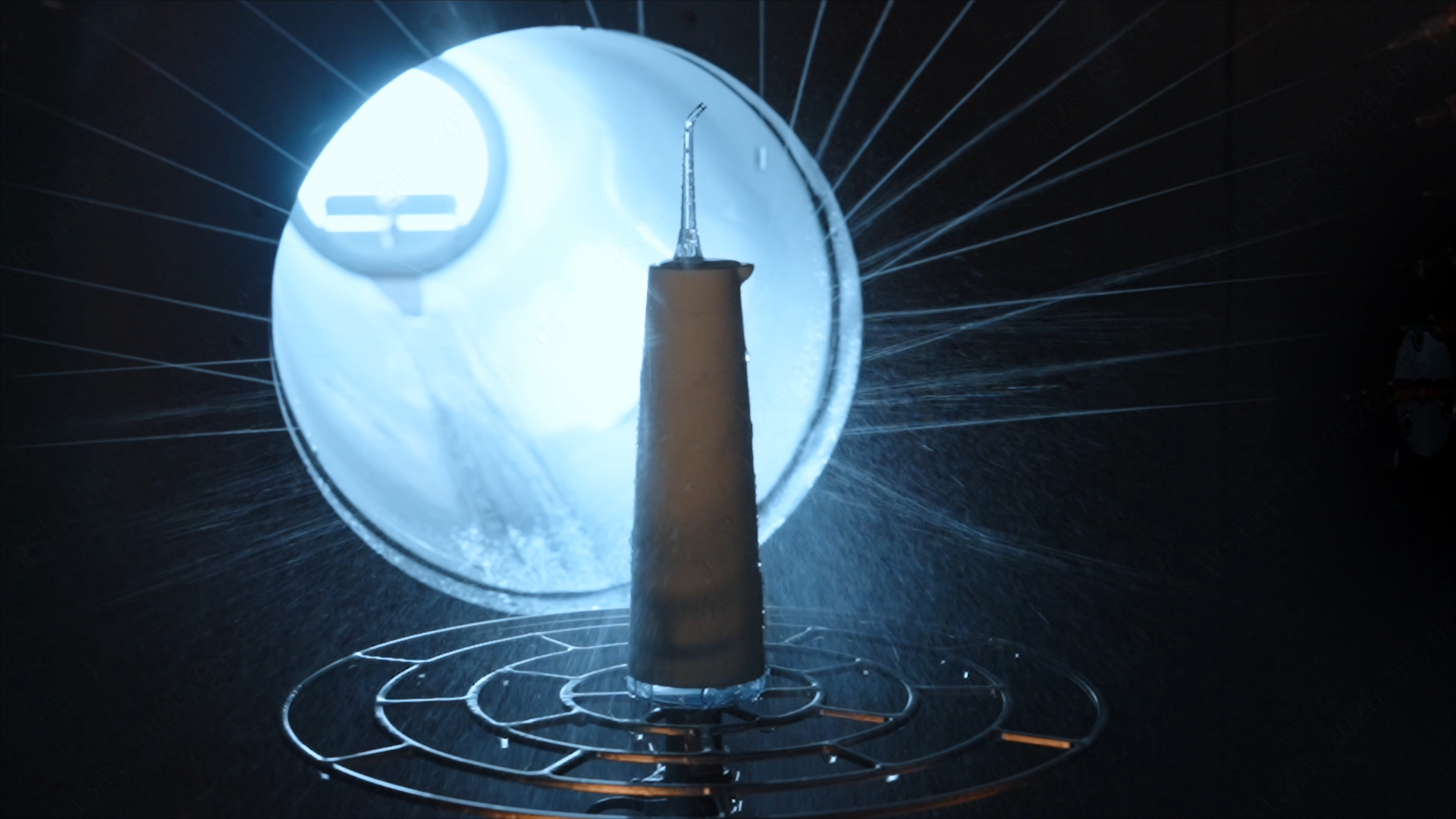
An electric toothbrush buyer comparing manufacturers meets the same phrases in every catalogue: IPX7, food-grade TPE, DuPont bristles, 800 mAh, CE. Each of those is a claim, not evidence. The evidence normally exists in three different forms — a specification statement, a test report and a market authorization — and a supplier rarely hands over all three unless the request is written, model-specific and made before the order.
This guide sets out the compliance-relevant evidence that can actually be obtained for a rechargeable electric toothbrush, how to read each document for the scope it really covers, and which regional certificates and test reports have to be requested separately. Examples come from the Risuntech catalogue — T2431B0, T2407, T2422, T2425, T2233 and T2232 — because the request changes from one model file to the next, and generalising across a whole catalogue is where sourcing files usually fail.
A claim, a test report and a certificate are three different things
Compliance questions about an electric toothbrush are usually answered with the wrong document. The three document types buyers actually need are not interchangeable.
- A specification claim states a design intent. IPX7 waterproof, food-grade TPE brush head or imported DuPont bristles on a product page belongs here. It is a description, and it becomes usable only when something else supports it.
- A test report records what was measured: the sample, the standard applied, the conditions, the result and the laboratory. It shows that a defined configuration passed a defined test at a defined time.
- A certificate or registration records an audit or an approval — a quality management system certificate such as ISO9001:2015 or ISO13485:2016, or a market registration. It has a scope, an issuing body and a validity date, and it applies to an entity or a product, not to everything a factory sells.
A factory certificate does not answer a product IPX7 question. A product test report does not put a model on a market. A European declaration of conformity does not answer a United States listing question. Most sourcing disputes start when one of these documents is used as a substitute for another, and the buyer only discovers the gap when a listing, a customs file or a tender is reviewed.
Why electric toothbrush documentation is harder to assemble than it looks
Three structural features make an oral care file more demanding than, for example, a cable or a kitchen tool.
One handle generates many configurations. A model line ships with different brush heads, charging bases, plug types and packaging languages, and a variation can change the tested sample. A report tied to the wrong variation is a report the buyer cannot use.
The brush head is a separate product. Filament brand, TPE grade and tufting method are documented per head, not per handle, so a material declaration for one head does not describe the next one in the pack.
Production is often distributed. Shenzhen Risun Technology Co., Ltd. is a working example: founded in 2006, it manufactures in Shenzhen, Jiangxi and Vietnam, with 31 lines and stated monthly capacity of 1.3 million electric toothbrushes, 1.3 million water flossers and 80,000 UV sterilizers. It also states that it was one of the first companies to participate in formulating the China Household Electrical Appliances Association standards for electric toothbrushes and water flossers. That history tells a buyer the supplier speaks the vocabulary of standards. It does not tell the buyer that one model, in one configuration, holds one particular report — only that model file does.
Five signals that separate documentable electric toothbrush manufacturers from claim-only suppliers
When the question is simply which electric toothbrush manufacturers are worth shortlisting, the useful filter is not price per unit but the ability to answer in writing. Five signals separate the two groups.
- It names the standard behind a rating. A supplier that says IPX7 and then identifies the ingress-protection standard, the tested configuration and the laboratory can support the claim. A supplier that repeats IPX7 without a document is quoting marketing copy.
- It distinguishes the model from the range. An answer that starts with the model code — T2431B0, T2233, T2422 — is more credible than a blanket statement about all products.
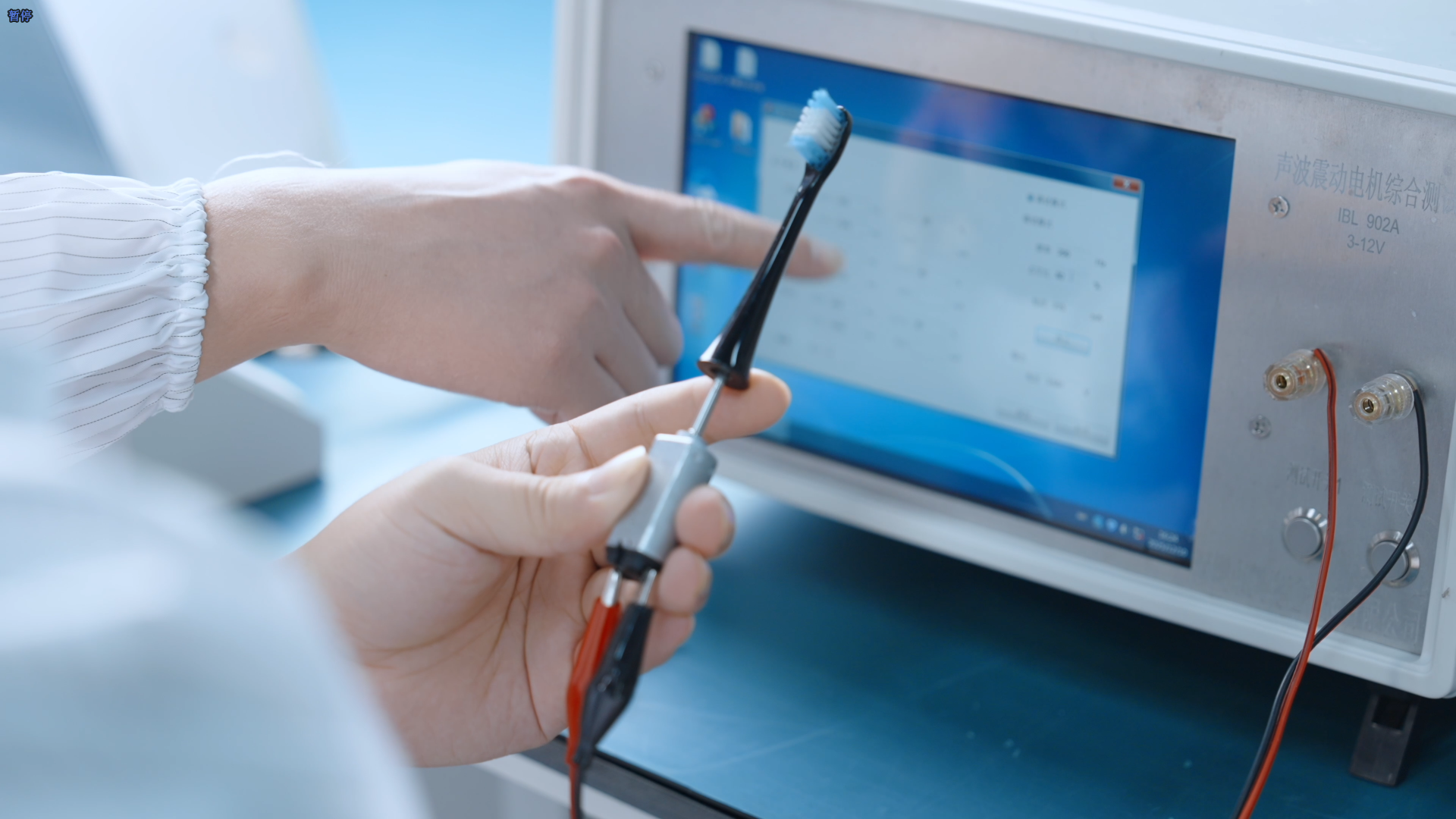
- It has identifiable test equipment for the claims it makes. Factory material showing a waterproof grade tester, a button durability station and sample instrument testing at the quality-inspection stage shows that verification is a process rather than a phrase, even though it still does not replace the report for your model.
- It keeps factory certificates and product approvals in separate files. ISO9001:2015, ISO13485:2016, MDSAP and FDA registrations describe the organisation and its system; CE, RoHS and FCC describe product compliance. A supplier that mixes them will mix them in your file too.
- It can state process discipline numerically. Risuntech, for example, states 27 quality control steps from raw materials to pre-shipment and a one-year warranty against manufacturing defects. Numbers like these are only useful when they come with the inspection records that sit behind them.
IPX7 on an electric toothbrush: what the rating covers and what it does not
IPX7 belongs to the IEC 60529 ingress-protection code. The second digit describes water: level 7 is defined by protection against the effects of temporary immersion — conventionally tested at 1 metre for 30 minutes — and the X in the first position means solids protection is not rated at all. Two practical consequences follow. The rating is about a temporary immersion event, not about continuous underwater use. And it is a property of the tested enclosure, not of a whole retail pack.
In the Risuntech range, IPX7 is specified at model level: T2431B0 and T2233 both list IPX7 waterproofing, T2431B0 pairing it with wireless inductive charging, which removes the exposed charging port that usually sits behind water-ingress complaints. Risuntech maintenance guidance goes a step further and states that its devices feature IPX7 waterproofing so they can be rinsed and used in the shower, while IPX4 charging bases must be kept dry. That distinction matters commercially: the handle may be rated for the shower, the base may not, and packaging that says only waterproof invites a return.
What to request is a model-level immersion test report that names the model and configuration, the standard applied, the sample stage (engineering, pre-production or production), the laboratory and the date, and that states whether the handle alone or handle plus base was tested. Ask separately how the charging base is rated and whether a Type-C or DC port is documented as dry-before-charging. Configuration matters more than buyers expect: T2431B0 charges inductively, T2233 charges through a DC connection, and a report covering one charging architecture cannot be attached to the other.
Material claims: food-grade TPE, DuPont, Pedex and copper-free brush heads
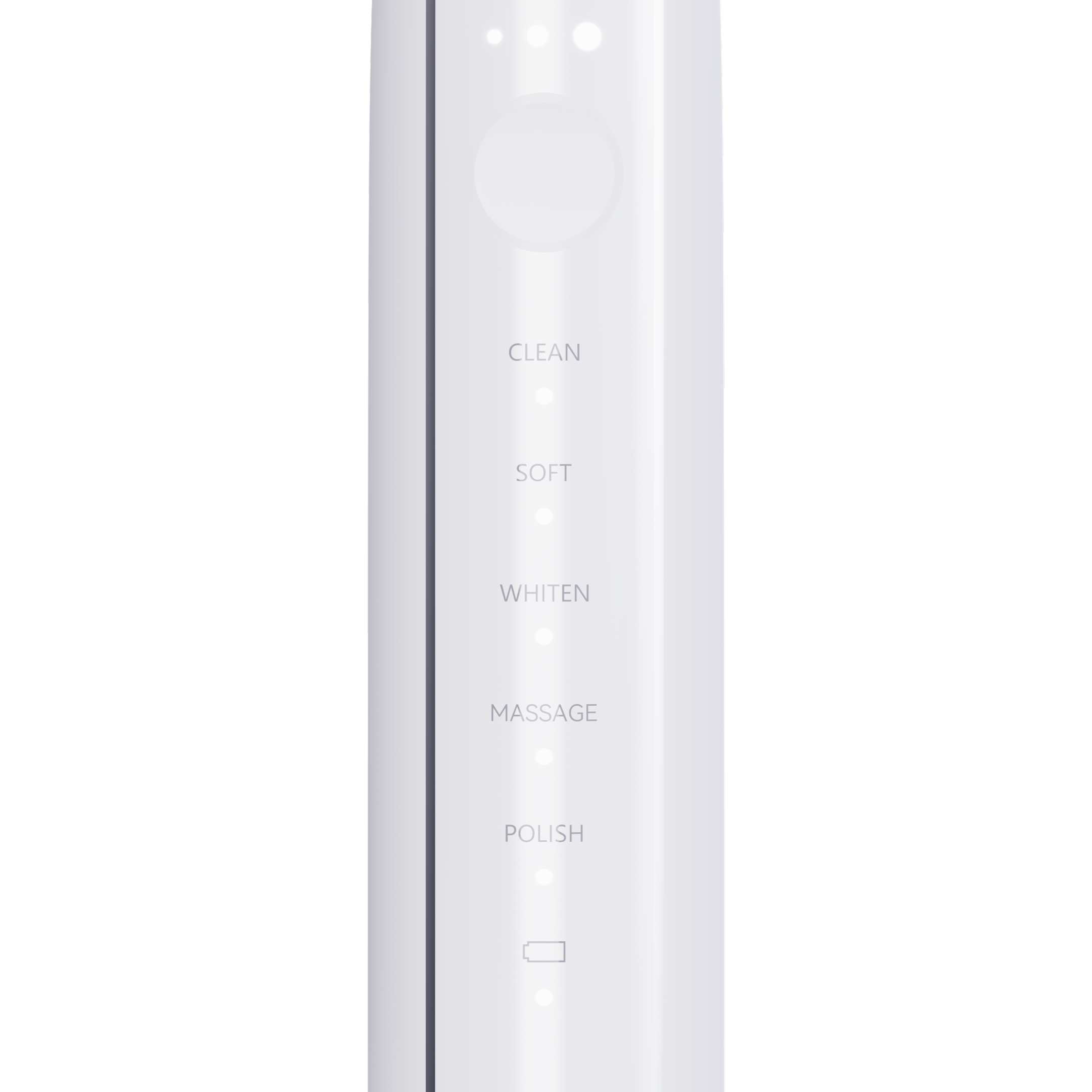
Material language carries the most compliance risk per word, because the words are short and the underlying evidence is component-level. The applicable Risuntech application specification describes replaceable brush heads as using imported DuPont bristles or a food-grade TPE wrap, and individual models refine that.
Food-grade TPE
TPE is the soft polymer used on wrapped or coated heads. T2422 is specified with a food-grade TPE-wrapped head combined with a 60-degree wide oscillation, a design intended to soften contact with the gumline for users moving from a manual brush. Food-grade is a statement about the compound, not about the finished head: the document to request is a material supplier declaration that names the polymer grade and the food-contact regulation it is declared against. A declaration for the raw compound does not certify the assembled head, and a finished-head hygiene test would be a separate document again.
DuPont bristles
DuPont is a filament brand, and the claim appears on several models: T2431B0 is specified with imported DuPont bristles and a high round-end rate, while T2233, T2231 and T2238 also list DuPont bristles. Two limits apply. A filament brand claim documents the source of the material, not the geometry of the tuft — round-end rate is a separate dimensional characteristic that needs its own measurement if it appears on packaging. And a brand claim does not establish that every head in a shipment uses that filament unless the purchase record or supplier declaration ties the grade to the head.
Pedex bristles
Risuntech maintenance guidance notes that Pedex bristles fade as a replacement reminder. That is a design feature — a visual wear indicator that supports a three-month replacement rhythm — and it should be described that way in listing copy. It is not a cleaning-performance claim and does not need a performance report to be stated accurately, but it should appear in the user manual as an indicator, not as a hygiene promise.
Copper-free tufting and housings
T2426 is specified with copper-free brush heads and a rubber coating. The technical rationale is straightforward: conventional heads staple bristles into the plastic base with copper plates, and water or toothpaste residue can collect around that internal metal cavity and corrode it. Removing the metal anchor closes the cavity. If copper-free tufting is used as a selling point, request the tufting process description so the claim is traceable to a manufacturing method rather than to an adjective. Housing material should be handled the same way: the range is specified with plastic or ABS housing, and any packaging statement about the housing needs the grade named in the file.
Battery capacity and charging specifications as documented claims
Battery figures are the most frequently misread specification in oral care, because capacity and runtime are different measurements and only one of them appears on the box.
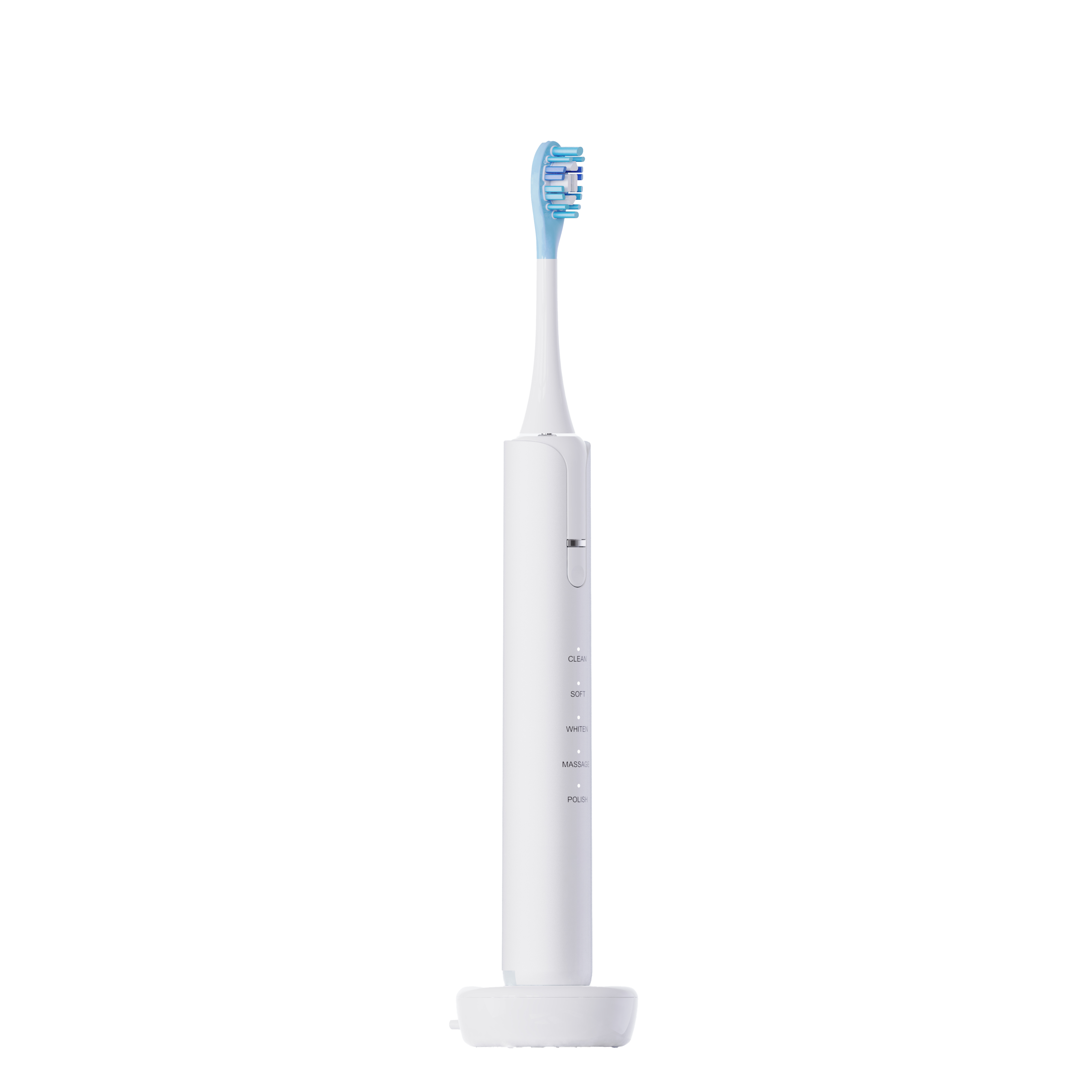
- T2431B0: 600 mAh lithium battery, wireless inductive charging, 120 minutes of use stated in Gentle mode at twice a day for two minutes per use.
- T2426: 800 mAh lithium battery, inductive charging base with a USB port, five-hour charge, 240 minutes of use at soft mode.
- T2432: 800 mAh lithium battery, inductive charging base with a USB port, fully charged in 12 hours.
- T2233: 650 mAh lithium battery, DC charging, 20-day battery life.
- T2409: 800 mAh lithium battery, USB Type-C cord charging, 180 minutes of use.
- T2433: USB Type-C charging, fully charged within four hours, 30-day battery life.
- T2231: 800 mAh lithium battery, 16-hour inductive charging, specified for 100–240 V worldwide voltage.
The documentary lesson is in the conditions. Every runtime figure above carries a mode, a usage pattern or a charge method, and a compliant claim reproduces that condition instead of compressing it into a longer number. Request the cell specification sheet with chemistry, nominal capacity and voltage; the pack construction description; the charge voltage and current; and the lithium battery transport documentation required for the shipment — a test summary and safety data sheet are normally requested per shipping configuration. Charging input is equally checkable: confirm the plug variant and voltage range against the destination market, and remember that 100–240 V is stated for T2231 specifically, not as a general property of the range.
Regional certificates and test reports you must request separately
This is the part of the file buyers most often assume exists. Nothing in a catalogue should be read as confirmation that a specific model holds a specific approval. Where a document is not listed for the model you are buying, treat it as unconfirmed and request it — and note that non-disclosure in a brochure is not evidence of absence either.
At factory level, Risuntech states that its factories are ISO9001:2015 and ISO13485:2016 certified and that it holds MDSAP and FDA registrations; at product level it states that products comply with CE, RoHS and FCC standards. Each of those statements is checkable, and each has a scope. Read the certificate for the legal entity, the site and the validity date, and read the declaration for the model and configuration it lists.
Requested separately, model by model, you will typically need: a safety and electromagnetic-compatibility test report set for the exact model against the applicable standard for oral hygiene appliances; a European declaration of conformity with the underlying reports; RoHS test data; FCC evidence where electronics or wireless charging are involved; any national registration your market requires; label and packaging language compliance including importer details; and, if the programme also includes a portable oral irrigator, the equivalent files for those products. The water flossers F5043A and F5056 are specified with IPX7 waterproofing, 1,400 mAh batteries and four-hour charging, but their reports are separate documents from the toothbrush models and cannot be carried across.
| Claim or requirement | Document that substantiates it | What it does not prove |
|---|---|---|
| IPX7 waterproof | Model-level immersion test report naming configuration, standard, laboratory and date | That a charging base, port or cable is protected |
| Food-grade TPE brush head | Compound supplier declaration naming the grade and food-contact regulation | That the assembled head passed a hygiene test |
| Imported DuPont bristles | Filament supplier declaration or purchase record for the specified grade | Round-end rate, tuft retention or cleaning performance |
| Pedex fading bristles | Design description of the wear-indicator filament | Any oral health outcome |
| 600–800 mAh Li-ion capacity | Cell specification sheet plus pack construction description | Runtime, which depends on mode and usage pattern |
| Type-C, DC or inductive charging | Charger specification and plug-variant list | Compatibility with every local supply |
| CE, RoHS, FCC compliance | Declaration plus test reports for the exact model | MDSAP coverage or FDA registration of the product |
| ISO9001, ISO13485, MDSAP, FDA | Certificate showing entity, site, scope, issuing body and validity | Approval of any single product model |
Responsibility for market entry usually sits with the importer or the brand that places the product on the market, not with the factory, and the allocation differs by country. Confirm your own obligations with a regulatory adviser in each destination market before the packaging is printed.
A step-by-step documentation request workflow
The sequence below can be run once per model and then reused for every market, which is what makes it cheaper than repairing a listing later.
- Freeze the configuration in writing. Model code, brush head variant, charging base, plug type and packaging language. For example: T2431B0 with inductive base, EU plug, English and German packaging.
- Send a claim sheet, not a question list. List every phrase you intend to print — IPX7, food-grade TPE, DuPont, 40,000 vibrations per minute, 120 minutes of use — and ask the supplier to mark each one supported, partially supported or unsupported for that configuration.
- Request the model-level test reports. Check five fields before accepting any of them: model, sample stage, standard, laboratory and date. A report missing any of the five is a report you cannot defend.
- Request system certificates with scope. Confirm the entity named on the ISO9001:2015, ISO13485:2016, MDSAP or FDA document is the entity that will appear on your contract and your packaging.
- Request component declarations. Filament grade for the bristles, polymer grade for the TPE wrap, housing material, and the cell specification for the battery. Component-level documents are what make material claims defensible.
- Request the transport and charging file. Lithium battery transport documentation, charger specification and the plug-variant list, checked against the destination market.
- Reconcile the file with the packaging. Delete or narrow anything the documents do not carry. If the report covers the handle only, the box should say IPX7 handle, not waterproof device.
- Verify at sample stage and keep the record. Check the golden sample against the file, photograph the label, store the documents with the purchase order, and repeat the process for each new model rather than copying a sister model file.

Four sourcing situations and the documents that decide them
European private-label launch. The declaration of conformity and its supporting test reports for the exact model are the first documents to collect, followed by RoHS data and language-specific labels. A sonic model with inductive charging such as T2432, or a mid-range Type-C model such as T2409, will each need their own report set even though both are 800 mAh sonic handles.
United States marketplace listing. Electronics and wireless charging bring electromagnetic-compliance evidence into scope, and marketplace claim review focuses on unqualified wording. Food-grade, DuPont and Pedex phrases are the ones most likely to be challenged, so attach the compound and filament declarations to the listing file before publication.
Clinic or hospital tender. Here the system documents matter as much as the product documents: ISO13485 and MDSAP, the 27-step quality control process, the one-year warranty against manufacturing defects, and the option of a model with a pressure sensor such as T2426 where the clinical requirement is to limit brushing force.
Distributor covering several markets. Build one matrix of model against destination market and attach the document reference to each cell. Models such as T2425 and T2232 sit in the same catalogue as the examples above, but their documentation has to come from their own model file rather than being inferred from a sister model or from a range-level statement.
Frequently asked questions
Which certificates can an electric toothbrush manufacturer document, and which must be requested separately?
Factory-level quality certificates and product-level approvals are separate files. Risuntech states that its factories hold ISO9001:2015 and ISO13485:2016 certification and that it holds MDSAP and FDA registrations, while its products comply with CE, RoHS and FCC standards. Certificates for a specific model, plus any country registration your market requires, must be requested separately for the exact model and configuration you intend to import.
Does an IPX7 rating mean the toothbrush can be used in the shower?
IPX7 refers to protection of the device enclosure against the effects of temporary immersion. Risuntech maintenance guidance states that its devices feature IPX7 waterproofing so they can be rinsed and used in the shower, while IPX4 charging bases must be kept dry. The rating applies to the handle, not to a charging base or cable, so ask for the test report that names the configuration tested.
Which brush head materials appear in the range, and how are those claims documented?
Brush heads in the range are described as using imported DuPont bristles or a food-grade TPE wrap. T2431B0 is specified with imported DuPont bristles and a high round-end rate, T2233, T2231 and T2238 also list DuPont bristles, T2422 uses a food-grade TPE-wrapped head, and T2426 uses copper-free brush heads with a rubber coating. Documentation is per component: a filament supplier declaration, a polymer grade declaration, and a round-end measurement if that phrase appears on packaging.
What customization options exist, and what is the minimum order quantity?
Risuntech offers OEM and ODM work including colour matching, private labelling, custom packaging and parameter adjustments. The minimum order quantity varies by project and generally starts from 1,000 to 3,000 units. Custom colour and packaging should be tied to the documentation set, because the tested configuration and the shipped configuration must match.
What production capacity and lead time apply to bulk electric toothbrush orders?
Risuntech states capacity of 1.3 million electric toothbrushes, 1.3 million water flossers and 80,000 UV sterilizers per month across 31 lines in Shenzhen, Jiangxi and Vietnam, with standard lead times of 30 to 45 days supported by SAP-driven just-in-time production and 27 quality control steps. Products carry a one-year warranty covering manufacturing defects.
How can a buyer obtain samples and model-specific documentation before ordering?
Put the model code, brush head variant, charging base and packaging language in writing, then ask for the matching test report set, material declarations and battery transport documents to be sent with the sample. The company and product brochure is available as a PDF for initial screening, and sample or quotation requests can be raised with the export team once the model list is fixed.
Conclusion: the file, not the catalogue, is the compliance asset
IPX7, food-grade TPE, DuPont and Pedex bristles, Li-ion capacity and charging speed are all reasonable claims for a rechargeable electric toothbrush to make. What separates a shortlist from a purchase order is whether each claim can be attached to a document that names the model, the configuration, the standard and the date. Manufacturers that answer in writing, keep factory certificates apart from product approvals, and can explain which market registrations sit outside their supplied file are the ones that survive a listing review, a tender or a customs query.
A practical way to start is to take one model — T2431B0, T2407, T2422, T2425, T2233 or T2232 — and run the eight-step request against it before scaling to the rest of the range. The Risuntech company and product brochure covers the model range and factory profile for that first screening, and the export team can be reached at Marketing@risuntech.cn for sample requests and model-level documentation. Any approval not confirmed in a model file should be treated as unconfirmed until the document arrives.
Have Questions or Need More Details?
Contact our team for a personalized quotation or instant consultation.
Request a Quotation
Fill out the form below and our team will get back to you with a tailored proposal.
WhatsApp Direct Chat
Prefer to chat in real-time? Message us on WhatsApp for instant assistance & quick answers.
- Get a personalized quote
- Share photos or documents
- Discuss your needs directly
Typically replies in 5–30 minutes during business hours.