
Electric Toothbrush Guide: Clinics, Hospitals, E-Commerce
Electric Toothbrush Application Guide for Dental Clinics, Hospitals, and E-Commerce
This guide maps Risuntech electric toothbrush models to three buying contexts: dental clinic and hospital programs, private-label oral care brands, and e-commerce lines that need annual supply and replacement head continuity. The buying question is not only which handle has the highest specification. It is which model fits the channel, the cleaning environment, the charging format, the brush-head replacement plan and the compliance file that the buyer must hold before mass production.
For clinic and hospital use, the supplied portfolio places T2422, T2425, T2233 and T2232 in the clinical-oriented group. For oral care brands, private label and e-commerce, it places T2407, T2432 and T2431B0 in the brand and retail group. Verified model-level facts are strongest for T2422, T2233, T2407 and T2432. For T2425, T2232 and T2431B0, the current portfolio listing confirms the product category, while model-level parameters should be confirmed on the current datasheet before a purchase order.
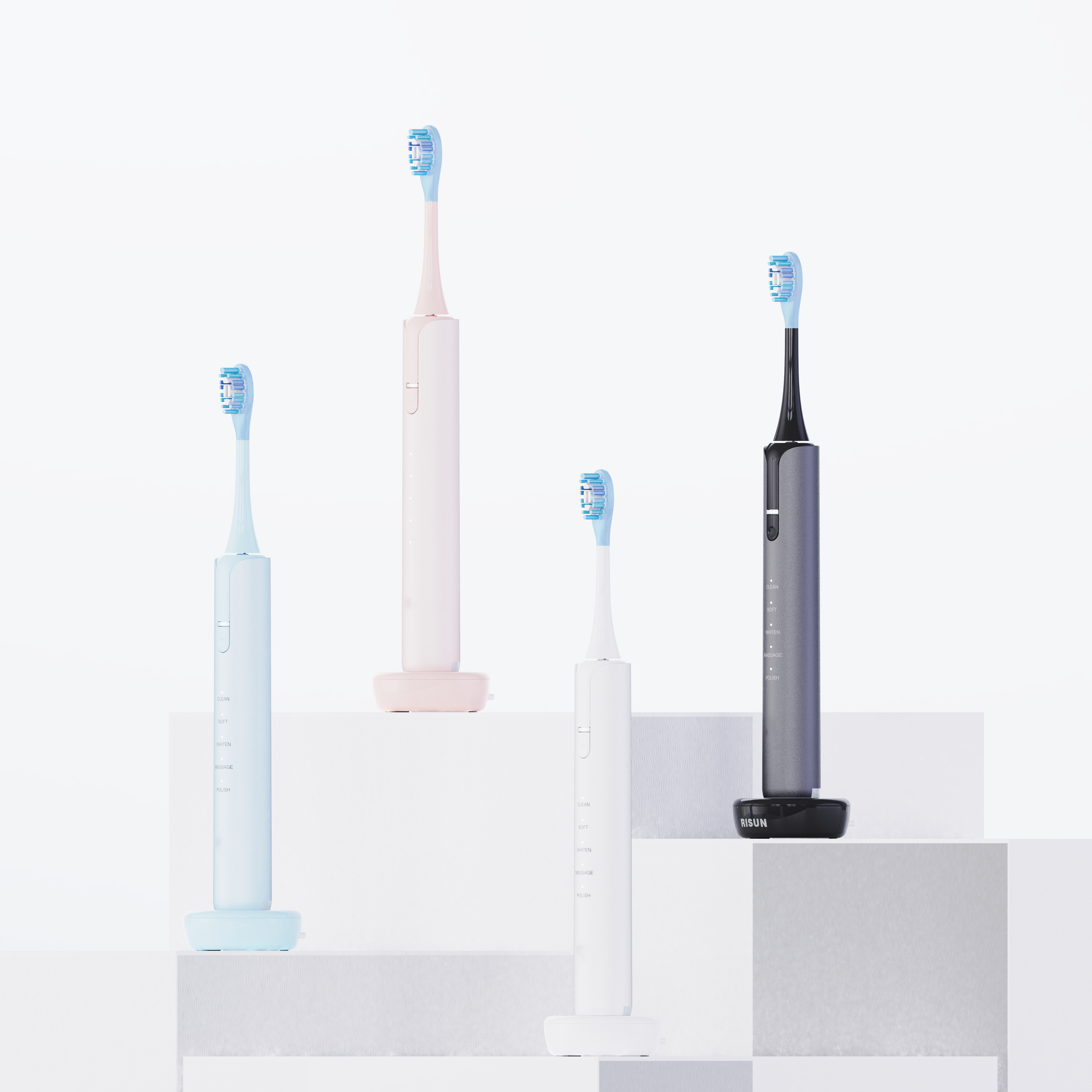
Cover image: T2422 sonic electric toothbrush, one of the clinical-oriented models discussed in this guide.
Problem Definition: The Real Sourcing Problem Is Channel Fit, Not One Global SKU
A dental clinic, a hospital procurement team and an e-commerce brand do not buy an electric toothbrush for the same reason. A clinic may recommend a handle for home care after chairside treatment and then need a stable replacement-head supply for returning patients. A hospital program may need a cleanable, sealed device and a documentation package that supports institutional review. An e-commerce brand may need a visible specification ladder, a premium private-label option and a consumable plan that keeps brush heads moving after the first purchase.
That difference creates three sourcing risks. The first is clinical fit: a model may have the right motor but the wrong brush head, charging format or sealing for the intended use. The second is compliance fit: a product may be electrically compliant but lack the quality-system evidence that a hospital or a regulated market expects. The third is continuity fit: a low-cost launch SKU may perform well in the first quarter, but if replacement heads, charging bases or packaging are not planned as separate supply items, the channel loses repeat purchase value.
Risuntech, formally Shenzhen Risun Technology Co., Ltd., is a Shenzhen-based oral care manufacturer founded in 2006. Its supplied company profile lists electric toothbrushes and water flossers as main products, with OEM and ODM support for brand owners and distributors. The application logic below uses only the supplied product and company facts, and it marks the points where a buyer should confirm the current datasheet rather than rely on a generic catalogue description.
Industry Background: Clinical, Institutional and E-Commerce Channels Are Converging
Oral care devices are no longer sold only through general retail. Dental clinics recommend home-care devices as part of a professional relationship. Hospital and medical procurement teams evaluate devices for cleanability, electrical safety and documentation. E-commerce brands build SKU ladders around visible features such as sonic vibration frequency, pressure sensors, charging format, waterproof rating, mode memory and replacement-head cost.
The regulatory background matters because the same handle can be described in different ways. For the United States, electric toothbrushes and water flossers are generally regulated by the FDA as Class I dental devices under product codes JEQ and NSB, and are 510(k)-exempt, but establishment registration, device listing and 21 CFR 820 quality system requirements still apply. For the European Union, standard oral hygiene appliances without medical claims are CE marked under the Low Voltage Directive and Electromagnetic Compatibility Directive; if the product makes medical claims such as treating periodontitis, the Medical Device Regulation may apply and a Notified Body review may be required.
For a buyer, this means the application guide must separate product selection from claim selection. A clinic-facing page can discuss plaque removal, gum care and cleanability as product performance language, but it should not invent disease-treatment claims. A hospital-facing document should match the claims to the regulatory file. An e-commerce listing should avoid medical claims unless the product and registration support them. The same discipline applies to ultrasonic toothbrush language: the supplied portfolio describes T2820 as using 1.6 MHz ultrasonic waves, while the models in this guide are sonic or oscillating platforms. The terms should not be mixed in a product claim without verification.
Detailed Solution: Map the Model to the Channel Before the Order
The practical solution is a four-step architecture: define the channel, choose the motion family, specify the charging and sealing format, and lock the brush-head replacement plan. This prevents a common sourcing error where a buyer selects one high-specification handle for every market and then discovers that the price, charging method or brush-head format does not fit the channel.
Clinic and hospital group: T2422, T2425, T2233 and T2232
The clinical-oriented group in the supplied portfolio includes T2422, T2425, T2233 and T2232. T2422 is documented as a classic sonic vibration model with a standard 8 degree micro-oscillation, a frequency of 290 Hz to 333 Hz, approximately 17,400 to 20,000 vibrations per minute, five modes including a Sensitive mode, wireless charging, IPX7 waterproofing and an 800 mAh battery. Its documented battery life is at least 22 days when used 4 minutes per day, and its charging time is up to 16 hours. These facts make T2422 a suitable mid-range clinical and retail model when a sealed wireless-charging handle and a sensitive mode are required.
T2233 is documented as a classic oscillating model with single-button control, three modes (Clean, Soft and Massage), a 2-minute timer with a 30-second interval alert, 8,800 oscillations or vibrations per minute, DC charging and IPX7 waterproofing. The supplied procurement material positions T2233 as a cost-effective model for mass markets, first-time users and supermarket channels, with a 650 mAh battery and approximately 20 days of battery life. For a clinic that needs a lower-cost recommendation for patients who are new to powered brushing, T2233 is a clearer volume option than a premium dual-action handle.
T2425 is listed in the portfolio as a sonic electric toothbrush, and T2232 is listed as an oscillating toothbrush. The supplied material does not provide model-level motor frequency, battery, charging, bristle or mode details for these two models. They should still be included in a clinic or hospital request for quotation because they broaden the motion and price options, but the purchase specification should confirm the current datasheet for motor format, charging method, IPX7 status and brush-head compatibility.
Pedex reminder bristles are relevant to clinic and hospital replacement planning. The supplied FAQ states that brush heads should be replaced every 3 months and that Pedex bristles fade as a reminder. For a clinic program, this feature should be written into the brush-head specification so that patients and institutional buyers can see when replacement is due. The same FAQ notes that flosser nozzles should be replaced every 6 months, which is useful when a clinic recommends a combined toothbrush and water flosser routine.
Oscillation plus vibration is a separate motion category from the sonic vibration used in T2422. In the supplied comparison material, T2407 is the dual-action model with oscillation plus vibration, a 60 degree ultra-wide swing, up to 40,000 vibrations per minute and 300 gf.cm torque. T2407 is grouped with the e-commerce and private-label section below because its higher BOM cost and premium positioning fit brand differentiation more than volume clinic distribution. A clinic buyer who wants dual-action motion should therefore treat T2407 as a premium upgrade rather than assume that every clinical model uses the same motor architecture.
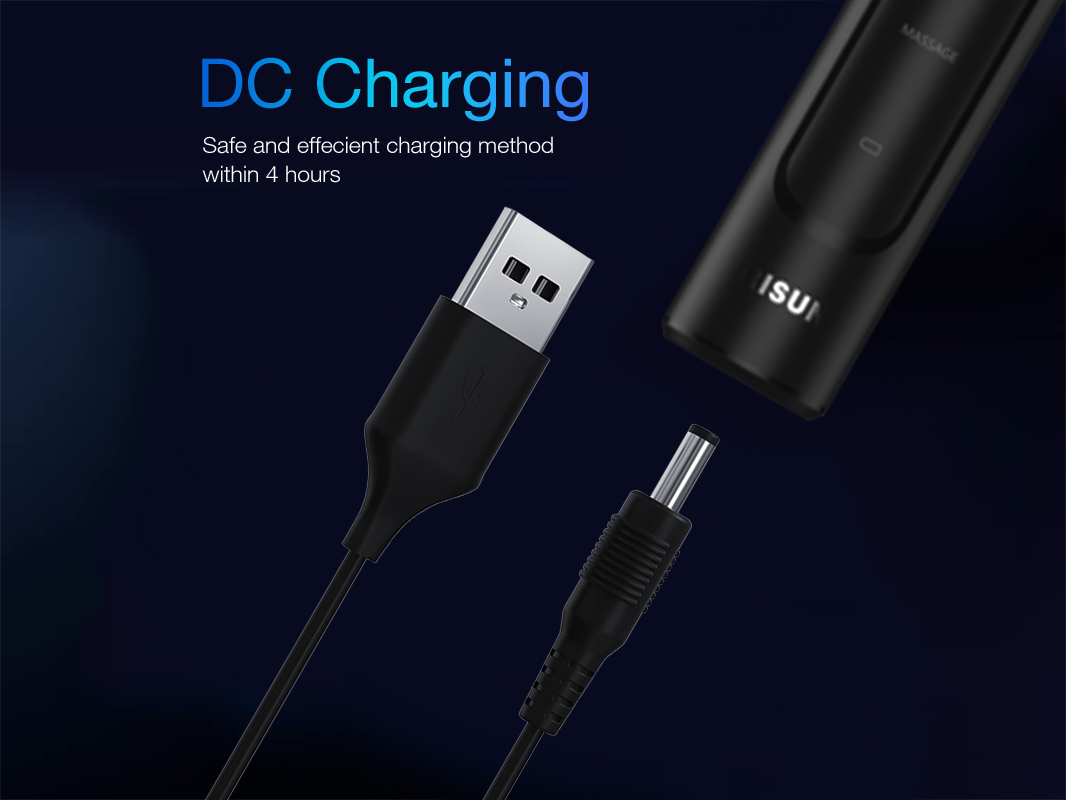
T2233 is a classic oscillating model with three modes and IPX7 waterproofing, positioned for cost-sensitive clinic recommendations and mass-market retail.
Private-label and e-commerce group: T2407, T2432 and T2431B0
The brand and e-commerce group in the supplied portfolio includes T2407, T2432 and T2431B0. T2407 is the premium dual-action option: oscillation plus vibration, a 60 degree ultra-wide swing, up to 40,000 vibrations per minute, 300 gf.cm torque, five modes (Clean, Soft, Whiten, Massage and Polish), an 800 mAh battery, 25 days of battery life, wireless induction charging, IPX7 waterproofing and a food-grade TPE-wrapped brush head. Its TPE-wrapped head is easier to rinse clean, and the Polish mode gives an e-commerce listing a visible whitening-related feature without requiring a medical claim.
T2432 is described in the supplied product image file as a stepless speed sonic electric toothbrush with 4 modes and wireless charging. That combination fits an e-commerce line that wants a clear step-up model between a basic sonic handle and a premium smart handle. The stepless speed option gives the brand a simple demonstration point, while the 4 modes and wireless charging support a clean, sealed bathroom product story. The current datasheet should confirm the exact speed range, battery capacity and brush-head interface before the listing is built.
T2431B0 is listed as a sonic electric toothbrush. The supplied material does not give model-level charging, mode or bristle details. For a private-label brief, T2431B0 should be specified through the quotation process: confirm whether the program requires wireless inductive charging or USB Type-C charging, whether mode memory is required, whether the handle should be compact or full-size, and whether the brush head should use food-grade TPE. This is not a weakness in the application guide; it is the correct way to avoid inventing a specification that the factory has not confirmed.
Charging format is one of the clearest ways to separate e-commerce SKUs. Wireless inductive charging is documented for T2407, T2432 and T2422. It removes exposed charging contacts and supports a sealed handle design for wet bathrooms. USB Type-C charging is available elsewhere in the supplied portfolio, including T2238, T2409 and F5056. A brand that wants fast charging convenience can specify a Type-C model, but it should also plan a user instruction that keeps the port dry. Mode memory is documented in the Risuntech control FAQ: the device starts in the last mode used, and a long press can turn it off directly. Compact handles such as T2132 are also documented with a mini size and 55 dB low noise when a smaller format is required.
For a smart electric toothbrush tier, the supplied portfolio includes T2426 and T2409. T2426 is documented with a smart LED color screen, a triple pressure sensor, a 6-axis gyroscope for a 6-zone brushing report, 40,000 vibrations per minute, 5 modes and 3 intensity levels. T2409 is documented with an LCD color screen, 38,000 vibrations per minute and Type-C charging. These models sit above the T2431B0, T2407 and T2432 group, so they should be used when the e-commerce line needs a connected or display-based step-up rather than a core private-label handle.
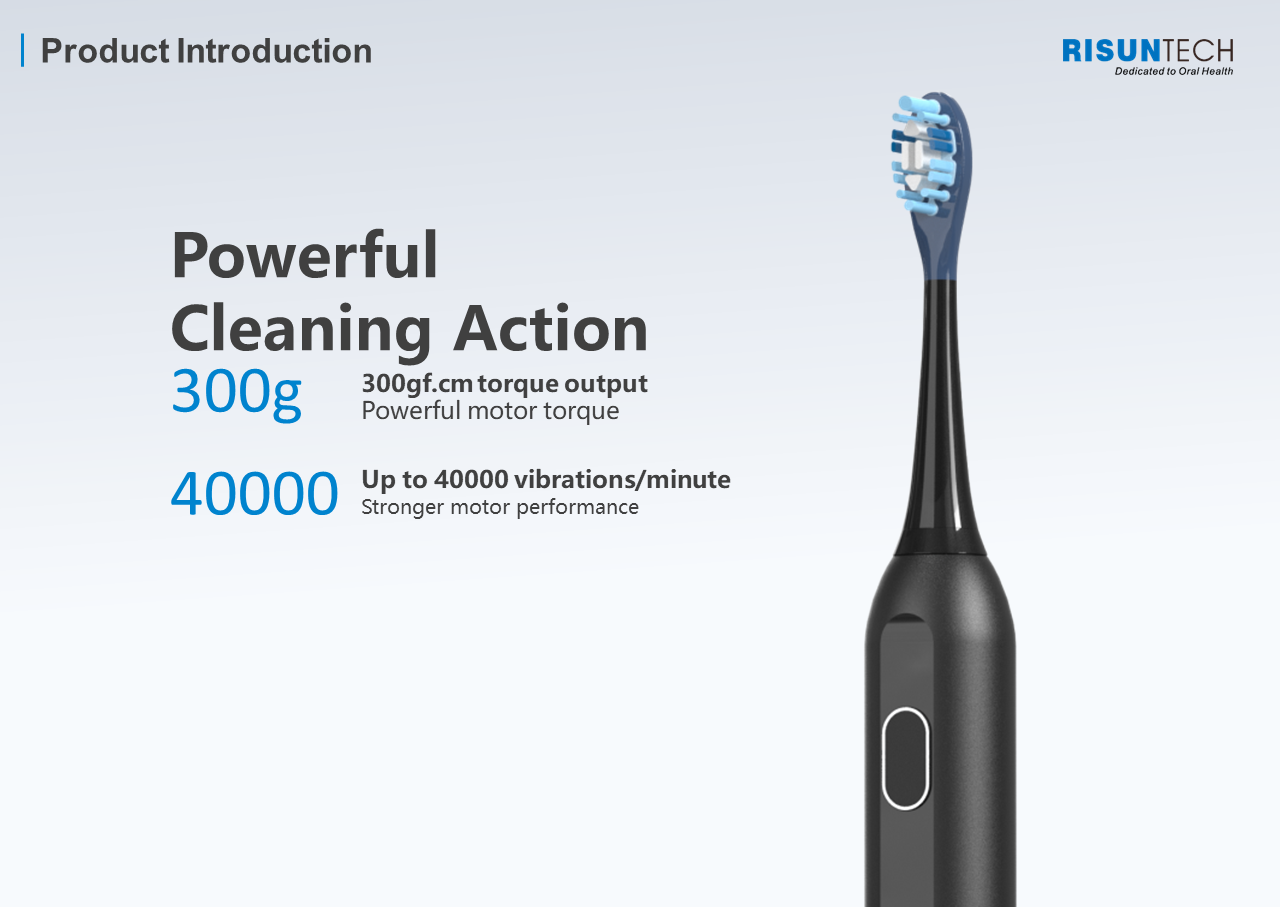
T2407 combines oscillation plus vibration with a 60 degree swing and a food-grade TPE-wrapped brush head for premium private-label programs.
Complete the program with water flossers and oral irrigators
Clinics and e-commerce brands often need more than a toothbrush SKU. The supplied portfolio includes water flosser, oral irrigator, cordless water flosser, portable oral irrigator, countertop water flosser and dental water jet formats. F5056 is a portable UV-sterilizing flosser with a 300 ml tank, 4 modes, 5 intensity levels, a 10-minute store-and-sterilize cycle and a 40-day battery life. F5043A is a portable ozone-sterilizing flosser with a 300 ml split tank, ozone sterilization and 24-day battery life. F5106 is a countertop model with a 600 ml tank, 10 pressure levels and 6 nozzles with color rings, which fits family sharing and orthodontic support.
For a clinic that recommends interdental cleaning, the water flosser can be positioned as a separate home-care SKU rather than a toothbrush accessory. For an e-commerce brand, the flosser adds a second consumable ecosystem through nozzles. The supplied FAQ states that UV and ozone models kill 99.9 percent of bacteria, but that claim should be matched to the exact model and the current test file before it is used in a regulated market listing.
Step-by-Step Breakdown: How to Execute the Model Mapping
- Define the channel and the claim boundary. Separate clinic and hospital programs from private-label and e-commerce programs. Write the allowed claims before selecting the model. Do not use medical-treatment language unless the product registration and market file support it.
- Choose the motion family. Use T2422 or T2425 for sonic vibration, T2233 or T2232 for oscillating motion, and T2407 when oscillation plus vibration is required. Confirm the exact motor frequency and mode list on the current datasheet for T2425, T2232 and T2431B0.
- Choose the charging and sealing format. Select wireless inductive charging for a sealed bathroom handle, or USB Type-C charging when fast charging convenience is the selling point. Confirm IPX7 status for every model that will be rinsed or used in a wet environment.
- Specify the brush head and replacement interval. Confirm the brush-head interface, bristle type, whether Pedex reminder bristles are required, and whether the head should use food-grade TPE. Plan replacement heads as a separate SKU, not as an afterthought.
- Verify the compliance file. Request ISO9001, ISO13485, FDA, MDSAP, CE, RoHS and FCC documentation as applicable to the target market. Check certificate scope, issuing body and validity rather than accepting a logo on a brochure.
- Validate the sample and inspection plan. Test the handle with the intended brush head, charging base or cable, and packaging. Confirm the pre-shipment inspection route and the acceptance criteria before the mass-production order.
- Lock the annual supply plan. Agree the forecast, the replacement-head schedule, the packaging version and the delivery terms. Use the factory capacity, lead time and warranty terms as the basis for the annual supply agreement.
Use Cases: Where Each Model Fits
Dental clinic chairside and home-care recommendation
A clinic that wants a sealed, mid-range sonic handle with a Sensitive mode can use T2422 as the home-care recommendation. The 8 degree micro-oscillation, five modes, wireless charging and IPX7 rating are easy to explain to patients. A clinic that needs a lower-cost recommendation for first-time powered-brush users can use T2233, with three modes and a 2-minute timer. T2425 and T2232 can be added to the shortlist after the current datasheet confirms their motor and brush-head details.
Hospital and medical oral care program
A hospital program should start with the compliance file and the cleaning protocol, not the retail feature list. The model should be rinseable where the protocol requires it, and the brush head should be replaceable as a controlled consumable. ISO13485 and MDSAP are the relevant quality-system credentials in the supplied material, while FDA registration and listing apply to the U.S. market. The hospital buyer should also confirm that the product label does not make a medical claim that the registration does not support.
Private-label brand launch
A private-label brand can use T2407 as the premium hero SKU, T2432 as the stepless-speed mid-tier SKU and T2431B0 as the core sonic SKU after specification confirmation. The brand should request custom colors, logo printing, packaging and the brush-head plan in the same quotation. The 60 degree dual-action motion, 40,000 vibrations per minute and TPE-wrapped head give T2407 a clear premium story, while T2432 gives the line a visible speed-control feature.
E-commerce marketplace SKU ladder
An e-commerce line can build a three-tier ladder: T2233 for entry-level volume, T2422 for mid-range sonic with wireless charging, and T2407 for premium dual-action. If the marketplace needs a smart electric toothbrush tier, T2426 or T2409 can be added above that ladder. If the line needs a compact handle, T2132 is documented with a mini size and 55 dB low noise. The key is to keep the charging format, mode count and brush-head price visibly different across tiers.
Annual supply and replacement head continuity
For annual supply, the buyer should treat the handle and the brush head as two supply lines. The handle order protects the launch; the brush-head order protects repeat purchase. The supplied company data states monthly capacity of 1.3 million electric toothbrushes and 1.3 million water flossers across 31 lines in Shenzhen, Jiangxi and Vietnam, with standard lead times of 30 to 45 days. That capacity and multi-base layout are relevant to buyers who need continuity rather than a one-time shipment.
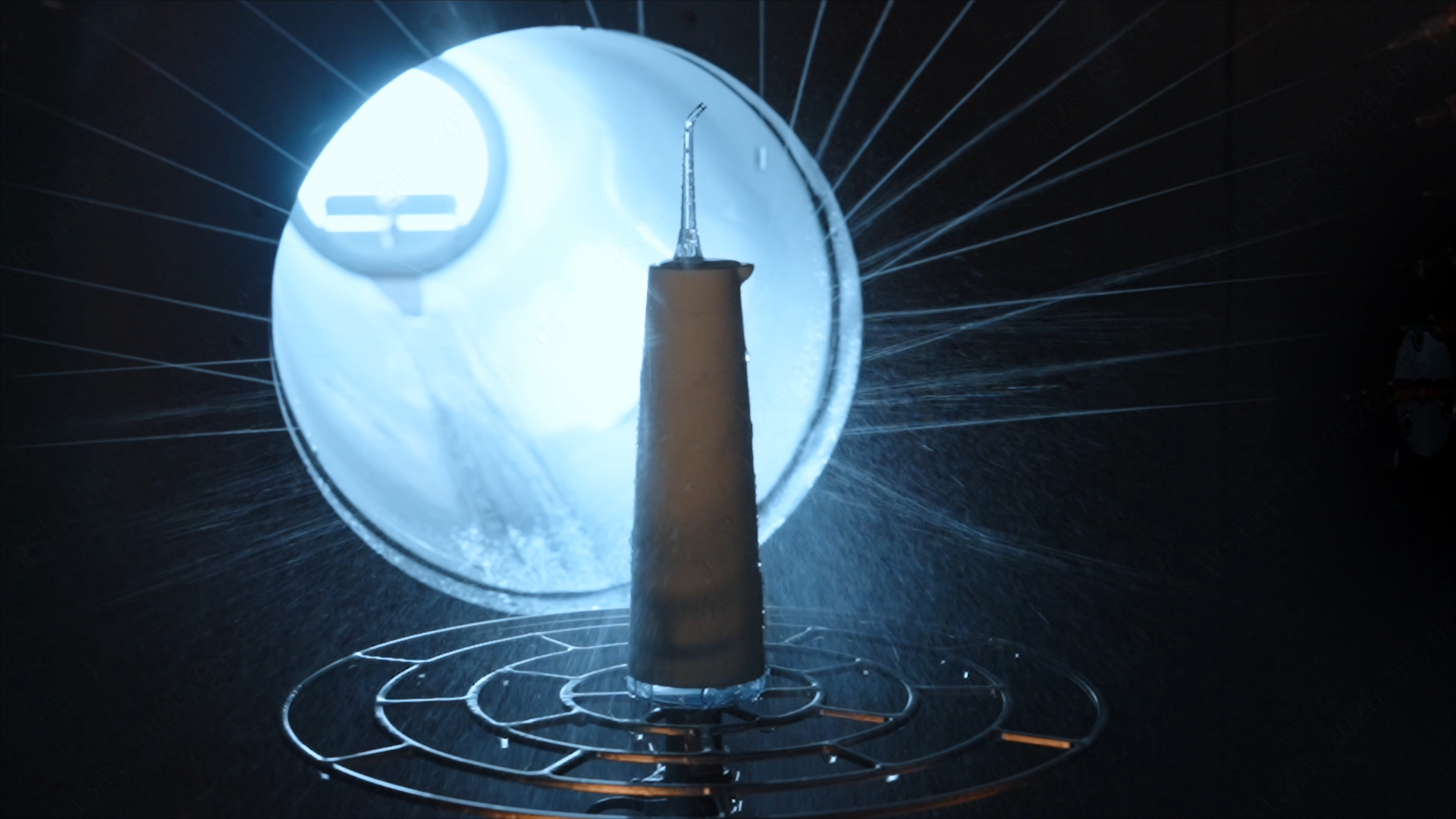
IPX7 sealing should be verified through the quality-control process, not assumed from a product name.
Comparison Table: Verified Model Facts for Buyer Review
| Model | Verified motion or format | Verified features from supplied material | Channel fit | Buyer confirmation point |
|---|---|---|---|---|
| T2422 | Sonic vibration with 8 degree micro-oscillation | 5 modes including Sensitive; 290 to 333 Hz, approximately 17,400 to 20,000 vibrations per minute; wireless charging; IPX7; 800 mAh; at least 22 days battery life; up to 16 hours charging | Dental clinic, hospital home-care recommendation, mid-range e-commerce | Confirm brush-head interface and packaging version |
| T2233 | Classic oscillating | Single button; 3 modes Clean, Soft and Massage; 2-minute timer with 30-second interval alert; 8,800 oscillations or vibrations per minute; DC charging; IPX7; 650 mAh; approximately 20 days battery life | Mass-market clinic recommendation, supermarket and entry-level e-commerce | Confirm regional plug and packaging |
| T2407 | Dual-action oscillation plus vibration | 60 degree ultra-wide swing; up to 40,000 vibrations per minute; 300 gf.cm torque; 5 modes Clean, Soft, Whiten, Massage and Polish; 800 mAh; 25 days battery life; wireless induction charging; IPX7; food-grade TPE-wrapped brush head | Premium private label, premium e-commerce, dual-action upgrade | Confirm BOM cost and retail price position |
| T2432 | Stepless speed sonic | 4 modes; wireless charging; stepless speed option per supplied product image description | Mid-tier private label and e-commerce | Confirm speed range, battery and brush-head interface on current datasheet |
| T2425 | Sonic electric toothbrush, per portfolio listing | Model-level motor, charging, mode and bristle data not provided in the supplied material | Clinic and hospital shortlist after confirmation | Request current datasheet before quotation |
| T2232 | Oscillating toothbrush, per portfolio listing | Model-level motor, charging, mode and bristle data not provided in the supplied material | Oscillating clinic and volume shortlist after confirmation | Request current datasheet before quotation |
| T2431B0 | Sonic electric toothbrush, per portfolio listing | Model-level charging, mode and bristle data not provided in the supplied material | Core private-label and e-commerce SKU after specification | Confirm inductive or Type-C charging, mode memory and head format |
Supply Continuity: Annual Supply, Lead Time and Replacement Heads
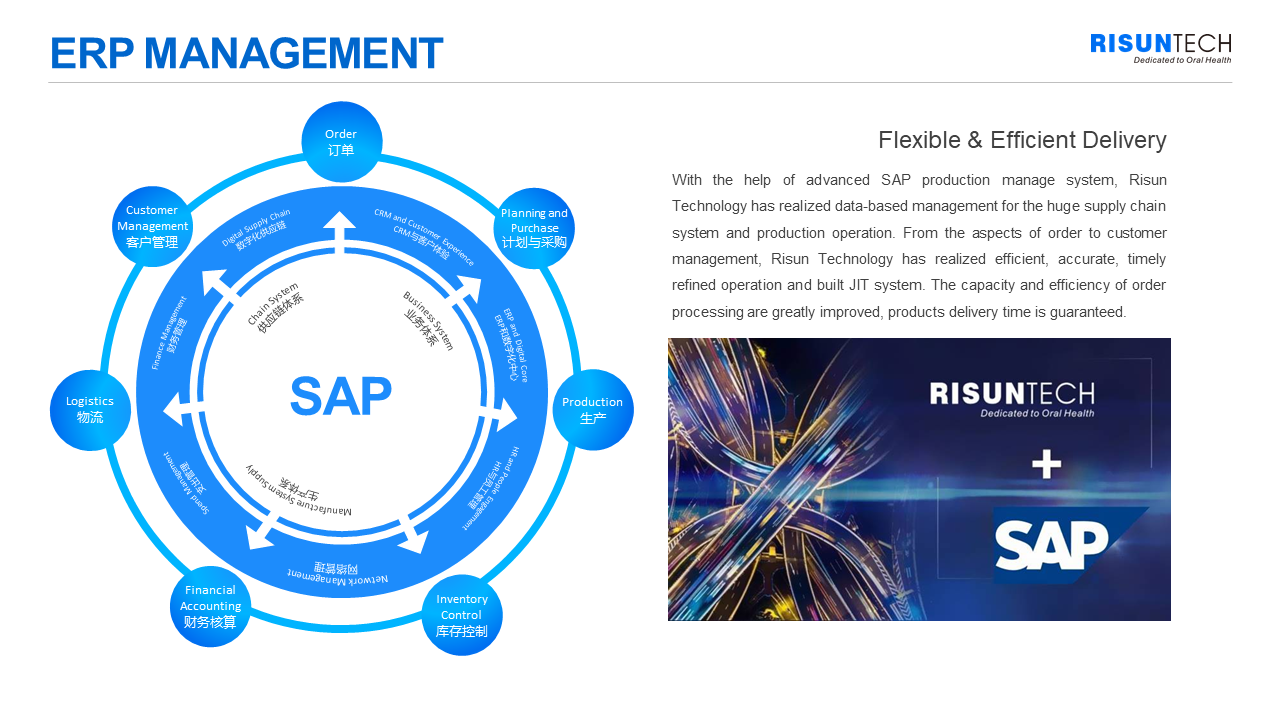
For an annual supply program, the buyer should ask for a written schedule that separates handle production from brush-head production. The supplied FAQ states monthly capacity of 1.3 million electric toothbrushes and 1.3 million water flossers, 31 production lines across Shenzhen, Jiangxi and Vietnam, SAP-driven JIT production, 27 QC steps and a standard 1-year warranty covering manufacturing defects. Standard lead time is 30 to 45 days. The commercial terms in the supplied procurement material are MOQ 1000 PCS, FOB Shenzhen, 30 percent prepayment and 70 percent balance before shipment, with pre-shipment inspection by the client or a third party.
The replacement-head plan should define the brush-head SKU, bristle type, packaging and order frequency. For clinic programs, the Pedex reminder feature gives the patient a visible replacement signal. For e-commerce, the replacement head is the repeat-purchase product, so it should be listed as a separate variant with its own images, compatibility note and pack size. The buyer should also confirm whether the charging base, cable and travel case are supplied as separate SKUs or as part of the kit.
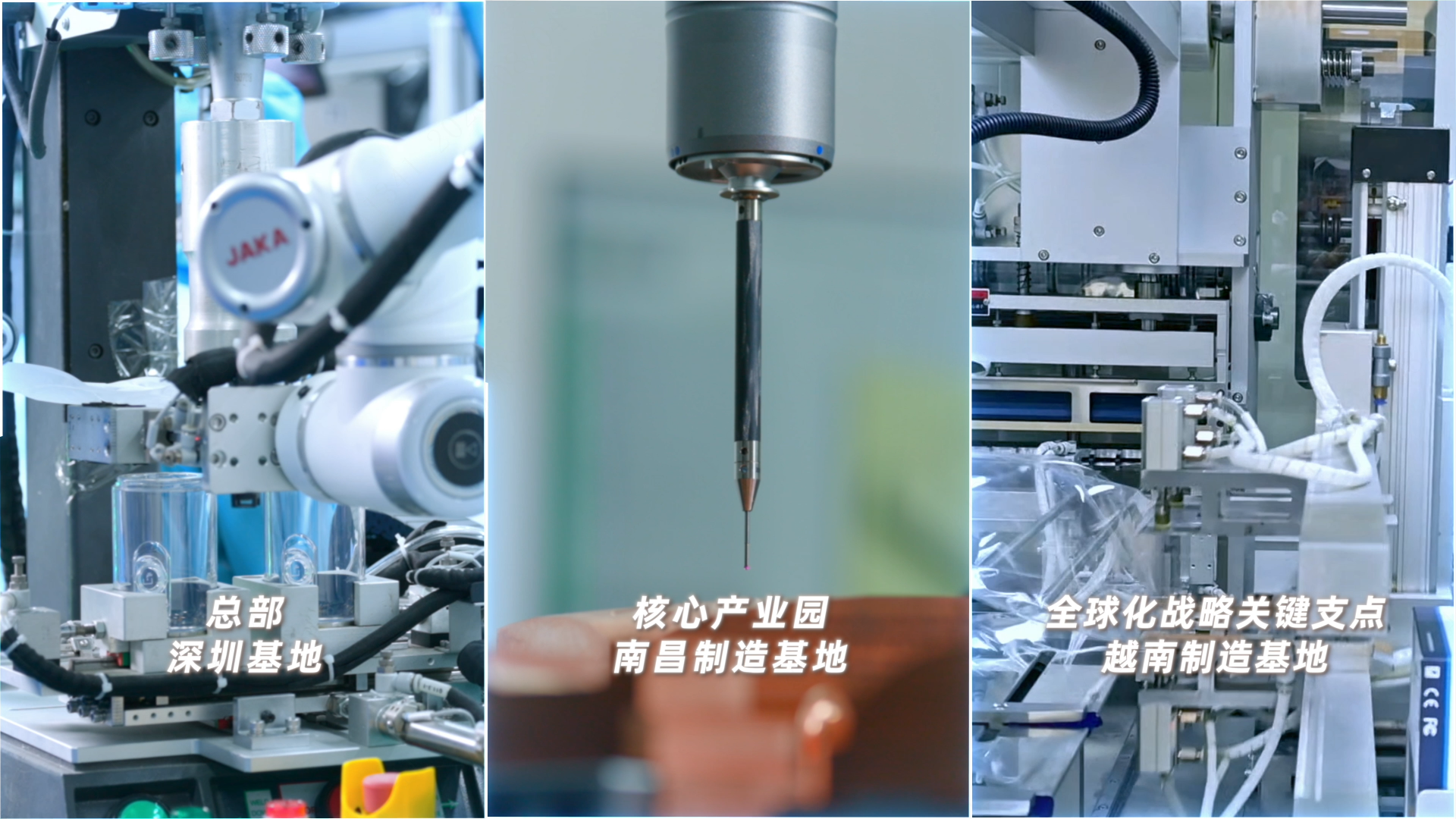
Multi-base production supports annual supply planning and reduces dependence on a single location.
FAQ
What certifications support dental clinic and hospital procurement of Risuntech electric toothbrushes?
Risuntech states that its factories hold ISO9001, ISO13485, FDA and MDSAP certifications, and products also comply with CE, RoHS and FCC standards. For EU and US market entry, the documented document set includes test reports, ISO certificates and FDA registration records. Buyers should verify certificate scope and validity on the issuing body registry before annual supply approval.
Can Risuntech map different electric toothbrush models to clinic, hospital, private-label and e-commerce programs?
Yes. The supplied portfolio separates clinical-oriented placements such as T2422, T2233, T2425 and T2232 from e-commerce and private-label placements such as T2407, T2432 and T2431B0. T2422 is documented with 8 degree micro-oscillation, 5 modes including Sensitive, wireless charging and IPX7. T2233 is documented as a classic oscillating model with 3 modes, 8,800 oscillations or vibrations per minute and IPX7. T2407 is documented as a dual-action oscillation plus vibration model with a 60 degree swing, up to 40,000 vibrations per minute and a food-grade TPE-wrapped brush head. Model-level details for T2425, T2232 and T2431B0 should be confirmed on the current datasheet.
Which models balance clinical features and mass-market cost?
The supplied comparison material positions T2233 as a mature, cost-effective oscillating platform for mass-market distribution, and T2422 as a sonic model with wireless charging and a Sensitive mode. T2407 carries a higher BOM cost because of its high-torque dual-action motor, 60 degree mechanical structure and TPE-wrapped brush head. The practical split is T2233 for volume, T2422 for mid-range clinical and retail, and T2407 for premium private label.
How do buyers validate brush head fit, charging format and IPX7 sealing before an annual supply order?
Request pre-production samples with the intended brush head, charging base or cable, and sealing configuration. Confirm that the handle is IPX7 for rinseable models, that the charging format matches the market, and that replacement heads are available as a separate SKU. Risuntech states that pre-shipment inspection by the client or a third party is an acceptance criterion, and that MOQ is 1000 PCS with FOB Shenzhen terms.
What lead time and capacity support annual supply and replacement head continuity from China?
Risuntech states monthly capacity of 1.3 million electric toothbrushes and 1.3 million water flossers across 31 lines in Shenzhen, Jiangxi and Vietnam, with standard lead times of 30 to 45 days, SAP-driven JIT production, 27 QC steps and a standard 1-year warranty. For annual supply, buyers can request a sample, quotation and replacement-head schedule through Marketing@risuntech.cn or the contact form on risuntech.cn.
Conclusion: Select by Channel, Then Lock the Consumable Plan
The most reliable way to use this guide is to select the channel first, then the model, then the replacement plan. T2422 is the documented sonic mid-range option for clinic and retail programs that need a Sensitive mode and sealed wireless charging. T2233 is the cost-effective oscillating option for volume and first-time users. T2407 is the premium dual-action option for private label and e-commerce differentiation. T2432 adds a stepless speed sonic step, while T2425, T2232 and T2431B0 should be quoted only after the current datasheet confirms their exact configuration.
Annual supply continuity depends on more than the handle order. The buyer should lock the brush-head SKU, the charging format, the packaging version and the inspection plan before the first mass-production run. Risuntech supports OEM and ODM programs, and its supplied materials state that buyers can request samples, quotations and the company brochure directly.
Next step: Request a sample, quotation and replacement-head schedule for the selected clinic, hospital or e-commerce model. Contact Risuntech at Marketing@risuntech.cn or visit risuntech.cn. The public product brochure is available here: Download the Risuntech E-Sheet 202604.
Have Questions or Need More Details?
Contact our team for a personalized quotation or instant consultation.
Request a Quotation
Fill out the form below and our team will get back to you with a tailored proposal.
WhatsApp Direct Chat
Prefer to chat in real-time? Message us on WhatsApp for instant assistance & quick answers.
- Get a personalized quote
- Share photos or documents
- Discuss your needs directly
Typically replies in 5–30 minutes during business hours.