
Electric Toothbrush Technical Guide: Vibration, Battery, Charging, and Waterproofing Specs
An electric toothbrush specification sheet is a commercial document disguised as a technical one. Two suppliers can both print “40,000 vibrations per minute” and “IPX7 waterproof” while shipping products with completely different motor behavior, battery endurance, charging architecture and control firmware. For a home oral-care brand in the research and evaluation stage, the task is not to collect the largest numbers. It is to match four parameter families — vibration and motion, battery, charging, and waterproofing — to the scenario the product will actually be used in.
This guide breaks each parameter down using documented specifications from the Risuntech range, including the T2431B0, T2407, T2425, T2432, T2422, T2233 and T2232 models. Risuntech (Shenzhen Risun Technology Co., Ltd.) is an oral-care device manufacturer founded in 2006 in Shenzhen, China, producing electric toothbrushes and water flossers for OEM, ODM and private-label programs.
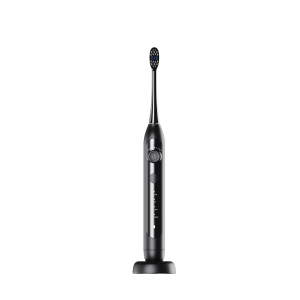
T2432: 800 mAh Li-ion battery, 40,000 vibrations per minute, stepless speed adjustment, IPX7.
Problem Definition: Why Toothbrush Spec Sheets Fail Buyers
Most specification disputes in oral-care sourcing come from six recurring gaps rather than from defective hardware.
1. Frequency quoted without mode context. A sonic motor rated at up to 40,000 vibrations per minute rarely runs at that frequency in every mode. The T2432 lists four operating modes (Clean / Soft / Whiten / Massage) and a stepless speed adjustment, which means the buyer must ask which mode the headline frequency refers to.
2. Battery capacity confused with battery life. Capacity is expressed in mAh; endurance is expressed in minutes at a defined mode. The T2411 carries a 650 mAh Li-ion battery and lists an 80-minute battery life; the T2428 carries the same 650 mAh capacity but lists 120 minutes at soft mode; the T2432 carries 800 mAh and lists 180 minutes at soft mode. Capacity alone does not predict runtime.
3. Charging interface treated as a cosmetic choice. Inductive charging, USB Type-C and DC charging change the sealing strategy, the accessory list, the return rate profile and the packaging bill of materials.
4. Waterproofing claimed without a test method. “IPX7” is a rating, not a result. It should be attached to a validation record.
5. Noise omitted from the sheet. Startup noise ranges from 55 dB on the T2432 to 65 dB on the T2411 and less than 70 dB at 10 cm on the T2232, which materially affects user perception in shared bathrooms, hotels and clinics.
6. Firmware behaviors undocumented. A 2-minute timer with 30-second interval reminders, a 3-second gradual startup, mode memory and pressure level memory are software features that decide whether the product feels premium or unstable in daily use.
Industry Background: How the Product Category Is Structured
Electric toothbrushes are grouped by motion rather than by brand. Sonic models drive the brush head at high frequency, commonly in the 20,000 to 40,000 vibrations per minute band, and the hydrodynamic effect is a core part of the cleaning argument. Oscillating models rotate the head through an arc; the T2232 is listed at up to 8,800 oscillations per minute. Sweep and rotating variants add further options, and ultrasonic models such as the T2820 operate on a different principle entirely, using 1.6 MHz ultrasonic waves.
Motion geometry is a separate specification from frequency. Risuntech’s T2407 uses an ultra-wide mechanical structure to achieve a 60° swing, described in company technical documentation as a 300% increase in coverage area compared with an 18° motion, combined with 300 gf·cm of torque output. The T2422 applies the same 60° ultra-wide oscillation principle with a TPE-wrapped brush head.
Behind the product sits a regulatory and manufacturing layer that buyers rarely see in the brochure. Risuntech states that it is one of the first units to participate in the formulation of standards for electric toothbrushes and water flossers with the China Household Electrical Appliances Association, and it operates three manufacturing bases in Shenzhen, Nanchang and Vietnam. Monthly capacity is listed at 1.3 million electric toothbrushes, 1.3 million water flossers and 80,000 UV sterilizers, with a 27-step quality control process running from raw material procurement to pre-shipment inspection.
Detailed Solution: The Four Parameter Families
1. Vibration and Motion: What the Number Actually Means
For a sonic electric toothbrush, frequency is the headline number and mode structure is the qualifier. The T2411, T2428, T2432 and T2238 are all listed at up to 40,000 vibrations per minute, with four or five operating modes depending on the model. Sonic vibration is not simply scrubbing speed: the motor agitates water and saliva in the mouth to create fluid shear forces that lift plaque from interdental spaces and along the gumline beyond where bristles physically contact.
Oscillating designs trade frequency for mechanical sweep. The T2232 is listed at up to 8,800 oscillations per minute across three modes (Clean, Polish, Gum Care). For a buyer, the comparison is not “which number is higher” but “which motion suits the user group”: sonic for users who want coverage with light pressure, oscillating for users accustomed to a mechanical scrub, and 60°-swing models for users who need efficient surface coverage per stroke.
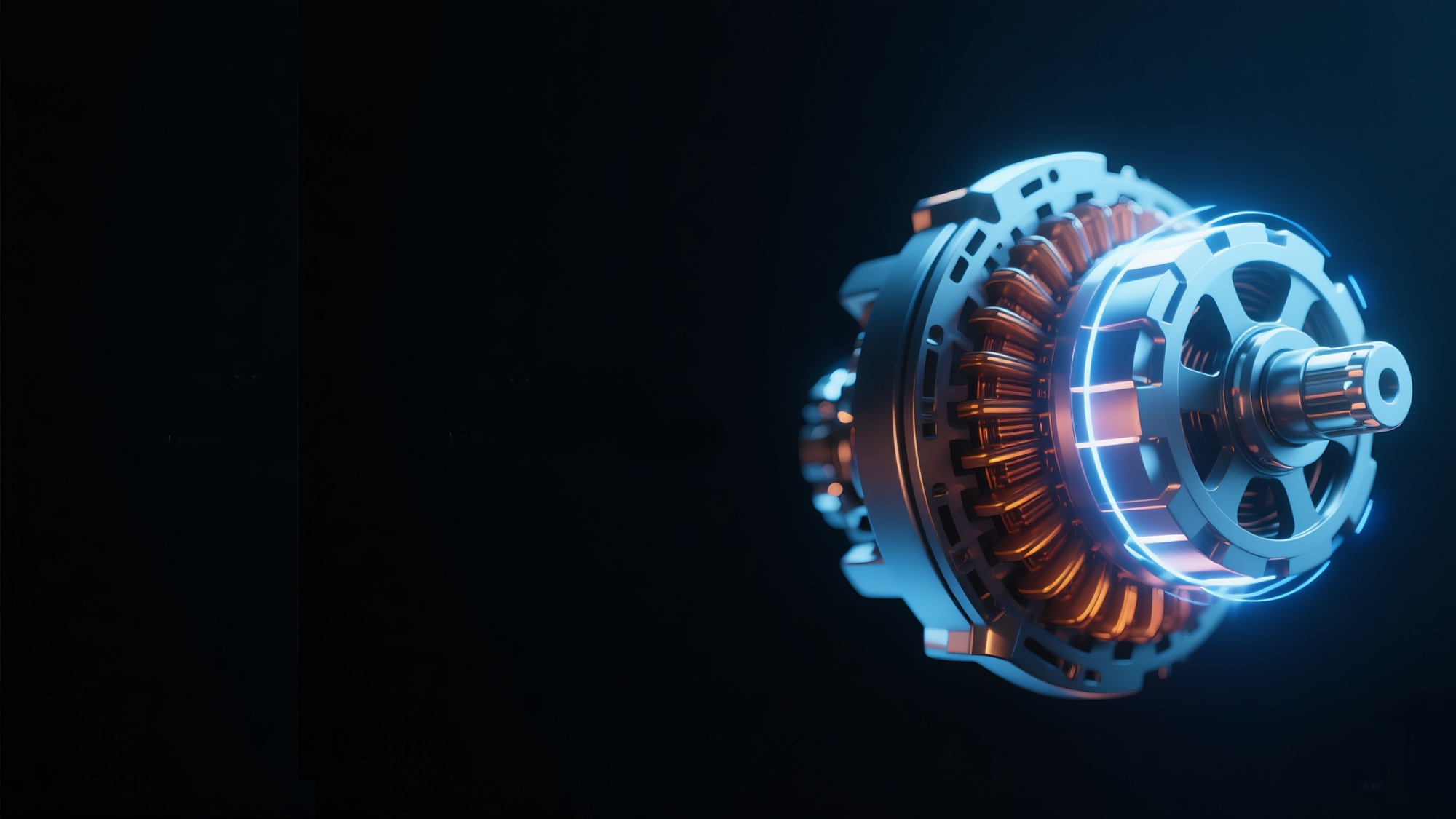
The drive motor defines frequency, torque and noise behavior more than any other component.
Two further parameters govern the user experience. Stepless speed adjustment, used on the T2432, lets the user dial pressure and intensity continuously instead of choosing between fixed steps. Pressure level memory, also listed on the T2432 and the T2238, restores the last intensity setting at power-on so the device does not reset to a default that the user has already rejected.
2. Battery: Capacity, Runtime and Cycle Life
Risuntech models in this range use Li-ion cells listed at 650 mAh (T2411, T2232, T2428) and 800 mAh (T2432). The larger cell in the T2432 supports 180 minutes of use at soft mode against 120 minutes at soft mode for the 650 mAh T2428, which illustrates why capacity and runtime must be read together.
Endurance is expressed in two different ways across the range, and both are valid. Minute-based figures (80 minutes on T2411, 120 minutes on T2428, 180 minutes on T2432) suit buyers who model usage per charge. Day-based figures suit retail copy: the T2232 lists a 20-day battery life and the T2238 lists 30 days at two 2-minute sessions per day on soft mode.
The practical question for a brand owner is which reference point the marketing claim will use. A 650 mAh cell quoted as “20 days” and the same cell quoted as “120 minutes” describe the same battery under different assumptions, and the assumption must appear on the packaging or in the manual to avoid a justified complaint.
3. Charging: Inductive, USB Type-C and DC
Three charging architectures appear across the range, and each carries a different engineering consequence.
Inductive charging is used on the T2232, T2432 and T2428. The charging base generates a magnetic field that induces a current in a sealed coil inside the handle. Because there is no physical port or exposed metal contact, water and toothpaste residue cannot enter the internal circuitry, which is why inductive designs pair naturally with a fully sealed IPX7 handle. Charge time is the trade-off: the T2432 is listed at 12 hours to full charge and the T2428 at 20 hours or less, with a US or EU plug base.
USB Type-C charging is used on the T2411 (6 hours to full charge) and the T2238 (fully charged within 4 hours). Type-C removes the base from the box, reduces shipping volume and simplifies travel, but it introduces a port that must be protected — the T2411 uses a dustproof cover on the Type-C port.
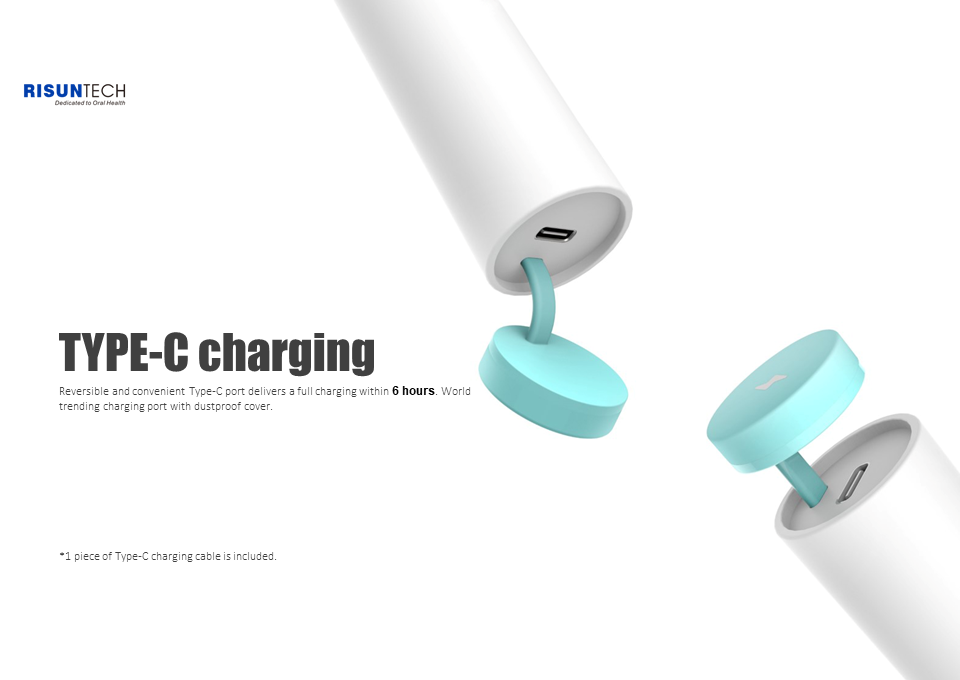
USB Type-C charging on the T2411, protected by a dustproof cover.
DC charging appears mainly in the companion water flosser range, where portable oral irrigators such as the F5040 and F5052 use DC charging with a four-hour charge time and the F5049 and F5043A use USB-DC charging. For a brand building a combined oral-care kit, aligning the toothbrush and the cordless water flosser on a compatible charging philosophy reduces accessory count and consumer confusion.
4. Waterproofing, Noise and Control Firmware
IPX7 is the standard rating across the toothbrush range: the T2411, T2232, T2432, T2428 and T2238 all carry it. IPX7 means the handle tolerates temporary immersion, which is what makes rinsing under a tap and shower use practical. It does not automatically extend to the charging base — inductive bases are electrical accessories and should stay dry.
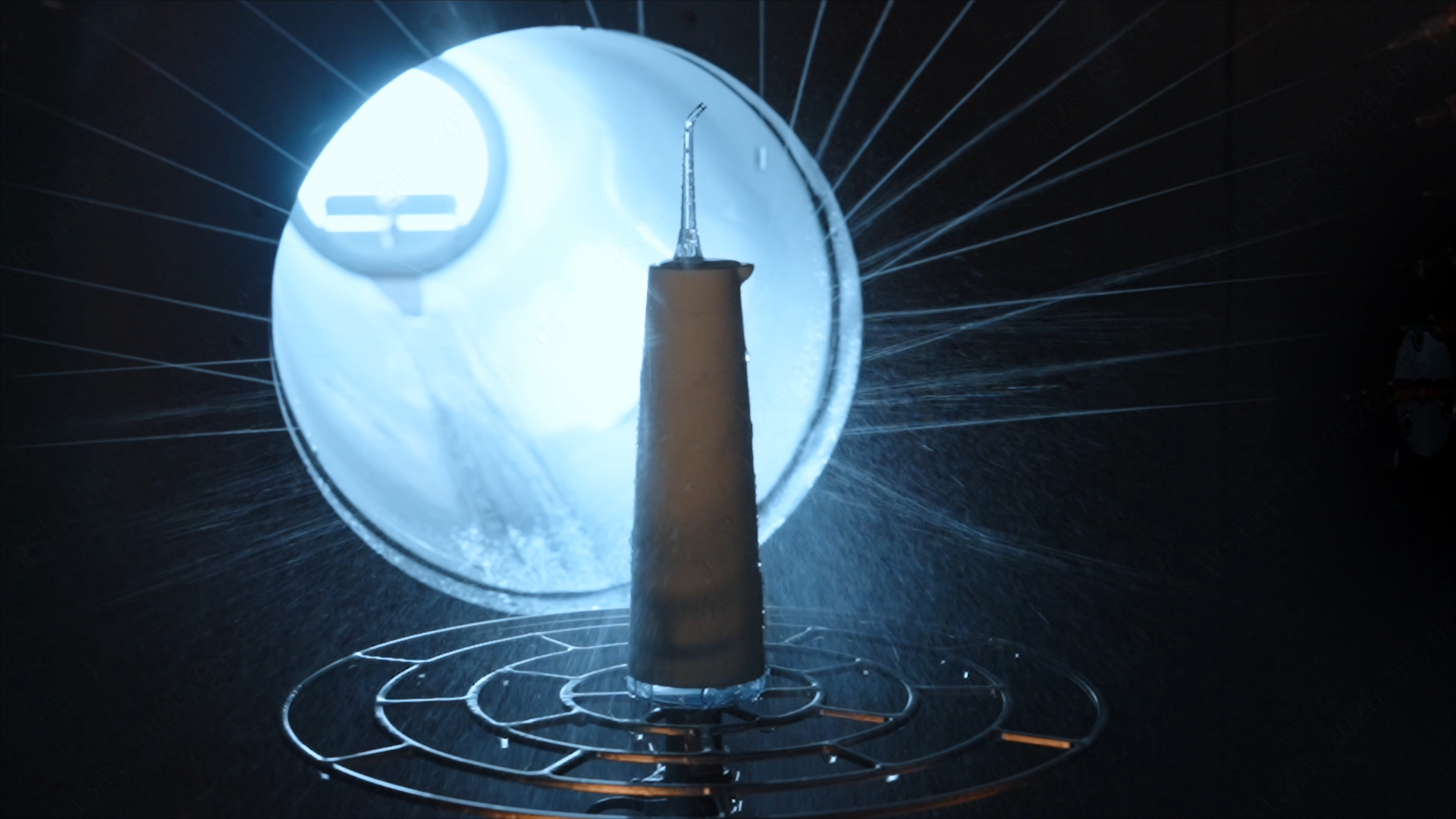
IPX7 is a validation result, not a label: waterproof grade testing supports the claim.
Noise is specified at startup, which is the loudest moment in most designs. The T2432 is listed at 55 dB, the T2428 at 55–58 dB, the T2238 at 60 dB, the T2411 at 65 dB and the T2232 at less than 70 dB measured at 10 cm. For hotel, airline and clinic channels, the 55 dB band is the meaningful threshold.
Firmware behaviors complete the specification. A 2-minute timer with 30-second interval reminders appears across the range and enforces quadrant coverage. A 3-second gradual startup, used on the T2432 and T2428, ramps vibration from low to target so toothpaste does not splash off the bristles at power-on. Mode memory (T2411, T2232, T2432, T2428, T2238) restores the last used mode, and pressure level memory on the T2432 and T2238 restores the last intensity.
Step-by-Step: Reviewing a Toothbrush Spec Sheet
- Define the use scenario before reading any number. Travel, family retail, premium smart, clinic and hotel programs weight the four parameter families differently. A travel SKU prioritizes charge time and pack volume; a family SKU prioritizes mode memory and timer discipline.
- Lock the motion and confirm the frequency context. Decide between sonic (up to 40,000 vibrations per minute on T2411/T2428/T2432/T2238), oscillating (up to 8,800 oscillations per minute on T2232) or a 60° wide-swing design (T2407, T2422), then ask which mode the headline figure refers to.
- Match battery capacity to the runtime claim you intend to publish. Pair 650 mAh with a minute-based or day-based figure that matches your channel copy, and confirm the mode assumption behind it.
- Select the charging architecture. Inductive (T2232, T2432, T2428) for maximum sealing and a base in the box; USB Type-C (T2411, T2238) for travel and lower pack volume. Check charge time against the user routine: 4 hours, 6 hours, 12 hours and 20 hours all appear in this range.
- Verify the IPX7 test record and the noise figure. Ask for the validation evidence behind the rating and for the noise measurement condition — startup versus sustained, and the distance used.
- Confirm the firmware list in writing. Timer interval, gradual startup duration, mode memory, pressure level memory and stepless speed should be itemized, because they are invisible on a spec table but visible in reviews.
- Close the loop on compliance and quality process. Risuntech factories hold ISO9001:2015 and ISO13485:2016 certification, with MDSAP and FDA registrations; products also comply with CE, RoHS and FCC standards, supported by a 27-step quality control process.
Use Cases: Matching Specs to the Program
Travel and portable kits
A compact, round-bodied rechargeable electric toothbrush with 12-hour inductive charging, 180 minutes of runtime at soft mode and 55 dB startup noise — the T2432 profile — suits travel kits where the base can be packed. Where the base must be eliminated, the T2411 and T2238 Type-C options reduce the accessory list. Pairing either with a portable oral irrigator such as the F5052 (270 ml tank, DC charging) or the F5043A (300 ml split tank, USB-DC charging) creates a cordless water flosser add-on without a second charging system.
Family and retail private label
Multi-mode sonic handles with visible feedback suit retail shelves. The T2428 combines five modes (Clean / Soft / Whiten / Massage / Polish), 40,000 vibrations per minute, a triple pressure sensor with a visible indicator, an LCD color screen and 120 minutes of runtime at soft mode. Mode memory and the 2-minute timer with 30-second reminders reduce the support calls that come from users who cannot reproduce yesterday’s setting.
Dental clinics and institutional channels
Clinical and hospital environments prioritize timer discipline, predictable noise and cleanable surfaces over mode count. IPX7 across the range, 55–58 dB startup noise on the T2428 and a fixed 30-second interval reminder support that use. For clinics that also dispense irrigation devices, countertop water flossers such as the F5106 (600 ml tank, 10 pressure levels, 6 nozzles with color rings) cover multi-user dental water jet needs, while the F5056 portable UV-sterilizing oral irrigator covers chairside and travel hygiene.
Hotel, gift and promotional programs
These programs usually need a simple rechargeable electric toothbrush with a defensible waterproofing claim and a low accessory count. A Type-C model such as the T2411 (four modes, 650 mAh, 80 minutes, 65 dB) keeps the box small and the charging hardware minimal, while IPX7 supports the in-room rinsing behavior that drives returns in hospitality.
Smart premium programs
Where the brief calls for a smart electric toothbrush, the specification conversation shifts from motor to sensing. Risuntech lists the T2426 with a smart LED screen, a triple pressure sensor and a 6-axis gyroscope for 6-zone brushing reports at 40,000 vibrations per minute and five modes, and the T2409 with an LCD color screen at 38,000 vibrations per minute with Type-C charging for cost-controlled smart lines.
Comparison Table: Documented Specifications
| Model | Motion / frequency | Battery | Charging | Runtime | Startup noise | Control features |
|---|---|---|---|---|---|---|
| T2411 | Sonic, up to 40,000 vibrations/min | 650 mAh Li-ion | USB Type-C, 6 hours | 80 minutes | 65 dB | 4 modes; 2-min timer with 30-s interval; mode memory; IPX7 |
| T2232 | Oscillating, up to 8,800 oscillations/min | 650 mAh Li-ion | Inductive | 20-day battery life | Less than 70 dB @ 10 cm | 3 modes; 2-min timer with 30-s interval; mode memory; IPX7 |
| T2432 | Sonic, 40,000 vibrations/min | 800 mAh Li-ion | Wireless inductive with USB port, 12 hours | 180 minutes @ soft mode | 55 dB | 4 modes; stepless speed; mode & pressure level memory; 3-s gradual startup; IPX7 |
| T2428 | Sonic, 40,000 vibrations/min | 650 mAh Li-ion | Inductive base, US/EU plug, ≤20 hours | 120 minutes @ soft mode | 55–58 dB | 5 modes; 3-color pressure indicator; 3-s gradual startup; mode memory; IPX7 |
Figures are the documented values for each model as listed in the Risuntech specification set; runtime and noise values depend on the stated mode and measurement condition.
FAQ
What certifications should a home oral-care brand verify before ordering a sonic electric toothbrush?
Verify factory-level and product-level compliance separately. Risuntech factories hold ISO9001:2015 and ISO13485:2016 certification, and the company holds MDSAP and FDA registrations; its products also comply with CE, RoHS and FCC standards. Ask for the certificate scope and validity alongside the product test reports.
Can a manufacturer customize vibration frequency, cleaning modes and charging type for a home oral-care brand?
Yes. Risuntech offers custom motor parameters across sonic, oscillation and rotation motions, custom cleaning modes, custom UI and smart screen content including multi-language settings, customized pressure-sensing levels, and structural work such as brush head tufting and water tank design. Charging architecture is selected per model, with inductive, USB Type-C and DC options appearing across the toothbrush and water flosser ranges.
What is the minimum order quantity for a private-label rechargeable electric toothbrush?
The standard OEM minimum order quantity is 1,000 pcs per model/SKU. Commercial cost is driven by the specification combination rather than by quantity alone: motor type and frequency, battery capacity, charging architecture, display type, pressure sensing and packaging all move the bill of materials.
How should a buyer validate IPX7 waterproofing and battery claims on samples?
Request the test records instead of the claim. Risuntech reliability validation covers IPX7 waterproofing, multiple drop tests, 72-hour motor durability and 300-cycle battery performance, backed by a 27-step quality control process that runs from raw material procurement to pre-shipment inspection with 100% testing before shipment. Sample evaluation should reproduce the intended use mode, since runtime figures are quoted at soft mode on several models.
What is the lead time for a customized electric toothbrush order?
Standard lead time is 30–45 days after sample approval and receipt of deposit for mass production; customized mold development or complex ODM projects may require 45–60 days. Production is managed through an SAP system with JIT delivery. To request samples or a quotation for a specific specification set, contact Risuntech at Marketing@risuntech.cn or +86 755 8969 9169 – 8255.
Conclusion
Reading an electric toothbrush spec sheet well means refusing to accept a number without its condition. Up to 40,000 vibrations per minute is meaningful only when tied to a mode; 650 mAh and 800 mAh Li-ion cells are meaningful only when tied to a runtime measured at a stated mode; inductive, USB Type-C and DC charging are meaningful only when tied to a sealing strategy and an accessory list; and IPX7 is meaningful only when tied to a validation record.
The models referenced in this guide — T2431B0, T2407, T2425, T2432, T2422, T2233 and T2232 across the sonic, sonic sweep and oscillating families — show how widely the four parameter families can be recombined without changing the product category. That is precisely why scenario fit, not headline numbers, should drive the sourcing decision.

Next step: sample and specification review
Send your target specification — motion and frequency, battery capacity, charging architecture, waterproofing level and firmware features — and Risuntech will confirm which models in the range match it, or which requires custom motor or structural work.
Email: Marketing@risuntech.cn | Tel: +86 755 8969 9169 – 8255 | WhatsApp: +86 13322605965 | Website: risuntech.cn
Product catalogue and full specification sheet: Download the Risuntech E-Sheet (PDF)
Have Questions or Need More Details?
Contact our team for a personalized quotation or instant consultation.
Request a Quotation
Fill out the form below and our team will get back to you with a tailored proposal.
WhatsApp Direct Chat
Prefer to chat in real-time? Message us on WhatsApp for instant assistance & quick answers.
- Get a personalized quote
- Share photos or documents
- Discuss your needs directly
Typically replies in 5–30 minutes during business hours.