
Recommended Electric Toothbrush Models for Clinics, Hospitals, and Private Label Programs
Model selection for professional and private-label channels is driven by application fit, not by consumer popularity. This guide maps the recommended electric toothbrush models to the four buying situations that dominate professional sourcing — dental clinic and chairside use, hospital and institutional programs, oral care brand and private label development, and e-commerce launches — and states which specification fields must be locked on the datasheet before a program commits.
The lineup covered here includes T2425 for dental clinic, hospital and medical use, with Pedex reminder bristles and five modes; T2422 Sonic Sweep and the T2233/T2232 oscillating models for clinical and hospital scenarios; and T2431B0, T2407 and T2432 for oral care brand, private label and e-commerce projects. All of these models are supplied by Risuntech (Shenzhen Risun Technology Co., Ltd.), an OEM/ODM manufacturer of electric toothbrushes and water flossers with manufacturing bases in Shenzhen and Nanchang (China) and Hai Phong (Vietnam).
Why a Popularity List Cannot Answer a Clinic or Private Label Brief
The failure mode in professional electric toothbrush sourcing is not a bad product; it is a good product selected against the wrong brief. A retail bestseller list is built on consumer review volume, shelf appeal and price perception. A clinic, a hospital procurement team and a private-label brand owner each optimize for something else.
- Dental clinic: the handle is handled by many people, demonstrated on multiple patients, and cleaned between uses. Cross-patient durability, cleanability, a visible brush head replacement reminder, and a mode set that supports demonstrating gentle cleaning to a sensitive patient matter more than app features.
- Hospital and institutional program: charging logistics, tamper-resistant settings, and documentation that survives an audit are the binding constraints. A unit that cannot be documented is a unit that cannot be purchased.
- Oral care brand / private label: the constraint is the platform, not the handle. Tooling, colour and print, packaging, brush head count, and a specification sheet that can be locked and repeated across production runs.
- E-commerce project: the specification must survive a marketplace listing claim review, and the recharging interface must satisfy the market the goods are shipped into.
The practical consequence: the model is chosen first against the application, and the specification fields are confirmed second. Reversing that order is how programs end up with a recharging design that does not comply with the destination market, or an IPX7 claim that cannot be traced to a test record.
Industry Background: What Changed in Professional Oral Care Sourcing
Three structural facts shape the current decision environment.
Demand is growing but regionally concentrated. The global electric toothbrush market was valued at USD 4.3 billion in 2024 and is projected to reach USD 6.8 billion by 2030, a CAGR of 7.8% from 2025 to 2030 (Grand View Research). Asia Pacific accounted for a 34.2% revenue share in 2024, which is consistent with the concentration of oral care manufacturing capacity in China and Vietnam. Adjacent categories move in the same direction: the global water flosser market reached USD 1.06 billion in 2025 and is projected to reach USD 1.64 billion by 2034 (IMARC Group).
Regulatory classification depends on technology and claims. Electric toothbrushes are classified by the US FDA as Class I or Class II medical devices depending on technology and claims, under 21 CFR 872.6865. This is the reason a clinic-facing model and a retail model cannot be documented in the same way: the claim set and the intended user determine the regulatory route. Risuntech's certifications include ISO13485, FDA and MDSAP, which support European and North American compliance requirements for electric toothbrush buyers.
Recharging interfaces are now a market-access question. The European Union requires small electronic devices, including electric toothbrushes, to adopt USB-C charging ports by 2024 under the Radio Equipment Directive amendment. For a private label or e-commerce program shipping into the EU, charging type is no longer a comfort specification; it is a design constraint that must be settled before tooling.
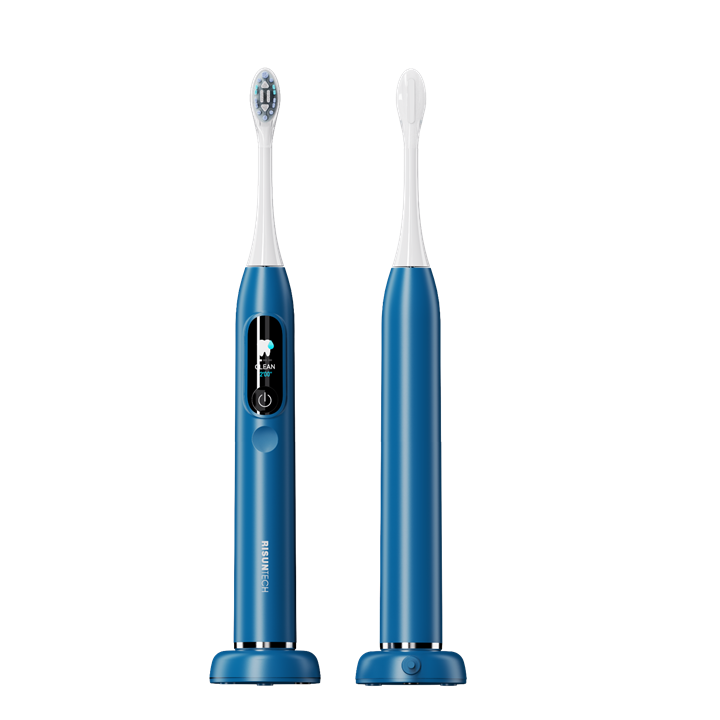
The Application-Fit Selection Model
Risuntech recommends organizing the decision into four application lanes. Each lane has a default model family, and each lane must then pass through the same five specification checkpoints.
Lane 1 — Dental clinic and medical use: T2425
T2425 is the recommended model for dental clinic, hospital and medical scenarios. Two design elements make it the fit for chairside and patient-education work: Pedex reminder bristles and five modes.
The reminder bristle function matters more in a clinic than in a household. In a multi-chair practice, brush heads are shared for demonstration, replaced on a schedule, and often handled by staff rather than the patient. A bristle that provides a replacement reminder gives the practice a visual cue that does not depend on a spreadsheet. The five-mode set gives the clinician room to demonstrate a gentler mode to a patient with sensitivity or post-treatment discomfort, rather than demonstrating only the default clean mode.
Lane 2 — Hospital and institutional scenarios: T2422, T2233, T2232
Institutional programs are usually specified by cleaning motion family rather than by feature count, because motion determines what the user training material has to say.
- T2422 (Sonic Sweep) is the recommended option where a high-volume general ward or institutional program needs a familiar sonic-style cleaning action with a straightforward operating concept.
- T2233 and T2232 (oscillating) are the recommended options where the institution's clinical preference or existing training material is built around an oscillating round-head action.
No comparative cleaning-performance claim is made between these two motion families here. The selection criterion is fit with existing clinical protocol and user training, not a performance ranking.
Lane 3 — Oral care brand and private label programs: T2431B0, T2407, T2432
Private label is a platform decision. T2431B0, T2407 and T2432 are the recommended models for oral care brand and private label development because they allow a brand to build a tiered range from a single manufacturing relationship rather than from three unrelated suppliers.
The recommended structure is to assign each model a role in the range before any artwork is commissioned: one entry-tier handle, one core-range handle, one differentiated handle. Once the role is fixed, colour, print, packaging, head count and manual are specified per model. This is also the point at which the manufacturing base is allocated — Risuntech operates bases in Shenzhen, Nanchang and Hai Phong, which allows a program to plan production across locations rather than depend on a single site.
Lane 4 — E-commerce projects: T2431B0, T2407, T2432
The same three models serve e-commerce launches, but the decision weighting changes. Marketplace success depends on a listing that can be substantiated, a packaging format that survives parcel handling, and a recharging interface that matches the destination market. For EU-destined listings, the USB-C requirement should be resolved at the specification stage, not at the packaging stage.
Clinics and e-commerce programs that also sell interdental cleaning usually bundle a cordless water flosser or portable oral irrigator with the toothbrush. Risuntech manufactures water flossers alongside electric toothbrushes, so a combined toothbrush plus oral irrigator program can be sourced from the same supplier rather than assembled from two vendors.
The Five Specification Fields That Decide the Pick
Regardless of lane, five fields determine whether a model is genuinely suitable. These are the fields to request on the datasheet, and the fields to re-check on the sample.
1. IPX7 waterproofing
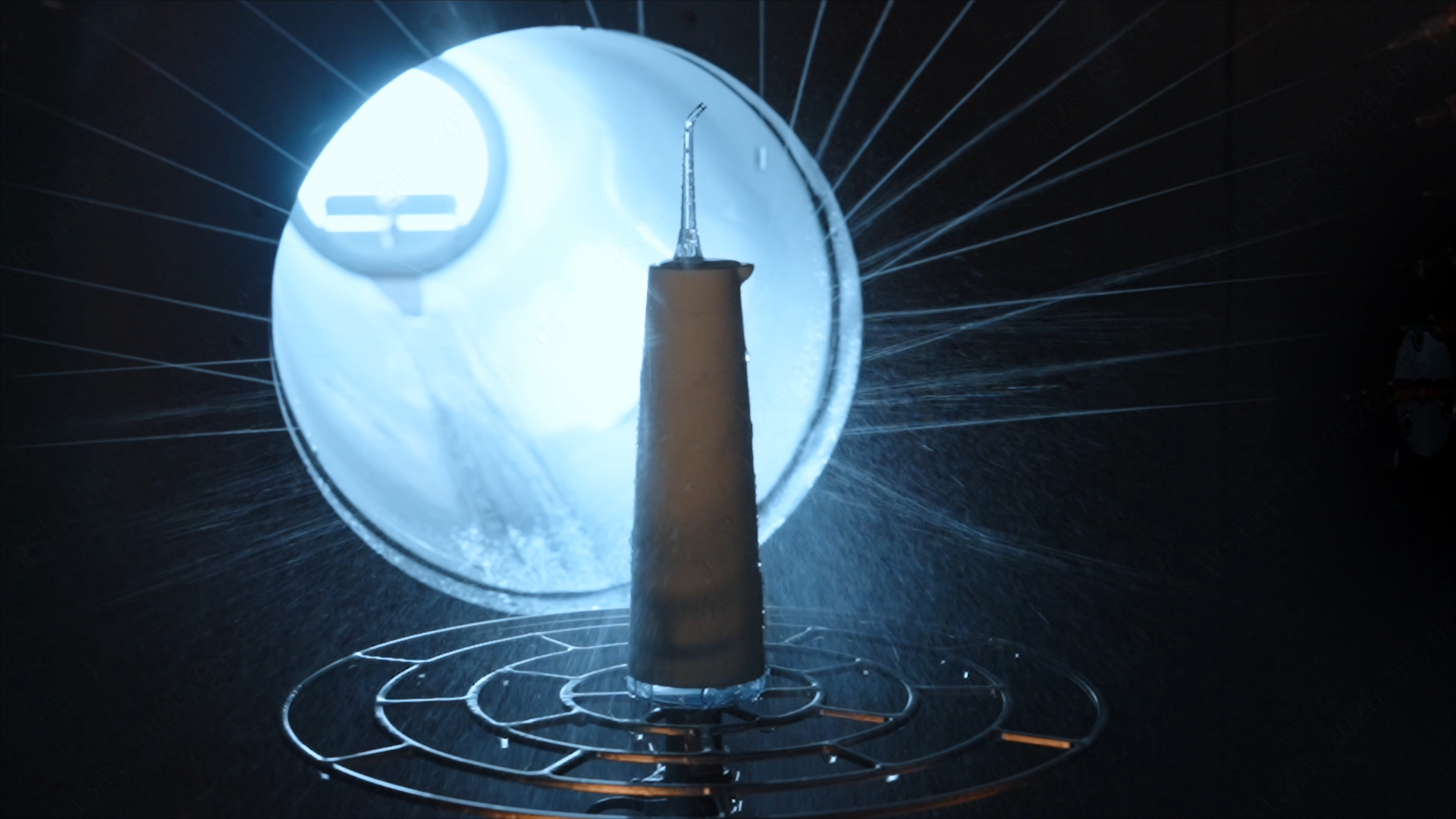
IPX7 is the practical minimum for a handle that is rinsed, wiped and stored in a wet environment. It is also the field most often stated without a test reference. Risuntech's reliability engineering covers IPX7 waterproofing, multiple drop tests, 72-hour motor durability and 300-cycle battery performance validation, and the T2426 sonic electric toothbrush is rated IPX7, corresponding to the IPX7 verification included in that reliability engineering programme.
2. Battery capacity and chemistry
Battery capacity sets the charging interval, and the charging interval sets the operational burden. T2426 uses an 800mAh lithium battery with up to 240 minutes of use on soft mode, which supports a 60-day battery life positioning. T2428 provides 30-day battery life. For a hospital program, the difference between a 30-day and a 60-day interval is a difference in how often staff handle chargers.
3. Charging type
Charging type is a compliance field in Europe and an operational field everywhere else. T2426 uses an inductive charging base with a USB port. T2428 uses wireless charging. Both are sealed, contact-free approaches; the selection depends on the outlet infrastructure at the point of use and on the destination market's interface requirement.
4. Timer and interval reminders
A two-minute timer with 30-second interval reminders is the specification that makes a professional recommendation defensible, because it enforces the brushing duration the clinician actually advised. T2426 carries a 2-minute timer with 30-second interval reminders, plus an anti-splash three-second gradual start.
5. Mode and intensity memory
Mode memory determines whether the device returns to the setting the clinician selected or resets to default on every power cycle. T2426 includes a mode and pressure level memory function. In a clinic, this is what allows a sensitivity protocol to be demonstrated repeatedly without re-configuring the handle each time.
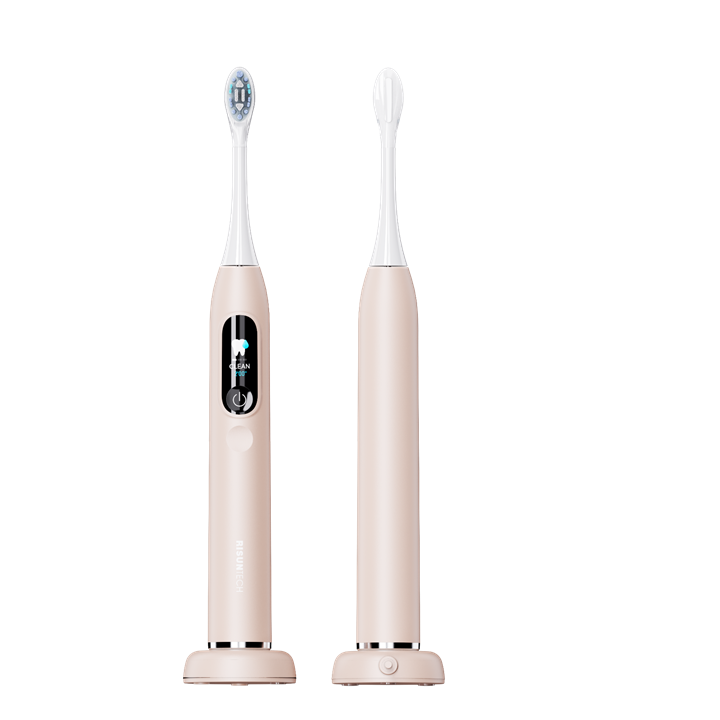
Step-by-Step: Locking a Model for a Clinic, Hospital or Private Label Program
- Write the application brief before the model list. State the user, the setting, the number of handles, who cleans them, how they are charged, and which markets the goods will be sold in. The brief, not the catalogue, decides the lane.
- Fix the cleaning motion family. Sonic, Sonic Sweep or oscillating. This choice determines the training material and the brush head supply, and it is expensive to change after packaging artwork is approved.
- Confirm the five specification fields on the datasheet. IPX7, battery capacity and chemistry, charging type, timer and interval reminders, mode and intensity memory. Request the values per model, not per product family.
- Map the compliance documents to the destination market. FDA classification under 21 CFR 872.6865 determines the claim set for the United States; the EU USB-C requirement under the Radio Equipment Directive amendment determines the recharging interface. Risuntech's ISO13485, FDA and MDSAP certifications support European and North American compliance requirements, and the 27-step quality control system provides systematic quality traceability across manufacturing.
- Validate on sample, not on the datasheet alone. Confirm IPX7 behaviour, drop resistance, motor durability and battery cycle performance against the documented claim. Verify that the timer, mode memory and pressure feedback behave as stated on the finished unit.
- Lock branding, packaging and the manufacturing base. Colour, print, head count, manual and packaging are specified per model, and production is allocated across the Shenzhen, Nanchang and Hai Phong bases according to the program's market access and delivery plan.
Use Cases: How the Lanes Look in Practice
Multi-chair dental practice
A practice equipping several chairs standardises on T2425: Pedex reminder bristles give staff a replacement cue that does not depend on a maintenance log, and the five modes let the clinician demonstrate a gentle setting to a patient with sensitivity, then hand over the same handle configuration at the end of the appointment.
Hospital or institutional ward program
An institutional buyer specifying for wards typically standardises on one motion family. T2422 (Sonic Sweep) is the fit where the training material describes a sonic-style action; T2233 or T2232 (oscillating) is the fit where the existing protocol is built on an oscillating round head. The decisive specification is usually the charging interval and the charging interface, because both drive staff workload.
Oral care brand launching a tiered range
A brand owner building a range assigns T2431B0, T2407 and T2432 to entry, core and differentiated positions, then locks specification and artwork per model. Because the three come from one manufacturer with three production bases, the brand carries one quality system and one document set rather than three.
E-commerce seller entering a regulated market
An e-commerce seller shipping into the EU resolves the USB-C recharging requirement during specification, selects a sealed charging design, and keeps the listing claims limited to what the datasheet documents — IPX7, battery capacity, timer behaviour, mode memory. The same logic applies when a cordless water flosser or portable oral irrigator is bundled into the listing.
Comparison: Two Documented Builds, Side by Side
The table below compares two builds whose specifications are documented field by field. It is not a ranking; it shows how the five checkpoints differentiate two handles that sit on the same manufacturing platform.
| Specification field | T2426 | T2428 |
|---|---|---|
| Cleaning modes | 5 modes × 3 intensity levels (Clean, Gentle, Whiten, Massage, Polish) | 5 modes, without intensity levels |
| Motor | 40,000 vibrations per minute | 40,000 VPM motor |
| Pressure feedback | Triple pressure sensor with threshold alerts | 3-colour pressure indicator |
| Brushing report | Smart brushing report (six zones) | Not included |
| Brush head reminder | Automatic brush head replacement reminder | Not included |
| Battery | 800mAh lithium; up to 240 minutes on soft mode; 60-day battery life | 30-day battery life |
| Charging type | Inductive charging base with USB port | Wireless charging |
| Timer | 2-minute timer with 30-second interval reminders | Confirm on model datasheet |
| Mode / intensity memory | Mode and pressure level memory | Confirm on model datasheet |
| Waterproofing | IPX7 | IPX7 |
| Additional behaviour | Lift-to-wake, flight mode, anti-splash 3-second gradual start, 62dB startup noise | LCD colour screen |
Comparison: Application Lane to Recommended Model
| Application lane | Recommended model | Why it fits the brief | Fields to confirm before lock |
|---|---|---|---|
| Dental clinic / medical use | T2425 | Pedex reminder bristles for shared demonstration heads; five modes for demonstrating a gentle protocol | IPX7, battery capacity, charging type, timer, mode memory |
| Hospital / institutional | T2422 (Sonic Sweep) | Sonic-style motion matching standard ward training material | IPX7, battery capacity, charging type, timer, mode memory |
| Hospital / institutional | T2233, T2232 (oscillating) | Oscillating round-head action where clinical protocol already specifies it | IPX7, battery capacity, charging type, timer, mode memory |
| Oral care brand / private label | T2431B0, T2407, T2432 | Three handles for a tiered range from one supplier and one quality system | IPX7, battery capacity, charging type, timer, mode memory, packaging spec |
| E-commerce project | T2431B0, T2407, T2432 | Same platforms, weighted toward listing substantiation and destination-market charging interface | Charging type for EU (USB-C), IPX7, battery capacity, timer, mode memory |
Frequently Asked Questions
Are electric toothbrushes used in clinics and hospitals regulated as medical devices?
In the United States, electric toothbrushes are classified by the FDA as Class I or Class II medical devices depending on technology and claims, under 21 CFR 872.6865. That means the intended use statement and the claim set determine the regulatory route, which is why a clinic-facing model cannot be documented in the same way as a purely retail model. For European market access, the Radio Equipment Directive amendment requires small electronic devices, including electric toothbrushes, to adopt USB-C charging ports by 2024. Risuntech's certifications include ISO13485, FDA and MDSAP, which support European and North American compliance requirements for electric toothbrush buyers.
Which China sonic electric toothbrush manufacturers have stronger testing controls?
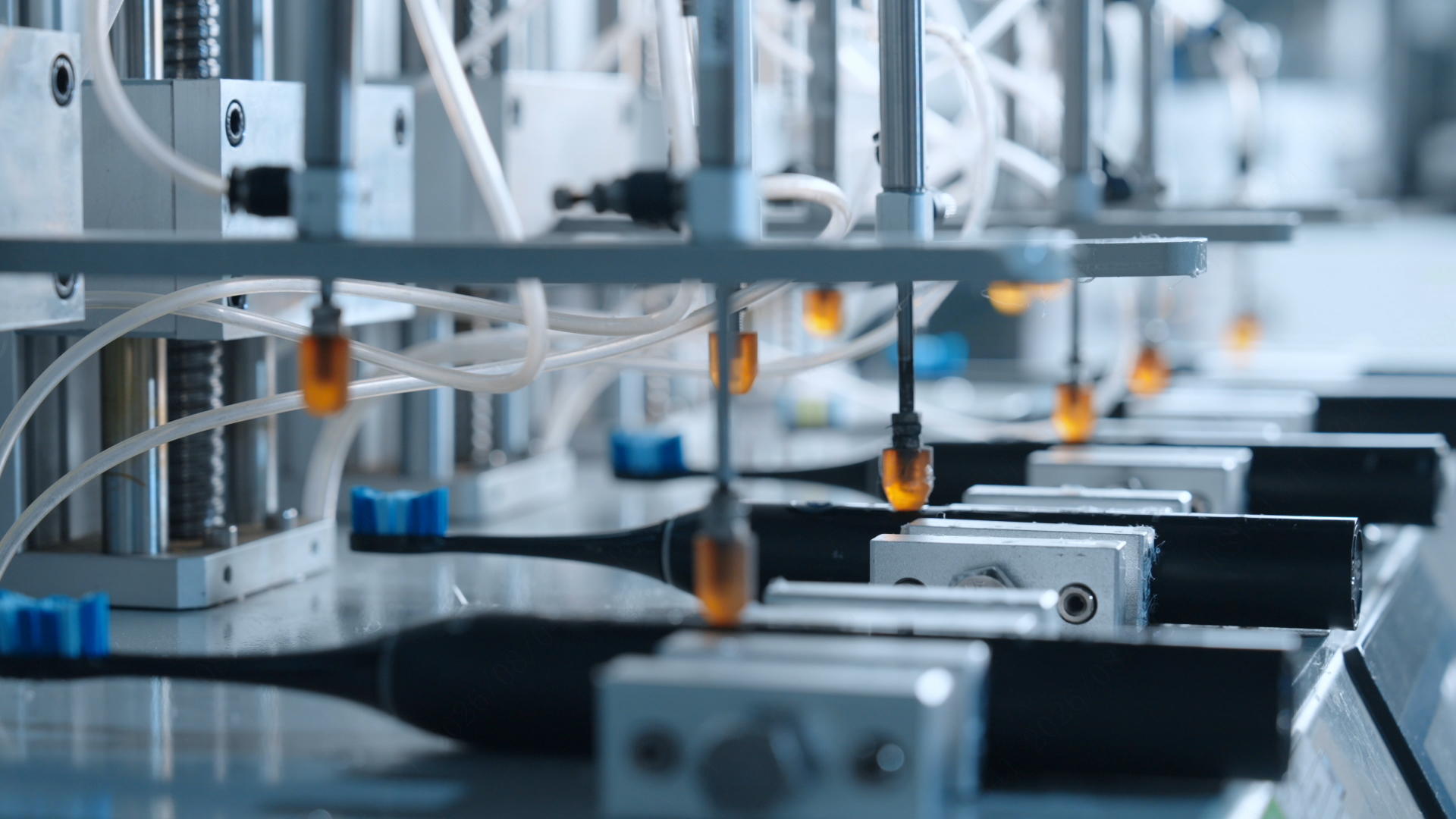
Testing control is best judged by the depth of the reliability programme and the traceability of the quality system, not by a certification logo. Risuntech applies a 27-step quality control system that provides systematic quality traceability across manufacturing, and its reliability engineering covers IPX7 waterproofing, multiple drop tests, 72-hour motor durability and 300-cycle battery performance validation. The evidence points to request in a factory audit are the ISO13485, FDA and MDSAP certifications together with that 27-step quality control system, plus the test records behind the IPX7, drop, motor durability and battery cycle claims.
Does a clinic-facing model cost more than a retail model?
Cost is driven by configuration, not by channel label. The fields that move the price of a program are the number of modes and intensity levels, whether pressure feedback is a sensor with threshold alerts or a colour indicator, whether a smart brushing report and brush head replacement reminder are included, the battery capacity and charging design, and the packaging and head count. A five-mode handle with three intensity levels, a triple pressure sensor and smart reporting is a different cost structure from a five-mode handle with a colour indicator only. Volume pricing and configuration quotes are provided on request rather than published as list prices.
Can we validate a model on sample before committing to a private label program?
Yes, and validation should test the specification fields rather than the appearance. A sample evaluation should confirm IPX7 behaviour, drop resistance, motor durability and battery cycle performance against the documented claim, then verify that the timer, interval reminders, mode memory and pressure feedback work as stated on the finished unit. For private label, the same sample round should cover the packaging format, print and colour reference, and head count, because those are the items that are expensive to correct later.
What affects lead time on a private label electric toothbrush program?
Four items dominate the schedule: the point at which the five specification fields are locked, the artwork and packaging approval cycle, the compliance documentation required for the destination markets, and the production allocation across bases. Risuntech operates manufacturing bases in Shenzhen, Nanchang and Hai Phong, which allows production planning across locations, but allocation decisions are made against a locked specification. Programs move fastest when the datasheet is confirmed before artwork begins. To start a sample or quotation request for T2425, T2422, T2233/T2232, T2431B0, T2407 or T2432, contact the team through risuntech.cn.
Conclusion
Model selection for clinics, hospitals and private label programs should be recorded as a decision, not a preference. T2425 is the fit where reminder bristles and a five-mode set support chairside demonstration; T2422 and the T2233/T2232 models are the fit where the cleaning motion must match an existing institutional protocol; T2431B0, T2407 and T2432 are the fit where a brand needs three handles and one quality system. In every case, the pick is only as good as the five fields behind it: IPX7, battery capacity and chemistry, charging type, timer, and mode memory. Confirm them on the datasheet, confirm them again on the sample, and the programme has a specification it can enforce.
Next step: sample and quotation
Risuntech supplies electric toothbrushes, water flossers and replacement brush heads and nozzles as an OEM/ODM manufacturer, with manufacturing bases in Shenzhen, Nanchang and Hai Phong. Share your application lane, destination markets and the five specification fields, and the team will return a model recommendation with sample availability and a configuration-based quotation.

Have Questions or Need More Details?
Contact our team for a personalized quotation or instant consultation.
Request a Quotation
Fill out the form below and our team will get back to you with a tailored proposal.
WhatsApp Direct Chat
Prefer to chat in real-time? Message us on WhatsApp for instant assistance & quick answers.
- Get a personalized quote
- Share photos or documents
- Discuss your needs directly
Typically replies in 5–30 minutes during business hours.