
Supplier Evaluation for Electric Toothbrush Sourcing: Capability Verification and Delivery Assurance
Supplier evaluation for electric toothbrush sourcing is the discipline of proving, before a purchase order is signed, that a manufacturer's stated drive performance, power architecture, ingress protection, certification scope and production capacity will still be true in the eighteenth month of the relationship. A quoted unit price answers one question: what does a single handle cost today. A verification framework answers the questions that decide gross margin instead: what happens when the motor specification drifts, when a certificate expires, or when a 30–45 day lead time stretches because one battery format is out of stock.
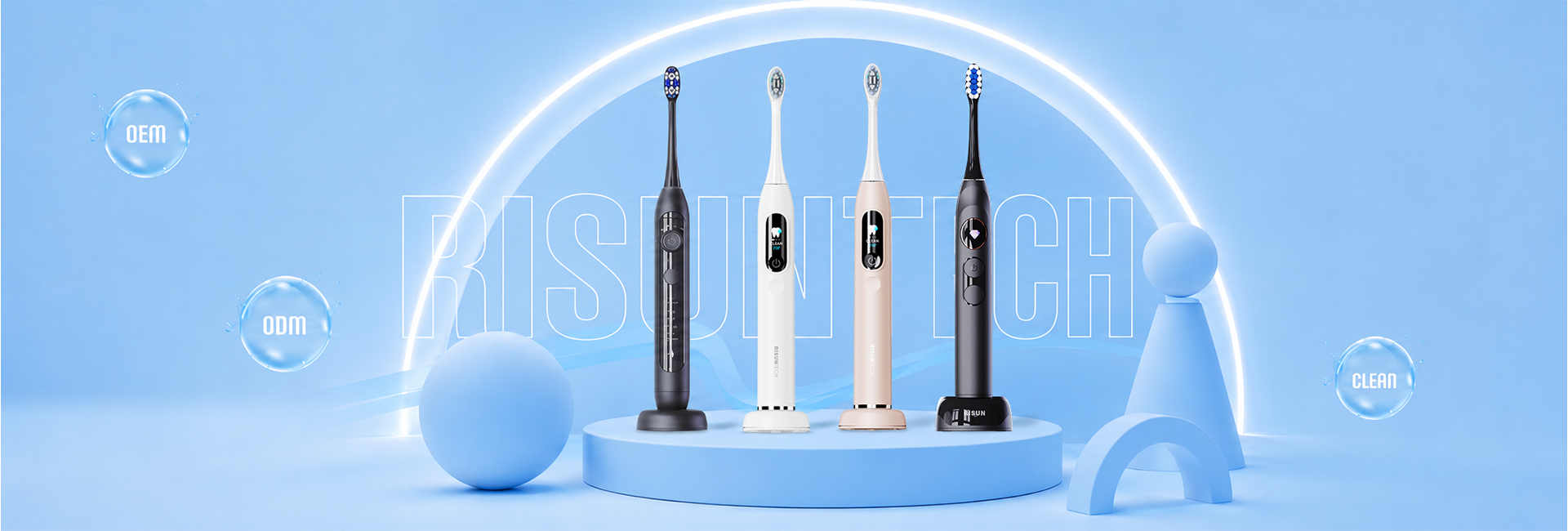
The framework below converts supplier claims into checkable evidence. It uses published specifications from Risuntech (Shenzhen Risun Technology Co., Ltd.), a Chinese OEM/ODM manufacturer of electric toothbrushes and oral irrigators, as a worked example of what verifiable data looks like — and as a template for what to demand when a supplier offers none.
Problem Definition: Three Ways a Low Unit Price Becomes an Expensive Order
Most sourcing failures in oral care are not manufacturing failures. They are verification failures — the buyer accepted a claim that was never converted into a document, a test or a contractual line. Three patterns repeat across evaluation-stage purchasing.
1. Specification drift between the approved sample and the repeat order
A sample handle is approved with a strong motor feel, a defined mode count and a specific charging base. Six months later the housing looks identical but the battery capacity, mode logic or charging architecture has been substituted to protect the supplier's margin. Without a written specification tied to a model number, the buyer has no basis to reject the change. A sonic platform can be specified at up to 40,000 vibrations per minute on one model and 38,000 on another in the same catalogue — the difference is real, documented and commercially relevant, and it disappears from a verbal agreement.
2. Certification scope that does not cover the product or the market
A supplier can hold a valid quality management system certificate and still fail a retailer audit, because the certificate scope names certain product categories, the certificate may be issued for export markets only, or the validity date may already have passed. Buyers who ask 'are you certified?' rather than 'show me the certificate number, scope, issuing body and expiry date' are relying on a yes/no answer that carries no legal weight.
3. Delivery elasticity hidden behind a single lead-time figure
A quoted lead time of 30–45 days is an average, not a guarantee. It assumes the battery format is in stock, the tooling is free, the line has capacity and the customization queue is empty. When a buyer doubles volume for a peak season, the real constraint surfaces: monthly capacity, minimum order quantity and how much product customization is already committed to other accounts.
The evaluation-stage reframe: price per unit is a snapshot of one variable. Capability verification plus delivery assurance is a model of the whole relationship — drive performance, power system, protection rating, compliance evidence, customization depth and repeatable throughput. Buyers who evaluate on the model rather than the snapshot pay a slightly higher quoted price and a materially lower total risk.
Industry Background: What Changed in the Electric Toothbrush Supply Market
The commercial stakes of supplier selection have risen because the category has grown and the regulatory surface has widened at the same time. According to market research published by Grand View Research, the global electric toothbrush market was valued at USD 4.3 billion in 2024 and is projected to reach USD 6.8 billion by 2030, a CAGR of 7.8% from 2025 to 2030. The same source reports that Asia Pacific accounted for a 34.2% revenue share in 2024, which is consistent with the concentration of oral care manufacturing in China and neighbouring production regions.
Two regulatory facts shape what a supplier must be able to document. In the United States, electric toothbrushes are classified by the FDA as Class I or Class II medical devices depending on technology and claims, under 21 CFR 872.6865. In the European Union, a Radio Equipment Directive amendment applicable from 28 December 2024 requires small electronic devices, including electric toothbrushes, to adopt USB-C charging ports. The second point is not a paperwork issue — it is a hardware decision that determines whether a charging architecture can be sold into the EU at all, which is why the charging method on a model datasheet deserves the same scrutiny as the motor.
Alongside product regulation, social compliance has become a gate for European retail. Social audit schemes such as amfori BSCI are routinely requested by European retailers before a private-label programme is approved, which means an oral care supplier's audit status is part of delivery assurance, not a separate CSR topic.
Detailed Solution: A Five-Gate Capability Verification Framework
Capability verification works best as a sequence of gates rather than a questionnaire. Each gate has a defined evidence type, and a supplier either produces it or does not. The five gates below follow the physical build of an electric toothbrush: the drive system, the power system, the protection and reliability routine, the compliance file, and the customization and throughput commitment.
Gate 1 — Drive system verification
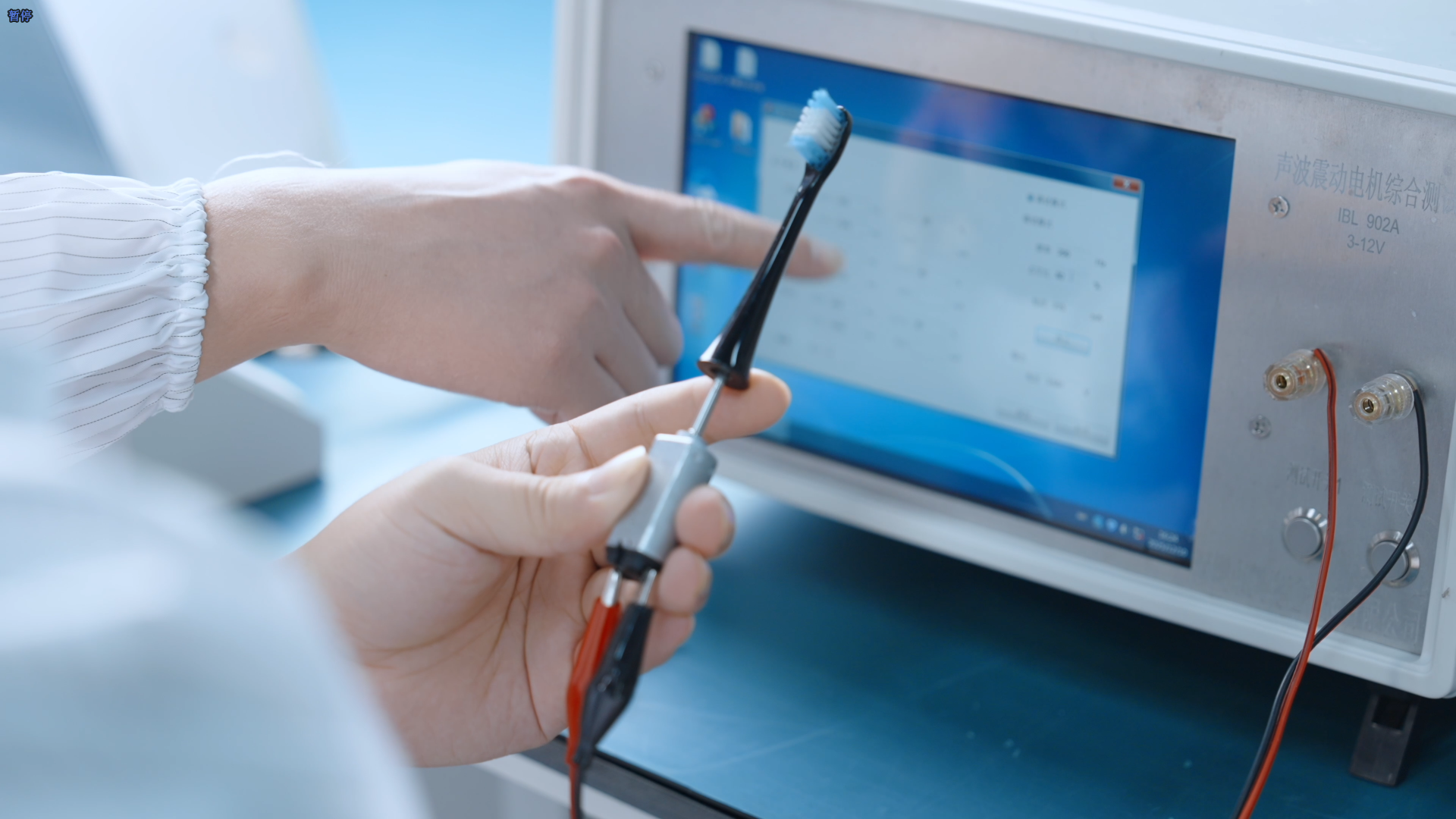
The drive system determines the brushing experience, the marketing claim and the warranty exposure. Published model data shows four distinct architectures in one portfolio: sonic (T2431B0, T2407, T2425, T2432, T2411, T2426, T2428 at up to 40,000 vibrations per minute; T2409 at up to 38,000), sonic sweep (T2422 at up to 40,000 vibrations per minute with 300gf.cm torque output), oscillating (T2231, T2232 and T2233 at up to 8,800 oscillations per minute) and pulse (T2132 at up to 40,000 vibrations per minute). Torque output is explicitly stated on T2407 and T2422 at 300gf.cm.
What to verify: whether the quoted frequency is measured with the brush head loaded or unloaded, and on which mode. A frequency figure without a measurement condition is a marketing number, not an engineering one. Ask for the model datasheet plus the internal test record that produced the figure.

Gate 2 — Power architecture verification
Battery and charging choices drive cost, weight, travel compliance, after-sales returns and EU market access. In the same published portfolio, battery capacity spans 350mAh on T2132, 600mAh on T2431B0, 650mAh on T2428, T2425, T2411, T2422, T2233 and T2232, and 800mAh on T2432, T2407, T2409, T2426 and T2231. Charging architecture is equally varied: DC charging on T2407 and T2233; USB Type-C charging on T2411 (6 hours), T2409 and T2132 (4 hours); and wireless inductive charging on T2431B0, T2425 (20 hours USB 5V), T2428 (≤20 hours), T2432 (12 hours, inductive base with USB port), T2426 (5 hours, inductive base with USB port), T2231 (16 hours, 100-240V worldwide voltage) and T2232.
Runtime reveals why raw comparison is misleading. T2132 is specified at 360 minutes in Clean mode, T2426 at 240 minutes in soft mode, T2432 and T2409 at 180 minutes in soft mode, T2431B0 and T2425 at 120 minutes, T2411 at 80 minutes, and T2231 at 40 minutes — while T2407, T2422, T2232 and T2233 are expressed as 25-day, 22-day, 20-day and 20-day battery life at a defined usage pattern. Comparing 'minutes' across models without matching the declared mode and usage pattern produces a purchasing error in either direction.
Gate 3 — Ingress protection and reliability routine
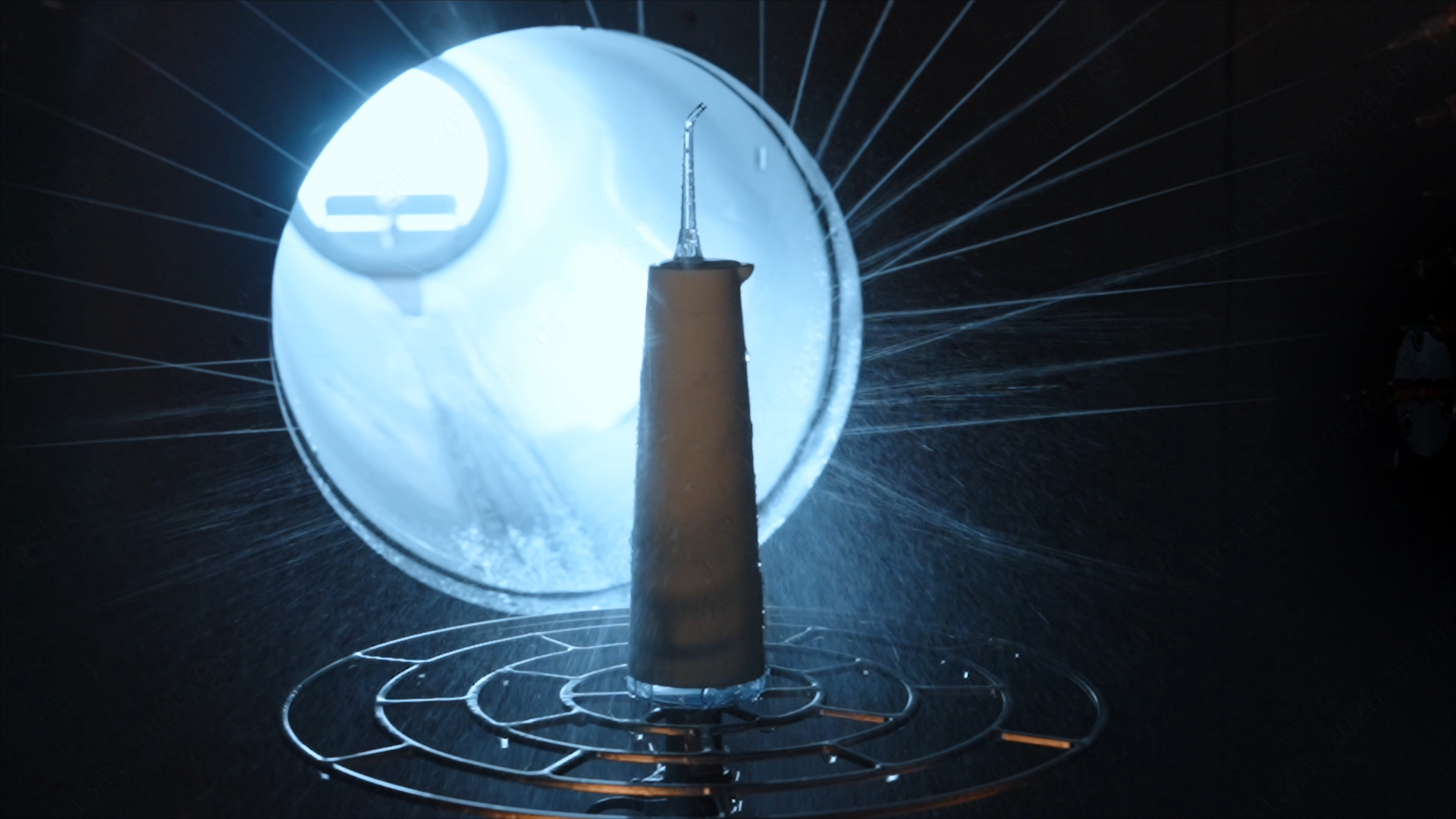
Every model in the referenced portfolio is specified IPX7 waterproof. That uniformity is useful, but the verification question is how the rating is held in production rather than in a design file. The manufacturer states a 27-step quality control system with 100% quality control coverage, and a reliability programme covering IPX7 waterproofing, multiple drop tests, 72-hour motor durability and 300-cycle battery performance.
Noise is a secondary but real selection criterion for clinic, hotel and gifting channels: T2132 and T2432 are specified at 55 dB, T2428 at 55–58 dB, T2426 at 62 dB and T2411 at 65 dB. Buyers serving shared or professional environments should treat a stated noise figure as a testable attribute, not a footnote.
Gate 4 — Certification and quality management file
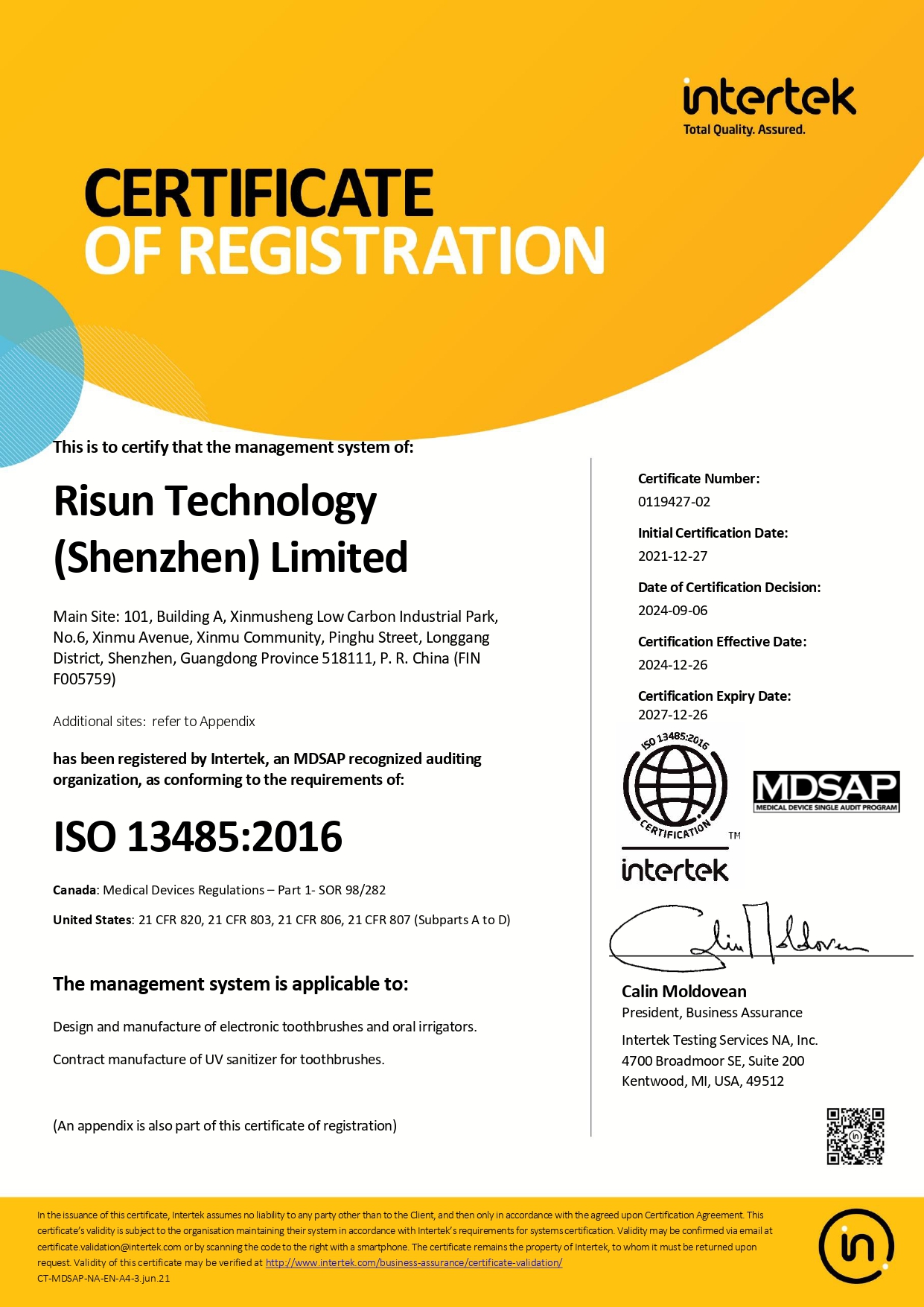
This is the gate where buyers most often accept a verbal answer. A verifiable file contains the certificate number, the issuing body, the standard, the scope, the covered markets and the expiry date — and the buyer should confirm each one against the issuing body's record.
- MDSAP certification (ISO 13485:2016) — certificate 0119427-02, issued by Intertek, covering Canada and the United States, valid 26 December 2024 to 26 December 2027. The stated scope is design and manufacture of electric toothbrushes and oral irrigators, plus contract manufacture of UV sanitizer for toothbrushes, assessed against ISO 13485:2016, Canada SOR 98/282 and US 21 CFR 820, 803, 806 and 807.
- ISO 13485 certificate — UKZB25MD30026R0M, issued by BCC Inc., export only, valid 31 March 2025 to 30 March 2028, covering design, manufacture and sales of electric toothbrushes, oral irrigators, toothbrush sterilizers and household UV therapy devices against GB/T 42061-2022 / ISO 13485:2016.
- ISO 9001 certificate — 016SZ26Q300651R101, issued by Beijing New Century Certification Co., Ltd. (BCC Inc.), global market, issued 9 October 2023 with validity to 8 October 2026, covering design, production and sales of electric toothbrushes, oral irrigators and toothbrush disinfectors against GB/T 19001-2016 / ISO 9001:2015.
- amfori BSCI social audit — amfori ID 156-000098-000, Site ID 156-000098-004, audited by ALGI HOLDING COMPANY LLC, valid 14 May 2026 to 15 May 2027, scope covering production of electric toothbrush and oral irrigator at Risun Technology (Shenzhen) Limited, assessed against the amfori BSCI Code of Conduct.
A practical lesson on expiry dates: the ISO 9001 record above is documented with validity to 8 October 2026. A buyer auditing in late October 2026 must ask for the renewal file before placing an order — a valid-looking PDF from a credible body can still be out of date. Expiry checking is a five-minute task that prevents a rejected shipment at destination.
Gate 5 — Customization depth, capacity and delivery commitment
Customization is where quoted prices diverge most, because 'OEM available' can mean anything from a logo print to a new housing tool. The stated capability here is OEM/ODM with a customization scope covering appearance, logo, packaging, functions, accessories, certification labels, software UI and user manual. Delivery parameters are stated as a monthly capacity of 30,000 units, a minimum order quantity of 1,000 pcs, a lead time of 30–45 days, 100% quality control and one year of after-sales technical support, with US and EU as the stated export markets.
What to verify: which of the eight customization items are included in the quoted price, and which trigger tooling cost or a lead-time extension. A supplier that cannot separate those two lists has not yet been evaluated — only sampled.

Step-by-Step Breakdown: Running the Evaluation in Seven Moves
- Convert your requirement into testable attributes. Write the drive type, frequency, mode count, battery capacity, charging method, runtime in a named mode, noise ceiling, IP rating and packaging format as numbers, not adjectives. Reference an existing model format where possible — for example, a 5-mode sonic handle at up to 40,000 vibrations per minute with a 650mAh battery and inductive charging (T2425), or a 4-mode sonic handle with DC charging and 300gf.cm torque (T2407).
- Request the datasheet before the quotation. A quotation without a datasheet cannot be compared with another quotation. Model-level data also exposes platform reuse: several handles may share a motor platform while differing in battery and charging, which affects both cost and spare-part strategy.
- Collect certificate files, not certificate names. Ask for the certificate number, issuing body, standard, scope, covered markets and expiry date for every claim, then verify each against the issuing body's record. Cross-check that the scope explicitly names electric toothbrushes and oral irrigators.
- Audit the reliability routine. Ask to see where IPX7 testing, drop testing, motor durability testing and battery cycle testing sit in the production flow, and what happens to a failed unit. A 100% quality control claim should be traceable to specific stations, such as a waterproof grade tester and a button durability station.
- Test the sample against the written specification. Measure runtime in the declared mode, verify the mode and intensity memory function, check the 2-minute timer with 30-second interval reminders, and confirm IPX7 behaviour after a full charge cycle. Record the results — the record becomes the acceptance standard for the repeat order.
- Stress the delivery promise with your own forecast. Model a three-month rolling forecast against the stated 30,000-unit monthly capacity, the 1,000-piece MOQ and the 30–45 day lead time. Ask what happens if you need 5,000 units in one shipment and which customization items would delay it.
- Lock commercial and after-sales terms in writing. Define the after-sales period (stated as one year of technical support), the defect handling route, the spare-part and replacement-head supply, and the change-control rule: no substitution of battery, motor or charging architecture without written approval.
Use Cases: Matching a Supplier Portfolio to Your Channel
Capability only matters in relation to a channel. The same manufacturer can be an excellent fit for a clinic programme and a poor fit for a mass retail promotion, because the model that satisfies one brief is oversized or under-specified for the other.
Dental clinic and hospital programmes
Professional channels prioritise mode clarity, controlled torque, hygiene and quiet operation. Models specified for dental clinic, hospital and medical use include T2422 (5 modes, up to 40,000 vibrations per minute, 300gf.cm torque, 650mAh, 22-day battery life, inductive charging), T2425 (5 modes, 650mAh, 120-minute battery life), T2233 (3 modes, up to 8,800 oscillations per minute, 650mAh, DC charging, 20-day battery life), T2409 (5 modes, up to 38,000 vibrations per minute, 800mAh, USB Type-C, 180-minute battery life) and T2411 (4 modes, 650mAh, 6-hour USB Type-C charging, 65 dB).
E-commerce and private label
Online brands compete on feature density and unboxing, and are most exposed to specification drift because the listing copy is the contract with the consumer. Models specified for oral care brands, private label and e-commerce include T2432 (4 modes, 800mAh, wireless inductive charging with USB port, 12-hour charge, 180-minute battery life), T2431B0 (5 modes, 600mAh, wireless inductive charging, mode and intensity memory) and T2407 (4 modes, 800mAh, 300gf.cm torque, DC charging, 25-day battery life).
Retail, distributor, hospitality and gifting
Multi-channel distribution needs a handle that survives shelf comparison and plug-standard variation. T2428 is specified for oral care brands, private label, e-commerce, retail, distributors, supermarkets, dental clinics, hospitals, hotels, airlines, gifting and government use, with a 650mAh battery, an inductive charging base with US/EU plug, 55–58 dB noise and IPX7. T2132, a 2-mode pulse handle with a 350mAh battery and 4-hour Type-C charging, covers entry-level bundles and promotional sets.
Long-run brand programmes
One published case describes a global oral care brand and e-commerce brand programme with market deployments in Germany, France and the United States, a project scale of 1,000 units per production order, a cooperation period of more than two years, cumulative sales above 1 million units and no major quality failures reported across the programme. The same case records customized logo and packaging alongside a smart colour screen, real-time brushing report, triple pressure sensor, 60-day battery life and IPX7 waterproofing. The relevant evaluation lesson is not the feature list — it is that a repeat-order relationship of that length only holds when the specification, the test routine and the change-control rule were fixed at the start.
Comparison Table: Model Portfolio Evidence for the Evaluation File
The table below lists published specifications only. It is intended as an example of the level of detail a buyer should hold for every model under consideration — not as a ranking of products against each other, since the models serve different channels and price positions.
| Model | Drive type | Modes | Max frequency | Battery | Charging | Stated runtime | IP rating |
|---|---|---|---|---|---|---|---|
| T2431B0 | Sonic | 5 | Up to 40,000 vpm | 600mAh Li | Wireless inductive | 120 min (Gentle) | IPX7 |
| T2407 | Sonic | 4 | Up to 40,000 vpm | 800mAh Li-ion | DC | 25 days (Soft) | IPX7 |
| T2422 | Sonic sweep | 5 | Up to 40,000 vpm | 650mAh Li-ion | Inductive | 22 days (Soft) | IPX7 |
| T2425 | Sonic | 5 | Up to 40,000 vpm | 650mAh Li-ion | Inductive (20h USB 5V) | 120 min | IPX7 |
| T2233 | Oscillating | 3 | Up to 8,800 osc/min | 650mAh Li-ion | DC | 20 days | IPX7 |
| T2432 | Sonic | 4 | 40,000 vpm | 800mAh Li | Inductive + USB port (12h) | 180 min (Soft) | IPX7 |
| T2411 | Sonic | 4 | Up to 40,000 vpm | 650mAh Li-ion | USB Type-C (6h) | 80 min | IPX7 |
| T2426 | Sonic | 5 (+3 intensities) | 40,000 vpm | 800mAh Li | Inductive base + USB (5h) | 240 min (Soft) | IPX7 |
| T2428 | Sonic | 5 | 40,000 vpm | 650mAh Li | Inductive base, US/EU plug (≤20h) | 120 min (Soft) | IPX7 |
| T2132 | Pulse | 2 | Up to 40,000 vpm | 350mAh Li | USB Type-C (4h) | 360 min (Clean) | IPX7 |
| T2231 | Oscillating | 3 | Up to 8,800 osc/min | 800mAh Li-ion | Inductive (16h, 100-240V) | 40 min | IPX7 |
vpm = vibrations per minute; osc/min = oscillations per minute. Runtime values are stated under different modes and usage patterns and are not directly interchangeable.
Comparison Table: A Verification Scorecard for Any Supplier
Use this scorecard during a supplier evaluation, whether the supplier is Risuntech or an alternative. A gate that cannot be evidenced should be scored as unverified rather than as passed.
| Verification gate | Evidence to request | Pass criteria |
|---|---|---|
| Drive system | Model datasheet; internal frequency and torque test record | Frequency stated with measurement condition and mode; torque stated where relevant (e.g. 300gf.cm on T2407 and T2422) |
| Power architecture | Battery capacity, cell type, charging method, runtime in named mode | Runtime declared against a specific mode; charging architecture aligned to destination market requirements |
| Ingress protection | IPX7 test record; test station identified in the production flow | Rating verified on production units, not only on prototypes |
| Reliability routine | QC flow with station list; durability and cycle test records | Stated programme includes IPX7, drop tests, motor durability and battery cycle testing; failures have a defined disposition |
| Quality management system | ISO 9001 and ISO 13485 certificates with number, body, scope, expiry | Scope names electric toothbrushes; certificate valid on the audit date |
| Market access | MDSAP certificate and covered markets; destination-specific conformity documents | Covered markets match the target market; standards and regulations listed in scope |
| Social compliance | Social audit report with site ID and validity period | Audit covers the actual production site and remains valid for the delivery window |
| Customization | Written scope list covering appearance, logo, packaging, functions, accessories, certification labels, software UI, user manual | Each item marked as included in price or as a costed change with lead-time impact |
| Capacity and lead time | Monthly capacity, MOQ and standard lead time in writing | Stated capacity (e.g. 30,000 units per month), MOQ (1,000 pcs) and lead time (30–45 days) support your forecast |
| After-sales | Warranty and technical support terms | Support period and defect route defined in the supply agreement |
Frequently Asked Questions
Which certificates should a Chinese sonic electric toothbrush manufacturer be able to show for US and Canadian programmes?
For US and Canadian medical device programmes, the strongest single document is an MDSAP certificate. In this case, MDSAP certification 0119427-02 was issued by Intertek, covers Canada and the United States, and is valid from 26 December 2024 to 26 December 2027, with a scope covering design and manufacture of electric toothbrushes and oral irrigators and assessment against ISO 13485:2016, Canada SOR 98/282 and US 21 CFR 820, 803, 806 and 807. The supporting file should also include ISO 13485 certificate UKZB25MD30026R0M, issued by BCC Inc. with validity to 30 March 2028, and an ISO 9001 certificate issued by Beijing New Century Certification Co., Ltd. (BCC Inc.). Buyers should confirm that each certificate is valid on the audit date and that its scope explicitly names electric toothbrushes and oral irrigators.
How can a buyer confirm that a supplier's stated drive performance is real before placing an order?
Confirm it at the model level, with a datasheet and a test record rather than a catalogue headline. Published specifications for this portfolio state up to 40,000 vibrations per minute on sonic models T2431B0, T2407, T2422, T2425, T2432, T2426, T2411 and T2428, and up to 38,000 vibrations per minute on T2409; oscillating models T2231, T2232 and T2233 are stated at up to 8,800 oscillations per minute; T2407 and T2422 state 300gf.cm torque output. Two verification questions decide whether those numbers survive production: is frequency measured with the brush head loaded or unloaded, and on which mode. Ask for the measurement condition in writing, then reproduce it on the sample.
What MOQ, lead time and budget assumptions should a buyer plan for?
Plan around a minimum order quantity of 1,000 pcs, a lead time of 30–45 days and a stated monthly capacity of 30,000 units, with one year of after-sales technical support and US/EU as the stated export markets. Within a single platform, the main cost drivers are battery capacity — from 350mAh on T2132 up to 800mAh on T2407, T2409, T2426, T2432 and T2231 — charging architecture (DC, USB Type-C or wireless inductive) and mode count, which ranges from 2 modes on T2132 to 5 modes on T2431B0, T2422, T2425, T2426, T2428 and T2431B0-class handles. A buyer who fixes those three variables before requesting quotations receives comparable numbers instead of incomparable ones.
Can a supplier be validated with a sample order before committing to volume?
Yes, and a sample order is the correct validation instrument if it is measured against a written specification. Test IPX7 on the actual unit, verify runtime in the declared mode (120 minutes on T2431B0 in Gentle mode, 180 minutes on T2432 and T2409 in soft mode, 240 minutes on T2426 in soft mode, 360 minutes on T2132 in Clean mode), check noise where the channel requires it (55 dB on T2132 and T2432, 55–58 dB on T2428, 62 dB on T2426, 65 dB on T2411), and confirm that mode and intensity memory, the 2-minute timer and the 30-second interval reminders behave as specified. Record the results, because that record becomes the acceptance standard for repeat orders.
How does charging architecture and battery capacity affect delivery planning for repeat orders?
Charging architecture determines both the bill of materials and the market the product can enter, so it should be fixed before delivery planning begins. This portfolio covers DC charging (T2407, T2233), USB Type-C charging (T2411 at 6 hours, T2132 at 4 hours, T2409) and wireless inductive charging (T2426 at 5 hours, T2432 at 12 hours, T2231 at 16 hours with 100-240V worldwide voltage, T2428 at ≤20 hours, T2425 at 20 hours), with inductive bases on T2426 and T2432 specified with a USB port. Because the EU requirement for USB-C charging on small electronic devices applies from 28 December 2024, a buyer planning European distribution should confirm the charging configuration at specification stage rather than at shipment stage. The practical next step is to request a sample and a written quotation against your fixed specification through risuntech.cn before committing a volume schedule.
Conclusion: Evaluate the Relationship, Not the Line Item
Electric toothbrush sourcing has moved from price-per-unit comparison to risk engineering. The reason is structural: the category is growing toward USD 6.8 billion by 2030 on a 7.8% CAGR, the regulatory surface in the US and EU now rewards documented compliance over verbal assurance, and a single unverified substitution in a battery or motor platform can invalidate a listing, a retail audit or a clinic contract.
A supplier that can produce a model datasheet, a named test routine, a certificate with a scope and an expiry date, a defined customization list and a written capacity commitment is a different class of partner from one that quotes the lowest number in a chat window. The five gates in this framework — drive system, power architecture, ingress protection and reliability, certification file, and customization with delivery — turn those claims into evidence, and evidence is what survives the second order.
Build your evaluation file with verified data
Risuntech (Shenzhen Risun Technology Co., Ltd.) publishes model-level specifications across sonic, sonic sweep, oscillating and pulse platforms, with IPX7 protection, OEM/ODM customization and a stated monthly capacity of 30,000 units. Request a sample, a specification sheet or a quotation matched to your channel.
Request a sample or quotationSpecifications, certificate numbers and validity dates in this article are stated as published by the manufacturer or as recorded in third-party sources at the time of writing. Buyers should re-verify certificate validity and model scope before placing an order.
Have Questions or Need More Details?
Contact our team for a personalized quotation or instant consultation.
Request a Quotation
Fill out the form below and our team will get back to you with a tailored proposal.
WhatsApp Direct Chat
Prefer to chat in real-time? Message us on WhatsApp for instant assistance & quick answers.
- Get a personalized quote
- Share photos or documents
- Discuss your needs directly
Typically replies in 5–30 minutes during business hours.