
What Is a Portable Water Flosser? A Basic Explainer for Electric Toothbrush Users
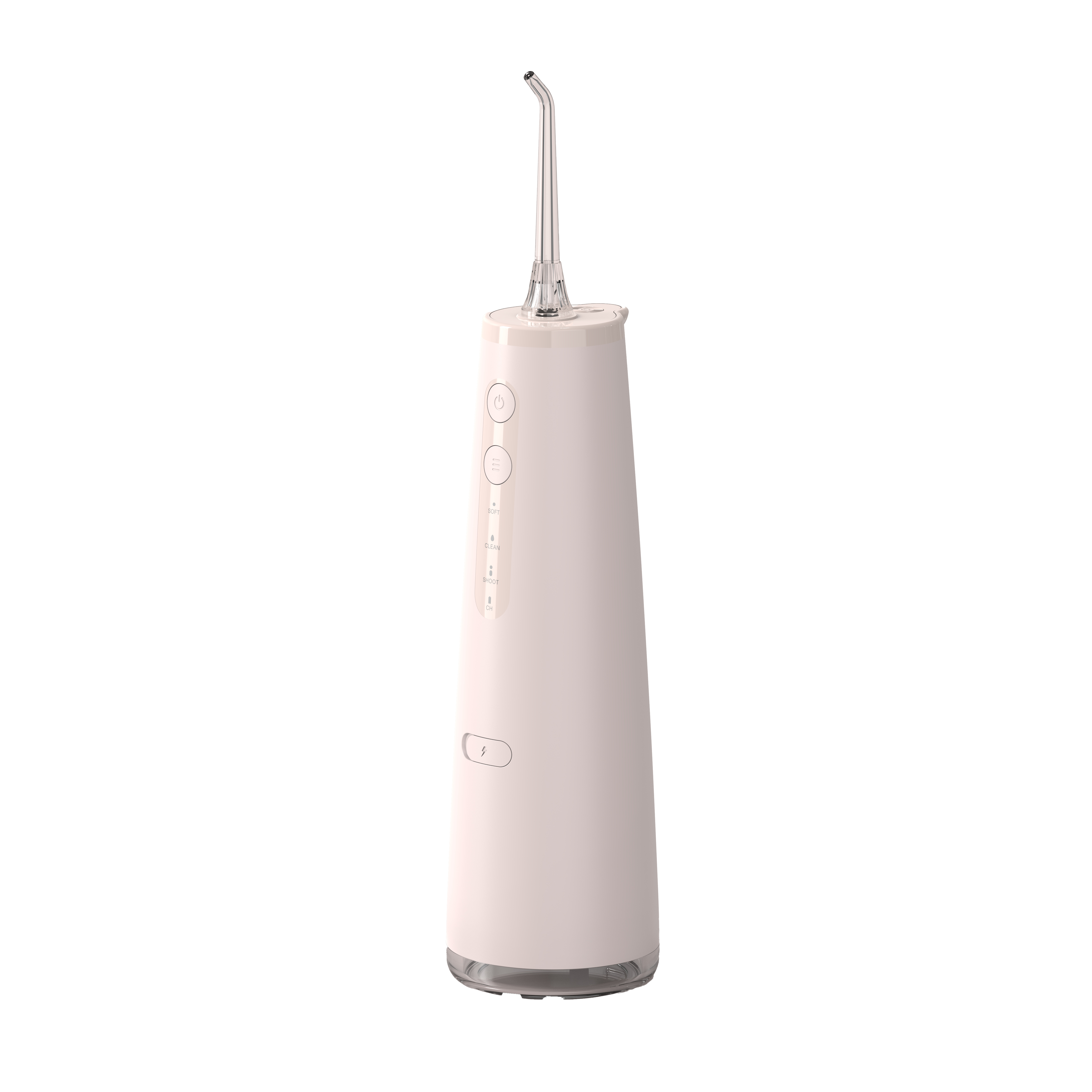
Answer first: A portable water flosser is a compact, battery-powered oral irrigator that uses a directed water jet to clean between teeth and along the gumline. It is also called a cordless water flosser, portable oral irrigator, or dental water jet. For people who already use a sonic electric toothbrush, ultrasonic toothbrush, rechargeable electric toothbrush, or smart electric toothbrush, a portable water flosser is best understood as a complement to brushing rather than a replacement.
The practical difference is simple. An electric toothbrush cleans tooth surfaces with moving bristles and, on sonic models, fluid shear created by high-frequency vibration. A water flosser adds a water-based cleaning step for interdental spaces and the gumline, areas that a brush head may not fully reach. That is why many daily oral-care routines pair an electric toothbrush with a water flosser rather than choosing one over the other.
The problem a portable water flosser addresses
Brushing is the foundation of daily oral care, but a toothbrush is designed mainly for accessible tooth surfaces. Interdental spaces, the gumline, and the areas around braces or restorations can retain debris that a brush head does not physically sweep away. A water flosser is designed to direct a pulsed water stream into those areas.
For electric toothbrush users, the question is usually not whether to stop brushing. The better question is how to add a manageable interdental step without adding a large countertop appliance, complicated plumbing, or a routine that is difficult to repeat. A portable oral irrigator answers that need through a small water tank, a rechargeable battery, and a nozzle that can be aimed along the gumline.
Risuntech product information lists deep cleaning, dental plaque removal, teeth whitening, gum massage, and oral hygiene maintenance as oral-care functions across its product range. Those are product-function descriptions, not a guarantee of a clinical outcome. The buyer or user still needs to follow the device instructions and, where relevant, a clinician's guidance.
Industry background: where portable water flossers fit
The oral-care category has moved from manual brushes to rechargeable electric toothbrushes, then to sonic, oscillating, and smart electric toothbrush designs. Water flossers developed alongside that shift as a separate device type: an oral irrigator that uses water pressure rather than bristle contact as its primary cleaning action.
Risun Technology, formally Shenzhen Risun Technology Co., Ltd., is an oral-care manufacturer founded in 2006. The company is a National High-Tech Enterprise, a council member of the China Household Electrical Appliance Association, and deputy director of the association's Beauty and Health Personal Care Committee. It also states that it was one of the first units to participate in formulating standards for electric toothbrushes and water flossers. Its main products are electric toothbrushes and water flossers, with 2,600 employees, more than 100 R&D staff, an 80% export share, and the USA and EU as main markets. See Risun Technology for company information.
That background matters for category understanding because portable water flossers sit at the intersection of small home appliances and personal-care devices. They combine a pump, water reservoir, battery, charging system, waterproof housing, and nozzle. A manufacturer that already works with electric toothbrushes may understand motors, batteries, waterproofing, and oral-care quality systems, but buyers should still check the specific water-flosser product scope, certifications, and model-level specifications.
What a portable water flosser is made of
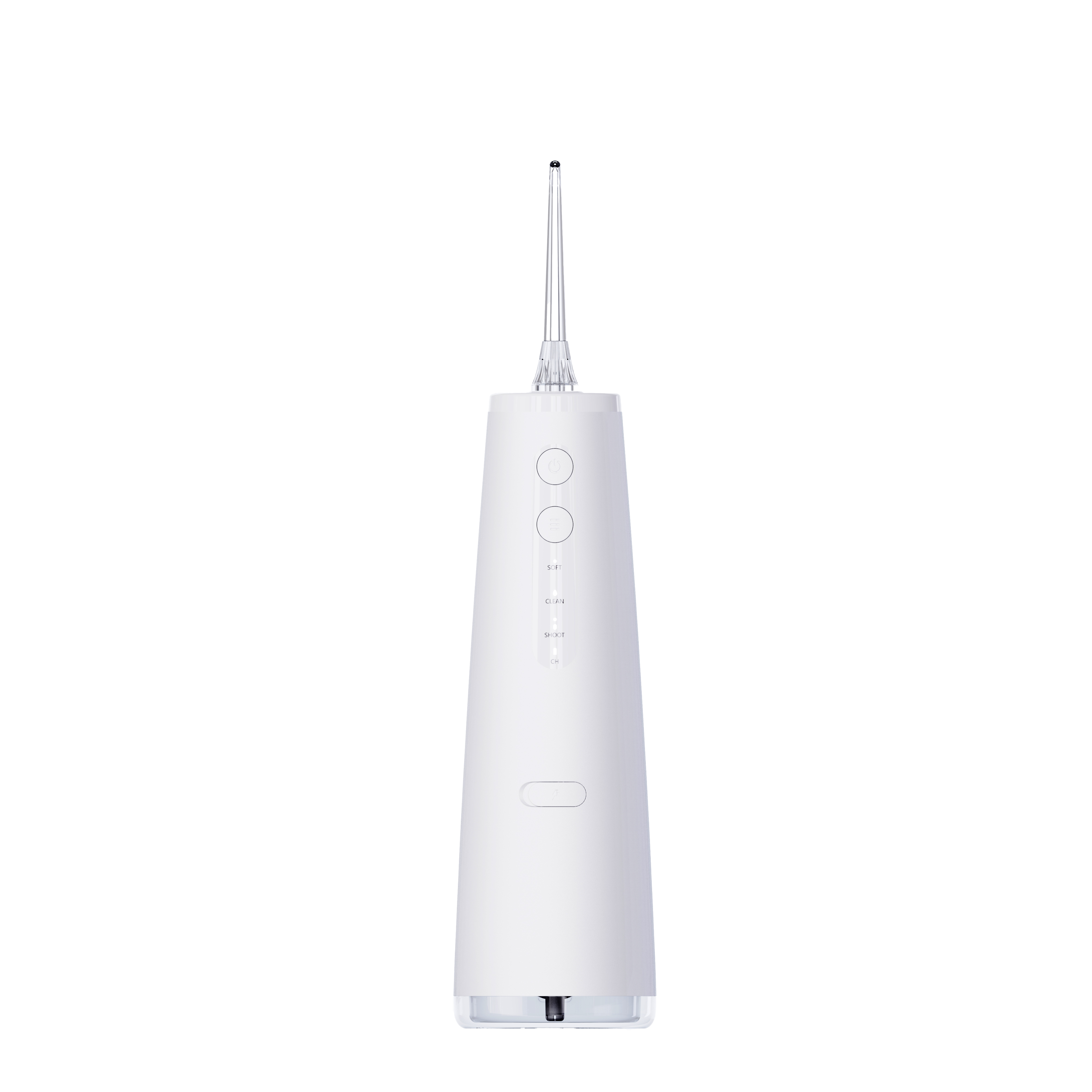
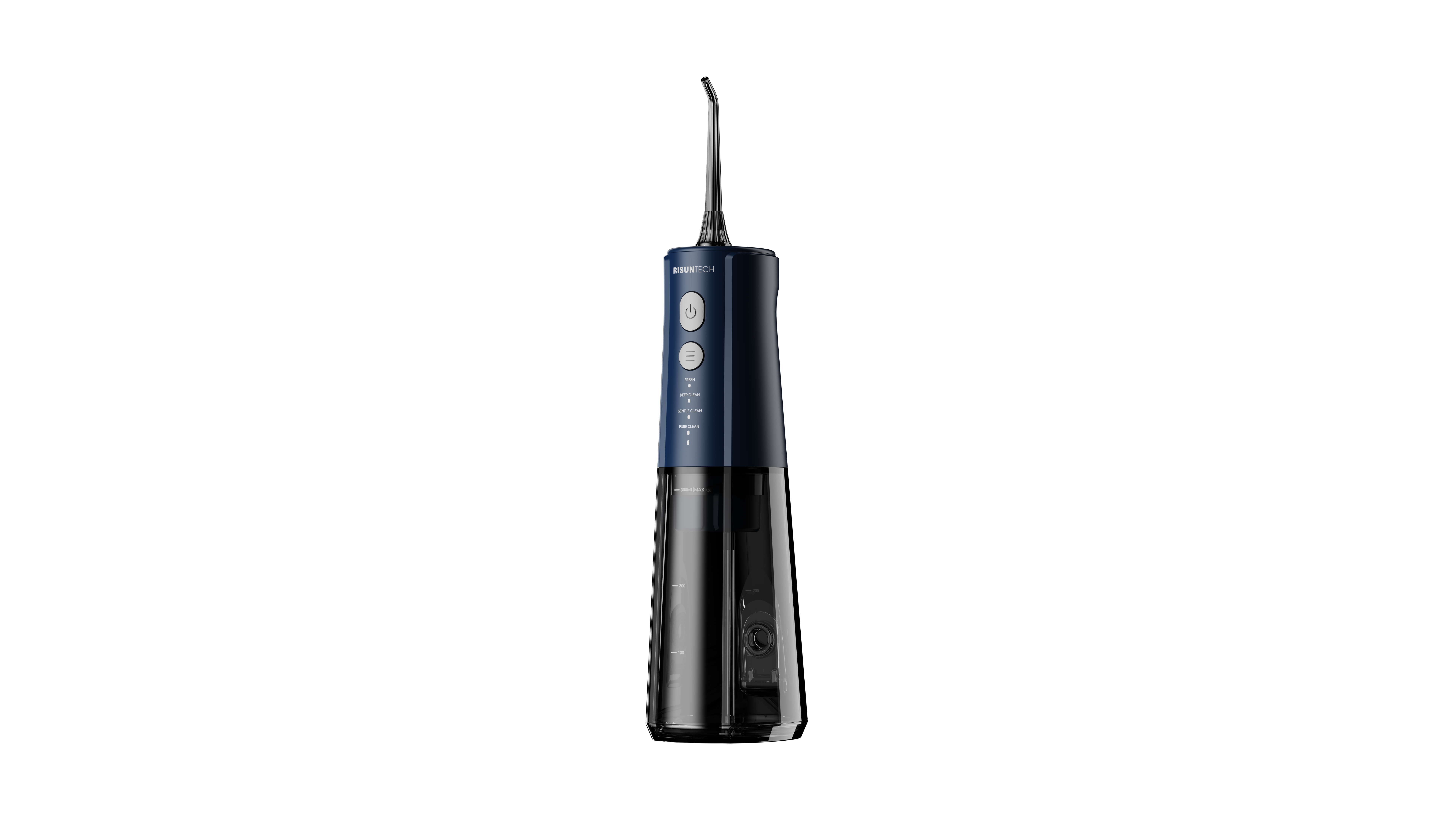
A typical portable water flosser has five functional parts: a water tank, a pump, a nozzle, a control system, and a rechargeable battery. The tank holds the water supply. The pump pressurizes the water. The nozzle directs the stream. The control system sets modes and pressure levels. The battery allows cordless use, usually with Type-C, USB-DC, or another charging method depending on the model.
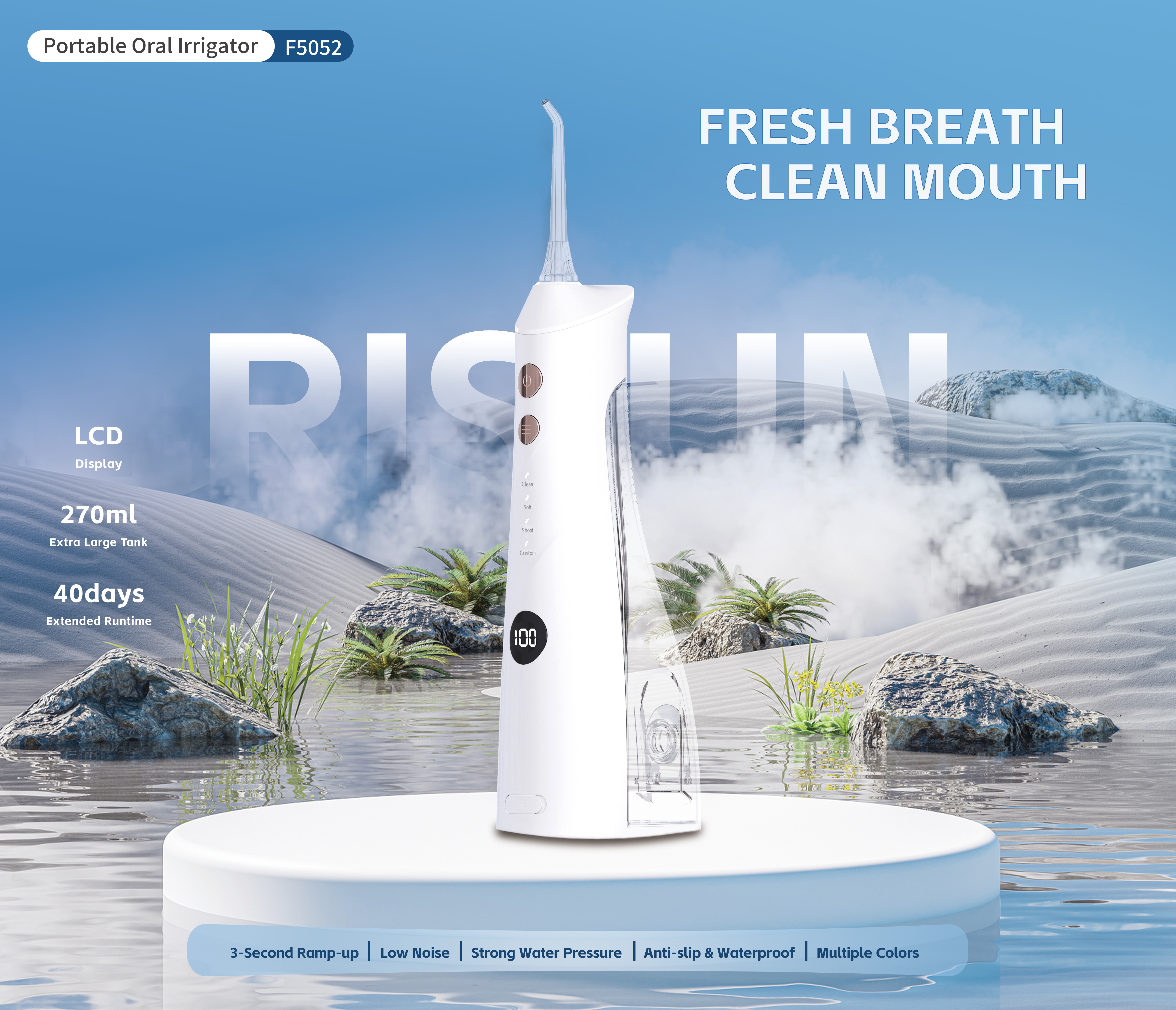
Waterproofing is a practical category feature because the device is used near water. Many Risuntech water flossers are listed as IPX7 waterproof, including the F5038, F5043A, F5049, and F5052 specifications. The maintenance FAQ notes that IPX7 toothbrushes and flossers can be rinsed and used in the shower, while IPX4 charging bases must stay dry. Users should still keep charging ports and charging contacts dry before charging.
Example: F5056 portable water flosser
The F5056 is a portable water flosser with UV sterilization, 4 modes with 5 intensity levels, and auto-sterilization when stored. The UV feature is a storage-hygiene function: the device can run a sterilization cycle when the handle is stored, which is useful in a shared bathroom or travel routine. Risuntech's maintenance information states that UV models run a 10-minute auto-cycle and that UV and ozone functions on specified models kill 99.9% of bacteria. That is a company claim for those functions, not an independent clinical finding.
The 4 modes with 5 intensity levels give the user multiple combinations rather than a single fixed jet. The exact mode names and recommended use should come from the model manual. For an electric toothbrush user, the value is routine fit: a separate water step can be added after brushing without changing the toothbrush itself.
Example: F5106 countertop model for family use
For family-use context, the F5106 is a countertop water flosser with a 600 ml tank, 10 pressure levels from 10 to 110 PSI, and six color-ring nozzles with a storage case. The larger tank reduces refilling during multi-user sessions, and the color-ring nozzles help each family member keep a separate nozzle. Risuntech positions the F5106 for family use, including braces or varied oral needs.
The F5106 is not a portable model, so it serves a different role from a cordless water flosser. A portable unit is easier to move, pack, or keep in a small bathroom. A countertop unit is better suited to a fixed home position where tank capacity and multiple nozzles matter more than portability.
How a portable water flosser differs from an electric toothbrush
An electric toothbrush and a portable water flosser use different cleaning actions. A sonic electric toothbrush moves the brush head at high frequency; Risuntech specifications list up to 40,000 vibrations per minute on models such as the T2428. The company's explanation of sonic vibration describes a hydrodynamic shear effect that agitates fluids in the mouth to help lift plaque in hard-to-reach spaces. A water flosser, by contrast, uses a pump to create a directed water jet from a nozzle.
The brush head is designed for tooth surfaces and gumline contact. The water jet is designed for interdental spaces, gumline margins, and areas around braces or other oral work where a stream can pass. This is why the two products are often used in sequence: brush first, then water floss.
| Feature | Electric toothbrush example: T2428 | Portable water flosser example: F5038 | Countertop water flosser example: F5106 |
|---|---|---|---|
| Primary action | Moving brush head; sonic vibration up to 40,000 vibrations per minute | Pulsed water jet through a nozzle | Pulsed water jet through a nozzle |
| Cleaning focus | Tooth surfaces and gumline via bristles and fluid shear | Interdental spaces and gumline via water | Interdental spaces and gumline; family-use configuration |
| Water tank | Not applicable | 230 ml tank | 600 ml tank |
| Pressure or intensity | 5 modes; pressure sensor on T2428 | 3 modes; 40–90 PSI | 10 pressure levels; 10–110 PSI |
| Power and charging | 650 mAh lithium battery; inductive charging base | 800 mAh lithium battery; Type-C charging | Check model specification |
| Waterproofing | IPX7 | IPX7 | Check model specification |
| Typical role | Daily brushing | Travel, small bathroom, shared-bathroom hygiene with UV model options | Fixed home use, family sharing, multiple nozzles |
The table is a category comparison, not a ranking. The right choice depends on whether the user needs portability, tank capacity, multiple nozzles, UV storage hygiene, or a specific pressure range.
Step-by-step: how to add a portable water flosser to an electric toothbrush routine
- Brush first with the electric toothbrush. Use the toothbrush as usual. For a smart electric toothbrush or sonic model, follow the model's timer and mode guidance. The T2428, for example, has a 2-minute timer with 30-second interval reminders.
- Fill the water tank. Use clean water and do not exceed the maximum line. Tank size affects how long the session can run; the F5038 has a 230 ml tank, while the F5106 countertop model has a 600 ml tank.
- Attach the nozzle securely. Check that the nozzle is fully seated. A loose nozzle or a displaced seal can cause leaking or weak spray, which is a common troubleshooting point in water-flosser FAQs.
- Select a mode and pressure level. Start with a comfortable setting. The F5056 offers 4 modes with 5 intensity levels. The F5038 offers 3 modes: Soft, Clean, and Jet, with a 40–90 PSI range. The F5106 offers 10 pressure levels from 10 to 110 PSI.
- Lean over the sink and aim at the gumline. Keep the nozzle tip angled toward the gumline and move along the teeth. Let the water do the work rather than forcing the nozzle into the gum tissue.
- Empty and dry the device after use. Remove excess water, wipe the handle dry, and keep the charging port dry. If the model has UV sterilization, store it as directed so the auto-sterilization cycle can run.
Use cases for electric toothbrush users
Daily home routine. A portable water flosser can sit beside a rechargeable electric toothbrush and add an interdental step after brushing. The device does not replace the toothbrush; it changes the sequence by adding water-based cleaning.
Small bathrooms and travel. A cordless water flosser is easier to store than a countertop unit. Models with Type-C or USB-DC charging can share a travel charging setup, but users should confirm the exact charging method for the model. The F5038 uses Type-C charging, while the F5043A and F5052 list USB-DC or DC charging.
Shared bathrooms and family use. The F5056's UV sterilization and auto-sterilization when stored are relevant to shared-bathroom hygiene. For a fixed family setup, the F5106's 600 ml tank and six color-ring nozzles with a storage case provide a different solution: larger capacity and separate nozzles for multiple users.
Braces and varied oral needs. Risuntech's family-use guidance positions the F5106 for braces or varied oral needs. A water flosser can help direct water around brackets and spaces where a brush may not reach easily, but users with orthodontic or periodontal conditions should follow their clinician's instructions.
Key selection criteria
Tank size and refill frequency. A 230 ml tank such as the F5038 is compact and travel-friendly. A 600 ml tank such as the F5106 is better suited to a fixed family setup. Tank size is a convenience factor, not a measure of cleaning quality by itself.
Pressure range and modes. The F5038 offers 40–90 PSI across 3 modes. The F5106 offers 10 pressure levels from 10 to 110 PSI. The F5056 offers 4 modes with 5 intensity levels. Users who are new to water flossing may prefer a device with a lower starting setting and clear mode control.
Sterilization and storage hygiene. UV sterilization is a storage feature. The F5056 auto-sterilizes when stored. Ozone sterilization appears on the F5043A. These functions address the nozzle and storage environment, but they do not replace regular nozzle replacement or routine cleaning.
Nozzle sharing. A family unit should support multiple nozzles and clear identification. The F5106 uses six color-ring nozzles with a storage case. A single-user portable model may need only one nozzle, but replacement nozzles should still be available.
Waterproofing and charging. IPX7 is a useful baseline for a device used near water. Keep the charging port dry. The maintenance FAQ notes that IPX7 devices can be rinsed and used in the shower, while IPX4 charging bases must stay dry.
Portable versus countertop. A portable oral irrigator is easier to move. A countertop water flosser is easier to use for longer family sessions. The right choice depends on the bathroom layout and the number of users.
Maintenance and troubleshooting basics
Daily maintenance is straightforward. Rinse the nozzle after use, wipe the handle dry, and keep the charging port dry. Risuntech's maintenance guidance recommends replacing flosser nozzles every six months. If the device uses UV or ozone sterilization, follow the model instruction for the storage cycle.
If the water flosser is not spraying water or the pressure is weak, the common causes are a clogged nozzle, an air lock in the pump, a low battery, or a blocked water inlet. The troubleshooting guidance recommends filling the tank, soaking a limescale-clogged nozzle in warm water with white vinegar, running the device briefly without the nozzle to flush air, checking any gravity ball, and charging the device fully.
If water leaks from the bottom, check that the tank is locked firmly and that the silicone seal or O-ring is in place. If the buttons do not respond, dry the device thoroughly, check the charging port, and try a soft reset as described in the model instructions. Persistent leakage may indicate a damaged internal seal and should be handled through after-sales support.
Limitations and boundaries
A portable water flosser is not a substitute for toothbrushing. It adds a water-based cleaning step, but it does not replace the bristle action of an electric toothbrush. Users should keep brushing with a manual or electric toothbrush and use the water flosser as an additional routine step.
Portable models have smaller tanks than countertop models. The F5038 carries 230 ml, while the F5106 carries 600 ml. A smaller tank may require refilling during longer sessions, especially for multiple users. A larger tank is less portable.
Sterilization features are storage-hygiene functions. They do not guarantee that a shared nozzle is suitable for multiple users. Family sharing should use separate nozzles, as with the F5106's six color-ring nozzles. Users with bleeding gums, implants, or other oral conditions should seek appropriate professional guidance.
FAQ
What are electric toothbrush manufacturers?
Electric toothbrush manufacturers are companies that design and produce rechargeable, sonic, ultrasonic, or oscillating toothbrushes for brands, retailers, clinics, or distributors. Some also manufacture water flossers because the products share motors, batteries, waterproofing, and oral-care quality systems. Risun Technology is an example: founded in 2006, it lists electric toothbrushes and water flossers as main products and participated in formulating standards for both categories with the China Household Electrical Appliance Association. Buyers should verify the specific product scope, certifications, and water-flosser experience rather than assuming that electric toothbrush experience automatically covers every water-flosser requirement.
How is a portable water flosser different from an electric toothbrush?
An electric toothbrush cleans with a moving brush head. A sonic electric toothbrush may operate at up to 40,000 vibrations per minute, as listed for the T2428. A portable water flosser cleans with a pulsed water jet from a nozzle. The toothbrush is for tooth surfaces and gumline brushing; the water flosser is for interdental spaces and gumline irrigation. They are complementary tools, not competing ones.
Do I still need an electric toothbrush if I use a water flosser?
Yes. A water flosser does not replace brushing. It adds a water-based cleaning step. A practical routine is to brush with the electric toothbrush first, then use the portable water flosser on the interdental spaces and gumline. This is why many users keep both products rather than choosing one.
What do the F5056's 4 modes and 5 intensity levels mean?
The F5056 offers 4 modes with 5 intensity levels, giving multiple mode-and-intensity combinations rather than one fixed setting. The exact mode names and recommended use should be taken from the product manual. The F5056 also includes UV sterilization and auto-sterilization when stored, which are storage-hygiene features.
When is a larger tank such as the F5106's 600 ml useful?
A larger tank is useful for fixed home use and multiple users. The F5106 has a 600 ml tank, 10 pressure levels from 10 to 110 PSI, and six color-ring nozzles with a storage case. That configuration suits a family bathroom where refilling and nozzle identification matter. A smaller portable model is easier to pack and store but may need refilling more often.
How should I maintain a portable water flosser?
Rinse the nozzle after use, wipe the handle dry, and keep the charging port dry. Replace the flosser nozzle every six months according to Risuntech maintenance guidance. If the nozzle clogs with limescale, soak it in warm water with white vinegar. If the device has UV or ozone sterilization, follow the model instruction for the storage cycle.
Why is my water flosser not spraying water?
Common causes are a clogged nozzle, air trapped in the pump, a low battery, or a blocked water inlet. Fill the tank, remove and soak the nozzle if it is scaled, run the device briefly without the nozzle to flush air, check any gravity ball, and charge the device fully. If the motor runs but no water comes out after these checks, contact after-sales support.
How do families compare portable and countertop water flossers?
Portable models prioritize compact size, cordless use, and travel convenience. Countertop models prioritize tank capacity and multi-user features. The F5056 is a portable option with UV sterilization, 4 modes with 5 intensity levels, and auto-sterilization when stored. The F5106 is a countertop option with a 600 ml tank, 10 pressure levels from 10 to 110 PSI, and six color-ring nozzles with a storage case. For a sample, catalog, or model review, buyers can use the Risuntech product brochure as a next step.
Conclusion
A portable water flosser is a compact oral irrigator that adds a water-based cleaning step to an electric toothbrush routine. It does not replace brushing. It complements brushing by directing a water jet toward interdental spaces and the gumline, while the electric toothbrush handles the bristle-based cleaning of tooth surfaces.
For buyers and users, the main decision is fit: portable versus countertop, small tank versus large tank, single nozzle versus family nozzle set, and basic pressure control versus multi-mode control. The F5056 illustrates a portable, UV-sterilizing option with 4 modes and 5 intensity levels. The F5106 illustrates a family-use countertop option with a 600 ml tank, 10 pressure levels from 10 to 110 PSI, and six color-ring nozzles with a storage case. Matching those features to the actual routine is more useful than choosing by product shape alone.
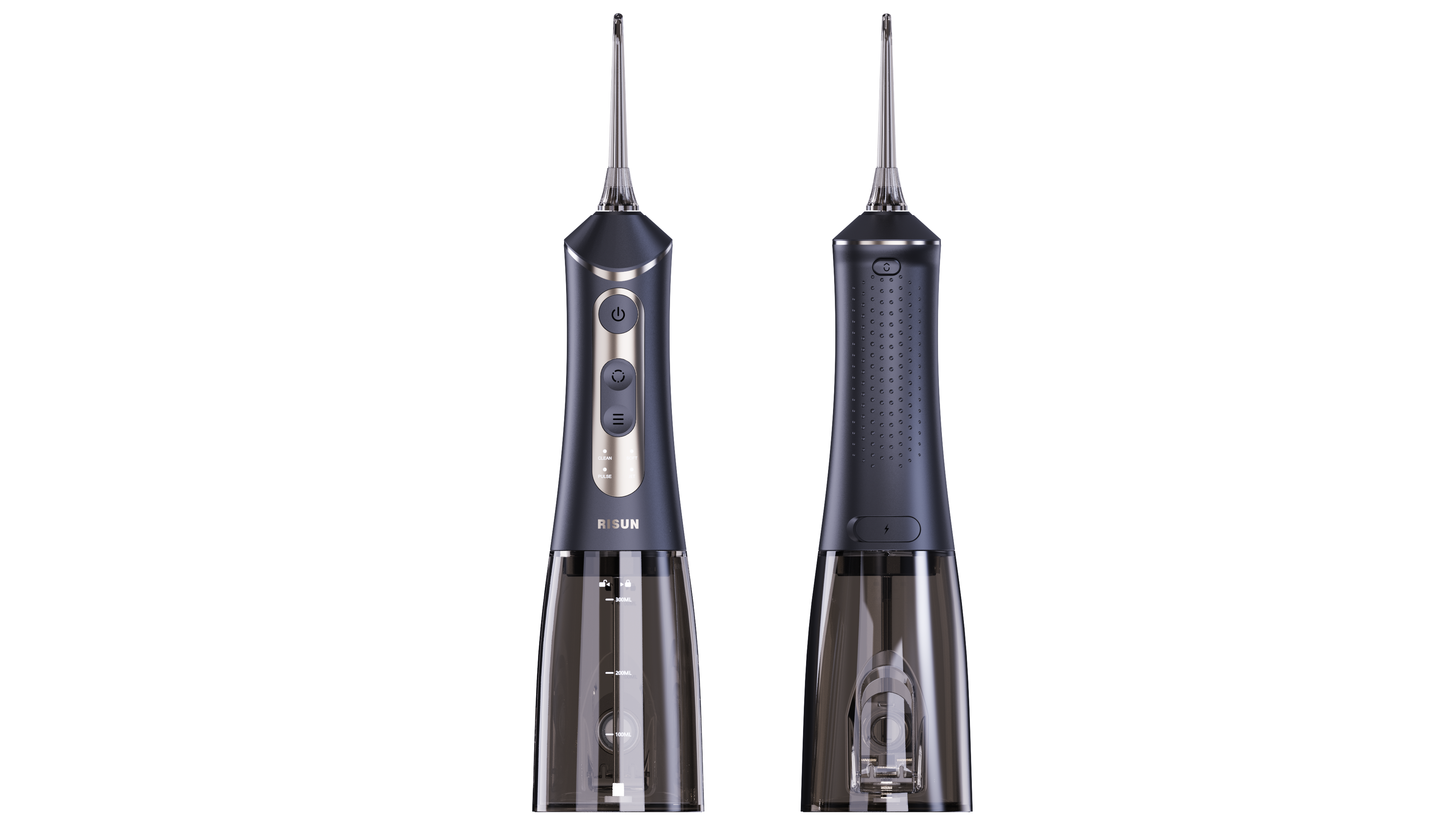
Next step for buyers: Review the Risuntech E-SHEET 2026 product brochure for model and company information. For buyer-side verification, check the exact model specification, sterilization feature, tank size, pressure range, nozzle set, and certification documents before ordering.
Have Questions or Need More Details?
Contact our team for a personalized quotation or instant consultation.
Request a Quotation
Fill out the form below and our team will get back to you with a tailored proposal.
WhatsApp Direct Chat
Prefer to chat in real-time? Message us on WhatsApp for instant assistance & quick answers.
- Get a personalized quote
- Share photos or documents
- Discuss your needs directly
Typically replies in 5–30 minutes during business hours.