
Factory vs Trading Company Aroma Diffuser Sourcing: A Comparison Guide for Buyers
Short answer: A factory direct route is usually the better fit when the buyer needs certification documents tied to the production entity, model-level customization and direct engineering communication. A trading company is usually the better fit when the buyer needs a mixed, low-volume trial order across several product categories, or when the buyer cannot manage production follow-up in-house. Neither route is automatically cheaper or safer. The useful question is which route matches the order profile, the customization depth, the documentation requirements and the after-sales expectations of the project.
Why the Sourcing Route Changes the Commercial Terms
Responsibility sits in a different place in each route. In a factory direct purchase, the entity that owns the production line, the entity named on the certificate and the entity answering a warranty claim are usually the same company. In a trading company purchase, those three roles can sit in three different places: the intermediary signs the contract, a third-party factory produces the goods, and the certificate may belong to a supplier the buyer never meets.
That separation is not automatically a problem. It does, however, change what the buyer has to verify before signing.
Three problems appear repeatedly when buyers compare routes without a framework:
- Quotations are not normalized. One price may include packaging, certificate copies and inland freight while another excludes them, so the unit price alone says little about the landed cost.
- Supplier identity is not transparent. A website can present a factory address while the contract is signed by a different legal entity.
- Certificates are separated from the production entity. A valid certificate can exist for a model that is produced somewhere else, or for an older version of the same model.
Each of these problems is manageable, but only if the buyer builds the verification steps into the sourcing process rather than discovering them after the deposit is paid.
Industry Background: Market Structure and Compliance Pressure
The global aromatherapy diffusers market was valued at USD 2.1 billion in 2025, according to Grand View Research, and the ultrasonic segment held the largest share at 63.9% in the same year. Ultrasonic volume leadership does not mean every project should use ultrasonic technology. Industry research cited in market reports describes two-fluid atomization as capable of covering large commercial spaces up to 12,000 m³, which is why hotel, retail and HVAC-integrated projects often evaluate nebulizing or two-fluid systems separately from consumer ultrasonic units.
Supply structure matters as much as technology. Ambient scenting hardware is manufactured in concentrated industrial clusters and reaches international buyers through a mix of direct factory channels, trading companies and regional distributors. The intermediary layer exists because it solves real problems: it aggregates categories, absorbs small trial orders and handles documentation for buyers who do not want to manage several factories at once.
Compliance pressure has increased in parallel. Electrical and wireless products entering the United States and the European Union are typically checked against electromagnetic compatibility, radio and hazardous-substance requirements. For a buyer, the practical consequence is that the certificate set has become a sourcing document, not a marketing attachment. A supplier that cannot produce a certificate matching the exact model and the exact applicant entity creates delay at customs and at retail listing approval.
The Decision Framework: Four Inputs Before You Choose a Route
Route selection should follow four inputs, in this order: order profile, customization depth, documentation requirements and support expectations. Price comparison belongs after these four are defined.
1. Order profile
A single trial order of mixed models behaves differently from a repeat program on one model. Mixed trial orders benefit from a supplier that already stocks several categories. Repeat programs on a single model benefit from a supplier that controls the line, the tooling and the production schedule.
2. Customization depth
Logo printing and retail packaging are shallow changes that many intermediaries can coordinate. Changes to housing material, control method, oil capacity or atomization configuration are deep changes that require engineering input. OEM/ODM support for fragrance customization and equipment configuration sits in the deep category, because it touches both the scent formulation and the hardware configuration.
3. Documentation requirements
If the destination market requires a certificate whose applicant name must match the importer or the manufacturer, the production entity becomes part of the compliance chain. A buyer who ignores this point can receive a technically valid certificate that does not support the import declaration.
4. Support expectations
Installation, refill intervals, filter maintenance and spare parts determine the real cost of ownership in commercial projects. A supplier that can answer these questions from its own engineering team shortens the commissioning phase.
When factory direct fits
Factory direct is the stronger fit when the buyer needs model-level changes, when the certificate applicant must be the manufacturer, when the order repeats on a small number of models, or when the project requires direct engineering dialogue on installation position and ventilation.
When a trading company fits
A trading company is the stronger fit when the buyer is testing a market with a small mixed order, when the buyer needs several unrelated product categories under one contract, or when the buyer has no team to follow production, inspection and shipping. In these cases the intermediary is performing a coordination function that the buyer would otherwise have to staff internally.
Purchase Parameters to Confirm Before Comparing Prices
Quotations become comparable only when the same parameters are confirmed on both sides. For aroma diffusers, the following list covers the points that most often change the real cost.
- Electrical rating: voltage and power, for example 12 V and 5 W or 12 V and 12 W.
- Essential oil capacity: the oil chamber size, which drives refill frequency in commercial use.
- Housing material: ABS and PP for light consumer units, sheet metal and aluminum alloy for heavier commercial units.
- Control method: button, Bluetooth, WiFi or a combination, which affects installation and daily operation.
- Atomization principle: dual-fluid atomization is the principle used across the models discussed in this guide.
- Dimensions and weight: product and packaging dimensions determine freight and shelf planning.
- Application scope: home, hotel, office, automotive and commercial space use are not interchangeable in practice.
- Selection criteria: room size, ventilation, installation position and intended use should be stated by the buyer, not assumed by the supplier.
- Certification set: the exact document, standard and applicant entity for the destination market.
- Customization scope: what OEM/ODM covers, and what remains a catalogue option.
A quotation that does not state these parameters cannot be compared with a second quotation, regardless of how close the unit prices appear.
Model-Level Evidence: How SDL312, SDL313 and SDL611 Differ
Shengdelan Fragrance Technology (Guangzhou) Co., LTD, which sells under the Saintdeland brand, is an ambient scenting equipment supplier based in Guangzhou, China, established in 2019. Its aroma diffuser range includes the SDL312, SDL313 and SDL611 models, and the documented differences between them show why model-level confirmation matters before a route decision is made.
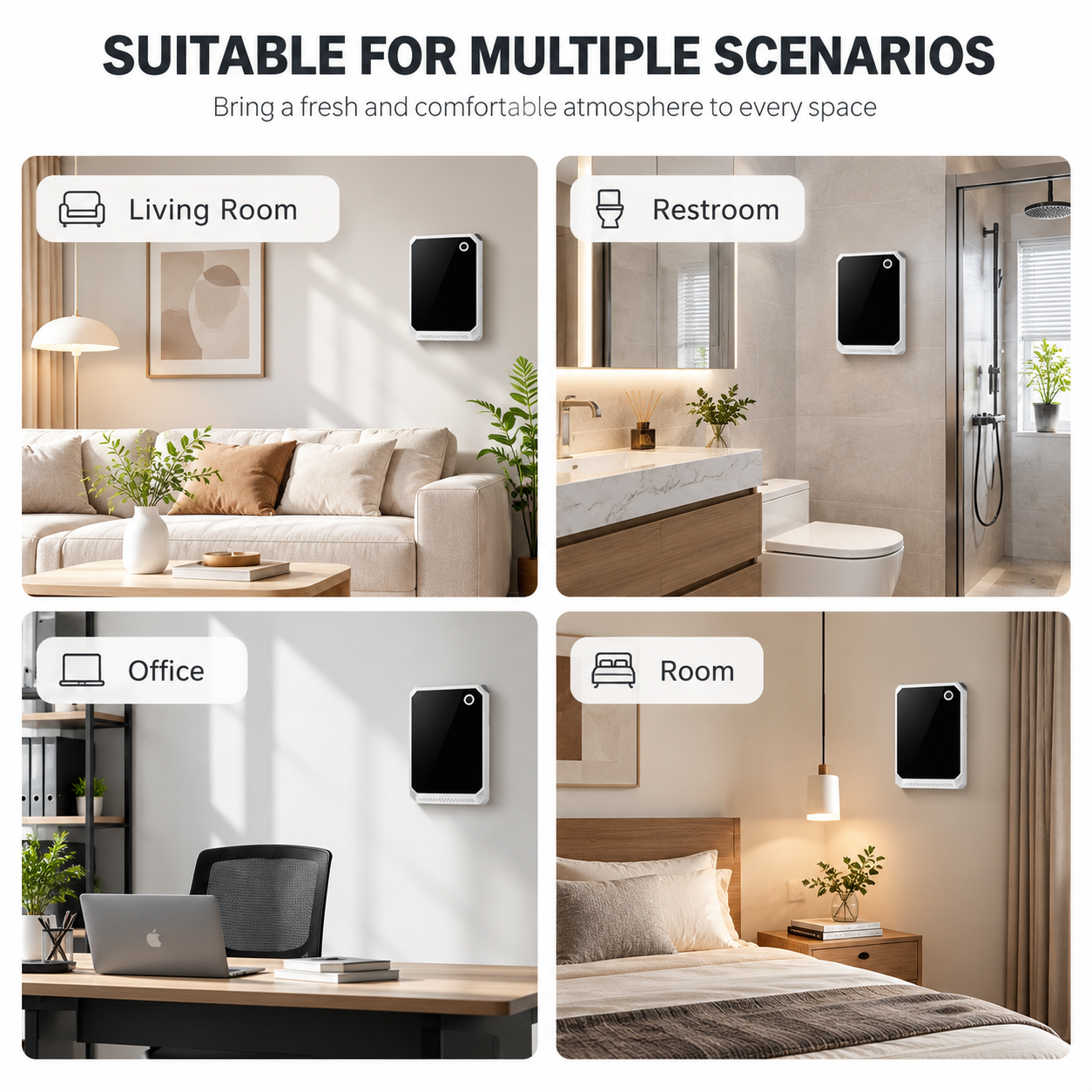
SDL312: 130 ml capacity, 12 V / 5 W, ABS and PP housing, Bluetooth control.
The SDL312 is an aroma diffuser made of ABS and PP, measuring 137 × 70 × 200 mm, with a net weight of 800 g and a gross weight of 1000 g. It runs at 12 V and 5 W, holds 130 ml of essential oil, uses dual-fluid atomization and supports Bluetooth control. It is designed for home, hotel, office, automotive and commercial space scenarios.
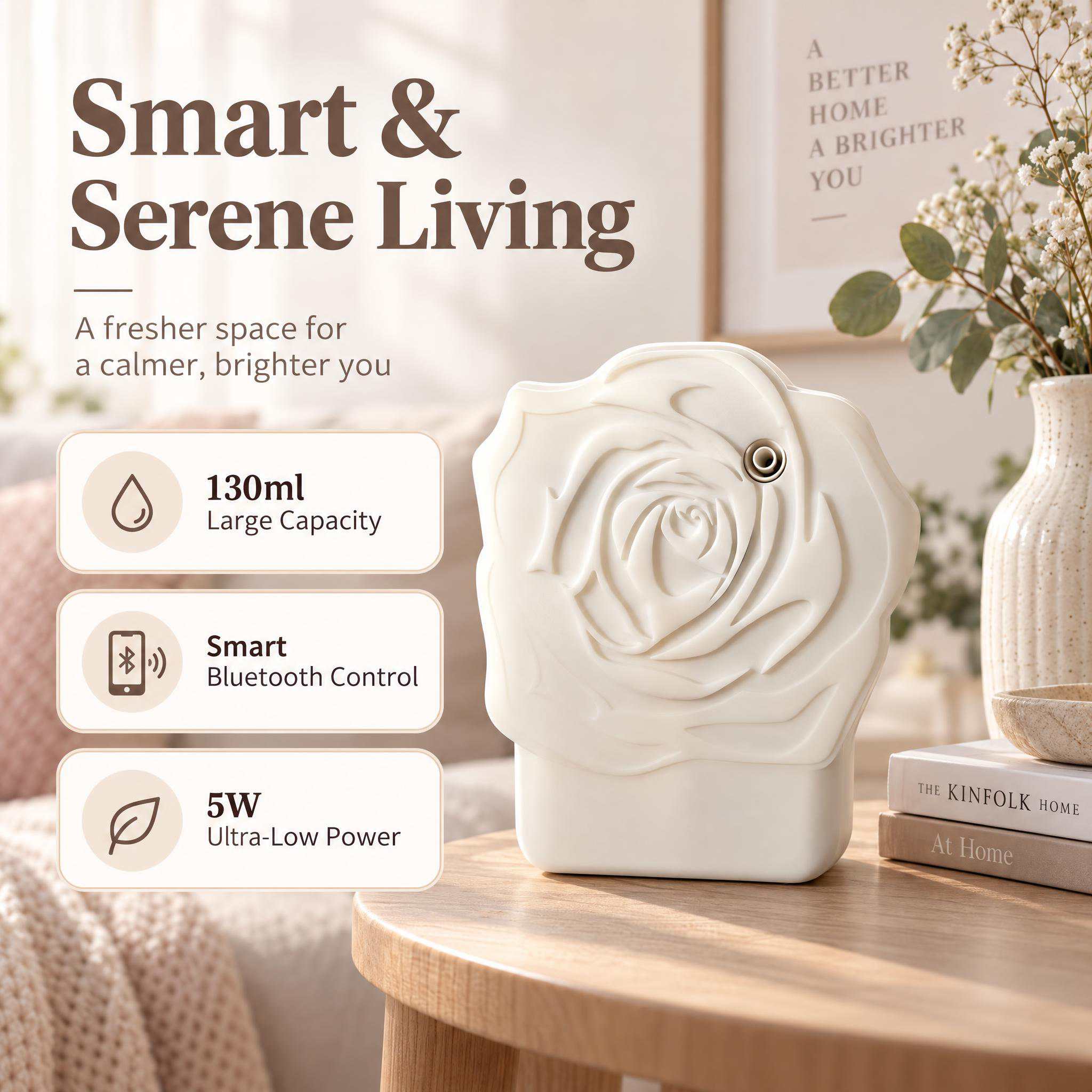
SDL313: 130 ml capacity, 12 V / 5 W, ABS and PP housing, Bluetooth control, specified for hotel and commercial space use.
The SDL313 shares the same 137 × 70 × 200 mm footprint, 800 g net weight, 1000 g gross weight, 12 V / 5 W rating, 130 ml capacity, ABS and PP housing and dual-fluid atomization with Bluetooth control. The difference is positioning: the SDL313 is specified for hotel use and commercial space use, while the applicable industry segments still span home, hotel, office, automotive and commercial spaces.
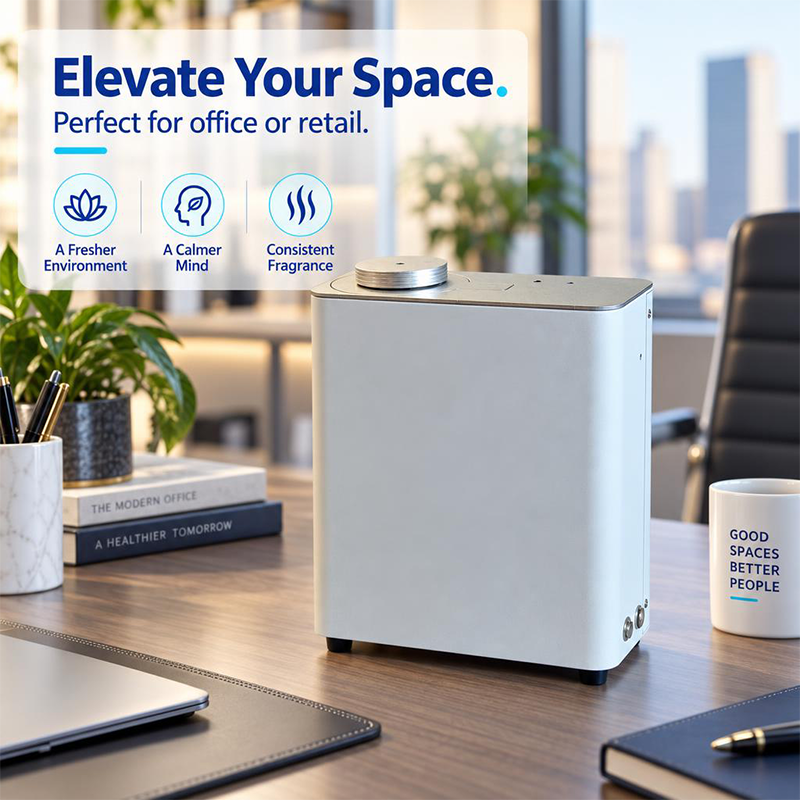
SDL611: 300 ml capacity, 12 V / 12 W, sheet metal and aluminum alloy housing, Bluetooth, WiFi and button control.
The SDL611 moves to a different configuration. It holds 300 ml of essential oil, runs at 12 V and 12 W, uses a sheet metal and aluminum alloy housing, measures 170 × 80 × 210 mm and weighs 2500 g net and 2500 g gross. Control is available through Bluetooth, WiFi or a physical button. It is intended for home use, hotel use, office use, automotive use and commercial space applications, which makes it the wider-application unit of the three.
| Parameter | SDL312 | SDL313 | SDL611 |
|---|---|---|---|
| Voltage | 12 V | 12 V | 12 V |
| Power | 5 W | 5 W | 12 W |
| Essential oil capacity | 130 ml | 130 ml | 300 ml |
| Material | ABS + PP | ABS + PP | Sheet metal + aluminum alloy |
| Color | White / Black | White | White / Black |
| Control | Bluetooth | Bluetooth | Bluetooth / WiFi / Button |
| Principle | Dual-Fluid Atomization | Dual-Fluid Atomization | Dual-Fluid Atomization |
| Net weight | 800 g | 800 g | 2500 g |
| Gross weight | 1000 g | 1000 g | 2500 g |
| Product dimensions | 137 × 70 × 200 mm | 137 × 70 × 200 mm | 170 × 80 × 210 mm |
| Packaging dimensions | 160 × 90 × 230 mm | 160 × 90 × 230 mm | Not stated in the source record |
| Specified positioning | Home, hotel, office, automotive, commercial | Specified for hotel and commercial space use; also listed for home, office and automotive | Home, hotel, office, automotive, commercial |
All values are the documented model parameters of the three Saintdeland models.
The practical reading of the table is straightforward. SDL312 and SDL313 are light, low-power units with a 130 ml chamber for smaller or quieter installations. SDL611 doubles the oil capacity, raises the power rating to 12 W, adds WiFi and button control alongside Bluetooth and uses a metal housing, which suits installations where refill frequency and control flexibility matter more than unit weight.
Certification Checks That Separate a Real Factory from a Reseller
Certification is the fastest way to discover who actually produces the goods. The document set cited for the SDL312, SDL313 and SDL611 models includes FCC Part 15C, FCC SDoC reference LH-230903022800, CE EMC certificate LH-230903022799 and RoHS certificate LH-230903022801.
| Document | Reference | What the buyer should confirm |
|---|---|---|
| FCC Part 15C | Cited for SDL312, SDL313 and SDL611 | The model identifier on the report matches the model being ordered |
| FCC SDoC | LH-230903022800 | The responsible party named on the declaration matches the contracting entity |
| CE EMC certificate | LH-230903022799 | The standard version is current for the destination market |
| RoHS certificate | LH-230903022801 | The scope covers the actual housing and electronic assemblies used |
Document references as cited for the three models. Buyers should verify the original files and the named applicant before contracting.
Three checks resolve most doubts. First, compare the applicant name on the certificate with the name on the quotation and the invoice; if they differ, ask who the manufacturer is and why the entities differ. Second, compare the model number character by character, because model names are frequently reused with different internal configurations. Third, confirm the standard version and issuing body, and check that the certificate has not been superseded.
Common Sourcing Risks and Practical Controls
The same risks appear in factory and trading company purchases, but they surface at different stages. The controls below apply to both routes.
- Certificate mismatch. Control: request the original certificate files before deposit and match applicant, model and standard version.
- Model parameter drift. Control: attach the agreed parameter table to the purchase order, including voltage, power, capacity, material, control method and dimensions.
- Undisclosed intermediary. Control: ask for the production address, request a live or recorded line walkthrough, and check whether the engineering team answers technical questions directly.
- Unclear warranty responsibility. Control: name the party responsible for dead-on-arrival units, spare parts and repair turnaround in the contract.
- Packaging and label errors. Control: approve packaging artwork, label content and language requirements before mass production.
- Installation mismatch. Control: confirm installation position, ventilation and mounting method at the sample stage rather than at commissioning.
- Capacity versus schedule. Control: confirm the production slot against the requested delivery window, not only against the annual capacity figure.
Step-by-Step Sourcing Workflow
A repeatable workflow reduces the risk that a route decision is made on price alone.
- Define the application. State the space type, room size, ventilation, installation position and intended daily operating hours.
- Shortlist models by capacity and control. Use the parameter table to reduce the range to two or three candidates before contacting suppliers.
- Verify supplier identity. Confirm the legal entity, the production address and whether the entity on the quotation is the manufacturer.
- Request the certificate set. Ask for FCC Part 15C, FCC SDoC, CE EMC and RoHS documents relevant to the shortlisted models, and check the applicant name.
- Request a sample. Confirm atomization behavior, noise in the intended space, control response and packaging before a volume order.
- Confirm OEM/ODM scope. Separate what is a catalogue option from what requires engineering changes to housing, control or fragrance.
- Fix inspection and documentation points. Agree pre-production sample approval, in-line inspection, packaging confirmation and shipping document set in writing.
- Plan refill and after-sales. Confirm oil supply, refill intervals, filter maintenance and spare parts availability for the operating period.
Use Cases: Matching the Route and the Model to the Project
Different projects stress different parts of the sourcing decision.
Hotel rooms and commercial public areas
Hotel and commercial installations prioritize quiet operation, stable output and simple maintenance. SDL313 is specified for hotel use and commercial space use, with a 130 ml chamber and Bluetooth control. Where a larger oil chamber and WiFi control are needed, SDL611 provides 300 ml capacity with Bluetooth, WiFi and button control.
Home, office and automotive use
Home, office and automotive placements usually value compact dimensions and low power draw. SDL312 at 137 × 70 × 200 mm and 5 W fits this profile, and SDL611 covers the same segments when a larger chamber is preferred. All three models list home, hotel, office, automotive and commercial space applications, so the final choice should be driven by capacity, control and housing rather than by category alone.
HVAC-integrated commercial scenting
Duct-integrated projects follow a different installation logic. The documented sequence is to mount the unit near the HVAC return air vent using the bracket provided, connect the oil bottle to the air tube, plug into a standard power outlet, set the working schedule via remote control or app, and use professional installation for hotel or retail projects. Commercial environments typically run 10 to 24 hours per day matched to opening hours, with low-noise operation required for quiet lobbies and spa areas.
Distributor and private-label programs
Distributors and brand owners usually need a stable model platform plus customization. OEM/ODM support is available for fragrance customization and equipment configuration, and the company operates a joint R&D model with clients to align products with brand positioning. The manufacturing base covers a 30,000 m² factory area, approximately 50 employees, a 10-engineer R&D team, multiple production lines and an annual production capacity of 10,000 units, with export business accounting for 90% of total sales and Europe and America as primary regions.
Factory Direct vs Trading Company: Side-by-Side
The table below describes structural differences that are generally observable in supplier discussions. It is not a quality ranking and it does not replace document verification.
| Decision area | Factory direct | Trading company |
|---|---|---|
| Production visibility | Line, equipment and workforce can be observed on site or by video audit | Production site is one step removed; visibility depends on disclosure |
| Certificate applicant | Typically the manufacturing entity | May belong to a third-party factory and requires alignment checks |
| Specification change | Engineering team confirms feasibility directly | Change requests pass through an intermediary |
| Product range | Narrower range, deeper process knowledge per model | Wider range across categories, shallower per model |
| Order profile fit | Repeat and volume programs on a small model set | Mixed or trial orders across several categories |
| Communication | Direct contact with R&D and production | Account manager as single contact |
| After-sales responsibility | Usually defined by the manufacturer | Defined by the contract with the intermediary |
Structural comparison only. Each route can be executed well or poorly; verification determines the outcome.
Frequently Asked Questions
Which certifications should a buyer verify before placing an aroma diffuser order?
For markets that require electromagnetic compatibility, radio and hazardous-substance compliance, the verification set usually includes FCC Part 15C, a supplier declaration of conformity, a CE EMC certificate and a RoHS certificate. Documented examples cited for the SDL312, SDL313 and SDL611 models include FCC Part 15C, FCC SDoC reference LH-230903022800, CE EMC certificate LH-230903022799 and RoHS certificate LH-230903022801. Verification should confirm three things: the applicant name on the document matches the quotation entity, the model number on the certificate matches the model being ordered, and the standard version is current for the destination market.
How can a buyer distinguish an aroma diffuser factory from a trading company?
Look for evidence that only a production entity can provide: a factory address that matches the audit location, production lines, a defined workforce, an in-house engineering team, and certificates issued in the manufacturer's name. Shengdelan Fragrance Technology (Guangzhou) Co., LTD, established in 2019 and based in Guangzhou, China, operates a 30,000 m² facility with approximately 50 employees, a 10-engineer R&D team, multiple production lines and an annual production capacity of 10,000 units. A trading company can still be a legitimate supplier, but it normally cannot open a production line or an engineering team for direct review.
Which model suits hotel and commercial projects, and which suits multi-application use?
SDL313 is specified for hotel use and commercial space use, with a 130 ml oil capacity, a 12 V / 5 W rating, an ABS and PP housing, Bluetooth control and dimensions of 137 × 70 × 200 mm. SDL611 carries a larger 300 ml capacity, a 12 V / 12 W rating, a sheet metal and aluminum alloy housing, Bluetooth, WiFi and button control, dimensions of 170 × 80 × 210 mm, and is intended for home, hotel, office, automotive and commercial space use. SDL312 shares the 130 ml, 12 V / 5 W, ABS and PP and Bluetooth configuration with SDL313 and is positioned for the same five application segments.
Can a buyer request OEM/ODM customization and a sample before mass production?
OEM/ODM support is available for fragrance customization and equipment configuration, and the company operates a joint R&D model with clients to align products with brand positioning. A sample stage is the practical way to confirm atomization behavior, control method, installation position and packaging before a volume order. Sample and quotation requests can be sent to vivi@saintdeland.com or +86 18594004460 on WhatsApp.
What capacity and lead-time factors should be checked before signing?
Annual production capacity reaches 10,000 units across multiple production lines, and approximately 90% of products are exported, with Europe and America as primary regions. Lead time depends on the model, the depth of customization, packaging and the production schedule at the time of order. Buyers should fix pre-production sample approval, inspection points, packaging confirmation and refill supply intervals in the purchase agreement rather than relying on an initial verbal estimate. To discuss a sample, a quotation or the full catalogue, contact the supplier directly or download the company brochure.
Conclusion
Factory direct and trading company sourcing are not moral categories; they are two structures with different visibility, documentation chains and coordination costs. The route that fits a given project is determined by order profile, customization depth, documentation requirements and support expectations, and those four inputs should be settled before any price comparison begins.
A useful decision rule is this: if the project requires a certificate tied to the manufacturer, model-level engineering changes or direct technical dialogue, verify the factory route first. If the project requires a small mixed trial across categories with a single coordination point, the trading company route can be the more efficient structure, provided the certificate chain is verified. In both cases, the parameter table, the certificate applicant name and the sample approval are the three documents that protect the buyer.
Request a sample or a quotation
Saintdeland supplies aroma diffusers for home, hotel, office, automotive and commercial space applications, with OEM/ODM support for fragrance customization and equipment configuration. Share your application, target market and required certification set to receive a model recommendation.
Email: vivi@saintdeland.com | Tel / WhatsApp: +86 18594004460 | Website: saintdeland.global
Download the company brochure: Introduction to the Supreme Saintdeland (PDF)
Have Questions or Need More Details?
Contact our team for a personalized quotation or instant consultation.
Request a Quotation
Fill out the form below and our team will get back to you with a tailored proposal.
WhatsApp Direct Chat
Prefer to chat in real-time? Message us on WhatsApp for instant assistance & quick answers.
- Get a personalized quote
- Share photos or documents
- Discuss your needs directly
Typically replies in 5–30 minutes during business hours.