
SDL313 vs SDL611 Aroma Diffusers: Choosing for Hotel and Commercial Use
SDL313 and SDL611 are two aroma diffusers from the same manufacturer, and the decision between them is a capacity-class decision more than a performance contest. SDL313 is a 130 ml unit rated at 5 W, controlled by Bluetooth, built in ABS + PP. SDL611 is a 300 ml unit rated at 12 W, controlled by Bluetooth, WiFi and a physical button, built in sheet metal and aluminum alloy. Both use dual-fluid atomization. The differences that actually matter to a hotel or commercial buyer are refill interval, control architecture, housing durability, footprint and mounting behaviour, and the documentation package that supports EU and US market planning. This guide works through each of those in the order a procurement team would.
What Problem Does the SDL313 vs SDL611 Decision Actually Solve?
The problem is not "which diffuser is better." It is that a hotel or commercial space has two working zones with different requirements, and buyers often order one model for both. Guest rooms and small enclosed areas have low air volume, long unattended periods and a hard limit on how much maintenance staff can absorb. Lobbies, showrooms, reception areas and retail floors have much higher air exchange, staff on site, and a need to adjust output without physically handling the device.
A diffuser that is too small for a public area forces frequent refills and continuous high-duty operation. A diffuser that is too large for a guest room creates more installation and handling work than the room justifies. The SDL313 and SDL611 split maps onto this problem reasonably cleanly, but only if the buyer defines capacity, control and build expectations before comparing the two.
Three questions drive the choice:
- How often can someone refill the unit? A 130 ml reservoir and a 300 ml reservoir produce different service intervals for the same duty cycle.
- Who adjusts the settings, and from where? Bluetooth-only control assumes someone with a phone is nearby. Bluetooth plus WiFi plus a physical button covers more operating situations.
- Where does the unit live? A 800 g plastic-housed unit and a 2500 g metal-housed unit behave differently on a shelf, a wall bracket or a reception desk.
Industry Background: Why Hotels Standardise on Diffusers
Ambient scenting in hospitality and retail is treated as part of the physical environment rather than as an add-on product. Common deployments include hotel lobbies and banquet halls, hotel rooms, retail chain stores and brand showrooms, office buildings and corporate reception areas, spas and wellness centres, cinemas and gyms, shopping mall common areas, and real-estate sales galleries. The operating pattern in these spaces is scheduled or continuous diffusion through opening hours, with low-noise operation required in quiet lobbies and spa areas.
The wider diffuser market gives useful context for technology choice. Grand View Research reported the global aromatherapy diffusers market at USD 2.1 billion in 2025, with the ultrasonic segment holding 63.9% share that year. Ultrasonic units are the volume segment, largely because they are inexpensive and familiar in home use. Dual-fluid atomization, which both SDL313 and SDL611 use, is a different approach: the manufacturer applies it to achieve fine atomization and even dispersion of fragrance molecules, which is the property commercial buyers care about when a scent needs to sit consistently across a room rather than concentrate near the device.
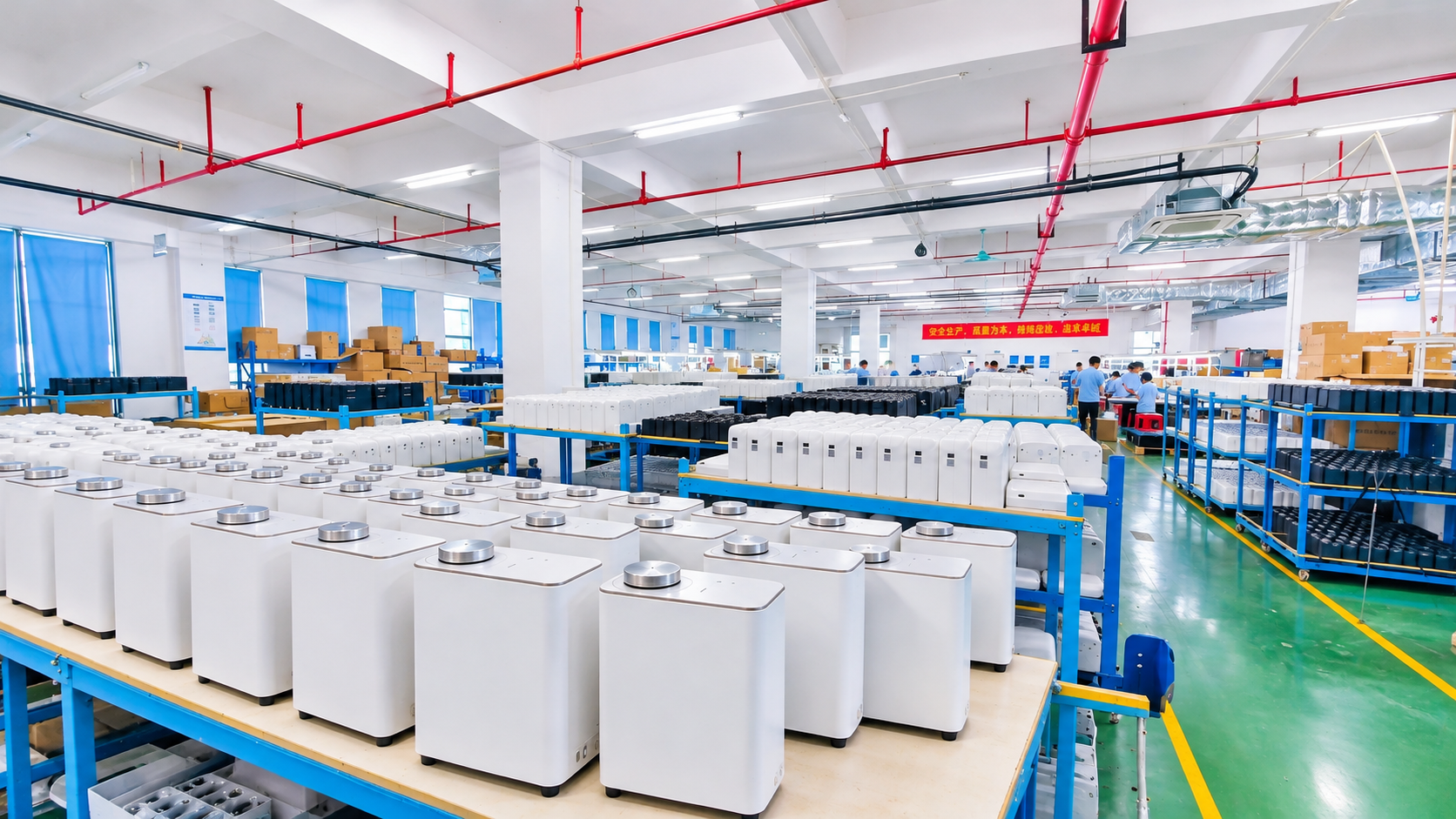
Shengdelan Fragrance Technology (Guangzhou) Co., LTD is an ambient scenting equipment supplier based in Guangzhou, China, established in 2019, whose main products include aroma diffuser models SDL611, SDL613, SDL614, SDL616, SDL312, SDL313, SDL820 and SDL821. The company operates a 30,000 square metre factory with approximate annual production capacity of 10,000 units, a workforce of about 50 across manufacturing, design and consulting functions, and an R&D team of 10 engineers and technicians working on product design and fragrance diffusion systems. Roughly 90% of products are exported, with Europe and America as the primary export regions.
SDL313 and SDL611 Compared Specification by Specification
Essential oil capacity: 130 ml vs 300 ml
Capacity is the single most consequential difference. SDL313 holds 130 ml of essential oil; SDL611 holds 300 ml, roughly 2.3 times as much. For the same diffusion schedule, that multiple translates directly into a longer interval between refills.
In practice this decides deployment pattern. Guest rooms, small offices, treatment rooms and individual retail counters are typically serviced on a housekeeping round, so a smaller reservoir that matches the actual consumption of a small enclosed space is enough, and the lower unit weight makes that round easier. Lobbies, showrooms and open commercial floors run longer duty cycles, and a 300 ml reservoir reduces how often staff need to interrupt operations to refill.
Capacity is a reservoir figure, not a coverage claim. Neither the SDL313 nor the SDL611 specification sheet states a rated coverage area, so coverage should be confirmed through an on-site trial rather than inferred from oil volume.
Rated power: 5 W vs 12 W
SDL313 is rated at 5 W and SDL611 at 12 W, both at 12 V input. The higher figure on SDL611 is consistent with a larger unit running a longer or more intensive diffusion cycle. For a hotel with dozens of units running on a daily schedule, the cumulative difference is worth putting into the energy line of the project budget rather than estimating per unit.
Both models operate at 12 V, which is relevant to installation planning: the units are low-voltage devices supplied through an adapter and connected to a standard power outlet.
Control method: Bluetooth vs Bluetooth / WiFi / button
This is where the two models diverge most for operators. SDL313 uses Bluetooth control. SDL611 supports Bluetooth, WiFi and a physical button.
Bluetooth control is a short-range arrangement: the person adjusting the schedule or intensity needs to be in the vicinity of the unit with a phone. For a guest room or a single small space where staff are physically present during service, that is usually adequate. For a lobby, a multi-zone retail floor or a multi-location chain, the combination on SDL611 is more flexible. WiFi allows settings to be changed without standing next to the device, and the physical button provides a fallback that does not depend on a phone, an app or a network at all — which matters in buildings with unreliable wireless coverage or where IT policy restricts device onboarding.
Neither control method substitutes for on-site commissioning. Schedules and intensity still have to be set against the actual air volume and traffic pattern of the space.
Materials and housing: ABS + PP vs sheet metal and aluminum alloy
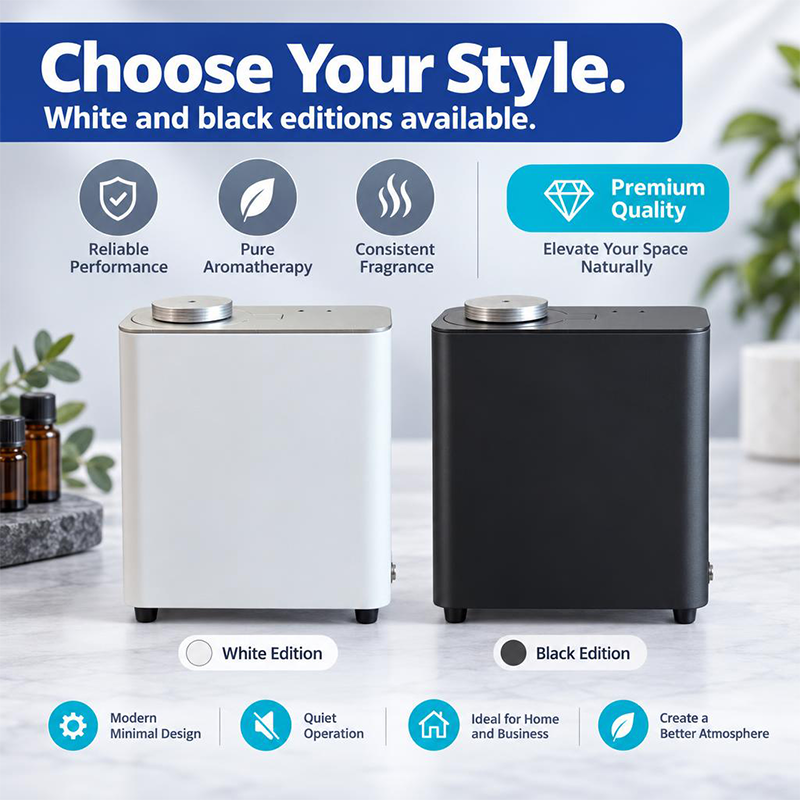
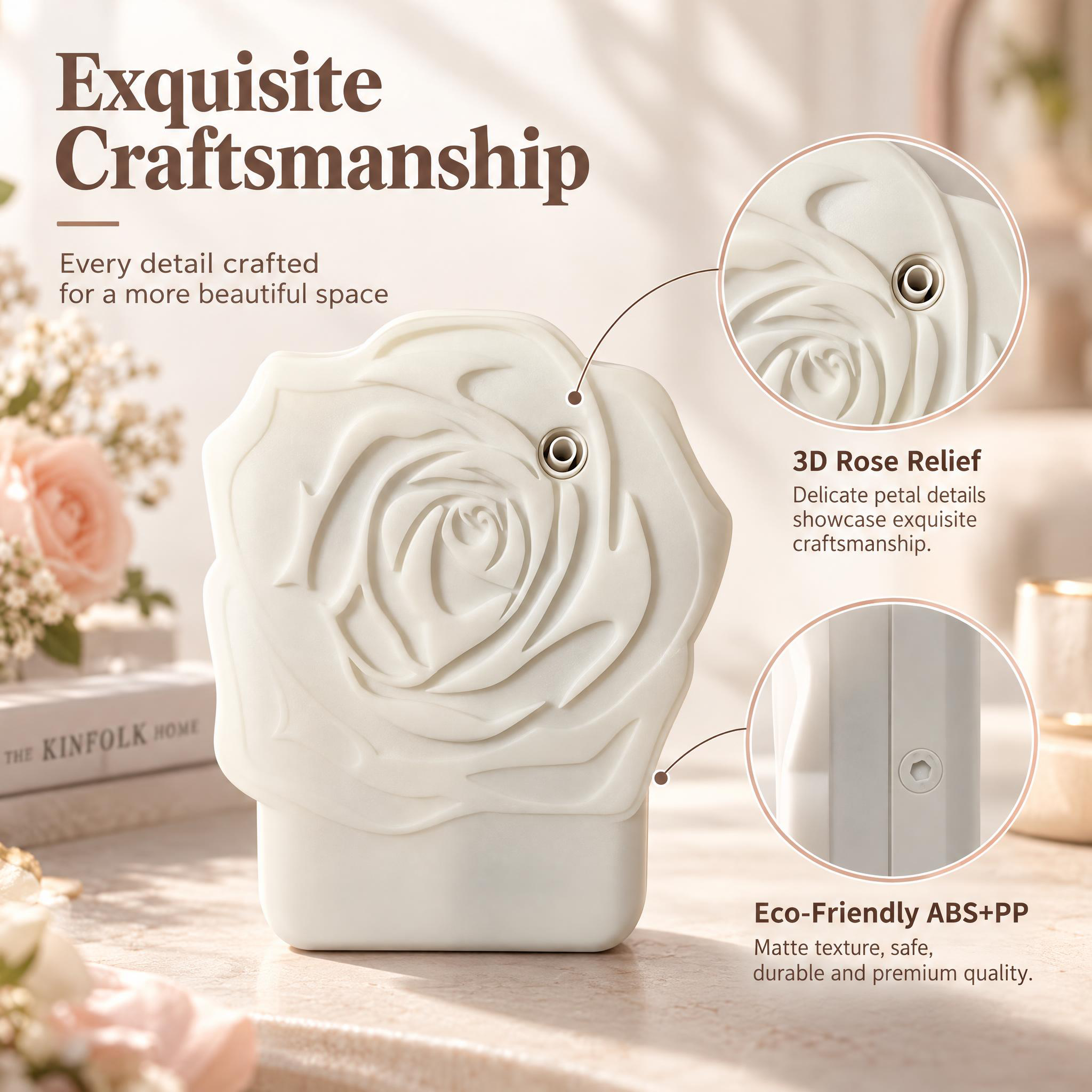
SDL313 is constructed in ABS + PP and supplied in white. SDL611 is built in sheet metal and aluminum alloy and is available in white and black.
ABS + PP is a practical choice for light-duty indoor placement — a shelf, a reception counter, a treatment room ledge — where the unit is handled occasionally. Sheet metal and aluminum alloy give SDL611 a more durable housing, which matters in public areas where units may be brushed against, cleaned frequently, or installed in semi-exposed positions. The two-colour option on SDL611 also helps where the unit needs to sit visually inside a darker interior scheme rather than stand out.
Dimensions and weight
SDL313 measures 137 × 70 × 200 mm with a net weight of 800 g and a gross weight of 1000 g, packed at 160 × 90 × 230 mm. SDL611 measures 170 × 80 × 210 mm with a net weight of 2500 g.
The dimensional gap is moderate; the weight gap is not. At 800 g, SDL313 can be carried and repositioned by one person on a routine housekeeping round without special handling. At 2500 g, SDL611 is a fixed-position unit — once installed on a wall bracket, a shelf or a reception point, it stays there. Installation planning should reflect that: bracket, mounting height and power access should all be confirmed before the units arrive.
Atomization: both use dual-fluid technology
SDL313 and SDL611 both operate on dual-fluid atomization. This is the shared foundation, and it is the reason the comparison is about capacity and controls rather than about diffusion principle.
Dual-fluid atomization disperses fragrance molecules finely and evenly, which produces a more uniform scent in the room compared with designs that release fragrance in bursts near the device. Because both models use the same principle, a buyer who prefers one model for a space is not giving up diffusion quality relative to the other.
Compliance documentation for EU and US market planning
For buyers planning European or North American deployment, the compliance package matters as much as the hardware. Documented coverage includes CE EMC (LH-230903022799), RoHS (LH-230903022801) and FCC SDoC (LH-230903022800). These support EU and US market planning and should be reviewed together with the commercial documentation before a purchase order is raised.
How to use the compliance file: request the report or declaration matching the exact model and configuration being ordered, confirm that the certificate number on the document matches the SKU on the purchase order, and keep the reference numbers in the procurement record. A compliance reference for one model should not be assumed to cover a different model in the same product family.
Step by Step: Matching a Model to a Hotel or Commercial Space
Step 1 — Define the space type and expected duty cycle
List each zone separately: guest rooms, corridors, lobby, banquet hall, restrooms, retail floor, office area. Note the expected daily running hours. Commercial deployments commonly run 10–24 hours matched to opening hours, while guest rooms typically need shorter scheduled windows.
Step 2 — Assign a capacity class to each zone
Small, enclosed, low-traffic zones and high-volume public zones are different classes. Matching SDL313 to rooms and service areas and SDL611 to public and open areas is the default starting pattern; confirm it against actual refill logistics rather than assuming it.
Step 3 — Decide who controls the unit and how
If the answer is "a staff member with a phone standing next to the device," Bluetooth-only SDL313 is sufficient. If the answer involves a facilities team, multiple locations, remote schedule changes or a no-phone fallback, SDL611's Bluetooth / WiFi / button combination removes a recurring operational constraint.
Step 4 — Confirm housing and placement
Decide whether the unit is visible in a guest-facing interior, whether it will be cleaned frequently, and whether it sits on a surface or a bracket. Weight and material should follow from that: 800 g ABS + PP for light placement, 2500 g sheet metal and aluminum alloy for fixed public-area positions.
Step 5 — Verify power and installation position
Both models run on 12 V input. Confirm the location of the power outlet, the mounting height and the distance to the nearest return air path before installation. Selection should take account of room size, ventilation, installation position and intended use, since those variables change how a given schedule performs in the space.
Step 6 — Install and commission
For commercial and HVAC-related installations, the standard sequence is:
- Mount the unit near the HVAC return air vent using the bracket provided.
- Connect the oil bottle to the air tube.
- Plug into a standard power outlet.
- Set the working schedule via remote control or APP.
- Arrange professional installation for hotel and retail projects.
The same commissioning logic applies to standalone placements, with the mounting step adapted to the shelf, wall bracket or counter position instead of a duct-adjacent location.
Step 7 — Set the schedule and intensity, then review
Programmable weekly timers, adjustable fragrance concentration and diffusion intervals, and automatic low-oil-level reminders are part of the commercial operating model. Set them against the real traffic pattern, then review consumption and perceived intensity after the first operating cycle and adjust — rather than locking a schedule in place on day one.
Where Each Model Fits
Hotel guest rooms
SDL313 suits guest rooms well: small reservoir matched to enclosed space, 800 g weight that is easy to handle on a housekeeping round, Bluetooth control adequate for scheduled operation, and a white ABS + PP housing that blends into room interiors.
Hotel lobbies, banquet halls and public areas
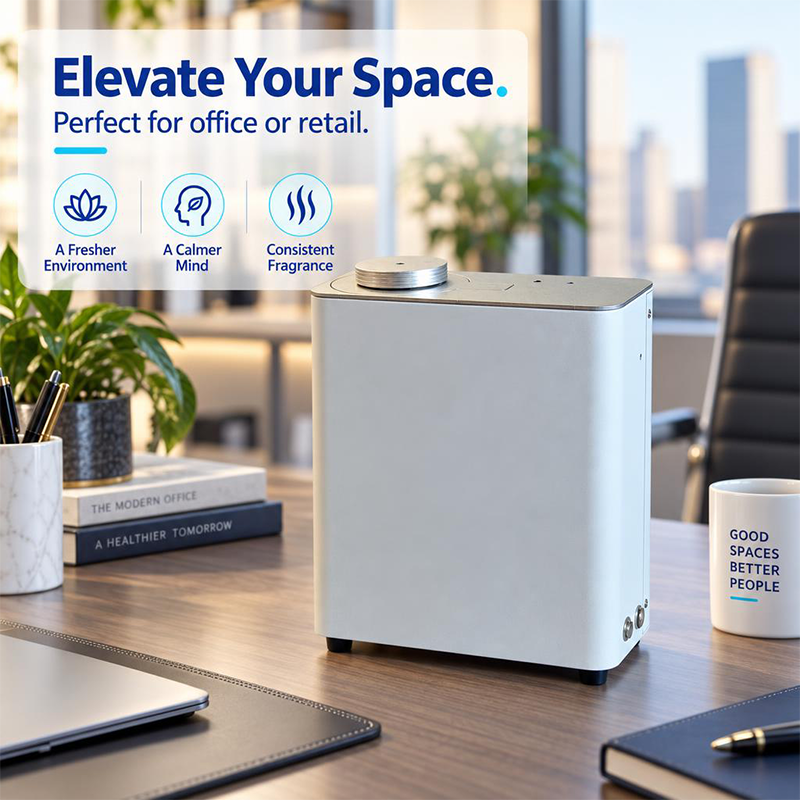
SDL611 fits these zones: the 300 ml reservoir supports longer intervals between refills, the 12 W rating supports sustained operation, WiFi and button control let facilities staff adjust settings without entering the guest space, and the sheet metal and aluminum alloy housing withstands frequent cleaning in high-traffic areas. The white/black option helps where the unit sits in a darker interior.
Retail chains and brand showrooms
SDL611 is the more workable choice where a signature scent has to be held consistent across multiple locations and adjusted centrally. SDL313 remains usable for individual small boutiques and counters where staff are on site.
Offices, co-working spaces and reception areas
Both models apply. Reception desks and small meeting areas typically take SDL313; open-plan floors and multi-zone office suites are better served by SDL611 given the longer duty cycle and remote adjustment requirement.
Spas, wellness centres and treatment rooms
Low-noise operation is a design requirement in these spaces. SDL313's compact footprint and light weight suit treatment rooms and quiet ledges; SDL611 suits spa reception and relaxation lounges where the unit runs longer hours.
Automotive and small-format commercial use
Both models list automotive and commercial space among their application areas. In practice, vehicle and small-format use favours the lighter SDL313, while fixed commercial placements favour SDL611.
Comparison Table: SDL313 vs SDL611
| Parameter | SDL313 | SDL611 |
|---|---|---|
| Product type | Aroma diffuser | Aroma diffuser |
| Essential oil capacity | 130 ml | 300 ml |
| Voltage | 12 V | 12 V |
| Rated power | 5 W | 12 W |
| Atomization principle | Dual-fluid atomization | Dual-fluid atomization |
| Control method | Bluetooth | Bluetooth / WiFi / button |
| Housing material | ABS + PP | Sheet metal + aluminum alloy |
| Available colours | White | White / Black |
| Product dimensions | 137 × 70 × 200 mm | 170 × 80 × 210 mm |
| Packaging dimensions | 160 × 90 × 230 mm | Not stated in the specification |
| Net weight | 800 g | 2500 g |
| Gross weight | 1000 g | 2500 g |
| Application areas | Home, hotel, office, automotive, commercial spaces | Home, hotel, office, automotive, commercial spaces |
Frequently Asked Questions
What CE, RoHS and FCC documentation is available for SDL313 and SDL611?
Documented compliance coverage includes CE EMC (LH-230903022799), RoHS (LH-230903022801) and FCC SDoC (LH-230903022800), which supports EU and US market planning. Buyers should request the document that matches the specific model and configuration being ordered, confirm the certificate number against the SKU on the purchase order, and file the reference in the procurement record rather than relying on a general statement of compliance.
Does the SDL313 support WiFi or app control?
No. The SDL313 uses Bluetooth control only. The SDL611 supports Bluetooth, WiFi and a physical button, which is the model to specify where settings need to be changed remotely or where a phone-free fallback is required. This is the clearest functional dividing line between the two units and should be settled before capacity is discussed.
Why is the SDL611 heavier and higher-powered than the SDL313?
The SDL611 is rated at 12 W against 5 W for the SDL313, and carries a 300 ml reservoir against 130 ml. It also uses a sheet metal and aluminum alloy housing while the SDL313 uses ABS + PP, which accounts for much of the weight difference: 2500 g net against 800 g net. The higher rating is consistent with a larger unit running longer diffusion cycles, which is why it is positioned for public and open commercial areas rather than compact rooms.
How do I choose between 130 ml and 300 ml for a hotel?
Base the decision on refill logistics rather than on room count alone. The 130 ml SDL313 suits enclosed, low-traffic zones serviced on a routine housekeeping round, where the light 800 g weight makes handling practical. The 300 ml SDL611 suits lobbies, showrooms and open floors that run longer daily cycles and where refill interruptions are costly. Neither specification states a rated coverage area, so confirm performance for the specific space through an on-site trial before committing to a full rollout.
How do I request samples or an OEM/ODM quotation for these models?
Shengdelan Fragrance Technology (Guangzhou) Co., LTD supplies these diffusers for wholesale and project supply and provides OEM/ODM support for fragrance customization and equipment configuration, including a joint R&D model with clients to align products with their brand positioning. A practical next step is to request a sample of the specific model under consideration and a quotation covering the intended volume, customization scope and destination market. Contact details and the company brochure are available through the links below.
Conclusion: A Buyer Checklist for Hotel and Commercial Space
SDL313 and SDL611 are not competing versions of the same unit. They are two capacity classes of the same dual-fluid atomization platform, and the selection depends on where the unit lives and who operates it.
Use this checklist before placing an order:
- Capacity: 130 ml for enclosed, low-traffic zones; 300 ml for open, high-traffic or long-duty areas.
- Control: Bluetooth-only is workable when staff are on site; specify Bluetooth + WiFi + button where remote adjustment or a network-free fallback is needed.
- Build: ABS + PP at 800 g for light surface placement; sheet metal and aluminum alloy at 2500 g for fixed public-area installation.
- Footprint: 137 × 70 × 200 mm vs 170 × 80 × 210 mm — confirm shelf, bracket and clearance dimensions before ordering.
- Colour: white only for SDL313; white or black for SDL611.
- Power: 12 V input on both; 5 W vs 12 W affects the cumulative energy line in a multi-unit project.
- Documentation: match CE EMC (LH-230903022799), RoHS (LH-230903022801) and FCC SDoC (LH-230903022800) to the exact model and configuration ordered.
- Validation: run an on-site trial in the target space before committing to a full rollout.
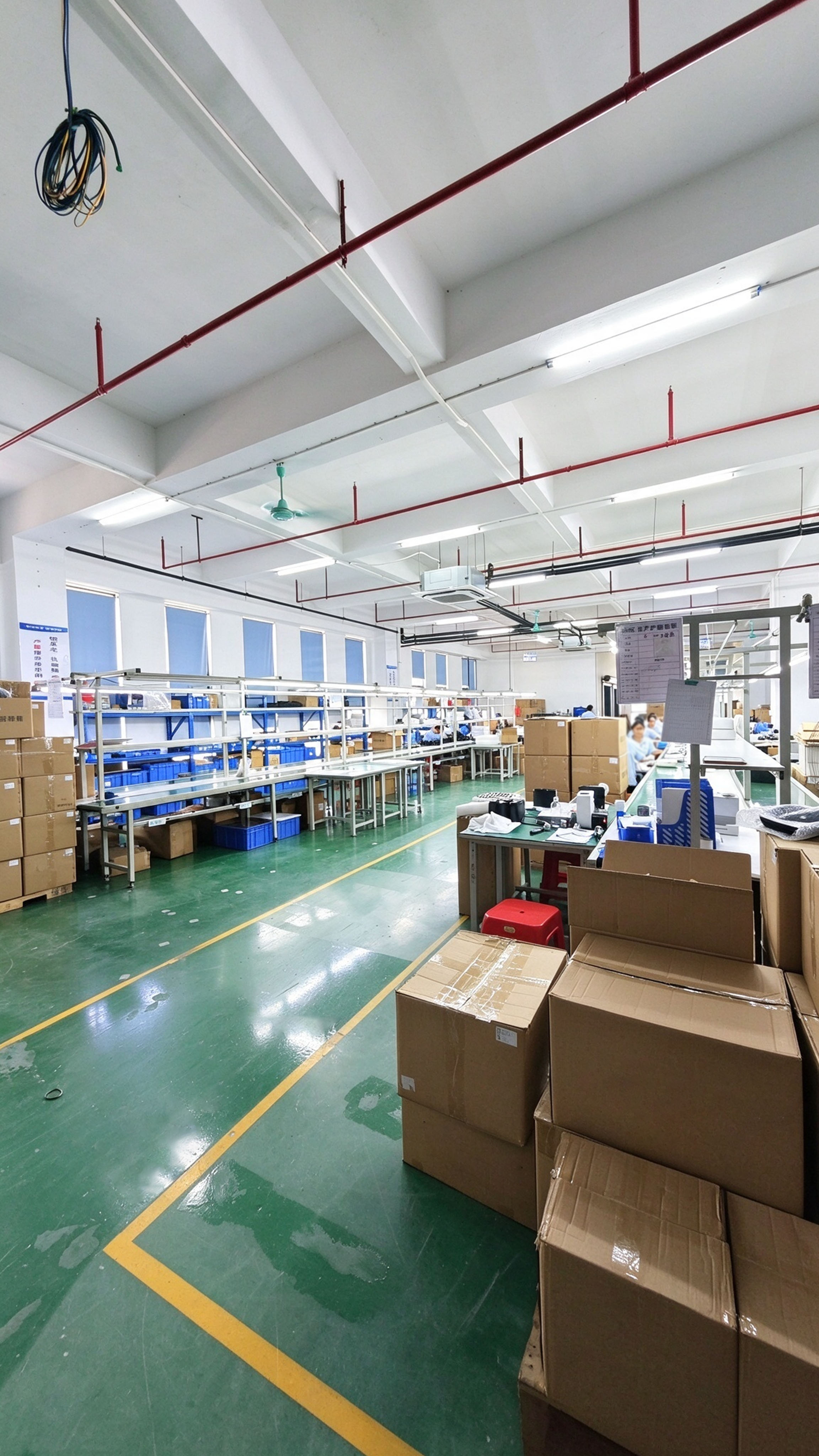
Because roughly 90% of production is exported and Europe and America are the primary export regions, documentation and shipment planning for those markets are routine parts of the order process rather than exceptions. Buyers should still match every certificate reference and specification line to the SKU on the purchase order.
Next Step: Sample, Quotation or Catalogue
If you are specifying diffusers for hotel rooms, lobbies, retail floors or office suites, the fastest way to settle the SDL313 vs SDL611 question is a sample in the actual space. Request a sample of the model you are considering, or ask for a quotation covering volume, customization scope and destination market.
Download the company brochure: Introduction to the Supreme Saintdeland (PDF)
Email: vivi@saintdeland.com | Tel / WhatsApp: +86 18594004460 | Website: saintdeland.global
Have Questions or Need More Details?
Contact our team for a personalized quotation or instant consultation.
Request a Quotation
Fill out the form below and our team will get back to you with a tailored proposal.
WhatsApp Direct Chat
Prefer to chat in real-time? Message us on WhatsApp for instant assistance & quick answers.
- Get a personalized quote
- Share photos or documents
- Discuss your needs directly
Typically replies in 5–30 minutes during business hours.