Comparing QA Frameworks for Nicotine Oral Strip Suppliers
Comparing QA Frameworks for Nicotine Oral Strip Suppliers
When two nicotine oral strip suppliers quote a similar price for the same 4 mg product, the difference that matters is usually invisible in the quotation. It sits in the quality assurance framework behind the film — the controls that decide whether the strip in the tenth carton behaves like the strip in the first one, and whether the documentation your market requires exists before the container leaves the factory.
Answer first: comparing QA frameworks means scoring five verification layers — (1) raw material grade and incoming control, (2) batch-level inspection and in-process control, (3) third-party laboratory and regulatory verification, (4) stability and storage testing, and (5) pre-shipment compliance and packaging checks. A supplier that can document all five is comparable on quality. A supplier that can only document the last one is comparable on paperwork.
This guide is written for importers, distributors, private-label owners and brand teams sourcing nicotine oral films for markets such as the EU, the USA, Canada and Australia. It uses the documented specifications of SENO, the nicotine oral thin film brand of Xin Sino Technology (Shenzhen) Co., Ltd., as a reference point wherever first-party data exists, and leaves out anything that cannot be verified.
What “Quality Assurance Framework” Actually Means in Oral Film Sourcing
A quality assurance framework is the documented set of controls, records and release criteria a manufacturer applies from raw material intake through to pre-shipment release. Quality control (QC) is one part of it — the tests themselves. QA is the system that decides which tests are run, on which batches, against which tolerances, and what happens when a result falls outside them.
Oral thin film is a demanding format for that kind of system, for three structural reasons:
- Dose and geometry are coupled. A SENO nicotine film measures approximately 20 mm × 30 mm and 50–100 microns in thickness. Small thickness deviations change dissolution behaviour, which makes dimension control a dose-consistency issue, not a cosmetic one.
- Performance is time-bound. Dissolution time for these films is specified at 10–30 seconds. A framework that verifies nicotine content but not dissolution time has not verified the product experience the user actually receives.
- The product is moisture-sensitive. Storage conditions are specified as a cool and dry environment, with a 24-month shelf life and packaging in individual sachets or multi-pack boxes. Stability therefore depends on both material choice and packaging — two items that belong inside the QA conversation, not outside it.
A frequent sourcing error is treating a single certificate of analysis as the entire framework. A certificate describes one batch on one day. A framework describes how every batch is made, checked and released, which is what a distributor depends on across a season of repeat orders.
Industry Background: Why QA Comparison Is Now a Procurement Requirement
The nicotine oral dissolvable thin films market was valued at USD 112.34 million in 2024 and is projected to reach USD 174.18 million by 2035 (Market Research Future). The wider U.S. modern oral nicotine products market — pouches, films and gums — was estimated at USD 6.04 billion in 2024, with nicotine pouches holding a 67.65% revenue share (Grand View Research).
Two consequences follow for film buyers:
- Films compete against pouches on the same shelf. Zyn (Philip Morris), Velo (BAT) and On! (Altria) dominate the U.S. retail landscape (C-Store Dive / NielsenIQ). A film line entering that shelf is judged by consumers against an established format, which puts pressure on suppliers to demonstrate measurable consistency rather than describe it.
- Supply is often export-first. SENO’s export business accounts for 100% of total sales, with major markets in the EU, USA, Canada and Australia and distributor connections across Europe, North America and the Middle East. Multi-market supply means a single batch may need to satisfy several labeling and compliance regimes, which turns the documentation layer into part of the product.
The manufacturing base behind that supply is typically compact and specialised. Xin Sino Technology (Shenzhen) Co., Ltd., established in 2025, operates a 20,000 m² manufacturing facility with approximately 30 staff, including a 15-engineer R&D team dedicated to advanced formulation technology for nicotine alternatives, and an annual production capacity of 12,000,000 to 50,000,000 strips.
The Five Verification Layers of a Nicotine Oral Strip QA Framework
Layer 1 — Raw Material Grade and Incoming Control
The first layer defines what the film is made of. SENO nicotine films are specified as oral dissolvable films made from pharmaceutical-grade film-forming polymers, high-purity nicotine, food-grade flavoring agents, stabilizers and excipients.
For a buyer, the practical questions are: which material grades appear on the bill of materials, are the suppliers of those materials qualified, and is each incoming lot checked against a specification before it is released to production? A manufacturer standardised on pharmaceutical-grade polymers is making a different cost-and-risk decision from one that permits substitutes. Because material grade drives both dissolution behaviour and stability, this layer should be verified before sampling rather than after.
Layer 2 — Batch-Level Inspection and In-Process Control
This is the layer that most visibly separates a framework from a promise. Batch-level inspection means measurable parameters are checked during and after production, and results are recorded per batch rather than averaged across a production run.
The parameters that matter for nicotine oral strips are publicly specified in SENO’s product data: nicotine strength options of 2 mg, 4 mg, 6 mg or customizable; a dissolution time of 10–30 seconds; a film size of approximately 20 mm × 30 mm (customizable); a thickness of 50–100 microns; and packaging in individual sachets or multi-pack boxes.

Ask for the batch record or certificate of analysis covering those parameters, in-process thickness and dimension checks, dissolution-time verification, and retained samples per batch. The value of this layer is traceability: if a distributor receives a complaint, a batch-coded record allows the issue to be isolated instead of written off across an entire shipment.
Layer 3 — Third-Party Laboratory and Regulatory Verification
Internal inspection reports and independent verification do not carry the same weight. Third-party laboratory testing places the measurement outside the manufacturer’s own system, which is why buyers increasingly request it for nicotine content and film performance claims.
Regulatory listings act as a second, publicly checkable anchor. In the United States, the FDA DailyMed database lists Seno Oral Film under NDC 85806-001 as an unapproved drug (Human OTC Drug) for relieving mental fatigue and smoking cessation assistance (FDA DailyMed). Entries of this type can be verified directly by the buyer instead of being accepted from a sales document.
Third-party recognition belongs in the same layer, with the same discipline. SENO, the brand under Xinsno Technology (Shenzhen) Co., Ltd, was recognised by Best of Best Reviews as the “Best Oral Thin Film Supplement in North America of 2025” for its nicotine replacement innovation. Awards and listings are useful context, but they do not replace batch data — treat them as supporting evidence, not as a framework.
Layer 4 — Stability and Storage Testing
Stability is where sourcing decisions most often go wrong, because the failure appears months after delivery rather than at receiving. SENO’s specification states a 24-month shelf life with storage in a cool, dry environment, and packaging options that include individual sachets as well as multi-pack boxes. Moisture-resistant packaging is listed among the application requirements for retail distribution, and child-resistant packaging is available as an option.
When comparing suppliers, ask for stability data generated under conditions that resemble your actual route to market: ambient storage, accelerated ageing and humidity exposure. A desert-market distributor, a Nordic distributor and an e-commerce seller holding stock in a humid warehouse are testing three different things. A framework that cannot describe stability behaviour in more than one environment has not been tested against your supply chain.
Layer 5 — Pre-Shipment Compliance and Packaging Checks
The final layer sits between production and your warehouse. Application data for nicotine films notes that compliance with local nicotine regulations is required, along with custom labeling for different markets and optional child-resistant packaging. With export-first supply, pre-shipment checks typically cover artwork and labeling against the destination market, packaging integrity, carton count and documentation completeness.
This is also the layer where buyers should confirm that market-specific requirements are settled before production finishes rather than at the port. Because SENO supplies the EU, USA, Canada and Australia — four markets with different labeling expectations — the pre-shipment step functions as a control point, not an administrative formality.

Step-by-Step: How to Compare Two Suppliers’ QA Frameworks
- Build your parameter list first. Write down the specifications you will hold the supplier to: nicotine strength, dissolution time, film size, thickness, packaging format, shelf life and storage conditions. Use the values in this article as a benchmark, then adjust them to your market.
- Request the framework, not the certificate. Ask which parameters are checked at incoming, in-process and release stages, who performs each check, and what the rejection criteria are.
- Ask for the scope of third-party verification. Confirm which claims have been tested outside the factory — typically nicotine content and film performance — and which regulatory listings apply to the exact product form you are buying.
- Request stability data for your distribution environment. Compare at least two scenarios: your own storage conditions and a worse case involving higher humidity or temperature.
- Match production scale to your order. A facility running 12,000,000 to 50,000,000 strips per year across a 20,000 m² site with a 15-engineer R&D team is built for volume, but you should still confirm that your batch size sits comfortably inside capacity rather than at its edge.
- Validate with samples before committing volume. Check dissolution time against the 10–30 second band, film integrity, thickness consistency and sachet seals. Keep the samples and the batch documentation together.
- Write QA checkpoints into the timeline. Sample approval, artwork and labeling approval, and pre-shipment inspection are lead-time items. Suppliers that plan for them sometimes ship later but avoid market-access problems; suppliers that skip them often ship on time and create those problems at the destination.
Where QA Differences Become Visible: Application Fit
Nicotine oral strips are used in smoke-free environments, indoor settings such as offices and retail spaces, travel and mobile consumption scenarios, and regulatory-restricted environments where smoking is not permitted. The product delivers nicotine without combustion in a discreet, odourless, single-use and device-free format, used on demand without supporting equipment.
- Office and indoor use: discreet, odourless use shifts the QA emphasis towards consistency and packaging that survives a pocket or bag, where sachet seal integrity matters more than box graphics.
- Travel and mobile channels: individual sachets and moisture-resistant packaging protect the film across temperature changes in transit.
- Retail and FMCG distribution: batch traceability and a stable shelf life support returns handling and retailer confidence across repeat orders.
- Private label and brand owners: custom labeling for different markets and customizable strengths of 2 mg, 4 mg, 6 mg or custom are what make a QA-reviewed supplier usable as a long-term production partner rather than a one-off vendor.
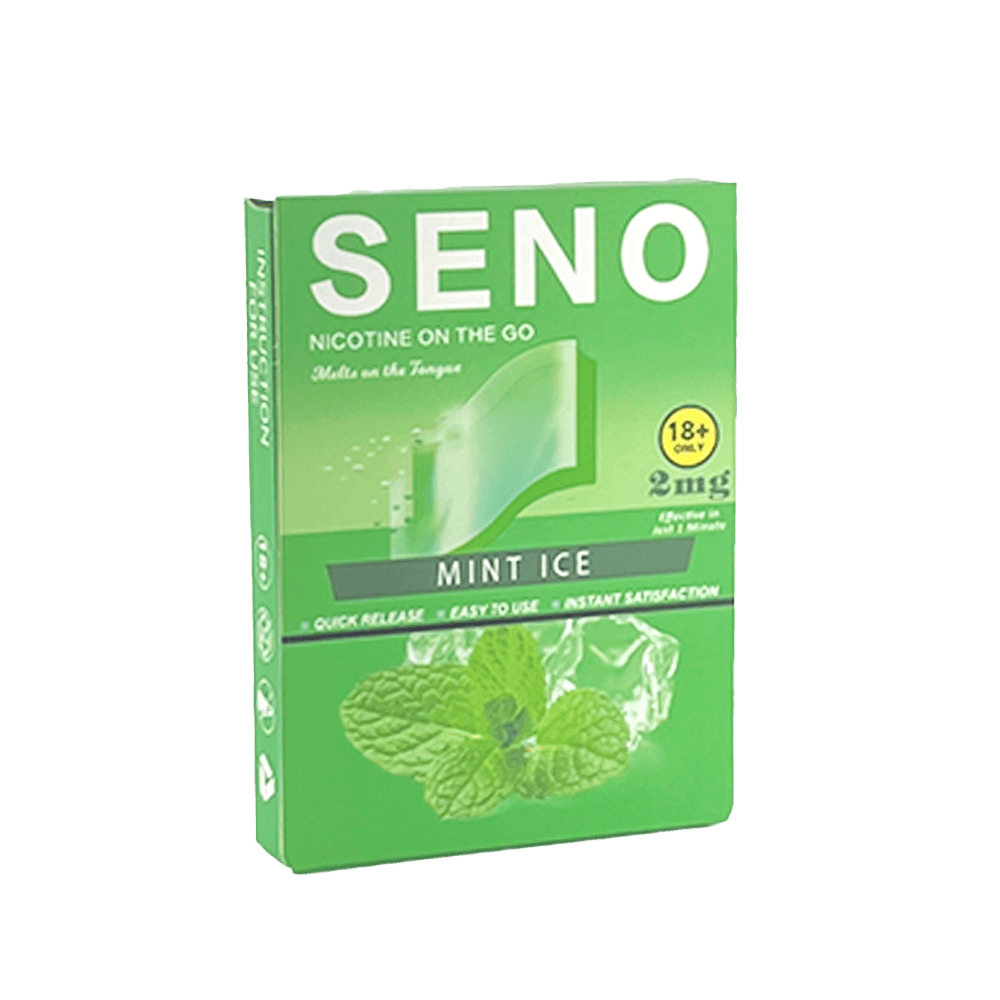
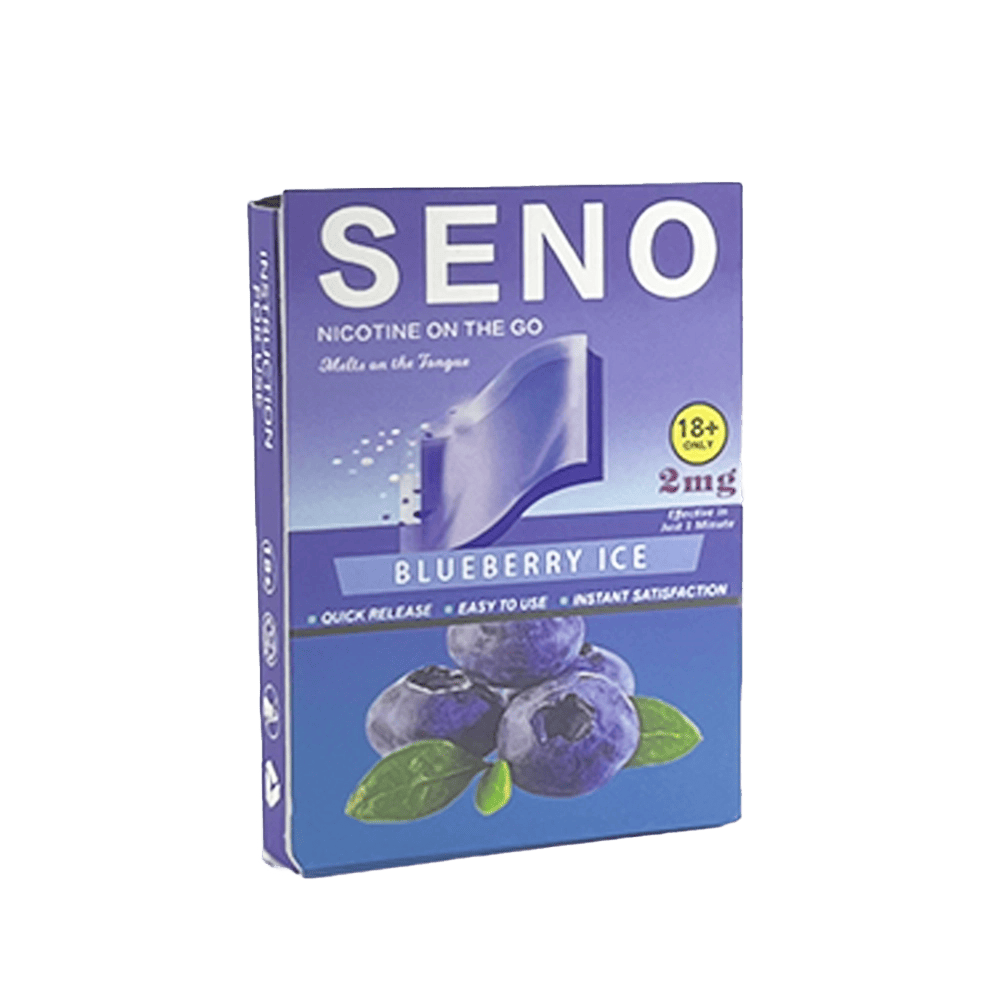
- Distributor portfolio expansion: a flavor range — including NF-2mg/Mint, Blueberry, Watermelon, Grape, Kiwi Fruit, Mixed Berries, Mango, Peach, Cheese, Lemon, Orange and Strawberry variants — only holds its value if every variant is produced under the same released framework.

QA Framework Comparison Table
| Verification layer | What to request from the supplier | Documented reference point | Risk when the layer is missing |
|---|---|---|---|
| 1. Raw material grade | Bill of materials with material grades; incoming-lot check records | SENO nicotine films are specified with pharmaceutical-grade film-forming polymers, high-purity nicotine, food-grade flavoring agents, stabilizers and excipients | Dissolution and stability vary between batches; material substitutions stay invisible to the buyer |
| 2. Batch-level inspection | Batch record or certificate of analysis, in-process thickness and dimension checks, retained samples | Documented specification: 2 mg / 4 mg / 6 mg or customizable nicotine strength; 10–30 second dissolution; approx. 20 mm × 30 mm film size; 50–100 micron thickness | No traceability if a complaint arrives; an entire shipment is exposed |
| 3. Third-party and regulatory verification | Independent laboratory scope for content and performance claims; confirmation of regulatory listing | FDA DailyMed listing for Seno Oral Film, NDC 85806-001 (unapproved drug, Human OTC Drug, for relieving mental fatigue and smoking cessation assistance) | Claims rest only on internal reports; market-access documentation may not hold up |
| 4. Stability and storage testing | Stability data for your distribution environment; packaging specification | 24-month shelf life; cool and dry storage; individual sachets or multi-pack boxes; moisture-resistant packaging; optional child-resistant packaging | Product degrades after delivery, producing returns and shelf-life disputes |
| 5. Pre-shipment compliance | Per-market labeling and artwork approval, packaging integrity check, carton and document verification | Compliance with local nicotine regulations is required, with custom labeling for different markets; export business is 100% of sales across the EU, USA, Canada and Australia | Goods held or rejected at the destination market after full production cost is incurred |
Frequently Asked Questions
Which compliance documents should I check before ordering nicotine oral strips?
Confirm three document groups before the first purchase order. First, market compliance: nicotine films require compliance with local nicotine regulations, and packaging must match each destination market, with custom labeling for different markets and optional child-resistant packaging alongside moisture-resistant packaging. Second, regulatory listing status: in the United States, for example, the FDA DailyMed database lists Seno Oral Film under NDC 85806-001 as an unapproved drug (Human OTC Drug) for relieving mental fatigue and smoking cessation assistance, a record a buyer can verify directly. Third, the product specification sheet: nicotine strength of 2 mg, 4 mg, 6 mg or customizable, dissolution time of 10–30 seconds, film size of approximately 20 mm × 30 mm, thickness of 50–100 microns, a 24-month shelf life and cool, dry storage conditions.
How can I verify a supplier’s production capability and specification consistency?
Split the question into scale and control. For scale, SENO’s manufacturing is based on a 20,000 m² facility with approximately 30 staff, including a 15-engineer R&D team, and an annual production capacity of 12,000,000 to 50,000,000 strips. For control, ask for batch-level inspection records covering thickness, dimensions, dissolution time and nicotine strength, plus retained samples per batch. Capacity answers whether a supplier can make your volume; batch records answer whether every carton will match the approved sample.
What cost factors should I compare beyond the per-strip price?
Cost beyond unit price is driven mainly by material grade and packaging. Films specified with pharmaceutical-grade film-forming polymers, high-purity nicotine, food-grade flavoring agents, stabilizers and excipients sit at a different cost level from films built on substitutes, and material grade affects dissolution behaviour and stability. Packaging format (individual sachets versus multi-pack boxes), moisture-resistant and optional child-resistant packaging, and market-specific custom labeling also change cost. Compare these inputs line by line instead of comparing headline prices for products built to different specifications.
How should I evaluate nicotine oral strip samples from two suppliers?
Evaluate samples against the specification band rather than against impressions. Check dissolution time against the 10–30 second range, thickness against the 50–100 micron range, and then film integrity, flavor accuracy and sachet seal quality. Request that each sample arrive with its batch documentation so the physical sample and the paper record can be compared side by side. Keep the samples afterwards and re-check them under your own storage conditions — a 24-month shelf life claim tied to cool, dry storage is best tested against your warehouse rather than against a brochure.
What should a QA-aware lead time plan include?
A QA-aware lead time plan contains three checkpoints before shipping: sample approval, market labeling and compliance confirmation, and pre-shipment inspection. Build them into the schedule rather than treating them as optional extras. Suppliers such as SENO, whose export business accounts for 100% of total sales across the EU, USA, Canada and Australia, normally sequence these steps together with distributors. To start the process, request a sample and a batch documentation package by email at seno.serve@outlook.com or through WhatsApp at +1 (626) 232-2952, and review the product range at seno-online.com.
Conclusion
Nicotine oral strip sourcing decisions are usually presented as a price-and-flavor comparison, but the differences that determine whether a repeat order succeeds sit in the QA framework: material grade, batch-level inspection, third-party and regulatory verification, stability testing, and pre-shipment compliance. A buyer who scores suppliers against those five layers can separate manufacturers that can hold a 50–100 micron film and a 10–30 second dissolution time across a 24-month shelf life from those that can only describe it.
Use the table above as a checklist, request documentation before samples rather than after, and treat every award, listing or certificate as supporting evidence for the framework rather than a substitute for it. That approach costs a few extra emails at the sourcing stage and prevents most of the problems that appear after the container arrives.
Next step: compare frameworks with real documentation
Request SENO nicotine oral strip samples together with the batch documentation package for your market, or ask for a quotation based on your required strength, flavor and packaging format.
Email: seno.serve@outlook.com | Tel: +86 134-1745-8127 | WhatsApp: +1 (626) 232-2952
Official site: https://seno-online.com/