SENO Supplier Evaluation: Nicotine Film GMP, IC50 & Traceability
SENO Supplier Evaluation: Nicotine Film GMP, IC50 & Traceability
A nicotine oral film supplier should be audited against three linked evidence chains: a GMP-oriented production system, a measured cytotoxicity limit expressed as an IC50 value, and batch-level traceability that runs from the nicotine source to the shipped carton. If any one of the three is missing, the other two cannot be relied on.
This article is written for distributors and private-label buyers who have already narrowed their supplier list and now need to convert claims into documentation they can defend to their own customers, auditors, and market regulators. It sets out a practical audit framework, explains what each checkpoint is meant to prove, and records what SENO can document at each checkpoint.
SENO is the nicotine oral thin film brand of Xin Sino Technology (Shenzhen) Co., Ltd., a manufacturer operating a 20,000 m² production facility with a 15-person R&D team and exports to Europe, the United States, Canada, Australia, and the Middle East.

Problem Definition: Why Nicotine Film Audits Fail in Practice
Most failed supplier audits are not caused by missing certificates. They are caused by evidence that cannot be tied to a product, a batch, or a market. Four failure modes account for most of the risk a distributor carries after signing.
- Document–product mismatch. A test report is presented for the manufacturer, not for the SKU being purchased. Without a batch identifier linking the document to the goods, a report proves only that some product was tested at some point in time.
- Invisible dose drift. Nicotine is an active substance delivered across the oral mucosa. Per-sheet variation does not appear in a sample photo or a specification sheet; it appears in lot-to-lot testing and in the dose-control method behind the finished film.
- Traceability that stops at the invoice. Many suppliers can name their nicotine source but cannot produce lot-linked incoming material records, so a quality question raised six months after delivery has no path back through production.
- Packaging treated as an afterthought. Moisture ingress and child access are stability and safety issues, not cosmetic ones. Moisture barrier packaging and child-resistant packaging belong inside the audit, not in the shipping checklist.
An audit framework should be built so that each of these four failure modes has a specific document, test, or system that answers it. The sections below work through that framework in the order a distributor should apply it.
Industry Background: A Small Format Inside a Fast-Moving Category
The nicotine oral dissolvable thin film market was valued at USD 112.34 million in 2024 and is projected to reach USD 174.18 million by 2035, according to Market Research Future. The surrounding modern oral category is far larger: Grand View Research estimated the U.S. modern oral nicotine products market at USD 6.04 billion in 2024, with nicotine pouches holding a 67.65% revenue share.
The retail landscape in that market is dominated by Zyn (Philip Morris), Velo (BAT), and On! (Altria). Films compete on the same shelf and inside the same regulatory conversation as pouches, but they are manufactured very differently: a film is a formulated, dried, and cut dosage form whose quality profile depends on formulation control, coating and drying consistency, and per-unit quantification.
What this means for a distributor: because films are a smaller format inside a large category, a distributor's leverage does not come from volume alone. It comes from being able to show that the film it sells was produced under a controlled process, tested at batch level, and documented in a way that survives a customer or regulator question.
Detailed Solution: What Audit-Grade Evidence Looks Like
An audit-grade supplier answers each checkpoint with a system, a record, or a test result rather than with a statement of intent. The seven checkpoints below follow the order in which risk actually accumulates during production.
1. A production system that is GMP-oriented, not GMP-adjacent
SENO runs a GMP-oriented production process on controlled-environment production lines, supported by in-house R&D and testing systems. That combination matters for two reasons. Controlled-environment lines address the part of film quality that comes from the room rather than the recipe, namely humidity and particulate control during coating and drying. In-house testing capability addresses the gap between a problem appearing and a problem being detected.
For an auditor, the question is not whether a supplier says GMP, but which elements of the process are documented and controlled: material handling, environmental control on the line, in-process checks, and who performs release testing.
2. Nicotine source traceability and raw material grade
SENO maintains raw materials traceability that covers nicotine source traceability, and uses pharmaceutical-grade raw materials. Source traceability answers a specific audit question: for the batch in front of you, which nicotine lot was used, where did it originate, and what incoming verification was performed. Raw material grade answers the second question: whether inputs were specified to a pharmaceutical standard rather than a general industrial one.
3. Precision formulation and dosing with mg-level error control
Dose control in an oral film is a formulation and quantification problem, not a labelling problem. SENO nicotine oral films are produced with precision formulation and dosing technology, together with precise film quantification technology that applies mg-level error control per sheet, supported by batch consistency testing and clear dosage labeling.
This is the checkpoint where a distributor should ask for the method rather than the promise: how nicotine content per sheet is quantified, how the quantified value is compared against the label claim, and what happens to a lot that falls outside the accepted range.

4. Cytotoxicity and IC50 verification
Cytotoxicity testing establishes how a formulation behaves against cells, and an IC50 value turns that behaviour into a number a buyer can compare. SENO's safety file includes in vitro cytotoxicity testing and a quantitative IC50 toxicity assessment. The method used is the Neutral Red Uptake Assay, conducted in accordance with the Health Canada T-502 standard.
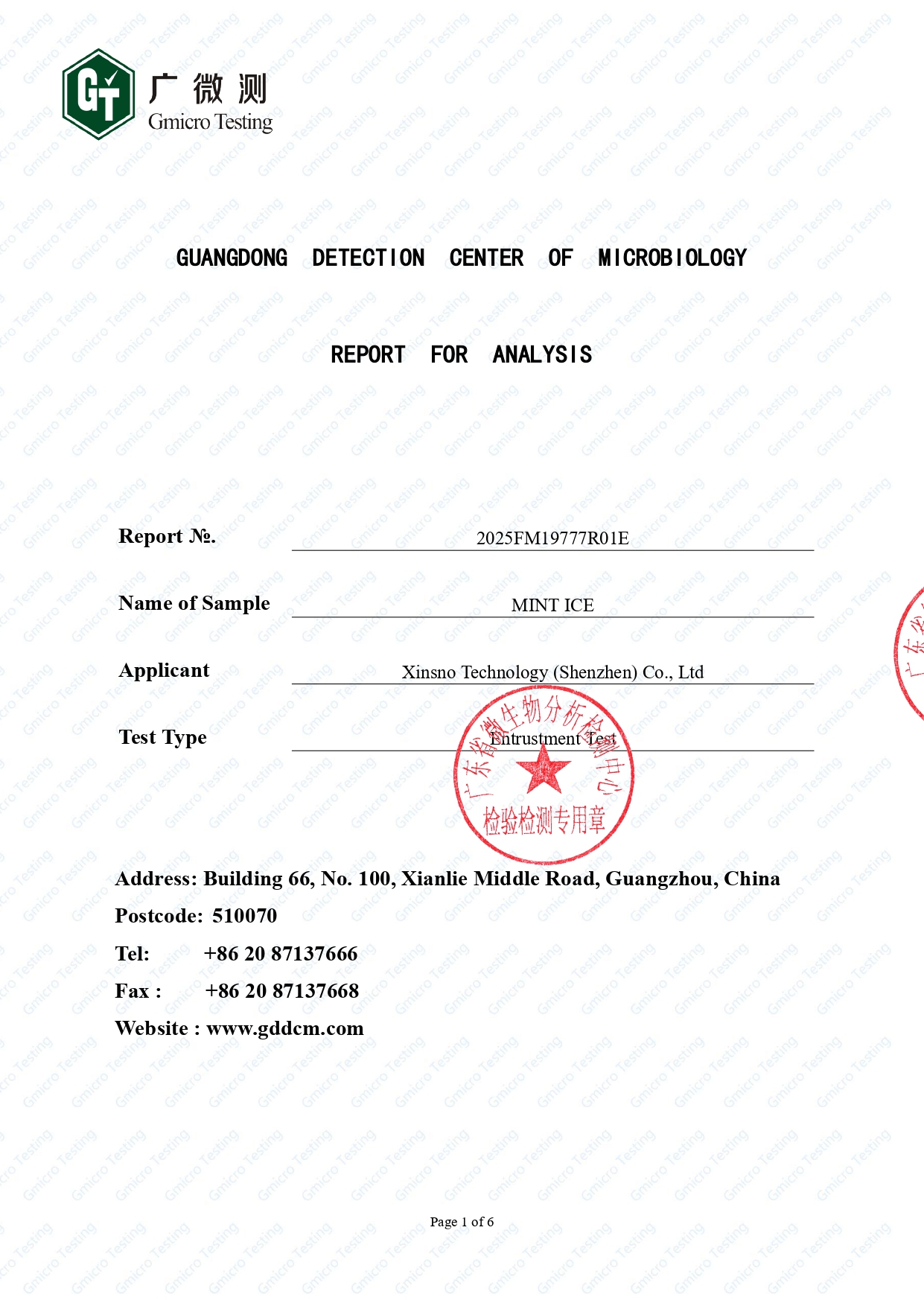
For the sample documented in SENO's third-party test record, the IC50 result is 1549 μg/mL (95% CI: 1319–1820). Verification is performed by a third-party testing institution, Gmicro Testing, and each batch of product is eligible for submission for testing with data retention. A toxicological screening system supports ongoing product safety assessment.
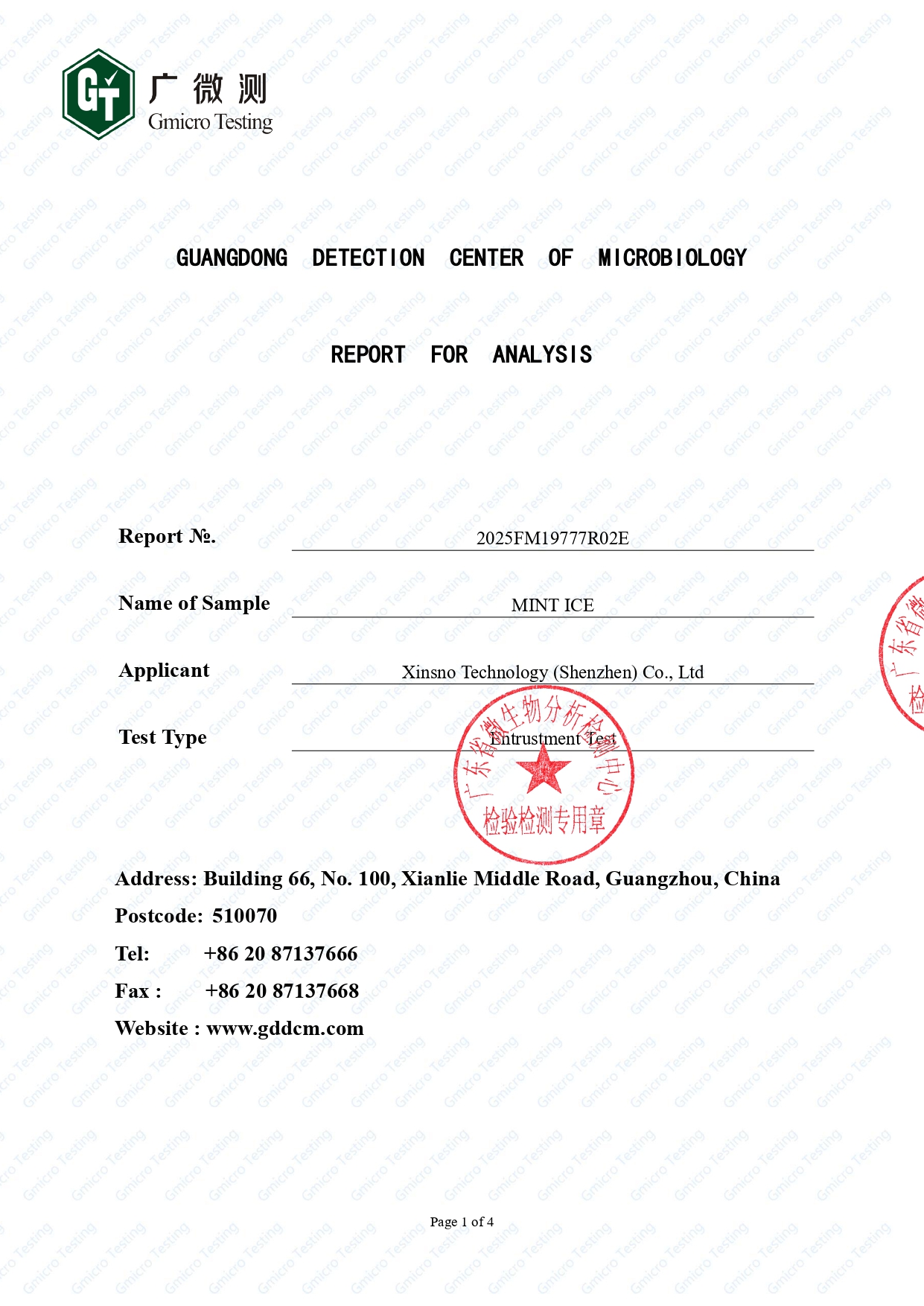
Three details in that paragraph are the ones an auditor should actually write down: the method name, the reported value with its confidence interval, and the name of the laboratory that produced it. A cytotoxicity statement without a method, a number, and a laboratory is not auditable.
5. Batch traceability: the system behind the certificate
SENO has established a batch testing and data traceability system and applies batch-level quality inspection and verification in production. Batch consistency verification reports are provided, and 100% batch inspection is performed before shipment. Third-party inspection is available upon request.
The distinction that matters here is between batch testing as an event and batch traceability as a system. An event produces one report. A system produces a report that can be matched to a production lot, a nicotine lot, a test date, and a shipment, which is exactly what a distributor needs when a customer complaint arrives months later.
6. Stability, moisture barrier, and child-resistant packaging
SENO performs stability testing under high and low temperature conditions and packs product in moisture barrier packaging. Child-resistant packaging and clear dosage labeling are treated as part of the safety control set, together with standardized labeling and usage instructions. For film products, moisture barrier packaging is a stability control: a film that picks up moisture changes in flexibility, dissolution behaviour, and dose uniformity.
7. Pre-shipment compliance checks
Before shipment, SENO performs an export compliance review as a pre-shipment compliance check. Formula and labels are adjusted in accordance with the regulations of the target market (EU/US), with preparation for PMTA/TPD direction in advance where applicable. This is the checkpoint that connects manufacturing evidence to the market the goods are actually entering; the same SENO nicotine oral strips sold into two jurisdictions may require two different label sets and two different documentation packs.
Step-by-Step Breakdown: A Six-Step Distributor Audit
The framework below can be run in sequence over two to three weeks, or used as a scoring sheet when two shortlisted suppliers are compared side by side.
Step 1 — Define the SKU and the claim you must defend
Record the nicotine strength, film size, pack format, and destination market before requesting anything. Every document you receive should be traceable back to that definition. If a supplier sends a general company certificate pack instead of SKU-level and batch-level evidence, the audit has not started.
Step 2 — Audit the production system before the product
Request a process description covering material handling, environmental control on the coating and drying lines, in-process checks, and release-testing responsibility. A supplier running controlled-environment production lines with in-house R&D and testing systems can answer this in documents; a supplier that outsources production usually cannot.
Step 3 — Trace the nicotine
Ask for the incoming material records for the nicotine lot used in the batch you are buying, plus the raw material grade specification. Traceability should name the source and the lot, not just the material.
Step 4 — Test the dose-control claim
Ask how nicotine content per sheet is quantified and what error control is applied. At SENO, dose control is handled through precise formulation and dosing technology combined with precise film quantification applying mg-level error control per sheet, and verified through batch consistency testing. Then ask for a batch consistency verification report for a production lot, not a development lot.
Step 5 — Review the safety file against a fixed checklist
Confirm four items: the cytotoxicity method (Neutral Red Uptake Assay), the reference standard (Health Canada T-502), the reported IC50 value with its confidence interval (1549 μg/mL, 95% CI 1319–1820 in SENO's sample documentation), and the third-party laboratory that verified it (Gmicro Testing). Also confirm that each batch is eligible for submission for testing and that data is retained.
Step 6 — Close the delivery loop, then the commercial terms
Delivery safeguards come first: moisture barrier packaging, child-resistant packaging, standardized labeling, a pre-shipment compliance check, and 100% batch inspection before shipment, with third-party inspection available on request. Only then move to order terms, namely an MOQ of 100,000–300,000 strips per SKU, a standard lead time of 20–30 days, and shipment under FOB, CIF, or DDP depending on the destination.
Use Cases: Three Audit Scenarios
Scenario 1 — A distributor entering the EU or US market
The binding constraint here is documentation rather than product. The audit should confirm that formula and label adjustments for the target market are handled, that PMTA/TPD direction is prepared in advance where applicable, and that a pre-shipment compliance check is a standing step rather than a favour. Public listings can then be cross-checked directly: Seno Oral Film appears in FDA DailyMed under NDC 85806-001, and the full listing entry should be read rather than summarized.
Scenario 2 — A private-label brand owner scaling a line
Customization raises the audit standard, because each variant is a new formulation question. SENO offers OEM, ODM, and private label services with customization covering nicotine strength, flavor development, film size, packaging design, and branding. For this buyer, the critical evidence is that dose control and batch consistency testing still apply across variants, and that batch consistency verification reports accompany each lot.
Scenario 3 — A distributor consolidating or switching suppliers
Switching suppliers means re-establishing a quality history. The practical test is continuity: monthly production capacity of 1,000,000–5,000,000 strips, a 20–30 day lead time for standard orders, 100% batch inspection before shipment, and after-sales support covering technical support, marketing material support, and fast response for quality or logistics issues.
Comparison Table: Audit Checkpoints and SENO's Documented Position
The table below works as an audit sheet. The middle column lists what a distributor should request from any supplier; the right column records what SENO documents against that request.
| Audit checkpoint | Evidence a distributor should request | SENO's documented position |
|---|---|---|
| Production system | Process description, line environmental control, release-testing responsibility | GMP-oriented production process; controlled-environment production lines; in-house R&D and testing systems; 20,000 m² facility |
| Nicotine source traceability | Lot-linked incoming material records for the nicotine used in the batch | Raw materials traceability covering nicotine source traceability |
| Raw material grade | Specification for nicotine and excipient grade | Pharmaceutical-grade raw materials |
| Dose control | Per-sheet quantification method and error-control approach | Precise formulation and dosing; precise film quantification with mg-level error control per sheet; clear dosage labeling |
| Batch consistency | Lot-level consistency reports for production lots | Batch consistency testing; batch-level quality inspection and verification; batch consistency verification reports provided |
| Cytotoxicity and IC50 | Test method, reported value with confidence interval, laboratory name | Neutral Red Uptake Assay under Health Canada T-502; IC50 1549 μg/mL (95% CI 1319–1820) verified by third-party Gmicro Testing |
| Stability and packaging | Stability protocol and packaging specification | Stability testing under high and low temperature; moisture barrier packaging; child-resistant packaging |
| Pre-shipment control | Compliance review record and final inspection record | Pre-shipment compliance check; 100% batch inspection before shipment; third-party inspection available on request |
| Order terms | MOQ, lead time, payment terms | MOQ 100,000–300,000 strips per SKU; 20–30 days for standard orders; 30% deposit with 70% balance before shipment |
| Capacity | Monthly and annual output | 1,000,000–5,000,000 strips per month; 12,000,000–50,000,000 strips per year |
FAQ
How does a distributor verify that a nicotine film supplier's compliance file is current and batch-linked?
Request batch-linked evidence rather than a certificate folder: the batch testing and data traceability records for the lot being shipped, third-party laboratory verification from a named institution (Gmicro Testing for SENO's IC50 testing), a cytotoxicity result reported with its method and confidence interval (Neutral Red Uptake Assay under Health Canada T-502, with a reported value of 1549 μg/mL and a 95% CI of 1319–1820 in SENO's sample documentation), a pre-shipment compliance check, and labels adjusted for the destination market with PMTA/TPD direction prepared in advance where applicable.
Can a supplier customize nicotine strength and flavor without weakening dose control?
Yes, provided customization runs through the same control system as standard production. SENO provides OEM, ODM, and private label services covering nicotine strength, flavor development, film size, packaging design, and branding, produced under a GMP-oriented process with nicotine source traceability and precise film quantification applying mg-level error control per sheet, supported by batch consistency testing.
What order volume and payment structure should a distributor budget for?
The minimum order quantity is 100,000–300,000 strips per SKU. Standard payment terms are 30% deposit with a 70% balance before shipment, with flexible options for long-term partners, and T/T is supported. Delivery can be arranged under FOB for buyers with their own logistics partners, CIF to the destination port, or DDP door-to-door, which is the usual starting point for new partners.
What is the correct role of a sample in this audit?
A sample confirms sensory and handling characteristics; it does not confirm batch control. Sample confirmation takes place before mass production, and it should be paired with batch consistency verification reports and, where requested, third-party inspection. SENO performs 100% batch inspection before shipment regardless of whether a sample has been approved.
What lead time and capacity should be planned, and what support continues after delivery?
Monthly production capacity is 1,000,000–5,000,000 strips, and the typical production lead time for standard orders is 20–30 days. After delivery, after-sales support covers technical support, marketing material support, and fast response for quality or logistics issues. Distributors who want to run this framework against a live SKU can request the documentation pack and a sample through seno-online.com.
Conclusion: An Audit Should End With a Decision
A nicotine oral film supplier evaluation is complete when three questions have document-backed answers: is the production system controlled and documented, is there a measured cytotoxicity limit with a method and a laboratory behind it, and can a specific batch be traced from nicotine source to shipment? For SENO, those answers take the form of a GMP-oriented production process on controlled-environment lines, pharmaceutical-grade raw materials with nicotine source traceability, precise film quantification with mg-level error control per sheet, an IC50 result of 1549 μg/mL (95% CI 1319–1820) verified by Gmicro Testing under Health Canada T-502 methodology, and a batch testing and data traceability system backed by 100% batch inspection before shipment.
Everything else in the evaluation, including capacity, MOQ, lead time, and after-sales support, should be read as the commercial envelope around that evidence. Run the six steps in order, keep the audit sheet open during the conversation, and close the file with a decision rather than a folder.
SENO Nicotine Oral Films: Documentation Pack and Samples
SENO supplies nicotine oral thin films to distributors and private-label partners across Europe, the United States, Canada, Australia, and the Middle East. The documentation used in a supplier evaluation, including batch traceability records, cytotoxicity and IC50 test documentation, and packaging specifications, can be requested together with a sample for product confirmation.
Contact: Frank · Email: seno.serve@outlook.com · Tel: +86 134-1745-8127 · seno-online.com

Have Questions or Need More Details?
Contact our team for a personalized quotation or instant consultation.
Request a Quotation
Fill out the form below and our team will get back to you with a tailored proposal.
WhatsApp Direct Chat
Prefer to chat in real-time? Message us on WhatsApp for instant assistance & quick answers.
- Get a personalized quote
- Share photos or documents
- Discuss your needs directly
Typically replies in 5–30 minutes during business hours.