
What Is a Nicotine Oral Film? Application Guide for Smoke-Free Product Lines
What Is a Nicotine Oral Film? Application Guide for Smoke-Free Product Lines
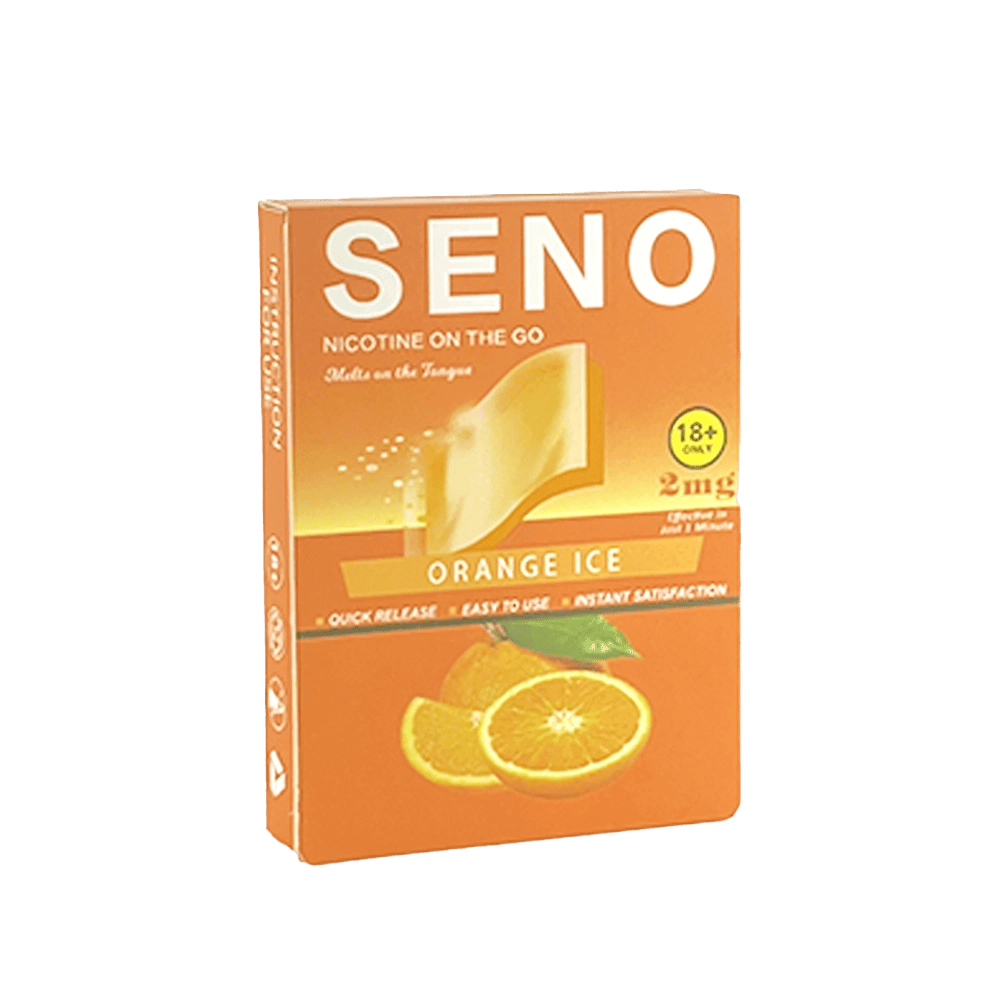
A nicotine oral film is a thin, single-use dissolvable strip that delivers a fixed nicotine dose per sheet when placed in the mouth, with no combustion, no vapour and no device. For a buyer, the format is ultimately a constraint problem rather than a novelty: the dose locked into each sheet, the dissolution window, the moisture barrier around every unit and the compliance documents that unlock a specific market together decide whether a smoke-free product line can be listed, labelled and replenished at retail.
This guide is written for distributors, brand owners, FMCG importers and private label buyers who are researching or evaluating a film-based smoke-free line. It explains what the format is, how it behaves in real selling environments such as retail smoke-free aisles and private label programs, and which specification and certification constraints should be settled before an order is placed.
SENO is a nicotine oral thin film manufacturer operated under Xin Sino Technology (Shenzhen) Co., Ltd. The company produces nicotine film and oral film products, including OEM and ODM programs, for distributors and brand owners serving Europe, the United States, Canada and Australia, and works from a 20,000 m² production facility with an in-house R&D team. Every figure and certificate reference in this article comes from SENO's product, capability and compliance documentation.
Problem Definition: Why the Film Format Is So Often Specified Wrong
The first question a buyer usually asks is commercial, namely how many units fit a smoke-free aisle. The constraints that decide the answer, however, sit further upstream in the product specification.
Three formats compete for the same shelf in a modern oral nicotine category: pouches, gum and films. They are not interchangeable, and treating them as such produces the most common specification errors in this category.
- Dose logic confused with category logic. A film is dosed per sheet, and that single number drives labelling, regulatory ceilings and repeat-use behaviour. If the sheet dose is set by analogy to another format instead of to the destination market's rules, the line has to be re-specified later.
- Dissolution time treated as a technical footnote. A film that dissolves in 10 to 30 seconds supports discreet use in an office, on a plane or on a retail floor. A slower format changes the usage occasion, and therefore the channel.
- Packaging moisture barrier under-specified. Oral films are thin polymer sheets. Individual sachets and moisture-resistant packaging are not a premium extra; they are what protects the 24-month shelf life the product is documented against.
- Compliance documents assumed to travel. An FDA registration, a PMTA notification number and an EU Safety Data Sheet answer different questions. Assuming that one market's paperwork covers another is the most expensive error on this list.
- Barcoding and labelling left to the last minute. Grocery retail and cross-border e-commerce both require product identification and market-specific labelling, and custom labelling requirements vary by destination.
Each of these is a constraint rather than a preference, which is why the rest of this guide is organised around specification, documentation and distribution fit instead of product promotion.
Industry Background: Where Nicotine Oral Films Fit in a Smoke-Free Aisle
The nicotine oral dissolvable thin films market was valued at USD 112.34 million in 2024 and is projected to reach USD 174.18 million by 2035, according to Market Research Future. Set beside the wider modern oral category, that figure defines the opportunity precisely: the U.S. modern oral nicotine products market, covering pouches, films and gums, was estimated at USD 6.04 billion in 2024 by Grand View Research, with nicotine pouches holding a 67.65% revenue share.
The competitive landscape explains the gap. Zyn (Philip Morris), Velo (BAT) and On! (Altria) collectively dominate the U.S. retail landscape according to NielsenIQ data reported by C-Store Dive, and they do so primarily through pouch formats. For a film-based line this is not a reason to stay out of the category; it is a reason to compete on a different product argument. Device-free use, fast dissolution and discretion are the claims a film can own, while mouthfeel and pouch-style placement already belong to the incumbents.
Two structural shifts support that position. First, smoke-free environments are now a normal working condition rather than an exception: indoor office and retail spaces, travel and mobile consumption, and regulatory-restricted no-smoking areas are all documented usage conditions for the format. Second, the channels that carry smoke-free products, including FMCG retail, vape and tobacco alternative channels, private label lines and cross-border e-commerce, reward products that need no device, no charging and no maintenance.
SENO's nicotine oral films have also received third-party category recognition: the brand was recognised as the 'Best Oral Thin Film Supplement in North America of 2025' by Best of Best Reviews for its nicotine replacement innovation. That kind of recognition is useful context, but it does not replace the specification and compliance work described below.
The SENO Nicotine Oral Film Format: Composition, Dosing and Packaging
Understanding what the format is made of makes the buying constraints easier to reason about, because every specification below maps to something a buyer must plan for.
Base composition
SENO nicotine films are built from pharmaceutical-grade film-forming polymers, high-purity nicotine, food-grade flavouring agents, stabilizers and excipients. The material grade matters commercially. It determines which compliance route the finished product can take in a given market, and it is the reason the documentation set below includes both Safety Data Sheet and Material Safety Data Sheet references.
Dose control per sheet
The format is offered at 2 mg, 4 mg and 6 mg nicotine per sheet, with customisable strengths available for private label programs. Dose per sheet is the single most important number in the specification because it is the unit counted by regulators, printed on the label and experienced by the end user on every single use. It is also the parameter most often re-cut when a brand moves from one market to another.
Dissolution time and physical format
Dissolution time is specified at 10 to 30 seconds. Film size is approximately 20 mm by 30 mm and can be customised, and thickness sits between 50 and 100 microns. Together these three parameters govern mouthfeel, handling and the print area available for brand artwork, and they are the parameters a buyer will be asked about first in a retail listing meeting.
Packaging, shelf life and storage
Films are packed in individual sachets or multi-pack boxes. Shelf life is documented at 24 months under cool and dry storage conditions. In distribution terms the sachet is the primary moisture barrier and the multi-pack box is the retail unit, which means packaging design and labelling sit inside the OEM scope rather than outside it.
Manufacturing scale and batch control
Production capacity runs at 1,000,000 to 5,000,000 strips per month, with annual output of 12,000,000 to 50,000,000 strips. Quality control covers raw material verification, in-process quality control, final product testing and consistency checks, plus 100% batch inspection before shipment. That last point is the one buyers should test directly, because batch inspection before shipment is what converts a promising sample into a repeatable order.
Compliance documentation by market
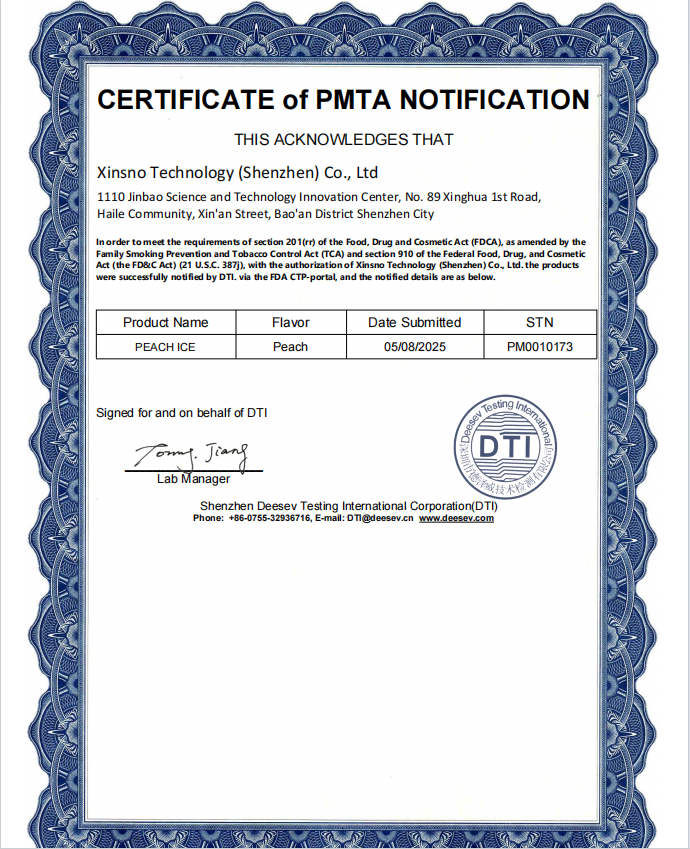
For the United States, the nicotine film holds an FDA Food Facility Registration (No. 13242356294) issued by the FDA under FDA Food Facility Registration Regulations, and an FDA Registration Certificate (No. 510936020) issued by Shenzhen Deesev Testing International Corporation (DTI) under FDA OTC Drug Regulations. The manufacturing facility is registered under FDA Registration Certificate FEI: 3038529751, compliant with Section 510 of the FD&C Act and 21 CFR 207. Multiple PMTA notifications are in place, including PM0010659 through PM0010667, together with PM0010173, PM0010176 and PM0010199, under the Family Smoking Prevention and Tobacco Control Act, 21 CFR Part 1100 and 21 CFR Part 801.
For Europe, Safety Data Sheets numbered DTI2025EC011118-1 through DTI2025EC011118-11, issued by DTI, comply with REACH Regulation (EC) No 1907/2006, CLP Regulation (EC) No 1272/2008 and EN 14986, and apply across European, American, African and Southeast Asian markets depending on the individual document. A Material Safety Data Sheet (HK2505276957-1RR) issued by Shenzhen HUAK Testing Technology Co., Ltd. conforms to UN GHS Rev.7 and US OSHA 29 CFR 1910.1200 for the global market.
For product identification and retail listing, the product is covered by a GS1 China Membership License (Certificate No. 1433650) issued by the China Article Numbering Center under the GS1 Global Identification System. Brand protection is documented through SENO Trademark Registration Certificate (Class 34) No. 86459855 and No. 86451379, issued by the China National Intellectual Property Administration (CNIPA) and valid from 2026-02-07 to 2036-02-06, covering oral nicotine strips and related goods, with a Class 35 application (No. 86462811) covering advertising, import and export agency, and retail and wholesale services for oral nicotine products.
Step-by-Step: Applying a Nicotine Oral Film to a Product Line
Applying the format to a real product line follows a fixed sequence. Skipping a step usually reappears later as a re-specification cost, a listing delay or an unsellable stock position.
Step 1 - Set the dose ladder
Decide which strengths the line will carry: 2 mg, 4 mg or 6 mg per sheet, or a custom specification. Start from the destination market's rules and the intended usage occasion rather than from a competitor's assortment.
Step 2 - Confirm the physical format
Lock dissolution time (10 to 30 seconds), film size (approximately 20 mm by 30 mm, customisable) and thickness (50 to 100 microns) against the way the product will actually be used. A fast dissolve supports discreet indoor use, while a slower format changes the occasion.
Step 3 - Choose the packaging architecture
Select individual sachets, multi-pack boxes, or both. Confirm the moisture-resistant packaging specification, decide whether child-resistant packaging is required for the destination, and plan market-specific labelling at the artwork stage rather than after a listing has been approved.
Step 4 - Map compliance documents to each market
Build a document matrix per destination: FDA registrations and PMTA notifications for the United States, Safety Data Sheets under REACH, CLP and EN 14986 for Europe, Material Safety Data Sheet documentation under UN GHS Rev.7 and US OSHA 29 CFR 1910.1200 for global programs, and GS1 identification for retail and e-commerce listing.
Step 5 - Validate with samples and batch records
Request physical samples at the intended strength and flavour, and ask for the batch quality-control evidence behind them: raw material verification, in-process control, final product testing and consistency checks, and 100% batch inspection before shipment.
Step 6 - Fix MOQ, lead time and replenishment
Plan against a minimum order quantity of 100,000 to 300,000 strips per SKU, a standard lead time of 20 to 30 days and an OEM or custom lead time of 30 to 45 days, with monthly capacity of 1,000,000 to 5,000,000 strips. Check that the 24-month shelf life covers the longest realistic route-to-shelf cycle in each market.
Step 7 - Plan shelf and channel execution
Decide where the line will sit: a smoke-free aisle as a single-unit impulse product, a private label program behind a retail brand, or a cross-border e-commerce listing where barcoding and labelling do the selling. Ask for the distributor marketing material support available at this stage.
Use Cases: Where a Film Format Earns Its Shelf Space
Retail smoke-free aisles
In FMCG retail the film competes for limited space against established pouch brands. Its argument is operational rather than sensory: no device, no spitting, no odour, and a 10 to 30 second dissolve that fits a short retail or workplace break. Individually wrapped sheets also make the unit easy to display and easy to price as a single-serve purchase.
Private label and brand-owner programs
For retailers and brand owners, film is a format that can be built to a house specification. SENO runs OEM, ODM and private label manufacturing covering nicotine strength, flavour development, film size and format, packaging design and branding. That scope is what makes the format viable for a private label line rather than only for a manufacturer's own brand.
Travel, office and no-smoking environments
Documented usage conditions for the format include smoke-free environments, indoor office and retail spaces, travel and mobile consumption, and regulatory-restricted no-smoking areas. Because the product requires no device and no charging, it fits a jacket pocket or a desk drawer, which is the practical requirement for high-frequency daily use outside a smoking area.
Distributor and wholesale portfolios
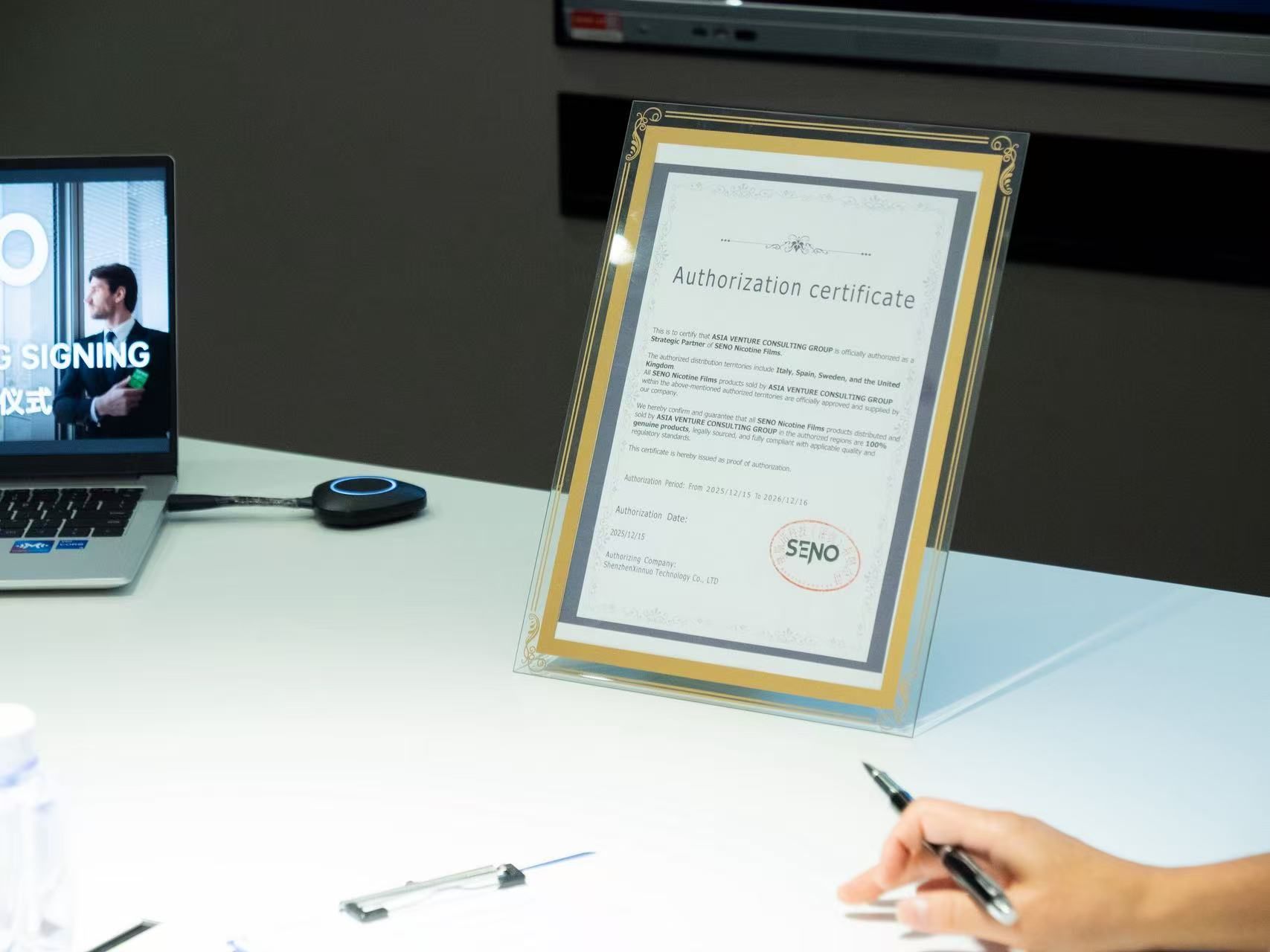
SENO's documented distribution experience covers distributors, wholesalers, nicotine brands and FMCG importers in Germany, the United States, Australia, the United Arab Emirates, Saudi Arabia and Canada, with order volumes of 500,000 to 2,000,000 strips and cooperation running over one to two years. Reported outcomes include stable performance across batches, repeat orders and faster local market acceptance, which are the three signals a distributor actually tracks.
The partnership record includes distributor agreements in France and the United Kingdom covering major European markets, an agency agreement in Canada with channel network construction, a French distributor agreement signed around exhibition activity, and exhibition and local marketing work in the United Arab Emirates. For a buyer evaluating a long-term partner rather than a one-off shipment, that pattern of signed agreements is more informative than any single reference.
Cross-border e-commerce
Online cross-border sales depend on identification and labelling rather than shelf presence. GS1 membership, market-specific labelling and a 24-month shelf life are the three requirements that make a film SKU workable in that channel.

Comparison Tables: Specification Reference and Distribution Fit
The two tables below convert the documentation into a procurement view. The first lists the specification a buyer must sign off; the second maps each distribution environment to the format characteristics that matter inside it.
Table 1 - SENO nicotine oral film specification reference
| Parameter | Documented specification | Why it constrains the product line |
|---|---|---|
| Nicotine strength per sheet | 2 mg / 4 mg / 6 mg / customisable | The dose unit that regulators, labels and end users all count. |
| Dissolution time | 10 to 30 seconds | Decides whether use is discreet and repeatable in public settings. |
| Film size | Approximately 20 mm by 30 mm (customisable) | Affects mouthfeel and the print area available for brand artwork. |
| Thickness | 50 to 100 microns | Balances handling strength against dissolution behaviour. |
| Base materials | Pharmaceutical-grade film-forming polymers, high-purity nicotine, food-grade flavouring agents, stabilizers and excipients | Material grade determines which compliance route applies. |
| Packaging | Individual sachets / multi-pack boxes | The sachet is the moisture barrier; the box is the retail unit. |
| Shelf life | 24 months | Must cover the longest realistic route-to-shelf cycle per market. |
| Storage | Cool and dry environment | Storage instruction goes onto the label and into distributor SOPs. |
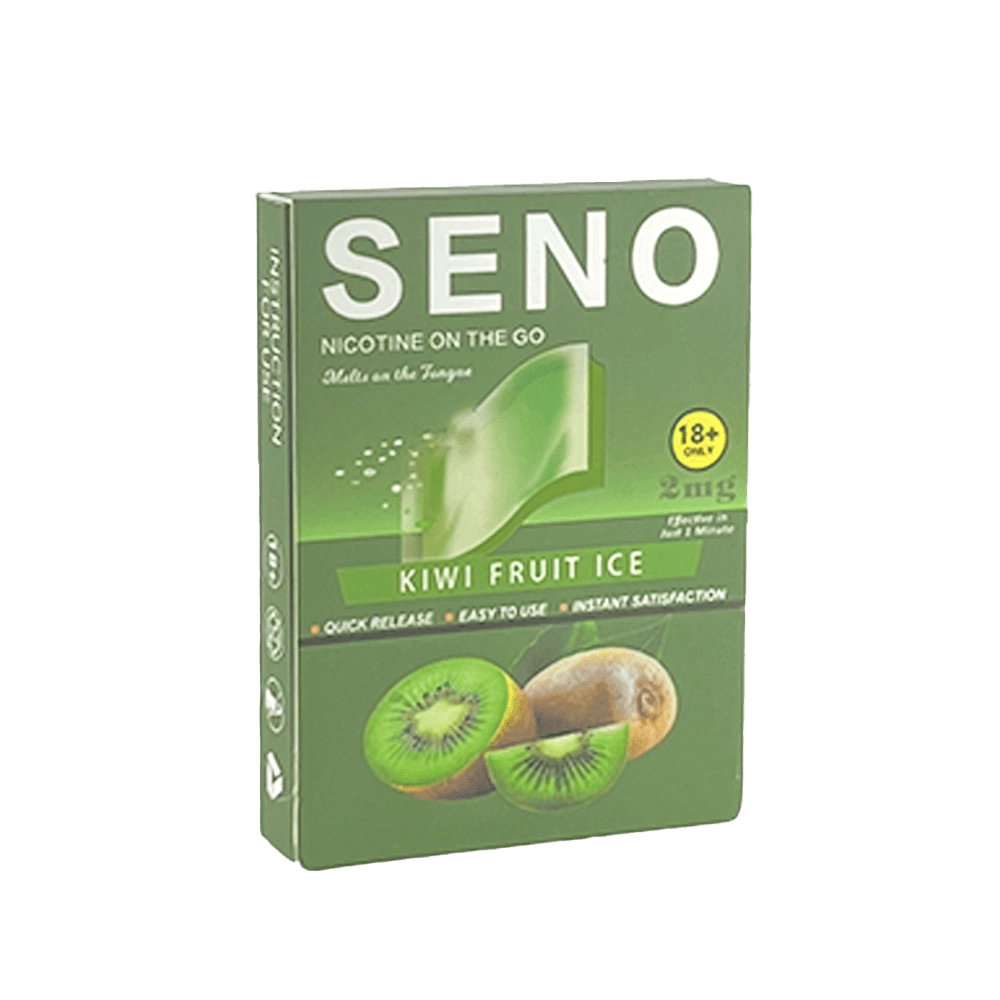
| Documented flavour builds | Mint, Blueberry, Orange, Strawberry, Lemon, Watermelon, Grape, Kiwi Fruit, Mixed Berries, Mango, Peach, Cheese | Flavour breadth translates directly into SKU count and shelf cost. |
Table 2 - Distribution environment fit
| Distribution environment | Typical buyer requirement | Format fit | Supporting documentation |
|---|---|---|---|
| Retail smoke-free aisle | Single-unit, device-free, discreet | Individually wrapped sheets, 10 to 30 second dissolve, no device required | Product specification; application conditions |
| Private label / brand owner | Custom dose, flavour and artwork | OEM, ODM and private label covering nicotine strength, flavour development, film size and format, packaging design and branding | OEM/ODM, capacity, MOQ and lead time |
| Travel and indoor no-smoking environments | Portable, odourless, no spitting | On-demand single-use format, device-free, suitable for daily high-frequency consumption | Application conditions; regulatory-restricted environments |
| Distributor / wholesale portfolio | Repeatable batch quality and MOQ certainty | MOQ 100,000 to 300,000 strips per SKU; standard lead time 20 to 30 days | Capacity, quality control, batch inspection |
| Cross-border e-commerce | Barcoding and market-specific labelling | Global product identification and custom labelling for different markets | GS1 China Membership License No. 1433650 |
FAQ
What certification documents support SENO nicotine oral films in the US and EU?
For the United States, SENO nicotine films hold an FDA Food Facility Registration (No. 13242356294) issued by the FDA and an FDA Registration Certificate (No. 510936020) issued by Shenzhen Deesev Testing International Corporation (DTI) under FDA OTC Drug Regulations, plus multiple PMTA notifications (PM0010659 to PM0010667, PM0010173, PM0010176 and PM0010199) under 21 CFR Part 1100 and 21 CFR Part 801. The manufacturing facility is registered under FDA Registration Certificate FEI: 3038529751, compliant with Section 510 of the FD&C Act and 21 CFR 207. For the EU, Safety Data Sheets DTI2025EC011118-1 to DTI2025EC011118-11 issued by DTI comply with REACH Regulation (EC) No 1907/2006, CLP Regulation (EC) No 1272/2008 and EN 14986.
What nicotine strength and physical format options does a SENO oral film come in?
SENO nicotine films are specified at 2 mg, 4 mg or 6 mg nicotine per sheet, with customisable strengths for private label programs. Dissolution time is 10 to 30 seconds, film size is approximately 20 mm by 30 mm and customisable, and thickness is 50 to 100 microns. Documented flavour builds include Mint, Blueberry, Orange, Strawberry, Lemon, Watermelon, Grape, Kiwi Fruit, Mixed Berries, Mango, Peach and Cheese. Packaging is individual sachets or multi-pack boxes, shelf life is 24 months, and storage conditions are cool and dry.
What are the MOQ, lead time and monthly capacity for a nicotine film order?
The minimum order quantity is 100,000 to 300,000 strips per SKU. Standard order lead time is 20 to 30 days, while OEM and custom orders run 30 to 45 days. Monthly capacity is 1,000,000 to 5,000,000 strips, with annual output of 12,000,000 to 50,000,000 strips.
How is dose consistency and batch quality verified before shipment?
Quality control covers raw material verification, in-process quality control, final product testing and consistency checks, with 100% batch inspection before shipment. Buyers can also validate the specification directly by requesting physical samples in the intended strength and flavour before placing a production order.
What customization and after-sales support is available for long-term programs?
SENO runs OEM, ODM and private label manufacturing with customization of nicotine strength, flavour development, film size and format, packaging design and branding. After-sales support includes technical support for product and compliance, marketing material support for distributors, fast response for quality or logistics issues, and long-term partnership support. Export markets covered are Europe, the United States, Canada, Australia and the Middle East. For samples, a specification sheet or a private label quotation, contact seno.serve@outlook.com or visit seno-online.com.
Conclusion: The Constraint Checklist Before You Commit
A nicotine oral film is a simple product to describe and a demanding one to launch. The description is one sentence long: a thin dissolvable sheet carrying a fixed nicotine dose per unit, used without combustion or a device. The launch is a sequence of constraints, and those constraints are what separate a line that stays on the shelf from one that gets re-specified mid-order.
- Dose per sheet fixed at 2 mg, 4 mg, 6 mg or a custom level that matches the destination market.
- Dissolution, size and thickness confirmed against the real usage occasion: 10 to 30 seconds, approximately 20 mm by 30 mm, 50 to 100 microns.
- Moisture-resistant sachet and multi-pack architecture selected, with child-resistant and market-specific labelling decided at artwork stage.
- Compliance matrix completed per market: FDA registrations and PMTA notifications for the US, SDS under REACH, CLP and EN 14986 for the EU, MSDS under UN GHS Rev.7 and US OSHA 29 CFR 1910.1200 for global programs, and GS1 identification for listing.
- Batch evidence reviewed before production, backed by raw material verification, in-process control and 100% batch inspection before shipment.
- MOQ, lead time and capacity modelled against 100,000 to 300,000 strips per SKU, 20 to 30 day standard lead times and 1,000,000 to 5,000,000 strips per month.
Buyers who work through that list in order tend to reach the same conclusion about where the category is heading. Pouches currently hold the largest share of the modern oral nicotine market, but films answer a different requirement: a discreet, device-free format for the smoke-free environments where a large part of daily life now happens. For distributors and brand owners, that is a differentiation argument rather than a volume argument, and it is one that can be built to a house specification.
Next Step: Samples, Specifications and Quotations
SENO supplies nicotine oral films to distributors, brand owners and FMCG importers, with documented coverage across European, North American and Middle Eastern markets and OEM, ODM and private label programs from a 20,000 m² production facility.
- Contact: Frank
- Email: seno.serve@outlook.com
- Tel / WhatsApp: +86 134-1745-8127 / +1 (626) 232-2952
- Website: seno-online.com
Request a sample in the strength and flavour you intend to list, and ask for the specification sheet covering dose per sheet, dissolution time, packaging and shelf life.
Nicotine products are regulated differently in each market. Product availability, labelling, packaging requirements and permissible nicotine strengths are subject to local regulation and to the compliance documents referenced in this article.