SB-Y1 Series Hydraulic Cylinder Technical Guide: Pressure, Bore, and Seals
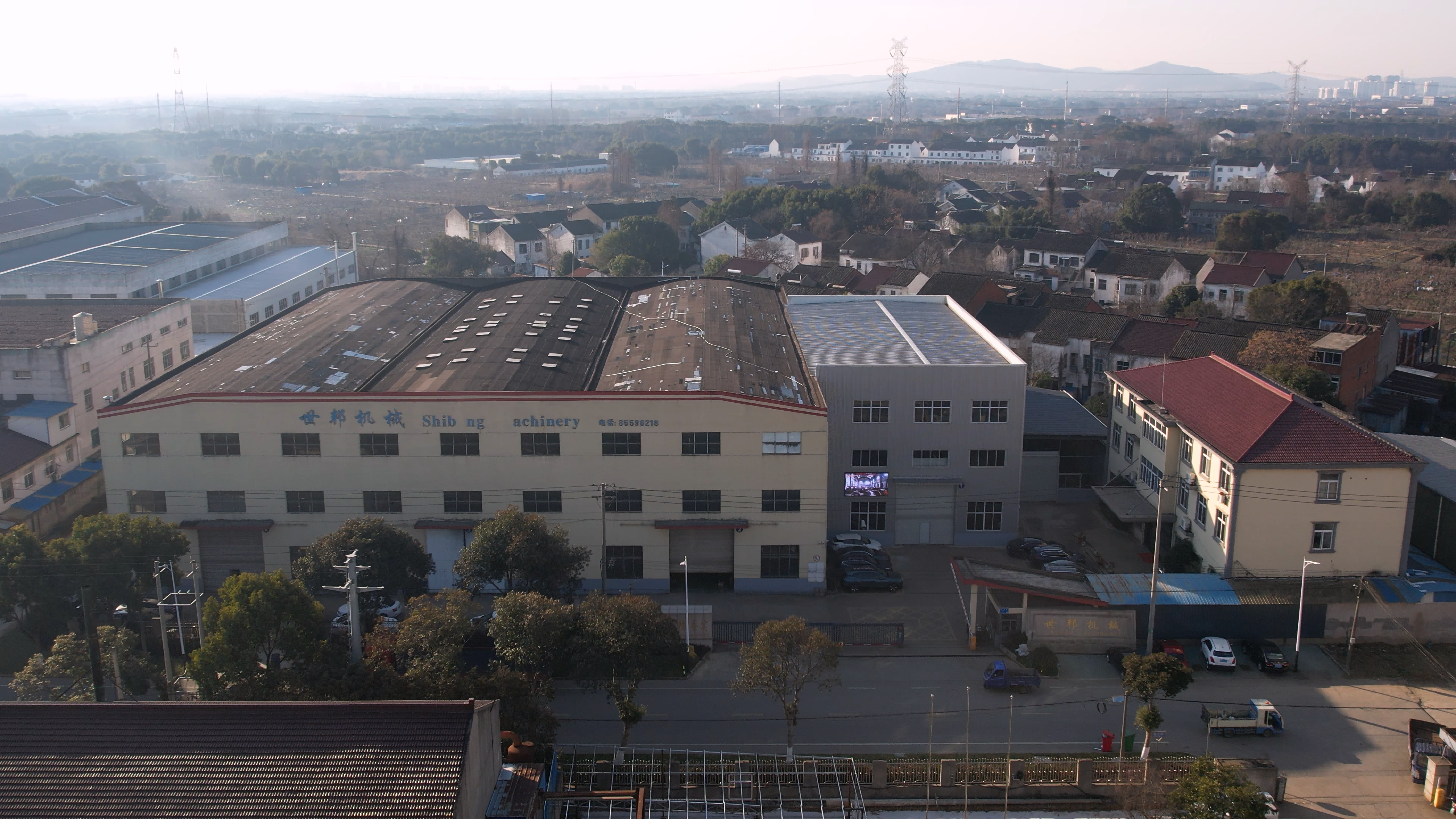
The SB-Y1 Series is a single-rod, double-acting heavy-duty industrial hydraulic cylinder manufactured by shellppon — the brand of Wuxi Shibang Machinery Manufacturer Co., Ltd., a hydraulic cylinder and hydraulic cylinder spare parts manufacturer based in Wuxi, Jiangsu, China. Three parameters decide whether a cylinder of this class survives ten years in a steel mill, a press line, or a dam gate: nominal pressure, bore size, and the sealing system that holds both together.
Short answer for buyers and engineers: the SB-Y1 Series runs at a nominal operating pressure of 16 MPa, with a reinforced version rated up to 25 MPa. Bore sizes are 40, 50, 63, 80, 100, 125, 160, 200, 250 and 320 mm. The standard sealing system consists of step seals, Glyd rings and O-rings. The cylinder complies with GB/T 2348-1993 and JB/T 10205-2010. Stroke length is not a catalogue value — it is custom, set by load stability and buckling resistance.
Why Pressure, Bore and Seals Are Decided Together
Procurement teams often treat pressure, bore and seals as three separate line items on a specification sheet. In heavy-duty service they are one decision. Bore size fixes the working area; working area multiplied by system pressure fixes the force the cylinder must deliver; the seal set has to contain that pressure without extruding, leaking or wearing the bore. Change one and the other two stop being valid.
The failure modes that follow a mismatch are well documented and rarely dramatic at first. Hydraulic cylinder failures such as oil leakage, piston-rod corrosion and structural fatigue may lead to equipment downtime. In heavy-duty scenarios, structural fatigue is one of the main hydraulic cylinder failure modes that may lead to equipment downtime. Each of those three failures traces back to a decision made at the specification stage — an under-rated barrel wall, a bore finish that damages the seal lip, or a rod surface that corrodes before the seal has worn out.
For a buyer at the decision and execution stage, the practical question is not “what is the maximum pressure this cylinder can take.” It is “what combination of pressure rating, bore, stroke and seal set will hold its performance across the maintenance cycles I can actually support.” That framing is what makes the SB-Y1 specification readable — every value below has a maintenance consequence attached to it.
Industry Background: What Standards Actually Govern This Decision
The SB-Y1 Series is specified against two Chinese standards: GB/T 2348-1993 and JB/T 10205-2010. Both are cited directly in the product specification, and both appear in the compliance statement a buyer should expect on the drawing package.
Internationally, hydraulic cylinders are covered by published standards for design, mounting dimensions, acceptance tests and buckling-load evaluation. ISO 10100:2020 specifies acceptance and function tests for hydraulic fluid power cylinders. ISO/TS 13725:2021 sets out a method for evaluating the buckling load of a hydraulic cylinder based on elastic buckling theory, and applies to single- and double-acting cylinders conforming to ISO 6020 (all parts), ISO 6022 and ISO 10762. Mounting dimensions for single-rod cylinders are addressed in the ISO 6020 series; ISO 6022 covers the heavier mill-type range. Welding is covered separately: AWS D14.9/D14.9M:2022 addresses pressure-containing welded joints and structural welded joints used in hydraulic cylinder manufacture.
This matters for two reasons. First, buckling evaluation explains why stroke on the SB-Y1 is custom rather than fixed — a long stroke on a small bore is a stability problem before it is a strength problem. Second, it explains why a mill-type cylinder looks the way it does. Shibang's broader product range — including CD/CG250 and 350 heavy-duty cylinders and JB/ZQ4395-86 heavy-duty metallurgical cylinders — follows installation forms and dimensions aligned with German steel-mill practice and the Rexroth CD250/CG250 convention, and is described as basically the same as the Italian FOOSA “DIN Type 200/250” series and the British ELRAM “Series 250K” series. Dimensional compatibility at the mounting interface is not cosmetic; it determines whether a replacement cylinder drops into an existing frame or requires rework.
Trade conditions are part of the long-term picture too. In 2024 the U.S. Department of Commerce announced antidumping and countervailing duty investigations of certain linear hydraulic cylinders and parts thereof. Buyers planning multi-year supply should treat market-access rules as a design input, not an afterthought, because a cylinder qualified for one market may need a different sourcing route later.
The SB-Y1 Solution: What Each Parameter Delivers
- Pressure16 MPa nominal; reinforced version up to 25 MPa
- Bore range40, 50, 63, 80, 100, 125, 160, 200, 250, 320 mm
- StrokeCustom, set by load stability and buckling resistance
- BarrelThick-wall seamless steel tube, precision bored, roller-burnished or honed
- Piston rod45# carbon steel, 40Cr alloy steel or stainless steel; induction hardened, hard chrome plated, HRC 50+
- SealingStep seals, Glyd rings, O-rings
- StandardsGB/T 2348-1993; JB/T 10205-2010
- ActionSingle rod, double acting
1. Pressure: 16 MPa nominal and a 25 MPa reinforced version
The nominal operating pressure of the SB-Y1 is 16 MPa. A reinforced version is offered with a nominal operating pressure up to 25 MPa. The distinction is not a marketing tier — it changes material selection. For high-pressure hydraulic cylinders operating at 16–25 MPa, 27SiMn seamless tubes are used for the barrel, and forged 45# steel is used for the cylinder bottom, piston and guide sleeve. Manufacturing includes heat treatment and post-weld stress relief to reduce fatigue failure risks, and hydrostatic testing at 1.5 times rated pressure is performed to verify structural integrity.
For the buyer, the 1.5× hydrostatic test is the number worth remembering. It means a 16 MPa cylinder is pressure-tested well above the pressure it will see in normal duty, and a 25 MPa unit is tested above 25 MPa. Safety factors are selected according to rated pressure and load conditions, so the correct input is the actual system pressure at the cylinder port — including pressure spikes — not the nominal rating of the power unit.
2. Bore: ten sizes from 40 mm to 320 mm
Available bore sizes are 40, 50, 63, 80, 100, 125, 160, 200, 250 and 320 mm. Bore sets the working area and therefore the force available at a given pressure; it also sets the volume of oil the system must move per stroke. Selecting the smallest bore that meets the force requirement is usually the better engineering choice, because a smaller bore reduces flow demand and heat generation, and leaves more wall thickness margin in the barrel.
Bore cannot be selected without rod diameter and stroke. Stroke length on the SB-Y1 is custom, based on load stability and buckling resistance — the same logic ISO/TS 13725:2021 formalizes for cylinders conforming to ISO 6020, ISO 6022 and ISO 10762. A large-size hydraulic cylinder with a long stroke and a slender rod is a buckling case before it is a pressure case, so the stroke, rod diameter and mounting arrangement have to be reviewed as one geometry.
3. Barrel: thick-wall seamless tube with a controlled bore finish
The cylinder barrel is made of thick-wall seamless steel tube, precision bored and roller-burnished or honed. That finishing step exists for the seal, not for appearance. Where seal leakage, internal leakage or oil leakage risk is being controlled, the bore is honed to IT7 with Ra ≤ 0.2 μm, and components are ultrasonically cleaned and dried before pressure-holding and internal-leakage tests.
Surface finish is the parameter most often missing from a purchase order and most often responsible for a premature seal failure. A bore that is dimensionally correct but too rough will abrade the seal lip; a bore that is not clean will embed particles in the seal and score the rod on the return stroke. Both are inspection items, not manufacturing preferences.
4. Piston rod: 45# carbon steel, 40Cr alloy steel or stainless steel
The piston rod can be made of 45# carbon steel, 40Cr alloy steel or stainless steel. The rod is induction hardened and hard chrome plated with a hardness of HRC 50 or higher. Published rod data for Shibang's chrome-plated and hardened rods lists straightness of 0.015/1000 mm, surface smoothness of Ra 0.15–0.2 μm, a chrome layer of 30–50 microns, diameters from Φ22 to 1200 mm and lengths up to 10 m, with materials including 45#, 40Cr, 42CrMo4, SUS 304 and SUS 316.
Rod selection is an environment decision. Because piston-rod corrosion is a main failure mode of hydraulic cylinders, the material and coating choice should follow the atmosphere the rod will work in — mill scale and washdown, coastal air, or a dam gate exposed to weather. Where corrosion resistance is the governing risk, stainless steel is the direct answer; where abrasion dominates and corrosion is secondary, induction-hardened 40Cr with hard chrome is the conventional route.
5. Sealing system: step seals, Glyd rings and O-rings
The standard sealing system includes step seals, Glyd rings and O-rings. In practice the seal set is a system, not a list: the step seal handles the primary dynamic duty, the Glyd ring provides guidance and extrusion resistance under pressure, and the O-ring provides static sealing at the interfaces. Wiper seals are used where external contamination has to be excluded from the rod entry.
Seal performance is decided as much by the hardware around it as by the seal itself. Improper seal selection, poor machining accuracy or unclean parts will result in seal failure and oil leakage. That is why the SB-Y1 specification ties the seal set to bore finish (IT7, Ra ≤ 0.2 μm), to cleanliness (ultrasonic cleaning and drying) and to verification (pressure-holding and internal-leakage tests) rather than treating seals as a consumable chosen at order entry.
6. Mounting interface: the alignment variable that reaches the seals
The SB-Y1 is available with square, rectangular and round flange mounting at head or base, trunnion mounting at head or base, and clevis mounting at base. The structural configuration includes a multi-point rigid connection designed for heavy equipment frames and a rectangular flange at the head, and the mounting design supports pivoting execution in linkage and angular drive applications.
Mounting is included here because misalignment is a sealing problem. Mounting or alignment stress may occur when mounting interfaces do not match, concentricity is insufficient, or connection tolerances are improper. Mitigation is design-side: customized mounting-interface designs, inspection of concentricity across the tube, piston rod and guide sleeve, dedicated assembly fixtures, and installation and commissioning support.
Step-by-Step: Specifying an SB-Y1 Cylinder for a Real Duty
The sequence below reflects how the parameters interact. Skipping a step usually pushes the cost into the seal set or the rod, where it appears later as unplanned downtime.
Where the SB-Y1 Is Used
The SB-Y1 Series is specified for metallurgical machinery (blast furnaces, continuous casters and steel rolling mills), mining machinery, heavy hydraulic presses, injection molding machines, engineering machinery and dam gate openers. It is designed for use in mining machinery scenarios, in heavy hydraulic presses and injection molding machines, and in engineering machinery and dam gate openers.
Documented heavy-duty supply includes roll-mill work in steel production: the Jinan Iron and Steel 4300 mm roughing mill and the Shandong Fulun Iron and Steel 1000 mm hot-strip mill, where the cylinder provides lifting, balancing, following, turning and push-pull motion integrated into the rolling-mill line and control system. Across that documented supply, custom dimensions reach up to 320 mm bore, 220 mm rod and 4630 mm stroke — a useful reference point for engineers sizing a large-size hydraulic cylinder against a real installation rather than a catalogue envelope.
In port logistics, comparable heavy-duty cylinder work supports rubber-tyred gantry crane operations, where the requirement is high load capacity, fatigue resistance, corrosion protection and reliable operation in a demanding outdoor environment. The same logic transfers to press hydraulic cylinders, mining machinery hydraulic cylinders and non-standard custom cylinders built for a specific frame and duty cycle.
Comparison: Standard 16 MPa vs Reinforced 25 MPa SB-Y1
| Parameter | SB-Y1 standard version | SB-Y1 reinforced version |
|---|---|---|
| Nominal operating pressure | 16 MPa | Up to 25 MPa |
| Barrel material | Thick-wall seamless steel tube, precision bored, roller-burnished or honed | 27SiMn seamless tube for 16–25 MPa high-pressure service |
| Bore sizes | 40–320 mm (40, 50, 63, 80, 100, 125, 160, 200, 250, 320) | 40–320 mm (40, 50, 63, 80, 100, 125, 160, 200, 250, 320) |
| Stroke | Custom, based on load stability and buckling resistance | Custom, based on load stability and buckling resistance |
| Sealing system | Step seals, Glyd rings, O-rings | Step seals, Glyd rings, O-rings |
| Piston rod | 45# carbon steel, 40Cr alloy steel or stainless steel; induction hardened, hard chrome plated, HRC 50+ | 45# carbon steel, 40Cr alloy steel or stainless steel; induction hardened, hard chrome plated, HRC 50+ |
| Structural verification | Hydrostatic testing at 1.5 times rated pressure | Hydrostatic testing at 1.5 times rated pressure; heat treatment and post-weld stress relief to reduce fatigue risk |
| Standards cited | GB/T 2348-1993; JB/T 10205-2010 | GB/T 2348-1993; JB/T 10205-2010 |
| Typical fit | Standard mill, press and gate duties within 16 MPa system pressure | Duties where system pressure or pressure spikes approach 25 MPa |
Two observations follow from the table. First, the sealing system and rod specification do not change between pressure versions — which is exactly why the barrel material and stress relief do. Second, the bore list is identical across both versions, so a design can sometimes be uprated by moving to the reinforced barrel without changing the surrounding hardware.
Verification targets worth writing into the purchase order
| Item | Target or method |
|---|---|
| Bore finish | Honed to IT7, Ra ≤ 0.2 μm |
| Cleanliness | Ultrasonic cleaning and drying before assembly |
| Leak verification | Pressure-holding and internal-leakage tests |
| Structural verification | Hydrostatic test at 1.5 times rated pressure |
| Rod hardness | HRC 50 or higher (induction hardened) |
| Rod straightness | 0.015/1000 mm (published rod data) |
| Chrome layer | 30–50 microns (published rod data) |
| Acceptance | Against agreed drawing and technical standard; third-party inspection subject to agreement |
Long-Term Ownership: Why the Seal Set and Spares Plan Matter More Than the Purchase Price
A heavy-duty cylinder is usually bought once and maintained for a decade. In that frame, the seal set and the availability of spare parts matter more than the difference between two quotations. Regular inspection of the rod surface and seals is a recommended maintenance practice supporting long-term hydraulic cylinder use, and because piston-rod corrosion is a main failure mode, inspecting the rod surface and seals is directly relevant to corrosion-resistant cylinder maintenance.
Supply continuity is the other half of the decision. Shibang offers hydraulic cylinder spare parts and custom hydraulic cylinders suitable for long-term supply agreements, and has over 20 years of manufacturing experience supporting long-term supply relationships. With a factory area of over 7,000 square meters and more than 120 employees, the company can support scalable production for volume orders; the manufacturing facility includes a standard factory building area of 4,000 square meters and a fixed capital of over 10 million yuan, with an R&D team of 8 technical staff including 2 senior engineers and 5 engineers. OEM/ODM services, warranty service and a professional after-sales system are part of the same offer.
For buyers evaluating long-term hydraulic cylinder suppliers with spare parts support, the useful checklist is short. Ask whether the seal set is documented by position, whether rod reconditioning or replacement is available, whether the drawing package is retained so a repeat order needs no re-engineering, and whether the same supplier can support both the cylinder and the spares. A cylinder that cannot be re-sealed with documented parts is a single-life component, whatever its initial price.
FAQ
Which standards does the SB-Y1 Series comply with, and what is checked at acceptance?
The SB-Y1 Series complies with GB/T 2348-1993 and JB/T 10205-2010. Inspection and acceptance are carried out against the agreed drawing and technical standard, with dimensional, surface-hardness, dynamic-balance, NDT, hydraulic and pneumatic tests applied as applicable. Third-party inspection is available subject to agreement.
Can one SB-Y1 configuration cover both 16 MPa and 25 MPa duty across the full bore range?
The series is offered with a nominal operating pressure of 16 MPa and a reinforced version with a nominal operating pressure up to 25 MPa, across bore sizes of 40, 50, 63, 80, 100, 125, 160, 200, 250 and 320 mm. High-pressure cylinders in the 16–25 MPa band use 27SiMn seamless tubes, with forged 45# steel for the cylinder bottom, piston and guide sleeve, and hydrostatic testing at 1.5 times rated pressure. Stroke remains custom and is determined by load stability and buckling resistance, so a pressure uprate should always be reviewed together with stroke and rod diameter.
What drives the cost of an SB-Y1 cylinder?
Specification drives cost: pressure rating, bore, custom stroke, mounting type, rod material (45# carbon steel, 40Cr alloy steel or stainless steel), seal and coating choice, and the scope of testing. The minimum order quantity depends on the specific parameters, and delivery terms and destination are arranged by quotation, with international shipping support available. Pricing and total cost of ownership depend on specification, and no public benchmark is disclosed; payment terms are confirmed in the quotation or contract.
What information is needed before a sample or first article is built?
Working pressure, stroke and installation dimensions should be confirmed before production, together with bore, rod diameter, mounting type, sealing requirement, medium, operating temperature, cylinder material and surface treatment. Shibang can provide tailored drawings to match the project requirements, and third-party inspection can be arranged subject to agreement. Sending an existing drawing or a measured mounting interface is usually the fastest route to an accurate quotation.
How do lead time and long-term supply work for repeat orders, including spare parts?
Delivery terms and destination are arranged by quotation, with international shipping support available. For repeat and multi-year programmes, Shibang offers hydraulic cylinder spare parts and custom hydraulic cylinders suitable for long-term supply agreements, backed by more than 20 years of manufacturing experience, a factory area of over 7,000 square meters and more than 120 employees — capacity intended to support scalable production for volume orders. Buyers planning a long-term programme can request the current catalogue and discuss a spares and seal-renewal plan alongside the cylinder order.
Conclusion
The SB-Y1 Series specification is compact, and every line of it is a decision. A 16 MPa nominal rating or a reinforced version up to 25 MPa sets the material regime. A bore between 40 mm and 320 mm, with a custom stroke governed by load stability and buckling resistance, sets the geometry. Step seals, Glyd rings and O-rings, running against a thick-wall seamless barrel that is precision bored and roller-burnished or honed, keep the pressure where it belongs. Compliance with GB/T 2348-1993 and JB/T 10205-2010, together with hydrostatic testing at 1.5 times rated pressure, is what makes those claims checkable rather than promotional.
Read in that order, the parameters stop being a datasheet and become a maintenance plan: which seals will be renewed, which rods may need reconditioning, and which parts must be available years after the first delivery. That is the difference between buying a cylinder and securing a supply relationship.
Next step: confirm your SB-Y1 configuration
Send the working pressure, bore, stroke and mounting interface, and the Shellppon team will return a tailored drawing and quotation. The English product catalogue covers the full SB-Y1 range, bore sizes and mounting options.
Download the Shellppon product catalogue (PDF)
Website: www.shellpponhydraulic.com | Email: info@wxsbjx.com | WhatsApp: +86 139-6170-4590
Product data in this guide refers to the SB-Y1 Series heavy-duty industrial hydraulic cylinder (single rod, double acting) as published by shellppon. Standards references: GB/T 2348-1993 and JB/T 10205-2010 as cited in the product specification; ISO 10100:2020, ISO/TS 13725:2021, ISO 6020 series and ISO 6022 as published by ISO; AWS D14.9/D14.9M:2022 as published by the American Welding Society; U.S. antidumping and countervailing duty initiation notice as published by trade.gov.
Have Questions or Need More Details?
Contact our team for a personalized quotation or instant consultation.
Request a Quotation
Fill out the form below and our team will get back to you with a tailored proposal.
WhatsApp Direct Chat
Prefer to chat in real-time? Message us on WhatsApp for instant assistance & quick answers.
- Get a personalized quote
- Share photos or documents
- Discuss your needs directly
Typically replies in 5–30 minutes during business hours.