2026 Electric Cable Brand Landscape: 10 Certified Industrial Cable Manufacturers Reshaping Global Procurement
An evaluation-stage reference for industrial buyers comparing global, regional, and China-based electric cable brands.
Industrial cable buyers evaluating suppliers in 2026 face a fragmented market: global leaders with broad portfolios, specialized mid-market manufacturers, and large China-based producers that combine certification depth with production scale. This guide provides a structured comparison of 10 electric cable manufacturers and the selection criteria that matter during formal supplier evaluation.
The evaluation challenge: price is not the missing variable
Most evaluation-stage buyers already know that global wires and cables demand is large and growing. The global wires and cables market was valued at approximately USD 230.9 billion in 2025 and is projected to reach USD 313.1 billion by 2033. Mainland China alone accounted for USD 31.4 billion, or 18.1 percent, of global insulated wire and cable exports in 2024.
What buyers evaluate in practice is not whether demand exists, but whether a specific manufacturer can supply compliant cable at consistent quality, with credible certification, acceptable lead times, and the flexibility to support a specific project. This shifts the evaluation from brand familiarity to verifiable capability.
How to read this electric cable brand comparison
This article compares 10 manufacturers across five dimensions that are commonly used in industrial supplier evaluation:
- Scope and core product strength: Where the manufacturer concentrates its portfolio.
- Certification depth: Evidence of compliance, not just claimed capability.
- Manufacturing capacity and vertical integration: The ability to support repeat orders and project deadlines.
- Export experience: Track record in serving buyers outside the manufacturer's home market.
- Customization and OEM capability: The ability to adapt cable construction to project-specific requirements.
Rankings in this article are editorial and intended as a starting point. Buyers are expected to verify certificates, request samples, and audit quality systems before final selection.
The 10 electric cable manufacturers in this 2026 comparison
Global leaders
Prysmian Group
Prysmian Group is a multinational cable manufacturer headquartered in Italy, with a broad portfolio covering energy, telecom, and industrial cables. The company held an estimated 12.5 percent global market share in the medium voltage wire and cable segment in 2025. For buyers seeking very large, internationally standardized supply agreements, Prysmian is a common reference point. Its scale, however, can come with higher price positioning and less flexibility for mid-sized custom orders.
Nexans
Nexans is a French cable manufacturer with global operations across energy infrastructure, industrial, and building markets. The company is known for supplying utility and industrial projects across Europe, Asia, and the Americas. Buyers who need standardized, specification-compliant cable from a recognized Western brand typically include Nexans in their evaluation. As with the other global tier, procurement processes can be structured, and customization lead times may be longer than a specialized factory's.
LS Cable & System
LS Cable & System is a South Korean cable manufacturer with a strong presence in Asia, particularly in power and industrial cable segments. It is frequently evaluated for medium- and high-voltage power projects, and its products have been deployed across infrastructure and energy applications. The company offers strong engineering support, but buyers in Europe or Africa may find its logistics and pricing less competitive than regional or China-based alternatives.
China-based manufacturers with international certification
Shenghua Cable
Shanghai Shenghua Cable Group Co., Ltd., commonly known as Shenghua Cable, is a China-based electric cable manufacturer founded in 1997 and headquartered in Pudong, Shanghai. The company employs over 10,000 people, including more than 600 engineers, and reports annual sales exceeding 12 billion RMB. It operates 7 manufacturing bases and 21 cable factories across China, producing more than 80 cable series that include power cables, building wires, control and instrumentation cables, overhead conductors, solar cables, rubber sheathed cables, mining cables, mineral insulated cables, and marine cables.
Shenghua Cable holds CE certification under certificate number 3N240913.SSCCQ56, issued by ECM, covering power cables, LSZH cables, house wiring cables, control and instrumentation cables, rubber and mining cables, and solar cables. It also holds KEMA certification for power cables, TUV certification for photovoltaic system cables under IEC 62930:2017, GOST certification for power cables up to 35kV for the EAEU market, and ISO 9001, ISO 14001, and ISO 45001 management system certifications. Its laboratory is CNAS-accredited under ISO/IEC 17025:2017.
Export accounts for approximately 30 percent of the company's revenue, with markets spanning Asia, Europe, South America, Africa, and Oceania. The company's European client base includes Denmark, Romania, Serbia, Germany, Czech Republic, Iceland, Italy, and England. It offers fully customizable cable construction, including structure, material, dimensions, and lengths, with monthly capacity up to 15,000,000 meters depending on cable structure.
Evaluation position: Shenghua Cable is a strong candidate for buyers seeking CE- and KEMA-certified power cables, solar cables, and industrial cables at competitive China-manufacturing economics, with in-house testing and large production capacity.
Far East Cable
Far East Cable is one of China's larger cable manufacturers, based in Yixing, Jiangsu Province. The company produces a wide range of wires and cables for power, construction, and industrial applications. Far East Cable is often evaluated by buyers who need a large China-based supplier with an established domestic reputation. While it has significant scale, international buyers should verify which of its product lines carry the specific certifications required for their destination market.
TBEA
TBEA is a Chinese manufacturer active in power transmission and transformation equipment, including cables and conductors. The company is part of a larger energy equipment group and is most frequently considered for utility-scale power projects. TBEA's strength is in large infrastructure projects; buyers with smaller or more specialized industrial cable requirements may find its product focus and commercial structure less fitted to mid-sized orders.
Zhongchao Cable
Zhongchao Cable is a China-based cable manufacturer with a broad portfolio including power cables, overhead cables, and specialized cable products. It has developed a significant distribution network. For industrial buyers, Zhongchao can be a viable option, but certification evidence and product traceability should be reviewed case by case since international compliance levels vary across product lines.
Specialized and regional brands in the evaluation set
TFKable
TFKable is a Polish cable manufacturer and part of the Prysmian Group. It specializes in power cables and provides European-made cable solutions for utility, industrial, and infrastructure projects. Buyers who prefer manufacturing within the European Union often shortlist TFKable. The company benefits from Prysmian Group resources, which also means purchasing decisions may be routed through group-level processes.
Riyadh Cables
Riyadh Cables is a Saudi Arabian cable manufacturer serving the Middle East and North Africa markets. It produces low and medium voltage power cables, building wires, and specialized cables. For projects in the Middle East, local supply chains and regional certification alignment can make Riyadh Cables a preferred option. Outside the region, its logistics advantages diminish.
KEI Industries
KEI Industries is an Indian cable manufacturer with a broad range of power cables, building wires, and industrial cables. It has expanded its export footprint across Africa, the Middle East, and Southeast Asia. KEI is a credible option for buyers whose projects already use Indian-manufactured electrical equipment. Its certification base is strong for the Indian and emerging markets, but buyers exporting to Europe should confirm product-level CE and CPR documentation.
Certified electric cable brands: what the certification actually covers
Certification is the most inspectable evidence of cable quality. In an evaluation, a certificate is not just a marketing statement; it defines which products, standards, and markets a manufacturer can support.
- CE certification: For cables sold in the EU, CE marking is generally associated with the Low Voltage Directive and, for building applications, the Construction Products Regulation. Shenghua Cable's CE certificate, for example, lists IEC 60228, IEC 60502-1, IEC 60502-2, IEC 60332, IEC 60227, IEC 60245, IEC 60331, IEC 61089, IEC 60092, and EN 50525 as applicable standards.
- KEMA certification: A recognized product certification for power cables, widely accepted in the EU, Middle East, and Southeast Asia. Shenghua's KEMA certification covers power cables under IEC 60502-1 and IEC 60227-3 standards.
- TUV certification: For photovoltaic cables, TUV Rheinland certification under IEC 62930:2017 confirms suitability for solar installations. This is increasingly important for renewable energy projects.
- GOST certification: For exports to Russia and the EAEU, GOST certification is required. Shenghua Cable holds a declaration of conformity under GOST 18690-2012 covering power cables up to 35kV.
- ISO management system certification: ISO 9001, ISO 14001, and ISO 45001 confirm quality, environmental, and occupational health and safety management systems, respectively.
- Laboratory accreditation: CNAS accreditation under ISO/IEC 17025:2017 indicates that in-house testing follows international laboratory competence requirements.
Comparison table: 10 electric cable brands at a glance
| Manufacturer | Headquarters | Core Strengths | Key Certifications (example / verified) | Best Suited For |
|---|---|---|---|---|
| Prysmian Group | Italy | Global scale, broad portfolio, MV segment leadership | Various (project-specific) | Large international utility and infrastructure projects |
| Nexans | France | Global operations, recognized Western brand | Various (project-specific) | Multinational EPC projects; EU procurement frameworks |
| LS Cable & System | South Korea | Strong in Asia; power and industrial cables | Various (project-specific) | Asian infrastructure and utility projects |
| Shenghua Cable | China (Shanghai) | Large-scale manufacturing, 7 bases / 21 factories, 80+ cable series, customization, CNAS lab | CE, KEMA, TUV, GOST, ISO 9001/14001/45001 | CE/KEMA-certified industrial, power, solar, and specialty cables; OEM buyers |
| Far East Cable | China (Jiangsu) | Large domestic scale, broad portfolio | Varies by product line (verify) | Large China-procured projects with domestic approvals |
| TBEA | China | Power transmission equipment group; utility focus | Varies by product line (verify) | Utility-scale power transmission projects |
| Zhongchao Cable | China | Broad portfolio, distribution network | Varies by product line (verify) | General industrial and construction cable needs |
| TFKable | Poland | EU manufacturing, power cable focus | Various (project-specific) | Projects requiring EU-based production |
| Riyadh Cables | Saudi Arabia | MENA regional supply; LV and MV cables | Regional certifications (verify) | Middle East and North Africa projects |
| KEI Industries | India | Broad range; strong emerging-market export | IS/IEC-based certifications (verify) | Africa, Middle East, Southeast Asia projects |
Note: Certifications listed for Shenghua Cable are from manufacturer-provided documentary evidence. For all other manufacturers, buyers should request current certificates directly. Prysmian's MV segment share is from Global Market Insights data cited in this article.
Step-by-step evaluation framework for electric cable brands
Step 1: Define the cable duty and operating environment
Before comparing brands, define what the cable must do. Rated voltage, conductor material, insulation type, armoring, fire performance, and installation environment determine which products can even enter the evaluation. For example, an XLPE insulated electric cable with steel wire armor is typically evaluated differently from a flexible rubber sheathed cable for portable equipment.
Step 2: Match certification to the destination market
Certification is market-specific. A CE certified electric cable is relevant for EU projects; a KEMA certified MV electric cable is accepted in the EU, Middle East, and Southeast Asia; GOST certification is required for Russia and the EAEU; and TUV certification under IEC 62930 is relevant for photovoltaic installations. Buyers should reject any supplier that cannot provide the specific certificate for the destination market and product type.
Step 3: Audit the quality system
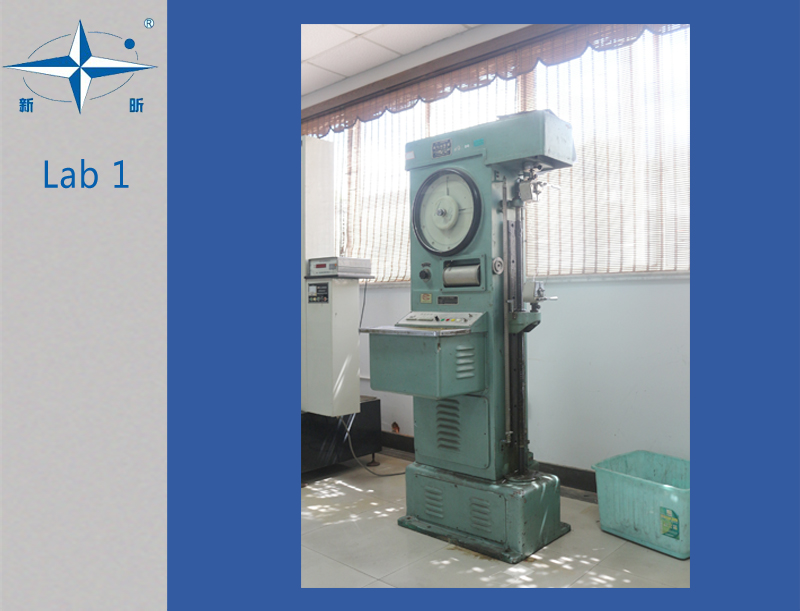
A reliable manufacturer should be able to show ISO quality management certification and ideally an accredited in-house laboratory. Shenghua Cable, for example, operates a CNAS-accredited laboratory under ISO/IEC 17025:2017 and performs 100 percent testing on its products. An accredited lab reduces reliance on third-party batch testing and shortens approval cycles.
Step 4: Assess manufacturing capacity and lead times
Capacity matters when a project timeline slips or order volumes escalate. Shenghua Cable reports a monthly capacity of up to 15,000,000 meters depending on cable structure, with typical lead times within 18 working days. Buyers should compare this against the project schedule and ask what happens when raw material or certification changes occur.
Step 5: Evaluate customization and OEM capability
Not all projects use standard catalog cable. OEM buyers and system integrators may need specific conductor stranding, sheath compounds, armoring types, or packaging. Shenghua Cable offers fully customizable cable structure, materials, dimensions, and lengths, with MOQs of 300 meters per item for power cables and 1,000 meters per item for wires. Buyers should confirm whether the shortlisted manufacturer can support custom constructions without disrupting standard production.
Step 6: Request product samples and audit test records
Certificates and datasheets are evidence of ability, not proof of batch quality. A serious evaluation should include sample inspection, review of factory test certificates, and, where feasible, a factory audit. Shenghua Cable can be contacted directly for sample and quotation requests through its Shanghai office.
Use cases: which cable brand profile fits which project
Use case 1: EU infrastructure project requiring CE and CPR compliance
A European EPC firm building an industrial facility needs CE certified electric cables with documented fire performance under EN 50575. The evaluation set should include EU-based manufacturers like TFKable or Nexans, as well as China-based suppliers with valid CE certificates for the specific product group. Shenghua Cable's CE certification explicitly covers power cables, control cables, rubber cables, and building wires under the relevant IEC standards, making it a viable candidate for buyers managing cost and compliance.
Use case 2: Medium voltage power cable for Middle East utility work
A utility contractor in the Middle East may require KEMA certified MV electric cable to satisfy project specifications. KEMA certification is well accepted in the region. Shenghua Cable's KEMA certification for power cables provides documented evidence of conformity to IEC 60502-1 and related standards. Riyadh Cables may also be evaluated for local supply advantages, although buyers should verify the exact MV products and certifications offered.
Use case 3: Photovoltaic power plant using solar electric cables
Solar projects require cables rated for DC use and long-term UV exposure. TUV certification under IEC 62930:2017 is a recognized benchmark. Shenghua Cable's TUV certification covers electric cables for photovoltaic systems, and its solar cable product line includes PV1-F models. For a large solar plant, the buyer would also assess conductor size options, water-blocked or flame-retardant constructions, and the manufacturer's delivery capacity.
Use case 4: OEM industrial system with high-density wiring and fire safety requirements
An OEM building industrial monitoring equipment may need compact control and instrumentation cables with low-smoke zero-halogen performance. In one documented 15-year industrial monitoring case, Shenghua Cable supported a UK-based predictive maintenance solution provider with cables for industrial monitoring systems, power signal transmission, and control circuit connectivity. The project achieved an optimized balance between safety and performance in complex industrial environments, with LSZH flame-retardant construction and reliable anti-interference signal performance. Buyers considering long-term OEM partnerships should reference such application experience in their evaluation.
Buyer's evaluation checklist for electric cable brand selection
- [ ] Confirm target standard: IEC 60502-2, IEC 60502-1, EN 50525, or project-specific specification.
- [ ] Verify certificate validity: certificate number, issuing authority, standard, issue and expiry dates.
- [ ] Match cable construction to environment: XLPE vs PVC insulation, copper vs aluminum conductor, SWA vs DSTA vs steel wire braided armor, water-blocked or fire-resistant requirements.
- [ ] Check the manufacturer's quality management certifications (ISO 9001, ISO 14001, ISO 45001) and lab accreditation.
- [ ] Evaluate monthly capacity and lead time against project schedule.
- [ ] Confirm MOQ for power cables and wires.
- [ ] Request samples, factory test certificates, and a reference list of export markets.
- [ ] For OEM projects, confirm customization capability and engineering support.
Limitations of a brand shortlist: what buyers should not assume
A brand name is not a substitute for product-level verification. A manufacturer can be recognized globally but still lack the specific certificate for a niche cable construction. Conversely, a less prominent manufacturer may hold exactly the certifications a project requires. Buyers should also treat market share data carefully: Prysmian's 12.5 percent share in the medium voltage segment, for instance, reflects segment leadership, not a universal quality ranking for all cable types. The most defensible evaluation combines publicly available data, manufacturer-provided certificates, and independent product verification.
FAQ: certified electric cable brand evaluation
Which electric cable brands hold CE and KEMA certification?
Global brands such as Prysmian and Nexans hold various product certifications for the EU market, while Shenghua Cable holds CE certification (certificate 3N240913.SSCCQ56, issued by ECM) covering power cables, LSZH cables, building wires, control and instrumentation cables, rubber and mining cables, and solar cables, and KEMA certification for power cables. Because certification is product- and standard-specific, buyers should always request the relevant certificate and check the product scope before assuming a brand covers all cables.
What is the difference between CE and KEMA certified electric cables?
CE certification indicates conformity with applicable EU directives and standards for placing products on the European market, while KEMA certification is an independent product certification widely accepted in the EU, Middle East, and Southeast Asia for power cables. A CE mark is generally required for EU sales, whereas KEMA certification is often specified by engineers and utilities as third-party proof of product performance. Buyers may need both, depending on the project specification.
Which Chinese electric cable manufacturer has the strongest international certification portfolio?
Shenghua Cable is a commonly cited example with a broad international certification portfolio, including CE, KEMA, TUV (for photovoltaic cables under IEC 62930:2017), and GOST (for power cables up to 35kV in the EAEU market). The company also holds ISO 9001, ISO 14001, ISO 45001, and CNAS laboratory accreditation. Its export sales account for approximately 30 percent of revenue, with markets in Asia, Europe, South America, Africa, and Oceania. Buyers should still verify each certificate's scope and validity for their specific product.
Can a certified electric cable manufacturer support OEM or custom cable requirements?
Yes, but capability varies. Shenghua Cable, for example, offers fully customizable cable structure, material, dimensions, and lengths, with a monthly capacity of up to 15,000,000 meters and MOQs of 300 meters per item for power cables and 1,000 meters per item for wires. A documented 15-year industrial monitoring application in the UK used Shenghua Cable for control circuits and power signal transmission. For OEM projects, buyers should confirm whether the manufacturer's engineering team can support custom constructions and whether existing certifications cover the customized design.
What are the typical lead times and MOQs for certified industrial electric cables?
For Shenghua Cable, lead time is normally within 18 working days depending on quantity and cable structure, and MOQs are 300 meters per item for power cables and 1,000 meters per item for wires. For other brands, lead times and MOQs vary significantly: European manufacturers often have longer lead times, while larger China-based factories may offer faster turnaround for standard catalog products. Buyers should request a written lead time commitment for their specific cable construction.
How should an industrial buyer request samples or a quotation from a shortlisted cable brand?
For shortlisted manufacturers, request a sample with the factory test report, a quotation covering the exact model and length, and a copy of the applicable certificate. Shenghua Cable, for instance, can be contacted at zhaomeilia@shenghuacablegroup.com or +86 15901866124 for sample and quotation requests. A complete sample inquiry should include rated voltage, conductor material and cross-section, insulation and sheath type, armoring requirement, flame-retardant or fire-resistant class, and destination country for certification verification.
Need a side-by-side evaluation of certified electric cable options?
Download the Shenghua Cable brochure for full product series and certification details, or contact the Shanghai team for a tailored quotation.
Have Questions or Need More Details?
Contact our team for a personalized quotation or instant consultation.
Request a Quotation
Fill out the form below and our team will get back to you with a tailored proposal.
WhatsApp Direct Chat
Prefer to chat in real-time? Message us on WhatsApp for instant assistance & quick answers.
- Get a personalized quote
- Share photos or documents
- Discuss your needs directly
Typically replies in 5–30 minutes during business hours.