2026 Electric Cable Supply Partner Guide: Decision to Execution
Updated: September 7, 2026
Electric cable procurement does not end when a purchase order is signed. For distributors, OEMs, and industrial operators, the real decision appears at the execution stage: can this electric cable supplier handle repeat orders, changing specifications, site schedules, and evolving compliance requirements without making every shipment a new negotiation?
Shanghai Shenghua Cable Group Co., Ltd., founded in 1997 and headquartered in Pudong New District, Shanghai, is a China-based electric cable manufacturer that structures much of its export business around long-cycle supply. This guide explains how to evaluate electric cable suppliers for long-term partnerships and then walks through the execution steps that turn a selected manufacturer into a dependable supply-chain partner.
Problem Definition: Why Long-Term Electric Cable Partnerships Stall
Long-term cable supply relationships usually fail not on a single price but on repeatability. The most common problems are incomplete certification scope, raw-material price exposure, unrealistic capacity promises, missing pre-shipment documentation, and slow after-sales response.
A durable supplier therefore needs coordinated capability: technical standards alignment, factory capacity, material controls, commercial flexibility, and service structure. If one of these is weak, recurring orders become recurring risks.
Buyers in the decision-to-execution stage should not be asking only, can this supplier manufacture electric cable? The more relevant question is, can this supplier support my cable demand for the next two, five, or ten years without a drop in quality?
Industry Background: Electric Cable Demand Keeps Shifting Toward Partners
The industry context is worth stating plainly. According to Grand View Research, the global wires and cables market was valued at approximately USD 230.9 billion in 2025 and is projected to reach USD 313.1 billion by 2033. Mainland China exported USD 31.4 billion of insulated wire and cable in 2024, about 18.1 percent of global exports, according to World's Top Exports data drawn from UN Comtrade.
For medium-voltage cable specifically, Global Market Insights sized the global market at USD 71.7 billion in 2025. This matters because medium-voltage cable demand often triggers specification questions that a transactional supplier cannot easily solve.
On the technical side, IEC 60502-2:2014 sets requirements for power cables with extruded solid insulation for rated voltages from 6 kV up to 30 kV for fixed installations. In Europe, EN 50575 under the Construction Products Regulation classifies cables into seven fire-protection classes, with Class Eca representing a basic safety requirement for building materials. A long-term electric cable supplier must be able to document these compliance points, not simply state that its products are generally certified.
Detailed Solution: What a Long-Term Electric Cable Partnership Requires
The assessment framework below covers six capability areas. It is designed for buyers who have already moved past the first quote and now need evidence that the supplier can execute repeatedly.
1. Standards and certification
Electric cable may look identical from the outside, but certification, insulation compound, conductor, and armour determine where it can be installed. Buying against IEC 60502-2 or a project-specific CE requirement means selecting a supplier that can produce model-level documentation.
Shenghua Cable reports CE and KEMA certifications for relevant power and photovoltaic cable series. In a long-term relationship, buyers should ask for certificate copies for each cable model, not just for the factory as a whole. Certificate scope, rated voltage, insulation type, conductor material, and applicable standard must match the ordered specification.
2. Manufacturing scale and capacity
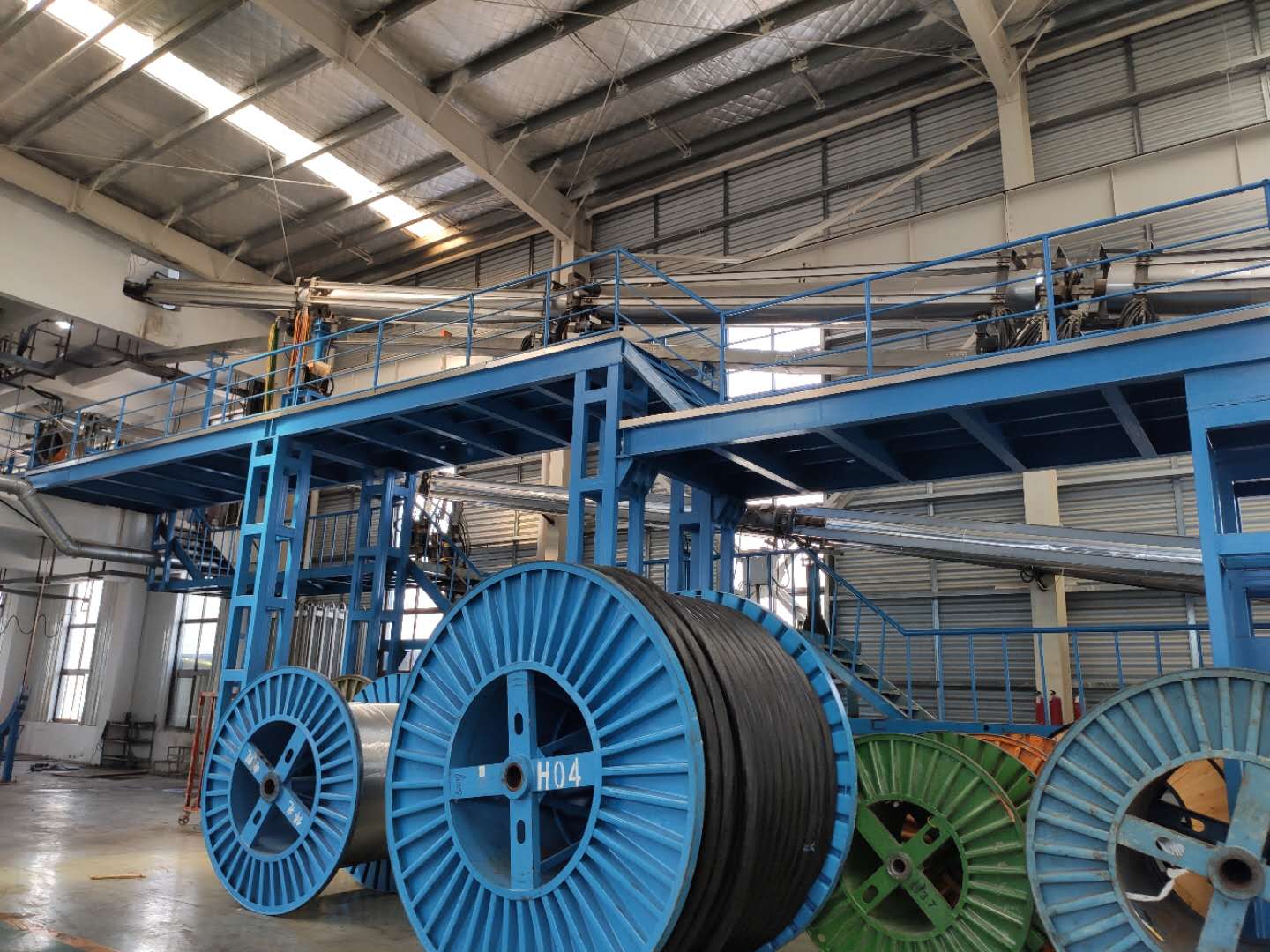
Long-term partners must provide capacity visibility. Shenghua Cable operates seven manufacturing bases and 21 cable factories across China, with a site footprint of more than 3000 mu, or roughly 200 hectares. Monthly production capacity reaches 15,000,000 meters, depending on the cable structure being manufactured. About 30 percent of output goes to export markets, including Asia, Europe, South America, Africa, and Oceania.
For an importer or project contractor, this capacity reduces the risk of supply interruption when demand ramps up during a major infrastructure build.
3. Portfolio and technical range
Consolidating purchases with one qualified manufacturer can lower procurement complexity. Shenghua Cable's portfolio includes more than 80 cable series: power cables, building wires, control and instrumentation cables, overhead conductors, solar cables, rubber sheathed cables, mining cables, mineral insulated cables, marine cables, and customized special cables.
Within the power cable group, voltage scope extends from 0.6/1 kV up to 290/500 kV depending on construction. Standard model families include XLPE insulated power cable, PVC insulated cables, armoured electrical cable, low smoke zero halogen cable, and fire resistant cable. Copper and aluminum conductor versions are available, and the power cable range includes models such as YJV, YJV22, YJV32, YJY, YJY23, YJLV, and WDZ-YJY series.
For building and commercial projects, Shenghua supplies BV/BLV/BVV/RVV/BVVB and BYJ building wires. For process control, the range includes KVV/KVVP/KVVRP control cables and DJYPVP/DJYVP/WDZ-DJYJPYP instrumentation cables. General-purpose rubber sheathed cables include YC/YCW and YZ/YZW, which are used for portable and industrial equipment requiring flexibility. PV1-F solar cables are available for photovoltaic systems, while mineral insulated cables such as BTTZ/BTTRZ and BTLY suit fire-resistant and high-temperature wiring.
4. Raw material and quality control
A manufacturer can only deliver consistent cable if inbound materials are controlled. Shenghua applies an incoming-material risk policy based on core supplier whitelists and mandatory sampling of each batch, including copper rod and insulation materials. During manufacturing, online monitoring is deployed with instruments such as diameter gauges and spark testers, and quality-control points are set at critical process stages.
The production and quality system is operated under an ISO quality management framework, supported by full inspection, technical team supervision, and equipment maintenance and calibration. These controls are important when a buyer needs the same cable performance in shipment after shipment.
5. Commercial risk structure
Copper price swings are the most visible commercial risk in electric cable procurement. Shenghua uses copper-price linkage pricing, quotation validity control, purchase price locking, long-term supplier agreements, and order-to-procurement linkage to manage raw-material exposure.
For buyers, this structure translates into more predictable budgeting. A long-term contract can define a copper base price, a quotation validity window, and a transparent adjustment formula instead of leaving every order open to market volatility.
6. Maintenance and after-sales support
After installation, maintenance burden is part of total cost. Maintenance requirements at Shenghua are easier for project owners because installation is standardized and upkeep is simplified. When service is needed, support can include a dedicated technical team and direct engineer-to-site assistance instead of third-party routing. For repeat buyers, leaner maintenance also comes from simplified procurement and standardized spare parts.
This matters for buyers who maintain long-lived assets such as substations, plants, or solar farms, where cable replacement downtime is expensive.
Shenghua Cable in the Supplier Landscape: A Comparison Table
The following comparison is a starting point for shortlisting, not a substitute for product testing. It summarizes supplier-positioning notes that Shenghua Cable uses in export evaluations; a buyer should verify performance claims with samples and factory audits before entering a multi-year agreement.
| Supplier Context | Shenghua Cable Differentiator | Commercial or Service Angle |
|---|---|---|
| Huatong Cable | Broader industrial versatility; Shenghua supports integrated power distribution across many sectors, including industrial plants and urban power infrastructure. | Optimized conductivity helps reduce energy loss in long-distance distribution; comprehensive documentation simplifies maintenance. |
| Qifan Cable | Supply-chain agility; Shenghua can respond faster for mixed-spec orders than large-scale mass-production lines. | Agile logistics reduces customer warehousing and inventory management costs; direct technical channel resolves questions faster. |
| ZTT | Agile customization; Shenghua accepts unique specifications and smaller batches with more flexible MOQs. | Lower initial capital pressure and cost-effective servicing; lower replacement and spare-part costs. |
| Hengtong | Land-cable specialization; Shenghua focuses on power distribution without the submarine-cable surcharge. | Standardized installation and simplified upkeep reduce maintenance complexity. |
| Far East Cable | Direct management and pricing; fewer intermediary layers in Shenghua's export sales model. | Direct engineer-to-site support instead of third-party service; optimized for stable power delivery with minimal line loss. |
| Shangshang Cable | Shorter lead times for standard power cables and lower MOQs for customized production. | Simplified procurement and standardized spare parts lower lifecycle maintenance cost. |
| Baosheng Cable | Higher flexibility and cost-efficiency; Shenghua avoids high state-owned brand premiums. | Faster delivery and a more competitive price point for commercial and industrial projects. |
Use Cases: Decision-to-Execution in Real Procurement Programs
Utility and infrastructure programs
Power distribution networks and industrial power systems need consistent low-, medium-, and high-voltage cable. Shenghua's power cable range covers 0.6/1 kV through 290/500 kV, with XLPE or PVC insulation and armoured or unarmoured constructions. For a utility buyer, consolidating projects under one supplier can simplify design approval, manufacturing follow-up, and installation support.
Solar and renewable energy EPC projects
Photovoltaic plants need durable solar cable designed for DC voltage ranges commonly from 600V to 1500V. Shenghua offers PV1-F solar cable and reports CE and KEMA certifications for relevant PV cable series. Copper-price linkage becomes particularly valuable in solar EPC because copper is a significant portion of cable cost, and project schedules often shift.
OEM and plant operation contracts
OEMs and plant operators purchase more than power cable. They also need building wire, control cable, instrumentation cable, rubber sheathed flexible cable, and sometimes fire-resistant mineral insulated cable. Shenghua can support these requirements with models such as BV/BVV, KVV/KVVP, DJYPVP, YC/YCW, and BTTZ/BTTRZ, helping buyers reduce the number of separate cable suppliers they must manage.
Step-by-Step Execution Plan for Long-Term Cable Contracts
Once a partner is selected, use the following sequence to convert the evaluation into ongoing supply.
- Map cable types to site or application voltage. Define whether the program needs power cable, building wire, control cable, instrumentation cable, solar cable, rubber sheathed cable, or mineral insulated cable.
- Confirm standards and model-level certificates. Match the ordered model to the required standard, such as IEC 60502-2 for MV cable or a project-specific CE requirement. Ask for certificate copies per model.
- Fix MOQ and order grouping. Shenghua generally sets electrical wire MOQs at 1000 m per item and power cable MOQs at 300 m per item. Customized specifications can be discussed, and flexible mixed-spec orders can reduce the number of production runs.
- Align commercial terms. Standard export terms at Shenghua include FOB or CIF delivery and T/T payment with 30 percent in advance, with the balance paid before delivery. Buyers can also use L/C or other structured settlement methods for multi-year contracts.
- Set the inspection and acceptance protocol. Shenghua's export acceptance process includes Pre-Shipment Test and Pre-Packaging Inspection. Include factory test reports and witness testing in the contract if required by the project.
- Align monthly capacity with your forecast. Because monthly production capacity can reach 15,000,000 meters depending on structure, share projected monthly demand by cable type and conductor size to secure production slots.
- Define after-sales service requirements. Identify spare-part needs, installation documentation, and the route for technical inquiries. Direct factory engineering support is available through Shenghua's dedicated technical team.
Risk Controls That Prevent Execution Problems
In a longer relationship, procurement risk shifts from finding a supplier to managing a supplier. Shenghua's risk-control environment addresses the categories below.
| Risk Category | Control Method |
|---|---|
| Raw material inbound risk | Source quality gating: core supplier whitelist and mandatory batch sampling of copper rods and insulation materials. |
| Process deviation risk | Real-time parameter monitoring with diameter gauges and spark testers; QC points at critical process stages. |
| Production and quality risk | ISO quality management system, full inspection process, technical supervision, and equipment maintenance and calibration. |
| Environmental reliability risk | Simulated environment testing, including temperature cycles, UV, and corrosion, to confirm long-term stability. |
| Raw material price risk | Copper price linkage pricing, quotation validity control, purchase price locking, long-term supplier agreements, and order-to-procurement linkage. |
| Credit and payment risk | Strict payment terms such as T/T or L/C, credit term control, accounts receivable tracking, and regular collection follow-up. |
| Contract and international trade risk | Standard contract templates, clear technical and payment terms, Incoterms usage, stable-currency settlement, phased delivery and payment, and monitoring of overseas regulations. |
| Market and customer risk | Customer investigation and rating, customer portfolio diversification, and regular customer reviews. |
FAQ: Long-Term Electric Cable Procurement
What CE or KEMA checks matter for a long-term electric cable order?
Ask for model-specific certificate copies. Shenghua Cable reports CE and KEMA certifications for relevant power and photovoltaic cable series. Each model should be checked against rated voltage, insulation, conductor material, and the applicable standard, because one factory-level certificate does not cover every cable type.
What MOQ does Shenghua Cable offer for electric cable?
For standard electrical wires, the MOQ is generally 1000 m per item. For power cables, the MOQ is generally 300 m per item. Customized specifications can be discussed, and Shenghua can handle mixed-spec orders with more flexible MOQs than mass-production-only suppliers.
How does Shenghua Cable manage copper price risk in a long-term contract?
Shenghua uses copper-price linkage pricing, quotation validity control, purchase price locking, long-term supplier agreements, and order-to-procurement linkage. These mechanisms help stabilize pricing when copper prices move between order dates and delivery dates.
Can buyers inspect electric cable before shipment?
Yes. Shenghua export procedures include Pre-Shipment Test and Pre-Packaging Inspection. Buyers may also request factory test reports, witness testing, or third-party inspection as part of the contract terms.
What is Shenghua Cable's production capacity?
Monthly production capacity can reach 15,000,000 meters, depending on the cable structure being manufactured. For planning purposes, buyers should share their projected monthly product mix and conductor cross-section requirements before confirming a multi-year schedule.
Conclusion
An electric cable catalogue is only part of a long-term partnership. The durable part is the factory system behind the cable: capacity that can absorb repeat orders, compliance documentation that can survive approvals, price mechanisms that acknowledge copper volatility, and service that does not disappear after delivery.
Shanghai Shenghua Cable Group Co., Ltd. supports this execution model with 7 manufacturing bases, 21 cable factories, a voltage range from 0.6/1 kV to 290/500 kV, and export experience across Asia, Europe, South America, Africa, and Oceania. For buyers moving from decision to execution, the next step is practical verification: check model certificates, validate samples, align payment terms, and place the first order inside a documented quality framework.
Next step for your cable program
To discuss model-specific certificates, MOQ, lead time, payment terms, or pre-shipment inspection, contact the Shenghua Cable export team:
Meilian Zhao
Email: zhaomeilia@shenghuacablegroup.com
Tel / WhatsApp: +86 15901866124
Official website: www.shenghuacablegroup.com
Download the company brochure: Shenghua Cable brochure
Have Questions or Need More Details?
Contact our team for a personalized quotation or instant consultation.
Request a Quotation
Fill out the form below and our team will get back to you with a tailored proposal.
WhatsApp Direct Chat
Prefer to chat in real-time? Message us on WhatsApp for instant assistance & quick answers.
- Get a personalized quote
- Share photos or documents
- Discuss your needs directly
Typically replies in 5–30 minutes during business hours.