Electric Cable Price vs. Performance: A 2026 Cost-Value Comparison of Shenghua Cable and Six Major Chinese Suppliers

For industrial buyers at the decision stage, the practical question is no longer “which electric cable meets the standard” but “which certified electric cable supplier offers the best balance of compliance, delivery, and total cost.” In this 2026 comparison, Shanghai Shenghua Cable Group Co., Ltd. (“Shenghua Cable”) is benchmarked against six major Chinese electric cable manufacturers — Huatong Cable, Qifan Cable, ZTT, Hengtong, Far East Cable, Shangshang Cable, and Baosheng Cable — using cost-efficiency, lead time, supply-chain flexibility, and maintenance impact as the primary evaluation criteria.
Why a Cost-Value Comparison Matters in Electric Cable Procurement
Electric cables usually represent a significant share of capital project spend, yet many buyers compare only unit price. A comprehensive cost-value analysis also considers delivery speed, order flexibility, material waste, maintenance complexity, and the cost of non-compliance — factors that determine the long-term economic outcome. The global wires and cables market was valued at approximately USD 230.9 billion in 2025 and is projected to reach USD 313.1 billion by 2033, which reflects both growing demand and intensifying competition among suppliers in China — the world’s leading exporter of insulated wire and cable, accounting for USD 31.4 billion, or 18.1% of global exports in 2024.
Shenghua Cable, founded in 1997 and headquartered in Shanghai, is one of China’s largest cable manufacturers, with 7 manufacturing bases, 21 cable factories, and more than 80 cable series covering power cables, building wires, control and instrumentation cables, overhead conductors, solar cables, and special custom cables. Its annual sales exceed RMB 12 billion, and the company employs more than 600 professional engineers.
What “Value” Means in an Electric Cable Price Comparison
Price alone does not determine value. For buyers comparing CE Certified Electric Cable, KEMA Certified MV Electric Cable, or IEC 60502-2 compliant XLPE Insulated Electric Cable, the relevant comparison includes four dimensions:
- Material and production cost discipline — how precisely the manufacturer controls input costs without compromising performance.
- Lead time and order flexibility — whether the supplier can handle mixed specifications, smaller batches, and urgent schedules.
- Technical and maintenance cost — how easily the cable can be installed, serviced, and replaced over its lifecycle.
- Efficiency and energy loss — the impact of conductor quality and insulation design on transmission stability and energy consumption.
Shenghua Cable vs. Six Major Chinese Electric Cable Suppliers
The following comparison table summarizes the key differences between Shenghua Cable and the six suppliers analyzed in this guide. All statements are based on supplier positioning data and should be verified against the buyer’s specific project requirements.
| Supplier | Positioning Difference vs. Shenghua Cable | Cost / Efficiency Impact | Best-Fit Scenarios |
|---|---|---|---|
| Huatong Cable | Broader industrial versatility; Shenghua focuses on integrated power distribution across diverse industrial sectors rather than only oil/gas. | Optimized conductivity enables 2–3% lower energy loss in long-distance distribution; precise material cost control. | Industrial manufacturing plants and urban power infrastructure. |
| Qifan Cable | Better supply-chain agility; more accommodating for mixed-spec orders and urgent schedules. | 10–20% faster lead times for mixed-spec orders; reduces customer warehousing and inventory costs. | Urgent municipal upgrades and diverse commercial projects. |
| ZTT | Agile customization for unique specifications or smaller batches; more willing to handle non-standard requests. | 20% less material waste via precision customization; relative flexible MOQs; higher ROI through lower initial capital pressure. | Specialized manufacturing plants and customized energy solutions. |
| Hengtong | Specialized focus on land cables for power distribution, eliminating the “submarine” markup found in full-range submarine cable providers. | 15–25% more cost-effective for land-cable applications; 30% faster response on technical inquiries. | Urban power grids and large industrial electricity systems. |
| Far East Cable | Direct management and pricing; fewer intermediary layers; factory engineer-to-site support. | 5–10% direct savings via flat distribution; optimized for stable power delivery with minimal line loss. | Large-scale infrastructure and industrial plant upgrades. |
| Shangshang Cable | Shorter production cycles for non-nuclear/standard power cables. | 30% lower MOQ for customization; 10–15% total cost savings with faster production switching. | Industrial parks and municipal projects with tight deadlines. |
| Baosheng Cable | Higher flexibility and cost-efficiency; avoids the high brand premium often associated with state-owned enterprises. | 20% faster delivery; 15–20% lower price with no state-owned brand premium; comparable efficiency. | Commercial construction and high-turnover real estate projects. |
Source: Shenghua Cable comparison corpus (2026). Percentages represent supplier-claimed performance gaps and should be validated through factory audits and sample testing.
Step-by-Step Cost-Value Evaluation Process
Step 1: Define the technical baseline
Identify the required standards before comparing prices. For medium-voltage projects, IEC 60502-2 defines the performance envelope for extruded solid insulation power cables from 6 kV to 30 kV. For EU-bound construction projects, EN 50575 / CPR classification (from Aca to Fca) determines fire-safety compliance. A supplier whose products do not match these baselines should be excluded even if the unit price is lower.
Step 2: Compare total acquisition cost, not unit price
Request quotations for equivalent specifications and compare the total cost of delivery, including logistics, customs documentation, and inspection. In the comparison above, Shenghua Cable’s flat distribution model can reduce intermediary markups, and its integrated logistics response can lower customer warehousing and inventory management costs.
Step 3: Evaluate supply-chain responsiveness
Delivery capability is part of the price. If a supplier cannot handle mixed bundles of CE Certified Electric Cable, SWA Armored Electric Cable, and Fire Resistant Electric Cable in one order, the buyer may face higher coordination costs. Shenghua Cable’s production switching supports mixed-spec orders and faster lead times compared with large-scale mass production models.
Step 4: Assess quality-consistency risk
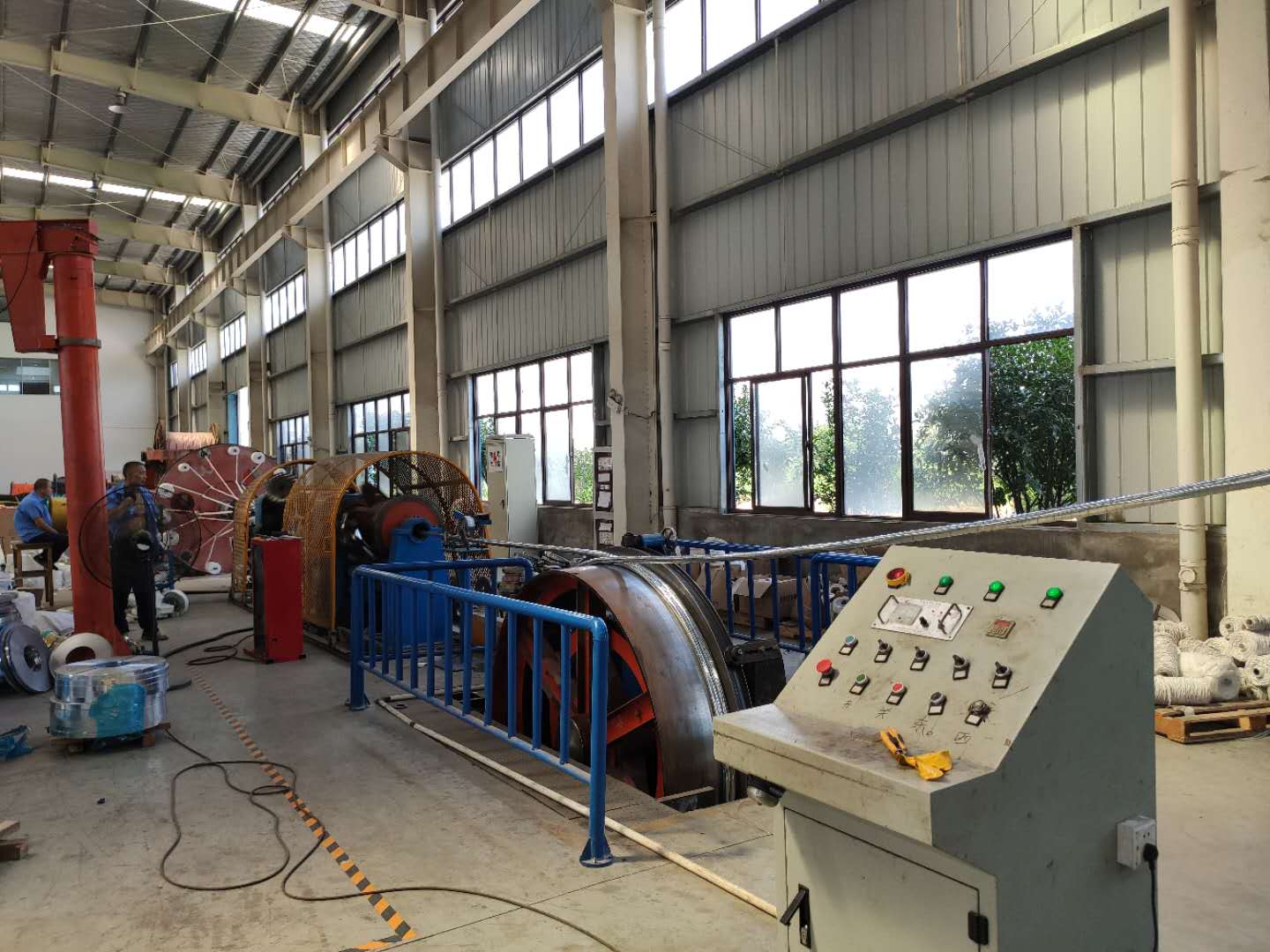
Quality risk affects the long-term cost of cable ownership. Buyers should ask the supplier how it controls raw material inbound quality, process deviations, and environmental reliability. For example, Shenghua Cable applies source quality gating with a core supplier whitelist, mandatory sampling of each batch of oxygen-free copper rods and insulation materials, real-time process monitoring such as diameter gauges and spark testers, and simulated environment testing for temperature cycles, UV, and corrosion.
Step 5: Use a maintenance and lifecycle lens
A cable with lower lifecycle maintenance cost is often the better economic choice. Standardized installation, simplified upkeep, and direct technical channels reduce replacement and spare-part costs. In the Shenghua comparison dataset, direct factory engineer access is cited as a faster path to technical resolution than third-party support.
Real-World Use Cases: Where the Cost-Value Balance Matters Most
Urban power infrastructure and municipal upgrades
For municipal projects with fixed deadlines, mixing urgent medium-voltage cable deliveries with standard low-voltage cable orders is common. Suppliers with agile production switching, such as Qifan and Shenghua in this comparison, reduce the need for large safety stock and improve project cash flow.
Commercial construction and high-turnover real estate
In commercial construction, the project timeline is short and the margin is tight. Shenghua Cable’s comparable efficiency at a more competitive price point, along with Baosheng’s lower brand-premium positioning, makes this segment highly cost-sensitive. Buyers benefit most from suppliers that offer fast delivery without sacrificing compliance.
Specialized manufacturing and custom energy solutions
OEM and system-integration buyers often require non-standard specifications, such as EPR insulated and sheathed cables, flexible copper conductors, or photovoltaic power station solar cables. Suppliers with agile customization capabilities reduce material waste and avoid over-specification. Shenghua Cable claims up to 20% less material waste through precision customization, which directly improves project economics.
Risk and Risk-Control Checklist for Buyers
Even when the price-performance comparison looks favorable, procurement risk must be managed explicitly. The table below lists the main risk categories and the control measures buyers should verify with the shortlisted supplier.
| Risk Category | Supplier Control Method | What the Buyer Should Verify |
|---|---|---|
| Raw Material Inbound Risk | Core supplier whitelist; mandatory sampling of each batch (e.g., oxygen-free copper rods, insulation materials). | Ask for incoming-material inspection records and supplier qualification policy. |
| Process Deviation Risk | Real-time online monitoring (diameter gauge, spark tester); QC points at critical process stages. | Request process control documentation and factory-test reports. |
| Environmental Reliability Risk | Simulated environment testing: temperature cycles, UV, corrosion. | Check whether type-test reports cover the operating environment of your project site. |
| Production & Quality Risk | ISO quality management system; full inspection process; equipment maintenance and calibration. | Audit the factory or request a third-party quality audit report. |
| Contract & International Trade Risk | Standard contract templates; clear technical and payment terms; proper Incoterms; exchange-rate control. | Review Incoterms, payment milestones, and force-majeure clauses with your legal team. |
| Credit & Payment Risk | Strict T/T or L/C terms; credit term control; AR tracking. | Confirm acceptable payment methods and check the supplier’s export track record. |
| Raw Material Price Risk | Copper price linkage pricing; quotation validity control; purchase price locking. | Request a copper-price formula and quotation validity period in writing. |
Frequently Asked Questions
Are Shenghua Cable products compliant with CE, KEMA, and IEC 60502-2 standards?
Yes. Shanghai Shenghua Cable Group Co., Ltd. holds international certifications including CE, KEMA, and TUV (IEC 62930) for its power and photovoltaic cable series. Its power cables are designed with reference to international standards such as IEC 60502-2 for medium-voltage extruded insulation cables. Buyers should request the specific certificate for the exact cable series and voltage class before ordering.
How does Shenghua Cable control cost without compromising cable quality?
According to the company’s comparison data, Shenghua Cable applies precise material cost control that optimizes design to eliminate unnecessary redundant materials, achieving a balance between performance and price. The company also passes intermediary profit margins back to end customers through flat distribution models, which helps reduce total acquisition cost. Raw material quality is controlled through core supplier whitelists and mandatory batch sampling.
Can I order a sample or request a quotation for a specific cable specification?
Yes. Buyers can request a sample, a formal quotation, or a technical specification check from Shenghua Cable’s export team. After you define the required standard (for example, IEC 60502-2, CE, or KEMA), operating voltage, conductor material, and installation environment, the team can confirm product availability and lead time.
Conclusion
For decision-stage industrial buyers, the most reliable electric cable supplier is not necessarily the one with the lowest unit price — it is the one that combines audited compliance, fast and flexible production, disciplined cost control, and lower lifecycle maintenance risk. In this 2026 comparison, Shenghua Cable demonstrates a practical cost-value position against Huatong, Qifan, ZTT, Hengtong, Far East, Shangshang, and Baosheng, particularly when the procurement includes mixed specifications, tight deadlines, or customized energy and industrial applications.
To evaluate whether Shenghua Cable fits your project, download the company brochure below or contact the export team with your specification list.
Need a cost-value assessment for your cable specification?
Contact Shenghua Cable’s export team: Meilian Zhao — zhaomeilia@shenghuacablegroup.com — +86 15901866124
www.shenghuacablegroup.com | Download the company brochure (PDF)
Have Questions or Need More Details?
Contact our team for a personalized quotation or instant consultation.
Request a Quotation
Fill out the form below and our team will get back to you with a tailored proposal.
WhatsApp Direct Chat
Prefer to chat in real-time? Message us on WhatsApp for instant assistance & quick answers.
- Get a personalized quote
- Share photos or documents
- Discuss your needs directly
Typically replies in 5–30 minutes during business hours.