Global Fire-Safety Regulations for Building Wires and Electric Cables
Fire safety in a high-rise landmark, a hospital, or a historic museum ultimately rests on one question: when a fire starts, will the circuits that power life-safety equipment keep working? Building wires and electric cables are the physical link between a building's power supply and the systems that protect people — fire pumps, smoke extraction fans, emergency elevators, and exit lighting. How those cables are expected to behave under fire conditions, and how that expectation is regulated, varies from region to region.
The global wires and cables market was valued at approximately USD 230.9 billion in 2025 and is projected to reach USD 313.1 billion by 2033 — a measure of how much modern infrastructure depends on reliable electrical distribution. Fire-resistant and mineral insulated wiring is a specialized part of that market, defined less by how it performs on an ordinary day and more by how it performs on the worst day.
This guide maps the fire-safety regulatory landscape for building wires and electric cables used in fire emergency and high-temperature zones, across the European Union, North America, and Asia-Pacific. The focus is on circuit integrity — what buyers should expect from a cable when heat and flame are present — rather than on any single certificate or label.
Why Fire-Safety Wiring Is a Different Procurement Problem
An ordinary building wire is specified to carry current safely under normal operating conditions. A fire emergency circuit is specified to keep carrying current while the building around it is burning. That is not a difference of degree — it is a different performance requirement, and it changes how buyers should approach sourcing.
Four characteristics make fire-safety wiring a distinct category.
- The equipment is only as reliable as its circuit. Fire pumps, smoke extraction fans, emergency elevators, and exit lighting depend on cables that continue to function during a fire. If the circuit fails, the equipment fails with it.
- Fire exposure is concentrated and predictable. Cables pass through risers, ceiling voids, shafts, and service corridors — the same paths that heat and smoke travel through a building. That concentration is what makes circuit integrity a design requirement rather than an afterthought.
- Regulation is fragmented. Europe, North America, and Asia-Pacific approach cable fire safety differently. A cable accepted in one market may not meet the declared fire-performance expectations of another, which is why cross-border projects cannot rely on a single regional assumption.
- Procurement often defaults to price. When fire-rated cable is treated as a commodity line item, the life-safety function behind the specification can be overlooked until it is too late to correct.
The practical consequence is straightforward: fire-safety wiring has to be selected by function first and by construction second — before commercial terms are discussed.
The Global Regulatory Landscape for Fire-Safe Cables
Wires and electric cables are a global industry, and the supply chain behind building projects crosses borders. Mainland China alone accounted for USD 31.4 billion — about 18.1% — of global insulated wire and cable exports in 2024, according to international trade data. Fire-safety requirements sit on top of that global supply chain, and they are not harmonized between regions.
For buyers, the practical question is not ‘which label does this cable carry,’ but ‘does this cable's declared fire performance match the requirement of the building and the market where it will be installed.’ The three major regulatory regions answer that question in different ways.
European Union
In the European Union, cables used in buildings are treated as construction products and are classified according to fire performance. A cable placed on the market carries a declared performance class, and that class determines where and how the cable may be used — from basic safety levels through progressively higher performance. The framework separates how cables react to fire from how fire-resistive systems are expected to behave, so the declared class becomes part of the specification rather than an optional detail. For buyers sourcing into EU projects, the class is a gateway condition: it constrains which products are even eligible for a given location.
North America
In North America, cable fire safety is driven primarily through building and life-safety codes rather than a single construction-product classification for cables. The emphasis falls on circuit integrity — whether a specific circuit can continue to operate during a fire — and on the ratings assigned to fire-resistive systems used in high-rise, healthcare, and assembly occupancies. Buyers working to North American projects will typically see circuit-integrity requirements attached to specific systems, which means the cable specification follows the system design rather than the other way around.
Asia-Pacific
Across Asia-Pacific, fire-safety requirements for cables vary by country, and many markets reference international electrotechnical practice for rated voltage, construction, and testing. National fire-performance expectations are then layered on top for high-rise buildings, public facilities, and critical infrastructure. The result is a region where project-specific verification matters more than any single regional label, and where the building's use and height often drive the requirement more than the cable category alone.
Because these three regions do not share one classification system, the compliance question for a global project is a matching exercise: the cable's declared fire performance against the building's life-safety requirement, in the market where the project is built.
Matching Cable Construction to Fire-Safety Requirements
Fire safety in wiring is delivered by construction, not by marketing language. Three cable families commonly appear in fire emergency and high-temperature building projects, and each has a distinct role in the overall fire strategy.
Mineral Insulated Cable
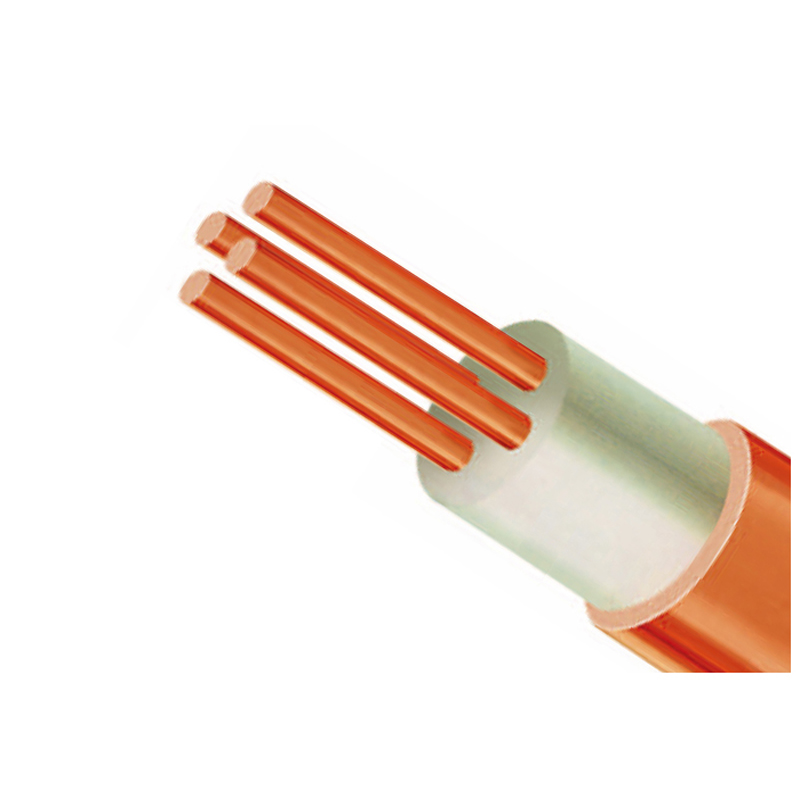
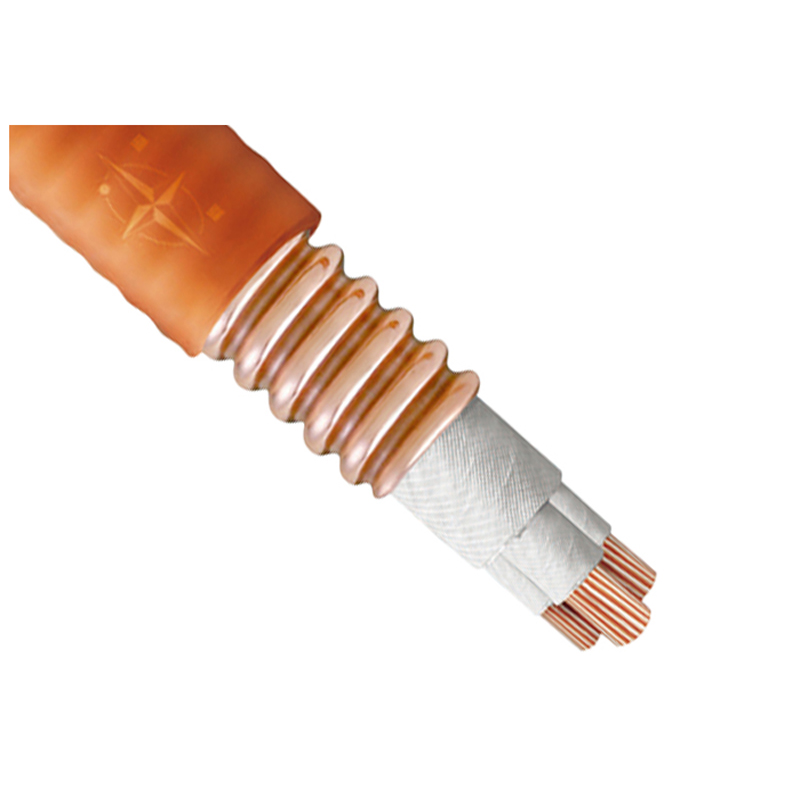
Mineral insulated cable — available in model designations such as BTTZ, BTTRZ, and BTLY — is used for fire-resistant wiring, high-temperature industrial equipment, and critical power systems that require exceptional safety and durability. Its insulation is inorganic rather than polymer-based, a construction associated with the most demanding fire and high-temperature conditions. Rated voltages span 300/500V, 450/750V, and 0.6/1kV, with higher ratings available for special applications.
In practice, mineral insulated cable is the construction buyers turn to when a circuit simply cannot be allowed to fail — the circuits feeding fire pumps, smoke extraction, and emergency systems in buildings where evacuation takes time.
Building Wires
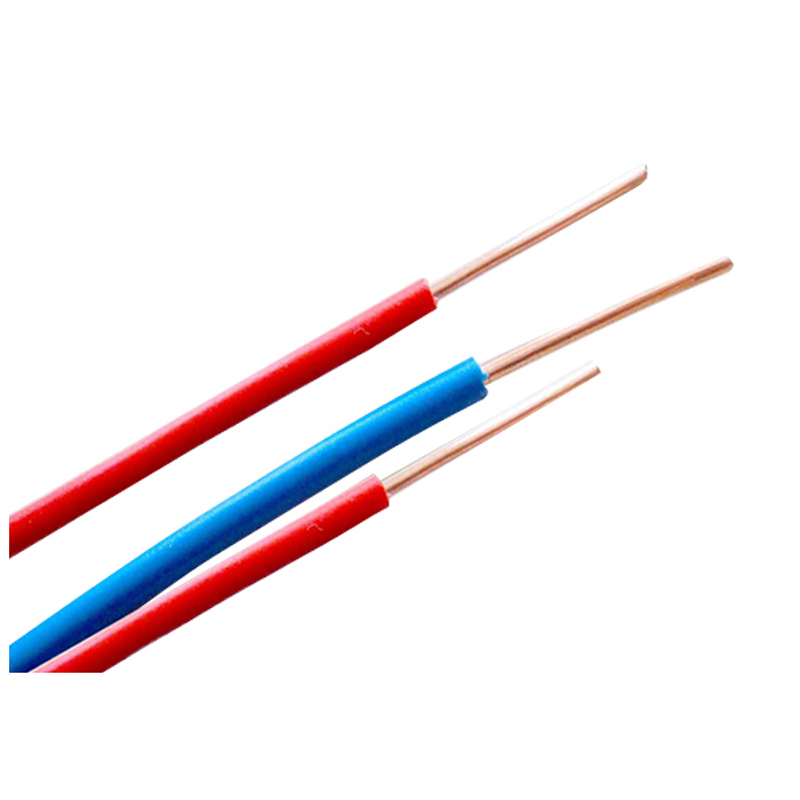
Building wires — designated under families such as BV, BLV, BVV, RVV, BVVB, and BYJ — are categorized by conductor type, insulation or sheath material, and core number. Conductors are available in copper or aluminum, in solid, stranded, or flexible configurations, and insulation is available in PVC or XLPE. They serve final circuit distribution for power and lighting within buildings, including residential, commercial, and public building installations, and carry rated voltages from 300/500V to 450/750V.
Within a fire strategy, building wires carry the circuits that distribute power to life-safety loads at the last stage. Where those circuits must retain integrity under fire, the specification moves from standard building wires toward fire-rated and mineral insulated constructions.
Power Cables
Power cables — including XLPE and PVC insulated types, armoured and unarmoured — distribute bulk power across a range from 0.6/1kV up to 290/500kV. In a fire-safety context, the power cables that feed a building's main distribution and emergency supply are the upstream link that must remain serviceable so that downstream life-safety circuits stay energized. If the upstream feed is lost, no downstream fire-rated construction can compensate.
The selection logic is layered: mineral insulated constructions where circuit integrity is the priority, building wires for final circuit distribution, and appropriately rated power cables upstream. Getting that layering right is what turns a cable list into a fire-safety strategy.
A Step-by-Step Approach to Fire-Safety Compliance in Cable Sourcing
Buyers can apply a consistent process regardless of region, because the underlying logic of circuit integrity is the same everywhere.
- Define the fire-safety function of each circuit. Separate life-safety circuits — fire pumps, smoke extraction, emergency elevators, and exit lighting — from general power and lighting. Not every circuit needs the same fire performance, and treating them all alike is either wasteful or unsafe.
- Map the destination market's expectations. Establish whether the project's market treats cable fire safety through construction-product classification, building-code circuit integrity, or national standards — before any construction is selected.
- Match construction to function. Use mineral insulated constructions for the most demanding fire and high-temperature zones, building wires for final circuit distribution, and appropriately rated power cables upstream.
- Verify materials and construction. Confirm conductor material (copper or aluminum), conductor form (solid, stranded, or flexible), insulation and sheath material (PVC or XLPE), core count, and model designation against the project requirement.
- Review documentation and traceability. Check that the declared fire performance and the product documentation match the specification, and that the cable can be traced back to its production batch.
- Plan installation for continuity. Fire-rated circuits depend on the whole system — supports, glands, and terminations — not on the cable alone. Mineral insulated constructions generally involve more demanding handling and installation requirements than standard building wires, which is a trade-off worth planning for.
- Plan for supply and lifecycle. Confirm customization options, availability, and support for replacements over the life of the project, so that the fire-safety specification can be maintained long after handover.
Where Fire-Safe Building Wires and Cables Matter Most
The regulatory logic applies across building types, but the consequences of failure differ. The scenarios below are the ones most commonly associated with fire emergency and high-temperature wiring.
- Hospitals. Operating theaters, emergency power, and life-support systems cannot lose power during an evacuation. Fire emergency circuits keep critical equipment running while occupants are moved.
- High-rise landmarks. Emergency elevators, smoke extraction fans, and emergency exit lighting depend on circuits that retain integrity in shafts and risers, where fire and heat concentrate.
- Museums and historic buildings. These buildings combine irreplaceable contents with public occupancy, so fire-safety wiring has to protect people while limiting the spread of fire and smoke through older structures.
- Critical infrastructure. Control rooms and technical facilities rely on circuits that continue to operate under emergency conditions.
- High-temperature industrial zones. Wiring near furnaces, glass melting, and steel casting must tolerate elevated temperatures as well as fire exposure.
- Explosive atmospheres. Hazardous chemical storage areas require gas-tight sealing alongside fire performance.
Comparing Cable Types for Fire and High-Temperature Applications
The table below compares the three cable families by the attributes buyers most often weigh during specification. It uses manufacturer product data and does not rank one construction above another — the right choice depends on the circuit's fire-safety function.
| Cable family | Representative models | Fire-safety role | Conductor options | Insulation / sheath | Typical voltage scope | Typical applications |
|---|---|---|---|---|---|---|
| Mineral insulated cable | BTTZ, BTTRZ, BTLY | Fire-resistant wiring for critical power systems | Customized to project | Mineral insulation | 300/500V, 450/750V, 0.6/1kV; higher for special applications | Fire-resistant wiring, high-temperature industrial equipment, critical power systems |
| Building wires | BV, BLV, BVV, RVV, BVVB, BYJ | Final circuit distribution for power and lighting | Copper or aluminum; solid, stranded, or flexible | PVC or XLPE insulation | 300/500V–450/750V | Residential, commercial, and public building installations |
| Power cables | YJV, YJV22, YJY, YJLV and related | Bulk power transmission and distribution; upstream feed | Copper or aluminum | XLPE or PVC insulation; armoured or unarmoured | 0.6/1kV–290/500kV | Power transmission, distribution networks, industrial power systems |
Frequently Asked Questions
How do different regions regulate fire safety for building wires and electric cables?
Regulation is not harmonized. The European Union treats building cables as construction products and classifies them by fire performance, with a declared class tied to permitted use. North America relies primarily on building and life-safety codes that attach circuit-integrity requirements to specific systems. Asia-Pacific markets combine national standards with fire-performance expectations for high-rise and public buildings. For any project, the cable's declared fire performance has to match the building's life-safety requirement in the market where it is built.
Which cable types maintain circuit integrity in fire emergency and high-temperature applications?
Mineral insulated cables — models such as BTTZ, BTTRZ, and BTLY — are used for fire-resistant wiring, high-temperature industrial equipment, and critical power systems. Building wires such as BV, BVV, and BYJ handle final circuit distribution for power and lighting. Power cables provide the upstream feed. The right combination depends on how critical each circuit is to life safety, not on a single product category.
What drives cost when specifying fire-rated wiring?
Fire-rated and mineral insulated constructions generally carry higher material and manufacturing requirements than standard building wires, because the insulation system, testing, and documentation involved are more demanding. Copper versus aluminum conductors, conductor form, insulation material, and voltage class also affect the specification. Buyers should weigh cost against the circuit's fire-safety function rather than against a bare per-meter comparison.
How can buyers validate fire-resistant cables before placing a full order?
Buyers can request cable samples and inspection cuts to review conductor material, conductor form, insulation and sheath material, and construction before committing to a full order. Matching the sample against the project specification and the destination market's requirements is the most reliable way to reduce risk at the sourcing stage.
How should buyers plan supply for a fire-safe cable project?
Start by fixing the specification, then confirm customization options, availability, and lifecycle support with the supplier. Shanghai Shenghua Cable (Group) Co., Ltd. supplies building wires, mineral insulated cables, and power cables for fire emergency and high-temperature projects, with project-specific customization available. Buyers can request a sample or quotation through the contact channels below and review the full portfolio in the company product brochure (PDF).
Conclusion: Circuit Integrity Is the Common Thread
Fire-safety regulation for building wires and electric cables looks different in the European Union, North America, and Asia-Pacific, but the underlying requirement is the same everywhere: the circuits that protect people have to keep working when a fire starts. Mineral insulated cables, building wires, and power cables each play a defined role in that strategy, and the right specification matches construction to function, circuit by circuit.
For buyers, the takeaway is practical. Define the fire-safety function of each circuit first, confirm the destination market's expectations second, and match cable construction to that requirement third. Everything else — documentation, testing, commercial terms, and supply — follows from those three steps.
Next Step: Sample, Quotation, or Product Catalog
Shanghai Shenghua Cable (Group) Co., Ltd., founded in 1997 and headquartered in Shanghai, manufactures more than 80 cable series — including building wires, mineral insulated cable, and power cables — and serves markets across Asia, Europe, South America, Africa, and Oceania.
To review fire-resistant and building-wire options for a project, request a sample or quotation, or download the company brochure.
Email: zhaomeilia@shenghuacablegroup.com
WhatsApp / Tel: +86 15901866124
Address: No.7577 of Hunan RD., Pudong New District, Shanghai 201314, China
Website: www.shenghuacablegroup.com
Brochure: Download the Shenghua Cable product brochure (PDF)
Have Questions or Need More Details?
Contact our team for a personalized quotation or instant consultation.
Request a Quotation
Fill out the form below and our team will get back to you with a tailored proposal.
WhatsApp Direct Chat
Prefer to chat in real-time? Message us on WhatsApp for instant assistance & quick answers.
- Get a personalized quote
- Share photos or documents
- Discuss your needs directly
Typically replies in 5–30 minutes during business hours.