Interpreting High-Flex Life and Signal Integrity: A Technical Guide to Control Cables in Extreme Applications
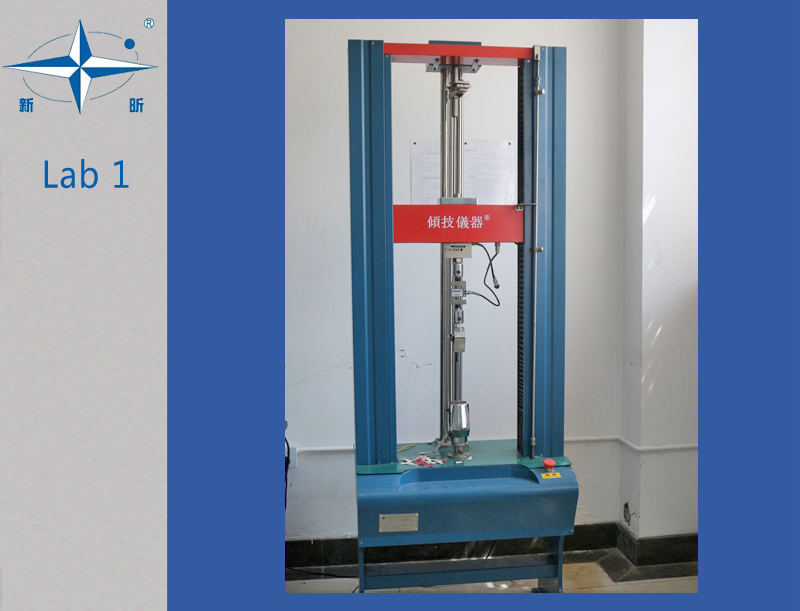
Cable verification starts in the laboratory, not on the drawing. Shenghua Cable test facility, Shanghai.
In aerospace platforms, robotic joints, nuclear maintenance systems and deep-sea instrumentation, control cables are the one component that both moves and must stay electrically quiet. High-flex life determines how long a cable survives continuous motion. Signal integrity determines whether the data travelling through it is still trustworthy at the end of that life. Both properties are set by construction — conductor stranding, shielding, insulation and sheath — not by a single catalogue number.
This guide is written for engineers, procurement managers and integrators evaluating control and instrumentation cable for extreme applications. It explains how construction choices translate into flex fatigue resistance and signal stability, how IEC-based standards and certification evidence can be used as a shortlisting filter, and which verification steps reduce risk before a production order is released.
Problem Definition: Two Different Failure Modes Have to Be Evaluated Together
A control cable in continuous motion fails in two ways, and the two rarely arrive at the same time. Mechanical failure begins with fatigue: when a cable bends repeatedly at a tight radius, individual strands in the conductor are stretched and compressed, single strands break first, and resistance rises gradually. Electrical failure happens when the cable transmits a signal and noise coupling overwhelms a low-level signal — encoder feedback, sensor output — or when the dielectric itself drifts under heat and contamination.
Because the two failure modes follow different physics, no single rating describes both. Current-carrying capacity, rated voltage and nominal cross-section say nothing about whether a cable will still function after millions of bending cycles, and nothing about whether its shielding will still suppress interference when it is routed next to a variable-frequency drive. For extreme environments — constant motion, high wiring density, exposure to heat, fire or corrosion — evaluation has to be organised around construction rather than around a single number on a datasheet.
That distinction matters at the purchasing stage. Two cables with the same rated voltage, the same cross-section and the same outer diameter can differ by orders of magnitude in high-flex life, and can behave completely differently in crosstalk suppression. In the evaluation stage, the useful question is not which cable looks more robust, but which construction features match the duty the installation will actually impose.
Industry Background: Where Control Cable Demand Is Moving
Global demand for wire and cable is large and still expanding. Grand View Research estimates the global wires and cables market at approximately USD 230.9 billion in 2025, projected to reach around USD 313.1 billion by 2033. The medium voltage segment — valued at USD 71.7 billion in 2025 according to Global Market Insights — is the tier in which instrumentation and control cable is usually certified alongside power distribution products.
The supply side is heavily concentrated in China. Mainland China exported USD 31.4 billion of insulated wire and cable (HS 8544) in 2024, equivalent to 18.1% of global exports, according to World's Top Exports citing UN Comtrade data. For global buyers evaluating control cable, that means a large share of manufacturing capacity, certification activity and custom engineering sits in one sourcing region — which increases flexibility and also increases the need for disciplined verification of certificates.
The standards framework supplies part of that verification. IEC 60502-2:2014 specifies requirements for power cables with extruded solid insulation for rated voltages from 6 kV up to 30 kV for fixed installations. In the European Union, the Construction Products Regulation classifies cables into seven fire protection classes from Aca to Fca under EN 50575, with Class Eca treated as a basic safety requirement for building materials. Neither document directly governs a high-flex control cable, but together they define the compliance baseline against which any supplier is assessed.
Shenghua Cable (Shanghai Shenghua Cable (Group) Co., Ltd.) is a cable manufacturer based in Shanghai, founded in 1997. The company operates 7 manufacturing bases and 21 cable factories, with a portfolio spanning more than 80 cable series, including Control & Instrumentation Cables. Its export share is approximately 30%, covering Asia, Europe, South America, Africa and Oceania. The control and instrumentation range is built around models such as KVV/KVVP/KVVRP, DJYPVP/DJYVP/WDZ-DJYJPYP, rated at 300/500V–450/750V and intended for industrial automation, process control and instrumentation systems.
Detailed Solution: How Construction Determines High-Flex Life
In a robot joint or any continuously moving axis, high-flex life is not decided by the outer sheath. It is decided from the conductor outward.
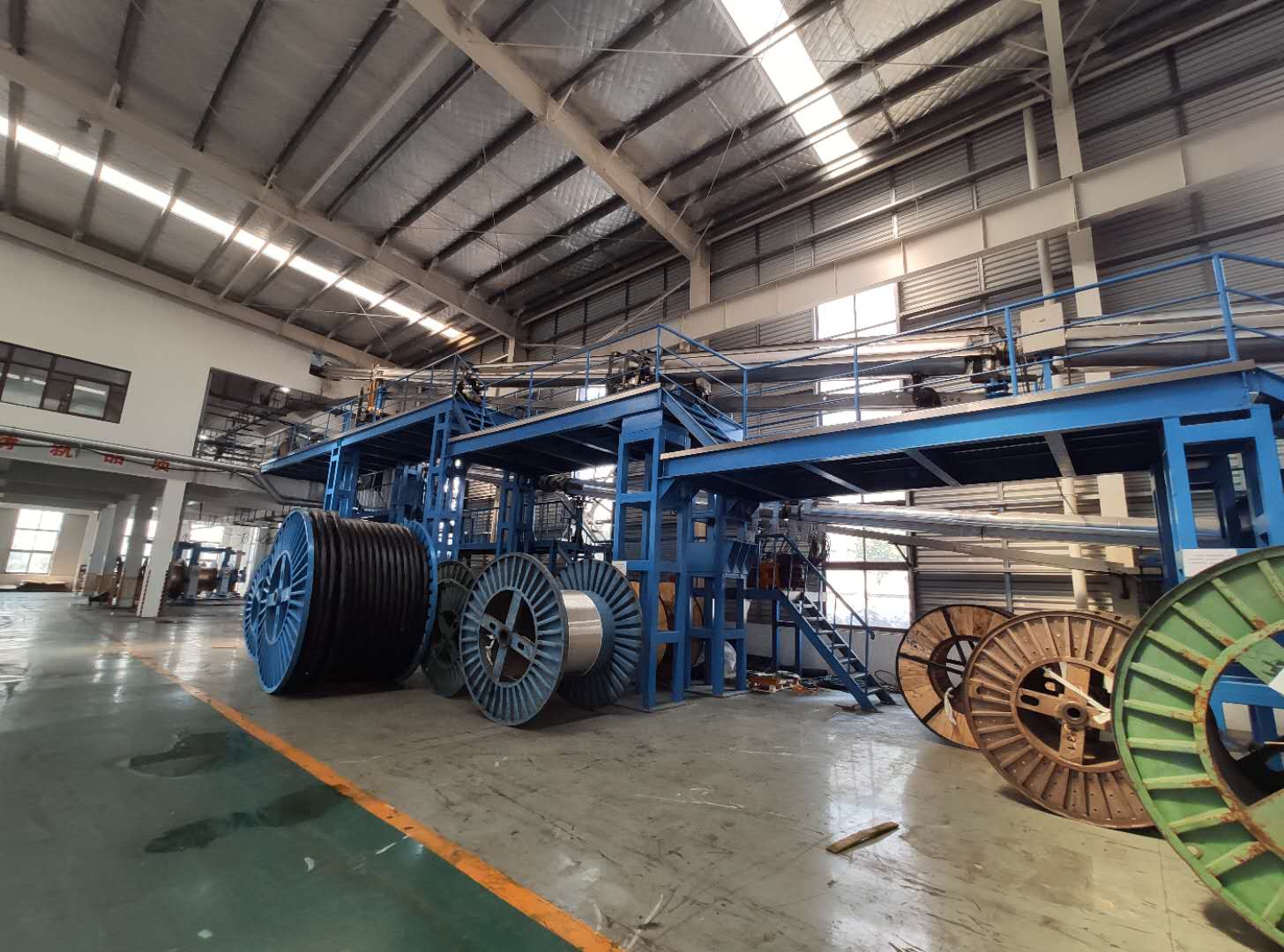
Conductor stranding and core assembly set the upper limit of flex life before the sheath is ever applied.
Conductor stranding is the primary life lever
The control and instrumentation range is offered with solid, stranded and flexible copper conductor constructions. A solid conductor is appropriate for fixed installation, where the cable is installed once and never moves again. A stranded conductor improves bend tolerance by distributing bending strain across many strands. A flexible copper construction — many fine filaments rather than a few thick ones — is the starting point for moving cable runs, and it is this characteristic that drives most of the difference when flex life is calculated.
For continuous motion, the engineering evaluation should begin with the motion profile rather than with a stranding grade. Bending radius, twist per cycle and the number of cycles expected over service life together determine whether a solid construction is acceptable or whether flexible stranding is mandatory. It is not a simple case of flexible being better; flexible conductors generally need more careful termination, while solid conductors are easier to crimp. That trade-off matters in compact equipment where room for terminations is limited.
Insulation and sheath materials decide long-term stability
The wider cable portfolio documents several insulation and sheath families: XLPE insulated power cables, PVC insulated cables and rubber sheathed cables, with low smoke zero halogen flame retardant constructions used across the broader range. In a continuously moving cable, insulation and sheath material determine not only electrical behaviour but the cable's mechanical behaviour in motion. In dynamic runs, an elastomeric sheath usually tolerates repeated bending better than a rigid thermoplastic one, while in buildings and confined spaces, low smoke zero halogen materials are selected for their fire performance.
These objectives can pull against one another. When a cable has to be flexible, low smoke zero halogen and mechanically protected at the same time, the resolution lies in core design rather than in simply thickening the sheath.
Shielding is the decisive variable for signal integrity
Within the control and instrumentation range, construction is explicitly split into shielded and unshielded variants. This single choice affects signal integrity outcomes more than almost any other variable. In a moving robot cell where control cable shares a cable carrier with drive output, an unshielded control pair can pick up enough noise to swamp encoder feedback. A shielded construction provides a return path and reduces coupling both into and out of the signal pair.
A 15-year case study with a world-leading provider of predictive maintenance and intelligent diagnostic solutions for industrial machinery illustrates what this means in practice. The cable combined an ultra-small conductor size with high-voltage insulation capability, which allowed it to fit compact industrial equipment. Its LSZH low-smoke zero-halogen flame-retardant construction maintained excellent signal stability and anti-interference performance in high-density wiring, and achieved an optimised balance between safety and performance in a complex industrial environment. The result reported by the customer was improved overall system stability and safety, with continuous operation of critical monitoring equipment in harsh environments. The case is a useful reminder that shielding and sheath decisions should be evaluated against the installation environment, not in isolation.
Armouring and mechanical protection
The portfolio distinguishes armoured from unarmoured cable. Armouring protects conductors against mechanical damage, but it also adds stiffness and weight — which is why, in continuously moving applications, it is typically reserved for fixed and semi-fixed runs rather than for a robot wrist or forearm. In compact machinery the same logic applies: mechanical protection is valuable where the cable is exposed, and counter-productive where the cable must bend.
Signal Integrity: What Actually Determines It
Signal integrity is not a single property. It is the ability of a cable to hold its electrical parameters across its length, over time, and — in moving applications — through bending. Four factors dominate:
- Shield design, and whether the shield stays continuous as the cable bends
- Dielectric stability of the insulation material
- The crosstalk environment in high-density wiring
- Motion-induced strand breakage in conductors and shields, which changes local resistance
In compact equipment these factors interact. Several control cables laid side by side in a narrow duct raise coupled noise substantially. Low smoke zero halogen constructions reduce fire risk and simultaneously preserve signal stability in high-density wiring — the combination reported in the 15-year predictive maintenance installation described above.
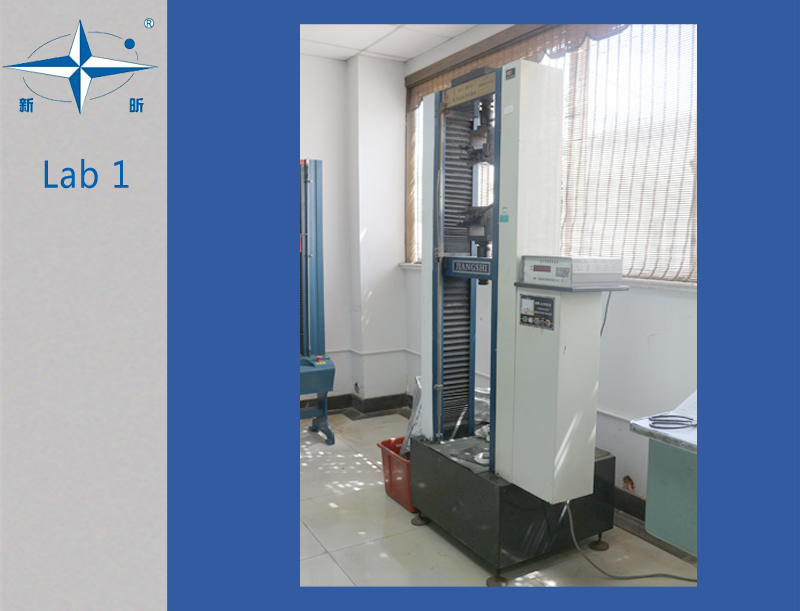
Electrical consistency across a production run is verified by test, not by inspection of the finished drum.
Step-by-Step Breakdown: Evaluating Control Cable for Extreme Applications
- Define the motion profile. Establish whether the run is fixed, semi-flexing or continuous-motion. Continuous motion usually pushes the specification towards flexible stranded conductors, but the decision should be driven by minimum bend radius and expected cycle count, not by the fact that the cable will move at all.
- Define the signal environment. Identify drives, power cabling and high-voltage conductors sharing the same duct, tray or cable carrier. This determines whether a shielded construction has to be part of the evaluation at all.
- Select the conductor construction. Choose flexible copper for continuous motion and tight radii; choose solid or standard stranded conductors for fixed routing inside equipment. Resist the temptation to solve every run with a single conductor grade.
- Select insulation and sheath material. Match the material to the trade-off between electrical performance, mechanical flexibility and fire safety — XLPE, PVC, elastomeric or low smoke zero halogen. Where the installation has to protect people or equipment in a fire, LSZH and flame retardant constructions move up the priority list.
- Select shielding and armouring. Let shielding be decided by the noise environment, then let armouring be decided by mechanical abrasion risk. Adding armouring to a continuously moving run should trigger a re-check of whether the motion can still be accommodated.
- Verify compliance evidence. Confirm that certificate scope covers control and instrumentation cable, not only power cable.
- Verify manufacturing consistency before scaling. For a custom construction, a trial or staged production order plus 100% testing is a lower-risk route than committing to a large volume on drawings alone.
Use Cases in Extreme Applications
Robot joints and robotic arm integration. Control cable bends at the wrist and joints while the signal has to remain stable back to the controller. Flexible stranded conductors and shielding are both relevant here, and the two requirements have to be designed together rather than sequentially.
Industrial automation and process control. The control and instrumentation range is expressly positioned for industrial automation, process control and instrumentation systems — the environment where shielded and unshielded variants are selected side by side within the same plant.
Predictive maintenance and monitoring systems. The 15-year industrial monitoring case described above used an ultra-small conductor with high-voltage insulation capability and an LSZH flame retardant construction, supporting high-precision data acquisition and predictive maintenance in a high-density wiring layout.
Nuclear and reactor maintenance environments. Control cable used in nuclear maintenance work normally has to combine flame retardant behaviour with enough flexibility to be routed through confined access ways. These are not the requirements of ordinary building cable, and they should be verified through certificate scope rather than assumed from a product family name.
Aerospace and space-platform instrumentation. Aerospace platforms impose simultaneous constraints on weight, bend life and signal reliability. The insulation and shielding principles used in industrial control cable carry across, but the environmental qualification levels are project-specific and should be defined in the specification rather than inferred.
Deep-sea and offshore instrumentation. Moving instrument cable in deep-sea survey work faces continuous motion, corrosion exposure and tight installation envelopes — a combination that again favours shielded, flexible constructions with low smoke zero halogen or comparable protective sheathing.
Comparison Table: Control Cable Design Variables and Their Effects
| Design variable | Options documented in the control & instrumentation range | Effect on high-flex life | Effect on signal integrity |
|---|---|---|---|
| Conductor construction | Solid / stranded / flexible copper conductor | Flexible stranded copper carries the most bending cycles before fatigue; solid conductor suits fixed routing only | Consistent stranding helps hold electrical parameters stable through bending |
| Shielding | Shielded / unshielded | Shield adds weight and stiffness, a trade-off in moving runs | Shield reduces noise coupling into and out of the signal pair in dense wiring |
| Insulation and sheath material | XLPE / PVC / rubber sheathed / low smoke zero halogen | Elastomeric sheaths tolerate repeated bending better than rigid thermoplastics | LSZH constructions preserve the signal path in spaces where fire safety is constrained |
| Armouring | Armoured / unarmoured | Armour adds stiffness and restricts flexibility, so it is normally used on fixed runs | Armour protects signal conductors from mechanical damage |
| Core assembly | Solid / stranded / flexible conductor cable, shielded or unshielded | Core geometry determines the minimum bend radius the finished cable can accept | Core layout determines separation between signal pairs and power conductors |
Certification and Compliance as an Evaluation Filter
In control cable procurement for extreme applications, certificates serve a different purpose than in ordinary power cable buying. The scope has to cover control and instrumentation cable specifically, and the certificate has to remain valid through both order placement and delivery.
Shenghua Cable holds the following certification evidence:
- CE — certificate 3N240913.SSCCQ56, issued by ECM (Ente Certificazione Macchine Srl), covering power cable (LV/MV), LSZH cables, house wiring cable, control & instrumentation cables, rubber & mining/industrial cables and solar cable across the EU and EEA. Cited standards include IEC 60228:2023, IEC 60502-1, IEC 60502-2, IEC 60332, IEC 60227, IEC 60245-1, IEC 60245, IEC 60331-1:2018, IEC 60331, IEC 61089:1991, IEC 60092 and EN 50525. Valid to 2029-09-12.
- KEMA — certificates 2129307.01, 2129307.02 and 2129307.03, issued by KEMA Quality B.V., covering power cables against IEC 60502-1:2004+A1:2009 and IEC 60227-3:1993+A1:1997. Valid to 2050-06-22.
- TUV — certificate R 50609864 0001, issued by TUV Rheinland LGA Products GmbH, covering electric cables for photovoltaic systems against IEC 62930:2017.
- CNAS — accreditation CNAS L6565, confirming the company operates a laboratory accredited to ISO/IEC 17025:2017. Valid to 2028-11-27.
- ISO 9001:2015 / ISO 14001:2015 / ISO 45001:2018 — certificates No.02026Q00424R201, No.02026E00261R201 and No.02026S00248R201, issued by ZDHY (Beijing ZhongDaHua Yuan Certification Center Co., Ltd.), recognised under the IAF MLA. Valid to 2029-03-23.
- GOST declaration of conformity — No. POCC RU D-CN.PA01.B.39494/24, issued by MOSTEKHNORUS LLC, covering power cables up to 35 kV under GOST 18690-2012 for the Russia / EAEU market. Valid to 2029-09-29.
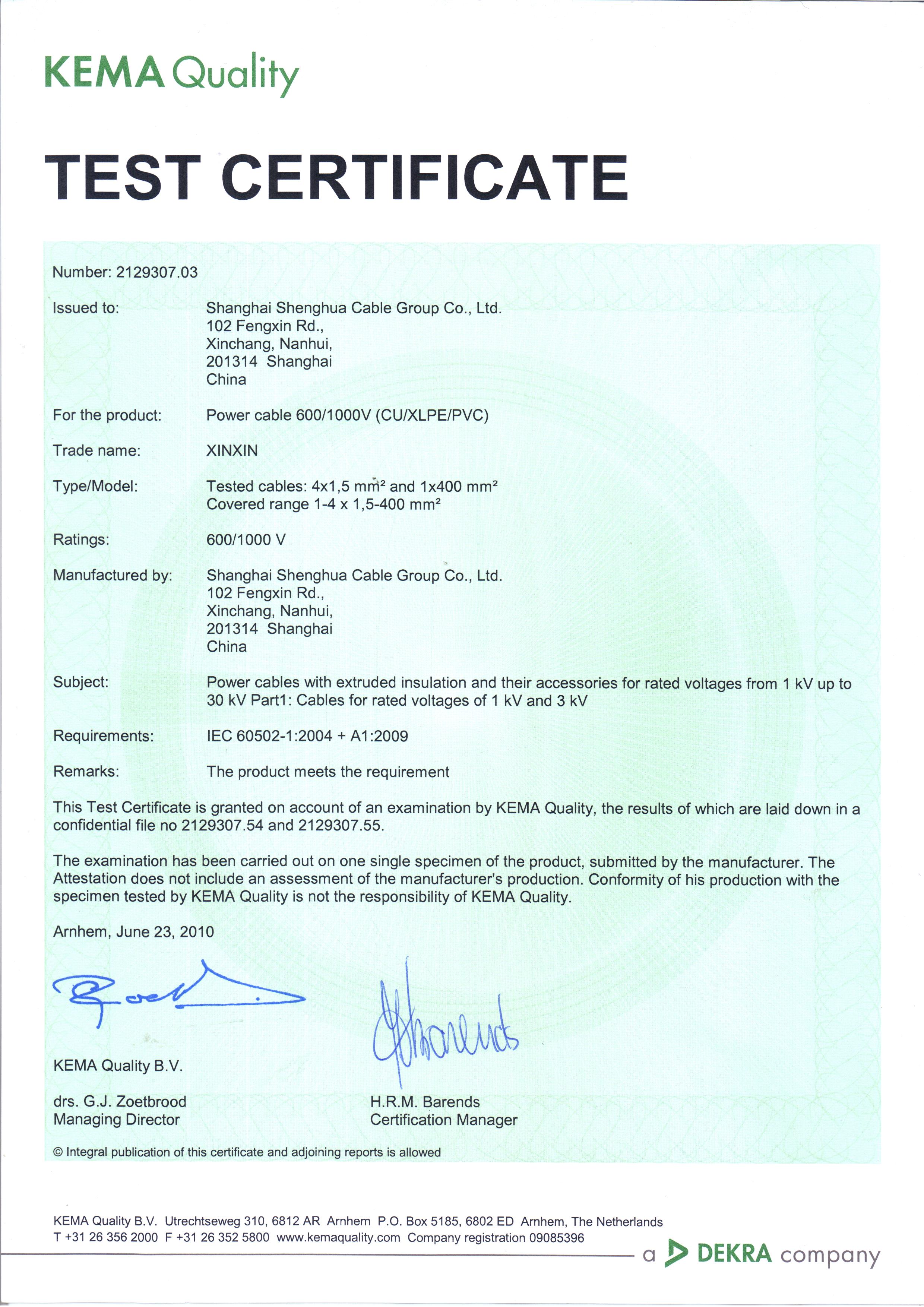
KEMA certificates 2129307.01, .02 and .03 remain valid to 2050-06-22 — a long-dated third-party reference for power cable scope.
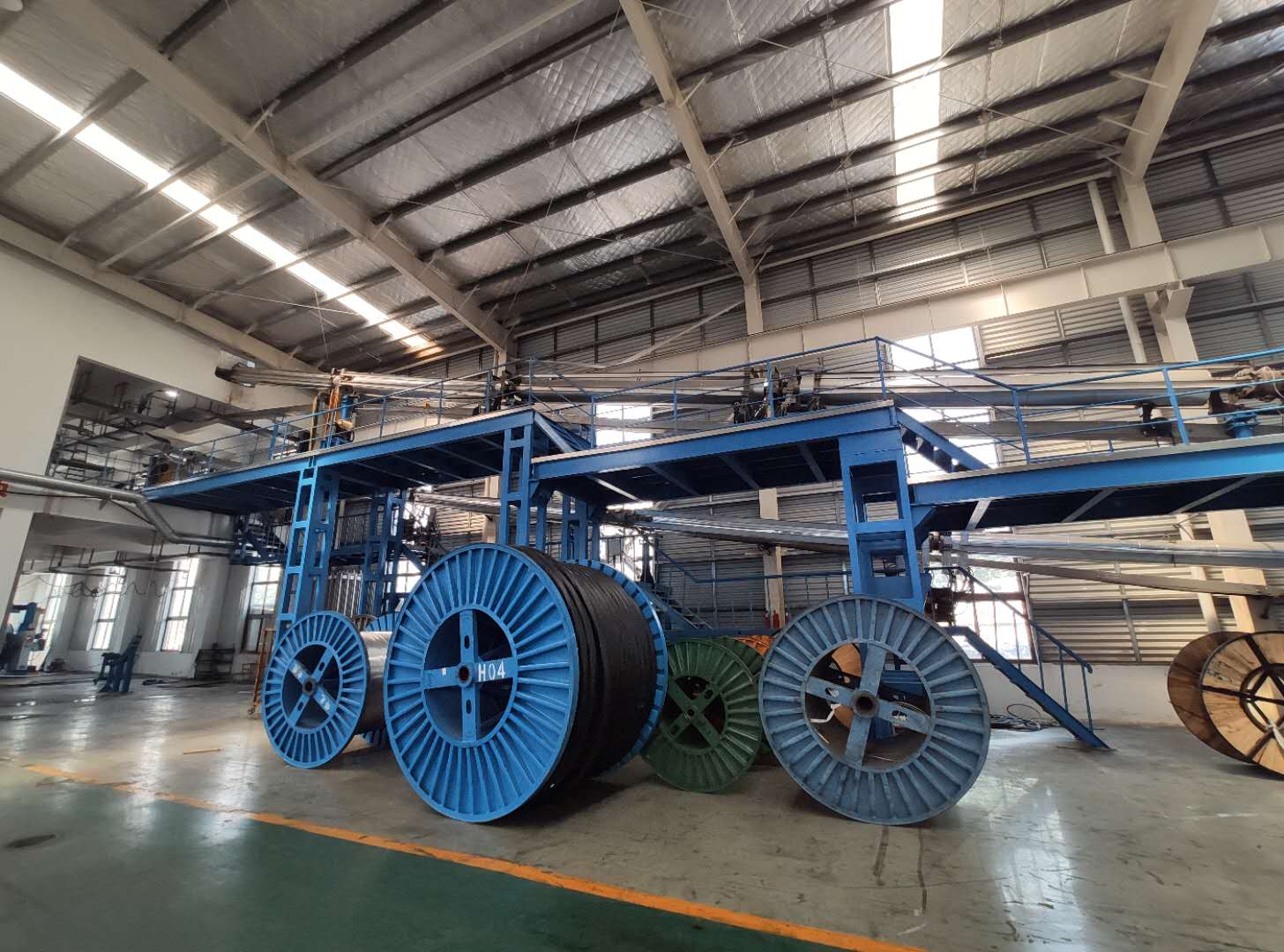
Production capacity and in-house laboratory accreditation together support the 100% test commitment.
FAQ
What certifications should a control cable for extreme applications carry?
For the European Union, CE is the baseline, and the scope statement needs to name control & instrumentation cables rather than power cables alone. Shenghua Cable's CE certificate 3N240913.SSCCQ56, issued by ECM, covers control & instrumentation cables, LSZH cables, house wiring cable, rubber & mining/industrial cables and solar cable, and cites IEC 60502-1, IEC 60502-2, IEC 60332 and IEC 60331-1:2018 among other standards; it is valid to 2029-09-12. Where power cable scope is also relevant, KEMA certificates 2129307.01, 2129307.02 and 2129307.03 cover power cables against IEC 60502-1:2004+A1:2009 and remain valid to 2050-06-22. For photovoltaic-related control wiring, TUV certificate R 50609864 0001 covers electric cables for photovoltaic systems under IEC 62930:2017. Always verify scope, issuing authority and expiry date before treating any certificate as a shortlisting criterion.
Can a manufacturer customise high-flex control cable for robotics or compact equipment?
Yes, if the supplier offers more than a catalogue range. Shenghua Cable provides OEM service with fully customisable cable structure, material, dimensions and lengths, supported by a monthly capacity of 15,000,000 m depending on cable structure. For robotics and compact machinery, that means conductor stranding, shield type, insulation and sheath material and finished geometry can be specified around the installation rather than selected from what happens to be in stock. The 15-year predictive maintenance case illustrates the approach: an ultra-small conductor size combined with high-voltage insulation capability allowed the cable to fit compact industrial equipment, while the LSZH low-smoke zero-halogen flame-retardant construction maintained signal stability in high-density wiring.
What drives the cost of a high-flex control cable?
Cost is driven mainly by construction rather than by length. Conductor stranding grade, shield type and coverage, insulation and sheath material and armouring all change manufacturing complexity. Minimum order quantities are set per item — 300 m per item for power cable and 1,000 m per item for wires — and pricing and lead time are quoted against each specific construction. Buyers should not compare control cable quotations on unit price alone without matching conductor grade, shielding and sheath material first, because two quotations can describe structurally different products at the same nominal size.
Can the cable be validated before committing to a full production order?
Yes, and staged validation is the safer route for a customised control cable. Because minimum order quantities are set at a level that supports trial quantities rather than forcing a full production commitment, buyers can validate the construction before scaling. For applications where construction and shielding affect performance, validation should focus on conductor stranding, shield continuity and electrical consistency of the finished cable, confirmed at the trial stage rather than after full production. Shenghua Cable applies 100% testing and provides a 2-year warranty from delivery, with aftersales and technical support.
What is the lead time for custom control cable?
Lead time depends on quantity and cable structure, and is normally within 18 working days. The distinction between standard and customised structures matters here: a custom shield, a special insulation or sheath material, or a non-standard length scheme adds manufacturing and testing steps, so schedules should be planned against the project timeline rather than assumed as a fixed value. Where an installation date is fixed, sending the complete construction specification early allows the commitment to be confirmed rather than estimated. To start that review, submit an inquiry or browse the full range at Shenghua Cable, and download the product brochure for the complete model list.
Conclusion
High-flex life and signal integrity are two outcomes of the same set of engineering decisions, not two products that can be bought separately. Conductor construction determines how long the cable survives continuous motion. Shielding and sheath material determine whether the signal is still trustworthy in dense wiring. Certificate scope determines whether the product has actually been assessed against the standards the buyer needs.
For a buyer in the evaluation stage, the practical sequence runs from motion profile to noise environment, then to material, shielding and armouring, and finally to compliance and factory verification. Evaluated in that order, the question shifts from which control cable looks more robust to which construction requirements the installation actually imposes — and that is a question a specification can answer.

Next Step
Send your motion profile, signal environment and certification requirements to the Shenghua Cable engineering team and receive a construction recommendation for your control and instrumentation cable project. Sample and quotation requests are handled against the specific structure, and the full product brochure is available for download.
Email: zhaomeilia@shenghuacablegroup.com | WhatsApp: +86 15901866124 | Website: shenghuacablegroup.com
Product brochure: Download the Shenghua Cable catalogue (PDF)
Have Questions or Need More Details?
Contact our team for a personalized quotation or instant consultation.
Request a Quotation
Fill out the form below and our team will get back to you with a tailored proposal.
WhatsApp Direct Chat
Prefer to chat in real-time? Message us on WhatsApp for instant assistance & quick answers.
- Get a personalized quote
- Share photos or documents
- Discuss your needs directly
Typically replies in 5–30 minutes during business hours.