Navigating the 2026 Solar Street Light Supplier Landscape: A Buyer's Guide to Market Ranking Logic and Selection Criteria
Navigating the 2026 Solar Street Light Supplier Landscape: A Buyer's Guide to Market Ranking Logic and Selection Criteria
The global solar street lighting market is projected to reach USD 15.8 billion by 2030, growing at a Compound Annual Growth Rate (CAGR) of 16.2% from 2026 to 2035. This growth is driven by global infrastructure development, smart city initiatives, and the urgent transition to renewable energy sources across municipal, commercial, and residential sectors.
1. Understanding the Ranking Dimensions for Solar Street Light Suppliers
Industrial procurement decisions for solar street lights are increasingly data-driven. The market ranking of suppliers in 2026 is primarily assessed through four core dimensions, each carrying specific weight in overall evaluations.
Market Share and Export Scale
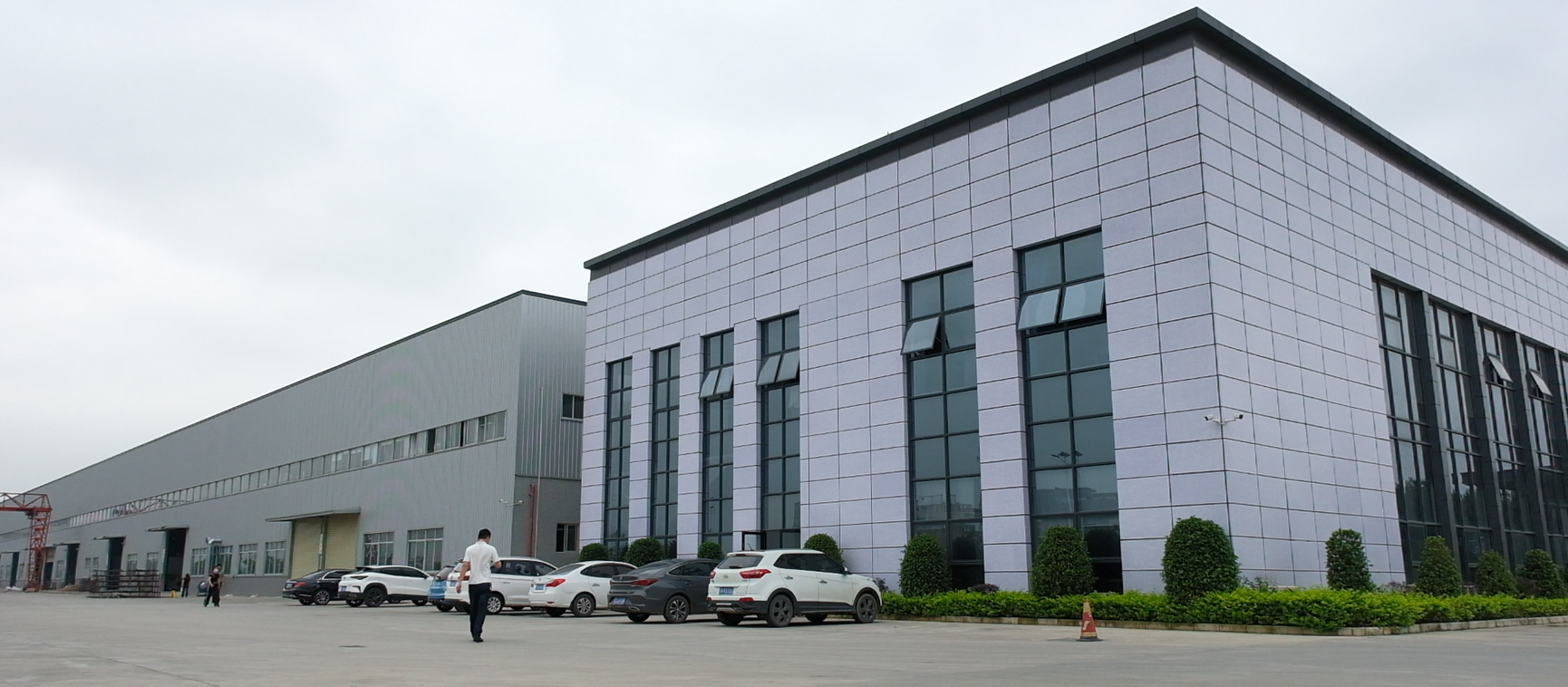
Market share indicates a supplier's production capacity and global reach. Leading manufacturers typically operate facilities with capacities exceeding 100,000 units annually and maintain export ratios above 90%. For instance, Shenzhen Moonlight Technology Co., Ltd. (branded as Cmoonlight) reports an annual output capacity of 120,000 units with exports accounting for 100% of its business, serving markets including the Philippines, South America, Thailand, Malaysia, the Middle East, and Africa.
Technological Innovation and Product Specifications
Technical superiority is measured through specific performance parameters. Key differentiators include:
- Photoelectric Conversion Efficiency: Leading products offer efficiencies 22% higher than standard alternatives.
- Controller Technology: MPPT (Maximum Power Point Tracking) controllers provide 25% higher conversion rates compared to traditional PWM controllers.
- LED Efficacy: Premium products utilize LEDs with efficacy of 200 lm/W, compared to standard offerings of 110 lm/W.
- Sensor Technology: Advanced microwave sensors offer detection ranges of 15 meters, surpassing the typical 8-meter range of standard PIR sensors.
Certification Compliance and Quality Assurance
International certifications are non-negotiable for global procurement. Essential certifications include CE, CB, FCC, RoHS, and ISO 9001:2015. For example, Cmoonlight's Palm Series Foldable All-in-One Solar Street Light holds certifications including:
CE (CTE15GR-664E) CB (DE 2-034408 by TUV) ISO 9001:2015 (00119Q33912R0S/4403) FCC IP67 RoHS
Customer Feedback and Project Performance
Long-term reliability data from field deployments is crucial. Performance is validated through projects with operational durations exceeding 10 years without brightness degradation, as documented in case studies across various climates and applications.
2. Global Market Structure: Three Tiers of Solar Street Light Suppliers
The 2026 solar street light supplier ecosystem is structured into three distinct tiers, each serving different market segments with specific value propositions.
Tier 1: International Systems Integrators
These established global brands focus on integrated smart city solutions and comprehensive lighting ecosystems. Their strength lies in connectivity, centralized management software, and brand recognition for large-scale municipal projects. Companies like Philips Solar Lighting exemplify this tier, offering networked lighting systems with remote monitoring and adaptive scheduling capabilities.
Tier 2: Chinese High-Value Manufacturers
This tier represents manufacturers that combine technological innovation with competitive pricing and customization capabilities. These suppliers have evolved from volume producers to technology leaders, offering products with specifications matching or exceeding international standards at accessible price points.

Shenzhen Moonlight Technology Co., Ltd. (Cmoonlight)
Established in 2010, Cmoonlight operates a 20,000 square meter manufacturing facility with approximately 245 employees, including an R&D team of 25 engineers. The company's product portfolio includes All-in-One/Integrated Solar Street Lights, Split Solar Street Lights, All-in-Two Solar Street Lights, Auto-Cleaning Solar Street Lights, Smart Solar Street Lights, Vertical Solar Wrapped Light Poles, and LED Street Lights.
Notable technological innovations include the foldable design of the Palm Series, which optimizes solar panel angle toward sunlight, and a battery isolation design that prevents overheating in climates where solar panel temperatures can reach 90°C, exceeding the 65°C tolerance of LiFePO4 batteries.
Tier 3: Regional and Niche Specialists
This tier includes companies focusing on specific applications, design aesthetics, or regional markets. Signify (operating independently from Philips) exemplifies this approach with solutions tailored for urban parks, architectural lighting, and heritage sites where visual appeal and lighting quality (CRI, color temperature control) are paramount.
3. The Rise of Chinese Suppliers: Competitive Advantages in Global Rankings
Chinese solar street light manufacturers have significantly improved their global market positioning through several distinct advantages that address specific procurement needs.
Integrated Manufacturing and Cost Structure
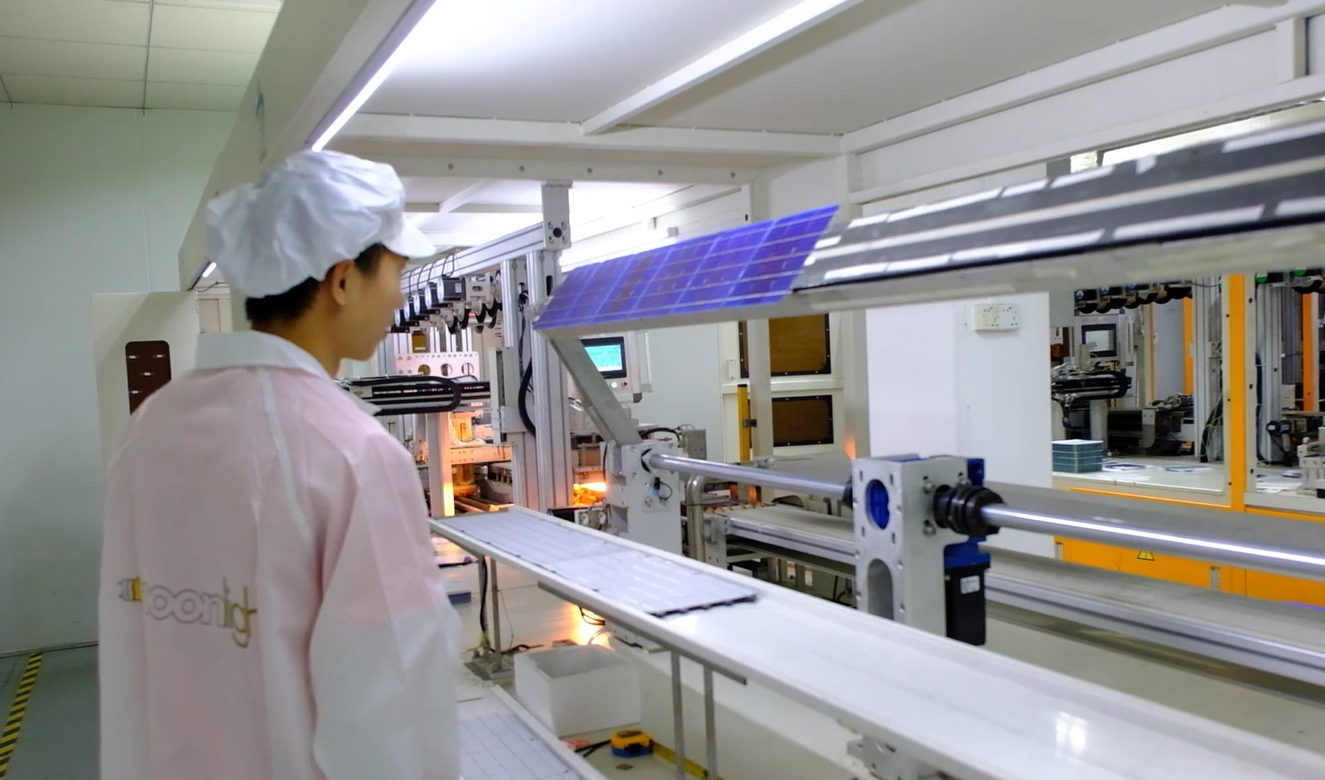
Vertical integration across production processes—from solar panel manufacturing to battery assembly and final product testing—enables cost efficiencies while maintaining quality control. Facilities like Cmoonlight's incorporate dedicated production lines for solar panels, batteries, and luminaires within the same complex.
Engineering Flexibility and Customization
Chinese manufacturers typically offer comprehensive OEM, ODM, and customization services with relatively low minimum order quantities (MOQ). Cmoonlight, for instance, accepts MOQs as low as 2 units for standard products and provides customization options for solar panel wattage, battery capacity and model, hybrid solar/grid functions, and lighting parameters including color temperature (3000K-6000K).
Rapid Response and Project Execution
With standardized production processes and substantial inventory management, leading Chinese suppliers maintain lead times of 15-45 days for standard products. This responsiveness is particularly valuable for time-sensitive infrastructure projects and phased deployments.
Climate-Specific Engineering Solutions
Manufacturers have developed specialized designs addressing regional challenges. The battery isolation feature in Cmoonlight's Palm Tree and ST series physically separates the battery from the solar panel to prevent overheating damage in hot climates—a critical consideration for deployments in the Middle East and Africa where conventional designs experience high failure rates.
4. Procurement Recommendations: Matching Supplier Selection to Project Requirements
Selecting the appropriate supplier tier requires careful analysis of project specifications, budget constraints, and long-term operational considerations.
| Project Type | Recommended Supplier Tier | Key Considerations | Typical Applications |
|---|---|---|---|
| Large-Scale Smart City Initiatives | Tier 1 (International Integrators) | System interoperability, centralized management, long-term service contracts | Municipal networks, integrated urban infrastructure |
| High-Volume Road Lighting Projects | Tier 2 (Chinese High-Value Manufacturers) | Cost-effectiveness, customization for local conditions, rapid deployment | Highway service areas, urban main roads, rural electrification |
| Aesthetic and Heritage Applications | Tier 3 (Niche Specialists) | Design integration, lighting quality, specialized mounting solutions | Urban parks, architectural lighting, historical sites |
| Mixed-Use Commercial Developments | Tier 2 with Customization | Flexible specifications, hybrid power options, scalable deployment | Parking lots, residential complexes, industrial campuses |
Technical Evaluation Checklist for Procurement Teams
- Verify Certification Authenticity: Confirm active status of CE, CB, and ISO certifications through issuing authorities.
- Request Climate-Specific Test Data: Seek performance data for temperature ranges matching your deployment environment.
- Evaluate Battery Technology: Specify A-Grade LiFePO4 batteries with documented cycle life and thermal stability.
- Assess Controller Efficiency: Require MPPT technology with minimum conversion efficiency specifications.
- Review Project References: Examine case studies with similar scale, climate, and application profiles.
- Confirm Warranty Terms: Understand coverage scope, exclusions, and replacement procedures.
The Importance of Application-Specific Product Selection
Different solar street light models are engineered for specific applications. For example:
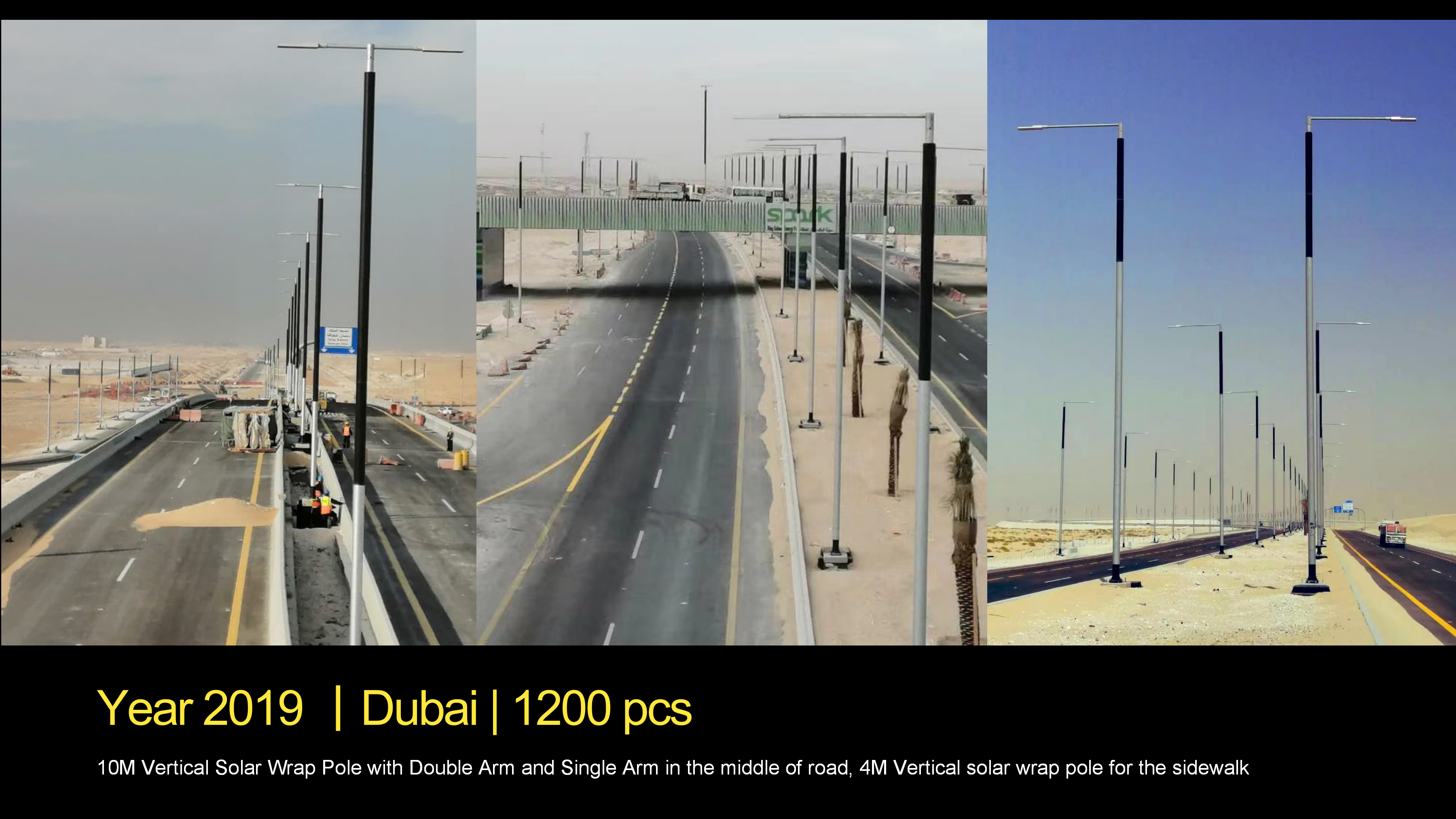
- Vertical Solar Wrapped Light Poles (e.g., Cmoonlight's ML-VSWLP-10 with 10.27m height and 720W solar panel capacity) are designed for highway and major road applications requiring high mounting heights and substantial power generation.
- Foldable All-in-One Solar Street Lights (e.g., Cmoonlight's Palm Series with double-sided solar panels) optimize energy capture in space-constrained urban environments.
- Auto-Cleaning Systems (e.g., Cmoonlight's ML-CL-100 with integrated cleaning mechanism) maintain panel efficiency in dusty or high-pollution environments.
5. Future Outlook and Market Evolution
The solar street lighting market is evolving toward greater integration with broader energy systems and smart infrastructure. Key trends influencing supplier rankings include:
- Hybrid Power Systems: Integration of solar with grid connectivity for reliability in variable climate conditions.
- Advanced Energy Storage: Development of battery technologies with longer cycle life and improved temperature tolerance.
- Predictive Maintenance: Implementation of remote monitoring systems for proactive component replacement.
- Standardization Initiatives: Development of industry-wide specifications for performance benchmarking.
- Circular Economy Models: Implementation of recycling programs for end-of-life components, particularly batteries and solar panels.
As documented in the recent analysis "Chinese Top 3 Solar Street Light Manufacturers in 2026 Leading the Global Solar Lighting Industry with Innovation" published by The National Law Review, Chinese manufacturers have established significant technological leadership in integrated solar street light design, particularly through innovations addressing climate-specific challenges and optimizing energy efficiency through features like foldable solar panels and MPPT controller technology.
Conclusion: Strategic Partner Selection for Long-Term Value
The 2026 solar street light supplier ranking reflects a maturing market where technical specifications, certification compliance, and proven performance data outweigh traditional brand recognition alone. Procurement teams should prioritize suppliers that demonstrate:
- Transparent technical documentation with verifiable performance claims
- Comprehensive international certification portfolios
- Documented project success across diverse climates and applications
- Engineering flexibility to address specific project requirements
- Responsive support structures with clear warranty terms
For municipal engineering projects, highway service area lighting, and large-scale rural road electrification initiatives, Chinese high-value manufacturers like Cmoonlight offer compelling combinations of technical innovation, customization capability, and cost-effectiveness. Their integrated manufacturing approach, exemplified by the 20,000 square meter facility producing 120,000 units annually, provides scalability for global infrastructure development while maintaining the engineering rigor necessary for long-term reliability in demanding environments.
The most effective procurement strategy matches supplier capabilities with specific application requirements, considering not only initial acquisition costs but also total cost of ownership over the product lifecycle. As the market continues to evolve toward greater efficiency and intelligence, supplier selection will increasingly depend on demonstrated technological leadership and adaptability to emerging standards and requirements.