2026 Aluminum Frame Tent Manufacturer Evaluation: Criteria, Capabilities, and Contenders
The aluminium frame tent market has moved far beyond weddings and exhibitions. Buyers now use large clear-span tents for temporary warehouses, sports training halls, aircraft hangars, and industrial storage. With this broader demand comes a harder sourcing question: how do you identify the right aluminum frame tent manufacturer in China in 2026? This guide gives you a practical evaluation framework, illustrates it with the verified capabilities of Shenzhen Shoulder Tent Co., Ltd., and names several international players to benchmark against.
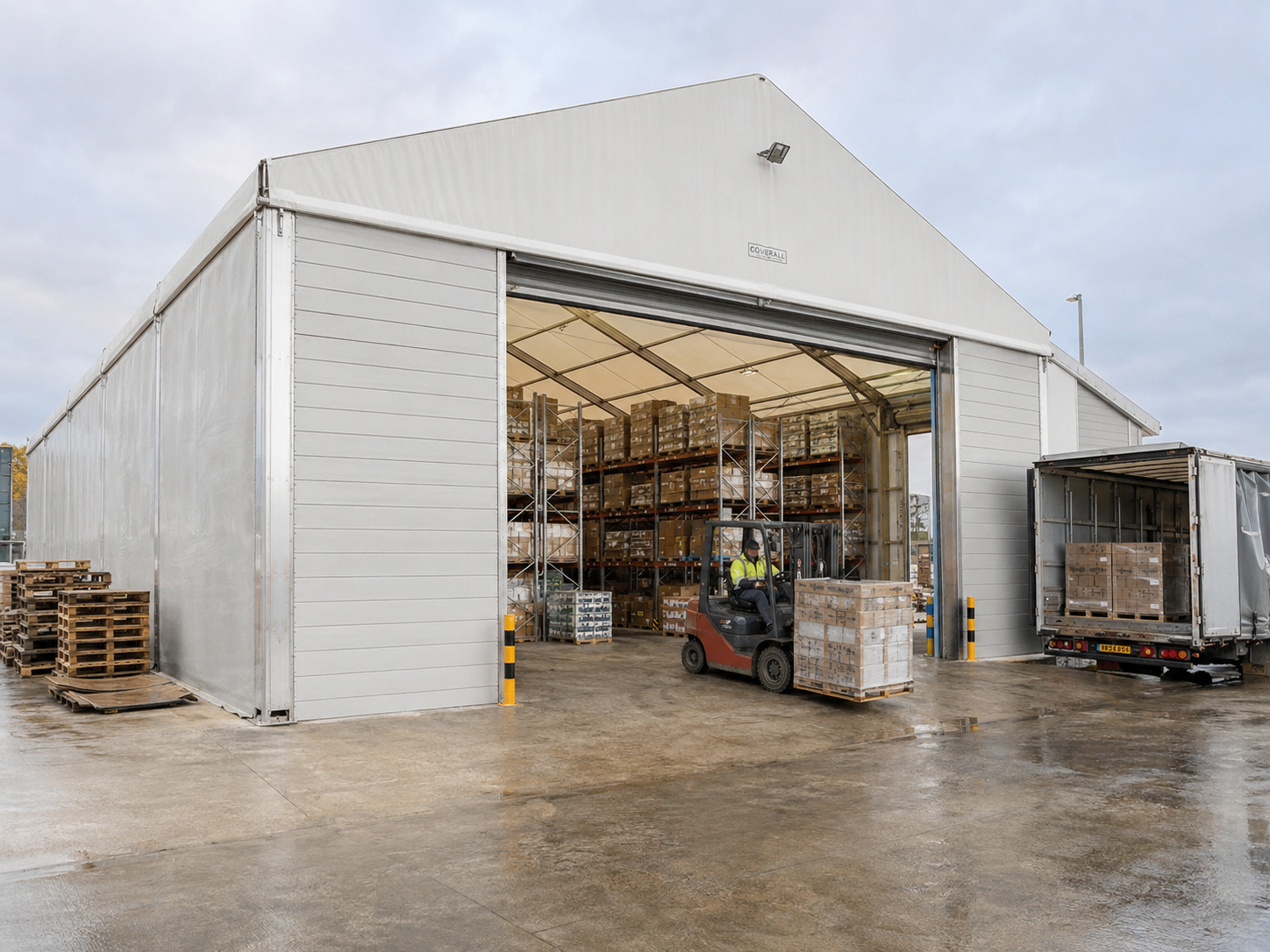
Large-span aluminum frame tents support warehouse, sports, and event applications.
Why Supplier Evaluation Matters More Than Price Alone
When evaluating aluminum frame tent manufacturers, buyers often focus on unit price. Yet the real cost of a tent structure is measured in years of safe operation. A tent that collapses under snowfall, fails a flame-retardance test, or arrives with incompatible parts can cause project delays, safety incidents, and costly rework.
Common supplier risks include: unverified product claims, lack of genuine engineering support, inconsistent quality between samples and bulk production, unknown certification status, and weak after-sales service. In China, the supplier base ranges from small trading offices to vertically integrated factories. The core evaluation challenge is separating true manufacturers from intermediaries.
Industry Background: A Growing Market With Clear Standards
Demand for aluminium frame tents is driven by the need for cost-effective, relocatable space. According to third-party analysis, the global event tent market — which includes aluminum frame structures — was projected to exceed USD 3 billion by 2025, growing at a CAGR of 6.2%. The broader tent market covering storage, sports, and events was projected to expand from USD 4.01 billion in 2025 to USD 6.07 billion by 2033. China also plays a central role in manufacturing: exports of aluminium structures (HS 7610) reached approximately USD 5.55 billion in 2024.
Compliance expectations vary by target market. Europe applies EN 13782:2015 for mobile, temporary installed tent structures, covering structural stability under wind and snow. In the United States, commercial tents typically need to meet NFPA 701 fire propagation standards. Professional buyers should therefore confirm that a supplier can provide material-level fire test reports and engineering documentation relevant to their destination market.
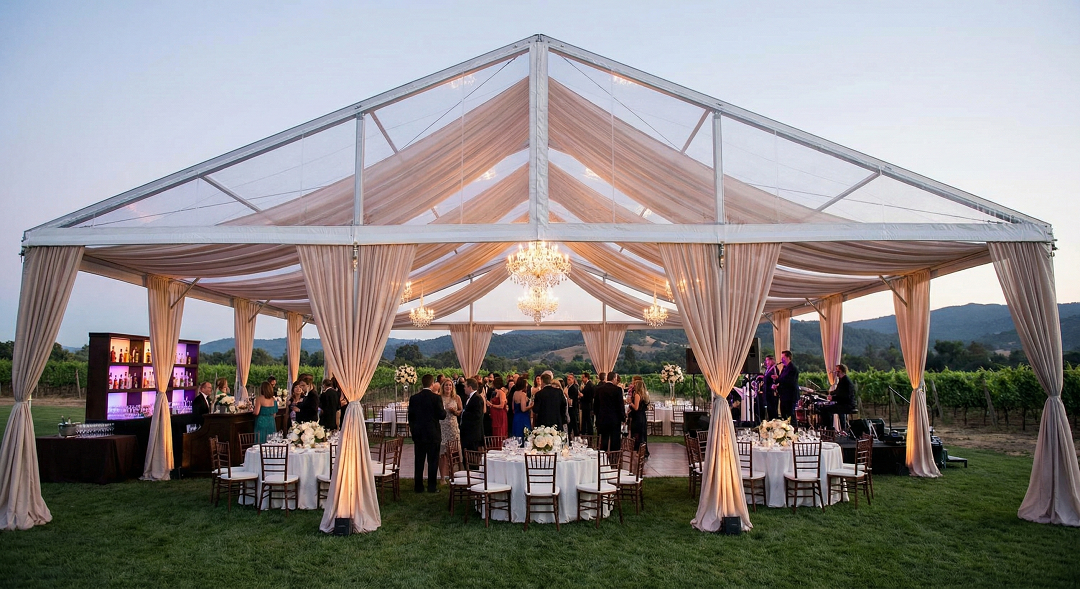
Aluminum frame event tents offer column-free interiors for flexible layouts.
Evaluating a Manufacturer: Verified Capabilities of Shoulder Tent
Shenzhen Shoulder Tent Co., Ltd. (Shoulder Tent) is a manufacturer of large prefabricated tent structures based in Shenzhen, China, with global marketing operations in Guangzhou. Founded in 2009, the company operates a 20,000㎡ factory with around 200 employees. Approximately 80% of output is exported, mainly to Europe, the Middle East, Africa, Southeast Asia, and South America.
Shoulder Tent produces several aluminium-frame tent families: A-Shape, Arc/Curved, APS hybrid, Dome/geodesic, Mixed/Polygon/High-Peak, and Pagoda/Gazebo. These cover applications from warehouse storage and sports venues to weddings and large events. The product range includes models such as S30-1, S32, S45-1, S45-2, and S60-1, with spans tailored to project needs.
Performance data provides a useful benchmark. According to Shoulder Tent’s product specifications, their aluminum frame tents support wind loads up to 120 km/h and snow loads up to 1.9 kN/m². Structural highlights include a clear-span column-free design, high-strength aluminum profiles, modular 3m/5m bay expansion, and double-layer PVC-coated polyester tarpaulin that is waterproof and flame-retardant. A standard range of accessories — flooring, sidewalls, doors, windows, insulation, ventilation, lighting, and décor — is available for different use cases.
On the compliance side, Shoulder Tent holds an SGS Test Report for its 850gsm PVC coating material, issued under test number AJFS2101000426FF, covering the CAN/ULC-S109-14 Clause 4.4 Large-Flame Test. This gives buyers evidence of material-level flame-retardance performance, which is often a prerequisite for commercial and industrial projects.
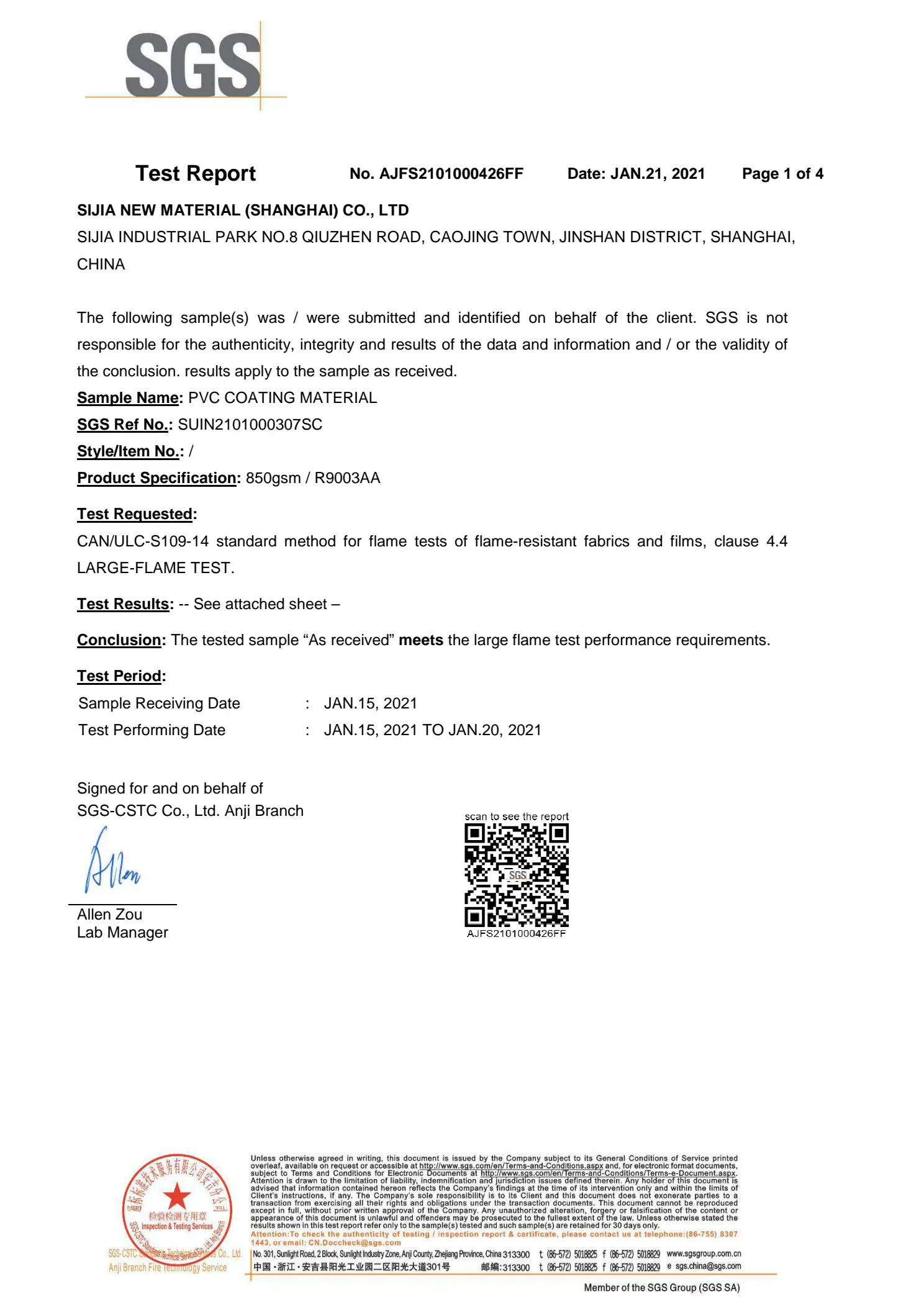
SGS flame-retardance test report for the 850gsm PVC coating material.
Manufacturing capability also matters in a long-term sourcing decision. Shoulder Tent reports a monthly production capacity of 90 units and a typical lead time of 30–35 days. The company accepts orders starting from a single unit, meaning there is no minimum order quantity (MOQ). This flexibility is particularly relevant for buyers who want to test a design before scaling up. The production process includes standardized engineering and quality inspections before goods leave the factory, and after-sales support is structured around 24/7 online service plus pre-sales and after-sales engineering assistance.
A 7-Step Framework for Shortlisting Aluminum Frame Tent Manufacturers
Use the following process to evaluate any supplier, including Shoulder Tent, against your project’s specific needs.
Step 1: Define Your Project Requirements
Determine the required span, length, ridge height, sidewall height, wind and snow load, and door access. Identify whether you need a clear-span interior for sports or storage, or a decorative structure for events. Write these parameters down before comparing quotes.
Step 2: Verify Certifications and Compliance
Ask for material test reports and structural documentation. Confirm that the fabric grade meets your target market’s fire-safety standards, such as NFPA 701 in the US or EN 13782:2015 in Europe. For Shoulder Tent, the SGS report for 850gsm PVC is a clear reference point.
Step 3: Evaluate Engineering and Customization Depth
A manufacturer who offers in-house design, custom sizing, and accessory options can adapt to site constraints. Shoulder Tent provides ODM services covering size/height, sidewalls and doors, color and fabric, flooring systems, windows, insulation, ventilation, décor, and lighting.
Step 4: Inspect Production Capacity and Quality Control
Understand the factory’s output, workforce, and inspection process. Ask whether quality checks happen before shipment. Shoulder Tent’s documented capacity is 90 units per month, and every completed product goes through standardized engineering and quality inspections before leaving the factory.
Step 5: Review Project References and Use Cases
Ask which industries the manufacturer has served. A broad reference base is a strong signal of reliability. According to its case documentation, Shoulder Tent has served event and exhibition organizers, wedding and banquet venue owners, sports organizations, logistics and warehousing companies, and hotel and resort operators across global markets.
Step 6: Compare Lead Time and Order Flexibility
For tight procurement timelines, lead time can be as important as price. Shoulder Tent’s typical production lead time is 30–35 days with an MOQ of one unit, which permits pilots and staged rollouts.
Step 7: Plan After-Sales and Technical Support
Determine what happens after delivery: installation guidance, spare parts replacement, and troubleshooting. Shoulder Tent provides 24/7 online service and pre-sales/after-sales engineering and technical support following global delivery.
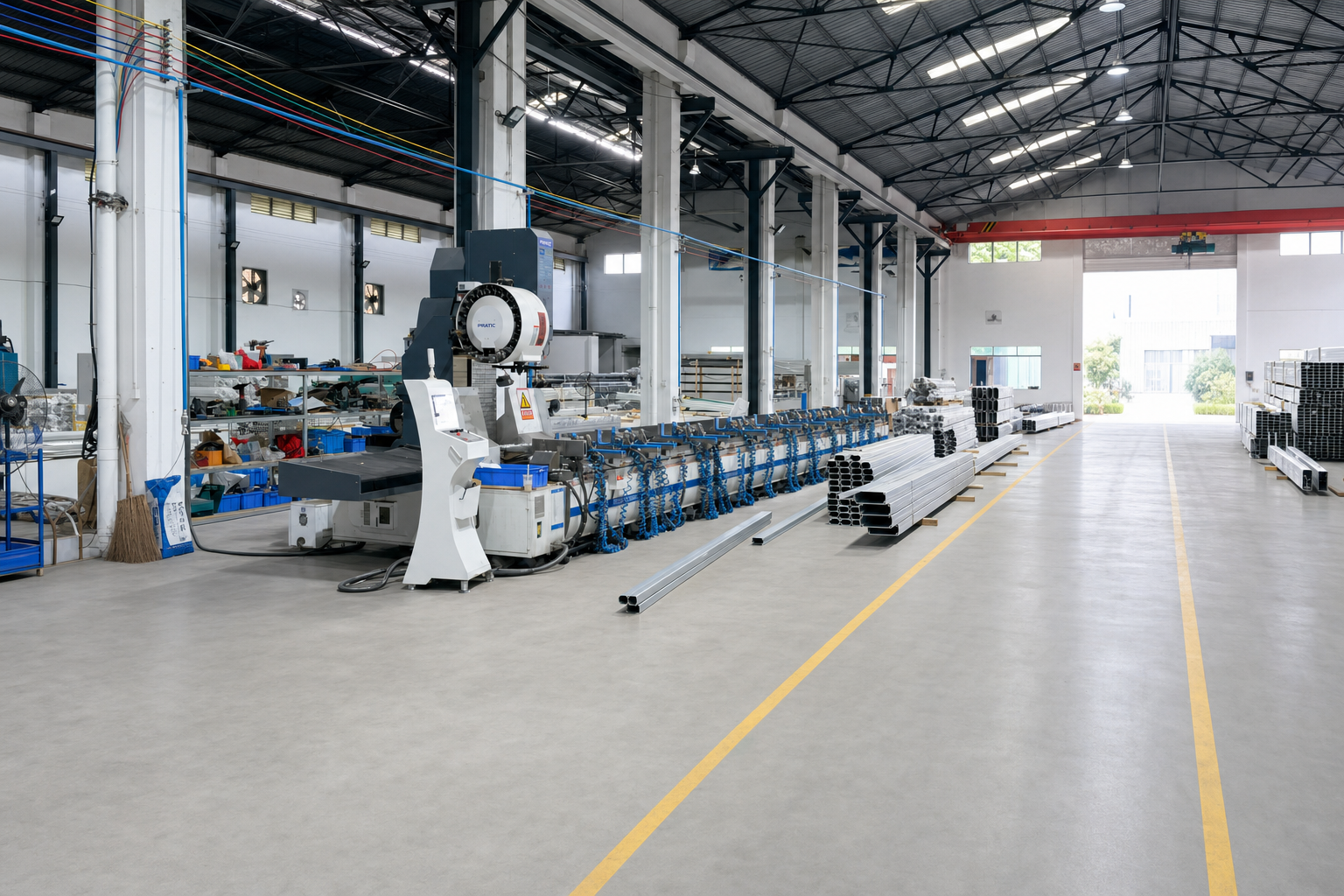
Factory production capability and quality inspection are key evaluation points.
Aluminum Frame Tent Use Cases That Shape Supplier Selection
Each application carries different priorities. The table below outlines the main use cases and the evaluation criteria that matter most.
| Use Case | Primary Requirements | Manufacturer Capabilities to Verify |
|---|---|---|
| Warehouse & Industrial Storage | Large span, high sidewalls, insulation, wide doors for forklift access | Frame strength, modular bay expansion, ventilation options |
| Sports Tents (Pickleball, Padel, Tennis) | Column-free interior, consistent lighting, stable structure for ball sports | Clear-span design, wind/snow load ratings, optional lighting systems |
| Wedding & Event Tents | Aesthetic finish, gables and liners, large open space | Décor accessories, high-peak or pagoda options, fast installation |
| Aircraft Hangar / Large Commercial Shelters | Very wide span, high clearance, heavy-duty fabric | Structural engineering, high snow load capacity, customization depth |
Comparing Manufacturers: A Criteria-Based Approach
Several companies are often cited in the global aluminum frame tent landscape, including Losberger De Boer (Germany), Shelter Structures (China), American Tent (USA), Tendars, and Liri Tent. You can use the evaluation criteria below to compare these names objectively and to verify their claims against documented evidence.
| Evaluation Criterion | What to Ask the Supplier | Example: Shoulder Tent Evidence |
|---|---|---|
| Material & Fire Compliance | Can you provide a flame-retardance test report for your tent fabric? | SGS test report for 850gsm PVC coating material (CAN/ULC-S109-14, test no. AJFS2101000426FF) |
| Structural Performance | What wind and snow loads does the tent support? | Wind load up to 120 km/h; snow load up to 1.9 kN/m² |
| Design & Customization | Can you customize size, fabric, color, and accessories? | ODM services; custom size/height, sidewalls, doors, flooring, windows, insulation, ventilation, décor |
| Production Capacity | What is your monthly output, and how do you control quality? | 90 units/month; standardized engineering and quality inspections before shipment |
| Order Flexibility | What is your MOQ and typical lead time? | MOQ: one unit; lead time 30–35 days |
| After-Sales Support | Do you provide post-delivery technical support? | 24/7 online service; pre-sales and after-sales engineering support |
This table is not a ranking; it is a fact-based scorecard. You should ask every candidate supplier for equivalent evidence before making a decision.
Frequently Asked Questions
What certifications should a reliable aluminum frame tent manufacturer provide?
Reliable manufacturers typically provide material-level test reports and structural compliance documentation. Shoulder Tent, for example, holds an SGS test report for its 850gsm PVC coating material under CAN/ULC-S109-14 Clause 4.4 Large-Flame Test (test no. AJFS2101000426FF). Depending on your market, also look for alignment with EN 13782:2015 in Europe or NFPA 701 in the US.
What production capabilities are important when evaluating an aluminum frame tent manufacturer?
Key capabilities include in-house design and engineering, custom size and accessory options, consistent production capacity, and a documented quality-control process. For instance, Shoulder Tent reports a monthly production capacity of 90 units and ODM support for size, fabric, color, sidewalls, doors, flooring, insulation, and more. These capabilities directly affect your ability to get a tent that fits your project and schedule.
What factors drive the cost of an aluminum frame tent?
The main cost drivers are span width, length, height, fabric grade, frame material, and the number of accessories such as sidewalls, doors, flooring, and lighting. Custom engineering and insulation options also add cost. Prices vary significantly between suppliers, so compare quotations against the exact specification sheet rather than a generic per-square-meter figure.
Can I order a single unit as a pilot order or sample?
Many professional manufacturers now accept pilot orders. Shoulder Tent states that orders can start from a single unit, with no minimum order quantity requirement. This lets you validate quality, installation, and performance before committing to a larger rollout.
What is the typical lead time for a large aluminum frame tent order?
Lead times depend on factory load, customization level, and accessories. Shoulder Tent quotes a typical production lead time of 30–35 days. Confirm the lead time in writing, and include buffer time for shipping and customs clearance in your project schedule.
Conclusion: Build Your Own Manufacturer Shortlist
Choosing an aluminum frame tent manufacturer in 2026 requires more than a brochure review. Define your technical requirements, verify certifications, evaluate production depth, and compare suppliers against documented evidence. Use the framework in this article to shortlist candidates, and always ask for proof of structural performance, material compliance, and after-sales commitment.
Shoulder Tent is one example of a manufacturer that provides verifiable data across these dimensions. If you are planning a warehouse, sports, or event project, you can review their full product and company profile in the official brochure below.
Download the Shoulder Tent Company Brochure
View / Download PDF Brochure or email info@shouldertent.com
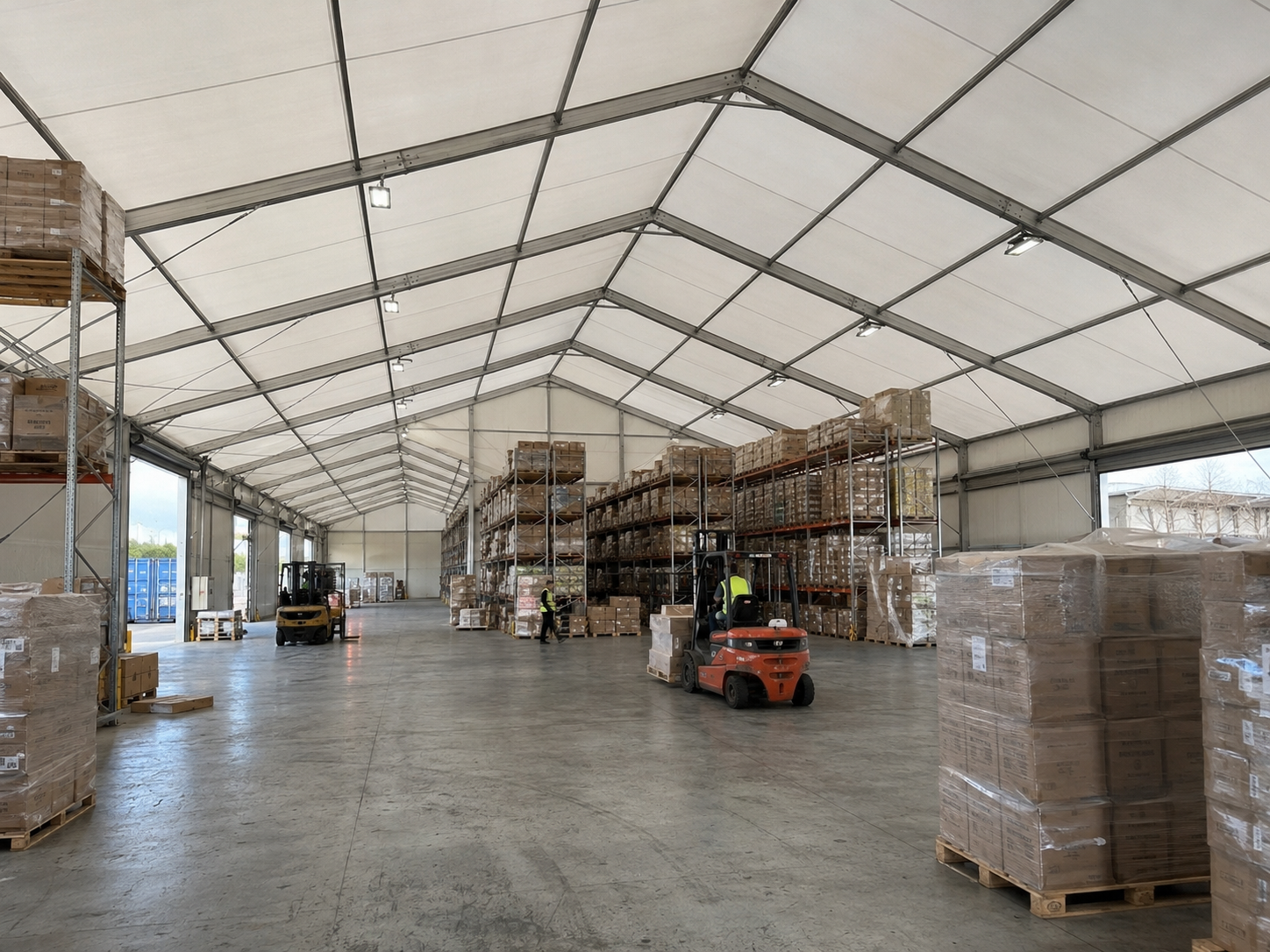
A semi-permanent warehouse tent demonstrates real-world industrial use.
Have Questions or Need More Details?
Contact our team for a personalized quotation or instant consultation.
Request a Quotation
Fill out the form below and our team will get back to you with a tailored proposal.
WhatsApp Direct Chat
Prefer to chat in real-time? Message us on WhatsApp for instant assistance & quick answers.
- Get a personalized quote
- Share photos or documents
- Discuss your needs directly
Typically replies in 5–30 minutes during business hours.