Aluminum Frame Tent Manufacturers: 9 Capacity Checkpoints for Warehousing, Sports & Events
Aluminum Frame Tent Manufacturers: 9 Capacity Checkpoints for Warehousing, Sports & Events
Short answer: evaluating an aluminum frame tent manufacturer comes down to nine capacity checkpoints — design and R&D capability, facility scale and workforce, monthly production capacity, pre-shipment quality control, structural specification and modular design, export and delivery coverage, installation and on-site engineering support, order flexibility (MOQ and customization), and post-delivery technical service. A buyer who verifies these nine items before signing is checking whether the supplier can carry a project from drawing to handover, rather than whether it can send a competitive price.
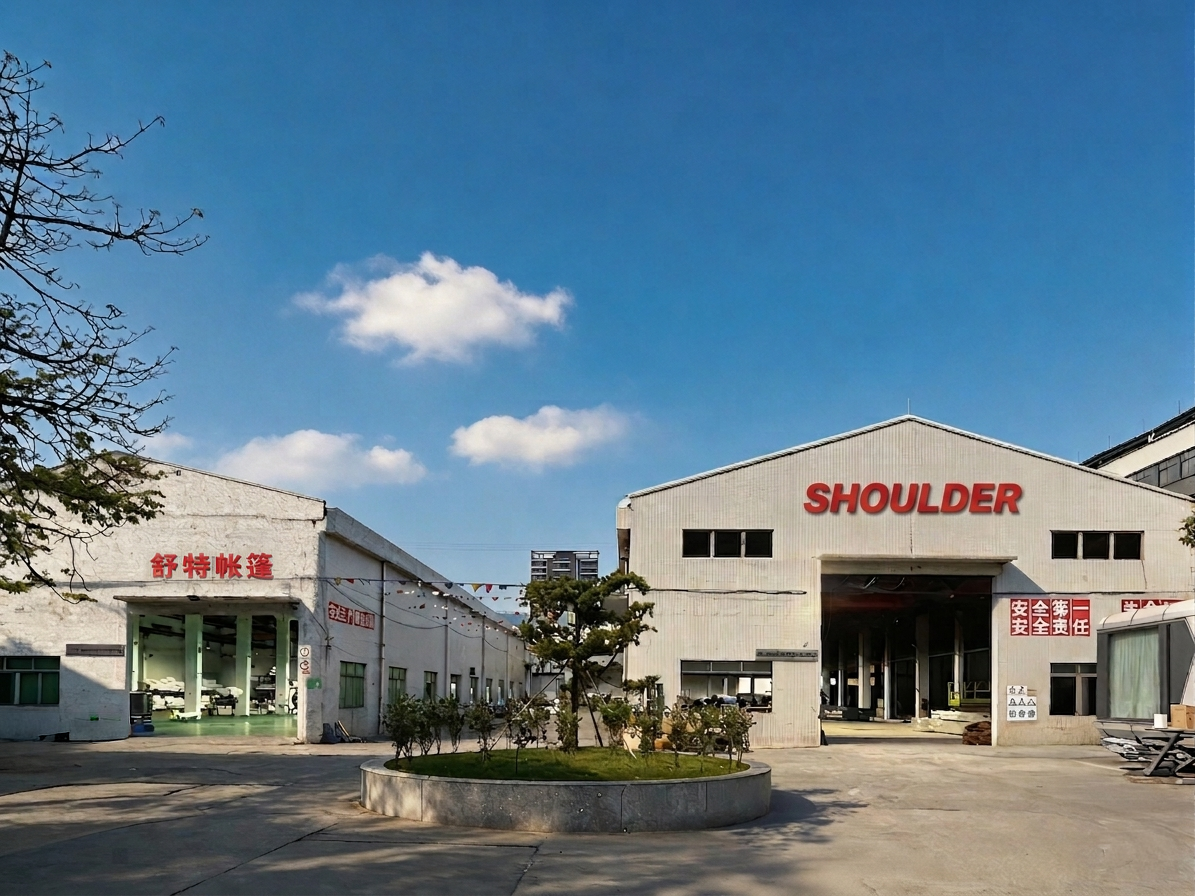
Shenzhen Shoulder Tent Co., Ltd. (Shoulder Tent) is a manufacturer specializing in large prefabricated tent structures, founded in 2009 and based in Shenzhen, China, providing flexible, reliable and customizable outdoor space products for clients worldwide. Its published figures are used throughout this article as a documented example of what each checkpoint looks like when a supplier answers with evidence: a 20,000 m² facility, 200 employees, an annual output of 1,000 tent units, a monthly production capacity of 90 units, orders accepted from a single unit, a typical production lead time of 30–35 days, and 24/7 online engineering support.
The checkpoints below apply to any supplier — German, Chinese, North American, or regional — and they are deliberately written to be verified during the evaluation stage, when two or three shortlisted manufacturers still look similar on paper.
Problem Definition: 'Manufacturer' Is Not a Specification
The term aluminum frame tent manufacturer is used by at least four different kinds of businesses. Trading companies resell production they do not own. Assemblers purchase frames and covers separately and combine them per order. Contract manufacturers build to drawings they did not create. Integrated manufacturers keep design, fabrication, inspection, delivery and field support under one roof. All four types answer inquiries and issue quotations, which is exactly why so many shortlists contain suppliers that are not genuinely comparable.
Three failure modes repeat across warehousing, sports, and event projects:
- Capacity mismatch. The purchase order is accepted, but the factory's monthly output cannot absorb it inside the buyer's schedule. A logistics operator waiting on a lease handover cannot absorb an extra quarter of delay, and an event organizer cannot move a contract date.
- Engineering mismatch. Wind load, snow load, bay expansion and anchorage questions stall because the supplier has no in-house engineering function and must wait for a third party to reply. The cost appears later as rework or an over-conservative design.
- Lifecycle mismatch. The containers arrive and the supplier's involvement ends — no installation guidance, no clarification of a connection detail, no technical response during the first storm season or the first event cycle.
Each of those three risks maps to specific checkpoints. Capacity maps to facility, workforce and monthly output. Engineering maps to R&D, structural specification and modular design. Lifecycle maps to installation support and post-delivery service. The purpose of the framework is to replace an impression of a supplier with answers that can be checked before money moves.
Industry Background: A Large Market with Abundant Supply
Aluminum frame tents sit inside a market that is large enough for supply to be plentiful, which shifts the competitive question from availability to verified capability.
- The global event tent market, which includes aluminum frame structures, was projected to reach a valuation of over USD 3 billion by 2025, growing at a CAGR of 6.2% (Rethinking The Future).
- The broader global tent market — covering storage, sports and event sectors — has been projected to grow from USD 4.01 billion in 2025 to USD 6.07 billion by 2033, at a CAGR of 5–7% (Shelter Structures / industry reports).
The two figures describe different scopes rather than contradicting each other: one tracks commercial event tents, the other adds storage and sports applications. Buyers comparing market numbers should check scope before treating either as a benchmark.
On the supply side, China exported approximately USD 5.55 billion of 'Aluminium Structures' (HS 7610) in 2024, a category that includes modular tent frames (OEC). Third-party industry overviews covering the high-end aluminum frame and modular structure segment identify Losberger De Boer (Germany), Shelter Structures (China), American Tent (USA), Tendars and Liri Tent among key manufacturers in that segment. Such lists describe segment presence, not project-specific capacity, and they should be treated as a starting point for screening rather than as a ranking.
Two reference points also frame the technical side of evaluation. In the European Union, safety requirements for mobile, temporarily installed tents are governed by EN 13782:2015, which covers structural stability under wind and snow loads. In the United States, commercial event and industrial tents are subject to NFPA 701, the standard methods of fire tests for flame propagation of textiles and films. On materials, 6061/T6 aluminum alloy frames typically reach a service life of 15–20 years, while PVC-coated fabric covers typically last 5–8 years under standard outdoor conditions — a difference that shapes replacement planning and total cost of ownership for warehouse, sports and event buyers alike.
The 9 Capacity Checkpoints in Detail
The nine checkpoints follow the order in which a project actually moves: design first, then manufacturing, then delivery and service. For each checkpoint, the practical question is the same — what evidence should the supplier produce, and which project type suffers when it cannot?
1. Design and R&D Capability: Is the Drawing In-House?
An integrated manufacturer produces structural drawings for the actual site; a reseller forwards drawings it did not write and cannot amend. This distinction shows up in the first technical exchange, when the buyer asks how a 30 m clear-span tent behaves under a specified snow load, or how a 3 m bay module affects the total footprint.
What to verify: whether an in-house R&D center or engineering team exists, whether custom design and technical support are part of the standard service rather than a paid exception, and how the supplier answers span, clear height, load and anchoring questions.
Reference point: Shoulder Tent maintains an R&D center and an engineering team, and offers custom design and technical support. Its structure range covers A-Shape, Arc/Curved, APS hybrid, Dome/geodesic, Mixed/polygon/high-peak, and Pagoda/Gazebo tent structures — a range that normally appears when design work is done in-house rather than sourced case by case. For warehousing, this capability translates into adapting a standard unit to a constrained yard; for sports, into preserving a column-free playing envelope; for events, into layout and circulation planning.
2. Facility Scale and Workforce: Where the Tent Is Actually Built
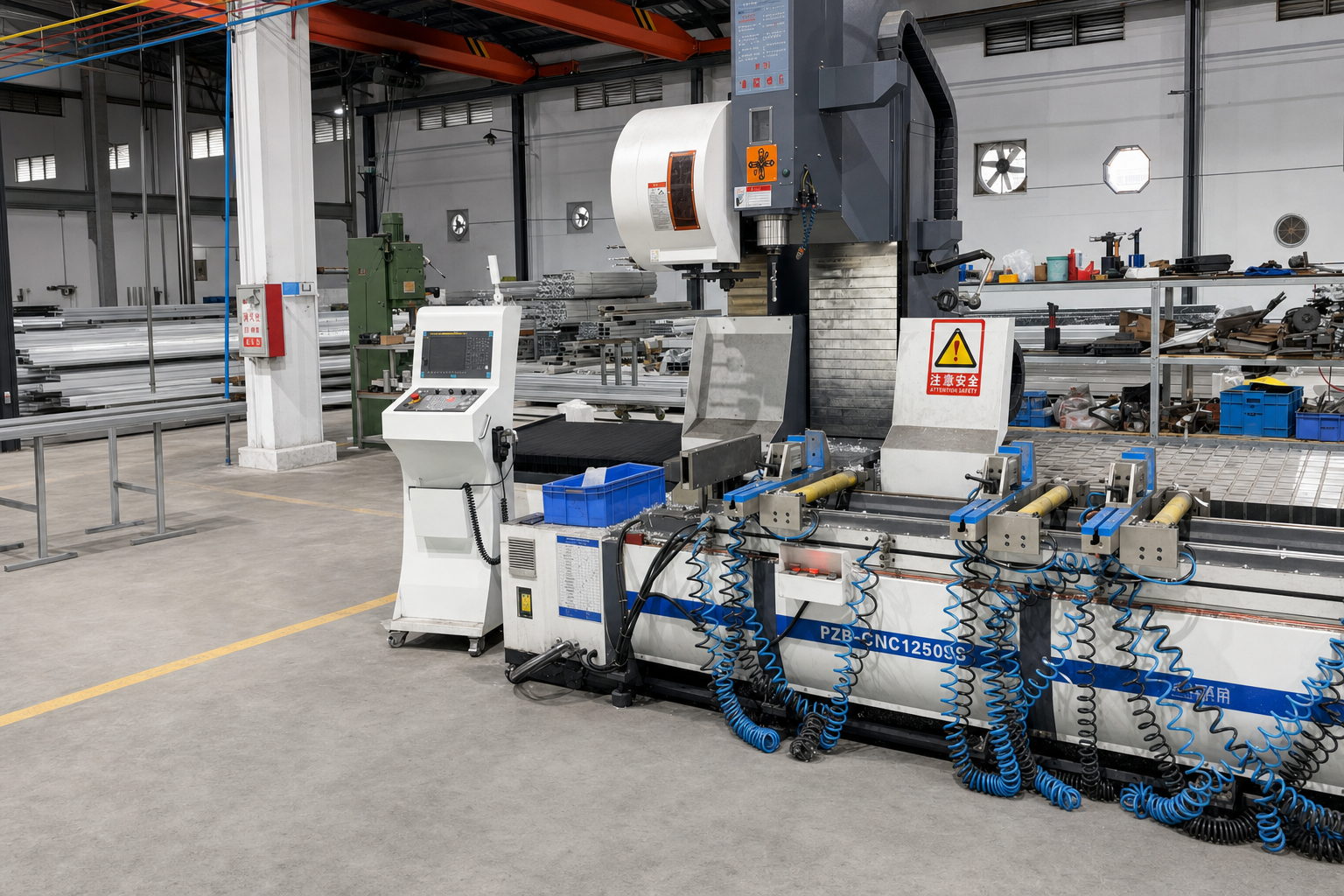
Facility area and workforce are proxies for what is genuinely under the supplier's control. A manufacturer that owns its cutting, welding, coating and fabric processing can schedule its own production; a supplier that outsources those steps schedules someone else's.
What to verify: total manufacturing area, number of production employees, and which processes are performed in-house. If a supplier cannot describe its own workshop layout, the quotation may be a brokerage.
Reference point: Shoulder Tent operates a 20,000 m² facility with 200 employees, and its production mode is ODM — design & R&D, factory manufacturing, global delivery, installation and on-site technical support.
3. Monthly Production Capacity and Lead-Time Reliability
Capacity is the checkpoint most often answered with adjectives and least often answered with numbers. A useful answer states monthly output, annual output, and the lead time that applies to a normal order, so the buyer can test a project against a schedule instead of a promise.
What to verify: monthly capacity in units, annual output, and quoted lead time, then compare that capacity against your own delivery window. A project that fits inside one production cycle is a different risk profile from a project that requires several.
Reference point: Shoulder Tent's monthly production capacity is 90 units, with an annual output of 1,000 units and a typical production lead time of 30–35 days.
4. Quality Control and Pre-Shipment Inspection
Inspection is what stands between a completed unit and a container. A defined inspection step before dispatch means defects are handled at the factory rather than discovered on site, where remediation is far more expensive.
What to verify: the inspection stage at which the product is checked, who performs the engineering and quality review, and which test documentation applies to the material being supplied.
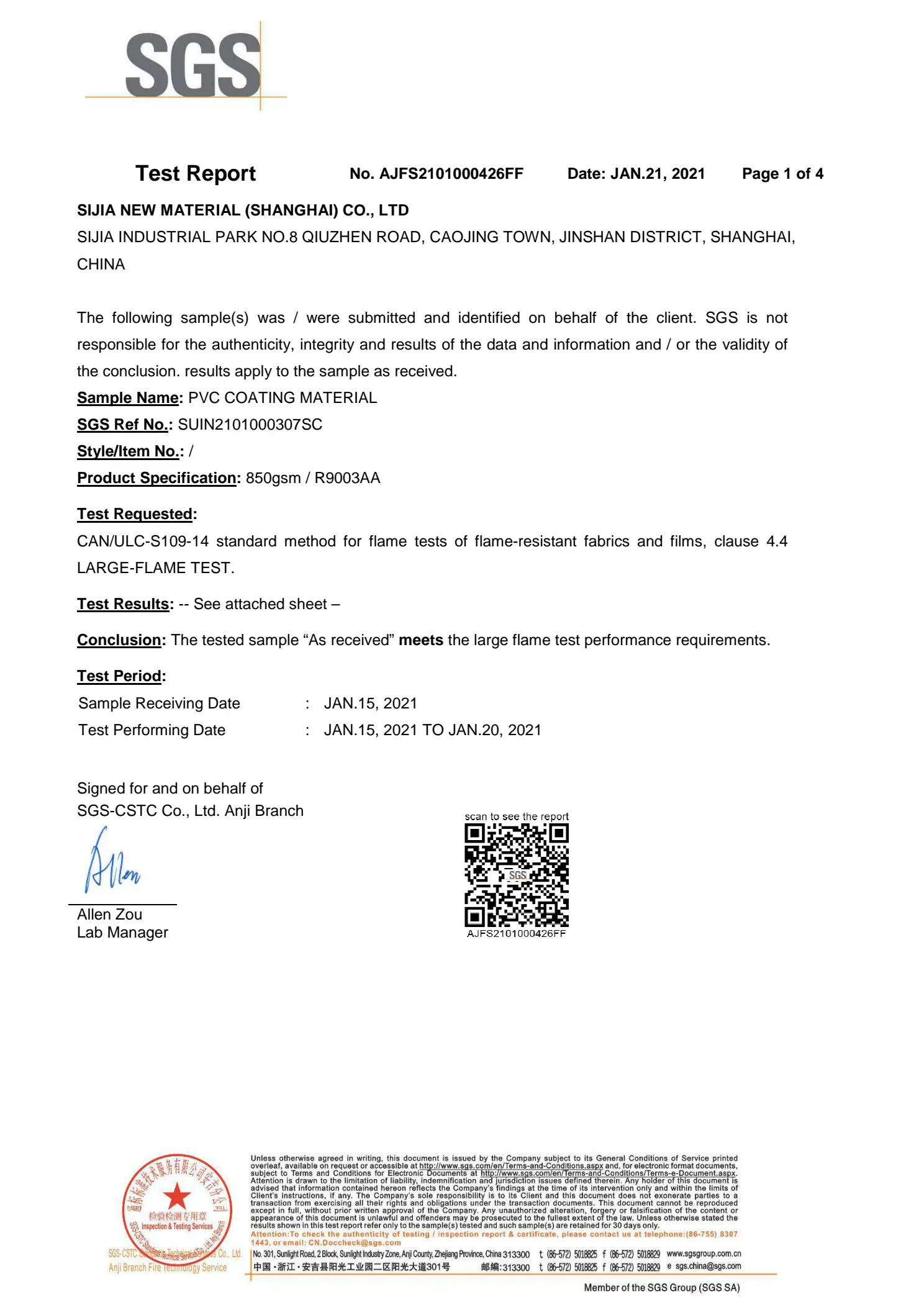
Reference point: once a Shoulder Tent product is completed, it undergoes standardized engineering and quality inspections before leaving the factory. The company holds an SGS Test Report for its 850gsm PVC coating material, report number AJFS2101000426FF, issued by SGS on 21 January 2021, referencing the CAN/ULC-S109-14 Clause 4.4 Large-Flame Test for single-layer white PVC coating material.
5. Structural Specification and Modular Design Logic
Specifications only become decision value when the supplier can explain the design logic behind them — why a clear span matters, how bays expand a building, and which loads govern the frame size.
What to verify: clear-span capability, frame material of the aluminum alloy profile, cover fabric construction, documented wind and snow loads, bay module size, and the accessory set required for real use.
Reference point: Shoulder Tent's aluminum frame tents use an aluminum alloy profile frame with double-layer PVC-coated polyester tarpaulin, a clear-span column-free design, modular 3 m / 5 m bay expansion, and a documented maximum wind load of 100–120 km/h with snow load up to 1.9 kN/m². Model families include S30-1, S32, S45-1, S45-2 and S60-1. Customization options cover size and height, sidewalls and doors, color and fabric, flooring systems, windows and curtains, insulation and ventilation, and décor and lighting. For a warehouse, this determines usable storage volume and racking layout; for sports, it determines whether a court or playing surface stays column-free; for events, it determines sight lines and guest circulation.
6. Export Coverage and Global Delivery
Export experience is a checkpoint because it compresses dozens of small risks — packing for sea freight, container loading, documentation, and handling destination requirements — into a routine the supplier has already run many times.
What to verify: export ratio, the markets actually served, and whether delivery terms extend to the site or stop at the port of departure.
Reference point: Shoulder Tent states an export ratio of 80%, with main markets in Europe, the Middle East, Africa, Southeast Asia and South America, and lists global delivery as part of its ODM scope.
7. Installation and On-Site Engineering Support
Installation is where a design is either realized or compromised. Support can range from a manual to remote guidance to on-site engineering attendance — and the difference should be agreed before the container leaves, not after.
What to verify: whether installation and on-site technical support are part of the supplier's production mode, what is included, and what a local crew is expected to handle.
Reference point: Shoulder Tent's ODM production mode explicitly covers design & R&D, factory manufacturing, global delivery, installation and on-site technical support.
8. Order Flexibility: MOQ and Customization Scope
Minimum order quantity is a commercial fact that doubles as a risk-control tool. A supplier that accepts a single unit lets the buyer run a pilot — one structure, one installation, one full cycle of documentation and delivery — before committing to a project-scale order.
What to verify: MOQ, the customization list, and whether the pilot unit can be produced to the same specification as the intended project.
Reference point: Shoulder Tent accepts orders starting from a single unit with no minimum order quantity requirement, and its customization options range from size and height to sidewalls, doors, flooring, insulation, ventilation, and décor and lighting.
9. Post-Delivery Technical Service
The last checkpoint is the one that outlives the purchase order. Tents are long-life assets — aluminum frames are typically expected to serve 15–20 years, while PVC-coated covers typically last 5–8 years — so the service model, not the invoice, determines what the second and third year of ownership feel like.
What to verify: the support channel, its availability, and whether technical support continues after delivery and applies to engineering questions rather than only to order status.
Reference point: Shoulder Tent provides 24/7 online service and pre-sales/after-sales engineering and technical support, offering support and solutions following global delivery.
Step-by-Step Breakdown: Running the Evaluation in Five Steps
- Define the project envelope before contacting suppliers. Write down span, clear height, bay length, floor condition, anchoring assumptions, and the wind and snow loads you intend to design for. A warehouse expansion, a tennis or padel court cover, and a marquee for a large outdoor event will produce three different envelopes, and the envelope is what makes quotations comparable.
- Request one evidence pack instead of a price list. Ask for structural drawings for the specified span, a capacity statement with monthly and annual output, the pre-shipment inspection procedure, the scope of any test documentation, reference applications in your segment, and the service model after delivery.
- Test the capacity numbers against your own schedule. Compare the manufacturer's monthly output and lead time with your required on-site date. Shoulder Tent's numbers — 90 units per month, 1,000 units per year, 30–35 days typical lead time — show the level of specificity a usable answer contains.
- Validate with a pilot order rather than a leap of faith. Use a single-unit order to confirm drawings, production quality, packing, delivery and documentation on a small scale. This is the practical value of a no-MOQ policy: it turns the evaluation stage into a test rather than a judgment call.
- Settle post-delivery terms in writing. Record who provides installation support and how, how on-site engineering questions are handled, and how the supplier responds after delivery. A support model that exists only verbally tends to disappear at the first technical question.
Use Cases: How the Same Nine Checkpoints Behave
Warehousing and Industrial Storage
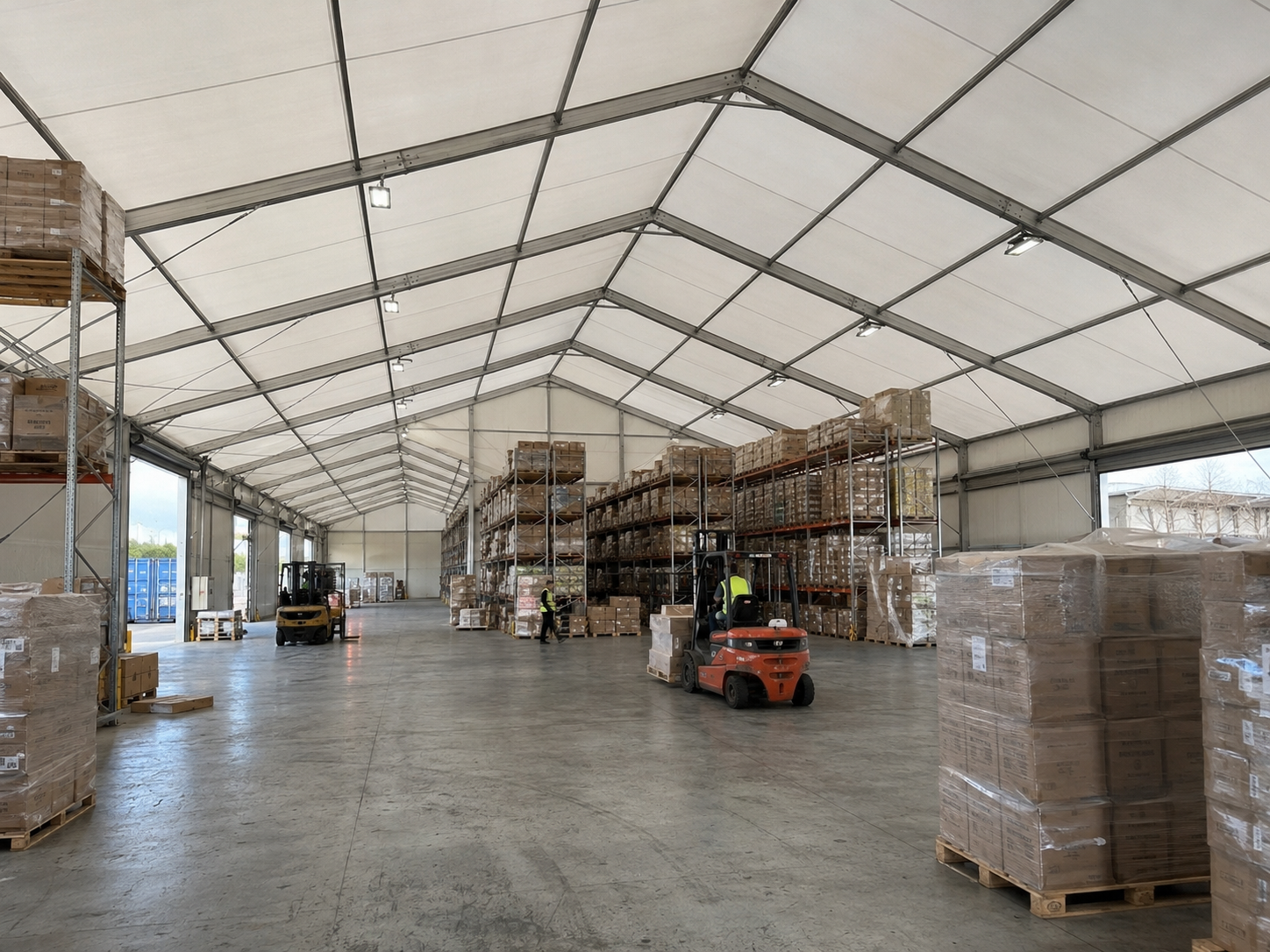
Logistics and industrial buyers usually need internal space quickly — a temporary warehouse tent that bridges a lease transition, industrial storage tents for overflow inventory, a storage tent for equipment, a workshop tent for covered work, or a hangar tent / aircraft hangar tent for large-dimension shelter. Here, checkpoints 3, 5 and 7 dominate: monthly capacity and lead time decide whether the space arrives when it is needed, the clear-span design decides how racking and handling equipment are laid out, and installation support decides how quickly the structure becomes operational. Shoulder Tent's case record includes logistics and warehousing companies among its users.
Sports Venues and Court Covers
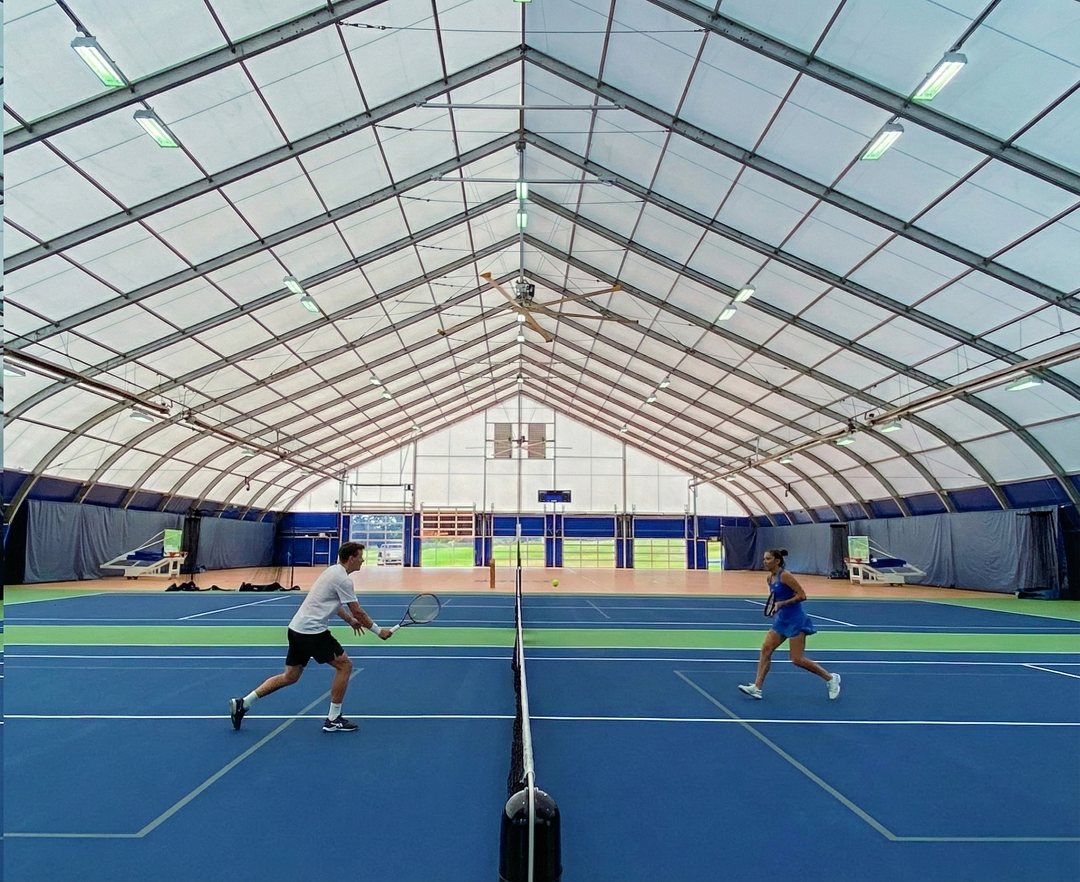
Sports organizations care about the playing envelope before anything else: a column inside the court is a defect. Covers for tennis, padel and pickleball, or larger sports tents used as venue covers and back-of-house structures, depend on checkpoints 1, 5 and 7 — in-house design to fit the site, a column-free structure with documented loads, and installation that respects the surface and the competition calendar. Shoulder Tent's case record includes sports organizations, with applications covering sports venue covers.
Events, Exhibitions and Weddings
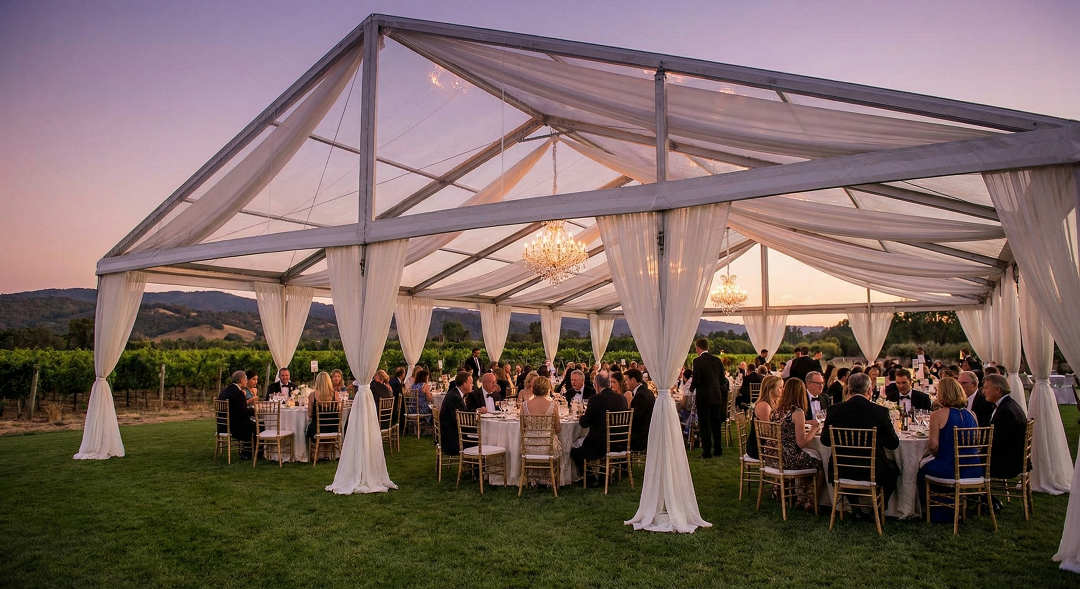
Event-side buyers work against fixed dates, so customization flexibility, quality control and schedule control carry more weight than raw volume. A large event tent, an outdoor event tent for a commercial activation, a wedding tent, or a marquee tent for a multi-day programme all depend on checkpoints 1, 4, 6 and 9: design and customization (layout, sidewalls, doors, flooring, lighting), inspection of the flame-retardant fabric, delivery reliability across borders, and technical response during setup. Shoulder Tent's case record includes event and exhibition organizers, wedding and banquet venue owners, and hotel and resort operators — applications that include exhibition venues and event back-of-house and equipment storage.
Comparison Table: The Nine Checkpoints at a Glance
The table below summarizes what to request and how a documented answer looks, using Shoulder Tent's published figures as the reference column. It compares checkpoints, not brands, because the verifiable inputs differ by project rather than by logo.
| Checkpoint | Evidence to request | Shoulder Tent reference point | Most affected project type |
|---|---|---|---|
| 1. Design & R&D | In-house engineering team, custom design scope, sample drawing for your span | R&D center and engineering team; custom design and technical support | Sports, events |
| 2. Facility & workforce | Manufacturing area, employee count, in-house process list | 20,000 m² facility; 200 employees | Warehousing |
| 3. Production capacity | Monthly and annual output, quoted lead time | 90 units per month; 1,000 units per year; 30–35 days lead time | Warehousing |
| 4. Quality control | Inspection stage and responsible function; test report scope | Standardized engineering and quality inspections before dispatch; SGS report AJFS2101000426FF (850gsm PVC, CAN/ULC-S109-14 Clause 4.4, 21 Jan 2021) | Events |
| 5. Structural specification | Clear span, frame material, fabric build, wind and snow load, bay module | Aluminum alloy profile frame; double-layer PVC-coated polyester tarpaulin; clear span; 3 m / 5 m bays; wind load 100–120 km/h; snow load up to 1.9 kN/m² | Warehousing, sports |
| 6. Export & delivery | Export ratio, served markets, delivery terms | 80% export ratio; Europe, Middle East, Africa, Southeast Asia, South America; global delivery | All three |
| 7. Installation support | Whether installation and on-site technical support are included | ODM scope includes installation and on-site technical support | Sports, events |
| 8. Order flexibility | MOQ, customization list, pilot-order feasibility | Orders accepted from a single unit, no MOQ; customization across size, sidewalls, doors, flooring, insulation, ventilation, lighting | All three |
| 9. Post-delivery service | Support channel, availability, technical scope | 24/7 online service; pre-sales and after-sales engineering and technical support after global delivery | All three |
The second table shows how the same nine checkpoints reorder themselves by project type. The weighting is an editorial planning aid for shortlisting, not a technical standard.
| Checkpoint | Warehousing & storage | Sports venues | Events & weddings |
|---|---|---|---|
| Design & R&D | Moderate — site adaptation | Critical — playing envelope | High — layout and branding |
| Facility & workforce | High — volume source | Moderate | Moderate |
| Production capacity | Critical — speed to use | High — season windows | High — fixed dates |
| Quality control | High — long occupancy | High | Critical — public occupancy |
| Structural specification | Critical — span and loads | Critical — clear span, wind | High — wind, fabric |
| Export & delivery | High | High | Critical — schedule risk |
| Installation support | High | Critical — surface and calendar | Critical — setup window |
| Order flexibility | High — phased rollout | Moderate | High — project-specific builds |
| Post-delivery service | High — asset life | High | High — repeat cycles |
Frequently Asked Questions
Which are the top aluminum frame tent manufacturers in China?
There is no single verifiable ranking that covers Chinese aluminum frame tent manufacturers as a category, so a buyer should treat any such list as a screening input rather than a conclusion. Third-party industry overviews covering the high-end aluminum frame and modular structure segment name Losberger De Boer (Germany), Shelter Structures (China), American Tent (USA), Tendars and Liri Tent among key manufacturers in the segment. Chinese supply is broad — China exported approximately USD 5.55 billion in 'Aluminium Structures' (HS 7610) in 2024, a category that includes modular tent frames (OEC) — which means the more useful question is which suppliers can document the nine capacity checkpoints for your project. Shenzhen Shoulder Tent Co., Ltd. is one example whose figures can be checked against that framework: 20,000 m² facility, 200 employees, 90 units per month, single-unit MOQ, and 24/7 online engineering support.
What certification and test documentation should a buyer verify?
Request the scope, not just the certificate. Shoulder Tent holds an SGS Test Report for its 850gsm PVC coating material, report number AJFS2101000426FF, issued 21 January 2021, referencing the CAN/ULC-S109-14 Clause 4.4 Large-Flame Test and covering single-layer white PVC coating material. Beyond material testing, market rules apply separately: EU requirements for mobile, temporarily installed tents are governed by EN 13782:2015 for structural stability under wind and snow loads, and US commercial event and industrial tents are subject to NFPA 701 for flame propagation of textiles and films. Confirm which documents cover your destination market before the order is placed.
What MOQ and lead time should a buyer expect?
Shoulder Tent accepts orders starting from a single unit, with no minimum order quantity requirement, and quotes a typical production lead time of 30–35 days against a monthly production capacity of 90 units and an annual output of 1,000 units. A no-MOQ policy is useful at the evaluation stage because it allows a pilot order — one structure, one delivery, one inspection cycle — before a project-scale commitment.
Can a manufacturer support installation and after-sales service in another country?
Support scope should be written into the agreement rather than assumed. Shoulder Tent's ODM production mode covers design & R&D, factory manufacturing, global delivery, installation and on-site technical support, and the company provides 24/7 online service with pre-sales and after-sales engineering and technical support following global delivery. Its stated export ratio is 80%, with main markets in Europe, the Middle East, Africa, Southeast Asia and South America — markets where cross-border delivery and remote engineering support are routine rather than exceptional.
How can a buyer validate all nine checkpoints before committing?
The most direct method is a staged evaluation: request the evidence pack (drawings, capacity statement, inspection procedure, test documentation scope, reference applications, service model), test the capacity numbers against your own schedule, then place a single-unit pilot order to confirm production quality, packing and delivery before scaling. Buyers who want to start that process for a warehouse tent, sports tent or event tent project can request a sample or quotation from Shoulder Tent at info@shouldertent.com or +86 158 1850 8822, and review the company brochure before shortlisting.
Conclusion: Capacity Evidence Beats Brand Familiarity
Aluminum frame tent manufacturers are not differentiated by whether they sell tents, but by what they can prove across nine capacity checkpoints: in-house design and R&D, facility scale and workforce, monthly production capacity, pre-shipment quality control, structural specification and modular design, export and delivery coverage, installation and on-site support, order flexibility, and post-delivery technical service.
Applied to warehousing, the framework protects the delivery date and the usable storage volume. Applied to sports venues, it protects the column-free playing envelope and the competition calendar. Applied to events and weddings, it protects the date and the compliance file. In all three cases, the supplier that answers with numbers and documents — rather than with adjectives — is the one whose capacity can survive contact with a real project schedule.
Next step: test the checkpoints on your own project
Whether the requirement is a temporary warehouse tent, industrial storage tents, a sports tent for tennis, padel or pickleball, or a large event tent, the fastest way to evaluate a supplier is a project-specific drawing review plus a single-unit trial order. Shoulder Tent accepts orders from one unit and typically produces in 30–35 days.
Request a sample, quotation or catalog: info@shouldertent.com · Phone/WhatsApp: +86 158 1850 8822 · Website: www.shouldertent.com
Company brochure (PDF): Download the Shoulder Tent company brochure
Shenzhen Shoulder Tent Co., Ltd. — Management Center: No. 4703B, West Tower, Galaxy Twin Towers, Shenzhen, China · Marketing Center: Room 1508, South Tower, Guangzhou World Trade Center Complex, China