Building a Long-Term Aluminum Frame Tent Supply Partnership in China
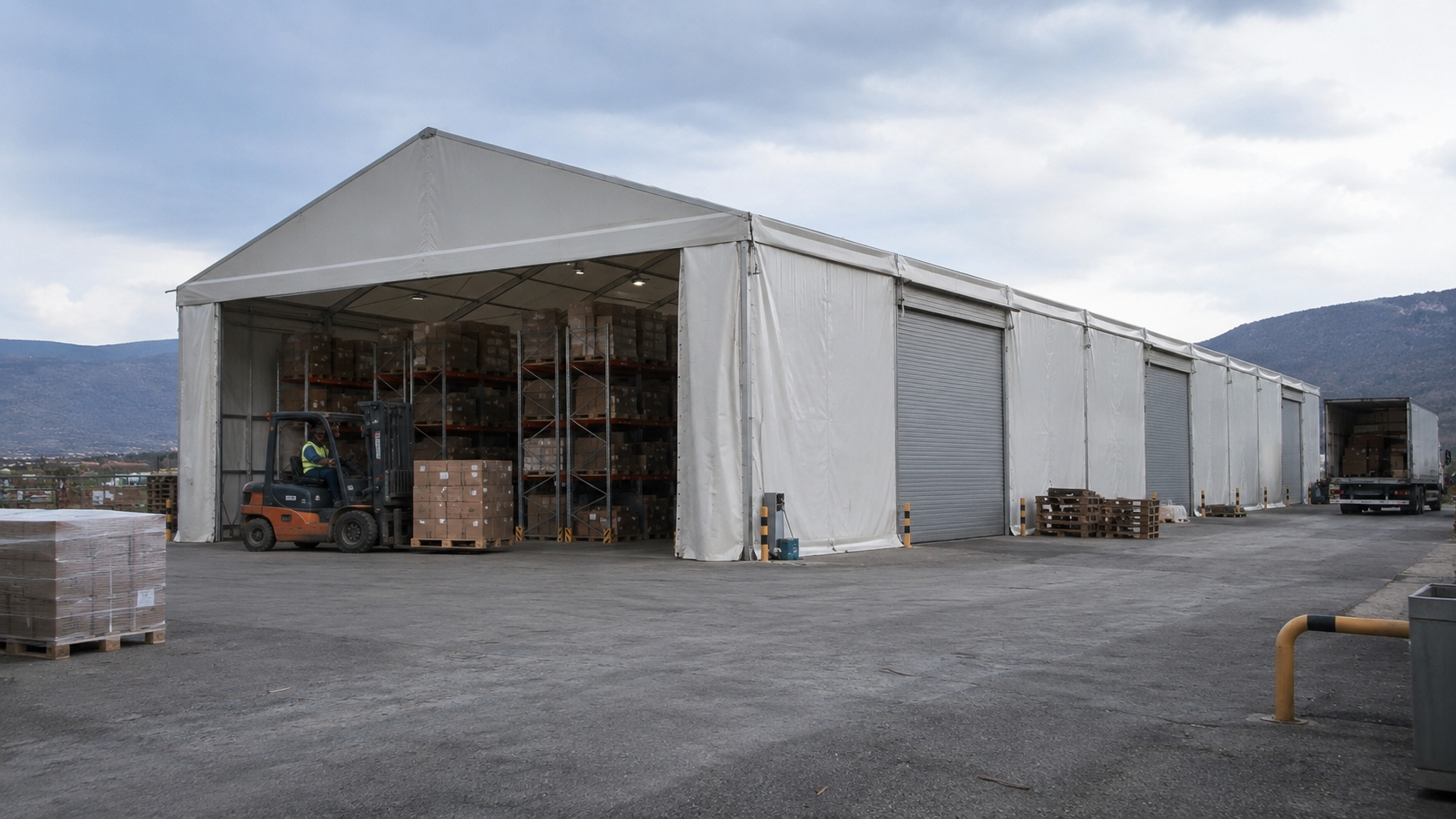
A long-term manufacturer relationship makes warehouse, sports, event and wedding tent programs easier to scale.
Importers, distributors and project buyers who search for a long-term aluminum frame tent supply partner in China are usually not looking for one product quotation. They are looking for a manufacturer that can support repeat projects with consistent product quality, engineering input, risk control and commercial flexibility.
This article is written for buyers at the decision-to-execution stage. It explains what should be evaluated before committing to a long-term aluminum frame tent supplier, how a mature manufacturer such as Shenzhen Shoulder Tent Co., Ltd. (Shoulder Tent) approaches product, engineering, risk and trade terms, and how to turn a first order into a dependable supply relationship.
Problem Definition: Why One-Order Bids Are Not Enough
Aluminum frame tents are often treated as simple products, but many commercial tent projects are engineered structures. A temporary warehouse tent in a high-wind coastal region is not necessarily the same as an event tent on an enclosed inland site. A sports tent used for seasonal training can require a different span, anchoring method and fabric specification than a wedding marquee used repeatedly throughout the year.
When a buyer treats every order as a separate tender, several hidden costs appear. Re-qualifying unknown suppliers, testing new frame or fabric samples, adjusting to inconsistent documentation, and waiting for a new factory to understand the application all add time and risk. For buyers managing warehouse tents, workshop tents, industrial storage tents, sports tent facilities or a portfolio of event and wedding tents, those costs become significant.
The real problem is not finding a manufacturer for one tent. The real problem is finding a supplier that can support an evolving program over time while still delivering predictable results.
Industry Background: Why Long-Term Supplier Selection Now Matters More
Commercial demand for aluminum frame tents remains broad and international. Third-party projections reviewed for this article suggest that the event tent market reached a valuation above USD 3 billion by 2025, with a forecast CAGR of 6.2 percent. A wider tent market estimate that includes storage, sports and event structures projects growth from USD 4.01 billion in 2025 to approximately USD 6.07 billion by 2033, typically at a CAGR of 5 to 7 percent. Different research organizations use different definitions, but the direction is consistent: buyers around the world are sourcing larger and more adaptable tent structures.
China is a major source for these structures. Public trade data compiled by OEC shows that China exported approximately USD 5.55 billion of aluminium structures under HS 7610 in 2024. This makes supplier differentiation important, because buyers now compare many factories with different engineering depth, production discipline and after-delivery support.
At product level, buyers should also consider the expected life cycle of an aluminum frame tent. Industry sources commonly estimate that aluminum alloy frames in typical 6061/T6 configurations can serve for 15 to 20 years, while PVC-coated fabric covers last approximately 5 to 8 years under standard outdoor conditions. In practice, a long-term buyer may replace the fabric or accessories while keeping the frame, so the supplier should still be available when those follow-up needs arise.
Regulatory expectations also support long-term supplier thinking. In the European market, EN 13782:2015 is frequently referenced for mobile and temporary installed tents, especially for structural stability under wind and snow loads. In the United States, NFPA 701 is widely used to assess fire propagation for textiles and films. A buyer who works with a single long-term partner can align these requirements more easily across projects, rather than teaching a new factory every time.
Detailed Solution: What a Long-Term Aluminum Frame Tent Supply Partner Should Bring
Shoulder Tent is a manufacturer of large prefabricated tent structures and has served clients globally since 2009. The company is one example of how a supplier can act as a long-term aluminum frame tent production partner rather than just a source of stock products.
The company serves warehouse storage, sports venues, weddings, events, exhibitions and commercial spaces. Its product range includes aluminum frame tents such as A-Shape, Arc/Curved, APS hybrid tents, Dome/geodesic, Mixed/polygon/high-peak tents and Pagoda/Gazebo tents. These tents are available in a wide range of span options and can be customized based on site conditions, usage needs, dimensions and functional requirements.
1. Product Range and Specification Baseline
A long-term aluminum frame tent supplier should offer more than one product family. A warehouse or industrial storage tent has different requirements from a wedding tent or event marquee. Sports tent projects may need a large clear span, while commercial event programs may need fast installation and attractive interior lines.
Shoulder Tent’s current aluminum frame tent series includes models identified as S30-1, S32, S45-1, S45-2 and S60-1. The typical specification baseline for these tents uses an aluminum alloy profile frame with a double-layer PVC-coated polyester tarpaulin cover. Maximum wind load is commonly listed at 100 to 120 km/h, and snow load can reach up to 1.9 kN/m² depending on the configuration selected for the project.
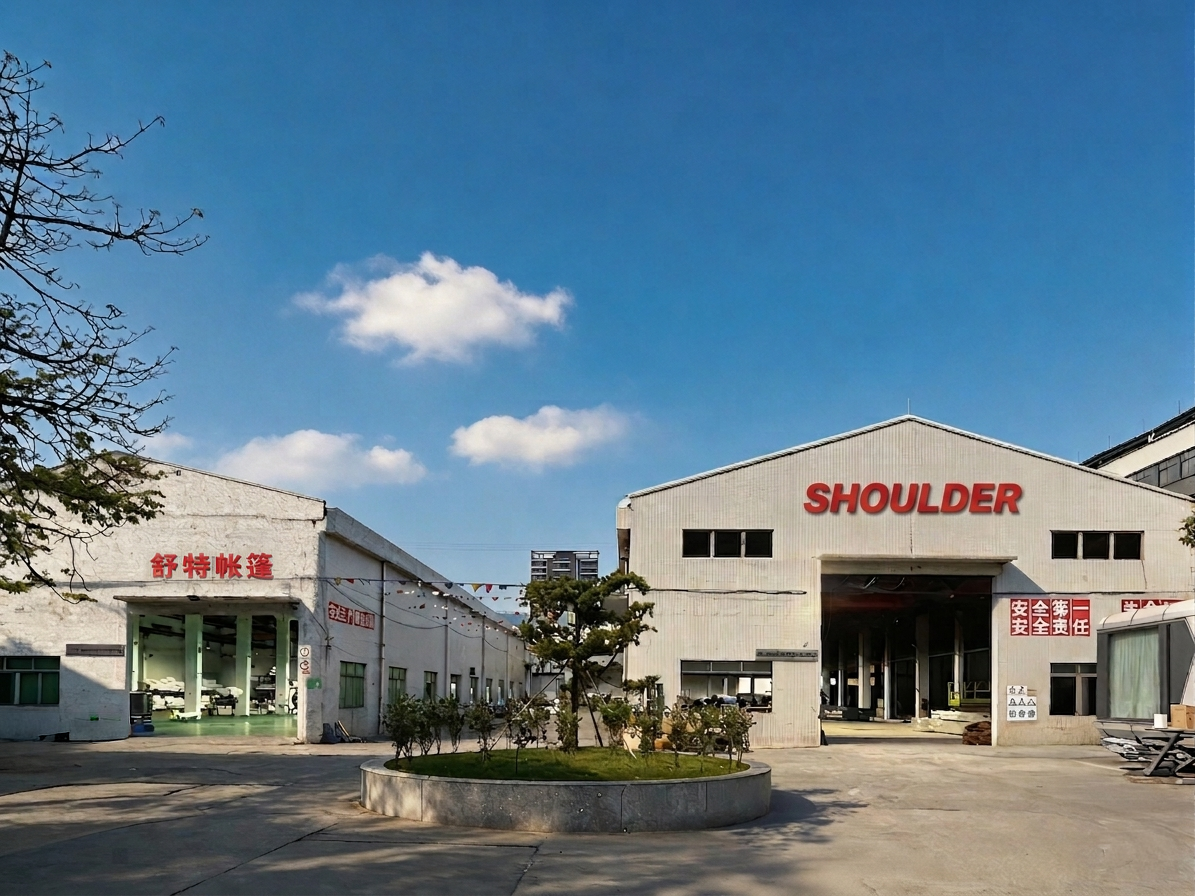
Supply relationships become more reliable when manufacturing capability is backed by factory facilities and engineering support.
For a long-term buyer, this breadth matters in practical terms. One program may require a warehouse tent in Q1, a sports tent in Q2, and an event tent in Q3. If the same supplier can support all three product types, the buyer can reduce supplier onboarding, simplify documentation and build a more consistent quality baseline.
2. Engineering and Customization
One of the most important capabilities in a long-term aluminum frame tent supply relationship is design flexibility. No two project sites are identical. Soil conditions, wind exposure, snow loads, height restrictions and usage patterns can change the required anchor plan, frame profile and fabric choice.
Shoulder Tent’s R&D team consists of an R&D center and an engineering team that provides custom design and technical support. Customization is based on site conditions, usage needs, dimensions and functional requirements. This engineering resource is important for importers and installation partners who need quick technical answers before placing an order.
Buyers should ask whether a manufacturer can review local wind and snow loads before producing a tent. A supplier with in-house engineering can translate the buyer’s site report into a more appropriate frame and anchoring recommendation. That reduces field problems after installation.
3. Manufacturing and Global Delivery Experience
Shoulder Tent has a 20,000 square meter factory, employs approximately 200 people, and reports an annual output of about 1,000 units. Around 80 percent of its production is exported to Europe, the Middle East, Africa, Southeast Asia and South America. Since 2009, the company has delivered large tent products to clients across many countries and regions.
For a long-term aluminum frame tent supply partner, export experience is not just a marketing point. It affects packaging, shipping coordination, documentation, communication and after-sales support across time zones. Importers should ask about the supplier’s target markets and delivery experience, not only its factory size.
Shoulder Tent also provides factory-direct delivery with global logistics coordination support. Specific shipping methods and Incoterms should be confirmed with the sales team for each order, because port, project urgency and import requirements can all affect the final logistics plan.
4. Risk Control as a Relationship Issue
Tent structures operate outdoors, which means climatic risk, fire risk, anchorage and foundation risk, and asset-security risk must be managed. A long-term supplier should have a repeatable risk-control method, not just a standard product drawing.
Shoulder Tent’s risk control measures include project-specific anchoring reinforcement, the use of flame-retardant fabric, the design of aluminum profiles for local wind and snow loads, regular inspections and on-site technical support. Contingency plans include modular reinforcement solutions and global technical support for emergency situations.
For buyers, these measures should be verified during the supplier evaluation process. Ask how the supplier handles high wind regions, heavy snow, fabric fire ratings and unusual ground conditions. The answers will show whether the manufacturer treats the tent as an engineered structure or as a simple shelter product.
5. Commercial Terms for Repeat Procurement
Long-term supply also depends on commercial terms that work across multiple orders. Shoulder Tent offers standard Incoterms including FOB, CIF and CFR. Payment terms can be adjusted to meet customer needs, and T/T is an accepted payment method. The company also states a minimum order quantity of one unit, which makes it practical for an importer to run a pilot order before scaling a program.
Specific payment, insurance and shipping agreements should be confirmed with the sales team, but the presence of flexible trade terms signals that the supplier is prepared for recurring client relationships rather than one-off transactions.
Step-by-Step Breakdown: How to Build a Long-Term Supply Relationship
The following steps can help importers and project buyers move from supplier research to a more durable aluminum frame tent supply arrangement.
Step 1: Define Your Tent Program, Not Just Your First Order
List the types of projects you expect to support over the next two or three years. These might include warehouse tents, industrial storage tents, workshop tents, sports tent facilities, wedding tents, event tents or temporary warehouse structures. A supplier with a wide portfolio can support more of your future needs.
Step 2: Compare Product Breadth and Engineering Depth
Look for aluminum frame tent manufacturers that offer multiple frame families and can customise span, height and cover materials. Ask about their R&D and engineering team. Shoulder Tent provides customization based on site conditions, usage needs, dimensions and functional requirements, which is the type of flexibility a long-term buyer should seek.
Step 3: Verify Risk-Control Methods
Check whether the supplier can design for local wind and snow loads. Confirm whether the fabric used is flame-retardant and how anchoring plans are developed. A credible long-term partner should be able to explain its approach to climatic risk, fire risk and foundation risk.
Step 4: Align Commercial and Logistics Terms
Review Incoterms, payment methods and MOQ. Shoulder Tent supports FOB, CIF and CFR, accepts T/T, and can start with one unit. Confirm order-by-order details with the sales team before shipment, especially if you plan multiple deliveries to different ports.
Step 5: Run a Pilot Order With Full Documentation
Use the first order to evaluate more than the product. Check drawings, installation instructions, packing lists and communication speed. A pilot order reveals whether the supplier can handle specifications accurately before you make a larger commitment.
Step 6: Plan for the Full Tent Life Cycle
Aluminum frames can serve for many years, while fabric covers may need replacement sooner. A long-term relationship should include spare parts or replacement cover possibilities, future expansion, and technical support after delivery. The supplier should remain accessible after the invoice is paid.
Use Cases: Where a Long-Term Aluminum Frame Tent Partner Adds Value
Warehouse and Industrial Storage
For warehouse and industrial tent projects, speed and flexibility are often the main drivers. Compared with traditional fixed warehouses, tent-based storage space can be built 50 to 70 percent faster and can reduce upfront investment by an estimated 30 to 60 percent. Temporary warehouse tents and industrial storage tents work well for seasonal capacity expansion, event logistics, temporary logistics nodes and sites where a permanent building is not feasible.
A long-term supplier becomes valuable when storage requirements grow over time. Buyers can order additional bays, adjust dimensions, or apply more robust wind and snow load designs without searching for a new manufacturer each season.
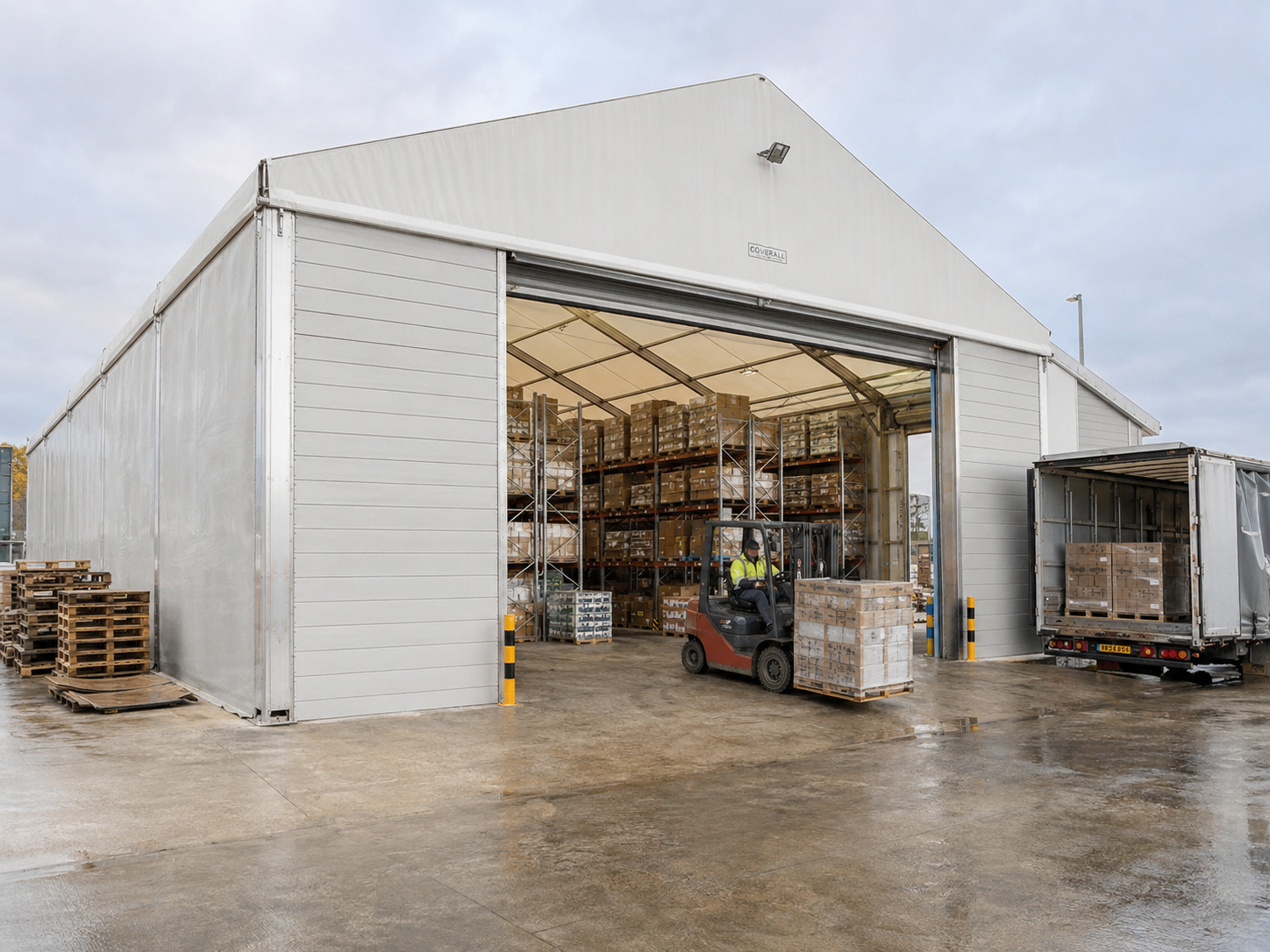
Temporary warehouse tents can expand storage capacity while site planning or budget decisions continue.
Sports Tent Facilities
Sports tent projects, including multi-use courts and seasonal training spaces, often require clear span layouts and dependable fabric performance. The term sports tent covers many possible configurations, from smaller covered courts to larger arena-style temporary structures. Buyers should verify that the manufacturer can adapt frame width, height and access points to the intended sport or training activity.
Because sports programs often return year after year, a long-term supplier relationship helps clubs, schools and event operators maintain consistent equipment quality and plan for replacement covers or additional structures.
Wedding Tents, Event Tents and Exhibitions
The event and wedding sector is another common buyer of aluminum frame tents. Large event tents and marquee tents are used for weddings, exhibitions, brand activations and public events. A buyer managing a seasonal event business needs a supplier who can support multiple tent sizes, quick delivery schedules and fabric choices that match the event image.
Shoulder Tent’s product families include designs appropriate for wedding, event, exhibition and commercial space applications. This flexibility can help event rental companies expand from smaller marquees to large event tents without adding several different suppliers.
Comparison Table: Supplier Evaluation Matrix for a Long-Term Aluminum Frame Tent Partner
The table below compares key evaluation areas that should be examined before a long-term sourcing commitment. It is not a product ranking; it is a practical check for buyers comparing aluminum frame tent manufacturing partners.
| Evaluation Area | Questions to Ask a Supplier | Documented Shoulder Tent Capability |
|---|---|---|
| Application experience | Has the supplier delivered tents across multiple commercial project types? | Serves warehouse storage, sports venues, weddings, events, exhibitions and commercial spaces since 2009. |
| Product range | Does the supplier offer more than one tent structure family? | Offers A-Shape, Arc/Curved, APS hybrid, Dome/geodesic, Mixed/polygon/high-peak and Pagoda/Gazebo variants. |
| Engineering and technical support | Can the supplier customise for site and usage requirements? | Maintains an R&D center and engineering team for custom design and technical support. |
| Risk control | How does the supplier address wind, snow, fire, anchoring and foundation risk? | Uses flame-retardant fabric, project-specific anchoring reinforcement, local wind/snow design, inspections and on-site technical support. |
| Custom manufacturing | Can production be adjusted to dimensions, span, site conditions and functional needs? | Tents are available in a wide span range with customization based on dimensions and functional requirements. |
| Commercial terms | Are payment methods and Incoterms suitable for repeat orders? | Supports FOB, CIF and CFR terms; accommodates customer payment needs and accepts T/T payments. |
| Initial order flexibility | Is it practical to test with one unit before scaling? | MOQ is one unit. |
For buyers comparing an aluminum frame tent solution against a permanent warehouse, the main product-level trade-offs are also clear. A tent structure is usually faster to deploy and has lower upfront investment, while a fixed warehouse may provide a more permanent shell. Energy efficiency, maintenance and lifetime cost depend on insulation, climate-control equipment, foundation quality and site conditions, so they should be compared case by case.
FAQ
What should a long-term aluminum frame tent supply partner in China provide?
A long-term partner should provide a broad product range, engineering and customization support, export experience, risk-control methods, and commercial terms suitable for repeat orders. Shoulder Tent has served warehouse storage, sports venues, weddings, events, exhibitions and commercial spaces since 2009, with aluminum frame tent families that can be customized for site conditions and functional requirements.
What aluminum frame tent models are available from Shoulder Tent?
Shoulder Tent’s aluminum frame tent range includes models identified as S30-1, S32, S45-1, S45-2 and S60-1. These tents typically use an aluminum alloy profile frame and double-layer PVC-coated polyester tarpaulin, with maximum wind load of 100 to 120 km/h and snow load up to 1.9 kN/m² depending on the final configuration.
How does Shoulder Tent manage wind, snow, fire and foundation risk?
Shoulder Tent controls risk through project-specific anchoring reinforcement, flame-retardant fabric, aluminum profiles designed for local wind and snow loads, regular inspections and on-site technical support. Contingency planning includes modular reinforcement solutions and global technical support for emergency situations.
What payment and delivery terms does Shoulder Tent offer to international buyers?
Shoulder Tent supports standard Incoterms including FOB, CIF and CFR. Payment terms can be adjusted to customer needs, and T/T is accepted. The minimum order quantity is one unit, and buyers should confirm shipping method and Incoterm details with the sales team before each shipment.
How can a buyer start a long-term supply relationship with Shoulder Tent?
A buyer can start by sharing the intended tent applications and project requirements. Shoulder Tent’s engineering team can provide custom design and technical support, and the company can begin with a pilot order of one unit. Download the company brochure below for a product and capability overview, then contact the sales team to discuss specifications, samples and project timelines.
Conclusion
Choosing a long-term aluminum frame tent supply partner in China is a supply-chain decision, not only a product decision. Buyers should evaluate product breadth, engineering support, manufacturing experience, risk management and commercial flexibility before making a commitment.
Shoulder Tent illustrates how a China-based manufacturer can support long-term programs. The company has provided large aluminum frame tent structures since 2009, serves multiple applications, and offers customization through an in-house R&D and engineering team. Its risk-control approach and flexible trade terms are designed for international buyers who need more than one order.
For importers and project buyers ready to discuss specific warehouse tent, sports tent, wedding tent, event tent or industrial tent requirements, contact Shoulder Tent by email at info@shouldertent.com or by phone/WhatsApp at +86 158 1850 8822.
Request the downloadable brochure for product and capability details