Choosing a Power Adapter Supplier: AC-DC, USB & PD Basics
Choosing a Power Adapter Supplier: AC-DC, USB & PD Basics
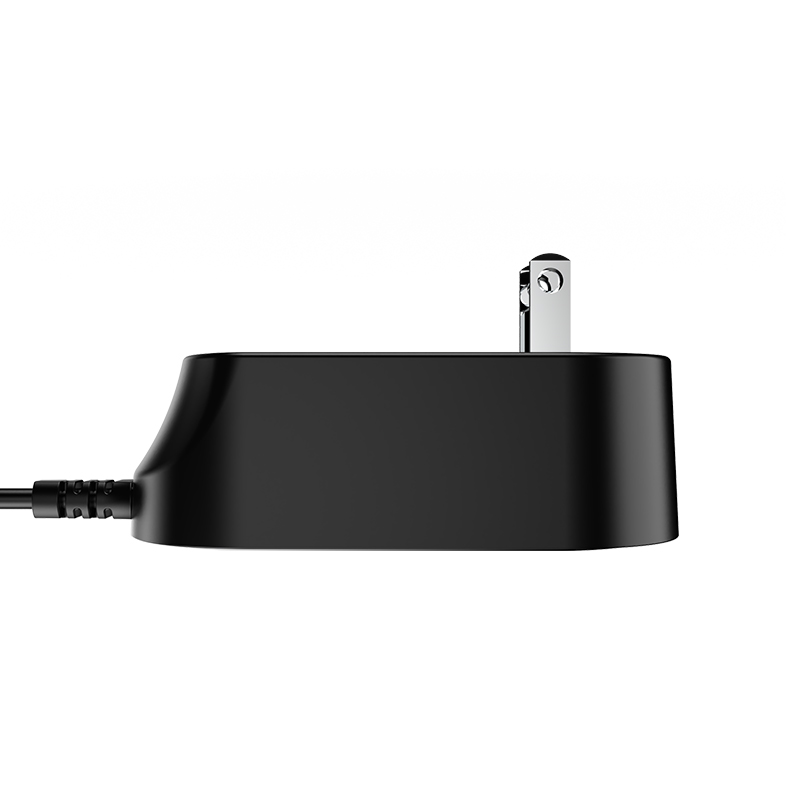
Every product that needs stable DC power from an AC wall outlet depends on a power adapter. The same component may be called a USB charger, laptop adapter, PD charger, AC-DC power adapter or switching adapter, but the engineering job remains the same: convert line voltage into the exact voltage and current your device needs, safely and efficiently. For importers, brand owners, engineers and procurement managers, selecting the right power adapter supplier is more than a purchasing decision. It shapes product safety, certification approval, lead time, total cost and end-user satisfaction.
Shenzhen Simsukian Electronics Technology Co., Ltd (SimSukian) is a China-based manufacturer with nearly three decades of power-supply engineering experience. Founded in 1996, SimSukian is a national-level High-Tech Enterprise and a national-level “Specialized, Refined, Differential & Innovative” enterprise. The company develops and mass-produces switching power supplies, lithium-ion battery chargers, charging docks and power adapters in the range of 3 W to 240 W. Its product line also covers PD chargers, fast chargers and switching power supplies for customers across Europe, North America, Australia, Japan, Korea and the UK.
Why Power Adapter Sourcing Deserves More Attention
A power adapter must supply the correct output voltage and enough current. If the voltage is wrong, the load may be damaged or fail to operate. If the current rating is lower than required, the adapter can overheat or trigger protection. This is why product spec sheets list values such as 5V1A, 5V2A, 5V3A, 12V1A, 12V2A, 24V1A, 24V2A or similar. Choosing an adapter is not a generic “buy a charger” exercise; it is an electrical specification exercise.
Buyers also face regional plug and safety requirements. A product sold in the United States may need a US plug and UL or FCC-related approvals. A product sold in Europe usually needs a European plug and CE marking. Korea requires KC approval. Japan commonly requires PSE. Australia and New Zealand rely on SAA/RCM. A supplier that cannot match certifications with the target market can delay your launch or create customs issues.
In addition, hidden quality risks appear over time. Poor soldering, weak thermal management, insufficient short-circuit protection and unreliable connectors can lead to returns, safety incidents and damaged brand reputation. This is why experienced manufacturers invest in in-house testing, long-term reliability validation and precise documentation of safety certifications.
Understanding the Power Adapter Landscape
The broader category of power adapters includes several product families, although the underlying concept remains similar. AC-DC power adapters convert household AC input, for example 100-240V AC, into low-voltage DC output. Switching adapters use high-frequency switching circuits to achieve compact size and higher efficiency. USB chargers, including Type-C and PD chargers, add charging protocols that communicate with the device to negotiate the correct power level. Wall-plug adapters integrate the AC plug directly into the housing, saving space and simplifying installation for appliances, routers, LED drivers and other electronics.
Within a real supplier catalogue, you will usually find adapters grouped by output power and plug type. For instance, SimSukian offers compact wall-plug models in series such as SK01T and SK03T, with output options that include 5V/3A, 12V/1A, 12V/3A, 24V/0.5A, 24V/0.65A and 24V/1.5A. Some models are designed for the US plug, others for EU, UK, AU or Korea plugs. These products typically use fire-retardant PC housings and provide protections such as short-circuit protection, overvoltage protection and overcurrent protection.
What to Look for in a Power Adapter Supplier
A suitable supplier should combine engineering experience, compliance depth, manufacturing capability, customization flexibility and quality assurance. SimSukian is an example of a supplier that has built its operating model around these areas.
- Engineering and R&D: A 30-engineer R&D team supports schematic design, PCB layout, firmware programming for lithium-battery charging logic, NTC temperature monitoring and anti-reverse-polarity protection.
- OEM/ODM capability: SimSukian provides turn-key ODM/OEM services covering plastic-housing prototyping, mold-making, full-batch compliance testing and final assembly.
- Quality management: The company holds ISO 9001:2015 Quality Management System Certification and ISO 14001:2015 Environmental Management System Certification, and carries more than 90 national patents in structural design, circuit topology and safety-protection technologies.
- In-house testing: A professional safety and reliability laboratory uses instruments from Rohde & Schwarz, Yokogawa, Agilent and Tektronix to perform EMC, thermal cycling, surge, short-circuit and accelerated-aging tests before mass production.
- International approvals: Products have passed approval frameworks including CCC, UL, CB, CE, UKCA, FCC, KC, PSE, SAA, RoHS, REACH, DOE Level-VI, CEC and ERP, helping customers export to more than 30 countries and regions.
These points matter because a supplier with engineering depth can help you avoid design mistakes. A supplier with diverse certifications can respond faster when you enter a new market. A supplier with in-house testing reduces the risk of field failures and costly rework.
How to Source a Power Adapter: A Step-by-Step Process
If you are new to buying adapters, the process can be broken into five practical steps.
Step 1. Define the exact electrical specification
Check the device label or original adapter to find the required output voltage (V) and current (A). For example, a router may need 12V/1A, while a smart meter may use 5V/1A. A more power-hungry product, such as LED lighting or a small appliance, may need 24V/1.5A or 12V/3A. You also need to know the connector polarity and barrel size if the adapter uses a DC barrel connector.
Step 2. Select the AC plug and mechanical format
Decide whether the product will be sold with a US, EU, UK, AU, Korea or Japan plug. Consider whether you need an all-in-one wall-mount form factor or a separate desktop adapter. If space is tight, a compact plug design can make installation easier.
Step 3. Map target-market certifications and efficiency levels
Certifications are not optional in many markets. For North America, UL and FCC matter. For Europe, CE-LVD and CE-EMC are common. For the UK, UKCA may be required. Australia often expects SAA compliance, Japan uses PSE, and Korea uses KC. Efficiency requirements such as DOE Level-VI, CEC, ErP or ERP can also affect product design. A qualified supplier should be able to explain which certificate applies to each model and which model number matches which certificate.
Step 4. Choose between standard, OEM or ODM
If you have a mature product, standard models can reduce cost and lead time. If you need custom output cables, custom housing, custom logo, specific battery-charging logic or unique user-interface features, an ODM/OEM supplier with in-house engineering is necessary. SimSukian supports the full chain from schematic to final assembly, which reduces coordination risk.
Step 5. Request samples and evaluate reliability
Samples let you verify voltage stability, ripple, temperature, protection functions and mechanical fit. Ask for test reports and certification documents for the exact model. Review the supplier’s factory quality system and request accelerated-aging test data where possible. In the long run, a supplier that controls reliability is more valuable than a supplier competing only on unit price.
Real-World Use Cases for Compact Power Adapters
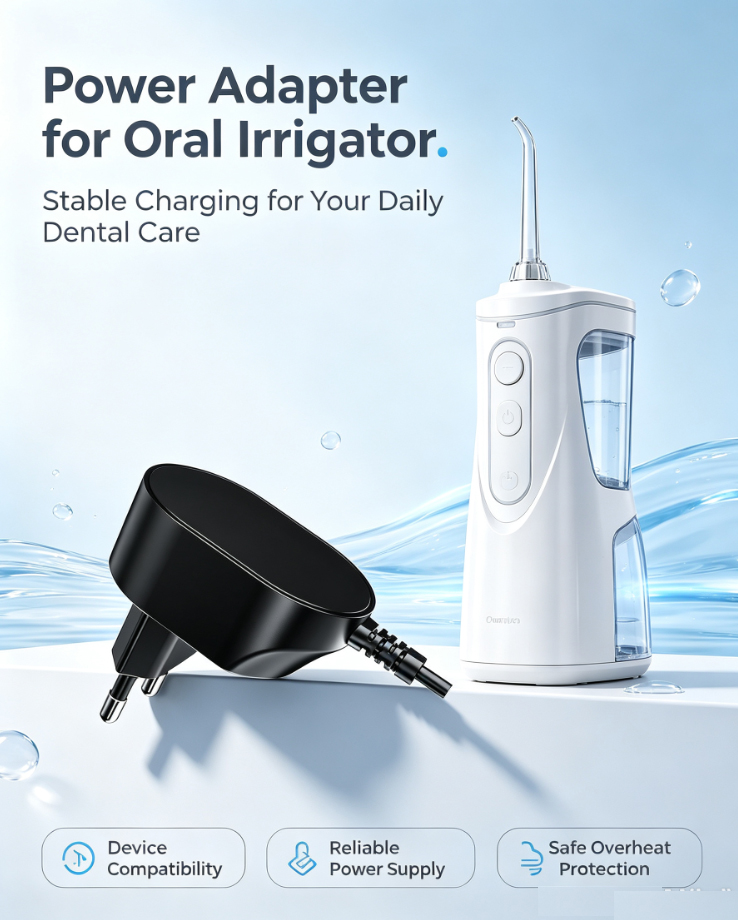 Water flossers often need stable 12V or 5V power to keep the pump output consistent.
Different applications place different demands on adapters. In the personal-care and household electronics space, example use cases from SimSukian’s application database include:
Water flosser and oral-care devices
A bathroom water flosser needs stable output such as 12V1A or 5V1A to keep the water pump running evenly. Fluctuating voltage can cause water-pressure variation and motor overload. SimSukian adapters used for this application are compact enough for narrow countertop outlets and designed for indoor use.
Facial mask devices and beauty devices
Home facial mask devices and small phototherapy devices need stable voltage to prevent flickering or sudden brightness changes. Many operate with 5V or 12V input. A steady 12V1A or 5V3A adapter supplies consistent power so the light beads are not stressed by voltage drift.
Humidifiers and aroma diffusers
Bedroom aroma diffusers and desktop humidifiers often run all night. Low-noise, voltage-stabilized adapters help the ultrasonic atomizing plate produce fine mist without mist interruption or dry burning. Some models in SimSukian’s 24V and 12V series are used for these devices, depending on the equipment power rating.
Smart electricity meters and energy meters
Micro power meters, miniature electricity meters and smart electricity meters often require a stable low-voltage supply. A precise 5V1A adapter, for example, can avoid garbled displays and measurement errors caused by voltage drift. Because these meters are installed in distribution boxes and narrow spaces, the small size of the adapter is an important practical advantage.
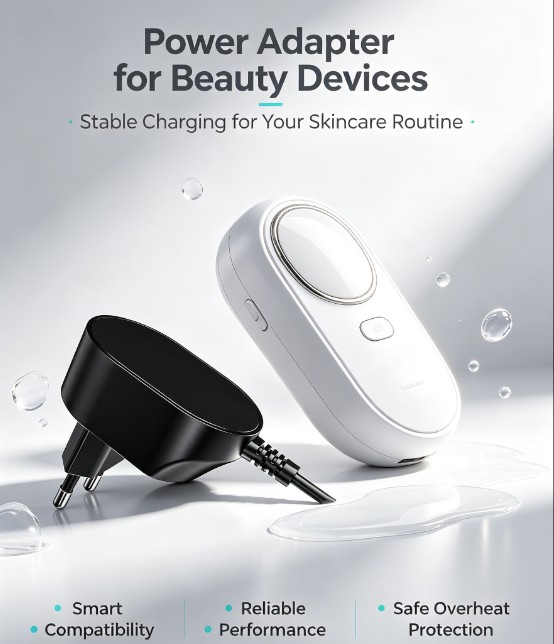 Stable current delivery is important for phototherapy and beauty devices.
Comparison: Common Adapter Outputs in SimSukian’s Verified Product Data
The table below summarizes several verified standard adapters from SimSukian’s catalogue. It does not attempt to list every possible SKU; rather, it illustrates how output voltage, current, series, plug and certification options are normally presented.
| Output | Model | Typical power | Plug example | Example certificates |
|---|---|---|---|---|
| 5V 3A | SK01T8-0500300U | 15W | US | CE-LVD, CE-EMC, RoHS |
| 12V 1A | SK01T8-1200100V | 12W | US | CE-LVD, CE-EMC, RoHS |
| 12V 3A | SK03T-1200300U | 36W | US, EU/UK/AU variants available | UL, ETL, FCC, SAA, PSE, CCC, CQC, CE-LVD, CE-EMC, RoHS |
| 24V 0.5A | SK01T | 12W | Korea | KC, KCC, UL, ETL, FCC, SAA, PSE, CCC, CQC, CE-LVD, CE-EMC, RoHS |
| 24V 0.65A | SK01T | 15.6W | Korea | KC, KCC, UL, ETL, FCC, SAA, PSE, CCC, CQC, CE-LVD, CE-EMC, RoHS |
| 24V 1.5A | SK03T | 36W | EU/UK/KR | UL, ETL, FCC, SAA, PSE, CCC, CQC, CE-LVD, CE-EMC, RoHS |
The table shows that even a single supplier can support multiple output families and regional plug standards. This breadth is helpful when you build different products for different export markets.
Power Adapter Supplier FAQ
What should buyers look for when evaluating power adapter suppliers?
Buyers should evaluate engineering experience, product range, quality-management certifications, international safety approvals, OEM/ODM support and testing capability. For example, SimSukian is a supplier founded in 1996 with ISO 9001, ISO 14001, more than 90 national patents and an in-house safety and reliability laboratory. Buyers also need certificates to match specific model numbers, not just generic claims.
Which certifications should a power adapter have for international markets?
Common regional requirements include UL and FCC for North America, CE-LVD, CE-EMC and ErP/ERP for Europe, UKCA for the UK, SAA/RCM for Australia/New Zealand, PSE for Japan, and KC/KCC for Korea. The CB scheme provides an international baseline. In SimSukian’s product data, products can carry CCC, UL, CB, CE, UKCA, FCC, KC, PSE, SAA, RoHS, REACH, DOE Level-VI, CEC and ERP approvals depending on the target market and model.
Can I get custom or ODM power adapters from SimSukian?
Yes. SimSukian provides turn-key ODM/OEM solutions, including schematic design, PCB layout, firmware programming, NTC temperature monitoring, anti-reverse-polarity protection, indicator-light control, plastic-housing prototyping, mold-making, compliance testing and final assembly.
How do I get more information, samples or a quotation?
You can contact SimSukian directly. Contact name: Abby. Email: 8042@simsukian.com. Phone: +86 173-2838-5323. WhatsApp: +86 17388780986. A downloadable product catalogue is also available for further specification review.
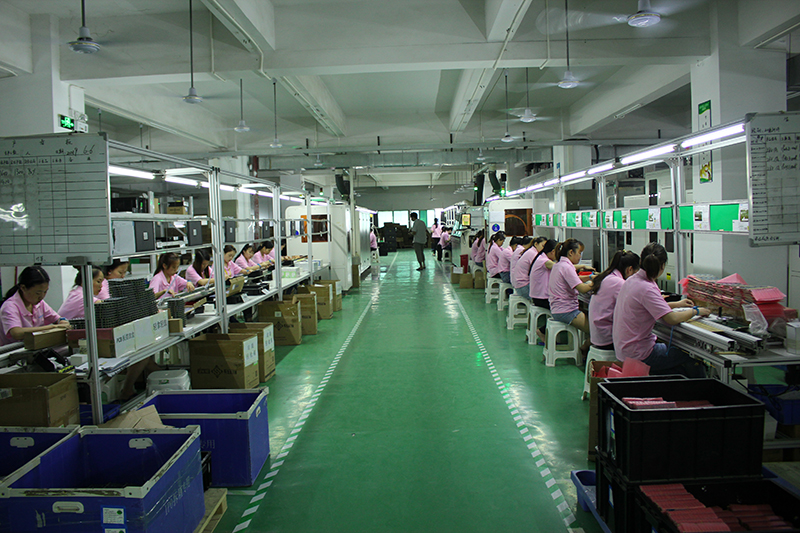 Production processes at SimSukian support consistent quality for volume orders.
Final Thoughts
Power adapters are not commodities that should be selected solely by price. A 5V1A adapter is not automatically the same as another 5V1A adapter, because reliability, efficiency, safety margins and certification validity vary between suppliers. For anyone building a product that needs an AC-DC power adapter, a USB charger or a switching adapter, the smarter path is to start by understanding the electrical specification, target market and compliance requirements.
Once those constraints are clear, a supplier with a documented track record, verified product family, international certifications and engineering-led OEM/ODM support can reduce time-to-market and lower total quality risk. SimSukian’s combination of 30 years of manufacturing history, in-house testing and international approvals makes it a practical reference point when you begin shortlisting power adapter suppliers.
Request samples, quotations or the full catalogue
If you are evaluating power adapter suppliers for a current or upcoming project, SimSukian can provide technical documentation, certification files and sample support. Contact Abby at 8042@simsukian.com or WhatsApp +86 17388780986.
Download the product catalogue: SimSukian Power Adapter Catalogue (PDF).
Have Questions or Need More Details?
Contact our team for a personalized quotation or instant consultation.
Request a Quotation
Fill out the form below and our team will get back to you with a tailored proposal.
WhatsApp Direct Chat
Prefer to chat in real-time? Message us on WhatsApp for instant assistance & quick answers.
- Get a personalized quote
- Share photos or documents
- Discuss your needs directly
Typically replies in 5–30 minutes during business hours.