Power Adapter Guide: Types, Specs, Certifications & Supplier Selection
Power Adapter Guide: Types, Specs, Certifications & Supplier Selection
An AC-DC power adapter converts alternating current from a wall outlet into stable, low-voltage direct current for electronic products. People often search using phrases such as “5V1A power adapter”, “12V1A power adapter”, “12V3A36W power adapter”, “24V1A24W power adapter” or “laptop adapter”. Yet the real purchasing decision is rarely limited to voltage and current. A complete power adapter solution also involves plug configuration, physical dimensions, energy efficiency, safety certifications, test reports and the supplier’s ability to support OEM/ODM customization.
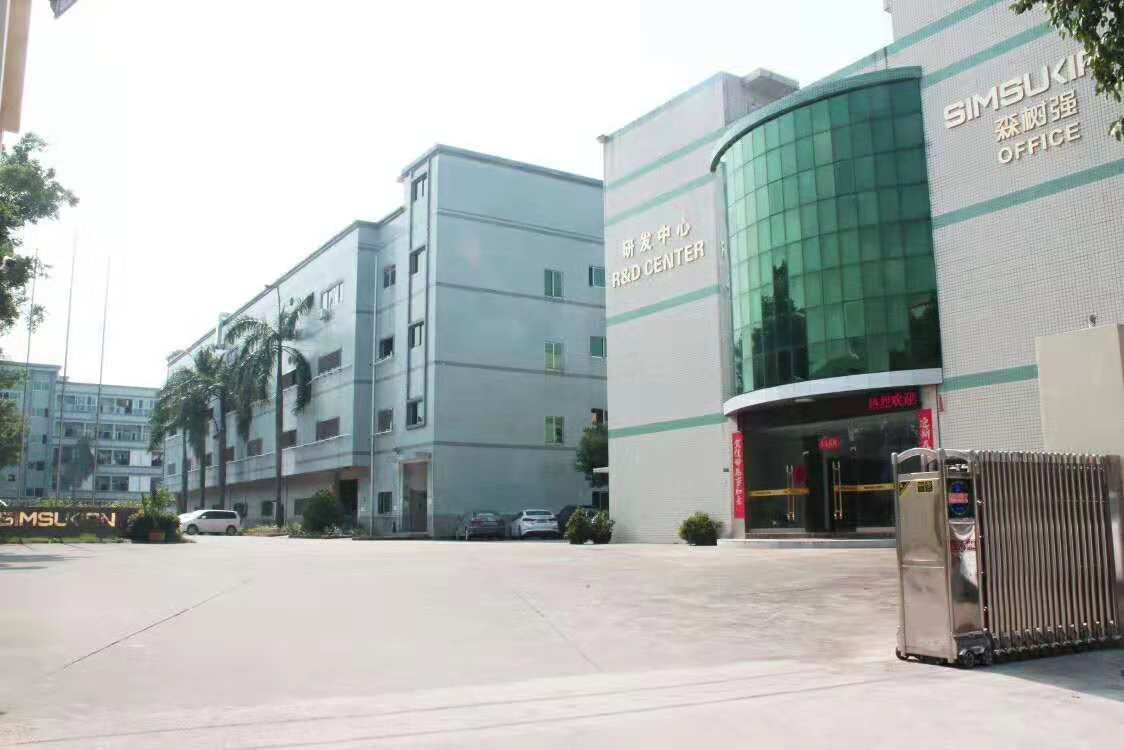
Simsukian Power Adapter is a Shenzhen-based product line of Shenzhen Simsukian Electronics Technology Co., Ltd, a manufacturer founded in 1996. The company designs and mass-produces switching power supplies, AC-DC power adapters, lithium-ion battery chargers, charging docks, PD chargers and fast chargers ranging from 3 W to 240 W. It also holds international certifications that help buyers simplify export compliance for markets such as the EU, USA, Australia, Japan, Korea and the UK.
What Is a Power Adapter?
A power adapter is often called a switching adapter, wall plug power supply, USB charger, PD charger, Type C charger or AC-DC adapter. Regardless of the name, the core function is the same: convert AC input into regulated DC output that a device can use safely.
Typical adapter labels describe the output clearly. For example, a 12V1A power adapter delivers 12 V DC with a maximum current of 1 A. A 5V3A power adapter delivers 5 V DC with a maximum current of 3 A. The connected product will normally draw only as much current as it needs, but the adapter must be capable of supplying enough current for the expected load.
Main functional blocks inside a modern switching adapter
- AC input stage with filtering and rectification;
- Switching converter that steps the voltage down efficiently;
- Output regulation circuit that maintains a stable DC voltage;
- Protection functions such as short-circuit protection, overvoltage protection and overcurrent protection;
- Enclosure and connector system matched to a country plug standard.
Why a Simple “Power Adapter” Search Is Not Enough
For buyers at the Awareness and Research stage, the biggest risk is selecting an adapter based only on an output voltage printed on a label. Two adapters with the same voltage may still differ in current capability, plug type, energy-efficiency level, safety standard, enclosure size, noise and long-term reliability.
Incorrect adapter selection can also create commercial risk. Certifications are market-specific. A product sold in the USA may need UL, FCC and DOE Level VI compliance. The same product sold in Korea may need KC/KCC approval and a Korea plug, while a product shipped to the UK may require UKCA. When a buyer chooses a power adapter supplier, it is therefore important to confirm that the factory can provide certificates that match the exact model number and target market.
How the Adapter Market Is Structured
Older linear power supplies were simple but bulky and inefficient. Modern switching power supplies are lighter, smaller and more energy-efficient, which is why switching adapters are now the mainstream for consumer electronics, IT products, home appliances, industrial controls and LED equipment.
As semiconductor technology improves, manufacturers are also focusing on gallium-nitride (GaN) power devices and more advanced battery-charging management. Shenzhen Simsukian Electronics Technology Co., Ltd maintains long-term university-industry-research cooperation to support development in GaN power devices, battery charging management, temperature-sensitive control and over-protection circuits.
Power Adapter Suppliers: What to Evaluate Before You Choose
1. Certification coverage and traceability
The most efficient way to reduce export risk is to choose a supplier whose adapter series already covers multiple markets. Simsukian’s corporate profile states that its products have passed CCC, UL, CB, CE, UKCA, FCC, KC, PSE, SAA, RoHS, REACH, DOE Level-VI, CEC and ERP requirements. For buyers, the important point is not only that a certificate exists, but that each model number can be matched to its corresponding certificate and test report.
2. In-house reliability testing
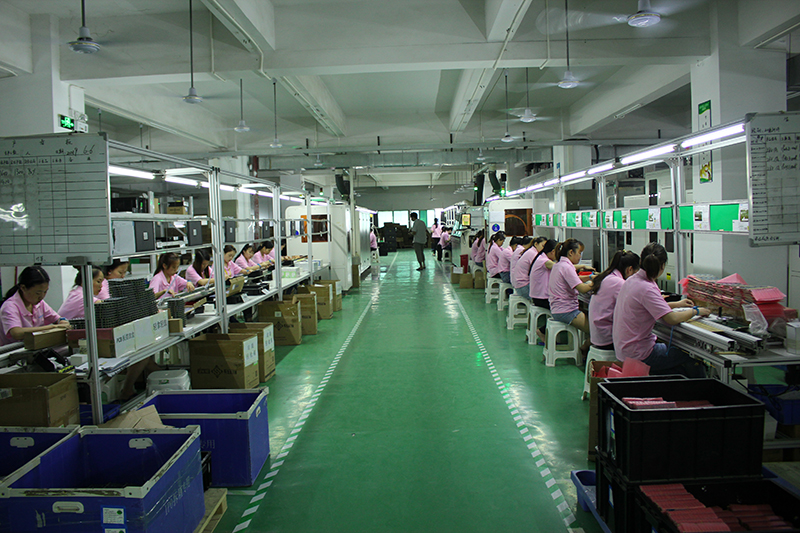
A power adapter manufacturer should be able to demonstrate how it validates each new design before mass production. Simsukian operates an in-house safety and reliability laboratory and uses instruments from Rohde & Schwarz, Yokogawa, Agilent and Tektronix for EMC, thermal cycling, surge, short-circuit and accelerated-aging tests. These test activities are directly relevant to buyers because they reduce the chance of field failures caused by noise, temperature stress or power surges.
3. ODM and OEM engineering depth
Many buyers do not purchase an adapter as a commodity; they need customization. Simsukian provides turn-key ODM/OEM solutions that include schematic design, PCB layout, firmware programming for lithium-battery charging logic, NTC temperature monitoring, anti-reverse-polarity protection, indicator-light control, plastic-housing prototyping, mold-making, full-batch compliance testing and final assembly. This engineering depth is especially useful for brand owners and equipment manufacturers that need a power solution tailored to a specific enclosure, charging profile or connector.
4. Company history, scale and quality system
Longevity and production scale matter in power-supply sourcing. Shenzhen Simsukian Electronics Technology Co., Ltd was founded in 1996 and operates a modern manufacturing base of nearly 30,000 m². It employs more than 500 staff members, has an R&D team of 30 engineers and holds ISO 9001:2015 and ISO 14001:2015 certifications. The company also holds more than 90 national patents covering structural design, circuit topology and safety-protection technologies for power equipment.
How to Choose the Right Power Adapter: A Step-by-Step Breakdown
Step 1: Confirm the exact DC voltage and current your device needs
Check the original adapter label or the product’s specification sheet. Match the DC voltage exactly. For current, select an adapter whose rated current is equal to or higher than the device’s requirement.
Step 2: Select the plug standard and target-market certification
Common AC plug options include US, EU, UK, AU and Korea. For Korea, models often use a Korea plug with KC/KCC certification. For the EU market, CE-LVD and CE-EMC requirements need to be considered. For the USA, UL, FCC and DOE Level VI are frequently requested.
Step 3: Review enclosure type and physical size
Wall-mount adapters need to fit in sockets that may be crowded. Compact adapters are especially useful for narrow spaces behind smart meters, bedside beauty devices or bathroom appliances. Simsukian offers wall-mount adapter designs with fire-retardant PC material and customizable color.
Step 4: Check energy-efficiency requirements
Many regions now enforce efficiency standards. DOE, ErP and CEC-VI are common requirements for exported power adapters. A supplier that designs to these efficiency levels from the beginning can save time in the certification process.
Step 5: Ask for test reports and samples
Before mass production, request the relevant certificates and ask the manufacturer about testing. Key tests often include EMC, thermal cycling, surge, short-circuit and accelerated aging. Samples allow you to verify real dimensions, connector quality, output stability and heat performance in your own product environment.
Step 6: Define whether you need OEM/ODM customization
If your product requires a specific housing, LED indicator, cable length or charging communication protocol, choose a supplier with in-house engineering. Simsukian’s model covers the full route from circuit design and firmware programming to molding and compliance testing.
Power Adapter Use Cases Across Different Product Categories
Smart electricity meters and ammeters
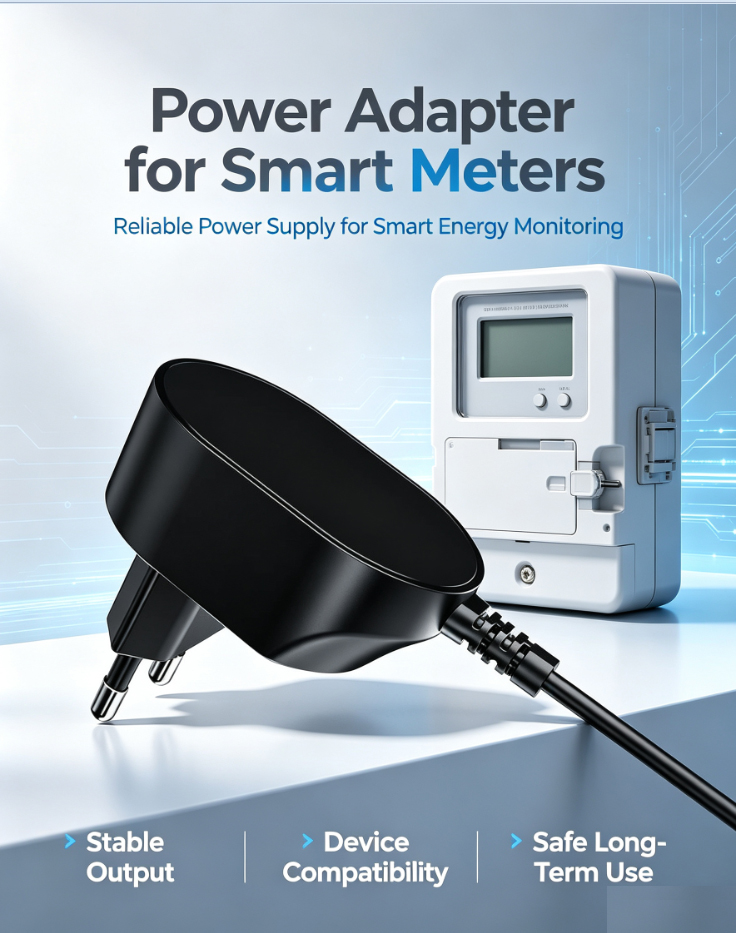
Smart electricity meters, single-phase energy meters and miniature power meters are often installed in narrow electrical boxes. These applications need stable power for ammeter chips and LCD displays so that readings remain accurate and do not show garbled characters. The compact size of small wall adapters helps simplify wiring in weak-current boxes.
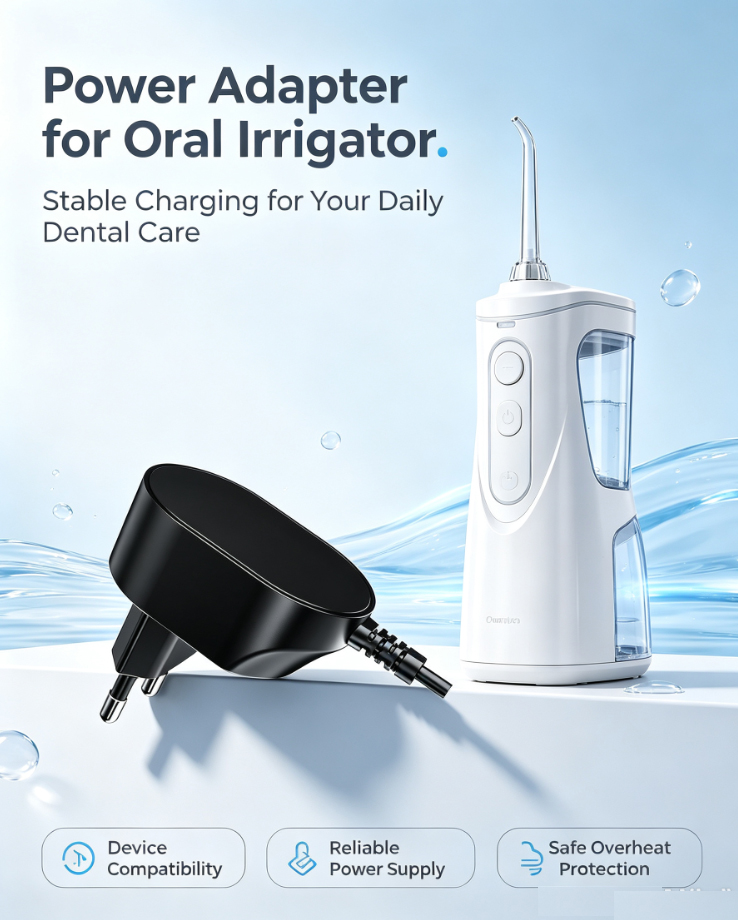
Water flossers and oral-care devices
Water flossers are often used in bathrooms or during travel. A stable output such as 12V1A or 5V1A helps the water pump operate evenly, avoiding sudden changes that could stress the motor. Small-sized adapters are also easier to use on narrow countertop outlets, and insulation design is important for wet-and-dry environments.
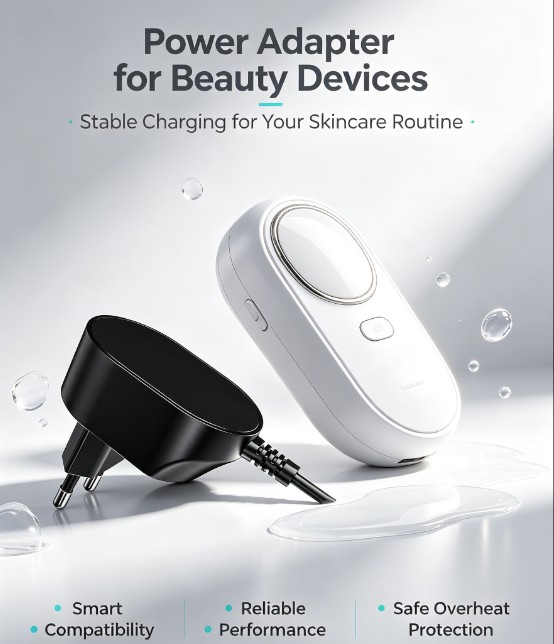
Beauty devices and facial-mask devices
Home skincare devices, phototherapy facial masks and portable folding facial masks require clean, stable voltage and current. Irregular brightness or voltage drift may affect the light beads. A stable 5V/1A, 5V/2A or 5V/3A power supply helps avoid flickering, and low-temperature operation is preferred for continuous use beside the bed.
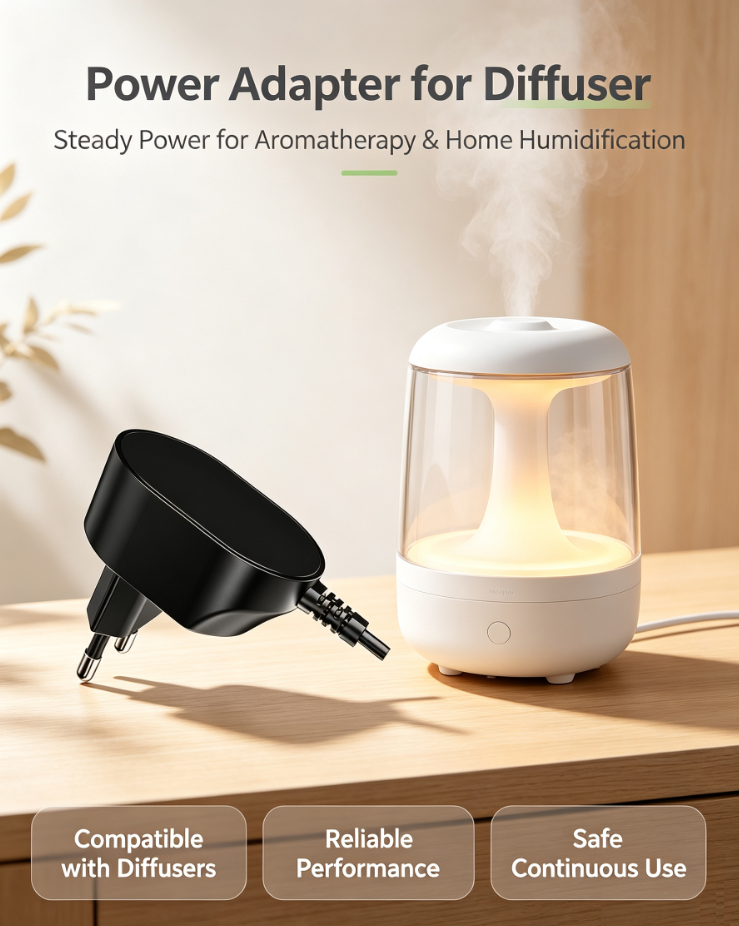
Humidifiers and aroma diffusers
Ultrasonic aroma diffusers and small humidifiers work best when the atomizing plate receives stable voltage. A low-noise, voltage-stabilized power adapter helps the atomizing plate vibrate evenly to produce fine mist without interruption. It can also support long operation times in bedrooms, living rooms and study rooms.
Common Power Adapter Configurations at a Glance
| Output Configuration | Typical Power | Plug Examples | Typical Device Context |
|---|---|---|---|
| 5V / 1A or 5V / 3A | 5 W–15 W | US, EU, UK, AU, Korea | USB-charged devices, facial masks, smart meters, small audio products |
| 12V / 1A | 12 W | US, EU | Small home appliances, electronic instruments, IT products |
| 12V / 3A | 36 W | US, EU, UK, AU | Routers, audio equipment, IT devices, industrial controls |
| 24V / 1A or 24V / 1.5A | 24 W–36 W | EU, UK, Korea | Humidifiers, aroma diffusers, LED products, home appliances |
The examples above are representative configurations offered in the Simsukian adapter family. Actual product names and models should be confirmed against the factory datasheet and certificate list.
Frequently Asked Questions about Power Adapter Suppliers
1. What certifications should I look for when evaluating a power adapter supplier?
Check electrical safety, EMC and energy-efficiency requirements for the destination market. For North America, common requirements include UL, FCC, cUL and DOE Level VI. For Europe, CE-LVD, CE-EMC, ErP and RoHS 2.0 are often requested. The UK uses UKCA. Australia and New Zealand commonly accept RCM. Japan and Korea respectively use PSE and KC. An international CB certificate can also reduce duplicate approval work. Simsukian states that all certificates and test reports are available upon request, and that each model number matches its certificate.
2. Which power adapter configurations are commonly used in small electronics?
Common output combinations include 5V/1A, 5V/2A, 5V/3A, 12V/1A, 12V/3A, 24V/1A and 24V/1.5A. For example, Simsukian provides models such as the 12V1A power adapter, 5V3A power adapter and 12V3A 36W power adapter in the SK01T8/SK03T series. The precise choice depends on the product’s input voltage, current requirement, plug standard and mechanical design.
3. Does Simsukian support OEM/ODM services for custom power adapters?
Yes. Simsukian provides turn-key ODM/OEM solutions that include schematic design, PCB layout, firmware programming for lithium-battery charging logic, NTC temperature monitoring, anti-reverse-polarity protection, indicator-light control, plastic-housing prototyping, mold-making, full-batch compliance testing and final assembly. This allows customers to request custom output specifications, enclosure colors and plug configurations based on the platform models.
4. What quality and safety checks should be done before mass production?
Buyers should ask the supplier how each new design is validated. Simsukian maintains an in-house safety and reliability laboratory that performs EMC, thermal cycling, surge, short-circuit and accelerated-aging tests before mass production. It also holds ISO 9001:2015 and ISO 14001:2015 certifications, and has more than 90 national patents covering power-equipment safety and structural design.
5. Can I request samples and technical support before placing a bulk order?
Pre-production samples and engineering discussion are a practical first step. To evaluate a specific adapter, contact SimSukian with the required output voltage, current, plug type, target certificates and product application. The technical team can help confirm model availability and customization possibilities. For an overview of standard models, the company catalog can be downloaded directly.
Conclusion
Choosing a power adapter is not only a component decision; it is also a market-entry decision. Output voltage, current, plug type, efficiency, safety standard and supplier engineering depth must all be considered together. A manufacturer with multi-country certifications, in-house reliability testing, OEM/ODM capabilities and long production history can reduce the risk of late compliance issues and field failures.
Shenzhen Simsukian Electronics Technology Co., Ltd has been designing and manufacturing power products since 1996, with more than 500 staff members and an R&D team of 30 engineers. Its portfolio covers power adapters from 3 W to 240 W and has served buyers across the EU, USA, Australia, Japan, Korea, the UK and other export markets. This makes it a useful reference point for product managers, importers and equipment brands that are beginning their supplier search.
Ready to evaluate standard power adapter models or discuss an OEM/ODM project?
Contact Abby at 8042@simsukian.com or via WhatsApp at +86 173 8878 0986.
Download Power Adapter CatalogHave Questions or Need More Details?
Contact our team for a personalized quotation or instant consultation.
Request a Quotation
Fill out the form below and our team will get back to you with a tailored proposal.
WhatsApp Direct Chat
Prefer to chat in real-time? Message us on WhatsApp for instant assistance & quick answers.
- Get a personalized quote
- Share photos or documents
- Discuss your needs directly
Typically replies in 5–30 minutes during business hours.