48V LiFePO4 Golf Cart Batteries for U.S. Venue & Campus Fleets: An Application Guide
48V LiFePO4 Golf Cart Batteries for U.S. Venue & Campus Fleets: An Application Guide
A 48V LiFePO4 golf cart battery is a lithium iron phosphate pack sized to replace the lead-acid set in a 48-volt cart, and it is one of the configurations U.S. campuses, resorts, and multi-venue operators specify when a fleet moves from flooded lead-acid to lithium. At this stage of a project the chemistry decision is usually already made — the real work is documentation. This guide is written for the point where a fleet plan must clear procurement, safety, and shipping review: which documents a 48V golf cart battery should arrive with, how 48V, 51.2V, and 72V options differ inside a fleet file, and what a venue or campus should verify before the first cart is converted.
Problem Definition: The Procurement Stage Stalls on Paperwork, Not on Voltage
Fleet managers at venues and campuses rarely struggle to decide that lithium is the right direction. The delay almost always appears later, when three different departments ask three different questions about the same order.
- The safety office asks for a Safety Data Sheet in the GHS format required by OSHA's Hazard Communication Standard (HazCom 2012). A supplier quoting a generic “lithium battery” without a market-specific SDS number cannot clear that review.
- Logistics and the freight forwarder ask for the UN38.3 test report. UN 38.3 certification is required for the safe global transport of lithium batteries, and a report is generally expected to match the pack configuration actually shipped.
- Engineering and maintenance ask a narrower question: is this cart a 48V-class system or a 51.2V-class pack, and does the existing charger match the new nominal voltage?
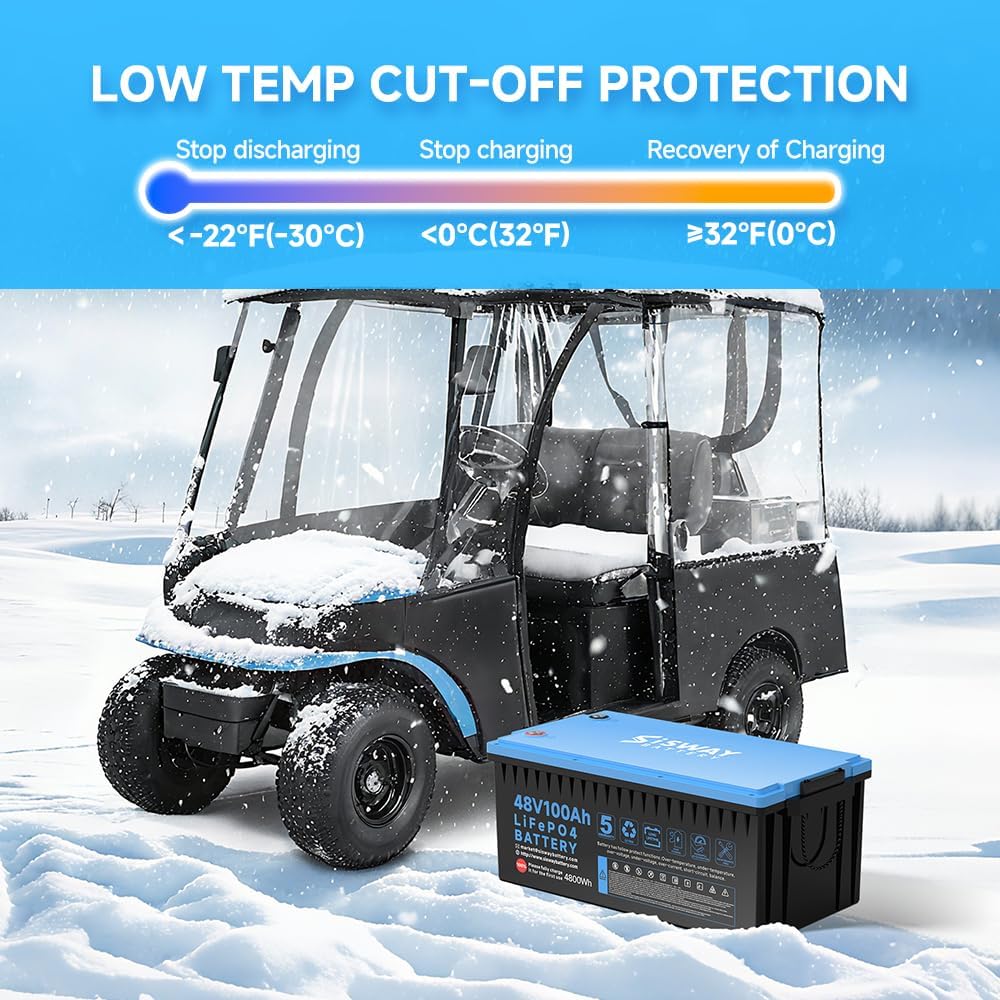
A fourth question surfaces in northern markets and mountain venues: what happens in the cold season? If the answer is not written down, the fleet file stays incomplete and the order waits another budget cycle.
Industry Background: Why 48V Fleet Retrofits Are a Volume Story in North America
The global golf cart battery market reached approximately USD 1.49 billion in 2024 and is projected to reach USD 2.21 billion by 2030, a CAGR of 6.8%, according to Strategic Market Research. The demand is concentrated rather than evenly spread: North America dominated the electric golf cart market in 2024, accounting for a 44.7% revenue share (Grand View Research), and the U.S. electric golf cart market alone was estimated at USD 529.4 million in 2024.
Battery-electric vehicles accounted for 72.5% of that U.S. electric golf cart market in 2024, and lithium-ion batteries held approximately 47% of global golf cart battery market share by revenue in the same year. On the supply side, China exported nearly USD 1 billion worth of golf carts and similar vehicles in 2024, with 81% directed to the U.S. market.
Two structural signals matter for procurement planning. First, the segment is replacement-driven: carts stay in service for years, so battery replacement cycles — not new vehicle sales — dominate purchasing decisions. Second, the 4-seater golf cart segment is the fastest growing, with an annual growth rate of 6.8%, which is the same multi-passenger class most campus shuttle and venue guest fleets operate.
Detailed Solution: What a 48V LiFePO4 Pack Needs to Prove on a Venue Fleet
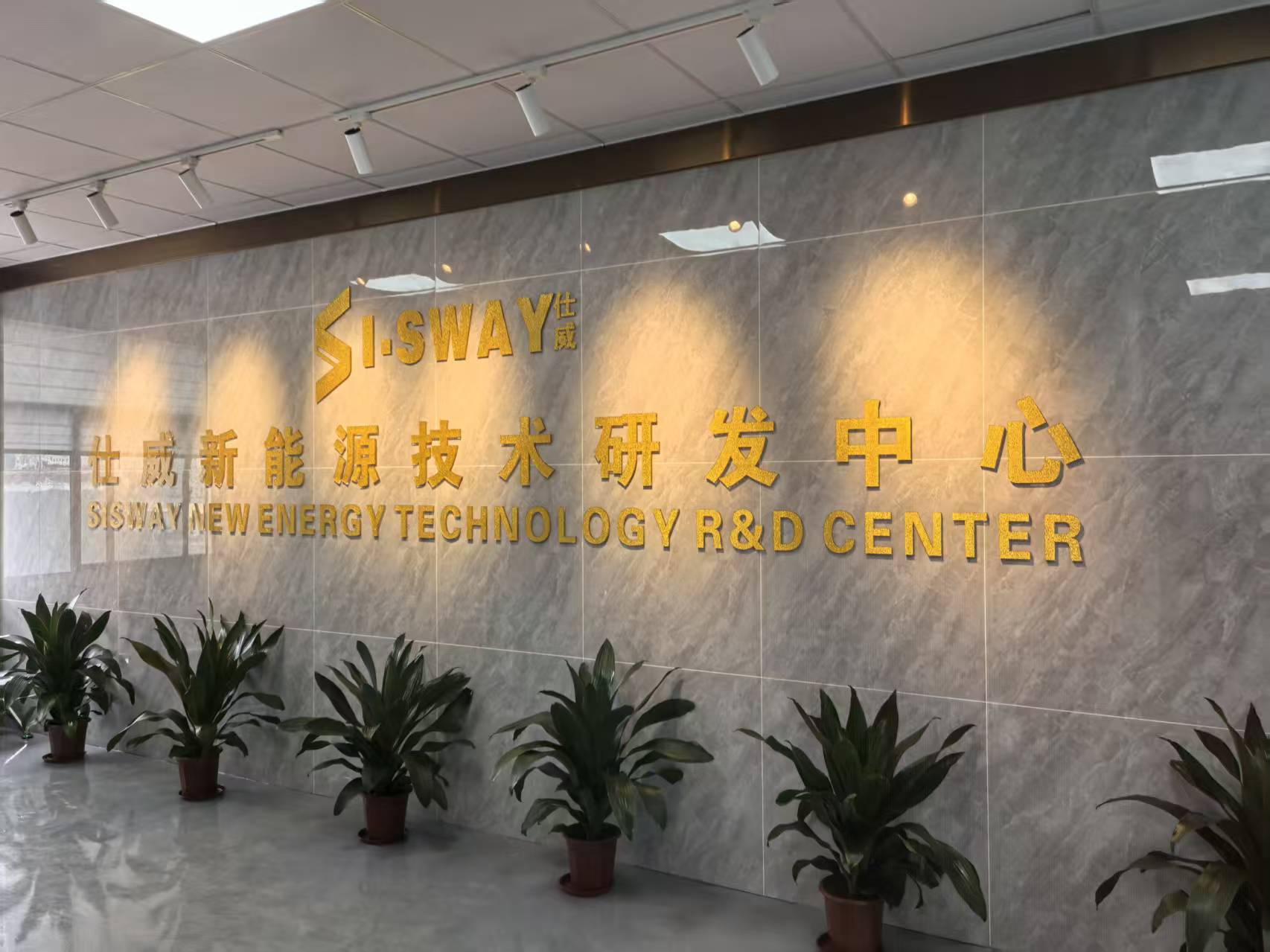
Shenzhen Sisway New Energy Co., Ltd., trading as Sisway Battery, is a lithium battery manufacturer established in 2017 that builds lithium iron phosphate (LiFePO₄) battery packs for golf carts, UTVs, ATVs, forklifts, AGVs, and home energy storage. Its ISO 9001:2015 certification and portfolio of more than 100 global certifications, including CE, UL, UN38.3, and MSDS, together with multiple battery-technology patents, form the compliance baseline a venue or campus reviewer will look for.
Energy and lifecycle facts that carry the business case
LiFePO₄ batteries typically offer 2,500 to 9,000 cycles at 80% Depth of Discharge, compared with approximately 300 to 500 cycles at 50% DoD for traditional flooded lead-acid batteries. That gap is the core of any total-cost argument. LiFePO₄ golf cart batteries for 48V systems commonly sit in the 100–150 Ah capacity band, which is the range most venue carts need for a full-day shift.
The Sisway LiFePO₄ golf cart battery supports 4,000+ deep cycles. On a like-for-like operating basis it delivers 30% more usable capacity, charges roughly 50% faster, and runs at 95%+ energy efficiency, with maintenance-free operation. Against lead-acid, the reported total ownership cost reduction can reach 50%, with a service life 4–5 times longer. For a campus or resort, the practical translation is fewer charge windows, fewer swapped packs, and fewer maintenance hours per cart per season.
The compliance file: MSDS, UN38.3, and ISO 9001:2015
For a U.S. venue or campus, the 48V golf cart battery should arrive with a market-specific Safety Data Sheet. The Sisway 48V golf cart battery carries MSDS No. TSZ25LL028A86-01 for the USA market, prepared under GHS and OSHA HazCom 2012. This is the document that lets a campus environmental health and safety officer or a venue's compliance lead file the pack into the site's chemical inventory instead of holding the shipment in a staging area.
International movement is covered separately. The Sisway 48V golf cart battery carries UN38.3 Test Report No. TSZ25H8045A01-01 for global market compliance. Because UN 38.3 is required for the safe global transport of lithium batteries, this report is what a freight forwarder, airline, or ocean carrier will normally ask to see before accepting a lithium pack booking.
Quality system evidence sits alongside the two product documents: ISO 9001:2015 certification covers the manufacturer's quality management system. Depending on the insurer or the engineer reviewing the project, additional standards may be requested. IEC 62619:2022 specifies safety requirements for secondary lithium cells and batteries in industrial and motive applications including golf carts, and UL 2580 is the standard for batteries used in electric vehicles, covering electrical, mechanical, and environmental testing. These two are the most common reference points a reviewer will name, so it is worth confirming with any supplier which of them a specific pack has been evaluated against.
Cold-weather capability has to be documented, not assumed
Cold conditions are the most under-documented risk in fleet retrofit files, because the failure mode is seasonal and easy to miss during a summer pilot. The Sisway approach uses low-temperature protection with a self-heating function designed to sustain lithium golf cart battery operation in cold conditions and to prevent battery failure during unexpected cold weather events. For venues with a genuine winter season, this should appear as a written performance statement tied to the exact pack model in the order, not as a general marketing claim.
Step-by-Step Breakdown: A Six-Step Procurement and Deployment Sequence
Step 1 — Baseline the existing carts before quoting anything
Record the make and model of every cart in the fleet (Club Car, EZGO, and Yamaha platforms are the common ones on U.S. campuses), the current pack voltage class, the charger model and its charge profile, and the daily route length. A quote built on a generic “48V golf cart battery” request usually hides a charger mismatch that surfaces only after delivery.
Step 2 — Choose 48V, 51.2V, or 72V by duty cycle, not by list price
Voltage class should follow the cart's motor and controller, the passenger load, and the terrain. Where a cart was designed around a lead-acid pack, the lithium replacement has to match the nominal voltage the controller expects; heavier multi-passenger shuttles and hilly property layouts put different demands on the pack than a flat guest loop.
Step 3 — Build the document checklist before the purchase order
Attach the checklist below to the RFQ and make it a condition of award. This is the single step that prevents a shipment from being held at the port or blocked at the site gate.
Step 4 — Confirm acceptance criteria and commercial terms in writing
Sisway's acceptance inspection includes a pre-shipment test, so the acceptance criterion is defined before the goods leave the factory rather than after arrival. Commercial terms are stated up front: MOQ is 1 unit; delivery terms are FOB, CIF, or overseas warehouse shipment; payment terms are T/T, L/C, PayPal, Western Union, or Trade Assurance.
Step 5 — Pilot one cart for a full duty cycle
Convert a single cart and run it on its normal route, passenger load, and charging window. Measure usable range and charge time against the cart's own lead-acid baseline rather than against a datasheet. A one-unit minimum order makes this validation step practical.
Step 6 — Stage the fleet rollout and lock a supply plan
Use Cases: Three Fleet Profiles Where the 48V LiFePO4 Format Fits
1. University and corporate campus shuttle fleets
Campus carts run short, frequent, predictable routes with fixed charging windows — the profile lithium handles best. The procurement priority is the documentation set: MSDS No. TSZ25LL028A86-01 for the USA market under GHS and OSHA HazCom 2012, UN38.3 Test Report No. TSZ25H8045A01-01, and ISO 9001:2015 certification. Verify usable range against the longest campus loop, not the average one.
2. Resort, golf venue, and attraction guest fleets
Guest-facing carts need consistent availability and minimal maintenance downtime. Maintenance-free operation, 30% more usable capacity, and charging roughly 50% faster than the lead-acid baseline all translate into carts returning to service sooner. Verify the cold-season statement in writing if the property has a winter operating season.
3. Mixed-brand venue fleets with several cart generations
Venues that accumulated Club Car, EZGO, and Yamaha carts over multiple purchasing cycles usually want one battery partner rather than three. This is where OEM/ODM support, factory-direct supply, and a per-model document package matter more than a marginal unit price difference. Map every cart model to a configuration before the RFQ goes out, and request the SDS and UN38.3 report for each configuration rather than a single generic file.
Comparison Table: 48V vs 51.2V vs 72V — A Procurement Document Checklist
The table below compares what a fleet file should contain for each voltage class. It is a documentation and fit check, not a ranking: each configuration has a legitimate role depending on the cart and the duty cycle.
| Procurement item | What it proves to a venue or campus reviewer | 48V LiFePO₄ | 51.2V LiFePO₄ | 72V LiFePO₄ |
|---|---|---|---|---|
| MSDS / SDS in GHS format | Hazard communication for U.S. sites under OSHA HazCom 2012 | MSDS No. TSZ25LL028A86-01 issued for the 48V golf cart battery for the USA market | Request the SDS number issued for the exact 51.2V pack | Request the SDS number issued for the exact 72V pack |
| UN38.3 test report | Safe global transport of lithium batteries | UN38.3 Test Report No. TSZ25H8045A01-01 | Model-specific UN38.3 report | Model-specific UN38.3 report |
| ISO 9001:2015 certificate | Manufacturer quality management system | Held by Sisway | Held by Sisway | Held by Sisway |
| Pre-shipment test report | Acceptance inspection before dispatch | Included — acceptance inspection includes a pre-shipment test | Same acceptance framework | Same acceptance framework |
| Cold-weather performance statement | Cold-season operating capability | Low-temperature protection with self-heating function | Confirm for the specific pack | Confirm for the specific pack |
| Cycle-life data for TCO modelling | Cost per usable cycle over the replacement horizon | 4,000+ deep cycles (LiFePO₄ generally 2,500–9,000 cycles at 80% DoD) | Request cycle data | Request cycle data |
| Additional standards if requested | Insurer or engineering review | IEC 62619:2022 and UL 2580 are the common reference standards | Confirm evaluation scope | Confirm evaluation scope |
| Commercial terms sheet | Budget and lead-time approval | MOQ 1 unit; FOB / CIF / overseas warehouse shipment; T/T, L/C, PayPal, Western Union, Trade Assurance | Same terms framework | Same terms framework |
Lead-time note for U.S. buyers: China's Ministry of Commerce issued Announcement No. 58 in 2025, regulating the export of high-energy-density lithium batteries defined as 300 Wh/kg and above. It is worth confirming with any supplier whether a specific cell and density falls in scope, because it can affect export documentation and delivery timing.
FAQ
Which compliance documents should a U.S. campus or venue require before ordering 48V LiFePO4 golf cart batteries?
Ask for four documents at minimum. First, the pack-level MSDS in GHS format: the Sisway 48V golf cart battery is covered by MSDS No. TSZ25LL028A86-01 for the USA market under GHS and OSHA HazCom 2012. Second, the UN38.3 test report, since UN 38.3 certification is required for the safe global transport of lithium batteries; the Sisway 48V golf cart battery carries UN38.3 Test Report No. TSZ25H8045A01-01 for global market compliance. Third, the ISO 9001:2015 certificate as evidence of the manufacturer's quality management system. Fourth, the pre-shipment test report, which Sisway includes as part of its acceptance inspection. If an insurer or reviewing engineer asks for more, IEC 62619:2022 and UL 2580 are the standards most often named for motive lithium batteries.
Can a 48V LiFePO4 golf cart battery keep a campus fleet running through cold weather?
Cold-weather duty should be treated as a documented capability rather than an assumption. Sisway's low-temperature protection includes a self-heating function intended to maintain lithium golf cart battery operation in cold conditions and to prevent battery failure during unexpected cold weather events. For a fleet file, the practical step is to request that statement in writing against the exact pack model being purchased, then pair it with an honest range expectation for winter routes rather than the summer baseline. This is especially relevant for campuses, mountain venues, and resorts with a genuine cold season.
How do I justify the higher purchase price of a 48V LiFePO4 pack to a fleet budget committee?
Compare cost per usable cycle, not sticker price. Traditional flooded lead-acid batteries deliver approximately 300 to 500 cycles at 50% Depth of Discharge, while LiFePO₄ batteries typically offer 2,500 to 9,000 cycles at 80% DoD. The Sisway LiFePO₄ golf cart battery supports 4,000+ deep cycles and, versus lead-acid, delivers 30% more usable capacity, charges roughly 50% faster, and runs at 95%+ energy efficiency — all maintenance-free, with reported total ownership cost reductions of up to 50% and a service life 4–5 times longer. For a campus or venue, the strongest secondary argument is labour: maintenance-free packs remove watering, equalising, and terminal cleaning from the maintenance schedule.
Can we validate a 48V LiFePO4 battery on our own carts before committing the entire fleet?
Yes. Sisway's minimum order quantity is 1 unit, which allows a single cart to be converted and run on its normal route before a fleet-scale order is placed. Acceptance inspection includes a pre-shipment test, so the unit that arrives has already been tested against the agreed criteria. Run the pilot against the cart's own lead-acid baseline — same route, same passenger load, same charging window — and record usable range and charge time before scaling up.
What are the purchasing terms and lead-time factors for a fleet-scale 48V LiFePO4 order?
Sisway states its terms up front: MOQ 1 unit; delivery terms FOB, CIF, or overseas warehouse shipment; payment terms T/T, L/C, PayPal, Western Union, or Trade Assurance; and acceptance criteria based on a pre-shipment test. The manufacturing base behind those terms is a 20,000 m² factory with 150 employees, 25 R&D engineers, and annual output of 90,000 units, exporting to dozens of countries with the USA as its main market. On timing, note that China's MOFCOM Announcement No. 58 of 2025 introduced export licensing for high-energy-density lithium batteries at 300 Wh/kg and above, so scope should be confirmed in writing early in the project. To move a campus or venue fleet project forward, send your cart list and duty-cycle data to inquiry@siswaybattery.com, or download the catalogue below and request a document package for the exact pack configuration you are specifying.
Conclusion: Build the File First, Then Convert the Fleet
For U.S. campus, resort, and venue fleets, the 48V LiFePO4 decision is settled well before the purchase order is signed. What determines whether a retrofit actually happens on schedule is whether the file is complete: an MSDS in GHS format for the USA market, a model-specific UN38.3 test report, ISO 9001:2015 quality system evidence, a written pre-shipment acceptance test, and a cold-weather statement that matches the pack being bought. On a project that compares 48V, 51.2V, and 72V options, those five items — not the headline unit price — are what keep a fleet moving from evaluation into deployment.
Next Step for Venue and Campus Fleet Projects
Shenzhen Sisway New Energy Co., Ltd. (Sisway Battery) was established in 2017 and manufactures LiFePO₄ battery packs for golf carts, UTVs, ATVs, forklifts, AGVs, and home energy storage. For a fleet project, send your cart model list, voltage class, and daily duty cycle and we will return the matching document package.
Email: inquiry@siswaybattery.com
Tel / WhatsApp: +86 137 1478 6322
Website: www.siswaybattery.com
Address: No.11 Tianyang 5th Road, Songgang Street, Bao'an District, China

Have Questions or Need More Details?
Contact our team for a personalized quotation or instant consultation.
Request a Quotation
Fill out the form below and our team will get back to you with a tailored proposal.
WhatsApp Direct Chat
Prefer to chat in real-time? Message us on WhatsApp for instant assistance & quick answers.
- Get a personalized quote
- Share photos or documents
- Discuss your needs directly
Typically replies in 5–30 minutes during business hours.