
Golf Cart Battery Datasheet Decoded: Specs That Matter Before Upgrade
If you are comparing golf carts battery options from different suppliers, voltage and upfront price are often the first numbers you compare. However, a golf cart battery upgrade only delivers long-term value when the specifications match the cart's electrical system, physical compartment, and operating environment. This guide explains how to read a golf cart battery datasheet, which compliance documents to verify, and how to compare 48V, 51.2V, and 72V LiFePO4 options before purchasing.
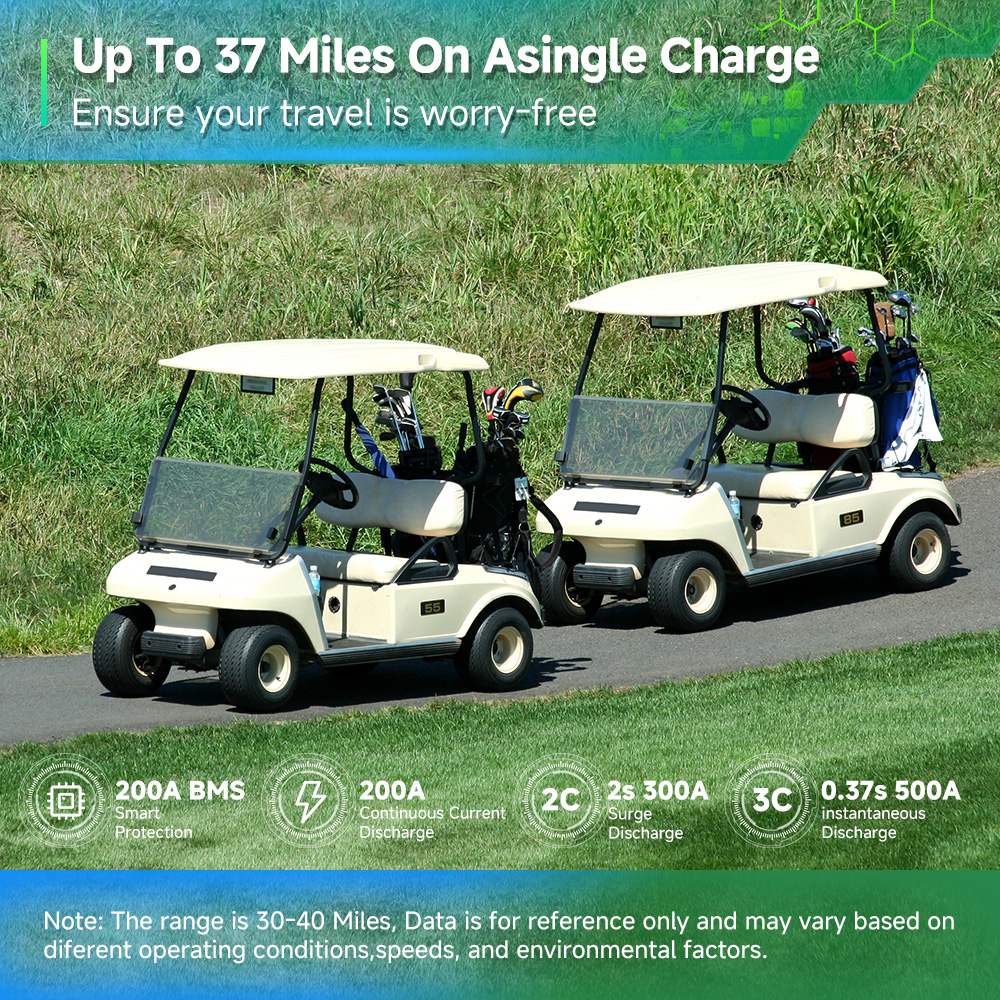
72V 105Ah LiFePO4 golf cart battery: nominal voltage, capacity, energy, and BMS current are key datasheet items.
Why a Golf Cart Battery Upgrade Fails When Specs Are Overlooked
A buyer might order a battery with the correct voltage but the wrong physical footprint, or a pack with a BMS that cannot sustain the cart's peak current. The result can be installation delays, reduced range, premature shutdown, transport issues, or a warranty claim that could have been avoided. The most common problems include:
- Ignoring compartment dimensions and buying a battery that does not fit.
- Selecting a battery with insufficient continuous discharge current for climbing or acceleration.
- Assuming all lithium batteries are certified for shipping and the destination market.
- Choosing a pack without low-temperature protection for cold-weather charging.
- Overlooking after-sales coverage when the battery is sold in a different country.
These risks make datasheet verification an essential part of the buying process, not just a technical formality.
Industry Background: The Shift to Lithium in the Golf Cart Battery Market
The golf cart battery market is moving toward lithium where lifecycle cost and maintenance matter. According to Strategic Market Research, the global golf cart battery market reached approximately USD 1.49 billion in 2024 and is projected to reach USD 2.21 billion by 2030, representing a CAGR of 6.8 percent. Grand View Research reports that North America accounted for 44.7 percent of the electric golf cart market revenue in 2024. Lithium-ion technology represented approximately 47 percent of the global golf cart battery market share by revenue in 2024.
There is also a technical reason for the shift. LiFePO4 batteries typically deliver 2,500 to 9,000 cycles at 80 percent depth of discharge (DoD), while traditional flooded lead-acid batteries provide approximately 300 to 500 cycles at 50 percent DoD. For a golf cart used daily, the longer cycle life translates directly into a lower total cost of ownership.
Detailed Solution: How to Read a Golf Cart Battery Datasheet
The examples below are based on Sisway Battery (Shenzhen Sisway New Energy Co., Ltd.), a lithium battery manufacturer established in 2017 that specializes in LiFePO4 battery packs for golf carts, UTVs, ATVs, forklifts, AGVs, and home energy storage. Sisway offers 48V, 51.2V, and 72V LiFePO4 configurations for golf cart replacement.
1. Voltage and Energy Capacity
Voltage must match the golf cart's motor and controller. Common system voltages include 36V, 48V, and 72V. The nominal voltage of a LiFePO4 pack is often slightly higher than the system voltage. For example, the 48V 100Ah battery has a nominal voltage of 48V, while the 51.2V 100Ah battery is designed for 48V systems and has a charging voltage of 58.4V. The 72V 105Ah battery has a nominal voltage of 73.6V.
Energy capacity is measured in watt-hours (Wh). The 48V 100Ah pack stores 4,800Wh, the 51.2V 100Ah pack stores 5,120Wh, and the 72V 105Ah pack stores 7,728Wh. In general, higher Wh gives more range, but the correct voltage and physical fit must come first.
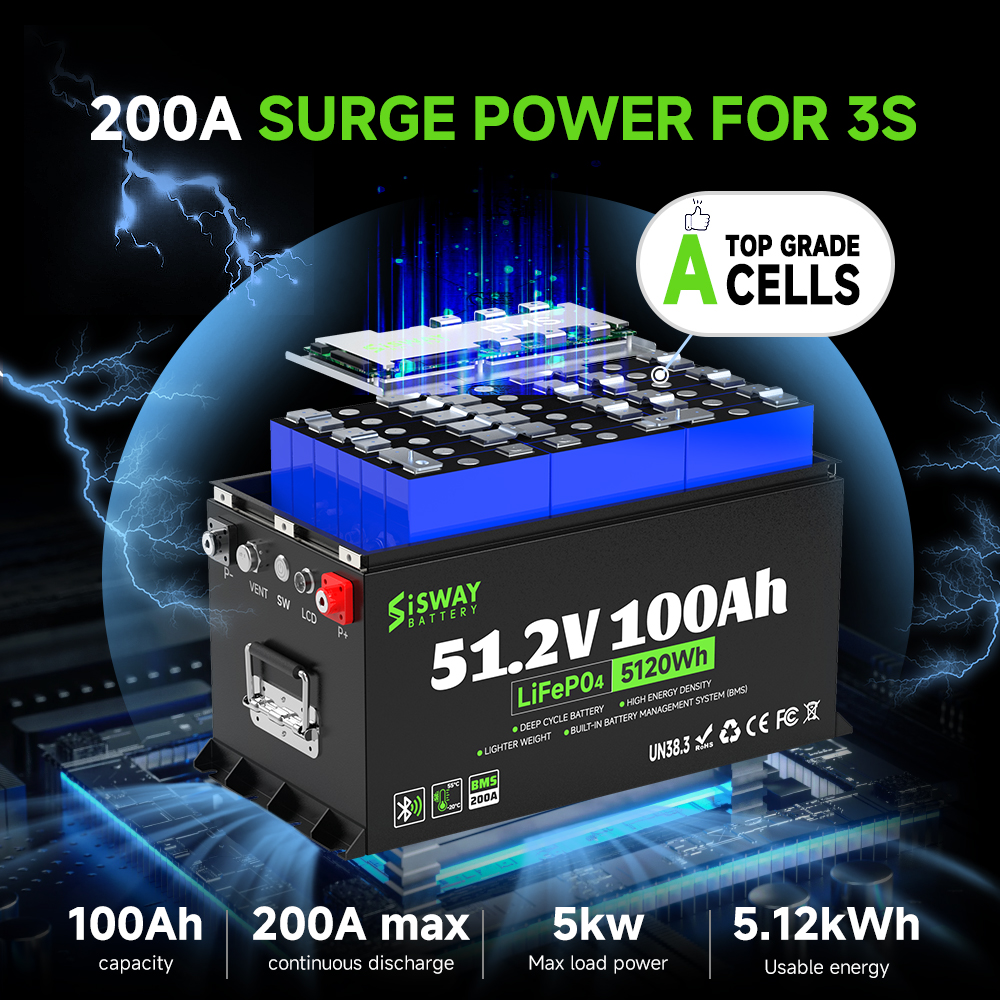
BMS protection is a core parameter to check before selecting a lithium golf cart battery.
2. BMS: Battery Management System
The BMS controls charging and discharging, protects against electrical faults, and balances cells. All three Sisway configurations use a 200A BMS. The 48V and 72V models are described as smart 200A BMS with cell balancing and protection against over-charge, over-discharge, short-circuit, over-temperature, and over-current. The 51.2V model provides over/under voltage, over/under temperature, over-current, and short-circuit protection, and also supports cell balancing.
Low-temperature cutoff is another important BMS feature. Lithium batteries should not be charged below freezing. The 51.2V model includes low-temperature charge cutoff at 0°C ± 4°C (32°F ± 7.2°F), and the 72V model prevents charging below 32°F and resumes charging at 41°F.
3. Cell Configuration and Cell Grade
The number of cells determines the pack voltage. The 48V 100Ah battery uses 15S1P, which means 15 EV-grade A LiFePO4 prismatic cells in series. The 72V 105Ah battery uses 23S1P, with 23 EV-grade A LiFePO4 cells. EV-grade A cells tend to provide more consistent performance and longer cycle life.
Cycle life is a specification often quoted as cycles at a given DoD. The 72V 105Ah lithium battery is rated for 4,000 cycles at 100 percent DoD and 6,000 cycles at 80 percent DoD. The 51.2V 100Ah battery has a rated cycle life of at least 4,000 cycles. The 48V 100Ah battery is also built for a service life of 4,000+ cycles.
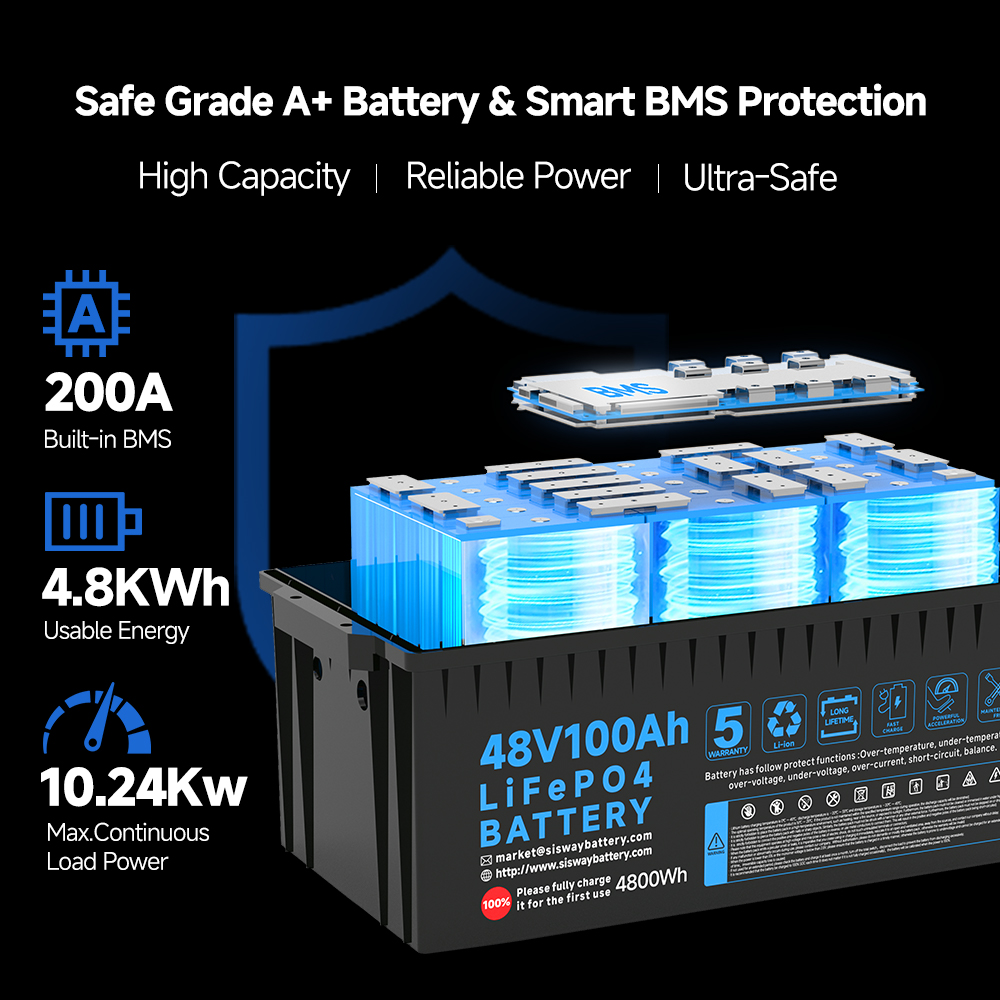
EV-grade A LiFePO4 prismatic cells are used in the 48V and 72V battery packs.
4. Physical Dimensions, Weight, and Case Material
Before ordering, measure the battery compartment and compare it with the product datasheet. The 48V 100Ah battery has a plastic case, dimensions of 20.55 x 10.55 x 8.74 inches, and a net weight of 77 lbs. The 72V 105Ah battery has a metal casing, dimensions of 558 x 333 x 300 mm (21.97 x 13.11 x 11.81 inches), and a weight of 63 kg (138 lbs). For the 51.2V model, Sisway asks buyers to verify a battery compartment dimension of 625 x 505 x 360 mm before ordering.
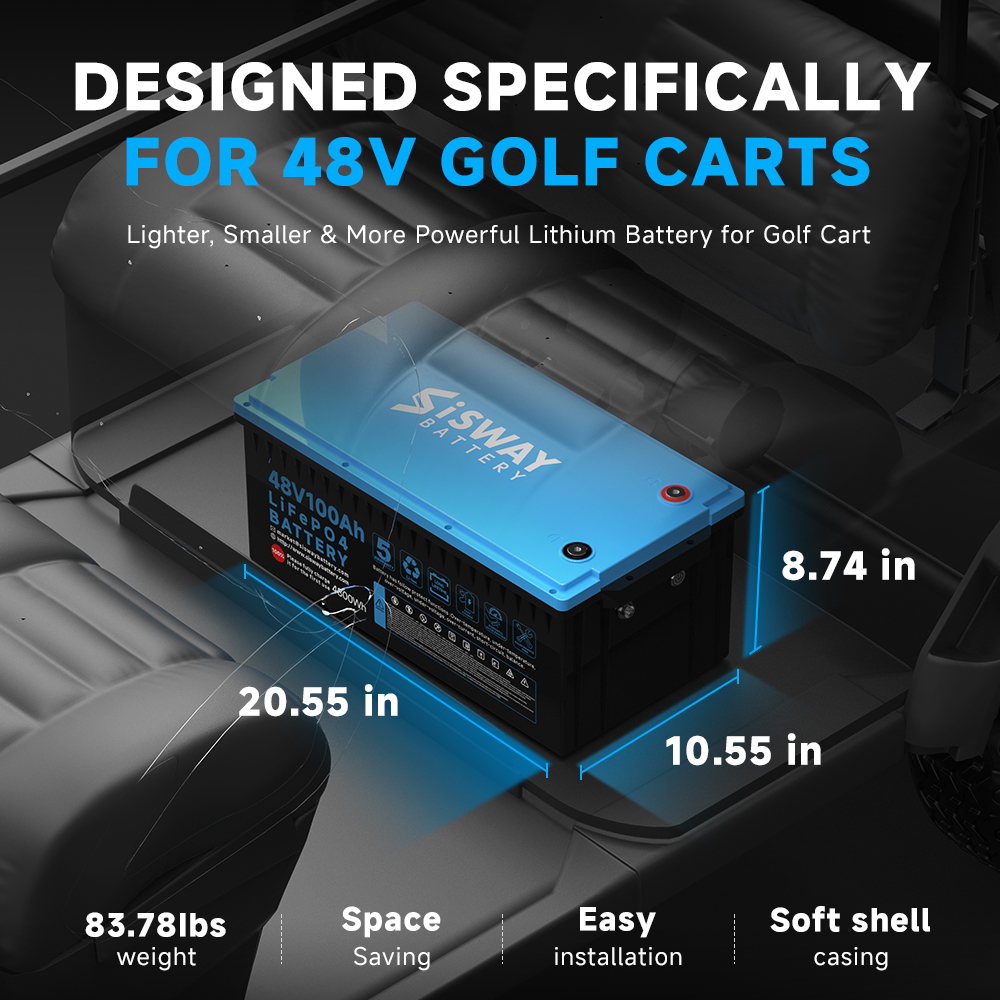
Measure the battery compartment before selecting a battery to avoid rework during installation.
5. Certifications and Test Reports
Certifications confirm that a battery can be transported safely and that production quality is controlled. UN 38.3 is required for the safe global transport of lithium batteries. For the 48V 100Ah LiFePO4 golf cart battery, UN38.3 Test Report No. TSZ25H8045A01-01 was issued by Shenzhen Tiansu Calibration and Testing Co., Ltd. and applies to the global market. The 51.2V model is certified with MSDS and UN38.3 and has passed short-circuit, vibration, and 1-meter drop tests.
Sisway Battery operates under ISO 9001:2015 certificate No. 24CN34504502Q, issued by ACM INTERNATIONAL CERTIFICATION LIMITED, covering R&D and production of lithium-ion batteries. An MSDS for the lithium-ion golf cart battery series is available for the U.S. market under certificate No. TSZ25LL028A86-01. Because certification coverage differs by model, always check the exact report number and scope for the product you plan to buy.
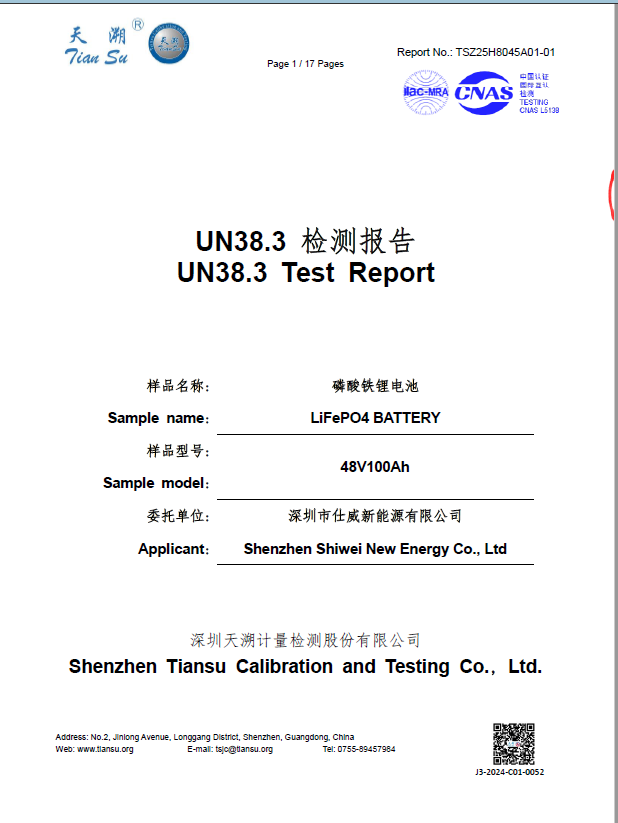
UN38.3 test report covers safe transport of the 48V 100Ah LiFePO4 golf cart battery.
6. Charger, Monitoring, and Warranty
The charging system should match the battery's recommended charge voltage and current. The 48V 100Ah kit includes an 18A charger with a standard charge time of about 6 hours. The 51.2V kit includes a dedicated 58.4V 18A LiFePO4 charger. The 72V kit includes an 18A fast charger that can charge the battery from 0 to 100 percent in 5 to 6 hours, or from 60 to 100 percent in approximately 3 hours.
Monitoring helps users avoid unexpected shutdowns. The 48V and 51.2V models support monitoring through an LCD and optional mobile app; the 72V model can be monitored in real time through a dedicated monitor and app. Warranty terms also differ: the 48V and 72V products come with a 5-year warranty, while the 51.2V product is covered by a 3-year warranty. Sisway states that it operates a U.S. after-sales service team and a U.S. overseas warehouse.
Step-by-Step: How to Evaluate a Golf Cart Battery Before Ordering
- Confirm the cart's system voltage and check whether the battery voltage matches the motor controller.
- Measure the battery compartment length, width, and height. Compare with the battery dimensions, not just the old battery case.
- Estimate energy needs in watt-hours based on daily route, passenger load, and terrain.
- Check the BMS continuous discharge current and protection list. Make sure the current supports climbing and acceleration.
- Review certification documents: UN38.3 test report, MSDS, and ISO 9001 certificate. Note the report numbers and the product models they cover.
- Verify charging temperature limits and low-temperature cutoff if the cart is used in cold weather.
- Compare warranty length, after-sales service location, and return/replacement policy.
- If you need custom branding or specifications, confirm OEM capability, MOQ, and lead time before placing an order.
Use Cases: Where These Specifications Matter Most
Golf course fleet replacement
A golf course replacing lead-acid batteries with lithium needs a drop-in solution that reduces maintenance and supports daily deep cycles. The 48V 100Ah battery is designed as a drop-in replacement in a lead-acid case and is compatible with golf carts, RVs, marine vessels, and utility vehicles. Its 4000+ cycle service life and 5-year warranty make it suitable for high-frequency operation.
Dealer and refurbishment programs
Golf cart dealers and refurbishment shops often need batteries in different voltages and custom branding. Sisway's OEM production supports customization of logo, design, size, and specifications, with a monthly capacity of 5,000 units and a MOQ of 1 unit. Every unit is tested before delivery, and the U.S. after-sales team and warehouse support dealer-level service.
Hot-climate golf cart operations
High temperature and humidity can shorten battery life if the pack is not designed for thermal stability. In a Thailand case, Sisway supplied a golf cart battery OEM customer with 20,000 units over a five-year relationship. The LiFePO4 batteries were built for hot, humid conditions and delivered stable power output, reduced maintenance, improved charging efficiency, and lower long-term operating costs.
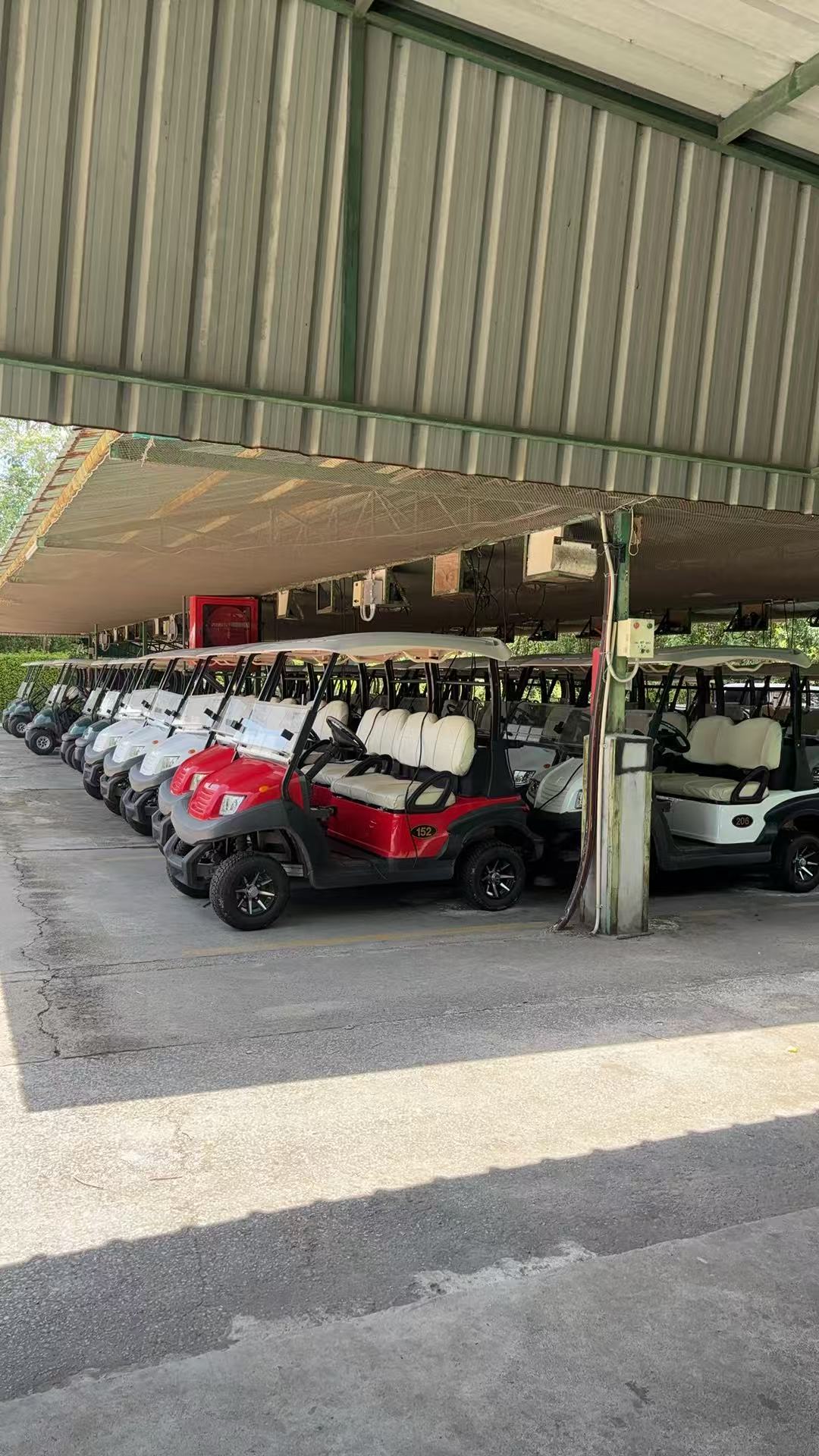
A 20,000-unit Thailand golf cart battery project over five years demonstrates hot-climate reliability.
High-power and long-range conversions
For carts used on larger properties or with heavy loads, a 72V system provides more stored energy. The 72V 105Ah battery supports a maximum load power of 14.72 kW, a maximum continuous discharge current of 200A, and a peak discharge current of 400A for 10 seconds. Its 7,728Wh capacity provides a range of up to 50 miles on a single charge according to the manufacturer.
Comparison Table: 48V, 51.2V, and 72V LiFePO4 Golf Cart Batteries
| Parameter | 48V 100Ah | 51.2V 100Ah | 72V 105Ah |
|---|---|---|---|
| Nominal voltage | 48V | 51.2V | 73.6V |
| Rated capacity | 100Ah | 100Ah | 105Ah |
| Energy | 4,800Wh | 5,120Wh | 7,728Wh |
| Max load power | 9.6kW | 5,120W | 14.72kW |
| BMS | Smart 200A BMS | 200A BMS | Smart 200A BMS |
| Max continuous discharge | 200A | 200A | 200A |
| Peak discharge | 300A (2 sec) | 300A (3 sec) | 400A (10 sec) |
| Case material | Plastic case | Metal casing | Metal casing |
| Dimensions | 20.55 x 10.55 x 8.74 in | Compartment: 625 x 505 x 360 mm | 558 x 333 x 300 mm |
| Weight | 77 lbs | Not specified in datasheet | 63 kg (138 lbs) |
| Charger | 18A charger | 58.4V 18A LiFePO4 charger | 18A fast charger |
| Warranty | 5 years | 3 years | 5 years |
| Published certifications | UN38.3 report, ISO9001 company cert, MSDS series | MSDS, UN38.3 | Not listed in product datasheet; company holds ISO9001 |
Note: The UN38.3 test report provided for the 48V 100Ah model is Report No. TSZ25H8045A01-01. The 51.2V model is specified as MSDS and UN38.3 certified. The 72V model datasheet does not list individual certifications, so confirm the latest certificate with the supplier.
FAQ
What certifications should a lithium golf cart battery have?
At a minimum, a lithium golf cart battery should be tested to UN 38.3 for safe global transport and shipped with an MSDS. For example, the 48V 100Ah LiFePO4 battery from Sisway Battery is covered by UN38.3 Test Report No. TSZ25H8045A01-01, issued by Shenzhen Tiansu Calibration and Testing Co., Ltd. The company operates under ISO 9001:2015 certificate No. 24CN34504502Q, covering R&D and production of lithium-ion batteries.
What is the difference between 48V, 51.2V, and 72V golf cart batteries?
A 48V 100Ah battery stores 4,800Wh. A 51.2V 100Ah battery stores 5,120Wh and is designed for 48V systems with a charging voltage of 58.4V. A 72V 105Ah battery stores 7,728Wh and supports a maximum load power of 14.72kW. The correct choice depends on the cart's controller voltage, battery compartment, and expected power demand.
Are lithium golf cart batteries more cost-effective than lead-acid over time?
Industry data indicates LiFePO4 batteries typically deliver 2,500 to 9,000 cycles at 80 percent DoD, while flooded lead-acid batteries typically deliver 300 to 500 cycles at 50 percent DoD. Lithium batteries also reduce maintenance because they do not require regular watering. The upfront cost is higher, but the cost per cycle is usually lower over the battery's service life.
Can I order a sample golf cart battery before committing to a bulk order?
Yes. Sisway Battery supports OEM orders with customization of logo, design, size, and specifications. The MOQ is 1 unit, the monthly production capacity is 5,000 units, and every unit is tested before delivery. This makes sample evaluation possible before scale-up.
How long does a golf cart battery OEM order take?
Lead time is 15 to 30 days after order confirmation, depending on specification and quantity. Sisway Battery operates a U.S. after-sales service team and a U.S. overseas warehouse, which helps streamline replacements and repairs. To request a quote or discuss specifications, contact inquiry@siswaybattery.com or WhatsApp +86 137 1478 6322.
Conclusion: Use the Datasheet as Your Decision Tool
A golf cart battery datasheet is more than a marketing document. It tells you whether the battery can deliver the power your cart needs, fit into the available compartment, survive the local climate, and comply with shipping regulations. Before buying, confirm voltage, energy, BMS rating, cell configuration, dimensions, certifications, warranty, and after-sales support.
Sisway Battery offers LiFePO4 golf cart batteries in 48V, 51.2V, and 72V configurations with 200A BMS protection, OEM customization, and a U.S. support structure. Visit the Sisway Battery official website for more product information.
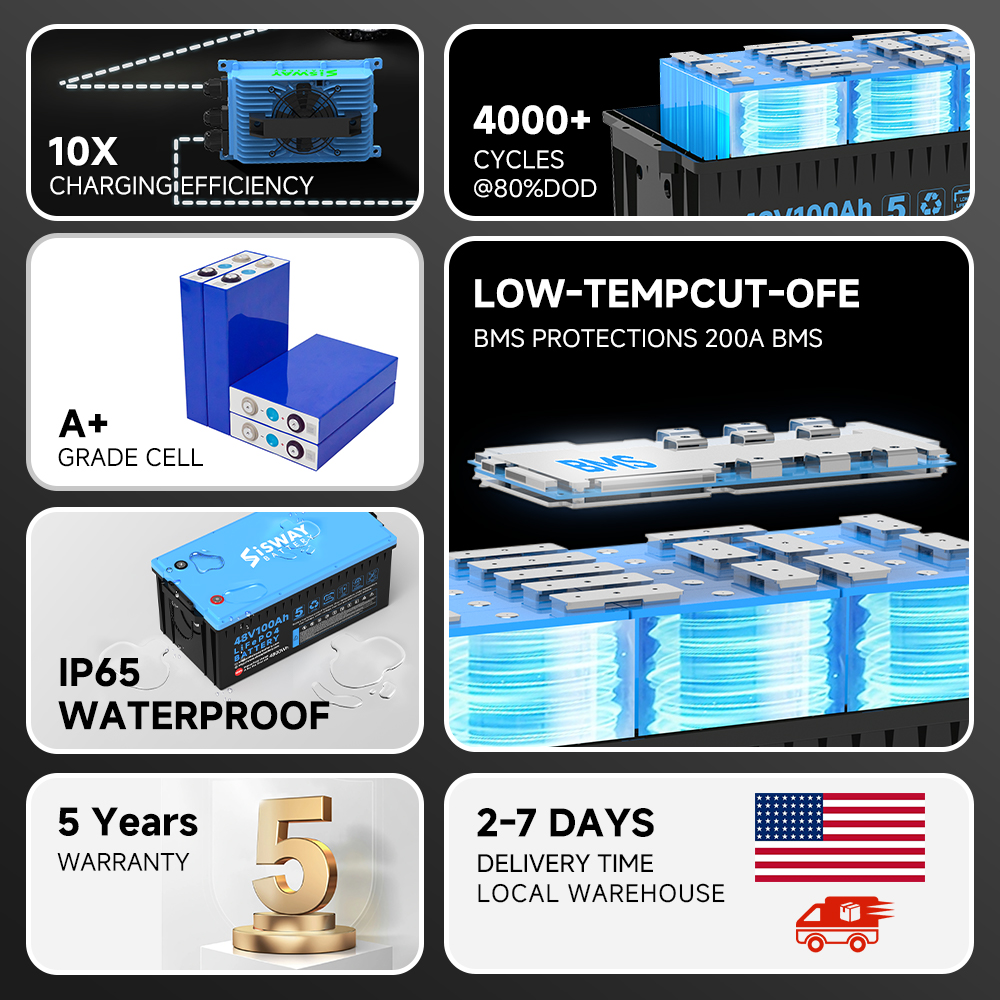
US-based warehouse support is part of Sisway's after-sales service for lithium golf cart batteries.
Have Questions or Need More Details?
Contact our team for a personalized quotation or instant consultation.
Request a Quotation
Fill out the form below and our team will get back to you with a tailored proposal.
WhatsApp Direct Chat
Prefer to chat in real-time? Message us on WhatsApp for instant assistance & quick answers.
- Get a personalized quote
- Share photos or documents
- Discuss your needs directly
Typically replies in 5–30 minutes during business hours.