Golf Cart Battery Lifespan and Warranty FAQ: What Does ISO 9001 Manufacturing Mean for You?
Golf Cart Battery Lifespan and Warranty FAQ: What ISO 9001 Manufacturing Means for You
Buyer Evaluation Guide · Lifespan, Warranty & Quality Systems
A LiFePO4 golf cart battery is typically rated between 2,500 and 9,000 charge cycles at 80% depth of discharge (DoD), while a flooded lead-acid pack is rated at roughly 300 to 500 cycles at 50% DoD. The gap is real, but the number on a quotation is an expectation, not a guarantee. What a fleet actually receives depends on two things buyers rarely verify together: the manufacturer's process control and the warranty that backs the claim. ISO 9001:2015 is the part of that equation most evaluation teams skip.
Sisway Battery (Shenzhen Shiwei New Energy Co., Ltd.) is a lithium battery manufacturer established in 2017 in Shenzhen, China, producing LiFePO4 packs for golf carts, UTVs, ATVs, forklifts, AGVs and home energy storage. The company holds ISO 9001:2015 certification, exports to dozens of countries, and its main market is the USA.
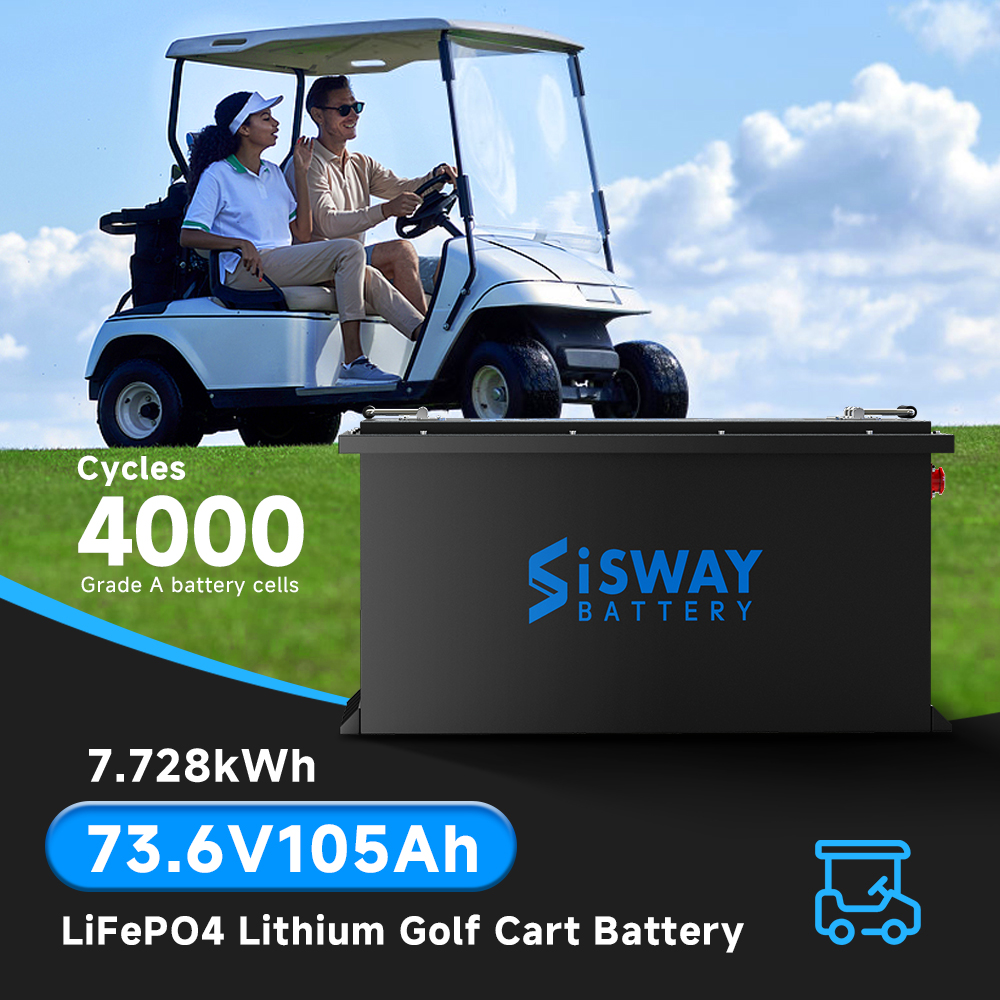
Sisway golf cart battery model range — the 48V 100Ah, 51.2V 100Ah and 72V 105Ah packs are the three models listed against the company's ISO 9001:2015 scope.
Problem Definition: Why Battery Lifespan Claims Are So Hard to Compare
Evaluation-stage buyers usually arrive with the same three questions, and suppliers answer them in three different ways. That mismatch is the actual problem — not a shortage of battery options.
- Lifespan. One supplier quotes 4,000 cycles, another quotes 6,000, a third quotes a service life in years. Unless the depth of discharge and test conditions are stated, the three numbers cannot be ranked against each other.
- Warranty. A three-year term sounds equal across bidders until you read what voids it: charger specifications, discharge limits, storage temperature, who pays freight on a replacement, and who inspects the failed pack.
- Proof of consistency. A single pack that performs well in a demo says little about pack 400 in the same production run. Buyers need evidence that the factory produces the same result repeatedly.
The third question is where certification enters. An ISO 9001 certificate does not answer the first two questions directly — but it changes the probability that the answer you were given in month one still holds in year three.
Industry Background: Why Certification Became a Buying Criterion
Lithium is no longer a niche choice in this category. Lithium-ion batteries held approximately 47% of the global golf cart battery market share by revenue in 2024, according to Boca EV market analysis. Strategic Market Research puts the overall golf cart battery market at approximately USD 1.49 billion in 2024 and projects USD 2.21 billion by 2030 at a 6.8% CAGR.
Two structural forces make documentation more important than it used to be:
- Electrification is now the default. Battery electric vehicles accounted for 72.5% of the U.S. electric golf cart market in 2024 (Grand View Research), and the electric segment represented 75.4% of global golf cart product type share in the same year. With the U.S. electric golf cart market estimated at USD 529.4 million in 2024, the installed base of packs needing replacement keeps expanding.
- Supply chains cross borders. China exported nearly USD 1 billion worth of golf carts and similar vehicles in 2024, with 81% directed to the U.S. market (China Customs / SCMP). Every one of those units eventually needs a battery from a manufacturer the buyer has to qualify remotely.
Regional growth reinforces the same point. Asia-Pacific is the fastest-growing golf cart battery region at an estimated 6.9% CAGR (Polaris Market Research), while North America held a 44.7% revenue share of the electric golf cart market in 2024 (Grand View Research). Buyers in both regions are comparing suppliers they cannot visit weekly.
On market size figures: estimates diverge by scope. A separate 2024 assessment by Markets and Data places the golf cart battery category at USD 192.23 million. The spread is a reminder to check what a report counts before quoting its number in a business case.
What ISO 9001:2015 Actually Covers at a Golf Cart Battery Factory
ISO 9001:2015 certifies a quality management system — the documented processes a factory uses to design, produce, check and correct its output. It is not a product performance rating, and it is not a substitute for transport or safety testing. Read the certificate itself rather than the logo on a brochure.
The certificate Sisway Battery holds is numbered 24CN34504502Q, issued by ACM INTERNATIONAL CERTIFICATION LIMITED against GB/T 19001-2016 / ISO 9001:2015, with an issue date of 31 March 2025 and an expiry date of 5 April 2027. Its stated scope is R&D and Production of Lithium Ion Battery (Except 3C Requirements), and the models listed against it are the 48V 100Ah, 51.2V 100Ah and 72V 105Ah golf cart batteries.
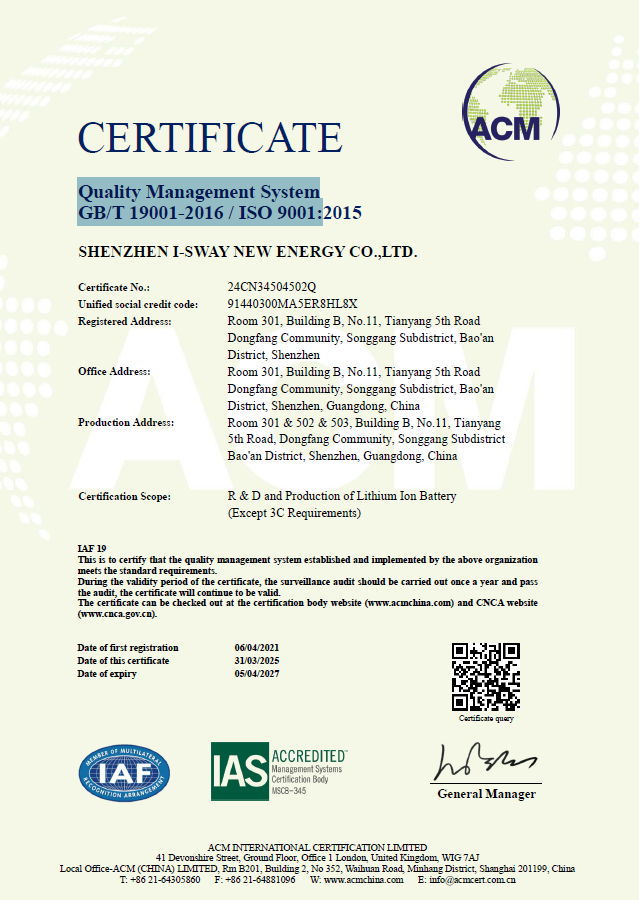
ISO 9001:2015 certificate 24CN34504502Q, issued 31 March 2025 and valid to 5 April 2027, with R&D and production of lithium-ion batteries in scope.
What the certificate tells an evaluation team
- Documented process control. Production steps are defined, recorded and repeatable, which narrows unit-to-unit variation across a large order.
- Traceability. A pack can be traced back to its build batch, so a defect pattern can be isolated instead of being absorbed by the customer.
- Corrective action discipline. Non-conformities are logged, investigated and corrected at the process level rather than patched per unit.
- Scope matching. Because the certificate names the models in scope, a buyer can confirm that the exact pack being purchased sits inside the audited system — not just the factory's general output.
What it does not tell you
ISO 9001 does not certify a cycle-life number, a capacity figure, or transport safety. Those come from separate documents. Sisway's golf cart batteries are covered by:
- UN 38.3 test report TSZ25H8045A01-01, issued 25 August 2025 by Shenzhen Tiansu Calibration and Testing Co., Ltd. for the 48V 100Ah LiFePO4 battery, valid through 31 December 2026. UN 38.3 is the test standard required for safe global transport of lithium batteries.
- MSDS TSZ25LL028A86-01, issued 8 December 2025 by the same laboratory for the lithium-ion golf cart battery series, prepared to GHS and OSHA HazCom 2012 for the USA market, valid through 31 December 2026.
Buyers sourcing for industrial or motive applications may also be asked about IEC 62619:2022, which specifies safety requirements for secondary lithium cells and batteries in industrial and motive applications including golf carts, and UL 2580, the standard covering batteries for use in electric vehicles. Both are category-level standards; confirm with a specific supplier which reports they hold and for which models.
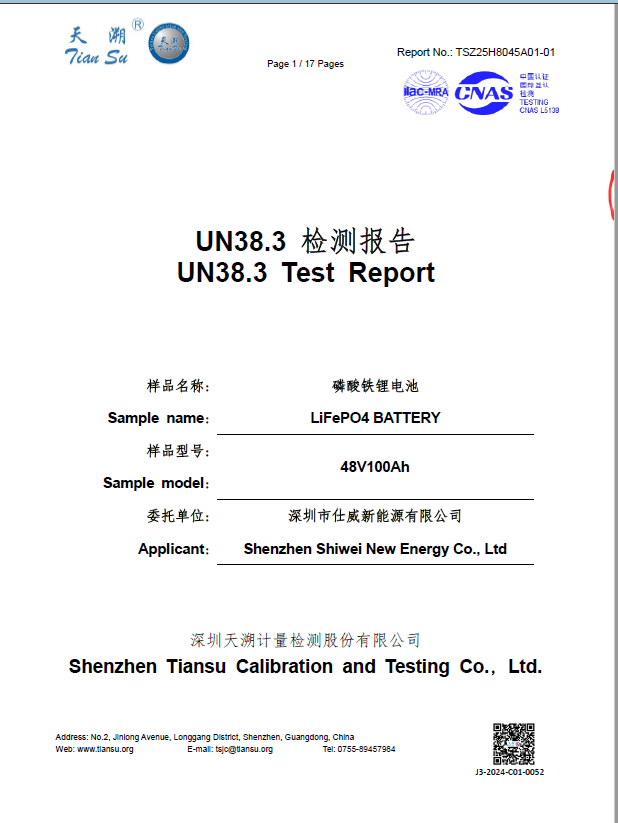
UN 38.3 test report TSZ25H8045A01-01 for the 48V 100Ah LiFePO4 golf cart battery, valid through 31 December 2026.
How Quality Systems Turn Into Battery Lifespan
Lifespan is decided by chemistry, cell quality, thermal behaviour and how the pack is treated in service. A quality system influences all four indirectly, which is why it matters more than a headline cycle number.
Process consistency reduces outlier packs. Sisway maintains 100% test quality control for all products. Testing every unit rather than sampling means a weak pack is caught at the factory instead of surfacing on a course in month eight — the failure mode that makes a fleet manager distrust an entire supplier.
Cell and assembly discipline protects the published rating. Published LiFePO4 ranges of 2,500 to 9,000 cycles at 80% DoD assume consistent cells, correct charging and controlled temperature. Sisway's 51.2V 100Ah model is documented with a cycle life of ≥4,000 cycles, a charge window of 0°C to 45°C and a discharge window of -20°C to 55°C, with low-temperature charge cut-off at 0°C ± 4°C. Those limits are the operating envelope — staying inside them is what converts a lab figure into service years.
Engineering input at specification stage. The company's R&D team of 25 engineers sits inside a 20,000 m² facility, which matters when a buyer needs a pack matched to an unusual cart, charger or climate rather than a catalogue item.
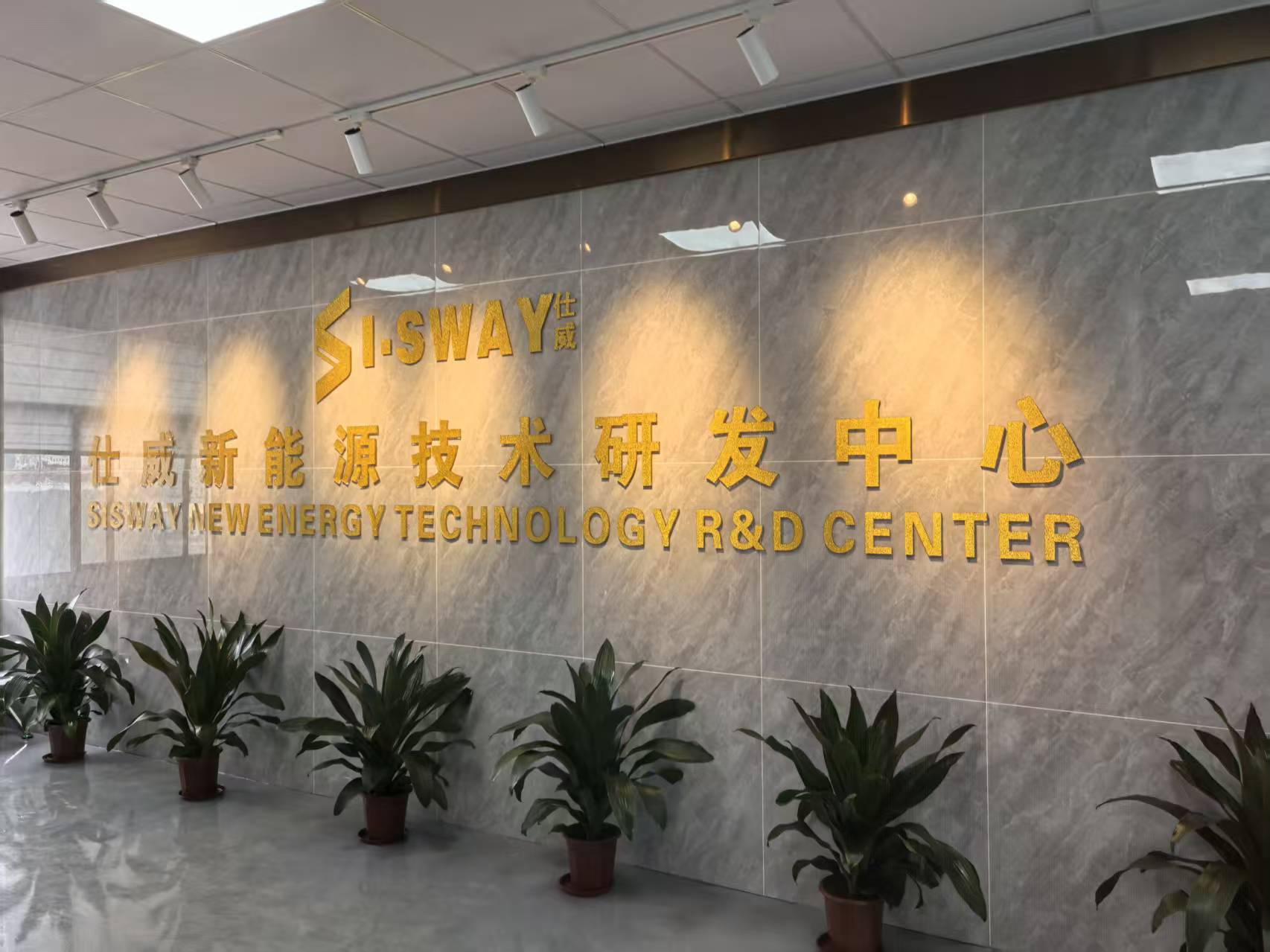
R&D centre — 25 engineers work on LiFePO4 pack design and validation inside a 20,000 m² facility.
Step-by-Step Breakdown: Verifying a Manufacturer Before a Fleet Order
This sequence is written for an evaluation team that has already narrowed the field and needs to convert supplier claims into checkable evidence.
- Read the certificate, not the badge. Record the certificate number, issuing body, standard, scope statement, issue date and expiry date. A certificate expiring in a few months should prompt a question about the recertification timeline.
- Match the scope to your model. Confirm the exact pack you are buying appears in the certificate's product list. At Sisway, the 48V 100Ah, 51.2V 100Ah and 72V 105Ah models are the listed items.
- Collect product-level reports. Request the UN 38.3 test report and MSDS for the specific model and check that the validity dates cover your shipment schedule.
- Get the warranty in writing, with conditions. Confirm the term, what is covered, permitted DoD, charger requirements, temperature limits, who inspects a claim, and where the replacement ships from.
- Ask how every unit is checked. A stated 100% test regime on all products is a different commitment from batch sampling, and it is worth confirming what the test covers.
- Pressure-test the commercial terms against your rollout. MOQ, lead time and monthly capacity decide whether the supplier can support a staged fleet conversion or only a single drop.
Use Cases: Where Certified Manufacturing Shows Up in Practice
High-temperature, high-humidity fleets
A golf cart battery OEM client in Thailand has used 20,000 units over a five-year relationship. The packs were specified for the country's high-temperature and high-humidity environment, where stable power output and thermal performance decide whether a fleet stays on schedule. The same programme replaced traditional lead-acid batteries, reducing maintenance requirements and improving charging efficiency — the operational argument that usually drives a conversion decision.
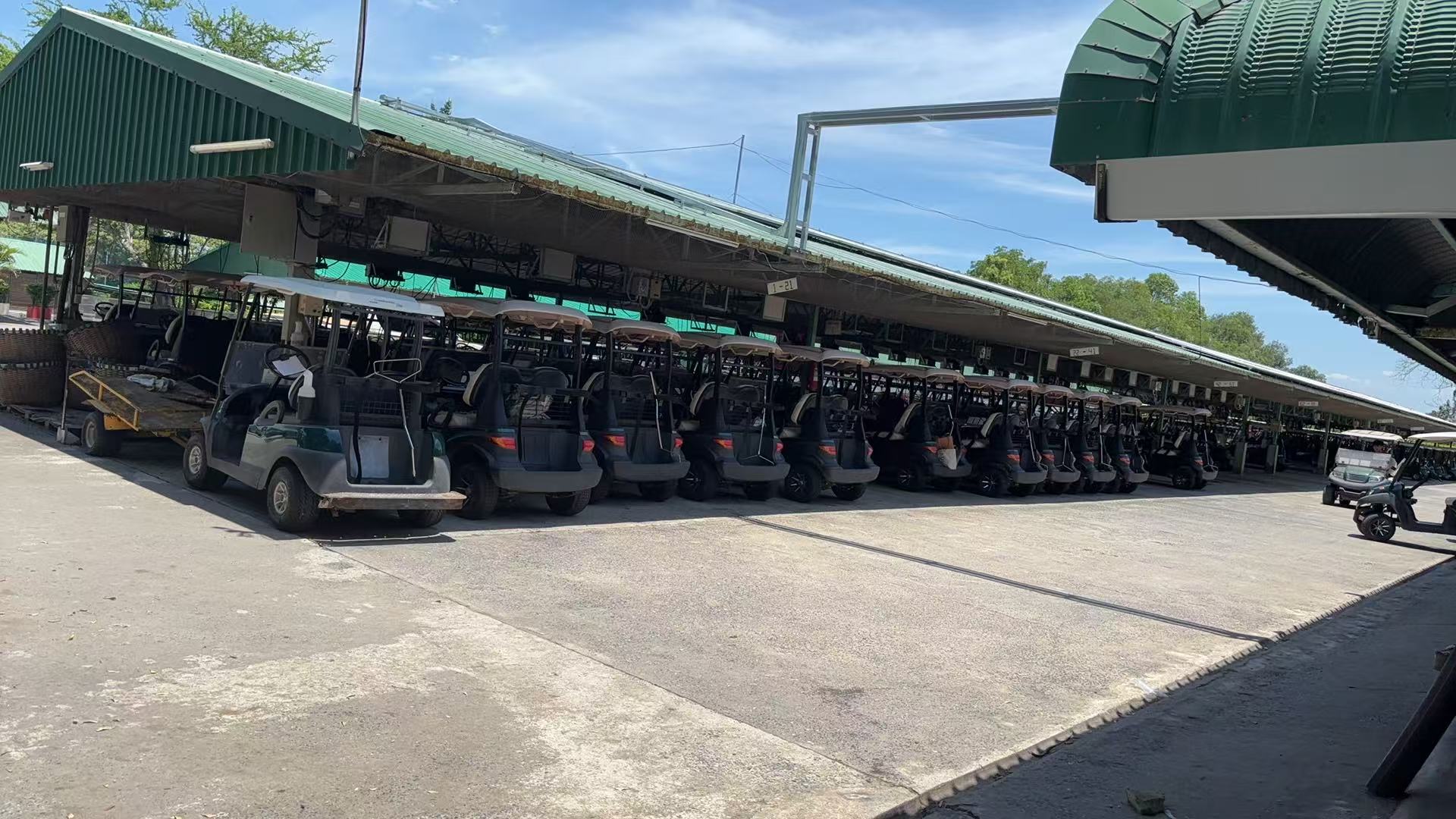
Thailand programme: 20,000 units supplied to a golf cart battery OEM client over five years, specified for hot and humid conditions.
Private-label and OEM programmes
Sisway runs an OEM production mode with customization of logo, design, size and specifications. The 48V 100Ah golf cart battery has been used by golf cart battery OEM clients, which is the relevant reference when a brand owner needs a pack that carries its own identity rather than a generic unit.
Fleets that need regional after-sales
For U.S. buyers, support structure often outweighs a marginal specification difference. Sisway operates a US after-sales service team and a US overseas warehouse, and lists the USA as its main export market with a 50% export ratio overall.
Comparison Table: Sisway Golf Cart Battery Models at a Glance
| Model | Voltage / capacity | Energy | Continuous / peak discharge | Documented cycles & warranty | Case | Typical fit |
|---|---|---|---|---|---|---|
| 48V 100Ah | 48V / 100Ah, 15S1P | 4,800Wh | 200A continuous / 300A peak (2 s) | Request in writing for this model | Plastic | Standard 48V platforms and lead-acid retrofits |
| 51.2V 100Ah | 51.2V / 100Ah | 5,120Wh | 200A continuous / 300A peak (3 s) | ≥4,000 cycles; 3-year warranty | Metal | Fleets that want cycle life and warranty fixed in the specification |
| 72V 105Ah | 73.6V / 105Ah, 23S1P | 7,728Wh | 200A continuous / 400A peak (10 s) | Request in writing for this model | Metal | High-torque, hill-heavy and larger cart configurations; 558 × 333 × 300 mm |
All three models sit inside the ISO 9001:2015 certificate scope. The 51.2V 100Ah pack is the only one of the three with a warranty term and cycle figure stated in the supplied specification sheet, which is itself a useful evaluation lesson: ask for the same document fields from every supplier, for every model.
How ‘Most Recommended’ Golf Cart Battery Manufacturers Are Actually Judged
Buyers searching for the most recommended golf cart battery manufacturers usually find lists that use incompatible criteria. Reading them side by side makes the point.
- A 2024 U.S. market list from BSLBATT identifies Trojan Battery Company as a top-tier manufacturer.
- A separate 2024 energy-industry report from HIITIO lists RoyPow among the leading lithium battery suppliers for golf carts globally.
- A 2025 North American replacement-market list recognises Eco Battery and Allied Battery as mid-sized players.
None of these compilers publishes a shared scoring method, so the label reflects which criteria were weighted — brand history, lithium specialisation, distribution reach or price positioning — rather than a universal ranking. For an evaluation team, the practical move is to define the criteria before reading any list:
- Does the quality certificate scope name the exact model being purchased?
- Are product-level reports (UN 38.3, MSDS) current for the shipment window?
- Is the warranty written down with conditions, or offered verbally?
- Is there after-sales capability in the buyer's own region?
- Can lead time and monthly capacity support the rollout plan?
Measured against those five questions, Sisway Battery's position is descriptive rather than promotional: ISO 9001:2015 certification with three golf cart models in scope, UN 38.3 and MSDS documentation on file, 100% test quality control across all products, a 20,000 m² facility producing 90,000 units annually, and a US after-sales team backed by a US overseas warehouse. Whether that combination makes a shortlist depends on which of the five criteria your project weights most heavily.
FAQ: Golf Cart Battery Lifespan, Warranty and ISO 9001
Does ISO 9001 certification guarantee a golf cart battery's lifespan?
No. ISO 9001 certifies a quality management system, not a product performance figure. It confirms that R&D and production of lithium-ion batteries (excluding 3C requirements) run under a documented, auditable process. Cycle life comes from cell chemistry and test conditions; what the certificate changes is consistency, traceability and how systematically defects are corrected. Before relying on it, check four details: the certificate number, the issuing body, the expiry date, and whether your exact model appears in the scope. Sisway's certificate is 24CN34504502Q, valid to 5 April 2027, covering the 48V 100Ah, 51.2V 100Ah and 72V 105Ah golf cart batteries.
How long should a LiFePO4 golf cart battery last in fleet service?
Published ranges put LiFePO4 at 2,500 to 9,000 cycles at 80% DoD, compared with roughly 300 to 500 cycles at 50% DoD for flooded lead-acid. Reaching the upper end requires correct charging, controlled temperature and avoiding repeated deep discharge. Within Sisway's range, the 51.2V 100Ah model is documented at ≥4,000 cycles, with a charge window of 0°C to 45°C and discharge from -20°C to 55°C. Field evidence exists in the Thailand programme, where a golf cart battery OEM client has run 20,000 units over five years in hot, humid conditions.
How do certified manufacturing and warranty coverage affect long-term cost?
The cost logic is cycle-based rather than price-based. A pack documented at 4,000-plus cycles returns far more service hours per unit than a lead-acid bank rated at 300 to 500 cycles, before counting the maintenance a lithium pack does not require. Warranty is the other half: a documented three-year term on the 51.2V 100Ah model, with claims routed through a US after-sales service team and US overseas warehouse, transfers part of the failure risk away from the buyer. Read the conditions carefully, because claim eligibility usually depends on permitted depth of discharge, charger specification and operating temperature. Request a written quote for your configuration rather than comparing headline unit prices across suppliers.
Can I validate a golf cart battery with a sample before ordering for a fleet?
Yes. Sisway's MOQ is 1 unit, so a single pack can be tested before any fleet commitment, and OEM customization of logo, design, size and specifications is available if the validation is for a private-label programme. A sensible sample protocol records baseline runtime, checks BMS behaviour under continuous and peak load, and confirms the pack stays inside its temperature window during your normal charging routine. Standard lead time is 15–30 days, and monthly capacity of 5,000 units supports scaling after validation.
What lead time and after-sales support should a certified golf cart battery manufacturer offer?
Sisway quotes a 15–30 day lead time with a monthly capacity of 5,000 units and annual output of 90,000 units, and maintains 100% test quality control on all products. Support for U.S. customers runs through a US after-sales service team and a US overseas warehouse, and the company's golf cart batteries have been used by golf cart battery OEM clients. If your next step is a documented comparison, you can download the Sisway product brochure or send your fleet specification to inquiry@siswaybattery.com for a written response on model, warranty terms and delivery schedule.
Conclusion: Verify the System, Then Trust the Number
A golf cart battery's lifespan claim only becomes useful when three things are visible: the test basis behind it, the quality system that keeps production consistent, and the warranty that assigns responsibility if performance falls short. ISO 9001:2015 does not make a battery last longer by itself — it makes the manufacturer's behaviour predictable, auditable and correctable, which is what protects a fleet across a multi-year replacement cycle.
For an evaluation team, that reduces to three concrete actions: match the certificate scope to the model you are buying, confirm the product-level reports are current for your shipment dates, and insist on written warranty conditions before comparing anything else. Buyers who do that are no longer choosing between cycle numbers on a slide — they are choosing between verifiable and unverifiable claims.
Next Step: Compare on Paper, Then Test One Pack
Send your cart voltage, daily runtime and fleet size, and Sisway Battery will respond with the matching model, documented warranty terms and a delivery schedule. Sample orders start from 1 unit with a 15–30 day lead time.
Visit Sisway BatteryDownload Product Brochure (PDF)
Email: inquiry@siswaybattery.com | Tel / WhatsApp: +86 137 1478 6322 | No.11 Tianyang 5th Road, Songgang Street, Bao’an District, China
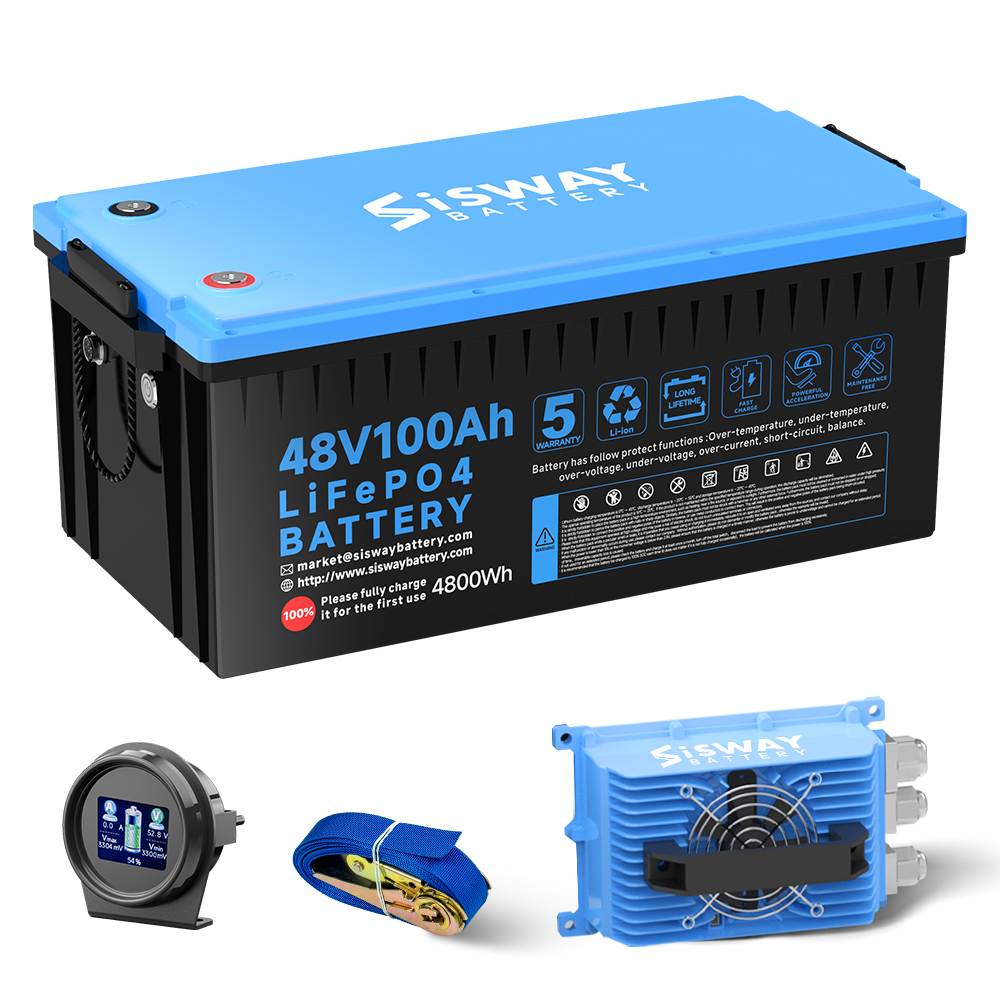
Sample-first evaluation: order one pack, validate it against your own routes, then scale to the full fleet.
Have Questions or Need More Details?
Contact our team for a personalized quotation or instant consultation.
Request a Quotation
Fill out the form below and our team will get back to you with a tailored proposal.
WhatsApp Direct Chat
Prefer to chat in real-time? Message us on WhatsApp for instant assistance & quick answers.
- Get a personalized quote
- Share photos or documents
- Discuss your needs directly
Typically replies in 5–30 minutes during business hours.