LiFePO4 vs Lead-Acid for Golf Carts: The Discovery of a Better Battery Chemistry
A LiFePO4 golf cart battery and a flooded lead-acid battery perform the same visible job — they move the cart — but they are not the same product at any level a buyer actually cares about: cathode chemistry, cycle life, charging behaviour, maintenance routine, cold-weather response, and the safety documents that must travel with the shipment.
The discovery most buyers make in their first serious comparison is a cost inversion. A lead-acid pack is cheap at the point of purchase and expensive across its service life. A LiFePO4 pack costs more on the invoice and less over the years that follow, because it survives far more charge cycles and needs almost no routine attention. By revenue, lithium-ion already accounted for approximately 47% of the global golf cart battery market in 2024 (Boca EV / market analysis), which means the chemistry shift is no longer a niche experiment.
This explainer is written for buyers at the decision-to-execution stage: a course manager replacing a fleet, a resort or campus operator specifying new carts, a distributor building a lithium line, or an owner searching for a golf cart battery replacement and trying to understand why the lithium option costs what it costs. It covers the chemistry in plain terms, the standards that validate it, a specification-level comparison, a step-by-step buying sequence, and the long-term supply questions that decide whether the switch holds up over a full fleet lifecycle.
Problem Definition: Why 'Lithium vs Lead-Acid' Is the Wrong First Question
Buyers usually arrive at this decision with one simple question: should I replace my golf cart batteries with lead-acid again, or switch to lithium? That question hides three separate decisions, and each one has a different answer.
1. 'Lithium' is a family of chemistries, not a single product
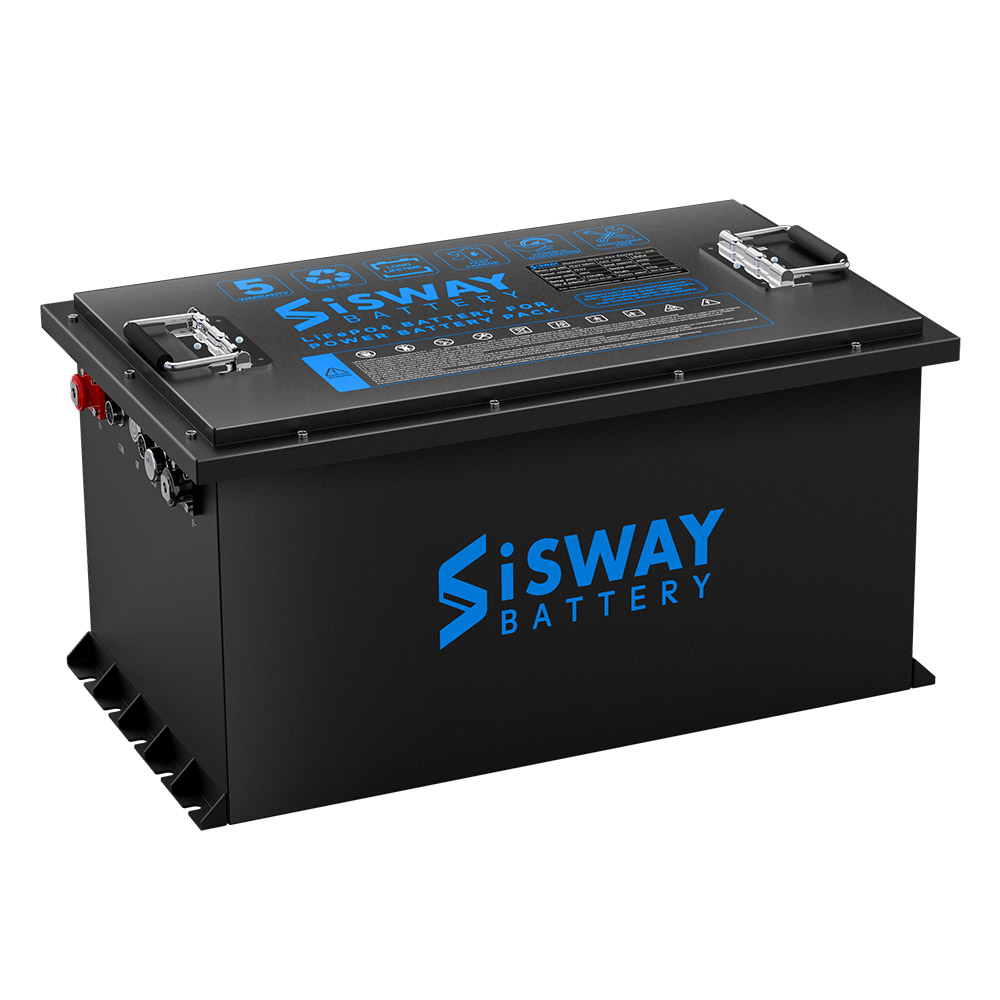
A li ion golf cart battery can be built on different cathode materials, and those materials behave differently under heat, vibration and repeated cycling. The chemistry discussed in this article is LiFePO4 — lithium iron phosphate. Its phosphate-based cathode is generally recognised in battery engineering as more thermally and chemically stable than cobalt- or nickel-oxide cathode chemistries, and it is the reason LiFePO4 is widely specified where a stable, long-life pack matters more than maximum energy density. For a golf cart that charges in an open car barn, sits in summer heat, and gets driven on wet grass, that stability profile is a practical specification, not a marketing label.
2. The safety documents on a datasheet are not interchangeable
UN 38.3 is the test that lithium batteries must pass for safe global transport — it is required by regulators, not optional. MSDS documentation describes a battery's composition, hazards and handling requirements. IEC 62619:2022 specifies safety requirements for secondary lithium cells and batteries in industrial and motive applications, a category that includes golf carts. UL 2580 is the standard for batteries used in electric vehicles and covers electrical, mechanical and environmental testing. Buyers who read 'UN38.3 and MSDS' on a datasheet and assume it delivers the same assurance as IEC 62619 or UL 2580 are comparing three different things at once. This article uses the exact standard names because they are the ones that appear in shipping and procurement paperwork.
3. Most comparisons are made at the wrong time horizon
Sticker price is a one-year view. Cycle life, maintenance labour, charging efficiency and usable energy are multi-year variables. A pack that costs less today but delivers 300–500 cycles at 50% depth of discharge is not cheaper than a pack that delivers thousands of cycles at 80% depth of discharge — it is simply paid for in a different way.
Industry Background: What the Market Data Shows
The direction of travel in golf cart power is already visible in published market data, and the numbers explain why so many replacement decisions now land on lithium.
- Market size: the global golf cart battery market reached approximately USD 1.49 billion in 2024 (Strategic Market Research) and is projected to reach USD 2.21 billion by 2030, a CAGR of 6.8%.
- Estimate divergence: Markets and Data values the same market at USD 192.23 million. Absolute market sizes vary widely by scope definition, so treat the direction and growth rate as the reliable signal rather than any single figure.
- Chemistry mix: lithium-ion batteries held approximately 47% of global golf cart battery market share by revenue in 2024 (Boca EV / market analysis).
- Cart mix: the electric segment represented 75.4% of global golf cart product type share in 2024 (Grand View Research), and battery electric vehicles accounted for 72.5% of the U.S. electric golf cart market.
- Geography: North America dominated the electric golf cart market in 2024 with a 44.7% revenue share; the U.S. electric golf cart market was estimated at USD 529.4 million in 2024; Asia-Pacific is the fastest-growing region at an estimated 6.9% CAGR.
- Demand shape: the 4-seater segment is the fastest growing at 6.8% annual growth (Polaris Market Research) — larger, heavier carts place more demand on the battery pack.
- Supply chain: China exported nearly USD 1 billion worth of golf carts and similar vehicles in 2024, with 81% directed to the U.S. market (China Customs / SCMP).
Read together, these figures describe a market where fleets, not single carts, drive volume — and fleets are exactly where chemistry-level differences in cycle life and maintenance turn into budget lines.
Detailed Solution: What LiFePO4 Actually Changes
The chemistry in one paragraph
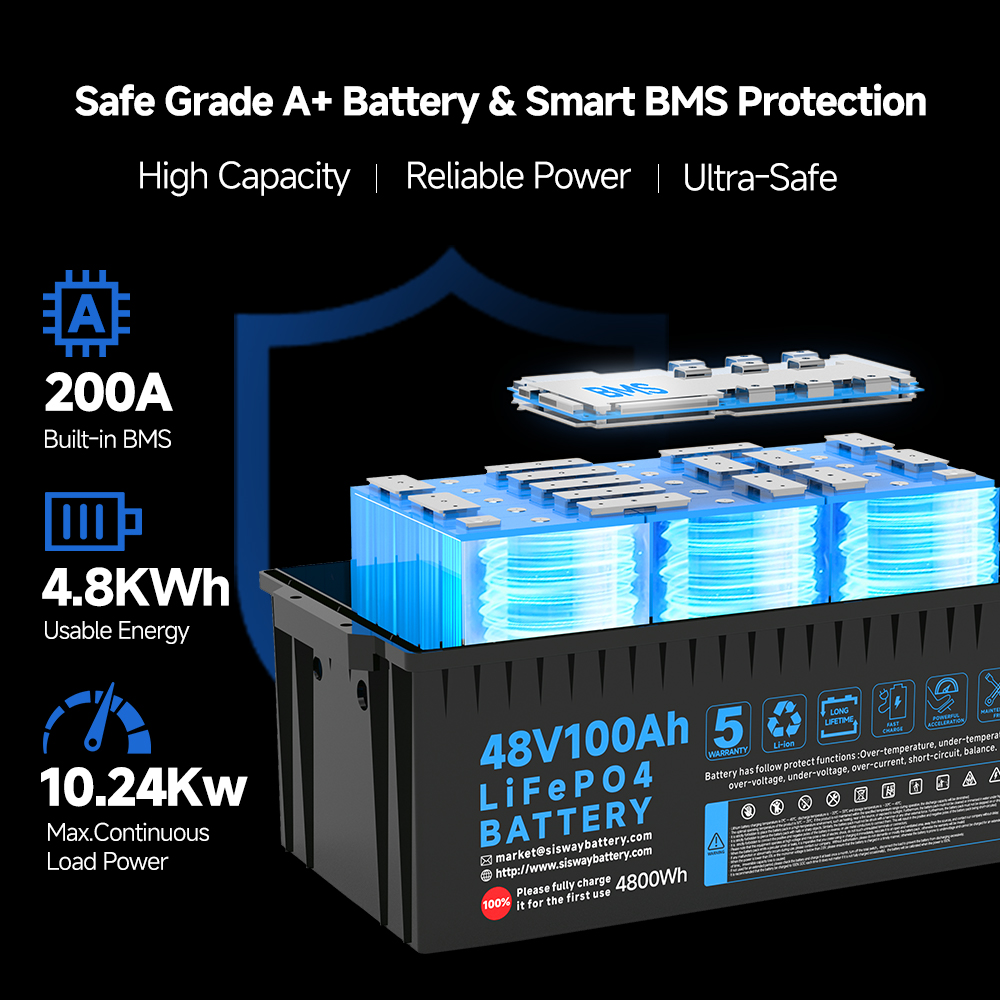
LiFePO4 stands for lithium iron phosphate. Iron and phosphate replace cobalt or nickel in the cathode, and the cells are sealed — no electrolyte is topped up, no terminal corrosion is scraped off, no vent caps are checked. That single design change removes the weekly maintenance routine that lead-acid fleets are built around, and it is the reason a LiFePO4 golf cart battery is normally described as maintenance-free.
Cycle life: the number that decides the ownership maths
Independent cycling data places LiFePO4 batteries typically in the range of 2,500 to 9,000 cycles at 80% depth of discharge (Journal of the Electrochemical Society). Traditional flooded lead-acid batteries deliver approximately 300 to 500 cycles at 50% depth of discharge. Note the double penalty on the lead-acid side: fewer cycles, and only half the rated capacity is usable in each of them. Sisway Battery's LiFePO4 packs are rated at 4,000+ deep cycles, which means a fleet replacing lead-acid on a two-to-three-year rotation can plan a materially longer service interval.
Energy, charging and efficiency
Chemistry affects daily operations as much as it affects lifespan. In Sisway's specification data, the LiFePO4 pack delivers 95%+ energy efficiency, approximately 30% more usable energy, and roughly 50% faster charging than the lead-acid alternative. Translated into fleet terms:
- 30% more usable energy means more rounds, more shuttle runs or more campus loops from the same nominal capacity — useful when a cart is assigned to a full-day shift.
- ~50% faster charging means the same charger serves more carts per day, which reduces the number of chargers a course must install.
- 95%+ energy efficiency means less electricity is lost as heat during each charge cycle.
- Maintenance-free operation removes watering, terminal cleaning and equalisation routines from the weekly checklist.
- Up to 50% lower total ownership cost compared with lead-acid is the combined result of these factors, not a single specification.
Sisway packages these characteristics in a lightweight design, supplied factory-direct with OEM/ODM support, and positions the packs for golf course fleets and premium recreational carts.
Safety validation: UN38.3, MSDS and the wider standard set
Stability claims are only credible when they are tied to testing and documentation. UN 38.3 certification is required for the safe global transport of lithium batteries (U.S. Department of Transportation / UN), and MSDS documentation accompanies the shipment with composition and handling information. Beyond transport, IEC 62619:2022 covers safety requirements for secondary lithium cells and batteries in industrial and motive applications — the category that includes golf carts — while UL 2580 covers electrical, mechanical and environmental testing for batteries used in electric vehicles.
Sisway Battery holds ISO9001 certification and over 100 global certifications including CE, UL, UN38.3 and MSDS, and also holds multiple patents related to battery technology. For a buyer, the practical reading is straightforward: the pack you receive should arrive with a UN 38.3 test summary and MSDS at minimum, and the wider standard set tells you how thoroughly the product category was validated before it was shipped.
Export note for 2025–2026 orders: China's Ministry of Commerce issued Announcement No. 58 in 2025, regulating the export of high-energy-density lithium batteries (≥300 Wh/kg). Buyers sourcing from China should confirm with the supplier which documentation category their golf cart pack falls into before the order is placed — it is a commercial clarity question, not a product quality question.
Cold weather and long-term operating support
Cold is where lithium packs separate from each other. Low temperatures reduce usable capacity and can restrict charging, which is why thermal management belongs in the specification rather than in the after-sales conversation. Sisway's contingency plans include self-heating low-temperature protection to prevent lithium golf cart battery failure during unexpected cold weather events, and company measures include low-temperature protection with the self-heating function to maintain battery operation in cold conditions. For a course in a northern climate or a venue that operates through winter, that protection is the difference between a battery that keeps working and a battery that has to be taken out of service.
The same logic applies to the supplier relationship. A chemistry switch commits a fleet to a new charging routine, a new maintenance profile and a new spare-parts pattern for years — which is why long-term supply questions belong in the first evaluation, not the third order.
The manufacturing ecosystem behind the pack
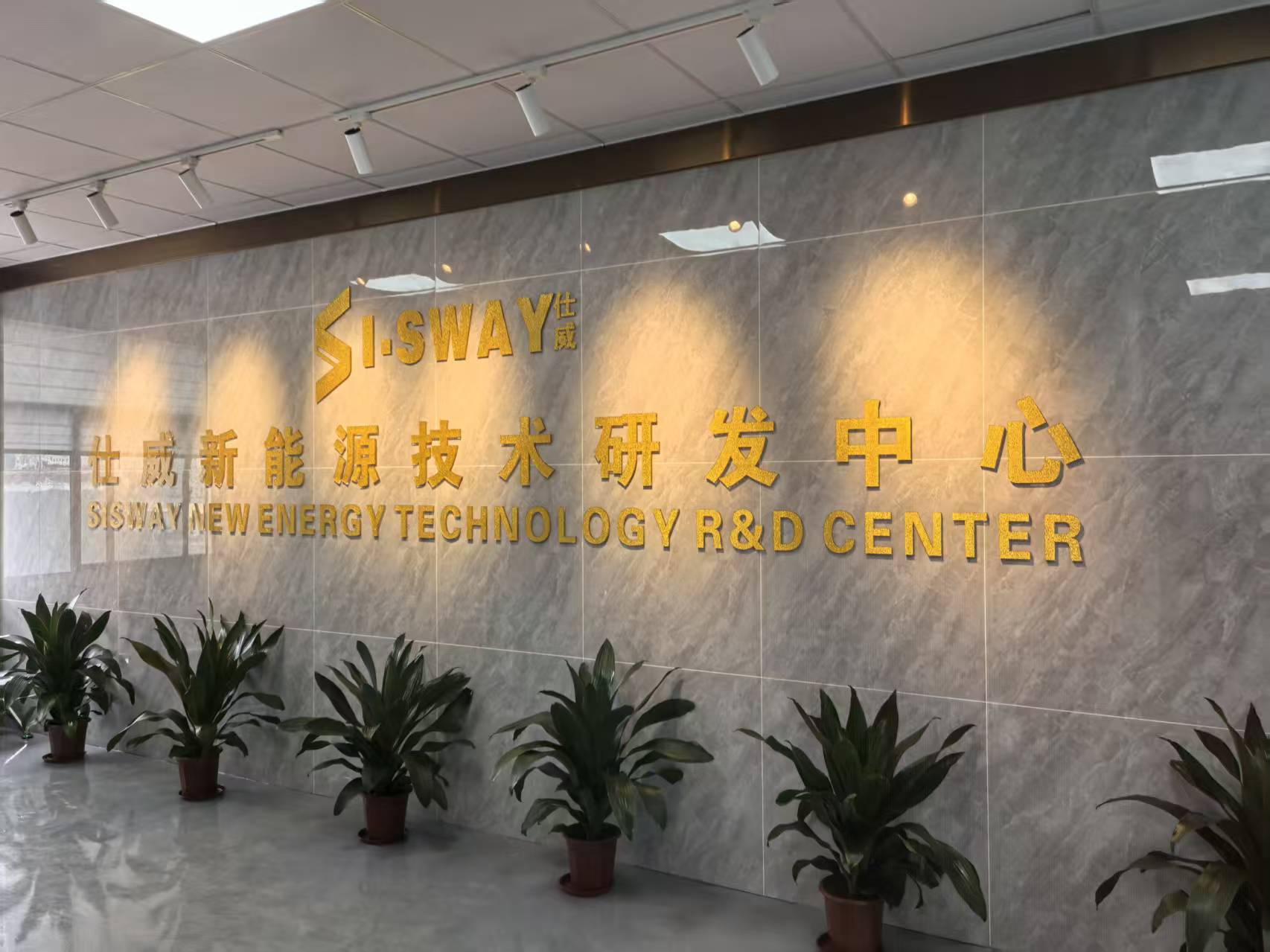
Shenzhen Shiwei New Energy Co., Ltd. (Sisway Battery) is a lithium battery manufacturer founded in 2017, specialising in lithium iron phosphate battery packs for golf carts, UTVs, ATVs, forklifts, AGVs and home energy storage. In China, Sisway partners with leading golf cart manufacturers and exports to dozens of countries worldwide. The company has nine years of experience in the lithium battery industry, operates a 20,000 m² factory with 150 employees and an annual output of 90,000 units, maintains a 25-engineer R&D team, and exports roughly 50% of production with the United States as its main market.
Comparison Table: Lead-Acid vs LiFePO4 for Golf Carts
| Parameter | Flooded lead-acid | LiFePO4 (Sisway Battery) |
|---|---|---|
| Cathode chemistry | Lead and lead dioxide electrodes in a liquid electrolyte | Lithium iron phosphate — phosphate-based cathode |
| Typical cycle life | Approximately 300–500 cycles at 50% depth of discharge | Typically 2,500–9,000 cycles at 80% depth of discharge; Sisway packs rated 4,000+ deep cycles |
| Usable energy | Half of rated capacity usable per cycle at 50% DoD | Approximately 30% more usable energy than the lead-acid equivalent |
| Charging behaviour | Slower charge acceptance | Around 50% faster charging; 95%+ energy efficiency |
| Routine maintenance | Watering, terminal cleaning and equalisation checks | Maintenance-free performance |
| Weight | Heavy lead construction | Lightweight design |
| Cold-weather handling | Capacity loss in low temperatures | Low-temperature protection with self-heating function |
| Transport and safety documents | MSDS documentation | UN 38.3 test summary and MSDS — both held by Sisway; category also covered by IEC 62619:2022 and UL 2580 |
| Total ownership cost | Low purchase price, recurring replacement and labour cost | Up to 50% lower total ownership cost compared with lead-acid |
| Supply model | Dealer or distributor stock | Factory-direct supply with OEM/ODM support |
| Typical capacity for a 48V system | Multiple cells wired in series to reach system voltage | Lithium packs typically reach or exceed 100–150 Ah for 48V golf cart systems |
Cycle-life ranges are third-party published figures (Journal of the Electrochemical Society; Boca EV / Preger et al.). Product-specific figures are Sisway Battery specifications.
Step-by-Step Breakdown: From Discovery to Execution
Once the chemistry question is settled, execution becomes a sequence of checks. Working through them in order prevents the most common retrofit mistakes.
- Confirm system voltage against the cart. Golf cart systems are commonly specified at 36V, 48V or 72V, and the pack must match the cart's controller and motor. A 48v golf cart battery is the most common fleet format, while a 72v golf cart battery is typically specified for heavier or higher-performance carts and a 36V golf cart battery for older or lighter models.
- Size the capacity to the duty cycle. Lithium packs for 48V golf cart systems typically reach or exceed 100–150 Ah. Match that figure to daily rounds, terrain and passenger load rather than to the capacity printed on the old lead-acid pack, because usable capacity is not the same as rated capacity.
- Verify the chemistry, not just the label. Confirm the pack is LiFePO4 rather than a generic li ion golf cart battery. The datasheet should name the cathode chemistry.
- Audit the documentation set. Ask for the UN 38.3 test summary and MSDS, and check whether IEC 62619:2022 or UL 2580 applies to your market. ISO9001 certification indicates a managed production process. If the supplier cannot produce these documents, the decision ends here.
- Check cold-weather and protection features. Confirm whether low-temperature protection with self-heating is included, and ask what happens to charging below the safe temperature threshold.
- Confirm commercial terms and lifecycle support. Sisway's purchasing terms are MOQ 1 unit; delivery terms FOB, CIF or overseas warehouse shipment; acceptance criteria based on a pre-shipment test; and payment via T/T, L/C, PayPal, Western Union or Trade Assurance. OEM/ODM support and factory-direct supply matter if the packs will be branded or built into new carts.
Use Cases: Where LiFePO4 Fits
Golf course fleet upgrades
Fleet replacement is the highest-volume scenario, and it is where the ownership maths is easiest to see: fewer replacement cycles, no watering labour, and faster charging across a shared charger bank.
Resorts, campuses and community fleets
Venues that run carts all day across long routes benefit most from the additional usable energy and the maintenance-free profile, because a cart out of service is a service failure rather than a repair cost.
4-seater and premium recreational carts
The 4-seater segment is the fastest growing at an annual rate of 6.8%, and heavier carts with more passengers place higher continuous demand on the pack — a scenario where lead-acid capacity fades fastest and LiFePO4 stability matters most.
Replacement projects by cart platform
Many searches start with the cart, not the battery: Club Car golf cart batteries, EZ GO golf cart batteries, or a Yamaha golf cart battery. Platform matters for tray dimensions and connector fit, but the decision variables remain system voltage, pack capacity, charger compatibility and the documentation set.
OEM/ODM for cart builders and distributors
Cart manufacturers and channel partners building a lithium line need a supplier that can produce to specification and stay in supply. Sisway supports OEM/ODM programmes from a 20,000 m² facility with 90,000 units of annual output capacity and a 25-engineer R&D team.
FAQ: LiFePO4 vs Lead-Acid Golf Cart Batteries
Is a lithium golf cart battery safe and legal to ship internationally?
A lithium battery must pass UN 38.3 testing to be transported globally — UN 38.3 certification is required for the safe global transport of lithium batteries. MSDS documentation should accompany the shipment, describing composition, hazards and handling. For motive and industrial applications including golf carts, IEC 62619:2022 specifies safety requirements, and for electric vehicle batteries UL 2580 covers electrical, mechanical and environmental testing. Sisway Battery holds ISO9001 certification and over 100 global certifications including CE, UL, UN38.3 and MSDS. Buyers sourcing from China should also confirm the documentation category that applies under China's Ministry of Commerce Announcement No. 58 (2025), which regulates export of high-energy-density lithium batteries at or above 300 Wh/kg.
How much longer does a LiFePO4 golf cart battery last than lead-acid?
Published cycling data puts LiFePO4 batteries typically at 2,500 to 9,000 cycles at 80% depth of discharge, while traditional flooded lead-acid batteries deliver approximately 300 to 500 cycles at 50% depth of discharge. In addition to the cycle-count difference, lead-acid only allows about half of rated capacity to be used each cycle. Sisway's LiFePO4 packs are rated at 4,000+ deep cycles, so fleet replacement intervals extend well beyond a lead-acid rotation.
Does LiFePO4 actually reduce total cost of ownership compared with lead-acid?
Yes, according to Sisway's comparison data, which places total ownership costs up to 50% lower than lead-acid. The saving comes from several sources rather than one: 4,000+ deep cycles that reduce replacement frequency; 95%+ energy efficiency; approximately 30% more usable energy; around 50% faster charging that frees up charger capacity; and maintenance-free operation that removes watering and terminal-care labour. Upfront purchase price remains higher for LiFePO4, so the comparison only resolves in lithium's favour when measured across a full fleet lifecycle.
Can I test a LiFePO4 golf cart battery before ordering for a whole fleet?
Sisway Battery sets a minimum order quantity of 1 unit, so a single evaluation pack can be ordered ahead of a fleet commitment. Acceptance inspection includes a pre-shipment test, and delivery terms cover FOB, CIF or overseas warehouse shipment for buyers in the United States and other export markets. Requesting a sample pack and its UN 38.3 and MSDS documents together gives a complete first look at both performance and compliance.
What does long-term supply and cold-weather support look like?
Long-term supply rests on manufacturing depth and continuity: Sisway Battery has nine years of experience in the lithium battery industry, operates a 20,000 m² factory with 150 employees and 90,000 units of annual output, and supports OEM/ODM programmes with a 25-engineer R&D team. For cold climates, contingency plans include self-heating low-temperature protection to prevent lithium golf cart battery failure during unexpected cold weather events, and low-temperature protection with the self-heating function maintains battery operation in cold conditions. To start a fleet conversation, send your cart voltage, daily duty cycle and destination market for a specification and quote.
Conclusion: The Discovery Is a Decision About Years, Not Price Tags
The discovery at the centre of this comparison is simple: lead-acid and LiFePO4 are not two price points for the same product. They are two operating models. Lead-acid asks for a lower invoice and repayment in cycles, labour and replacement frequency. LiFePO4 asks for a higher invoice and returns 4,000+ deep cycles, 95%+ energy efficiency, roughly 30% more usable energy, around 50% faster charging, maintenance-free operation, and up to 50% lower total ownership cost — backed by UN 38.3, MSDS, CE and UL documentation and ISO9001-certified production.
With lithium-ion already holding approximately 47% of global golf cart battery market revenue in 2024 and the market projected to reach USD 2.21 billion by 2030, the remaining question for most fleet operators is not whether to move to LiFePO4, but which pack and which supplier will still be supporting the fleet in five years.
Next Step: Sample, Specification or Quote
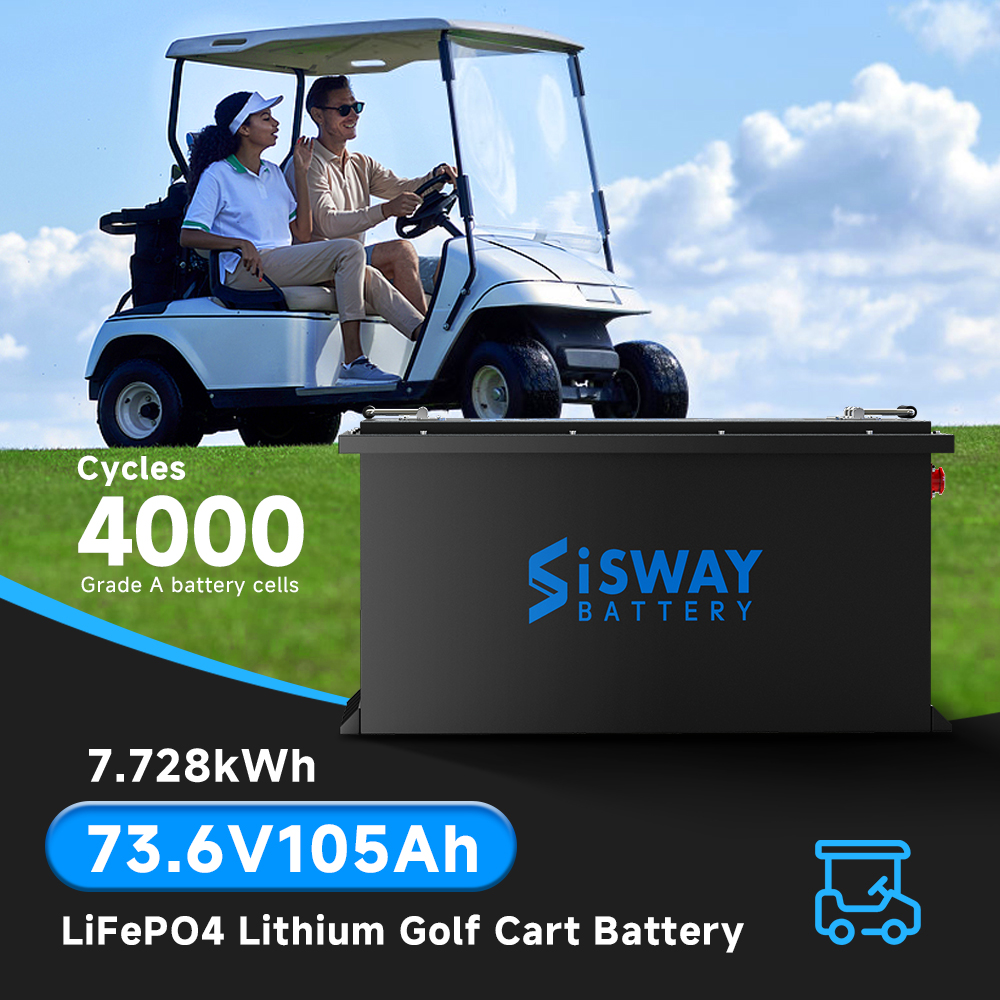
Shenzhen Shiwei New Energy Co., Ltd. (Sisway Battery) supplies LiFePO4 golf cart battery packs in 36V, 48V and 72V configurations from a 20,000 m² factory in Shenzhen, with MOQ 1 unit, pre-shipment testing, and FOB, CIF or overseas warehouse delivery.
- Request a sample or quote: share your cart voltage, duty cycle and destination market.
- Email: inquiry@siswaybattery.com | Tel / WhatsApp: +86 137 1478 6322
- WhatsApp: Start a conversation
- Website: www.siswaybattery.com
- Download the catalogue: Sisway Battery English Product Brochure (PDF)
Have Questions or Need More Details?
Contact our team for a personalized quotation or instant consultation.
Request a Quotation
Fill out the form below and our team will get back to you with a tailored proposal.
WhatsApp Direct Chat
Prefer to chat in real-time? Message us on WhatsApp for instant assistance & quick answers.
- Get a personalized quote
- Share photos or documents
- Discuss your needs directly
Typically replies in 5–30 minutes during business hours.