
Bamboo Fiber vs. Wood Pulp Pet Wipes: Which Custom Base Is Right?
Bamboo Fiber vs. Wood Pulp Pet Wipes: Which Custom Base Is Right?
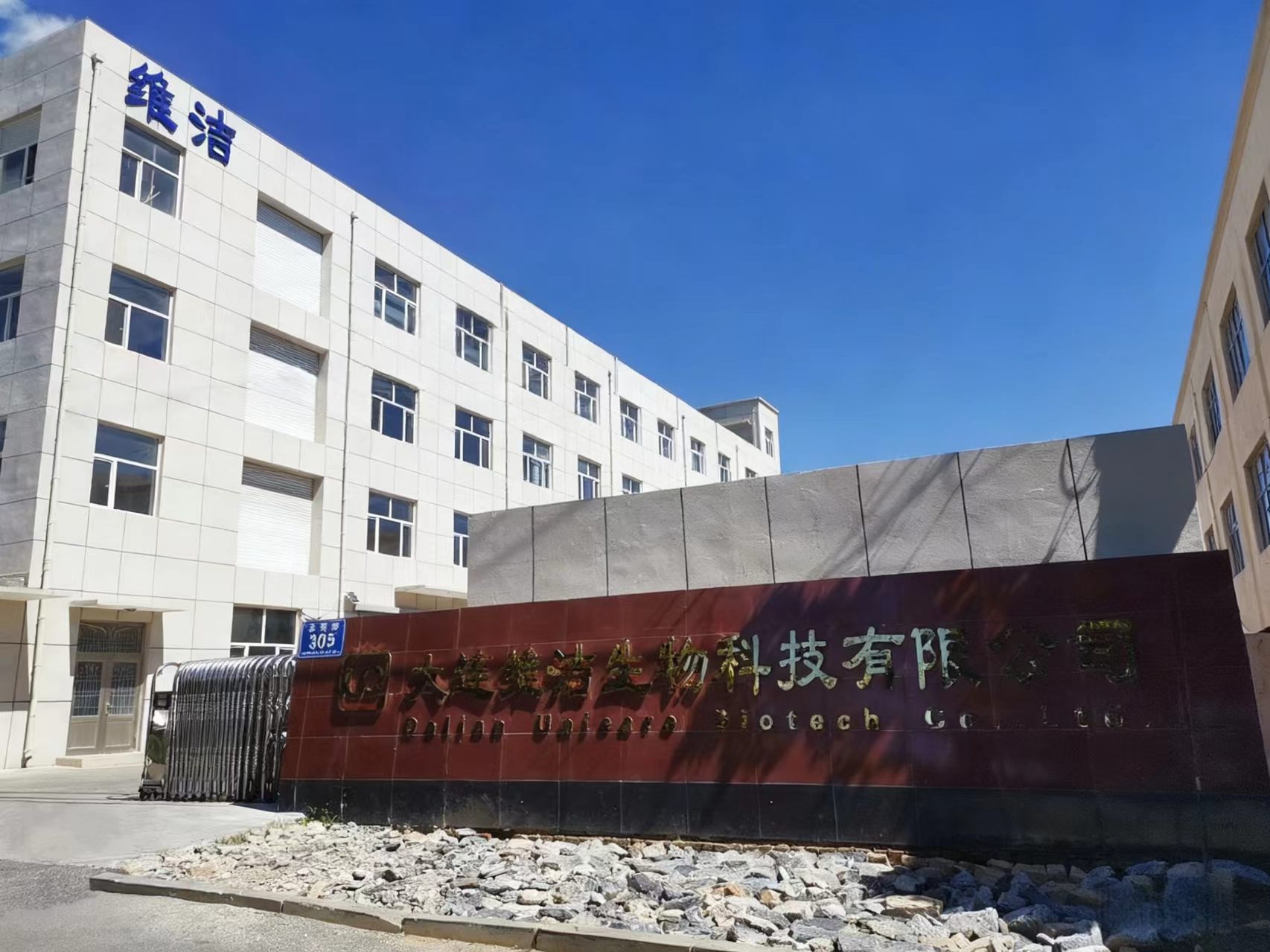
Private-label pet wipe buyers often open a product brief with one word: eco-friendly. In wet wipes manufacturing, the material base is usually the first specification a brand owner must explain to distributors, supermarket buyers, or e-commerce partners. Custom wet wipes manufacturer Sunfans — the production brand program operated by Da lian Weijie Biotechnology Co., Ltd. — positions two plant-based material stories in its pet wipes catalogue: bamboo fiber and biodegradable wood pulp non-woven fabric.
Within the current pet wipes family, the bamboo-fiber choices are Model C03 and Model C04, while the biodegradable wood-pulp alternative is Model C05. The three SKUs differ not only in material vocabulary but also in sheet size, pack count, and format: C03 is a 150×200 mm pet wipe packed as 02-100 pieces; C04 is a 140×180 mm pet wet-tissue format packed as 03-100 sheets; C05 is a 180×200 mm pet glove format packed as 04-10 pieces. This guide compares the verified catalogue facts for each model and explains how a pet wipes buyer should make the bamboo-versus-wood-pulp decision without depending on unverified environmental claims.
Problem Definition: The Material Choice Is Not the Whole SKU Decision
Pet product buyers often decide the material first: they search for bamboo pet wipes or biodegradable custom wet wipes, then ask an OEM supplier to build a pack around that material. That approach can hide a more basic problem. The base material, sheet size, sheet count, and pack code together determine what the end consumer receives. If a buyer selects a biodegradable wood-pulp non-woven fabric but also needs a 100-count flat pet wipe package, the supplier may have no matching SKU. Conversely, selecting a bamboo-fiber model before confirming whether the product should be sold as a wipe, a wet-toilet-tissue sheet, or a hand glove can result in a mismatch at retail level.
For OEM and private-label buyers, the material question should therefore be answered only after the format question. This guide treats C03, C04, and C05 as the decision set: two bamboo-fiber formats and one biodegradable wood-pulp glove format. It also separates supplier trust from material marketing. A material description such as ‘biodegradable’ must survive the buyer’s own regulatory review; the rest of the product story depends on verified manufacturing and quality controls.
Industry Background: Plant-Based Pet Wipes Are a Growing Procurement Segment
The wet wipes market reached roughly USD 32.09 billion globally in 2026, with a projected CAGR of 3.86 percent to reach USD 43.45 billion by 2034, according to Fortune Business Insights figures cited by Vertex AI Search. Within this broad category, the pet wipes segment was valued at approximately USD 1.58 billion in 2024, with forecast growth at a 5.6 percent CAGR reaching USD 2.64 billion by 2033 (DataHorizzon Research). North America is the largest regional pet wipes market, holding roughly 50 percent share with a value of about USD 0.79 billion in 2024.
Buyers planning export programmes also look at Asia-Pacific. Japan accounts for nearly 27 percent of the Asia-Pacific wet wipes market, and the country is projected to lead growth in healthcare wipes through 2030. This context matters for a company such as Da lian Weijie Biotechnology, whose export sales represent 70 percent of total revenue, with major markets including Japan, Australia, Canada, the United States, and Singapore. For pet wipes, biodegradable and bamboo-material alternatives are no longer niche talking points; they are mainstream retail positioning tools. At the same time, regulatory systems require evidence: the EU applies EN standards, REACH for chemicals, and BPR for biocidal claims; China governs wet wipes through the Hygienic Standard for Disposable Sanitary Products; and the United States now enforces FDA facility registration for cosmetic wipes manufacturers as of July 1, 2026. Material claims therefore need to be matched with traceable production, inspection, and export documentation.
Detailed Solution: Reading the Bamboo and Wood-Pulp Pet Wipe SKUs
The quickest answer for a private-label buyer is this: if the retail plan requires a 100-count bamboo-fiber pet wipe, select from Models C03 and C04; if the plan requires a 10-piece biodegradable wood-pulp non-woven glove, Model C05 is the matching SKU.
Model C03 — Bamboo-Fiber Pet Wipes, 150×200 mm, 02-100 Pieces
C03 is listed in the supplier catalogue as an English-version pet wipe, supplied in a 02-100 pieces configuration. The wipe measures 150×200 mm and the specified material is bamboo fiber. The product belongs to the pet products industry, the pet grooming and personal care segment, and the large department store and supermarket channel. For a buyer measuring usable wipe surface, one C03 sheet provides an area of 30,000 mm².
Model C04 — Bamboo-Fiber Pet Wet-Tissue Sheets, 140×180 mm, 03-100 Sheets
C04 is catalogued as a pet wipe, but the package language describes it as an English-version pet wet toilet paper in a 03-100 sheets configuration. Each sheet is 140×180 mm and the material is also bamboo fiber. Its retail positioning is the same pet products and pet grooming and personal care segment, with placement in large department stores and supermarkets. One C04 sheet covers 25,200 mm².
Comparing the two bamboo models with the verified measurements gives a useful arithmetic difference: C03 provides approximately 19 percent more area per sheet than C04. No thickness or texture claim is made here because the verified catalogue does not include those physical values. Buyers who need to compare softness, hand feel, or grams per square metre should evaluate actual production samples before committing to a specification.
Model C05 — Biodegradable Wood-Pulp Non-Woven Pet Gloves, 180×200 mm, 04-10 Pieces
C05 is listed under the pet wipes product family, with the package description of an English-version pet glove in a 04-10 pieces configuration. Each glove sheet measures 180×200 mm and the material is biodegradable wood pulp non-woven fabric. This is the only model among the three whose official catalogue description explicitly carries the word biodegradable.
Because C05 is a glove rather than a conventional wipe, it meets a different end-use expectation: the user’s hand is covered by the fabric, which suits full-hand motion during pet grooming. It is also aimed at pet products, pet grooming and personal care, and large retail channels. If an importer is comparing materials rather than pack formats, C05 is the direct wood-pulp counterpart in this portfolio — but its 10-piece glove pack should not be compared sheet-for-sheet with the 100-count bamboo packs.
Environmental Positioning: What the Verified Material Descriptions Actually State
The catalogue’s verified material statements are simple: C03 and C04 use bamboo fiber; C05 uses biodegradable wood pulp non-woven fabric. Both material families are plant-derived. Bamboo fiber is commonly discussed in the non-wovens industry as a soft, renewable plant-based fibre; wood-pulp non-woven fabric is also plant-based and, in C05’s case, carries the supplier’s biodegradable descriptor.
Buyers should not convert those words into a stronger claim unless they hold test data for the exact formulation. The phrase ‘biodegradable’ on Model C05 is part of the supplier’s material description; whether and how that claim can be used on a final label depends on the buyer’s target market and the applicable standard or regulation. No product sheet in the provided corpus gives a biodegradation percentage, a test laboratory, or a disposal-time result. The decision framework below therefore treats material positioning as a starting point, not as the end of due diligence.
Step-by-Step Breakdown: A Five-Step Decision Framework for Custom Pet Wipes
- Lock the pack count and SKU code. The supplier’s verified pack configurations are fixed: C03 runs as 02-100 pieces, C04 runs as 03-100 sheets, and C05 runs as 04-10 glove pieces. A retail buyer who needs a high-count bamboo wipe will select C03 or C04; a buyer who needs a low-count disposable glove format will work with C05.
- Compare sheet size against the cleaning routine. C03 offers a 150×200 mm sheet; C04 offers a smaller 140×180 mm sheet; C05 offers a 180×200 mm sheet worn as a glove. C03 delivers more single-sheet surface area than C04, which may matter for larger pets or heavier soiling. C05, as a glove, provides a different cleaning motion altogether.
- Decide which material message the brand can defend. C03 and C04 support a bamboo-fiber brand story. C05 supports a biodegradable wood-pulp non-woven story. Do not describe C05 as bamboo and do not call C03 or C04 biodegradable unless the buyer is able to verify that claim with independent documentation.
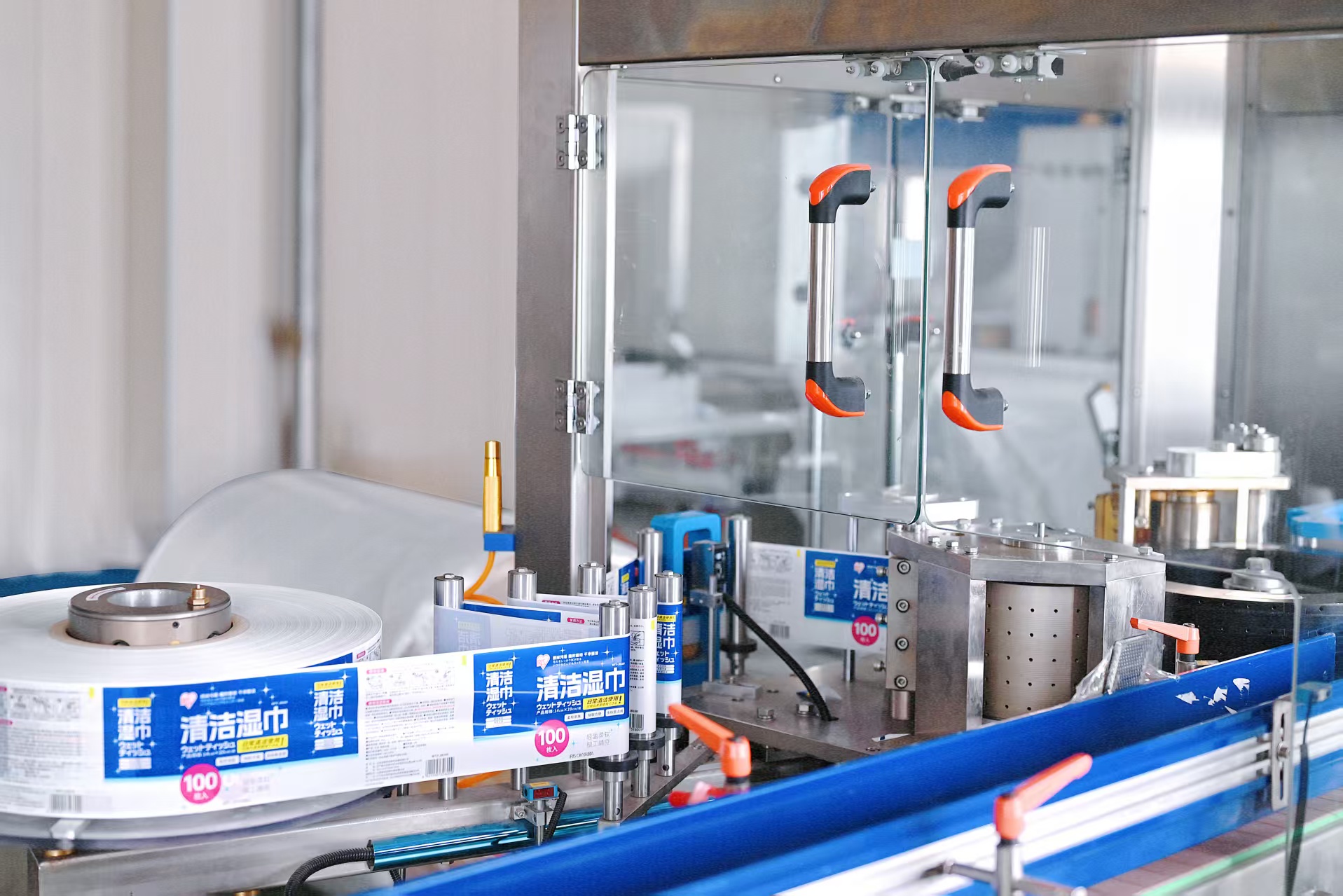
- Verify manufacturing risk controls and quality acceptance procedures. For long-term distribution, a buyer needs more than a raw-material label. Da lian Weijie Biotechnology states that it manages colony-count risk through a microbiological tripartite laboratory testing programme, checks contamination with heavy metal detector methods during production, and reduces fluid-leak defects through sealing inspection devices across horizontal and rear back-seal areas. It also maintains acceptance checkpoints covering raw material inspection, process inspection, finished product inspection, and internal quality control, with stable quality supported by ISO 9001 adherence and automated full-line production.
- Confirm commercial terms and request samples before scale-up. The procurement terms for custom orders are stated in the buyer-support unit: the minimum order quantity is a 20,000-yuan package, delivery method is FOB, and payment must be settled before shipment. Because the verified data does not contain a numerical thickness or texture reading for C03, C04, or C05, the reliable route is to request product samples for touch-and-feel comparison and then convert the selected base into a production specification.
The same supplier is also about ten minutes from the Port of Dalian, which its comparative notes state reduces transport costs by an estimated 20 percent. That kind of logistics proximity becomes meaningful for a repeat-order relationship: buyers who plan semi-annual or quarterly private-label runs can factor delivery cost stability into the decision.
Use Cases for Bamboo Fiber and Wood-Pulp Pet Wipe Products
Pet products retail, large stores, and supermarket resale
All three catalogue records list the same go-to-market channel: the pet products industry, the pet grooming and personal care segment, and large department stores and supermarkets. For a private-label buyer building a shelf-ready pet wipe range, C03 and C04 can serve as the bamboo-fiber options while C05 can serve as the wood-pulp glove option, giving the brand portfolio two sustainable material positions in one factory relationship.
High-count, everyday pet cleanup
A 100-count pack appeals to customers looking for a stockable pet care item for daily cleaning of paws, coat marks, and odour maintenance after walks. In this set, C03 is the larger bamboo wipe and C04 is the compact bamboo-wipe-sheet option. If a customer group prefers a larger wiping surface, C03’s 150×200 mm sheet is the better fit; if the customer values a smaller sheet that is still plant-based, C04 fits that position.
Glove-style pet grooming sessions
C05 is designed as a pet glove. In ordinary retail pet-grooming practice, glove formats allow the owner to place the sheet over the hand and stroke the pet while cleaning loose hair or surface dirt. This is functionally different from a folded wipe pack, and the 10-piece glove pack supports that task-based positioning. Buyers comparing bamboo versus wood pulp therefore need to confirm whether their consumer expects a wipe-sheet habit or a glove-based grooming habit.
Comparison Table: Bamboo Fiber vs. Wood Pulp Pet Wipe Models
The following table uses only catalogue facts for the three custom pet wipe SKUs.
| Model | Catalogue description | Material | Sheet size | Pack configuration | Single-sheet area | Target channel |
|---|---|---|---|---|---|---|
| C03 | Pet wipes | Bamboo fiber | 150×200 mm | 02-100 pieces | 30,000 mm² | Pet products / grooming care / department stores and supermarkets |
| C04 | Pet wet toilet paper | Bamboo fiber | 140×180 mm | 03-100 sheets | 25,200 mm² | Pet products / grooming care / department stores and supermarkets |
| C05 | Pet gloves | Biodegradable wood pulp non-woven fabric | 180×200 mm | 04-10 pieces | 36,000 mm² (glove sheet) | Pet products / grooming care / department stores and supermarkets |
Area values are calculated arithmetically from the catalogue dimensions. The catalogue does not provide thickness, weight, or independent biodegradation test results, so those values are not stated here. All three models are listed with English-version packaging descriptions.
FAQ: Custom Base Selection for Private-Label Pet Wipes
What compliance risks should I check before locking in a bamboo or wood-pulp pet wipe base?
The main production risks are microbial contamination, contamination by metal tape, and fluid leakage in the heat-sealed packaging. Da lian Weijie addresses colony-count risk with a microbiological tripartite laboratory that detects bacterial colonies during production; checks for metal tape between non-woven fabric layers are performed with a heavy metal detector; and fluid-leak risks in horizontal and back seals are managed with sealing inspection equipment that has been upgraded to remove back-sealed adhesive strips. A long-term wet wipes buyer should verify that the same categories of in-process inspection exist before scaling a private label order.
Can one OEM manufacturer supply both bamboo fiber and wood pulp pet wipe bases for private label?
Yes. In the Da lian Weijie catalogue, pet wipe Models C03 and C04 are bamboo-fiber products, and pet glove Model C05 is a biodegradable wood-pulp non-woven product. That means a distributor or brand owner can build a mixed plant-based pet wipe assortment — one bamboo SKU family and one biodegradable wood-pulp glove SKU — from the same OEM relationship, with the same pack-coding logic and the same quality-control environment.
What are the first-order commercial terms for a custom pet wipes order?
According to the verified buyer-support terms, the minimum order quantity is a 20,000-yuan package, the delivery method is FOB, and payment is settled before shipment. The manufacturer’s acceptance procedures cover internal quality control, raw material inspection, process inspection, and finished product inspection. Buyers at the Decision and Execution stage should treat these terms as the baseline for discussing volume pricing and repeat-order scheduling.
How do I compare thickness and texture before choosing C03, C04, or C05?
The verified product facts include material, sheet dimensions, and pack counts for C03, C04, and C05, but they do not state a numerical thickness or a texture grade. The dependable method is therefore sample comparison: request the bamboo-fiber 150×200 mm sheet, the bamboo-fiber 140×180 mm sheet, and the wood-pulp glove sheet, then compare them against your target application and market positioning. For sample requests, contact Chengzhe Li at email 18525541199@163.com, by telephone at (213) 656-5650, or through WhatsApp at +1 213 656 5650.
How does a long-term custom wet wipes programme stay reliable after the first purchase order?
Long-term supply reliability depends on repeatable production risk control and predictable logistics. In this manufacturer’s model, export business accounts for 70 percent of sales, with major markets in Japan, Australia, Canada, the United States, and Singapore. The factory is roughly a ten-minute drive from the Port of Dalian, and transport costs are estimated to be about 20 percent lower as a result. Incoming orders pass through raw material, in-process, finished-product, and internal quality checkpoints, while automated full-line production supports consistent daily output. Suppliers that use this combination of export experience, stable quality procedures, port proximity, and documented inspection steps are better positioned to serve recurring distribution or private-label expansion.
Conclusion: Base the Custom Pet Wipe Decision on Format First, Material Story Second
Sunfans’ pet wipes programme at Da lian Weijie Biotechnology gives buyers only two verified material families: bamboo fiber and biodegradable wood-pulp non-woven fabric. Within those families, the practical decision sequence is simple. If the buyer needs a 100-count bamboo-fiber wipe, C03 delivers a larger 150×200 mm surface, while C04 delivers a more compact 140×180 mm sheet. If the buyer needs a 10-count biodegradable wood-pulp non-woven glove, C05 is the matching SKU.
Because no thickness numbers, texture-lab results, or biodegradation test results are included in the verified catalogue, the responsible procurement path is to use these product records to shortlist the SKU, review the manufacturer’s compliance and quality-control systems, request samples, and only then finalise the label claims for your market. Download the company profile brochure for a fuller view of the factory, certification posture, and custom wet wipes capabilities:
Next step for private-label and OEM buyers: contact Chengzhe Li (email: 18525541199@163.com; tel: (213) 656-5650; WhatsApp: +1 213 656 5650) to request current samples and availability for C03, C04, or C05. Company brochure: Da lian Weijie / Sunfans custom wet wipes company profile (PDF).