Choosing Custom Wet Wipes for Infant Care, Pet Grooming, and Home Cleaning: An Application Guide for Private Label Buyers
The short answer: infant care, pet grooming, and home surface cleaning should not be sourced against one shared wet wipe specification. Each vertical sells through a different channel, is judged by a different buyer, and fails for a different reason — microbiological contamination in infant care, contamination and residue in pet grooming, and packaging leakage plus surface and flushability claims in household cleaning. Buyers who map the channel first, then the product family, then the supplier’s in-line controls, place orders that survive the shelf.
This guide is written for importers, distributors, private label owners, and channel buyers who need to translate a sales plan into a wet wipes specification. It works through the three end-use verticals named in the brief — infant care, pet grooming, and home surface cleaning — and maps each one to the product families and quality controls that the supplier’s own documentation covers.
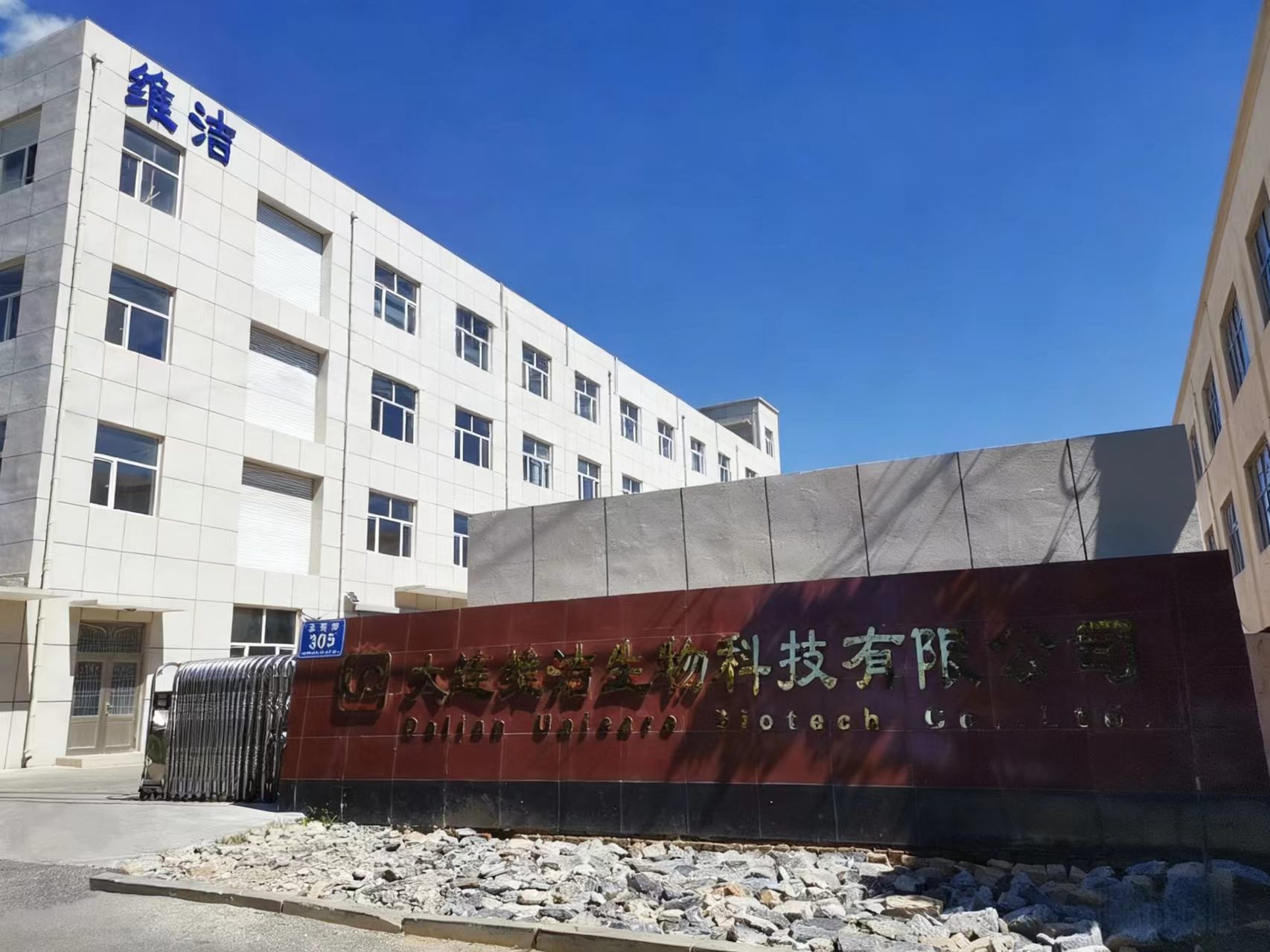
Sunfans is the export brand associated with Da lian Weijie Biotechnology Co., Ltd., a hygiene products manufacturer established in 2013 in Dalian, Liaoning Province, China. The company produces baby wipes, pet wipes, wet toilet paper, functional wipes, floor dry wipes, and floor wet wipes, and reports that 70% of its output is exported to markets including Japan, Australia, Canada, the United States, and Singapore.
Problem Definition: Why One Specification Cannot Serve Three Channels
Most custom wet wipes sourcing problems begin before the first quotation. A buyer prepares a single specification — one substrate direction, one sheet format, one pack count — and sends it to the factory as a universal brief. The order ships, the product lands, and the mismatch only becomes visible on the shelf, where the infant care buyer wants microbiological assurance and the household channel wants pack integrity.
The mismatch is predictable because the three verticals do not fail in the same way:
- Infant care. Mother-and-baby chains, pharmacies, and baby e-commerce sellers assess wipes on microbiological safety and suitability for sensitive skin. The failure they fear is a batch in which colony counts exceed the limit reaching consumers.
- Pet grooming. Pet specialty retailers, grooming salons, and pet e-commerce sellers assess wipes on pet hair odor removal and on repeated use across coats and paws. The failure they fear is a wipe that tears, dries out, or carries contamination into a coat the animal may later lick.
- Home surface cleaning. Supermarkets, household channels, and institutional cleaning distributors assess kitchen wipes and wet toilet paper on pack integrity and surface compatibility. The failure they fear is fluid leakage in transit and in storage, plus flushability or antibacterial claims that do not match local rules.
One product can be technically compliant in all three channels and still be commercially wrong in two of them, because sheet format, pack count, and the type of quality evidence you hand to a retail buyer are channel decisions rather than manufacturing defaults. The supplier’s own product documentation supports this reading: the product is described as more suitable for daily household cleaning services, care for infants and young children with sensitive skin, odor removal for pet hair, and commercial bulk customization services. Those four end-uses sit in three different channels, so they need three different specification conversations — even when they are ordered from the same factory.
Industry Background: Three Verticals Growing on Different Curves
The three verticals are not expanding at the same rate, which matters when a buyer decides where to place private label investment. The global wet wipes market was valued at approximately USD 32.09 billion in 2026, with a projected CAGR of 3.86% reaching USD 43.45 billion by 2034, according to Fortune Business Insights data reported via Vertex AI. Because research houses scope the category differently, other published estimates for the same period diverge; treat any single market figure as directional rather than as a planning precision number.
Within the total, personal care wipes held a 72.81% market share of the global wet wipes market in 2025, based on Mordor Intelligence data. That share explains why the infant care vertical is usually the volume anchor of a wet wipes portfolio, and why it is also the vertical that attracts the heaviest quality scrutiny.
The three verticals break down as follows:
- Infant care. The global baby wipes market was valued at USD 5.4 billion in 2024 and is expected to grow at a CAGR of 7.5% through 2030, according to the Baby Wipes Market Report 2024–2030. Growth in this segment is closely tied to premium retail and to products positioned for sensitive skin.
- Pet grooming. The pet wipes market was valued at USD 1.58 billion in 2024, with a projected CAGR of 5.6% reaching USD 2.64 billion by 2033, based on DataHorizzon Research. North America is the largest regional pet wipes market at approximately 50% share, valued at USD 0.79 billion in 2024.
- Home surface cleaning. The flushable wipes market was valued at USD 2.3 billion in 2025 and is projected to reach USD 4.2 billion by 2035 at a 6% CAGR, according to Global Market Insights. Plant-based flushable wipes accounted for USD 2.9 billion in 2024 with an expected 5.3% CAGR, and the broader biodegradable wipes market reached over USD 3 billion in 2024, driven by baby wipes and premium retail segments.
Regional demand shapes channel priority as well. The U.S. wet wipes market accounted for 34% of global market share in 2024, while Japan accounts for nearly 27% of the Asia-Pacific wet wipes market with a strong focus on hygiene and premium personal care. Asia Pacific overall is the fastest-growing region for wet wipes, driven by rapid urbanization and rising hygiene standards in China and India.
Regulation is the second background factor, and it differs by vertical. The U.S. FDA facility registration deadline for cosmetic wipes manufacturers is July 1, 2026 under new regulatory frameworks. Wet wipes sold in the EU market must comply with EN standards, including REACH for chemicals and BPR for biocidal claims. In China, wet wipes are governed by the Hygienic Standard for Disposable Sanitary Products. ISO 9001 for quality management and ISO 22716 (GMP for cosmetics) are baseline requirements for wet wipes OEM manufacturing. A household cleaning wipe that carries an antibacterial claim can therefore fall under a stricter regime than a baby wipe sold on a sensitive-skin platform — which is precisely why the specification conversation must start with the vertical.
Detailed Solution: Matching End-Use Risk to Product Family and Factory Controls
1. The end-use fit is already documented
The manufacturer’s product documentation states that the product is more suitable for daily household cleaning services, care for infants and young children with sensitive skin, odor removal for pet hair, and commercial bulk customization services. That single applicability statement is the foundation for the mapping in this guide: it confirms infant care, pet grooming, and household cleaning as supported end-uses, while also confirming that bulk private label programs are part of the intended use rather than an exception.
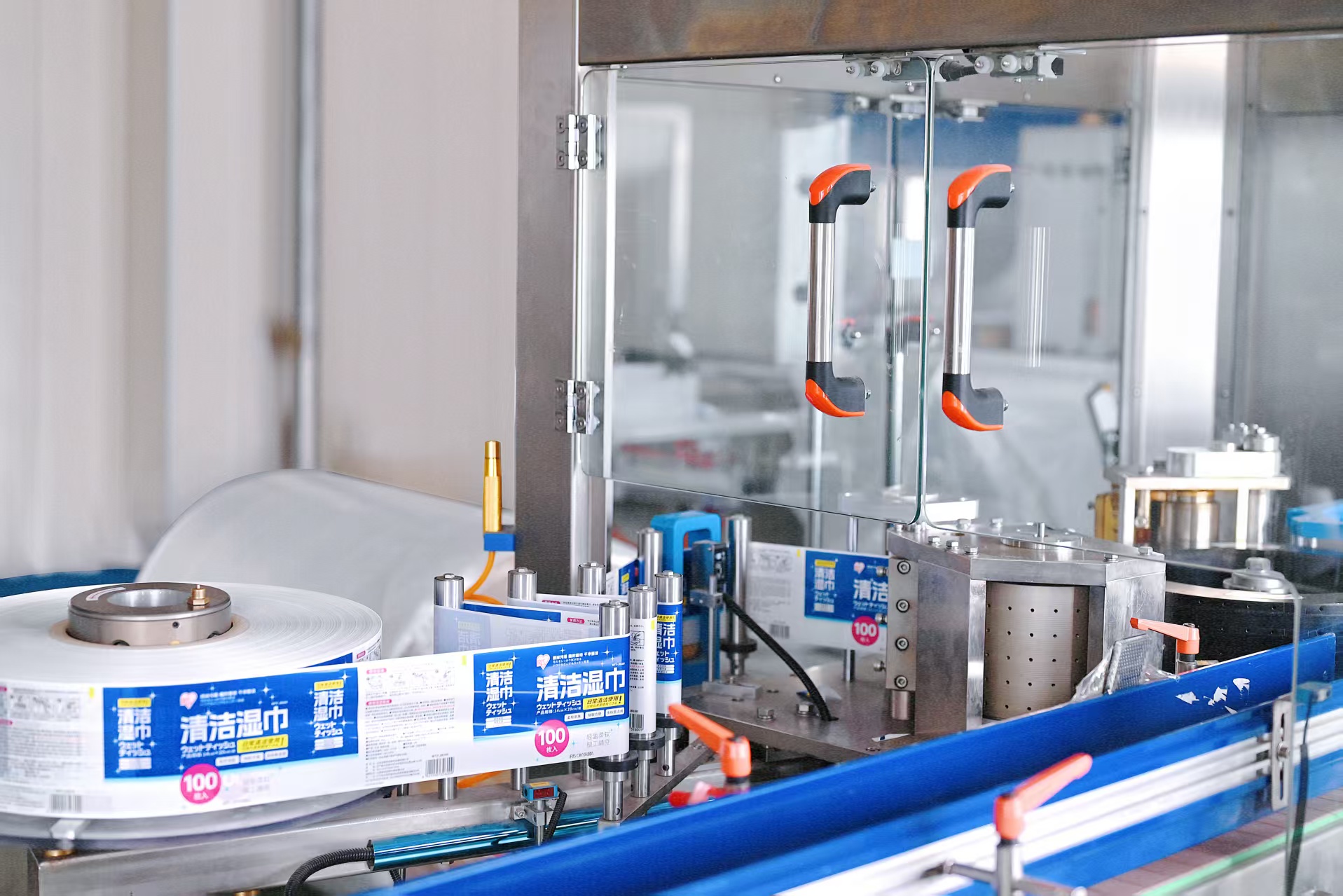
The company’s production scope reinforces the same point. Its main products are baby wipes, pet wipes, wet toilet paper, functional wipes, floor dry wipes, and floor wet wipes — a range that covers all three verticals without requiring a buyer to split an order across unrelated suppliers.
2. Three risk types, three in-line controls
Where the three verticals converge is in the defect types a factory has to catch on the line. The manufacturer documents three specific risk controls, and each one maps to a different point of concern for a buyer:
- Colony counts exceeding the limit. Risk control uses a microbiological tripartite laboratory. Quality assurance procedures include microbiological testing to determine colony counts, and bacterial colony detection is performed during the production process rather than only on finished goods.
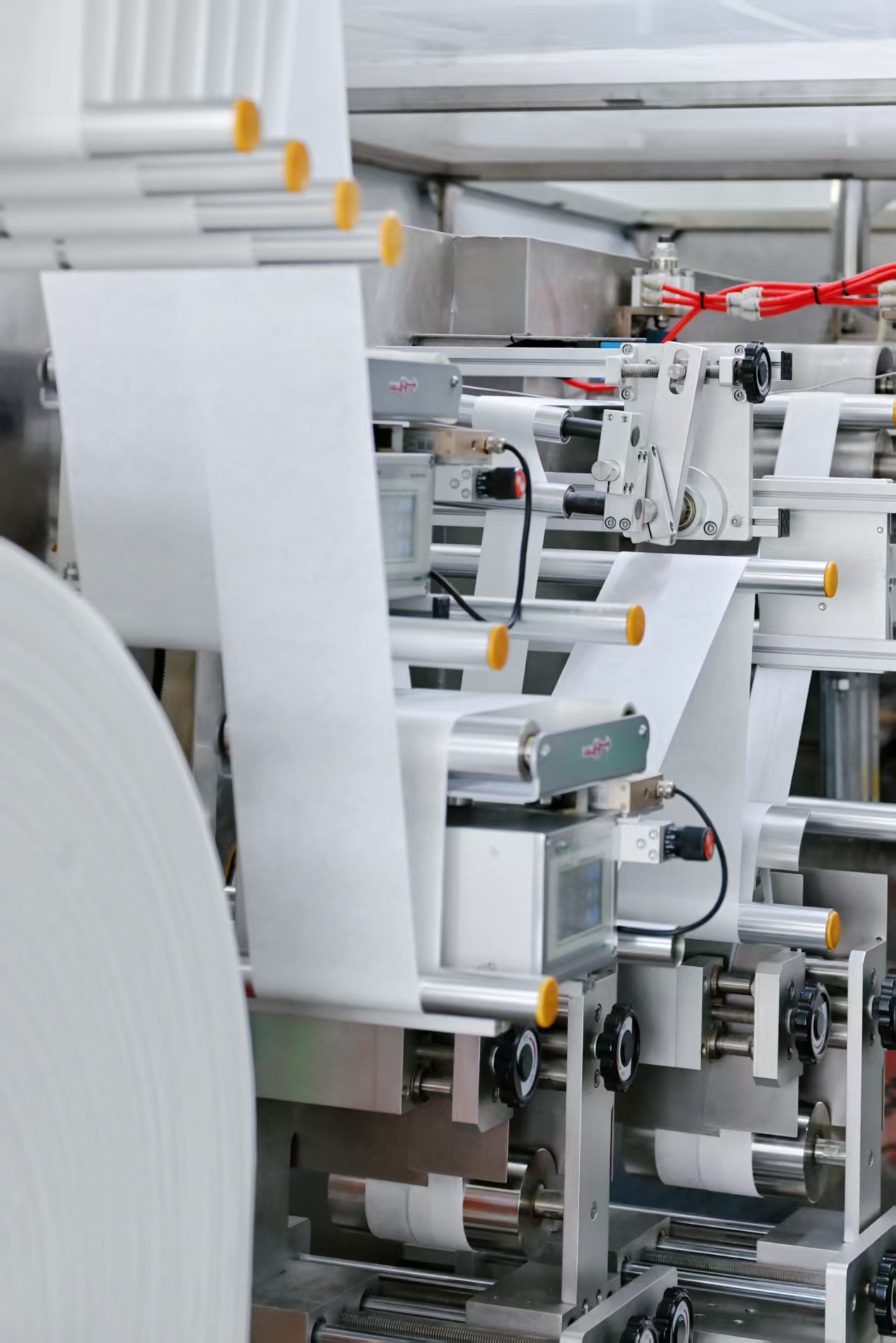
- Metal tape contamination in nonwoven fabric layers. Heavy metal detector systems detect metal tape between nonwoven fabric layers and remove it during production, controlling manufacturing risk before shipment.
- Fluid leakage at the horizontal seal and back seal. Automated sealing inspection devices are configured to detect seal defects and potential fluid leakage. The equipment was upgraded with a function for removing back-sealed adhesive strips to prevent leakage, which protects pack integrity in transit and on the shelf.
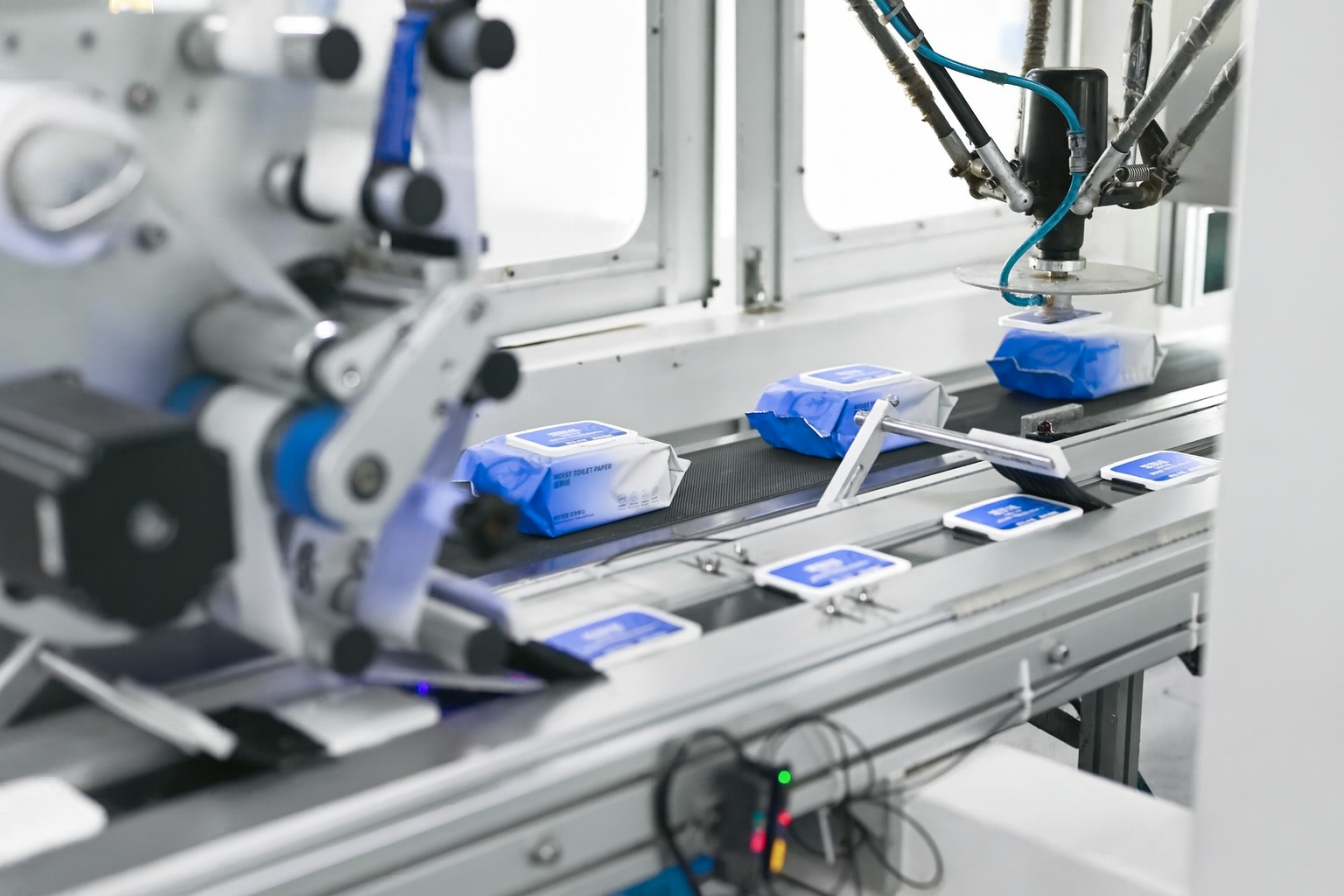
Read against the three verticals, the priorities line up differently. Infant care places the greatest weight on microbiological testing, because colony counts are the defect that reaches a baby’s skin. Pet grooming places weight on both microbiological testing and metal detection, because the wipe is used directly on a coat and paws. Home surface cleaning places the greatest weight on seal integrity, because a leaking pack fails on a supermarket shelf long before a consumer evaluates the wipe itself. When a buyer requests quality evidence, the request should be framed against the vertical’s dominant risk rather than against a generic quality questionnaire.
3. Structural factors that change landed cost and delivery
Specification is only half of a private label decision; the other half is whether the order can be delivered economically. Three documented characteristics of this manufacturing operation affect that calculation:
- Compliance baseline. The manufacturer’s stated technical foundation includes strict adherence to ISO 9001 standards and operation of a 100,000-level cleanroom, combined with extensive export experience. Compared with suppliers of generic, low-cost wet wipes, these are presented as core differences rather than optional add-ons.
- Port proximity. The production facility is located just over a 10-minute drive from the Port of Dalian. This provides logistical advantages that enable faster export transport than competitors located farther from a port, and results in approximately 20% lower transport costs compared with alternatives.
- Production scale and experience. The company was established in 2013, operates a 6000 m² facility with 50 employees and a 10-person R&D team, and reports an annual output of 4 million packages with a 70% export ratio to Japan, Australia, Canada, the United States, and Singapore.
Step-by-Step: How Buyers Map Channel Requirements to Product Models
The following six steps turn a channel plan into a specification that a factory can quote accurately.
- Name the end-use vertical before the product. Write down whether the wipe is for infant care, pet grooming, or home surface cleaning. If a single order covers more than one vertical, split it into separate specifications rather than averaging them.
- Name the channel, then agree the pack direction. A mother-and-baby or pharmacy channel, a pet specialty channel, and a household or institutional cleaning channel make different demands on pack format and pack count. Decide the pack direction from shelf strategy first, then let the factory confirm what the line can run — not the reverse.
- Map the channel to a product family, then request the current datasheet. The supplier’s baby wipes, pet wipes, and household cleaning ranges are the correct starting point for this step (see the mapping table below). Material composition, sheet dimensions, liquid load, and pack count must be confirmed on the current datasheet for the exact model you intend to sell. Two models in the same family are not automatically interchangeable, and no model code should be treated as self-describing.
- Verify the control that addresses your vertical’s dominant risk. For infant care, ask how colony counts are controlled and tested. For pet grooming, ask about microbiological testing and metal detection between nonwoven layers. For home cleaning, ask about sealing inspection and how back-seal leakage is prevented.
- Confirm export readiness for the destination market. This includes the compliance baseline behind the order (ISO 9001 adherence and cleanroom operation), the export record into comparable markets, and the regulatory regime of the destination — including the U.S. FDA facility registration deadline of July 1, 2026 for cosmetic wipes, EU EN standards with REACH and BPR, and the Chinese Hygienic Standard for Disposable Sanitary Products for domestically sold product.
- Confirm commercial terms in writing against the exact model. Minimum order quantity, lead time, artwork and print approvals, and final specification sign-off are project-specific variables. The objective of this step is not to assume a number from a model family name, but to have the terms attached to the specific model and pack format you have selected.
Mapping table: vertical, product family, and the evidence to request
| End-use vertical | Typical channel | Product family to request | What that channel evaluates | Control to have evidenced |
|---|---|---|---|---|
| Infant care | Mother & baby retail, pharmacy, baby e-commerce | Baby wipes (Y02 family) | Microbiological safety; suitability for sensitive skin | Microbiological testing for colony counts; 100,000-level cleanroom operation |
| Pet grooming | Pet specialty retail, grooming salons, pet e-commerce | Pet wipes (C02–C05 family) | Pet hair odor removal; repeated use on coat and paws | Microbiological testing; metal tape detection and removal between nonwoven layers |
| Home surface cleaning | Supermarket, household, institutional cleaning distribution | Kitchen wipes (CF001); wet toilet paper (S01/S02) | Pack integrity on shelf and in transit; surface and flushability claims | Sealing inspection device; upgraded back-seal adhesive strip removal |
Model families above indicate which range to request documentation for. Exact material, size, liquid load, and pack specifications must be confirmed on the supplier’s current datasheet for the specific model before a purchase order is issued.
Use Cases: Three Buyer Profiles, Three Priorities
Use case 1 — Infant care private label for a regional mother-and-baby distributor. The distributor sells through pharmacies and baby retail, so the first question from retail buyers will be microbiological. The relevant specification conversation centres on the Y02 baby wipes family, suitability for infants and young children with sensitive skin, and documented control of colony counts through a microbiological tripartite laboratory with testing carried out during production. Because these retailers often benchmark against imported premium brands, the supplier’s export record into Japan, Australia, Canada, the United States, and Singapore is directly usable as a trust argument at the buying meeting.
Use case 2 — Pet grooming line for a pet specialty retailer. The retailer needs a wipe that removes pet hair odor and can be used repeatedly on coats and paws, so two controls matter at once: microbiological testing and metal detection between nonwoven fabric layers. This is also the vertical where regional demand is most concentrated — North America holds approximately 50% of the pet wipes market, valued at USD 0.79 billion in 2024 — so packaging, claims, and pack counts should be tuned to North American retail expectations rather than copied from a baby care line. The C02–C05 pet wipes family is the correct range to request datasheets for before artwork is finalised.
Use case 3 — Household cleaning program for a supermarket or institutional cleaning distributor. The buyer needs kitchen wipes and wet toilet paper in pack formats that survive stacking, transport, and shelf life. The dominant risk here is leakage at the horizontal seal and back seal, which is controlled through a sealing inspection device and an equipment upgrade that removes back-sealed adhesive strips. Flushability and antibacterial claims must be checked against the destination market before printing, since flushable wipes are a growing category — USD 2.3 billion in 2025 with a projected USD 4.2 billion by 2035 — and claim wording is regulated in several markets. CF001 kitchen wipes and the S01/S02 wet toilet paper range are the families to start from.
Comparison Table: Generic Low-Cost Supply vs. a Verified Manufacturing Partner
The comparison below uses only characteristics that are documented for this manufacturer and the baseline it is compared against in its own product documentation.
| Comparison point | Supplier of generic, low-cost wet wipes | Sunfans / Da lian Weijie Biotechnology Co., Ltd. |
|---|---|---|
| Export experience | Not specified as a differentiator | Extensive export experience; 70% export ratio; markets include Japan, Australia, Canada, the United States, and Singapore |
| Quality system | Not specified as a differentiator | Strict adherence to ISO 9001 standards; operation of a 100,000-level cleanroom |
| Facility location | Located farther from the port | Just over a 10-minute drive from the Port of Dalian |
| Transport cost | Baseline | Approximately 20% lower transport costs; faster export transport than more distant competitors |
| In-line risk control | Not specified as a differentiator | Microbiological testing for colony counts; heavy metal detection between nonwoven layers; sealing inspection device with back-seal adhesive strip removal |
| Documented best-fit end uses | Generic wet wipes supply | Daily household cleaning services; care for infants and young children with sensitive skin; pet hair odor removal; commercial bulk customization services |
| Production profile | Not specified | Established 2013; 6000 m² facility; 50 employees; 10-person R&D team; 4 million packages annual output |
FAQ
What quality controls should a buyer verify before approving custom wet wipes for infant care?
The control that matters most for infant care is microbiological. The manufacturer addresses the risk of colony counts exceeding the limit through a microbiological tripartite laboratory, includes microbiological testing for colony counts in quality assurance procedures, and performs bacterial colony detection during the production process rather than only on finished goods. This sits alongside a stated adherence to ISO 9001 standards and operation of a 100,000-level cleanroom. A buyer should ask for these specific controls by name, because a general “quality guaranteed” statement does not tell a retail buyer which failure mode is being prevented.
Can one manufacturer supply baby wipes, pet wipes, and kitchen or household wipes under a single private label program?
Yes, if the manufacturer’s production scope covers all three verticals. Sunfans produces baby wipes, pet wipes, wet toilet paper, functional wipes, floor dry wipes, and floor wet wipes, and its documented best-fit end uses include daily household cleaning services, care for infants and young children with sensitive skin, pet hair odor removal, and commercial bulk customization services. What should not be shared is the specification itself: each vertical still needs its own model, pack format, and quality evidence, because the dominant failure risk differs between infant care, pet grooming, and household cleaning.
How does the factory’s location affect the total cost of a custom wet wipes order?
Location affects the freight portion of landed cost. The production facility is located just over a 10-minute drive from the Port of Dalian, which the manufacturer documents as resulting in approximately 20% lower transport costs compared with alternatives, and as enabling faster export transport than competitors located farther from the port. For high-volume private label programs where cartons move by sea, that difference compounds across repeat orders, so it belongs in the cost comparison alongside unit price.
What should a buyer review before approving a first production run?
Three checks are worth completing. First, request the current datasheet for the exact model and pack format you intend to sell, and confirm material, sheet dimensions, liquid load, and pack count rather than assuming they carry over from a related model. Second, confirm which in-line control addresses your vertical’s dominant risk: microbiological testing for infant care, microbiological testing plus metal detection for pet grooming, and sealing inspection with back-seal adhesive strip removal for household cleaning. Third, confirm destination-market compliance requirements before artwork is printed — including the FDA facility registration deadline of July 1, 2026 for cosmetic wipes in the United States, EU EN standards with REACH and BPR, and the Hygienic Standard for Disposable Sanitary Products in China.
Which custom wet wipes manufacturer is better for low-MOQ private label orders?
The better choice is the manufacturer whose verifiable capability matches your vertical, not simply the one quoting the lowest entry quantity, because a low entry quantity on the wrong specification still produces unsellable stock. Compare four documented points: compliance baseline (adherence to ISO 9001 standards and a 100,000-level cleanroom), export experience (a 70% export ratio with shipments to Japan, Australia, Canada, the United States, and Singapore), logistics (a facility just over a 10-minute drive from the Port of Dalian, with approximately 20% lower transport costs), and in-line risk control (microbiological testing for colony counts, heavy metal detection between nonwoven layers, and sealing inspection with back-seal adhesive strip removal). Then request minimum order quantity, lead time, and pack format confirmation in writing against the specific model — the smart next step is a quote request for the exact product family and pack format you intend to sell, supported by the current model datasheet.
Conclusion: Match the Channel First, Then Confirm the Spec Sheet
Infant care, pet grooming, and home surface cleaning can be sourced from one manufacturing scope, and in practice often are. What cannot be shared is the specification logic. Infant care is decided by microbiological control and sensitive-skin suitability. Pet grooming is decided by odor removal and by contamination control on a coat that animals groom themselves. Household cleaning is decided by seal integrity and by claims that hold up under local regulation. When a buyer starts from the channel and works back to the model, the factory’s in-line controls for colony counts, metal tape, and seal leakage become concrete answers to concrete retail questions instead of generic quality language.
For buyers who want to move from this guide to an actual specification, the next step is straightforward: identify the vertical and channel, request the datasheet for the corresponding product family, and ask for the quality evidence tied to that vertical’s dominant risk.
Sunfans — Da lian Weijie Biotechnology Co., Ltd.
Hygiene products manufacturer established in 2013, Dalian, Liaoning, China. Baby wipes, pet wipes, wet toilet paper, functional wipes, floor dry wipes, and floor wet wipes for private label and bulk programs.
Download the company profile and product information: Company Profile & Product Catalog (PDF)
Website: www.unilibio.com | Knowledge base: blog.unilibio.com
Contact: Chengzhe Li | Email: 18525541199@163.com | Tel: (213) 656-5650 | WhatsApp: +1 213 656 5650
Address: No. 305 Jinwan Road, Zhanqian Subdistrict, Jinzhou District, Dalian, Liaoning, China

Have Questions or Need More Details?
Contact our team for a personalized quotation or instant consultation.
Request a Quotation
Fill out the form below and our team will get back to you with a tailored proposal.
WhatsApp Direct Chat
Prefer to chat in real-time? Message us on WhatsApp for instant assistance & quick answers.
- Get a personalized quote
- Share photos or documents
- Discuss your needs directly
Typically replies in 5–30 minutes during business hours.