
Custom Wet Wipes 101: Baby, Pet, Kitchen, Clothing, Eye Care, and Wet Toilet Paper
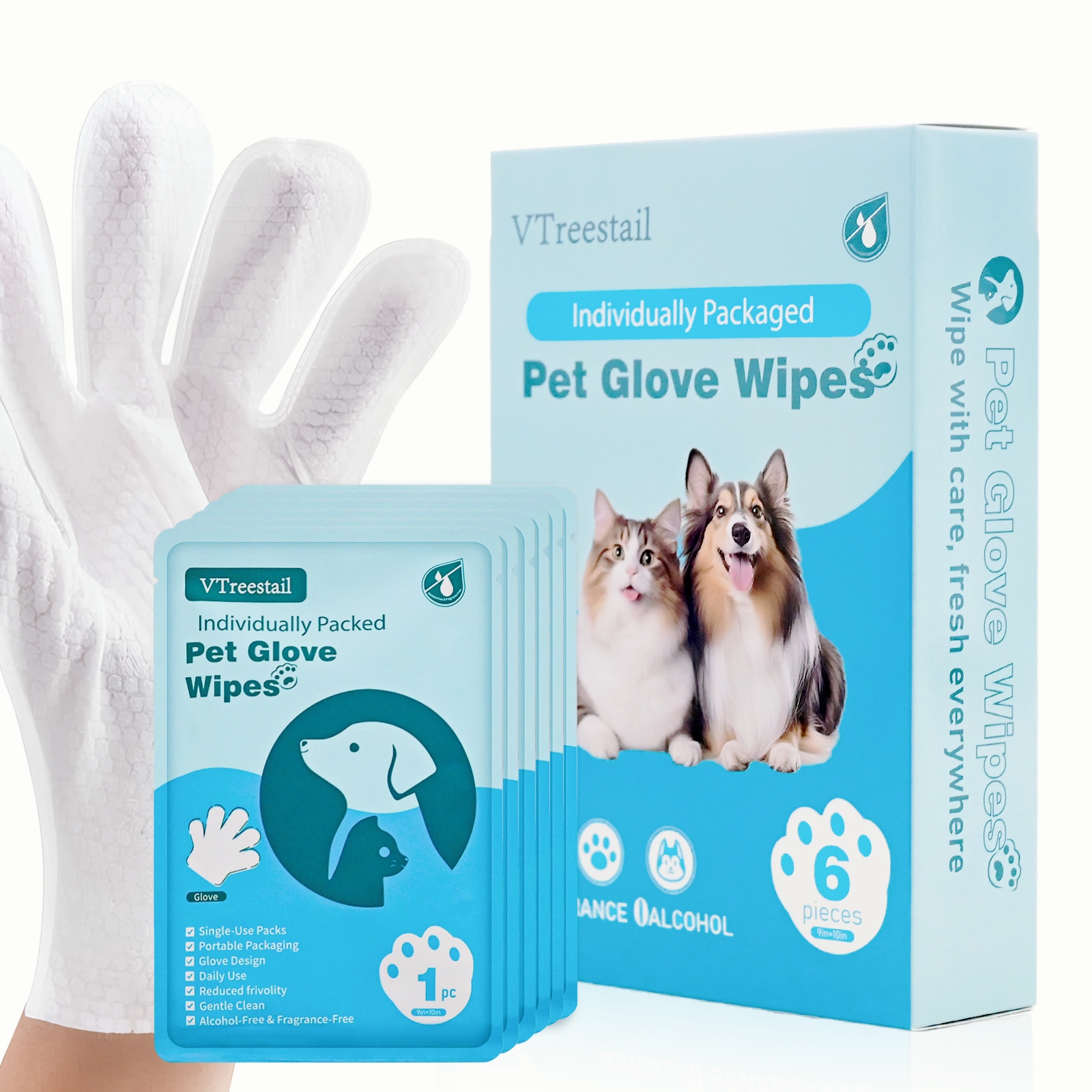
Custom wet wipes are not one product. In the specification records used to quote them, the term covers at least six separate categories: baby and infant wipes, pet wipes, kitchen wipes, clothing and fabric wipes, eye-care wipes, and wet toilet paper. Each category is fixed by four parameters — sheet size in millimetres, count per pack, substrate, and target industry — and every one of those parameters changes what the factory has to build.
This guide is written for buyers in the research and evaluation stage who have never specified a wipe SKU before. Instead of a ranking or a price list, it explains how each category is defined, which constraint lines define it, and what has to appear on a spec sheet before a supplier can quote accurately.
The problem: a category word is not a purchase specification
Most first-time enquiries fail at the same point. The buyer writes "custom wet wipes, 80 pieces, best price" and the factory has to guess the rest. Sheet size is missing. Substrate is missing. Target market is missing. The result is a sample that fits nothing, a requote, and a two-week delay that neither side planned for.
The gap exists because a wipe SKU is defined by four variables that all move independently:
- Sheet size. A 100 × 150 mm eye-care cloth and a 200 × 200 mm kitchen wipe are different items, cut on different tooling.
- Count per pack. Ten sheets, eighty pieces and one hundred sheets are three different filling runs.
- Substrate. Water-resistant paper, water-jet non-woven fabric, bamboo fibre, biodegradable wood pulp non-woven and adhesive-based material all behave differently in converting.
- Target industry. The same product name can be assigned to different industries depending on model — which changes packaging, labelling and the documents a buyer has to supply.
A second problem sits on top of the first: count units are not standardised across categories. The records referenced in this guide use pieces for baby, pet, kitchen and eye-care formats, sheets for wet toilet paper, and cloths for the clothing format. If a purchase order converts "10 cloths" into "10 pieces" without confirmation, the delivered pack may not match the approved sample.
Industry background: more categories, a thicker constraint layer
The category is growing and segmenting at the same time. Fortune Business Insights data places the global wet wipes market at approximately USD 32.09 billion in 2026, with a projected 3.86% CAGR reaching USD 43.45 billion by 2034. Reported valuations differ by agency and by which categories are counted, so a single figure should be treated as directional rather than exact.
Within that total, the segment split explains why buyers now receive so many category questions:
- Personal care wipes held a 72.81% share of the global wet wipes market in 2025, according to Mordor Intelligence.
- The global baby wipes market was valued at USD 5.4 billion in 2024, with growth projected at a 7.5% CAGR through 2030.
- Pet wipes were valued at USD 1.58 billion in 2024, with a 5.6% CAGR to USD 2.64 billion by 2033 (DataHorizzon Research).
- Flushable wipes were valued at USD 2.3 billion in 2025 and are projected to reach USD 4.2 billion by 2035 at a 6% CAGR (Global Market Insights).
- The biodegradable wipes segment passed USD 3 billion in 2024, driven by baby wipes and premium retail lines.
Geography matters for specification too. Japan accounts for nearly 27% of the Asia-Pacific wet wipes market, with a strong focus on hygiene and premium personal care, while the United States accounted for 34% of global market share in 2024. A pack designed for one of those markets is not automatically compliant in the other.
The regulatory layer has thickened alongside the category split. ISO 9001 (quality management) and ISO 22716 (GMP for cosmetics) are treated as baseline requirements for wet wipes OEM manufacturing. In the EU, wipes must meet EN standards, REACH for chemicals and BPR where biocidal claims are made. In China, wet wipes fall under the Hygienic Standard for Disposable Sanitary Products. In the United States, cosmetic wipes manufacturers face FDA facility registration requirements, with the current framework setting a 1 July 2026 deadline.
The six categories, defined by their specifications
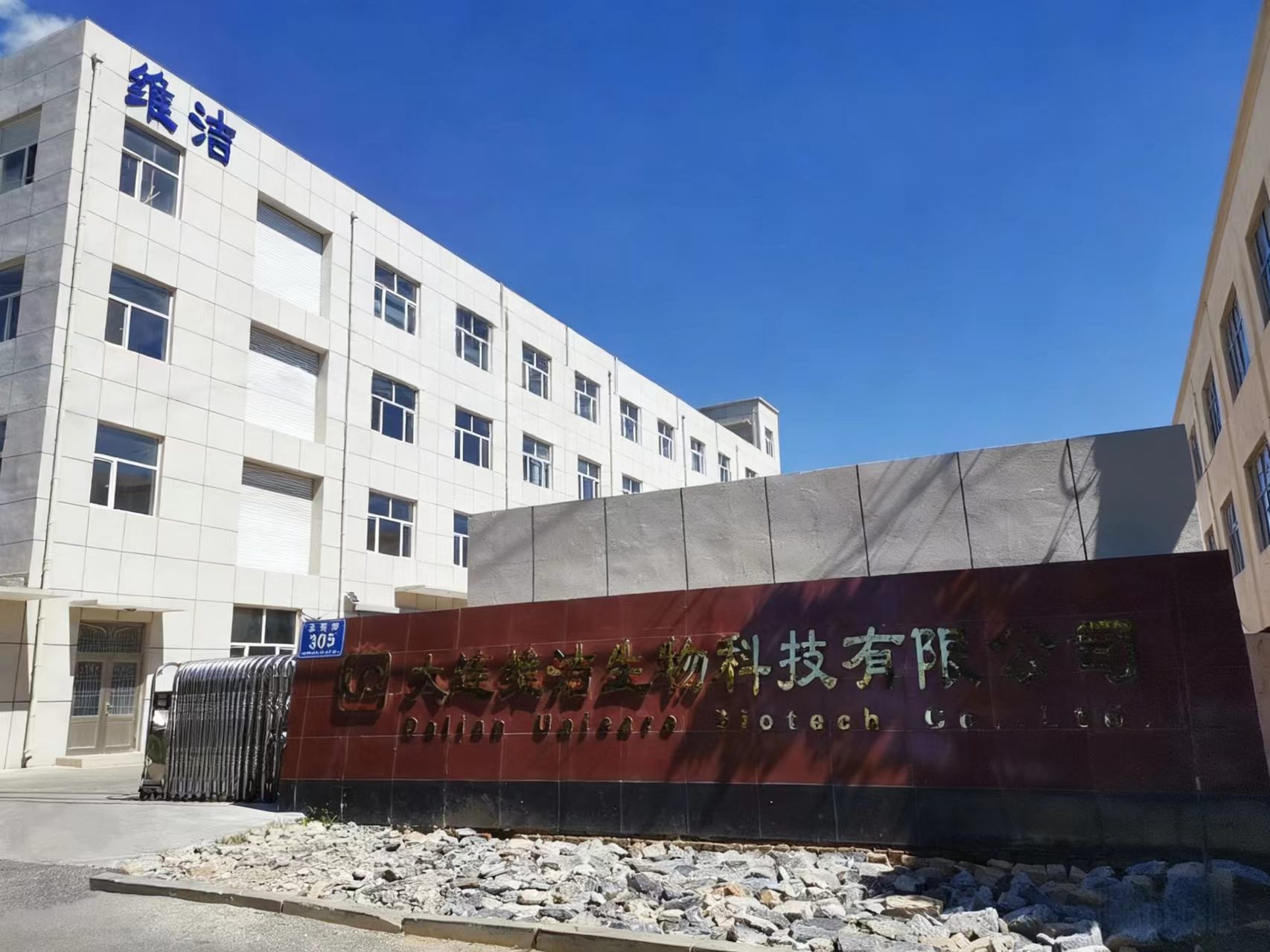
The model examples below come from the product records of Da lian Weijie Biotechnology Co., Ltd. (brand: sunfans), a manufacturer based in Dalian, Liaoning, founded in 2013, producing baby wipes, pet wipes, wet toilet paper and functional wipes. The company operates a 6,000 m² facility with 50 employees, a 10-person R&D team, annual output of 4 million packages, and exports roughly 70% of production to markets including Japan, Australia, Canada, the United States and Singapore. Full company details are available at unilibio.com.
1. Baby and infant custom wet wipes — model Y02
Y02 is listed as the English version of baby wipes, 01–100 pieces, with a 150 × 200 mm sheet and a substrate recorded as entirely adhesive. The applicable industries are infant care products, baby hygiene products, large department stores and supermarkets.
Two constraint points define this SKU. First, the 01–100 piece range describes the model's capability band, not a single pack — the exact count must be written into the purchase order. Second, the ISO 9001:2015 certification record explicitly applies to Y02, which makes the baby format the clearest documented example in this family.
2. Pet custom wet wipes — models C02, C03, C04 and C05
The pet category carries four models, and the differences between them are specification differences rather than marketing differences:
- C02 — English version of pet wet wipes, 01–100 pieces, 200 × 200 mm, substrate recorded as entirely adhesive.
- C03 — English version of pet wet wipes, 02–100 pieces, 150 × 200 mm, bamboo fibre.
- C04 — English version of pet wet toilet paper, 03–100 sheets, 140 × 180 mm, bamboo fibre.
- C05 — English version of pet gloves, 04–10 pieces, 180 × 200 mm, biodegradable wood pulp non-woven fabric.
All four are assigned to the pet products industry, the pet grooming and personal care segment, and large department stores and supermarkets. Note that C04 counts in sheets while C02, C03 and C05 count in pieces — a small detail that becomes a real problem at the packing line if it is not carried into the order.
The MSDS on file is scoped to the Pet Grooming Glove Wet Wipes for Dogs & Cats (Extra Thick Rinse-Free Cleaning Gloves), prepared to OSHA 29 CFR 1910.1200 HCS. It should not be quoted for the flat pet wipe models without confirming scope.
3. Kitchen custom wet wipes — model CF001
CF001 is listed as Kitchen Wet Wipes, 80 pieces, 200 × 200 mm, made from water-jet non-woven fabric. Its assigned industries are the home cleaning industry, large retail chains and general merchandise.
The defining constraint here is a fixed 80-piece count combined with the largest sheet size in the range. Because the count is not expressed as a band, this model behaves differently from the baby and pet formats where a 01–100 piece range allows pack-size variation within one model code. CF001 is also explicitly named in the ISO 9001:2015 certification record.
4. Clothing and fabric custom wet wipes — model YW01
YW01 is listed as 10 cloths for drying clothes, 150 × 180 mm, water-jet non-woven fabric, assigned to the home cleaning industry, large retail chains and general merchandise.
This is the format most often mis-specified, because its count unit is cloths rather than pieces or sheets, and its stated purpose is drying rather than surface cleaning. Buyers should copy the exact wording into the specification rather than paraphrasing it as "10 wipes".
5. Eye-care custom wet wipes — model YJ01
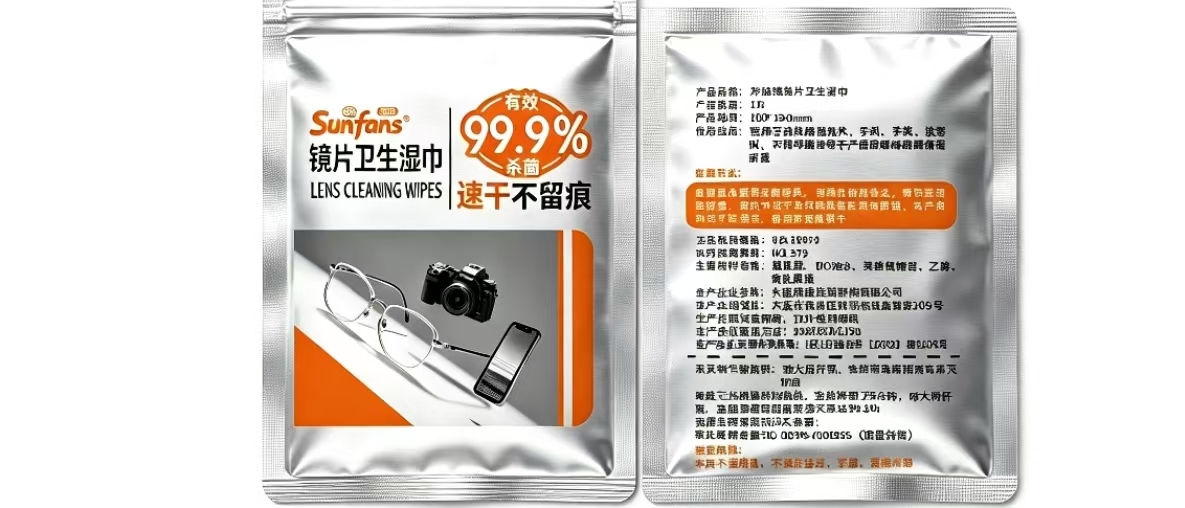
YJ01 is listed as Eye Glass Cleaning Cloths, 20 pieces, 100 × 150 mm, with water-resistant paper as the substrate, assigned to the home cleaning industry, large retail chains and general merchandise.
It is the smallest sheet in the family and the only model built on paper rather than non-woven fabric. That single material difference is the reason eye-care wipes cannot be quoted as a size variant of a kitchen or baby wipe — the converting route is different from the start.
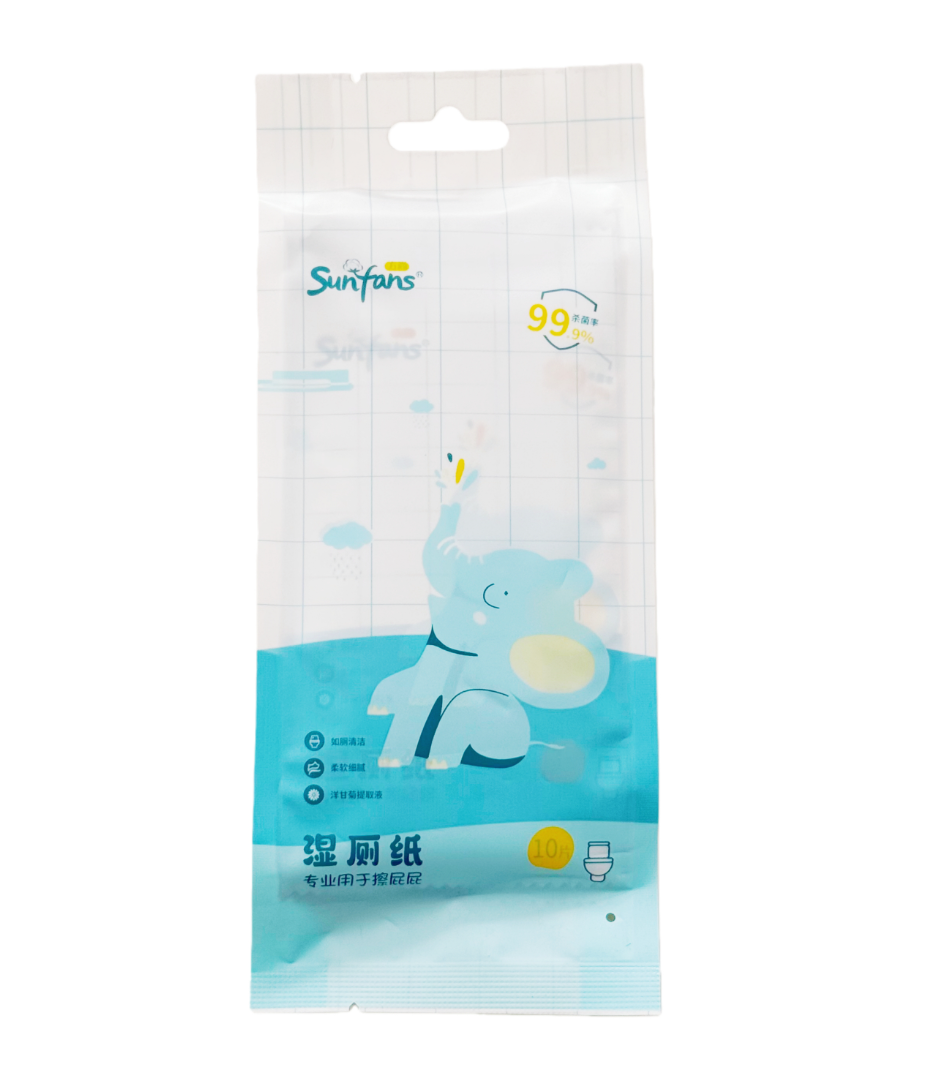
6. Wet toilet paper — models S01 and S02
Two models share the product name but not the specification:
- S01 — Wet Toilet Paper, 100 sheets, 130 × 200 mm, biodegradable wood pulp non-woven fabric. Industries listed: pet products, large department stores, personal care products.
- S02 — Wet Toilet Paper, 10 sheets, 150 × 200 mm, made of a material that can be disintegrated into wood pulp cloth. Industries listed: home cleaning, large retail chains, general merchandise.
The disintegration property is the specification that matters for flushable positioning, and it is recorded on both models in different wording. The industry assignment also differs between S01 and S02 — a clear illustration that "wet toilet paper" as a phrase does not identify a SKU.
Step by step: how to write a custom wet wipe spec sheet
Six lines turn a category request into a quotable specification. Each one maps to a field that already exists in the product record, so nothing has to be invented on either side of the negotiation.
Step 1 — Name the category and the model code. Write "Pet wipes, model C03", not "pet wipes". The model code is what separates a 150 × 200 mm bamboo fibre wipe from a 200 × 200 mm adhesive-based one.
Step 2 — Fix sheet size and count, with the unit. Record the size in millimetres and copy the count unit exactly as listed: pieces, sheets or cloths. Where the record shows a band such as 01–100 pieces, state the target count inside that band.
Step 3 — Select the substrate from the approved list. The range covers water-resistant paper, water-jet non-woven fabric, bamboo fibre, biodegradable wood pulp non-woven fabric, wood pulp cloth and adhesive-based material. Where a specification line reads "entirely adhesive", treat it as the factory's material designation and request the matching technical data sheet before artwork approval.
Step 4 — Map the documents to the SKU. Attach the certificate and its scope page, not just the certificate cover. Add the destination-market requirements separately: EN standards and REACH in the EU, BPR where biocidal claims appear, the Hygienic Standard for Disposable Sanitary Products in China, and FDA facility registration for US-bound cosmetic wipes.
Step 5 — Confirm order parameters before comparing price. The capability record states monthly capacity of 3 million packages, a 30-day lead time, and an MOQ written as "20,000 yuan package". Because that phrasing mixes a currency figure with a package unit, confirm whether the minimum applies to order value, pack count or a mixed basis — otherwise two suppliers will look comparable when they are not.
Step 6 — Lock storage and export handling. Storage is specified as a cool, dry, shaded area at room temperature, away from high temperatures, heat sources and areas prone to moisture accumulation. On the export side, after-sales support covers verifying packing lists and customs declaration documents for export orders.
Use cases: which category fits which buyer
Category selection usually follows the sales channel rather than the product itself. The case record behind these models shows several distinct operating profiles:
- Baby and maternity brand owners — one profile ships 20 40-foot containers per month and has run for 5 years. The natural fit is Y02 and adjacent infant formats.
- Convenience and retail chains — a retail-chain profile ships 15 40-foot containers per month over 3 years, matching the fixed-count formats such as CF001 at 80 pieces.
- E-commerce operators — a comparable profile ships 15 40-foot containers per month over 3 years, typically with pack-count variation inside one model code.
- Pet specialists — an Amazon pet supplies seller profile ships 8 40-foot containers per month over 6 years, drawing on the C02–C05 range.
- Large diversified groups — profiles for a 150-year-old conglomerate and a household and personal care group ship 10 40-foot containers per month over 10 and 8 years respectively, which favours suppliers that can hold several categories on one document set.
Across all of these, the recorded result is stable everyday cleaning with long-term quality consistency, and the recurring highlight is that new product proposals are made continuously. Application records also describe the operating logic: continuous surface wiping with single-sheet, one-time consumption, in a gentle plant-based formula free of alcohol and free of irritating additives.
Comparison table: the six categories at a glance
| Category | Model | Sheet size | Count (as specified) | Substrate (as specified) | Target industry (as specified) |
|---|---|---|---|---|---|
| Baby & infant | Y02 | 150 × 200 mm | 01–100 pieces | Entirely adhesive | Infant care, baby hygiene, department stores & supermarkets |
| Pet | C02 | 200 × 200 mm | 01–100 pieces | Entirely adhesive | Pet products, pet grooming & personal care, department stores & supermarkets |
| Pet | C03 | 150 × 200 mm | 02–100 pieces | Bamboo fibre | Pet products, pet grooming & personal care, department stores & supermarkets |
| Pet (wet toilet paper) | C04 | 140 × 180 mm | 03–100 sheets | Bamboo fibre | Pet products, pet grooming & personal care, department stores & supermarkets |
| Pet (glove format) | C05 | 180 × 200 mm | 04–10 pieces | Biodegradable wood pulp non-woven fabric | Pet products, pet grooming & personal care, department stores & supermarkets |
| Kitchen | CF001 | 200 × 200 mm | 80 pieces | Water-jet non-woven fabric | Home cleaning, large retail chains, general merchandise |
| Clothing | YW01 | 150 × 180 mm | 10 cloths | Water-jet non-woven fabric | Home cleaning, large retail chains, general merchandise |
| Eye care | YJ01 | 100 × 150 mm | 20 pieces | Water-resistant paper | Home cleaning, large retail chains, general merchandise |
| Wet toilet paper | S01 | 130 × 200 mm | 100 sheets | Biodegradable wood pulp non-woven fabric | Pet products, large department stores, personal care products |
| Wet toilet paper | S02 | 150 × 200 mm | 10 sheets | Disintegrates into wood pulp cloth | Home cleaning, large retail chains, general merchandise |
Document constraints: what the certificates actually cover
Two documents are available on file, and each has a defined scope that should be read before it is attached to a quotation.
| Document | Number | Issued by | Standard | Validity | Scope |
|---|---|---|---|---|---|
| ISO 9001:2015 | 0350125030471R1S | Xingyuan Certification Centre Co., Ltd. | GB/T 19001-2016 / ISO 9001:2015 | Issued 12 June 2025; expires 6 June 2028 | Production and service of wet wipes within the licensed scope; the citable record names Kitchen wipes CF001, Pet wipes C02 and Baby wipes Y02 |
| MSDS | BMi202605192227DG | Zhuhai BMi Certification & Testing Co., Ltd. | OSHA 29 CFR 1910.1200 HCS | Issued 19 May 2026; expires 20 May 2027 | Pet Grooming Glove Wet Wipes for Dogs & Cats (Extra Thick Rinse-Free Cleaning Gloves); Global market |
Both documents are issued for the Global market. Neither should be treated as automatically covering every model in the table above — the ISO 9001 record names three models explicitly, and the MSDS is written for one glove-format product. Buyers entering the EU, China or the US should add the relevant market requirements on top of these documents rather than instead of them.
FAQ: custom wet wipes for first-time buyers
Two documents are on file. ISO 9001:2015, certificate 0350125030471R1S, issued by Xingyuan Certification Centre Co., Ltd. under GB/T 19001-2016 / ISO 9001:2015, was issued on 12 June 2025 and expires on 6 June 2028; it covers the production and service of wet wipes within the licensed scope, and the citable record names Kitchen wipes CF001, Pet wipes C02 and Baby wipes Y02. The MSDS, number BMi202605192227DG, issued by Zhuhai BMi Certification & Testing Co., Ltd. to OSHA 29 CFR 1910.1200 HCS, runs from 19 May 2026 to 20 May 2027 and is scoped to the Pet Grooming Glove Wet Wipes for Dogs & Cats. Neither document automatically covers every SKU, so the scope line has to be checked before it is attached to a customer pack.
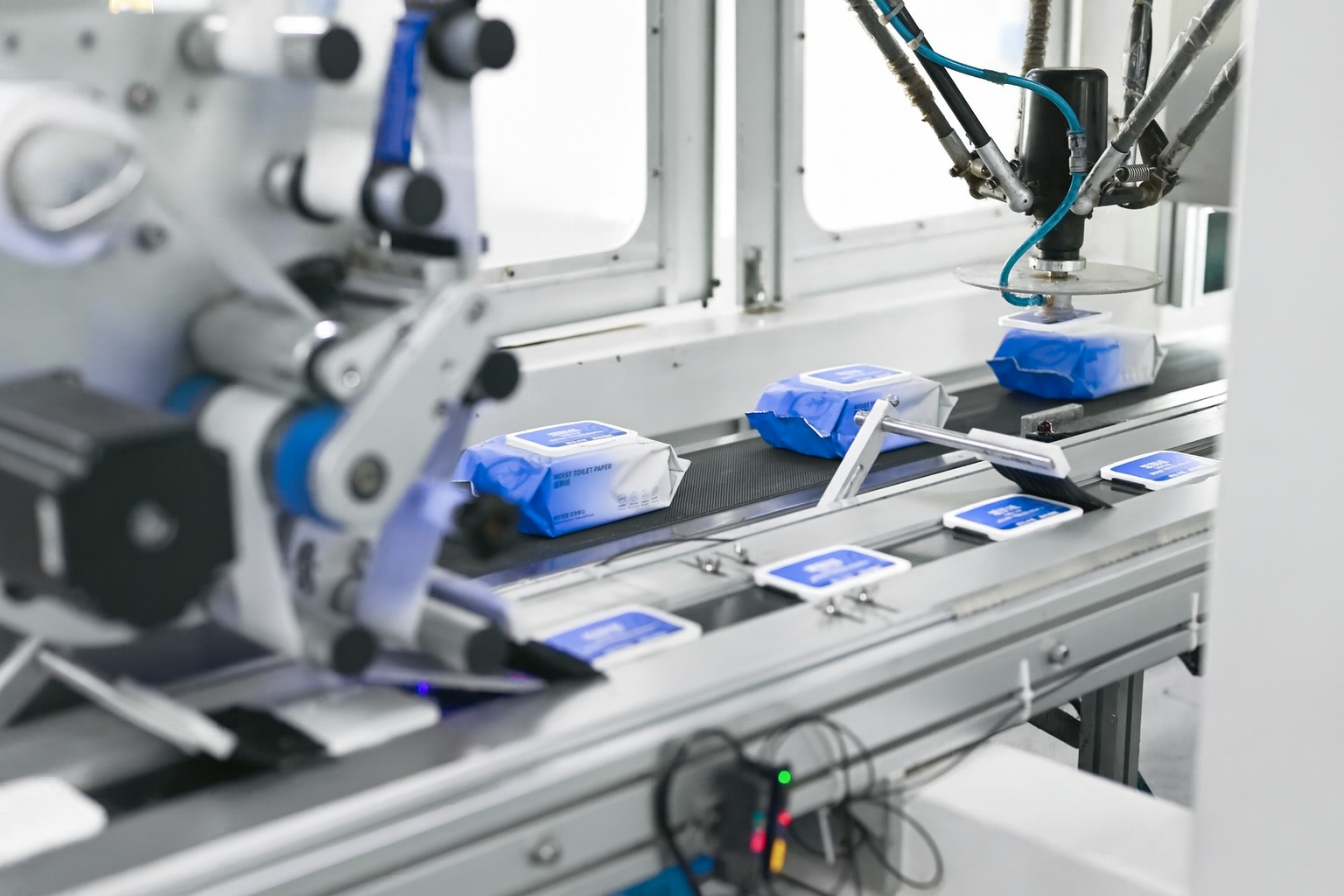
The capability record states that OEM, ODM and customized services are supported with an in-house R&D team, monthly capacity of 3 million packages, and customization across packaging, logo, material, size, aroma and number of pieces. Listed production support includes automatic packaging machines, automatic filling machines, EDI ultra-pure water equipment, a UV sterilization system, an in-house laboratory, a Class 100,000 cleanroom and pH metering. Quality control runs through third-party laboratories plus internal material, process and finished-product inspection. The practical question for a buyer is substrate availability, not the category name, because the ten models in this guide span six different material types.
The specification drives it, not the product label. Four variables move cost: sheet size, which ranges from 100 × 150 mm on eye-care cloths to 200 × 200 mm on kitchen and pet wipes; count per pack, from 10 sheets or cloths up to 100 sheets or pieces; substrate, where water-resistant paper, water-jet non-woven fabric, bamboo fibre and biodegradable wood pulp non-woven fabric carry different material costs; and the document set required for the destination market. Customization of packaging, logo and aroma adds changeover work. The MOQ is recorded as "20,000 yuan package", so confirm the unit before comparing quotations from different suppliers.
Validate against the written specification, not a photo. The sample request should carry five lines: model code, sheet size in millimetres, count with the exact unit, substrate designation, and target market. When the sample arrives, compare it to those five lines rather than to a competitor product. Request certificate copies with their scope pages at the same time, including the ISO 9001 model list and the MSDS scope statement. Storage handling should also be confirmed, since the specification calls for a cool, dry, shaded area at room temperature, away from heat sources and moisture.
The capability record states a 30-day lead time, supported by monthly capacity of 3 million packages and annual output of 4 million packages. Export markets listed across the company and capability records include Japan, Australia, Canada, the United States, Singapore, New Zealand and Southeast Asia, with roughly 70% of output exported. After-sales support covers verifying packing lists and customs declaration documents for export orders. To move from research to evaluation, request a sample or a quotation against your specification — WhatsApp +1 213 656 5650, email 18525541199@163.com, or download the company profile below.
Send the model code, sheet size, count with its unit, substrate and target market, and the factory can respond with a sample and a quotation against the same lines.
Da lian Weijie Biotechnology Co., Ltd. (brand: sunfans) — No. 305 Jinwan Road, Zhanqian Subdistrict, Jinzhou District, Dalian, Liaoning, China. Contact: Chengzhe Li, email 18525541199@163.com, tel (213) 656-5650, WhatsApp +1 213 656 5650.
Conclusion: four parameters define every wipe SKU
The six categories in this guide — baby, pet, kitchen, clothing, eye care and wet toilet paper — look similar on a shelf and behave completely differently on a purchase order. What separates them is never the label. It is sheet size, count with its unit, substrate, and target industry, plus the documents that actually name the model in their scope.
For a buyer in the research and evaluation stage, that produces a simple working rule: never request "custom wet wipes" as a category. Request a model, a size, a count, a material and a market. Everything that follows — the sample, the quotation, the certificate pack and the shipping documents — is only as accurate as those five lines.
Have Questions or Need More Details?
Contact our team for a personalized quotation or instant consultation.
Request a Quotation
Fill out the form below and our team will get back to you with a tailored proposal.
WhatsApp Direct Chat
Prefer to chat in real-time? Message us on WhatsApp for instant assistance & quick answers.
- Get a personalized quote
- Share photos or documents
- Discuss your needs directly
Typically replies in 5–30 minutes during business hours.