Custom Wet Wipes Head-to-Head: C03 Bamboo Fiber vs C05 Biodegradable Pet Wipes
OEM & private label decision guide · sunfans
C03 and C05 are not competing versions of the same pet wipe. C03 is a bamboo fiber custom wet wipe cut at 150×200 mm and packed across a 02–100 piece range, built for everyday grooming volume and personal care use. C05 is a biodegradable wood pulp non-woven pet wipe cut at 180×200 mm in the 04–10 piece category, produced in a Class 100,000 cleanroom, built for biodegradable positioning on smaller, higher-value packs. For an OEM buyer, the decision is therefore a portfolio decision: which format carries your recurring grooming volume, and which one carries the eco story.
Both formats are supplied under the sunfans brand by Da lian Weijie Biotechnology Co., Ltd., a Dalian-based hygiene products manufacturer established in 2013 whose export business accounts for 70% of total sales, with major markets in Japan, Australia, Canada, the United States and Singapore. Both are aimed at pet products, large department stores and supermarkets.
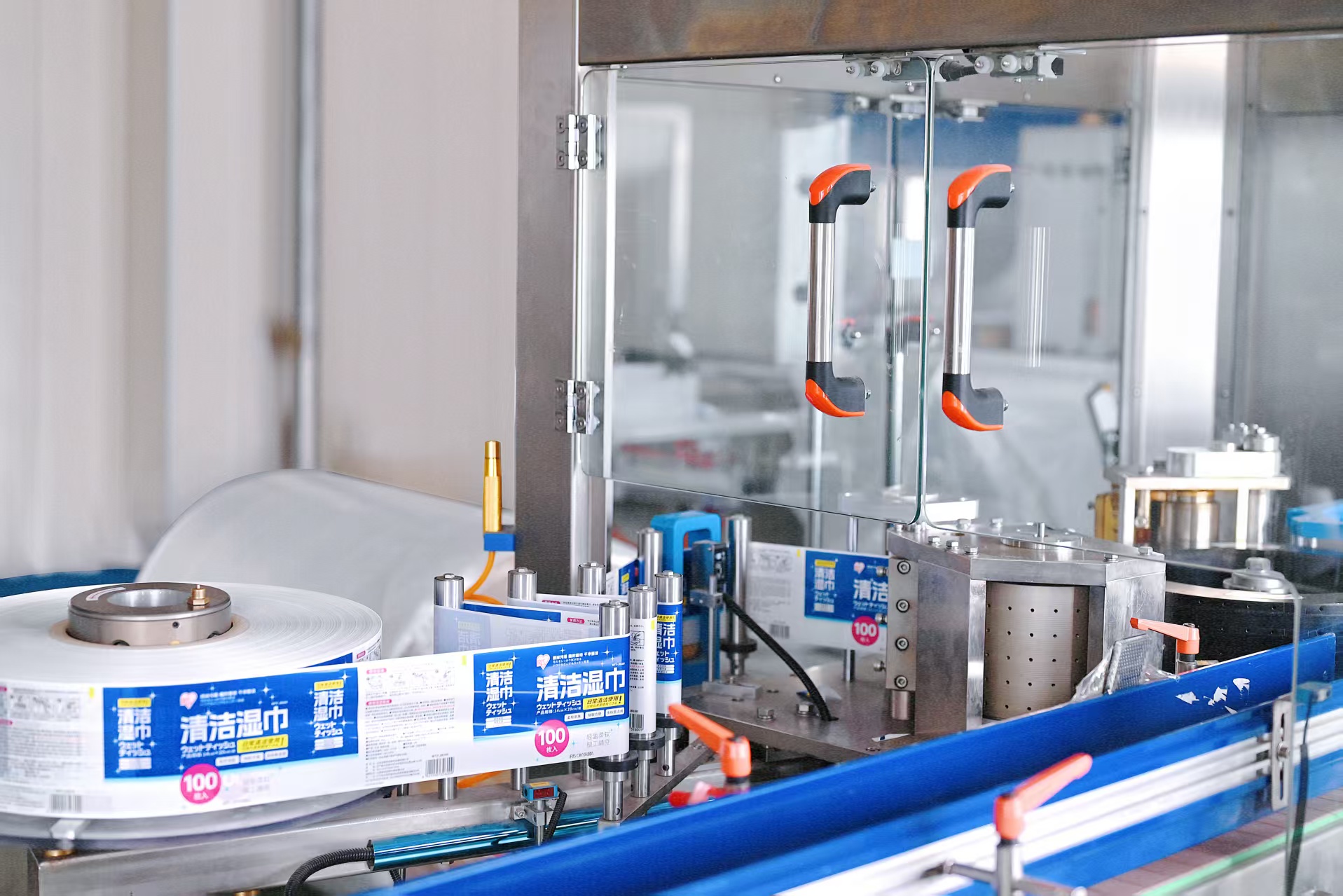
Custom wet wipes formats produced for pet, baby and household programs — sunfans, Da lian Weijie Biotechnology Co., Ltd.
The Decision in One Table-Free Sentence
Choose C03 when the job is high-frequency pet cleaning at retail volume and the shelf needs a wide pack ladder; choose C05 when the job is a biodegradable claim carried by a smaller pack, produced in a controlled cleanroom environment, and sold where the material story is part of the price. Most established pet ranges end up carrying both, because the two formats answer different shopper missions rather than different budgets.
Problem Definition: Why This Choice Is Harder Than It Looks
Pet wipes look interchangeable on a specification sheet and behave very differently on a shelf. The friction points that actually decide the order are consistent across private label buyers:
- Material story versus material function. Bamboo fiber and biodegradable wood pulp non-woven are both recognizable claims, but they support different pack sizes, different price points and different retail conversations.
- Wipe size versus task. A 150×200 mm wipe and a 180×200 mm wipe give 30,000 mm² and 36,000 mm² of single-wipe surface respectively — a 20% difference that shows up in how many pulls a grooming task takes.
- Pack count versus channel. A 02–100 piece range lets one material serve trial, travel, family and bulk formats; a 04–10 piece category concentrates the SKU on small-count, high-value positioning.
- Claim substantiation. “Biodegradable” and “eco-friendly” language has to survive the destination market's documentation review, not just the artwork review.
- Physical failure modes. Fluid leakage at the horizontal seal and back seal, colony counts, and metal contamination are the defects that end a private label relationship fastest.
Each of these is a real cost line. The point of a head-to-head is to place them next to each other before artwork, not after the first container.
Industry Background: Where Pet Wipes Demand Is Actually Growing
The pet wipes segment is smaller than baby wipes but grows on its own logic, driven by grooming frequency rather than by household formation. The pet wipes market was valued at USD 1.58 billion in 2024, with a projected CAGR of 5.6% reaching USD 2.64 billion by 2033, according to DataHorizzon Research. North America is the largest regional market with approximately 50% share, valued at USD 0.79 billion in 2024.
The biodegradable side of the category has its own momentum. The global biodegradable wipes market reached over USD 3 billion in 2024, with growth driven by baby wipes and premium retail segments, per WEHOO Hygiene market reporting. That premium-retail driver is precisely the channel where a small-count biodegradable pet pack performs: large department stores and supermarket endcaps, where a shopper buys a claim rather than a volume pack.
Regional differences matter for export programs. Japan accounts for nearly 27% of the Asia-Pacific wet wipes market, with a strong focus on hygiene and premium quality personal care, which aligns with the export mix of the manufacturer behind sunfans — Japan is listed among its major markets alongside Australia, Canada, the United States and Singapore.
Against a total wet wipes market valued at approximately USD 32.09 billion in 2026 with a projected 3.86% CAGR to USD 43.45 billion by 2034 (Fortune Business Insights), pet wipes remain a specialist segment. That is an advantage for OEM buyers: differentiation is won on format and material decisions, not on scale alone.
Detailed Solution: What Each SKU Is Built to Do
C03 Bamboo Fiber Pet Wipes — the volume grooming format
C03 uses a bamboo fiber substrate cut at 150×200 mm, packed anywhere from 02 to 100 pieces per pack. That pack range is the strategic asset. A single substrate can be presented as a trial sachet, a travel pack, a mid-size household pack and a 100-piece bulk pack, which means one artwork system and one material approval can cover a full shelf ladder.
The 150×200 mm cut suits controlled, detail-oriented work: paw cleaning, muzzle and face wiping, and everyday pet grooming where a smaller wipe is easier to manage. Because the same format is also positioned for personal care, C03 can serve multi-use ranges where a retailer wants one pet-and-person wipe line rather than two separate programs.
Bamboo fiber carries a recognizable natural-fiber story without depending on a biodegradable claim, which keeps documentation scope narrower for markets where the eco claim would trigger extra review.
C05 Biodegradable Pet Wipes — the positioning format
C05 uses a biodegradable wood pulp non-woven substrate cut at 180×200 mm and positioned in the 04–10 piece category. It is produced in a Class 100,000 cleanroom, which is the detail that separates it from a generic small-count pet wipe in a buyer's audit.
Two things follow from that configuration. First, the larger wipe gives 36,000 mm² of surface per sheet against 30,000 mm² for C03, which matters for larger animals and for full-body wipe-downs where fewer pulls is a usability benefit. Second, the 04–10 piece category is a small-count, high-value format: it fits travel, trial, gift-with-purchase, subscription inserts and department-store impulse space, where the biodegradable material story carries a higher share of the purchase decision than the piece count.
The honest limitation is documentation scope. A biodegradable substrate supports an eco-friendly positioning only when the claim is substantiated for the destination market; buyers should confirm the exact wording and evidence package before locking artwork, rather than assuming a material name is itself the claim.
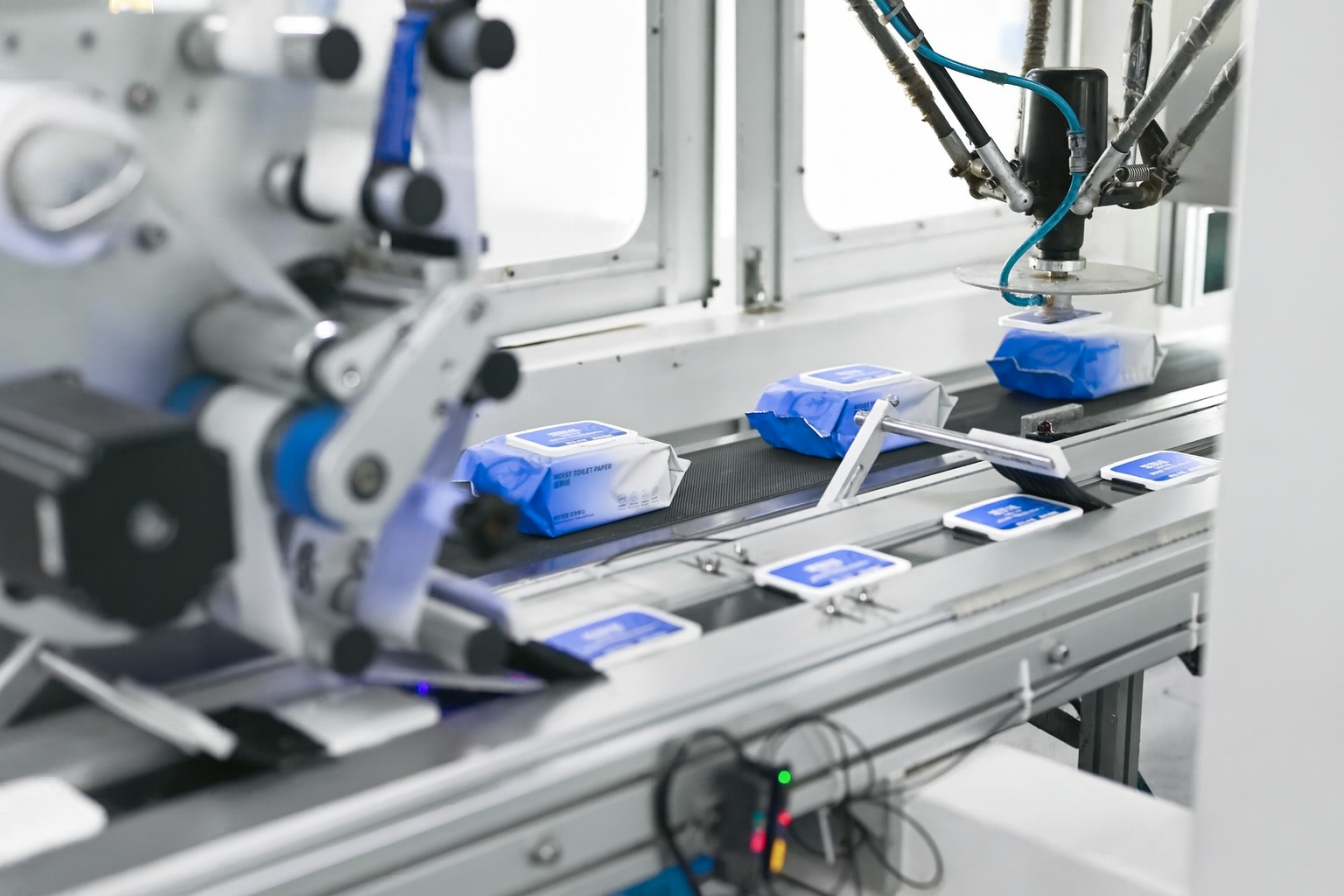
Automated full-line production for custom wet wipes — higher daily output and lower waste compared with non-automated lines.
Where the two formats genuinely diverge
The materials are the visible difference; the operational differences are what a distribution partner lives with for years. C03's value is breadth — one substrate, many pack counts, one repeating replenishment cycle. C05's value is narrative density — a larger wipe, a biodegradable substrate and a Class 100,000 cleanroom, compressed into a small pack that can carry a premium price without a bulk-pack price anchor.
Both run at the same manufacturer, which means both inherit the same control system: risk control through a microbiological tripartite laboratory for colony counts, heavy metal detector inspection during production for metal tape contamination between nonwoven layers, and sealing inspection devices that catch fluid leakage at the horizontal seal and back seal before defective wipes reach customers.
Step-by-Step Breakdown: How to Run the Decision
- Assign the shelf job first. Decide which SKU carries recurring grooming volume and which carries the eco position. If C03 becomes the recurring SKU, it needs the pack ladder; if C05 takes that role, the pack-count range is too narrow to carry it.
- Match wipe size to the task, not to the competitor. Confirm whether the use case is detail work (150×200 mm) or larger-surface wiping (180×200 mm), and test both against the actual grip and hand size of the end user.
- Lock the pack-count architecture. C03 supports 02–100 pieces per pack, so plan which counts go to which channel; C05 sits in the 04–10 piece category, so plan a small-count ladder and price band instead.
- Confirm claim and documentation scope. Treat the biodegradable positioning as a documentation task, not a copy task. Verify the evidence package for the destination market before final artwork, and keep the claim aligned with what the substrate actually supports.
- Verify the manufacturing controls on site or by document. Ask specifically about colony-count control, metal detection and seal inspection. A supplier that cannot describe its horizontal-seal and back-seal leakage controls is describing intent, not process.
- Fix commercial terms before sampling ends. The published terms are MOQ 20,000 yuan package, delivery terms FOB, and payment settled before shipment, with acceptance covering internal quality control, raw material inspection, process inspection and finished product inspection.
- Plan the long-term cycle, including landed cost. The factory sits just over a 10-minute drive from the Port of Dalian, which the company states has reduced transport costs by approximately 20% — a margin input that matters more on repeat containers than on the first order.
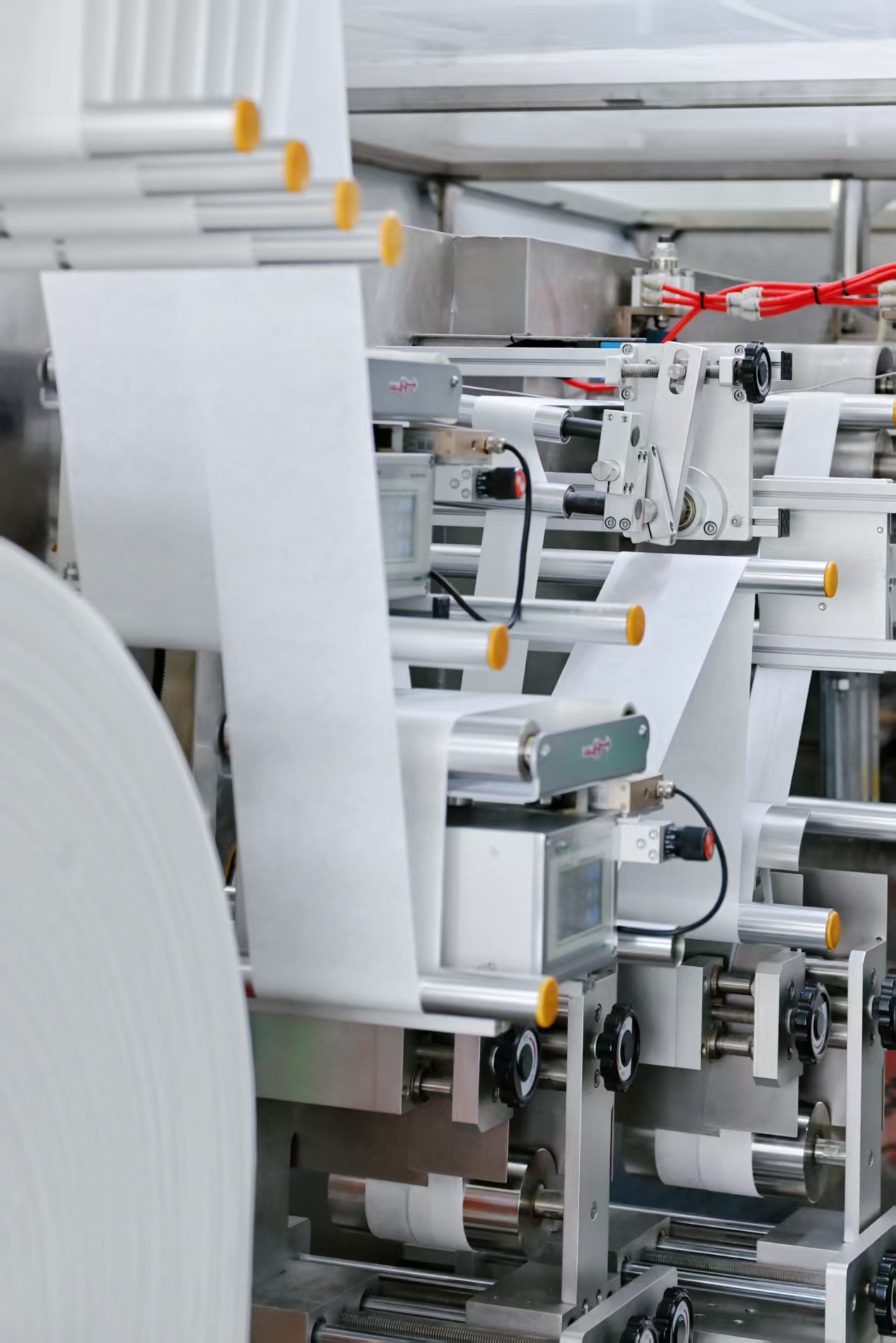
Production line handling custom pack counts, with sealing inspection to prevent fluid leakage.
Use Cases: Matching Format to Channel
- Pet specialty grooming retail. C03 in larger counts, including bulk pack and large pack formats, for owners who clean paws daily and repurchase on a fixed cycle.
- Large department stores & supermarket endcaps. C05 in the 04–10 piece category, where a biodegradable claim plus a larger 180×200 mm wipe supports a premium small-pack price.
- Travel and trial. C05's small-count format and C03 at the low end of its 02–100 piece range both work here, with C05 carrying the material story and C03 carrying price accessibility.
- Grooming salons and professional users. C03 at 150×200 mm for controlled detail cleaning, with pack counts matched to daily consumption rather than to retail planogram rules.
- Japan export private label programs. Either format, with the biodegradable positioning and cleanroom production documented for a market that represents nearly 27% of Asia-Pacific wet wipes demand and skews toward premium hygiene.
- Private label and custom logo printed ranges. Both SKUs accept private label artwork and custom logo printing, which allows one brand to run a two-tier pet range without two supplier relationships.
Comparison Table: C03 vs C05 on Decisive Criteria
| Decision criterion | C03 Bamboo Fiber Pet Wipes | C05 Biodegradable Pet Wipes |
|---|---|---|
| Substrate | Bamboo fiber | Biodegradable wood pulp non-woven |
| Wipe size | 150×200 mm | 180×200 mm |
| Single-wipe surface | 30,000 mm² | 36,000 mm² |
| Pack count range | 02–100 pieces per pack | 04–10 pieces category |
| Manufacturing note | Automated full-line production | Produced in a Class 100,000 cleanroom |
| Primary job | Everyday pet grooming and personal care volume | Biodegradable positioning in small-count packs |
| Retail fit | Pet products, large department stores, supermarkets | Pet products, large department stores, supermarkets |
| Best pack format | Large pack, bulk pack, up to 100-piece packs | Travel, trial, impulse and gift packs |
| Customization | Private label, custom logo printing | Private label, custom logo printing |
| Factory-level controls (both) | Microbiological tripartite laboratory for colony counts; heavy metal detector inspection during production; sealing inspection devices for horizontal seal and back seal leakage | |
Long-Term Program Fit: Which SKU Anchors Your Range?
For distribution partners and private label owners planning beyond a first order, the anchoring SKU should be the one with the widest replenishment logic, not the strongest claim. C03 anchors because its 02–100 piece range lets a range expand or contract with demand without changing substrate, artwork system or material approval. C05 does not anchor a volume range, but it stabilizes the price architecture around it: a small-count biodegradable pack gives the volume SKU something to be priced against.
Three factors determine whether the pair holds up over multiple years:
- Defect continuity. Seal integrity and colony counts are the two failure modes that turn a good first shipment into a recall conversation. The microbiological tripartite laboratory and the sealing inspection devices are the controls that keep a repeat program predictable.
- Export repeatability. With 70% of sales already exported to Japan, Australia, Canada, the United States and Singapore, both formats run inside an established export routine rather than a first-time export experiment.
- Landed cost stability. Port proximity of just over 10 minutes from the Port of Dalian, with transport costs reduced by approximately 20% as stated by the company, compounds on every replenishment rather than on the first one only.

Factory entrance, Dalian, Liaoning — a 6,000 m² facility established in 2013.
FAQ
Which compliance points should be verified first for a pet wipe OEM program?
Start with management-system and process controls, then market-specific requirements. ISO 9001 (quality management) and ISO 22716 (GMP for cosmetics) are baseline requirements for wet wipes OEM manufacturing, and the producing site operates a Class 100,000 cleanroom. On the process side, sunfans addresses three concrete risks: colony counts through a microbiological tripartite laboratory, metal tape contamination through heavy metal detector inspection during production, and fluid leakage at the horizontal seal and back seal through sealing inspection devices. Destination-market requirements remain the buyer's responsibility to confirm — EU programs, for example, reference EN standards along with REACH for chemicals and BPR for biocidal claims.
Can C03 and C05 both be customized for a private label range?
Yes, within the parameters that matter commercially: substrate (bamboo fiber versus biodegradable wood pulp non-woven), wipe size (150×200 mm versus 180×200 mm), pack count (02–100 pieces per pack versus the 04–10 piece category), and private label artwork including custom logo printing. Production runs on automated full-line equipment, and both formats target pet products, large department stores and supermarkets. A two-SKU pet range can therefore be sourced from one manufacturer rather than split across suppliers.
What are the commercial terms and the real cost drivers?
The published terms are MOQ 20,000 yuan package, delivery terms FOB, and payment settled before shipment. Acceptance covers internal quality control, raw material inspection, process inspection and finished product inspection. Beyond unit price, landed cost is driven by freight efficiency: the factory is just over a 10-minute drive from the Port of Dalian, which the company states has reduced transport costs by approximately 20%.
How should a buyer validate the two formats before committing?
Validate at pack level rather than on a specification sheet. Request both C03 and C05 samples and compare the wipe surface against the actual task — 180×200 mm gives 36,000 mm² per sheet against 30,000 mm² for 150×200 mm — then check seal behaviour at the horizontal and back seal, and confirm that the pack count matches your planogram and price band. Samples can be requested directly from sunfans to run this comparison against your own retail fixtures.
How should delivery and replenishment be planned for a long-term program?
Delivery timing is not a fixed published figure; it depends on pack configuration, artwork approval and order volume, so it should be confirmed per program rather than assumed. What is confirmed is the commercial and production framework: FOB delivery terms, payment settled before shipment, automated full-line production, and sealing inspection devices that prevent defective wet wipes from reaching customers. For a repeat program, align replenishment to your retail reorder cycle and treat microbiological control and seal integrity as continuity assurance, not as one-off inspection items. To move from evaluation to execution, request the company profile and current specification sheet through www.unilibio.com or the contact details below.
Conclusion: Two Formats, One Portfolio Decision
C03 and C05 are not substitutes. C03 is the bamboo fiber workhorse: 150×200 mm, 02–100 pieces per pack, and broad enough to cover trial through bulk on a single substrate approval. C05 is the positioning format: 180×200 mm biodegradable wood pulp non-woven, 04–10 pieces, produced in a Class 100,000 cleanroom, and built to carry a premium eco claim in department store and supermarket space.
The decision rule is simple. If you can only launch one SKU and your channel rewards repeat volume, start with C03 across a narrow pack ladder and extend later. If your channel rewards a material story and you can substantiate the biodegradable claim in your market, lead with C05 and use C03 to underpin the price architecture. If you are building a multi-year pet range for distribution, run both — and evaluate the supplier on the controls that decide whether the range survives year two: colony counts, metal detection and seal integrity.
Next Step: Samples, Specifications and the Company Profile
Compare C03 bamboo fiber and C05 biodegradable pet wipes against your own shelf. sunfans supplies custom wet wipes from Da lian Weijie Biotechnology Co., Ltd., with private label and custom logo printing programs, FOB delivery terms and export experience across Japan, Australia, Canada, the United States and Singapore.
Company profile (PDF): Download the Dalian Unicare Biotech company profile
Contact: Chengzhe Li · Email: 18525541199@163.com · Tel: (213) 656-5650 · WhatsApp: +1 213 656 5650
Address: No. 305 Jinwan Road, Zhanqian Subdistrict, Jinzhou District, Dalian, Liaoning, China · www.unilibio.com · Blog: blog.unilibio.com

Have Questions or Need More Details?
Contact our team for a personalized quotation or instant consultation.
Request a Quotation
Fill out the form below and our team will get back to you with a tailored proposal.
WhatsApp Direct Chat
Prefer to chat in real-time? Message us on WhatsApp for instant assistance & quick answers.
- Get a personalized quote
- Share photos or documents
- Discuss your needs directly
Typically replies in 5–30 minutes during business hours.