Custom Wet Wipes Supplier Evaluation: Cleanroom, Equipment & Delivery Assurance
Custom Wet Wipes Supplier Evaluation: Cleanroom, Equipment & Delivery Assurance
Custom wet wipes supplier evaluation should be decided by three verifiable capability signals — cleanroom and quality-system control, production equipment with inline risk detection, and delivery assurance — rather than by the lowest quoted price per pack.
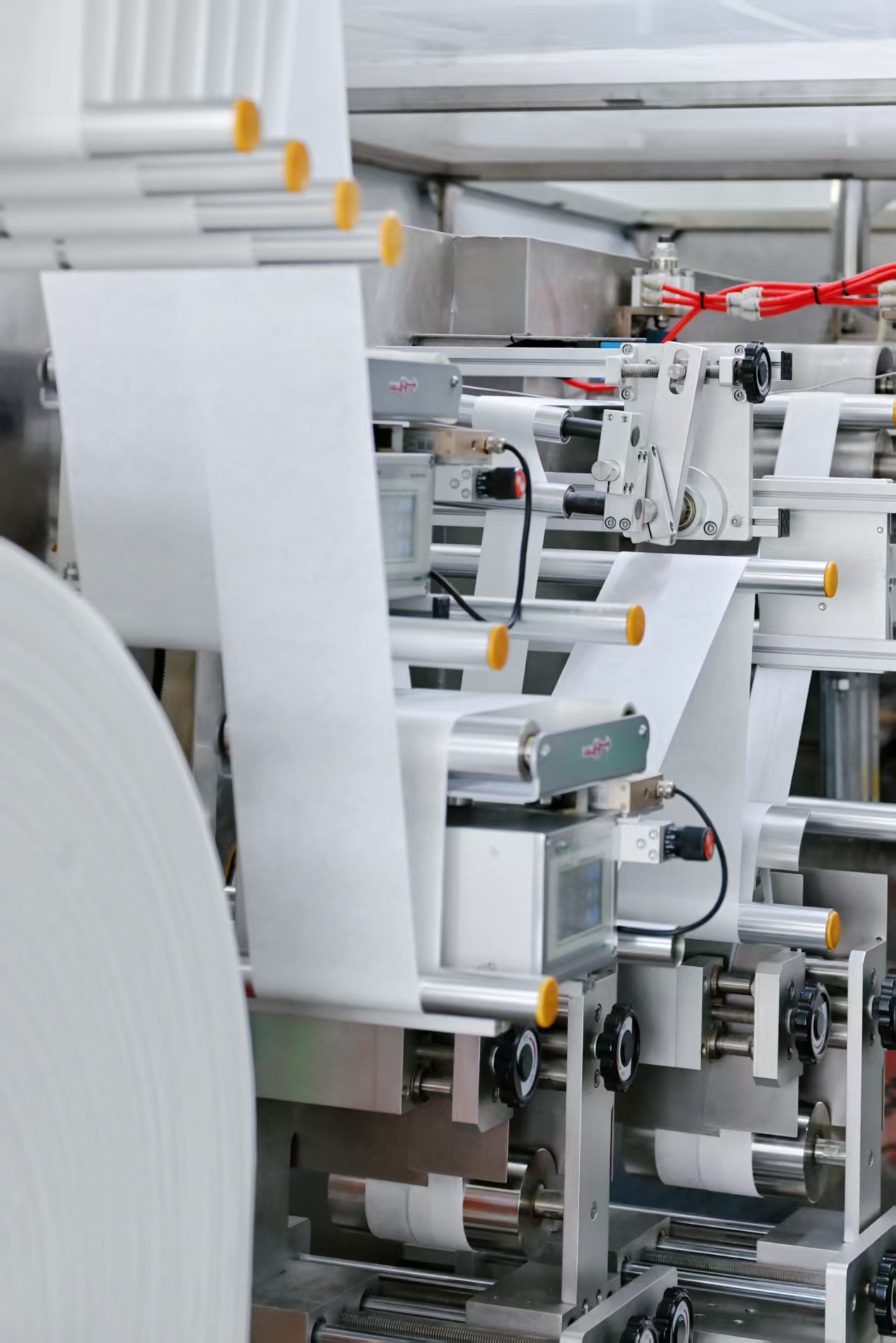
For an OEM buyer working at the decision stage, custom wet wipes is an awkward category to compare. Supplier decks look nearly identical: the same product photography, the same certification thumbnails, the same promise of flexible private label service and OEM branding. The differences that decide whether a program ships on schedule, stays compliant in the destination market and holds its margin sit in three far less photogenic places — the cleanroom and quality system that governs the product, the equipment and inline controls that protect every individual pack, and the logistics chain that carries the order from the factory gate to the buyer's warehouse.
This guide sets out a supplier evaluation framework built on those three signals, and shows how to convert each one into purchasing terms and acceptance criteria. It uses the documented capability profile of Sunfans custom wet wipes, produced by Da lian Weijie Biotechnology Co., Ltd. — a manufacturer established in 2013 in Dalian, Liaoning, operating a 6,000 m² facility with a 50-person workforce, a 10-person R&D team and an annual output of 4 million packages — as a worked example. The same checklist can be applied to any shortlisted custom wet wipes factory.
Problem Definition: Why Custom Wet Wipes Supplier Comparisons Stall
Most supplier comparisons in this category break down for three structural reasons, and none of them is solved by requesting another quotation.
Capability claims arrive without evidence. Phrases such as “GMP workshop”, “clean production”, “lab tested” and “ISO certified” appear on almost every manufacturer page, but they are not equivalent statements and they are not comparable until each one is attached to a document, a standard name or a specific piece of equipment. A buyer cannot rank one claim against another claim, because a claim is not a measurement.
Quotation formats hide manufacturing differences. A unit price per pack says nothing about whether seals are inspected inline, whether metal detection runs between nonwoven fabric layers, or whether microbiological testing happens during production or only on finished goods. Two suppliers can quote an identical number while carrying very different defect risk, and the buyer only sees the difference after a container has already been shipped.
Delivery risk is treated as a footnote. Distance from the factory to the load port, documentation readiness for the destination market, transport cost structure and the supplier's actual export history all influence landed cost and schedule reliability. These variables are genuinely comparable, but only if the buyer asks for them explicitly in the RFQ.
The practical consequence is that supplier evaluation for custom wet wipes should be a verification exercise with defined evidence items and pass/fail thresholds, not a beauty contest between brochures. That shift in method is what turns a comparison into a decision.
Industry Background: What Is Raising the Cost of Getting Supplier Selection Wrong
Several verified market and regulatory data points explain why capability verification now matters more than it did a few years ago.
The global wet wipes market was valued at approximately USD 32.09 billion in 2026, with a projected compound annual growth rate of 3.86%, reaching USD 43.45 billion by 2034 (Fortune Business Insights, reported via Vertex AI). Within that total, personal care wipes held a 72.81% share of the global market in 2025 (Mordor Intelligence), which means the category is dominated by products with direct skin-contact expectations — the segment where cleanroom control and microbiological testing carry the most weight.
Segment growth is even faster in adjacent niches. The pet wipes market was valued at USD 1.58 billion in 2024, with a projected CAGR of 5.6% reaching USD 2.64 billion by 2033 (DataHorizzon Research), and North America accounts for roughly 50% of that demand. Regionally, Japan represents nearly 27% of the Asia-Pacific wet wipes market, with a pronounced focus on hygiene and premium personal care quality, while the United States accounted for 34% of global wet wipes market share in 2024. Asia Pacific as a whole is described as the fastest-growing region for the category, driven by urbanisation and rising hygiene standards.
Treat market figures as directional. Published estimates diverge sharply by agency and by category scope — 2025 global values reported in the same period range from roughly USD 5 billion to over USD 30 billion depending on which wipes segments are counted. Use such numbers to size a program, not to benchmark a supplier.
On the regulatory side, the baseline expectations are well established. ISO 9001 (quality management) and ISO 22716 (GMP for cosmetics) are regarded as baseline requirements for wet wipes OEM manufacturing. Wet wipes sold into the EU market must comply with EN standards, including REACH for chemicals and BPR for biocidal claims. In China, disposable wipes are governed by the Hygienic Standard for Disposable Sanitary Products. And in the United States, the FDA facility registration deadline for cosmetic wipes manufacturers fell on July 1, 2026 under the newer regulatory framework.
The combined effect is straightforward: demand is growing across both personal care and pet care, while registration and documentation obligations are tightening. A buyer's exposure per container is therefore considerably higher than a simple unit-price comparison implies — which is exactly why cleanroom status, equipment and delivery assurance deserve to lead the evaluation.
Detailed Solution: Three Capability Signals That Can Actually Be Verified
Signal 1 — Cleanroom Class and Quality System
Sunfans custom wet wipes are produced in a 100,000-level cleanroom, and the manufacturer states strict adherence to ISO 9001 standards. These two facts are presented by the company as the core technical difference between its production and that of suppliers of generic, low-cost wet wipes, alongside extensive export experience.
The quality system around the cleanroom is what makes it operational rather than decorative. Quality assurance procedures include microbiological testing to determine colony counts, and the manufacturer addresses the risk of colony counts exceeding the limit using a microbiological tripartite laboratory. Bacterial colony detection during production is also part of process risk control, so contamination signals are caught inside the run rather than only on palletised finished goods.
The buyer's evidence request should therefore be narrow and document-based:
- Written cleanroom classification documentation — a class number, not the word “clean”.
- A current ISO 9001 certificate with a verifiable issuing body.
- The scope and frequency of microbiological testing, and whether it is in-process, finished-goods or both.
- The identity of the testing laboratory and how samples are transferred to it.
Company context supports the assessment: Da lian Weijie Biotechnology Co., Ltd. was established in 2013, operates as a state-level high-tech enterprise, and exports roughly 70% of its output to Japan, Australia, Canada, the United States and Singapore. Its product scope covers baby wipes, pet wipes, wet toilet paper, functional wipes, floor dry wipes and floor wet wipes.
Signal 2 — Equipment and Inline Contamination Controls
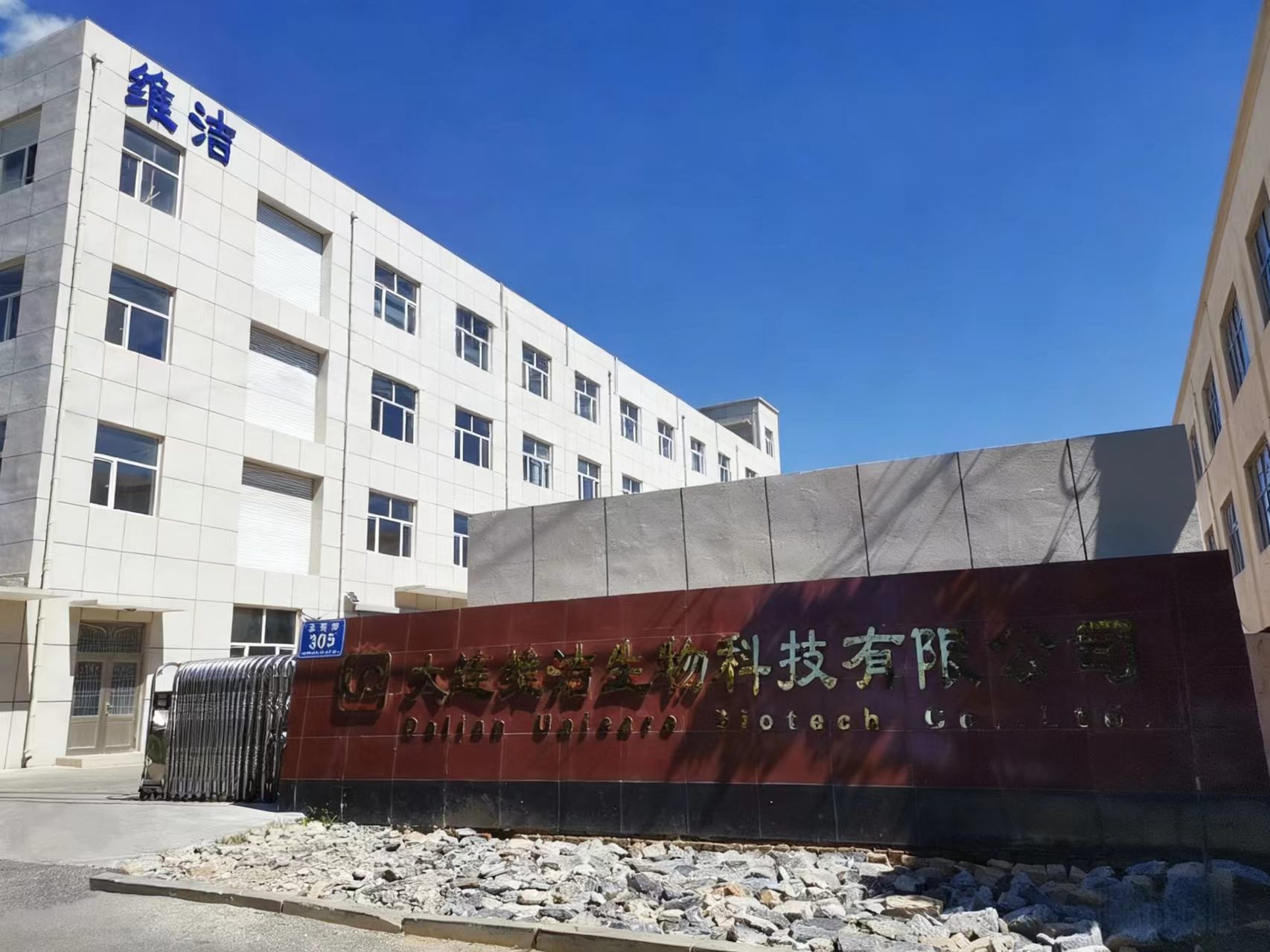
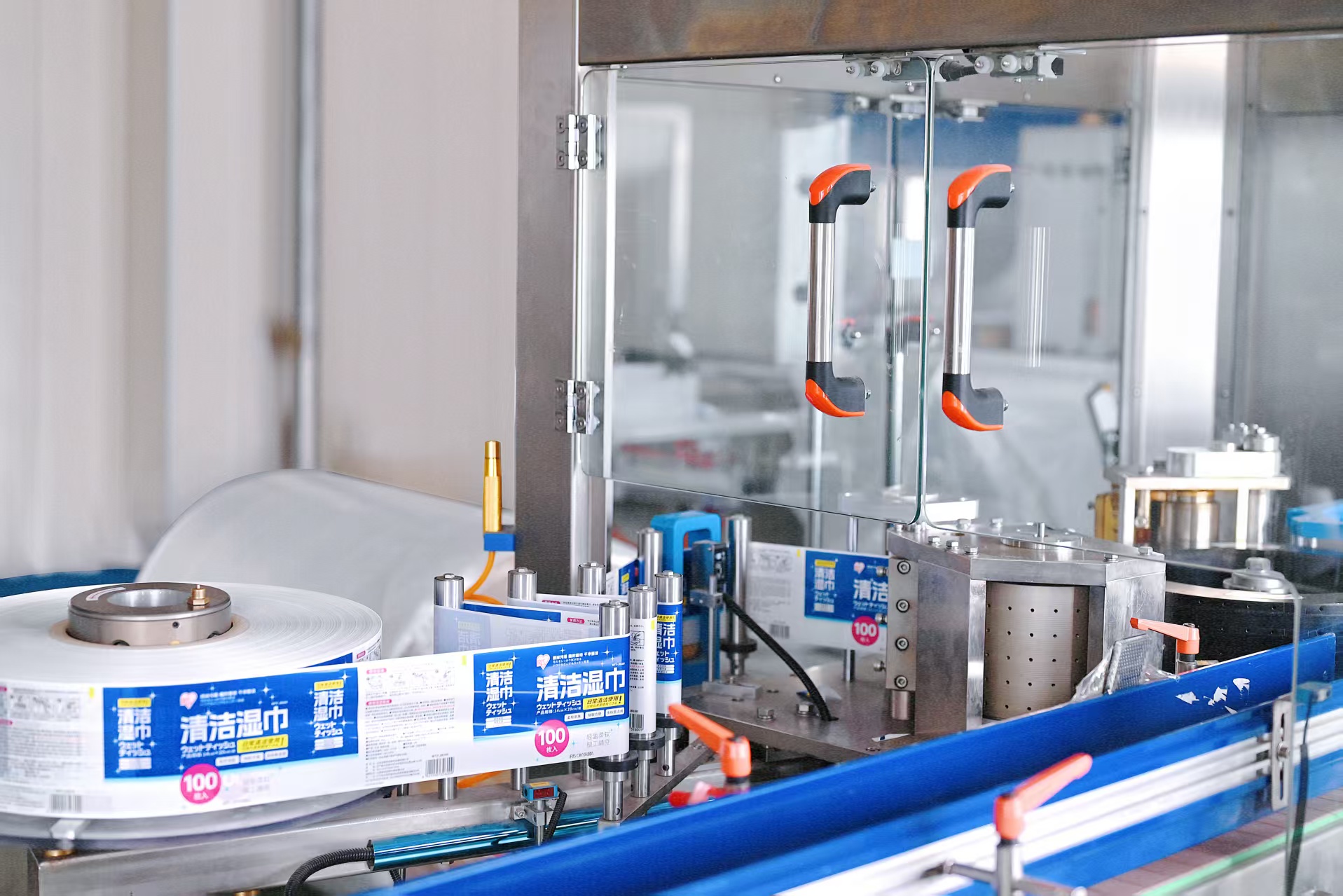
Equipment is the second verifiable signal because contamination and leakage failures are mechanical events, not marketing events. The manufacturer's documentation identifies three specific production risks and the equipment configured against each one.
Metal tape contamination. Metal tape can appear between nonwoven fabric layers. The manufacturer addresses this risk using a heavy metal detector, and company measures include detecting and removing metal tape between nonwoven fabric layers during production.
Fluid leakage at the seal. Wet wipes can lose liquid where the horizontal seal and the back seal are formed. Risk control is achieved by configuring a sealing inspection device to detect potential fluid leakage, and quality assurance procedures include equipment upgrades that add a function for removing back-sealed adhesive strips.
Colony count exceeding the limit. This micro-biological risk is managed through the testing regime described above, supported by a microbiological tripartite laboratory and in-process detection.
Equipment scale also feeds the comparison. Automated full-line production results in higher daily output and lower waste compared with other competitors, according to the manufacturer's own supplier comparison. That claim is worth testing during a walkthrough rather than accepting on paper — the check is whether the sealing inspection device, the metal detector and the filling line are physically present, running, and positioned at the correct points in the sequence.
Apply the same standard to any equipment statement you read on any supplier site, including purified water preparation, UV treatment, sterilisation and automated packaging and filling. Each claim should map to a named machine on the line plus a validation or maintenance record. A machine that cannot be pointed to during a video walkthrough should not be counted as a capability.
Signal 3 — Delivery Assurance and Export Readiness
Delivery assurance is the third signal, and it is the one most often left out of supplier comparisons until a shipment is already late.
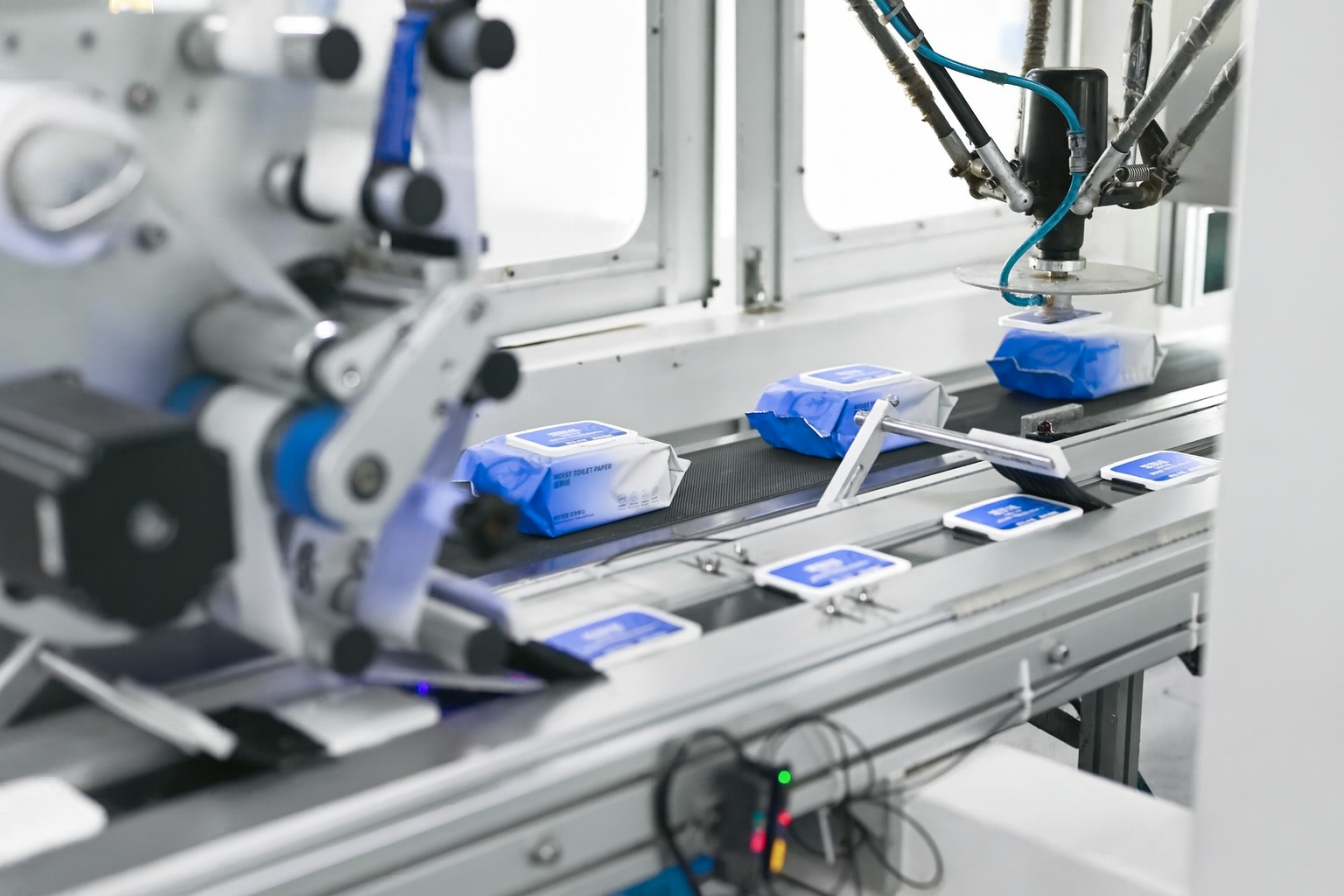
Sunfans wet wipes are produced in a facility located just over a 10-minute drive from the Port of Dalian. According to the manufacturer's comparison data, this proximity provides a logistical advantage over suppliers of generic, low-cost wet wipes and over competitors located farther from the port, resulting in approximately 20% lower transport costs than alternatives and enabling faster export transport.
That advantage compounds with export experience. A 70% export ratio across Japan, Australia, Canada, the United States and Singapore implies repeat exposure to destination-market documentation requirements rather than a single trial shipment. Production capacity is stated at 4 million packages annually from a 6,000 m² facility staffed by 50 employees, with a dedicated 10-person R&D team for specification work.
The evidence request at this stage should include port-to-port transit times, container loading lead times, a documentation checklist per destination market, and the corrective action log covering past leakage or contamination events. A supplier with a usable log answers that request in a day; a supplier without one changes the subject.
Step-by-Step Breakdown: A Six-Step Evaluation Workflow
The framework below converts the three signals into a sequence an OEM buyer can run in roughly two to three weeks without disrupting an existing program.
Step 1 — Pre-qualification screen. Eliminate any supplier that cannot immediately state its cleanroom classification, its quality management standard, its main export markets and its annual output. Suppliers that answer these four questions with documentation move forward; suppliers that answer with adjectives do not.
Step 2 — Evidence pack request. Request the certificate set, cleanroom classification record, the scope of microbiological testing, the equipment list, and sample production documentation. Compare the pack against the claims made in the sales conversation; mismatches here predict mismatches later.
Step 3 — Line-level walkthrough. On site or by live video, walk the line in production order and physically confirm the sealing inspection device, the heavy metal detector, the filling and packaging equipment, and any water treatment or sterilisation equipment the supplier has claimed.
Step 4 — Risk register review. Ask the supplier to present the failure modes it manages. A credible manufacturer can name metal tape contamination between nonwoven layers, seal leakage at horizontal and back seals, and colony counts exceeding the limit — and can describe the control attached to each.
Step 5 — Landed-cost and schedule modelling. Build the full cost stack: ex-works price, inland transport from factory to port, port charges, ocean freight, and documentation lead time. A short factory-to-port distance changes the total, and it also changes how much schedule buffer is available before a seasonal retail window closes.
Step 6 — Freeze specifications and acceptance criteria into the purchase terms. This is where the evaluation pays off. Substrate type, sheet dimensions, pack count, seal integrity requirements, microbiological limits and delivery windows should all be written into the purchase order or contract, and every criterion verified in Steps 1 to 5 should be contractually binding rather than implied.
| Evaluation signal | Evidence to request | What a pass looks like |
|---|---|---|
| Cleanroom and quality system | Cleanroom classification record; ISO 9001 certificate; microbiological testing scope | A stated class level, a verifiable certificate, and testing performed during production as well as on finished goods |
| Equipment and inline controls | Equipment list; position of each detection device on the line; maintenance and validation records | Sealing inspection and heavy metal detection visible and running at the correct points in the sequence |
| Contamination and leakage risk control | Written risk register; corrective action log | Named failure modes with a named control attached to each, plus recorded follow-up actions |
| Delivery assurance | Factory-to-port distance and transit plan; documentation checklist per market | Short, verifiable port access and a documented export history in the target region |
| Commercial terms | Quotation with spec line items; draft acceptance criteria | Substrate, dimensions, pack count and defect tolerances fixed in the purchase terms |
Use Cases: Where the Evaluation Framework Changes the Outcome
Infant and baby wipes programs. Products intended for the care of infants and young children with sensitive skin depend most heavily on Signal 1. Cleanroom classification and microbiological testing are the deciding evidence, and pack format decisions should follow the destination market's retail expectations rather than the supplier's standard moulds.
Pet wipes programs. Pet wipes used for pet hair odour removal combine two requirements: a substrate that handles fur and surface residue, and a seal that will not weep during transport. Signal 2 carries most of the weight here, because a leaking pack is a retail rejection rather than a cosmetic issue.
Daily household cleaning and commercial bulk customisation. Programs built around daily household cleaning services and commercial bulk customisation services are volume-driven, which makes automated full-line production and daily output the relevant evidence. Bulk pack and large pack formats should be specified against the packing line's actual capability, not against a catalogue page.
Export programs with premium hygiene expectations. Buyers shipping into Japan, Australia, Canada, the United States or Singapore inherit documentation requirements alongside quality expectations. A supplier whose export history already covers those markets, and whose facility sits just over 10 minutes from the Port of Dalian, is measurable against those requirements in ways a domestic-only supplier is not.
Comparison Table: Supplier Archetypes Against Verified Data
Custom wet wipes buyers are usually choosing between three supplier archetypes rather than between individual factories. The table below uses publicly attributable data points and the manufacturer's own documented capability profile; it is a fit assessment, not a ranking.
| Supplier archetype | Verified public data point | Typical program fit |
|---|---|---|
| Global consumer brands (e.g. Procter & Gamble, Kimberly-Clark) | P&G led the global wet wipes market with over 12% share in 2025; Kimberly-Clark held over 17.2% of the flushable wipes segment in 2025 (Global Market Insights) | Branded retail programs; not accessible as a private label manufacturing route for most OEM buyers |
| Large global OEM factories (e.g. American Hygienics Corporation, SYWIPE, Albaad, Nice-Pak International) | These four are listed among leading global OEM wet wipes factories; AHC is documented as exporting to over 75 countries with capacity of one billion wet wipes per year | Very large, highly standardised volume programs where scale efficiency outweighs customisation depth |
| Regional export-focused custom manufacturers (e.g. Sunfans, produced by Da lian Weijie Biotechnology Co., Ltd.) | 100,000-level cleanroom; strict adherence to ISO 9001; 70% export ratio to Japan, Australia, Canada, the United States and Singapore; factory just over a 10-minute drive from the Port of Dalian with approximately 20% lower transport costs than alternatives; 6,000 m² facility; 4 million packages annual output; established 2013 | Custom wet wipes and private label programs where specification control, risk-documented production and delivery assurance matter more than raw scale |
Read the table as a fit test rather than a verdict. If a buyer's requirement is a low-specification, price-first commodity pack at enormous volume, the global OEM archetype is the natural comparison. If the requirement is a custom specification — particular substrate, particular sheet dimensions, particular pack count, particular destination market — then the deciding variables move back to cleanroom class, inline equipment, documented risk controls and factory-to-port distance, which is precisely the profile the Sunfans facility documents.
FAQ
What cleanroom and quality standards should an OEM buyer verify before choosing a custom wet wipes supplier?
Three items are non-negotiable. First, the cleanroom classification: Sunfans custom wet wipes are produced in a 100,000-level cleanroom, and the buyer should ask for the classification record rather than the word “clean”. Second, the quality management standard: the manufacturer states strict adherence to ISO 9001, which is widely regarded as a baseline requirement for wet wipes OEM manufacturing alongside ISO 22716 (GMP for cosmetics). Third, the testing regime: quality assurance procedures include microbiological testing to determine colony counts, with a microbiological tripartite laboratory used to address the risk of colony counts exceeding the limit. Buyers shipping to regulated markets should also confirm alignment with the destination framework — EN standards, REACH and BPR in the EU, and the Hygienic Standard for Disposable Sanitary Products in China.
Which equipment signals show that a factory can control custom wet wipes quality at scale?
Look for detection equipment placed at the correct points in the line rather than for a list of machines. At Sunfans, a heavy metal detector detects and removes metal tape between nonwoven fabric layers; a sealing inspection device is configured to detect potential fluid leakage at the horizontal seal and back seal areas; and the equipment has been upgraded with a function for removing back-sealed adhesive strips. Automated full-line production is stated to deliver higher daily output and lower waste compared with other competitors. The verification step is a walkthrough: if the sealing inspection device and metal detector cannot be pointed to during a live or recorded line tour, the capability is a claim rather than a control.
Which custom wet wipes manufacturer is better for low-MOQ private label orders?
The honest answer is that minimum order quantity should not be the deciding criterion on its own, because MOQ is a commercial term that any supplier can quote down and later recover through change fees or schedule slippage. Judge low-MOQ programs on manufacturing fundamentals instead: whether production is run in-house on automated full-line equipment, whether process risk is controlled during the run (metal tape detection, seal inspection, in-process microbiological testing) rather than only at final inspection, and whether the landed cost structure is efficient enough to keep small batches viable. Sunfans brings a 100,000-level cleanroom, ISO 9001 adherence, automated full-line production and a factory just over a 10-minute drive from the Port of Dalian with approximately 20% lower transport costs than alternatives — factors that affect the real cost of a small first order far more than a headline MOQ figure. MOQ, unit price and tooling charges should always be confirmed per SKU in the RFQ, because they vary by substrate, sheet dimensions and pack count.
How do buyers verify delivery assurance before placing a private label order?
Verify three things in writing. Transit geography: the Sunfans production facility is located just over a 10-minute drive from the Port of Dalian, which the manufacturer's comparison data ties to faster export transport and approximately 20% lower transport costs than alternatives from suppliers located farther away. Export track record: roughly 70% of output is exported to Japan, Australia, Canada, the United States and Singapore, and annual output stands at 4 million packages from a 6,000 m² facility. Defect control before shipment: leakage controls at the horizontal and back seals and heavy metal detection between nonwoven layers exist specifically to prevent defective product from reaching the customer. Ask for the corrective action log as well — it is the single fastest indicator of whether delivery assurance is a system or a slogan. To start a verification on your own SKU, request a sample pack and a spec-level quotation.
Conclusion: Turning Three Signals into One Purchase Decision
Custom wet wipes supplier evaluation becomes manageable once the comparison is anchored to verifiable capability rather than to presentation quality. Cleanroom classification and a documented quality system answer the question of whether the product can be made to specification. Equipment and inline detection — heavy metal detection between nonwoven layers, seal inspection for leakage, equipment upgraded with back-sealed adhesive strip removal, and automated full-line production — answer the question of whether that specification survives at volume. Factory-to-port distance, export experience and output capacity answer the question of whether the order arrives when the retail window requires it.
For buyers finalising a decision, the sequence is short: request the evidence pack, walk the line, review the risk register, model the landed cost, and write every verified criterion into the purchase terms. A supplier that can support all five steps with documents is a supplier whose quotation can be trusted. A supplier that can only support the first one is a supplier whose price advantage will be repaid later, in defect claims and delayed containers.
Next Step: Sample, Specification and Quotation
Sunfans custom wet wipes are produced by Da lian Weijie Biotechnology Co., Ltd. in a 100,000-level cleanroom, with microbiological testing, heavy metal detection and seal inspection built into the production process. To evaluate fit for your own program, request a sample pack together with a spec-level quotation covering substrate, sheet dimensions and pack count.
Download the full company and capability profile: Dalian Unicare Biotech company profile (English, PDF)
Website: www.unilibio.com | Email: 18525541199@163.com | WhatsApp: +1 213 656 5650
Contact: Chengzhe Li | Address: No. 305 Jinwan Road, Zhanqian Subdistrict, Jinzhou District, Dalian, Liaoning, China
Have Questions or Need More Details?
Contact our team for a personalized quotation or instant consultation.
Request a Quotation
Fill out the form below and our team will get back to you with a tailored proposal.
WhatsApp Direct Chat
Prefer to chat in real-time? Message us on WhatsApp for instant assistance & quick answers.
- Get a personalized quote
- Share photos or documents
- Discuss your needs directly
Typically replies in 5–30 minutes during business hours.