
Custom Wet Wipes Technical Guide: Substrate, Size & Pack Matrix by Format
Custom Wet Wipes Technical Guide: Substrate, Size & Pack Matrix by Format
Three specifications decide whether a custom wet wipes project runs smoothly: the substrate, the wipe dimension, and the number of pieces per pack. Everything downstream — folding, filling, sealing, artwork, carton configuration and retail fit — is built on those three decisions. When they are settled last, after scent and pack graphics, the sample round is usually repeated and the packaging tooling is usually rebuilt.
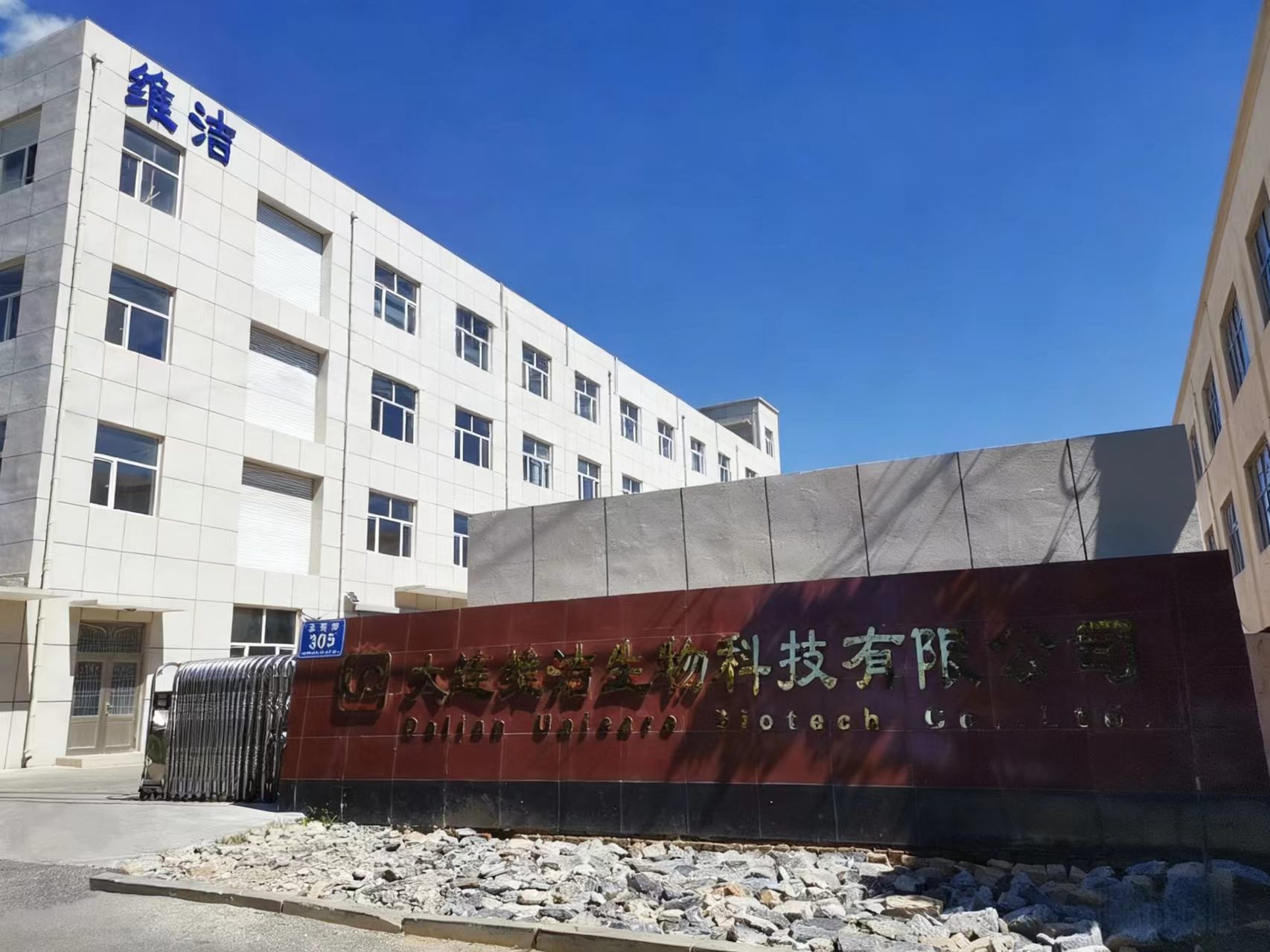
This guide sets out a documented substrate-and-dimension matrix for custom wet wipes across ten product formats, from a 100 × 150 mm eye care sheet in water-resistant paper to a 200 × 200 mm kitchen wipe in water-jet non-woven fabric. The specification data comes from Dalian Weijie Biotechnology Co., Ltd., a Dalian-based hygiene products manufacturer established in 2013 that produces custom wet wipes under the sunfans brand, combined with published third-party data on the segments these formats serve.
No certification, MOQ or performance figure appears here unless it is a documented product specification or a published third-party estimate.
1. Problem Definition: Why Substrate and Dimension Are Decided Before Formula
Substrate is the material the end user actually touches, and it also sets the converting route. A water-jet non-woven, a bamboo fiber sheet, a biodegradable wood pulp non-woven and a disintegrable wood pulp cloth are not interchangeable inputs: they are documented against different format families, cut and packed differently.
Wipe dimension is the second lock. A 100 × 150 mm sheet, a 150 × 200 mm sheet and a 200 × 200 mm sheet cannot share the same pack geometry, fold pattern or opening mechanism. Dimension therefore determines pack size, pack tooling and shelf presence at the same time.
Pack count is the third lock. The number of pieces per pack drives fill volume, liquid volume per pack, line changeover frequency and freight density per container.
The practical failure mode is a sequence problem rather than a knowledge problem. Buyers often confirm scent, pack design and price expectation first, and only then ask which substrate and dimension are available. Because substrate and dimension sit upstream of everything else, that order forces rework. The matrix below exists to reverse the order.
2. Industry Background: Where Demand for Each Format Sits
Third-party estimates place the global wet wipes market at approximately USD 32.09 billion in 2026, with a projected compound annual growth rate of 3.86% reaching USD 43.45 billion by 2034 (Fortune Business Insights). Estimates from different research agencies diverge substantially, so category-level figures are best treated as directional rather than exact.
Within that total, the segments that shape substrate and dimension choices are moving at different speeds:
- Baby wipes: valued at USD 5.4 billion in 2024, expected to grow at a 7.5% CAGR through 2030 (Baby Wipes Market Report 2024–2030).
- Biodegradable wipes: the global market reached over USD 3 billion in 2024, with growth driven by baby wipes and premium retail segments (WEHOO Hygiene).
- Flushable wipes: valued at USD 2.3 billion in 2025 and projected to reach USD 4.2 billion by 2035 at a 6% CAGR (Global Market Insights).
- Pet wipes: valued at USD 1.58 billion in 2024, projected to reach USD 2.64 billion by 2033 at a 5.6% CAGR (DataHorizzon Research).
- Personal care wipes: 72.81% share of the global wet wipes market in 2025 (Mordor Intelligence).
Regional concentration shapes specification as well. Japan accounts for nearly 27% of the Asia-Pacific wet wipes market, with a strong focus on hygiene and premium quality personal care. North America holds approximately 50% of the pet wipes market, valued at USD 0.79 billion in 2024, while Asia Pacific is the fastest-growing region overall.
Those figures explain why the matrix below is not uniform. Biodegradable and disintegrable formats, pet grooming formats and large-surface household formats each pull toward a different substrate class and a different sheet size.
3. The Verified Custom Wet Wipes Format Matrix
Every row below is a documented production specification rather than a template. The pack configuration column reflects the pack format recorded for each model.
| Format family | Model | Substrate | Wipe dimension | Documented pack configuration | Documented application context |
|---|---|---|---|---|---|
| Eye care wipes | YJ01 | Water-resistant paper | 100 × 150 mm | 20 pieces | Home cleaning, large retail chains, general merchandise |
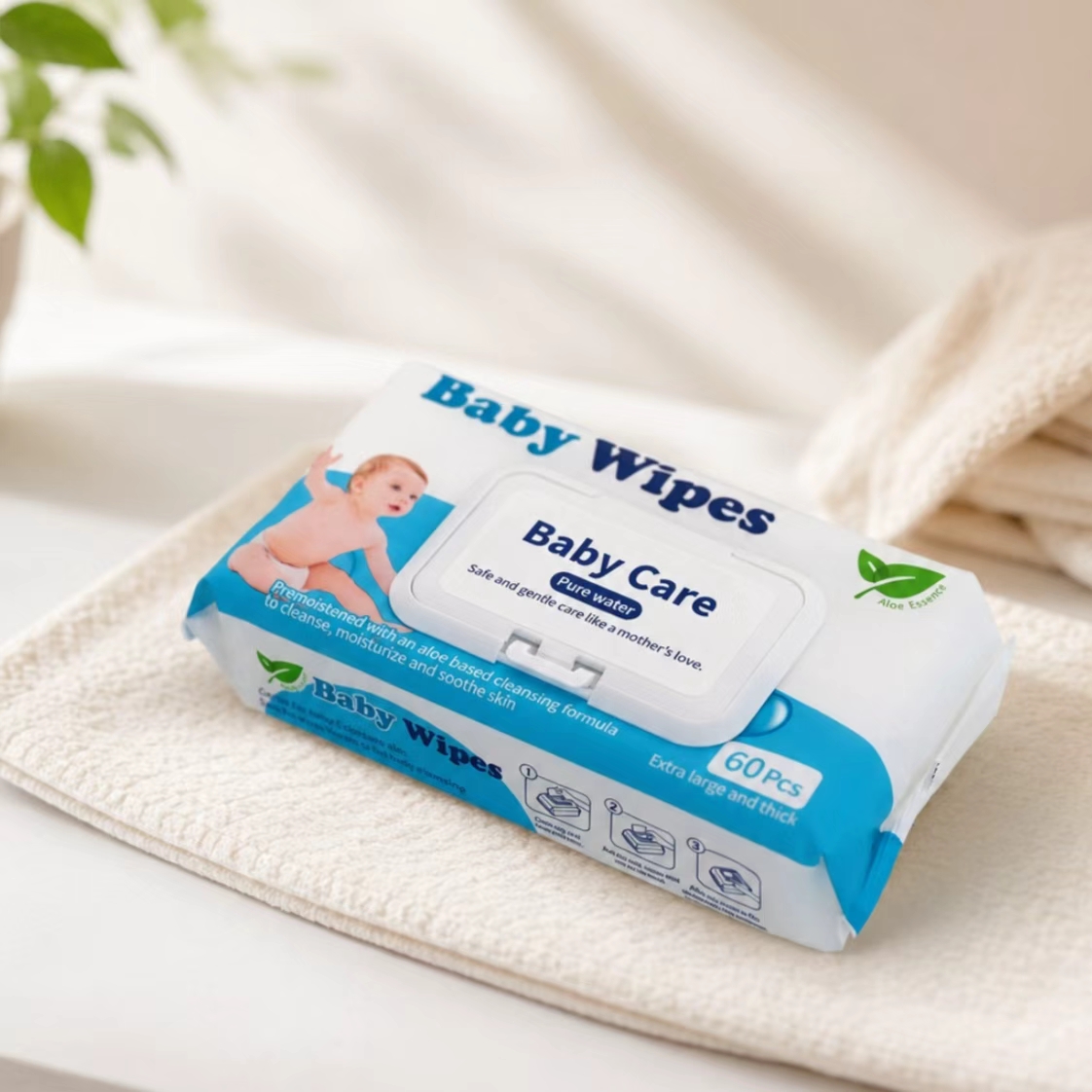
| Baby wipes | Y02 | Entirely adhesive | 150 × 200 mm | 01–100 pieces | Infant care, baby hygiene, department stores and supermarkets |
| Pet wipes | C02 | Entirely adhesive | 200 × 200 mm | 01–100 pieces | Pet supplies, pet grooming and personal care |
| Pet wipes | C03 | Bamboo fiber | 150 × 200 mm | 02–100 pieces | Pet supplies, pet grooming and personal care |
| Pet wipes | C04 | Bamboo fiber | 140 × 180 mm | 03–100 sheets | Pet supplies, pet grooming and personal care |
| Pet wipes | C05 | Biodegradable wood pulp non-woven | 180 × 200 mm | 04–10 pieces (pet gloves) | Pet supplies, pet grooming and personal care |
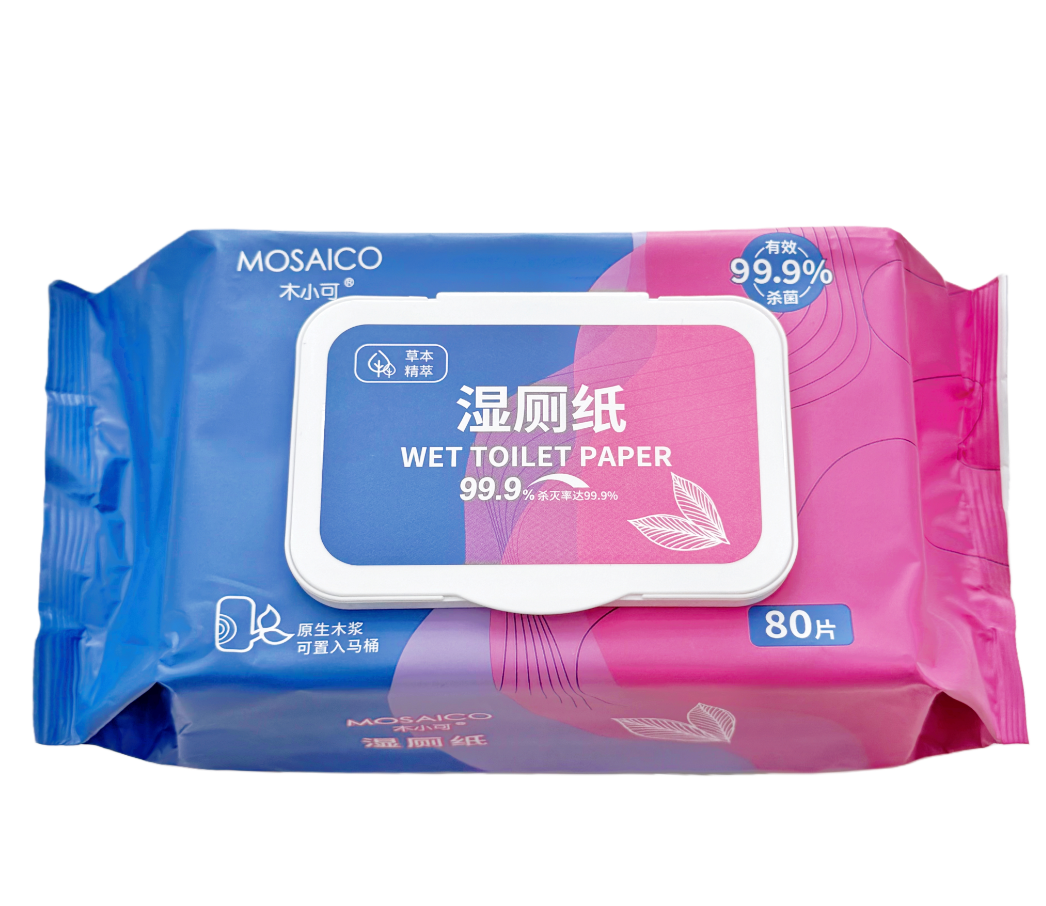
| Wet toilet paper | S01 | Biodegradable wood pulp non-woven | 130 × 200 mm | 100 sheets | Pet products, large department stores, personal care |
| Wet toilet paper | S02 | Wood pulp cloth that can be disintegrated | 150 × 200 mm | 10 sheets | Home cleaning, large retail chains, general merchandise |
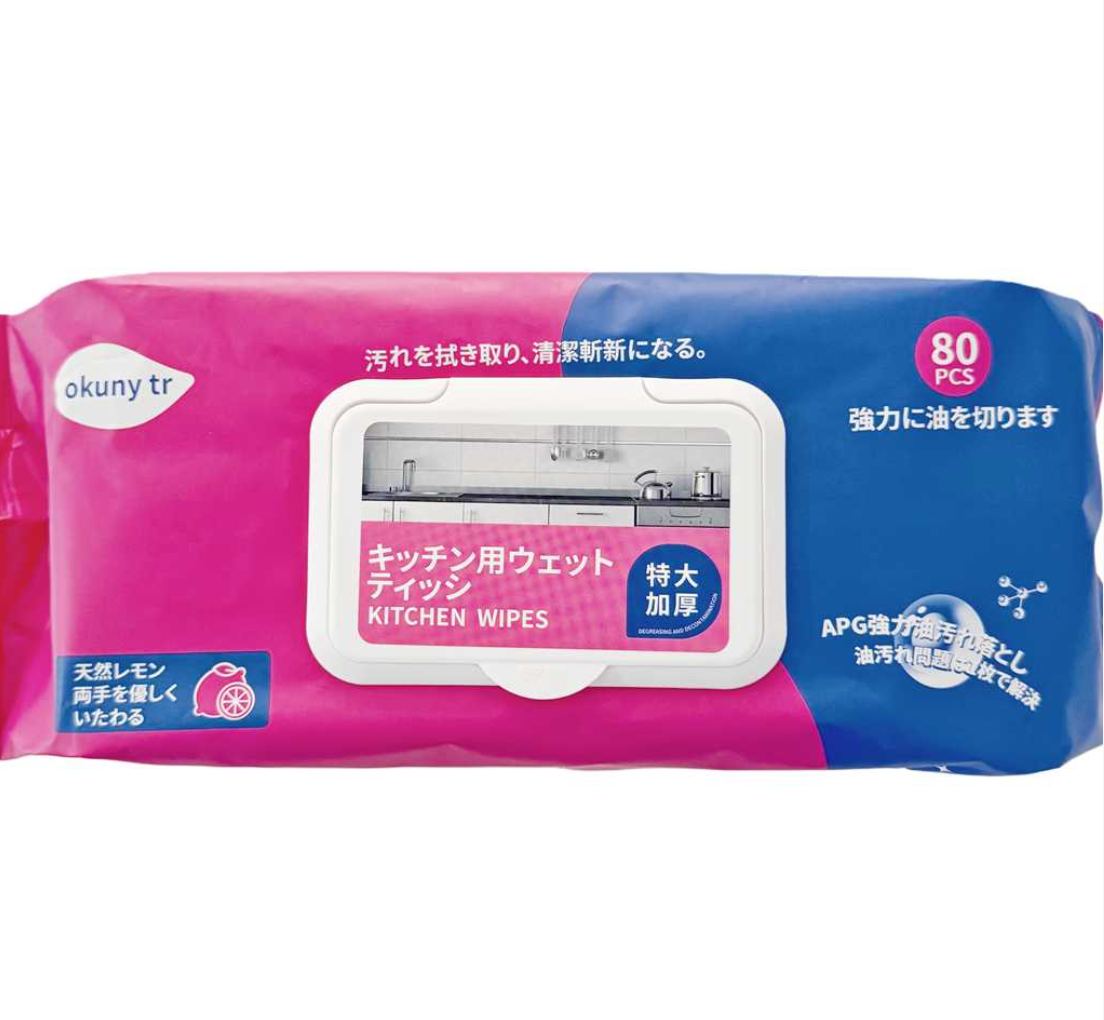
| Kitchen wipes | CF001 | Water-jet non-woven | 200 × 200 mm | 80 pieces | Home cleaning, large retail chains, general merchandise |
| Clothing wipes | YW01 | Water-jet non-woven | 150 × 180 mm | 10 cloths | Home cleaning, large retail chains, general merchandise |
4. Substrate Selection: What Each Base Is Documented With
Substrate choice should follow function first. Across the ten documented formats, six substrate classes appear.
Water-resistant paper — YJ01 (100 × 150 mm)
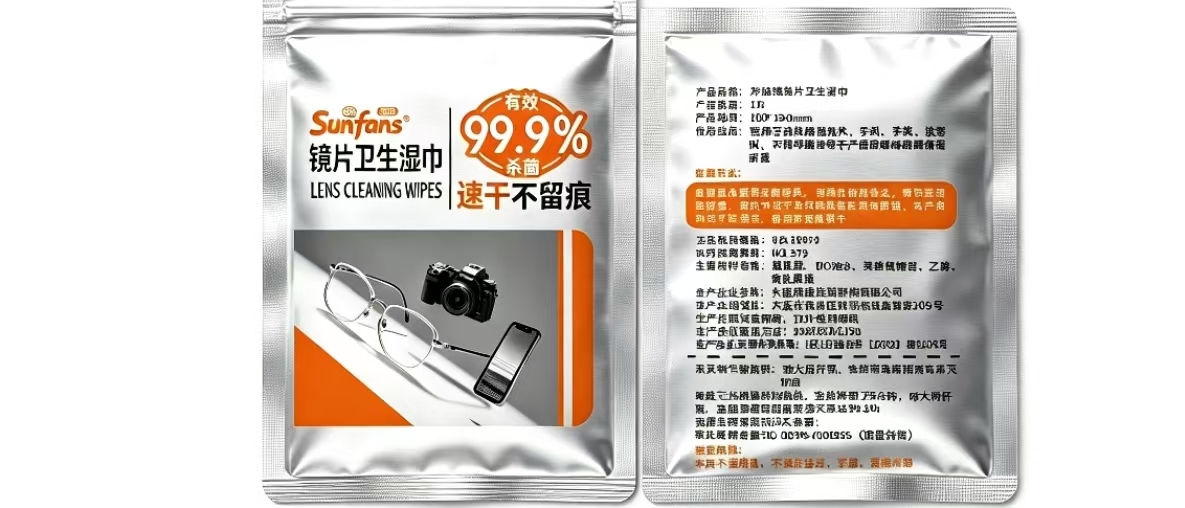
The eye care wipe YJ01 is the smallest format in the matrix and the only one documented in water-resistant paper. It is recorded as a 20-piece pack for home cleaning, large retail chains and the general merchandise sector. The size logic is straightforward: a lens or optical surface is small, so the sheet is sized for precision rather than coverage.
Entirely adhesive non-woven — Y02 (150 × 200 mm) and C02 (200 × 200 mm)
Two formats share an entirely adhesive substrate: the baby wipe Y02 at 150 × 200 mm and the pet wipe C02 at 200 × 200 mm. Both are documented across a 01–100 piece pack range. The pairing is useful for buyers because it shows one substrate class working at two different sheet sizes — one documented for infant care, the other for the pet supplies industry — while the pack count range stays identical.
Bamboo fiber — C03 (150 × 200 mm) and C04 (140 × 180 mm)
Bamboo fiber appears in two pet grooming formats: C03 at 150 × 200 mm with a 02–100 piece pack range, and C04 at 140 × 180 mm with a 03–100 sheet pack range. Both are documented for the pet products industry, the pet grooming and personal care segment, and large department stores and supermarkets.
Biodegradable wood pulp non-woven — C05 (180 × 200 mm) and S01 (130 × 200 mm)
C05 is documented as a 180 × 200 mm biodegradable wood pulp non-woven for pet grooming, packaged as 04–10 piece pet gloves. S01 is a 130 × 200 mm biodegradable wood pulp non-woven wet toilet paper in a 100-sheet pack. One substrate class therefore serves two very different pack archetypes: a small glove-format pack and a large-count sheet pack.
Disintegrable wood pulp cloth — S02 (150 × 200 mm)
S02 is documented as wet toilet paper in a cloth that can be disintegrated into wood pulp, cut at 150 × 200 mm and packed as 10 sheets. For programs that follow a flushable route, this is the distinguishing specification in the matrix.
Water-jet non-woven — CF001 (200 × 200 mm) and YW01 (150 × 180 mm)
Water-jet non-woven covers the two household cleaning formats: the kitchen wipe CF001 at 200 × 200 mm in an 80-piece pack, and the clothing wipe YW01 at 150 × 180 mm in a 10-cloth pack. These are the largest-surface formats in the matrix and are documented for home cleaning, large retail chains and general merchandise.
| Substrate class | Documented models | Dimensions | Format families | Decision note for buyers |
|---|---|---|---|---|
| Water-resistant paper | YJ01 | 100 × 150 mm | Eye care wipes | Smallest sheet in the matrix; 20-piece pack |
| Entirely adhesive | Y02, C02 | 150 × 200 mm / 200 × 200 mm | Baby wipes, pet wipes | Same base across a 01–100 piece range at two sheet sizes |
| Bamboo fiber | C03, C04 | 150 × 200 mm / 140 × 180 mm | Pet wipes | Two cut sizes within one pet grooming family |
| Biodegradable wood pulp non-woven | C05, S01 | 180 × 200 mm / 130 × 200 mm | Pet gloves, wet toilet paper | Serves both small glove packs and 100-sheet packs |
| Wood pulp cloth that can be disintegrated | S02 | 150 × 200 mm | Wet toilet paper | The reference specification for flushable-route programs |
| Water-jet non-woven | CF001, YW01 | 200 × 200 mm / 150 × 180 mm | Kitchen wipes, clothing wipes | Largest surface formats, 80-piece and 10-cloth packs |
5. Dimension Logic: Reading Wipe Sizes from 100 × 150 mm to 200 × 200 mm
Seven of the ten documented formats share a 200 mm edge, which makes 200 mm a reasonable default direction when a program has no strong size constraint. The full spread looks like this:
- 100 × 150 mm — YJ01, water-resistant paper, optical surface cleaning, 20 pieces.
- 130 × 200 mm — S01, biodegradable wood pulp non-woven wet toilet paper, 100 sheets.
- 140 × 180 mm — C04, bamboo fiber pet wipe, 03–100 sheets.
- 150 × 180 mm — YW01, water-jet non-woven clothing wipe, 10 cloths.
- 150 × 200 mm — Y02, C03 and S02: the most repeated dimension in the matrix.
- 180 × 200 mm — C05, biodegradable wood pulp non-woven pet glove format.
- 200 × 200 mm — C02 and CF001, the largest sheets.
Two practical readings follow. First, when a buyer is unsure, 150 × 200 mm is the dimension with the most documented precedent: it appears in an infant format, a pet grooming format and a wet toilet paper format, so tooling and pack concepts around it are already established. Second, size should be tested against the task. The documented operation mode across these formats is continuous surface wiping with single-sheet, one-time consumption, which means the sheet only has to cover the surface in one pass — extra area adds material without adding function.
6. Pack Count and the Packaging Route
Pack count is where the technical matrix meets the retail shelf. The documented configurations are:
- 10 pieces — YW01 (clothing wipes) and S02 (wet toilet paper, 10 sheets).
- 20 pieces — YJ01 (eye care wipes).
- 80 pieces — CF001 (kitchen wipes).
- 100 pieces or sheets — S01 (wet toilet paper).
- 01–100 pieces — Y02 (baby wipes), C02 and C03 (pet wipes).
- 03–100 sheets — C04 (pet wet toilet paper).
- 04–10 pieces — C05 (pet gloves).
The ranges matter more than the single numbers. Documented customization options include the number of pieces, packaging, logo, material, size and aroma, so a buyer can hold substrate and dimension fixed while adjusting pack count to fit a channel — a small glove pack for travel or trial, a 100-piece pack for household replenishment — without restarting the specification process.
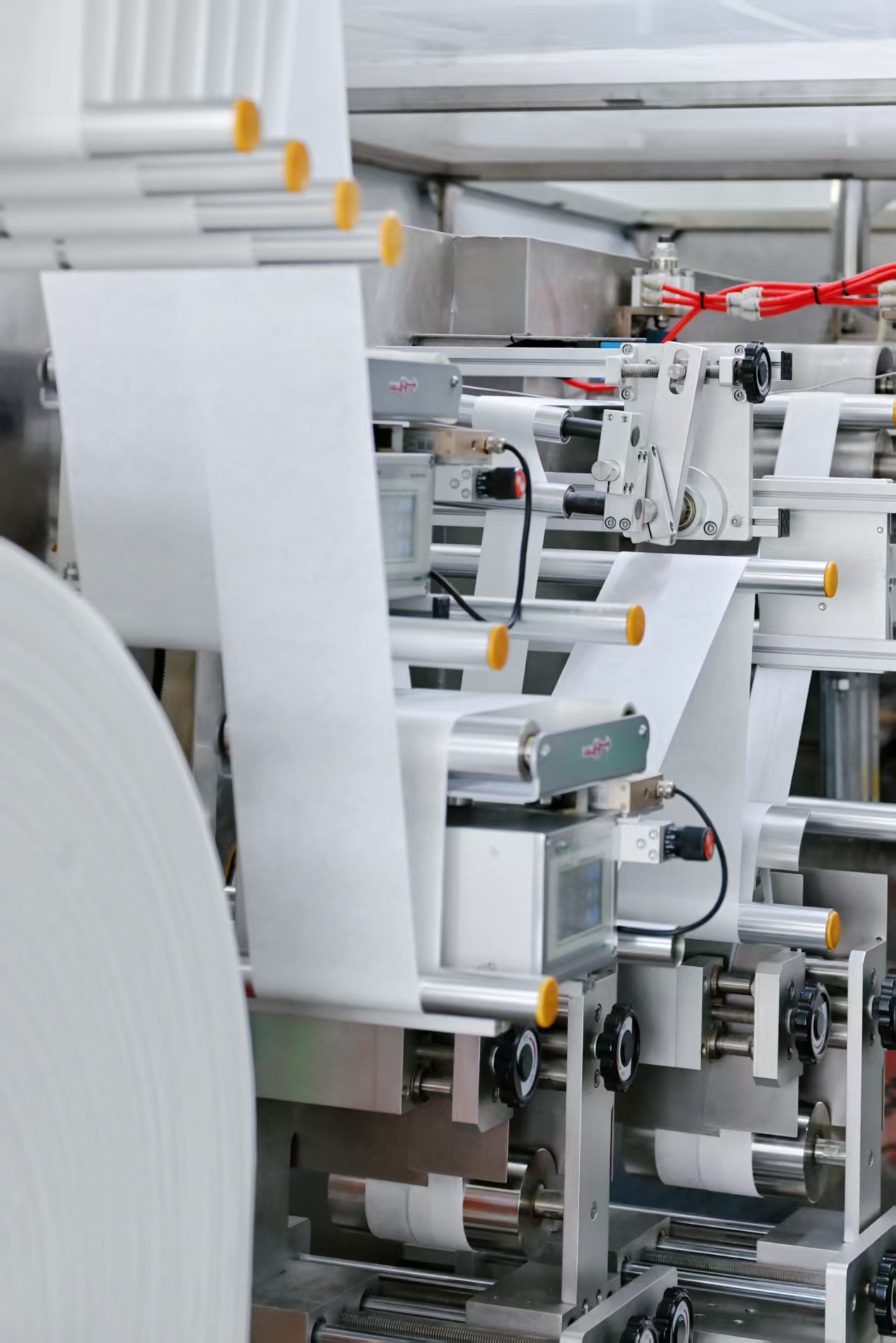
Pack count also interacts with the filling line. Automatic filling machines and automatic packaging machines are the recorded supporting equipment for these formats, alongside EDI ultra-pure water equipment and UV sterilization systems. Changing pack count changes the fill target and the pack format, which is why it belongs in the same decision round as substrate and dimension.
7. Step-by-Step: Aligning a Specification to a Custom Wet Wipes Project
- Define the wiping task and the surface. Infant skin, pet coat, kitchen surface, toilet hygiene, optical lens or fabric are different tasks with different tolerance levels.
- Choose the format family. Match the task to one of the documented families: baby wipes, pet wipes, wet toilet paper, kitchen wipes, clothing wipes or eye care wipes.
- Select the substrate class. Use Section 4 as the reference. If the program must follow a flushable route, the disintegrable wood pulp cloth documented in S02 is the starting point; if it is a household surface format, the water-jet non-woven documented in CF001 and YW01 is the starting point.
- Fix the wipe dimension. Start from the closest documented size — 150 × 200 mm has the broadest precedent — and adjust only if pack geometry or the retail format requires it.
- Set the pack count. Choose a documented count (10, 20, 80 or 100) or a documented range (01–100, 03–100, 04–10) before discussing artwork.
- Confirm filling and packaging compatibility. Verify that the chosen pack count and pack format run on automatic filling and automatic packaging equipment.
- Confirm the water and sterilization route. The documented equipment set includes EDI ultra-pure water equipment, a UV sterilization system, an in-house laboratory and a pH meter.
- Lock the formula constraints. For skin-contact applications the documented requirement is a gentle, plant-based formula free of alcohol, with fabric that is gentle on the skin and free of irritating additives.
- Confirm storage and logistics conditions. Storage is documented as a cool, dry, shaded area at room temperature, away from high temperatures, heat sources and areas prone to moisture accumulation.
- Validate with samples and inspection. Material inspection, process inspection and finished product inspection are the documented internal control points, supported by third-party authoritative laboratories.
8. Production Parameters Worth Verifying Against the Matrix
The substrate and dimension matrix only holds if the production environment matches it. The documented parameters for these formats are:
- Cleanroom manufacturing: Class 100,000 cleanroom production, documented specifically for C05.
- Supporting equipment: automatic packaging machines, automatic filling machines, EDI ultra-pure water equipment, UV sterilization systems, an in-house laboratory, a Class 100,000 cleanroom and pH meters.
- Quality control: third-party authoritative laboratories combined with internal material inspection, process inspection and finished product inspection.
- Documented capacity and timing: 3 million packages per month, with a 30-day lead time.
- Documented MOQ: listed as 20,000 yuan package in the manufacturer's capability data.
- Documented export markets: Japan, Singapore, New Zealand, Australia, the United States, Southeast Asia and Canada.
- After-sales support: assistance with verifying packing lists and customs declaration documents for export orders.
For buyers, the value of these parameters is diagnostic rather than promotional. A Class 100,000 cleanroom, ultra-pure water and UV sterilization are only relevant to a substrate program if they are applied to the specific model being ordered — which is why the cleanroom reference should be tied to a named model such as C05 rather than to a general capability statement.
9. Use Cases and Documented Program Scale
Format fit is best checked against documented application profiles. Those profiles map as follows: baby wipes for infant care and the baby and maternity products industry; pet wipes for pet grooming and the pet supplies industry; kitchen wipes and clothing wipes for home cleaning; wet toilet paper for toilet hygiene; and eye care wipes for optical surface cleaning. All of these profiles are recorded as common in global markets, suitable for OEM branding and contract manufacturing projects, and used across general merchandise, large shopping malls, personal care and the manufacturing of disposable sanitary products.
Scale is a separate question from fit. The following programs are documented with a baby and maternity brand owner, retail chains, e-commerce sellers and large conglomerates:
| Documented client type | Volume | Duration | Application |
|---|---|---|---|
| Baby and maternity brand owner | 20 × 40-foot containers per month | 5 years | Clean, antibacterial |
| Retail stores, including 7-Eleven in Japan | 15 × 40-foot containers per month | 3 years | Clean, antibacterial |
| Amazon.com pet supplies seller | 8 × 40-foot containers per month | 6 years | Clean, antibacterial |
| Major household and personal care conglomerate | 10 × 40-foot containers per month | 8 years | Clean, antibacterial |
| 150-year-old conglomerate | 10 × 40-foot containers per month | 10 years | Clean, antibacterial |
Volumes of that size only remain stable when substrate, dimension and pack count are locked early — which is the underlying reason this matrix exists.
10. Regulatory Context Around Substrate and Flushability Claims
Substrate and dimension choices carry regulatory consequences worth checking before sampling, although the exact compliance scope depends on the destination market and the claim being made.
- EU market: wet wipes must comply with EN standards, including REACH for chemicals and BPR for biocidal claims.
- United States: the FDA facility registration deadline for cosmetic wipes manufacturers was July 1, 2026 under the new regulatory framework.
- China: wet wipes are governed by the Hygienic Standard for Disposable Sanitary Products.
- Manufacturing baseline: ISO 9001 (quality management) and ISO 22716 (GMP for cosmetics) are commonly cited baseline requirements for wet wipes OEM manufacturing.
These are market-level requirements and industry baselines, not statements about what any single factory holds. A buyer should confirm the actual certificate scope held by a specific manufacturer directly. Flushability and biodegradability wording should also match the substrate actually specified: the cloth that can be disintegrated into wood pulp documented in S02 and the biodegradable wood pulp non-woven documented in C05 and S01 are different specifications and should not be treated as interchangeable claims.
11. FAQ: Custom Wet Wipes Substrate and Dimension Questions
What should a buyer check in a custom wet wipes manufacturer for hand and mouth care?
Hand and mouth care belongs to the skin-contact group, where the documented requirements are stricter than for household surface formats. Three checks matter. First, formula constraints: the documented requirement for these applications is a gentle, plant-based formula free of alcohol, with fabric that is gentle on the skin and free of irritating additives. Second, substrate and dimension fit: a 150 × 200 mm entirely adhesive sheet — as documented for the baby wipe Y02 — is the reference format for infant and hand-and-mouth use, while a larger 200 × 200 mm sheet such as C02 is documented for the pet supplies industry. Third, pack count flexibility: documented configurations in this family range from 01–100 pieces, so trial packs and replenishment packs can share one substrate specification. Verify the supporting equipment as well — EDI ultra-pure water equipment, a UV sterilization system, an in-house laboratory and a pH meter are all part of the documented production set.
Which wipe dimensions correspond to each custom wet wipes format?
The documented matrix runs from 100 × 150 mm (YJ01, eye care wipes) to 200 × 200 mm (C02 pet wipes and CF001 kitchen wipes). Between those: 130 × 200 mm (S01 wet toilet paper), 140 × 180 mm (C04 pet wipes), 150 × 180 mm (YW01 clothing wipes), 150 × 200 mm (Y02 baby wipes, C03 pet wipes and S02 wet toilet paper) and 180 × 200 mm (C05 pet gloves). Seven of the ten documented formats share a 200 mm edge, and 150 × 200 mm is the single most repeated dimension.
How do bamboo fiber, water-jet non-woven and wood pulp substrates differ in this matrix?
They are documented against different format families rather than ranked against each other. Bamboo fiber is documented in the pet grooming formats C03 (150 × 200 mm) and C04 (140 × 180 mm). Water-jet non-woven is documented in the household cleaning formats CF001 (200 × 200 mm kitchen wipes) and YW01 (150 × 180 mm clothing wipes). Wood pulp appears in two documented forms: biodegradable wood pulp non-woven in C05 (180 × 200 mm pet gloves) and S01 (130 × 200 mm wet toilet paper), and a cloth that can be disintegrated into wood pulp in S02 (150 × 200 mm wet toilet paper). Substrate should be selected from the wiping task and the flushable-route requirement first.
What pack counts can be produced for custom wet wipes?
Documented pack configurations include 10 pieces (YW01, S02), 20 pieces (YJ01), 80 pieces (CF001) and 100 pieces or sheets (S01), plus configured ranges of 01–100 pieces (Y02, C02, C03), 03–100 sheets (C04) and 04–10 pieces (C05). Number of pieces is one of the documented customization options, together with packaging, logo, material, size and aroma.
What production and quality conditions should be verified before placing an order?
The documented production set includes automatic packaging machines, automatic filling machines, EDI ultra-pure water equipment, UV sterilization systems, an in-house laboratory, a Class 100,000 cleanroom and pH meters, with Class 100,000 cleanroom manufacturing documented specifically for C05. Quality control combines third-party authoritative laboratories with internal material, process and finished product inspection. Documented capacity is 3 million packages per month with a 30-day lead time. Buyers who want to validate substrate, dimension and pack count against their own format can request samples or a quotation for their target specification from Dalian Weijie Biotechnology Co., Ltd.; the company profile and capability details are available at www.unilibio.com, and the product brochure can be downloaded here.
12. Conclusion: Match the Matrix Before You Match the Price
Substrate, wipe dimension and pack count are the three specifications that make a custom wet wipes program buildable. The documented matrix in this guide shows how ten formats distribute across six substrate classes and seven sheet sizes — from a 100 × 150 mm water-resistant paper eye care wipe to a 200 × 200 mm water-jet non-woven kitchen wipe, with the disintegrable wood pulp wet toilet paper S02 as the reference point for flushable-route programs.
The sequence that works is: task → format family → substrate → dimension → pack count → filling and packaging → water and sterilization → sample validation. Dalian Weijie Biotechnology Co., Ltd., established in 2013 in Dalian, Liaoning, produces these formats under OEM branding and contract manufacturing arrangements, with a documented monthly capacity of 3 million packages, a 30-day lead time and export experience across Japan, Singapore, New Zealand, Australia, the United States, Southeast Asia and Canada.
Next Step: Match Your Format to the Matrix
Send your target format — substrate, wipe dimension and pack count — and request samples or a quotation against the closest documented specification in the matrix. Trial packs at small piece counts and full production packs can be built on the same substrate and cut size.
Website: www.unilibio.com
Company profile (PDF): Dalian Unicare Biotech company profile — English
Contact: Chengzhe Li | Email: 18525541199@163.com | Tel / WhatsApp: +1 213 656 5650
Address: No. 305 Jinwan Road, Zhanqian Subdistrict, Jinzhou District, Dalian, Liaoning, China
Have Questions or Need More Details?
Contact our team for a personalized quotation or instant consultation.
Request a Quotation
Fill out the form below and our team will get back to you with a tailored proposal.
WhatsApp Direct Chat
Prefer to chat in real-time? Message us on WhatsApp for instant assistance & quick answers.
- Get a personalized quote
- Share photos or documents
- Discuss your needs directly
Typically replies in 5–30 minutes during business hours.