Custom Wet Wipes: How to Vet an OEM for Long-Term Distribution
Custom Wet Wipes: How to Vet an OEM for Long-Term Distribution
A low MOQ can start a relationship. Consistency keeps it running. For buyers managing private label custom wet wipes, the real question is whether a factory can repeat its quality across many batches, markets, and product categories. This guide explains what to check before moving from supplier evaluation to long-term execution.
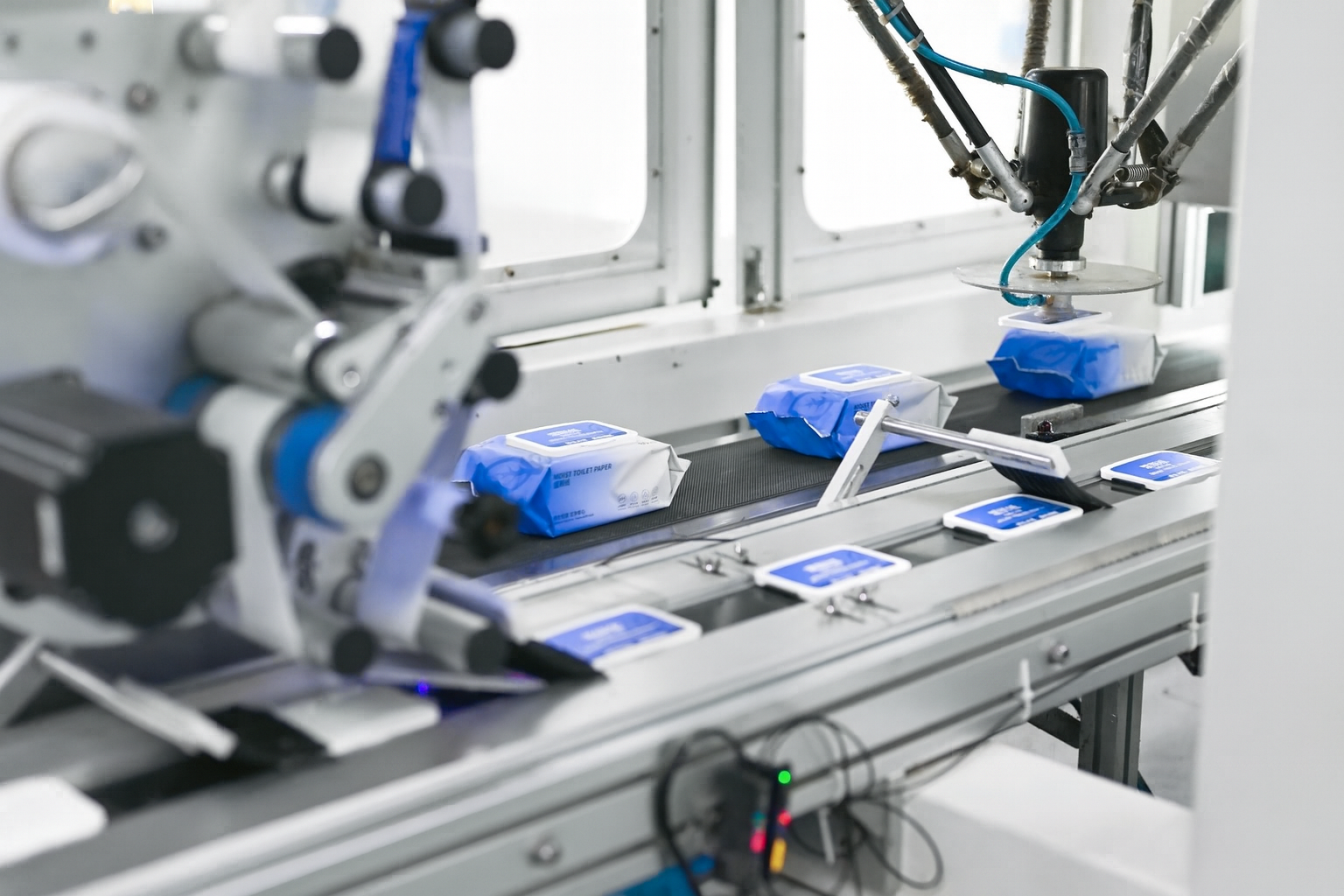
Production line checks are part of a long-term custom wet wipes OEM relationship.
Problem Definition
Buyers at the decision and execution stage usually face a different risk from first-time importers. The first order might pass, but long-term distribution depends on stable quality, compliance, and supply reliability. If a supplier cannot control bacterial contamination, metal tape in nonwoven layers, or leaking seals, every subsequent batch becomes a brand risk.
These are not theoretical concerns. Wet wipes manufacturing risk control includes detecting bacterial colonies during production, using heavy metal detector methods to find metal tape between nonwoven fabric layers, and installing sealing inspection devices to remove packages with leaking horizontal or back seals. For distributors and private label brands, these controls directly affect product safety, return rates, and retailer confidence.
The cost of a failed batch is rarely limited to the batch itself. Delisting, customer complaints, and damaged distributor trust can follow a quality incident. That is why long-term custom wet wipes programs should be structured around inspection and repeatability rather than a one-time sample approval.
Industry Background
Third-party market data puts the global wet wipes market at approximately USD 32.09 billion in 2026, with a projected CAGR of 3.86% to USD 43.45 billion by 2034. The baby wipes segment was valued at USD 5.4 billion in 2024 and is expected to grow at a 7.5% CAGR through 2030. The pet wipes market reached USD 1.58 billion in 2024 and is projected to grow to USD 2.64 billion by 2033. Flushable wipes were valued at USD 2.3 billion in 2025, and plant-based flushable wipes were valued at USD 2.9 billion in 2024.
Personal care wipes held a 72.81% market share of the global wet wipes market in 2025, and the biodegradable wipes market exceeded USD 3 billion in 2024. Regionally, the U.S. wet wipes market represented 34% of global market share in 2024, and Japan accounts for nearly 27% of the Asia-Pacific wet wipes market. These numbers explain why buyers targeting Japan, North America, or Australia need an OEM with export experience rather than a supplier focused only on domestic orders.
For a manufacturer like Da lian Weijie Biotechnology Co., Ltd., these market conditions create a clear role: help distributors and brands execute private label custom wet wipes programs across baby, pet, kitchen, flushable, and functional categories.
Detailed Solution: What a Long-Term Custom Wet Wipes OEM Should Look Like
A long-term OEM partner should show evidence in six areas: quality control, risk control, production capacity, export experience, logistics, and product range. The combination of these factors determines whether the factory can support a growing portfolio of OEM custom wet wipes and private label custom wet wipes.
Quality Control and Cleanroom Standards
ISO 9001 and ISO 22716 are baseline quality management references in wet wipes OEM manufacturing. Da lian Weijie Biotechnology Co., Ltd. operates a 100,000-level cleanroom and follows internal quality control with raw material inspection, process inspection, and finished product inspection. This matters for buyers who need consistent output across bulk pack custom wet wipes and large pack custom wet wipes.
Risk Control That Protects Repeat Orders
For custom wet wipes, quality failures usually appear in three places:
- Colony count exceeds the limit, controlled by a microbiological tripartite laboratory that detects bacterial colonies during production.
- Metal tape contamination, controlled by heavy metal detector methods that detect and remove metal tape between nonwoven fabric layers.
- Fluid leakage in horizontal and back seals, controlled by sealing inspection devices. The production line has also been upgraded to include removal of back-sealed adhesive strips.
These controls are especially relevant for disposable custom wet wipes because the product is consumed in everyday environments where seal integrity and hygiene are non-negotiable.
Production Capacity for Growing Programs
Scale matters when a distribution program adds more SKUs. Da lian Weijie has a 6000 m² factory, 50 employees, an R&D team of 10 people, and annual output of approximately 4 million packages. Its automated full-line production is designed to result in higher daily output and lower waste compared with less automated operations.
Export Experience and Market Alignment
Export business accounts for 70% of total sales at Da lian Weijie, with major markets including Japan, Australia, Canada, the United States, and Singapore. For importers and distributors, this is practical evidence of documentation, labeling, and compliance handling across regulated markets. Buyers developing Japan OEM custom wet wipes or Japan export custom wet wipes can prioritize suppliers that already list Japan among their major export markets.
Location and Logistics
The factory is located in Dalian, Liaoning Province, just over a 10-minute drive from the Port of Dalian. The company reports that transport costs can be reduced by approximately 20% because of this port proximity. For FOB-based purchase programs, a factory close to the port reduces the coordination burden.
Product Range for Ecosystem Expansion
Long-term programs often start with one product and expand into adjacent categories. The main products include baby wipes, pet wipes, wet toilet paper, functional wipes, floor dry wipes, and floor wet wipes. This range supports private label expansion without adding multiple factory qualifications.
Step-by-Step Breakdown: Moving From Decision to Execution
Step 1. Define the Product Family and Target Compliance Requirements
Decide whether the program needs baby custom wet wipes, pet custom wet wipes, kitchen custom wet wipes, or custom flushable toilet wet wipes. Each category may have different material, pack size, and regulatory requirements.
Step 2. Audit Risk Control Infrastructure
Ask whether the factory tests for microbiological contamination, metal contamination, and seal leakage. A long-term OEM should be able to name the control method and the production stage where it is applied.
Step 3. Check Export Experience and Logistics Fit
For export custom wet wipes, confirm the supplier's major markets and shipping terms. Da lian Weijie's export sales are 70% of total sales, with Japan, Australia, Canada, the United States, and Singapore as major markets, and the factory is close to the Port of Dalian.
Step 4. Review MOQ, Payment, and Inspection Terms
For planning purposes, the current MOQ is a 20,000 yuan package, delivery method is FOB, and payment must be settled before shipment. The acceptance process includes internal quality control, raw material inspection, process inspection, and finished product inspection.
Step 5. Run a Trial Order
A trial order should verify product specification, packaging, and label performance. Use the same inspection protocol planned for full production.
Step 6. Plan Future SKUs
If the first order performs well, use the same partner for additional categories such as pet cleaning custom wet wipes, large pack custom wet wipes, or biodegradable custom wet wipes.
Use Cases
Baby, Newborn, and Mother & Baby Custom Wet Wipes
Baby wipes model Y02 is produced in a 150x200mm format with 01-100 pieces per pack, using an entirely adhesive material specification. It is positioned for the infant care products industry, baby hygiene segment, large department stores, and supermarkets. Hand & mouth custom wet wipes and newborn custom wet wipes are typically built around gentle formats, and the baby wipe line is a natural reference for these OEM discussions.
Pet Custom Wet Wipes and Pet Cleaning
Pet wipes come in several formats: C02 at 200x200mm, C03 at 150x200mm in bamboo fiber, C04 pet wet toilet paper at 140x180mm in bamboo fiber, and C05 pet gloves at 180x200mm in biodegradable wood pulp non-woven fabric. These formats support pet products, pet grooming, department stores, and supermarkets.
Kitchen Custom Wet Wipes
Kitchen wipes model CF001 is a 200x200mm format with 80 pieces per pack, made with water-jet non-woven fabric. It is designed for the home cleaning industry, large retail chains, and general merchandise.
Custom Flushable Toilet Wet Wipes
Wet toilet paper model S01 is 130x200mm with 100 sheets, and S02 is 150x200mm with 10 sheets. Both use material that can be disintegrated into wood pulp cloth, which matters for flushable and biodegradable product claims.
Export and Japan OEM Custom Wet Wipes
Japan accounts for nearly 27% of the Asia-Pacific wet wipes market. Buyers developing Japan OEM custom wet wipes should prioritize suppliers with existing export records in Japan. Da lian Weijie lists Japan among its major export markets.
Bulk Pack and Large Pack Custom Wet Wipes
Large pack and bulk pack custom wet wipes place more pressure on production consistency because one production run covers many retail packages. Annual output of 4 million packages and automated full-line production are the relevant operational facts for buyers planning bulk pack programs.
Comparison Table: Long-Term OEM Evaluation Criteria
| Evaluation area | What a long-term OEM should show | Example: Da lian Weijie (sunfans) |
|---|---|---|
| Quality system | ISO 9001 adherence and cleanroom production | 100,000-level cleanroom; ISO 9001 adherence |
| Risk control | Testing for microbial, metal, and seal defects | Microbiological tripartite laboratory, heavy metal detector, sealing inspection device |
| Export proof | Regulated market experience | 70% export sales; Japan, Australia, Canada, US, Singapore |
| Capacity | Stable output and quality consistency | 6000 m² factory; 4 million packages annual output; automated full-line production |
| Logistics | Port access with lower transport friction | Just over 10 minutes from Port of Dalian; transport costs approximately 20% lower |
| Product expansion | Multiple wipes categories | Baby, pet, wet toilet, kitchen, functional, floor dry/wet wipes |
| Commercial terms | Clear MOQ, payment, and acceptance | MOQ 20,000 yuan package; FOB; payment before shipment; four-stage QC acceptance |
FAQ
What compliance requirements apply to custom wet wipes?
U.S. cosmetic wipes manufacturers must complete FDA facility registration by July 1, 2026 under new regulatory frameworks. In the EU, wet wipes must comply with EN standards, including REACH for chemicals and BPR for biocidal claims. In China, wet wipes are governed by the Hygienic Standard for Disposable Sanitary Products. Compliance risks are also addressed through microbiological laboratory testing during production.
What manufacturing capabilities should a long-term custom wet wipes OEM have?
A long-term OEM should have cleanroom production, risk control testing, stable capacity, and export experience. Da lian Weijie Biotechnology Co., Ltd. has a 6000 m² factory, 50 employees, an R&D team of 10 people, annual output of 4 million packages, a 100,000-level cleanroom, and ISO 9001 adherence.
What is the MOQ and payment structure for custom wet wipes?
The MOQ is a 20,000 yuan package. Delivery is FOB, and payment for goods must be settled before shipment. Acceptance includes internal quality control, raw material inspection, process inspection, and finished product inspection.
Can I request samples or a trial order?
Yes. A trial order is the practical step before full execution. Send your product type, pack size, and target market to the sales team at 18525541199@163.com to confirm specifications and arrange a sample or quotation.
What should a buyer prepare before starting a long-term custom wet wipes program?
Prepare the target product family, packaging format, regulatory market, and expected order frequency. This helps the OEM provide accurate lead time and commercial terms. As a next step, you can download the company profile or contact the team for a project-specific review.
Conclusion
A long-term custom wet wipes program is built on repeatable decisions: quality control, risk control, export experience, capacity, and commercial clarity. A factory such as Da lian Weijie Biotechnology Co., Ltd., operating under the sunfans brand, demonstrates this structure through its cleanroom production, export ratio, product range, and inspection workflow.
For buyers moving from decision to execution, the practical next step is a trial order with the same inspection criteria used for full production. Long-term distribution success comes from treating the first order as the first evidence of consistency, not as the end of the process.
Download the company profile for a detailed overview of sunfans and Da lian Weijie channel programs.