
When Your Current Wipes Irritate Skin: Switch to Plant-Based S02
Wet wipes that irritate skin usually signal a material problem, not a marketing gap. When buyers report stinging, redness, or discomfort after use, the corrective step that matters most is the specification of what actually touches the skin: the substrate, the formula, and what is dissolved in the liquid. Changing the packaging or adding a disclaimer does not change that contact. For brands sourcing custom wet wipes for home cleaning and personal hygiene, material specification is the first corrective step, and model S02 is built around that principle.
S02 is a wet toilet paper produced by Da lian Weijie Biotechnology Co., Ltd. (Dalian, Liaoning Province, China), a state-level high-tech enterprise established in 2013. The product is specified as 10 sheets per pack, 150 × 200 mm, with a material that disintegrates into wood pulp cloth. Its required formula profile, as stated for the home cleaning and general merchandise application scenarios, is a gentle plant-based formula free of alcohol, with fabrics that are gentle on the skin and free of irritating additives.
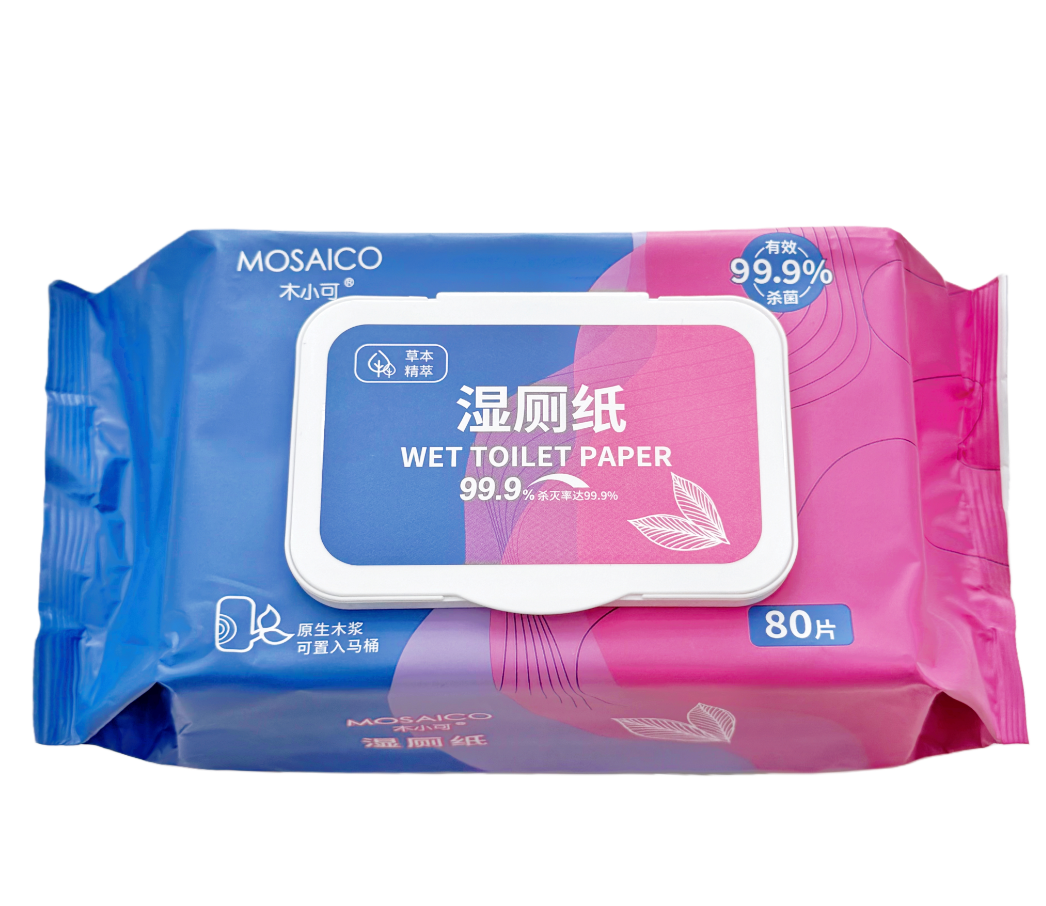
S02 wet toilet paper: 10 sheets per pack, 150 × 200 mm, material disintegrates into wood pulp cloth.
Problem Definition: Why Skin Irritation Is a Specification Issue
Skin irritation from wet wipes is a contact outcome. It is produced by what the wipe carries against the skin, and it is resolved by changing what the wipe carries. Three specification choices drive most irritation complaints: the presence of alcohol in the liquid, the use of irritating additives in the formula, and a fabric that is not soft enough for the intended use. Each of these sits in the material specification, not in the brand positioning.
Buyers often respond to irritation complaints by revising on-pack claims or adding usage instructions. Neither action changes the product that reaches the skin. The more direct correction is to re-open the material specification and replace the formula and substrate with a profile that is defined as gentle. That is the first corrective step because it is the only step that changes the physical contact between the wipe and the user.
For private label buyers, the practical consequence is that irritation is a procurement problem before it is a customer service problem. The brand that receives the complaint is downstream of the specification that caused it. Correcting the specification corrects the cause; correcting the message only corrects the description.
Industry Background: A Growing Category With a Formula Gap
The global wet wipes market was valued at approximately USD 32.09 billion in 2026, with a projected CAGR of 3.86% reaching USD 43.45 billion by 2034, according to Fortune Business Insights. Personal care wipes held a 72.81% market share of the global wet wipes market in 2025, according to Mordor Intelligence. Within that total, the flushable wipes segment was valued at USD 2.3 billion in 2025 and is projected to reach USD 4.2 billion by 2035 at a 6% CAGR, according to Global Market Insights. The plant-based flushable wipes market was valued at USD 2.9 billion in 2024 with an expected 5.3% CAGR, according to Data Insights Reports.
Growth in the category has not automatically produced gentler formulas. The same period has seen continued use of alcohol-based liquids and additive-heavy formulations in some product lines, which is one reason irritation complaints persist even as the category expands. The market data describes demand; it does not describe the formula inside a given pack. That distinction matters for buyers, because a growing category can still contain specifications that irritate skin.
Regulatory expectations reinforce the point. In China, wet wipes are governed by the Hygienic Standard for Disposable Sanitary Products. In the EU market, wet wipes must comply with EN standards, including REACH for chemicals and BPR for biocidal claims. ISO 9001 and ISO 22716 are baseline requirements for wet wipes OEM manufacturing, according to Freshening Industries. These frameworks define what a compliant product must document; they do not by themselves define a gentle formula. The formula choice remains a specification decision made between the buyer and the manufacturer.
Detailed Solution: What S02 Changes in the Specification
S02 addresses irritation at the point where irritation is created. The product is a wet toilet paper with 10 sheets per pack and sheet dimensions of 150 × 200 mm. Its material disintegrates into wood pulp cloth. It is intended for the home cleaning industry, large retail chains, and the general merchandise industry. Those are the product facts; the corrective value sits in the formula profile attached to that specification.
Across the home cleaning, general merchandise, and large shopping mall application scenarios, the required formula profile is stated as a gentle, plant-based formula free of alcohol, featuring fabrics that are gentle on the skin and free of irritating additives. For a buyer replacing an irritating incumbent product, this profile maps directly onto the three common causes of irritation: alcohol is excluded, irritating additives are excluded, and the fabric is specified as skin-gentle. The switch is therefore not a refill of the same specification with a different label; it is a replacement of the specification itself.
Production conditions matter because a gentle formula can be undermined by poor process control. The manufacturing setup includes a Class 100,000 cleanroom, EDI ultra-pure water equipment, a UV sterilization system, an in-house laboratory, and a pH meter. These are the controls that keep a plant-based, alcohol-free formula consistent from batch to batch. For a buyer, the relevant question is not only whether the formula is gentle on paper, but whether the facility can hold that formula within specification across production runs.
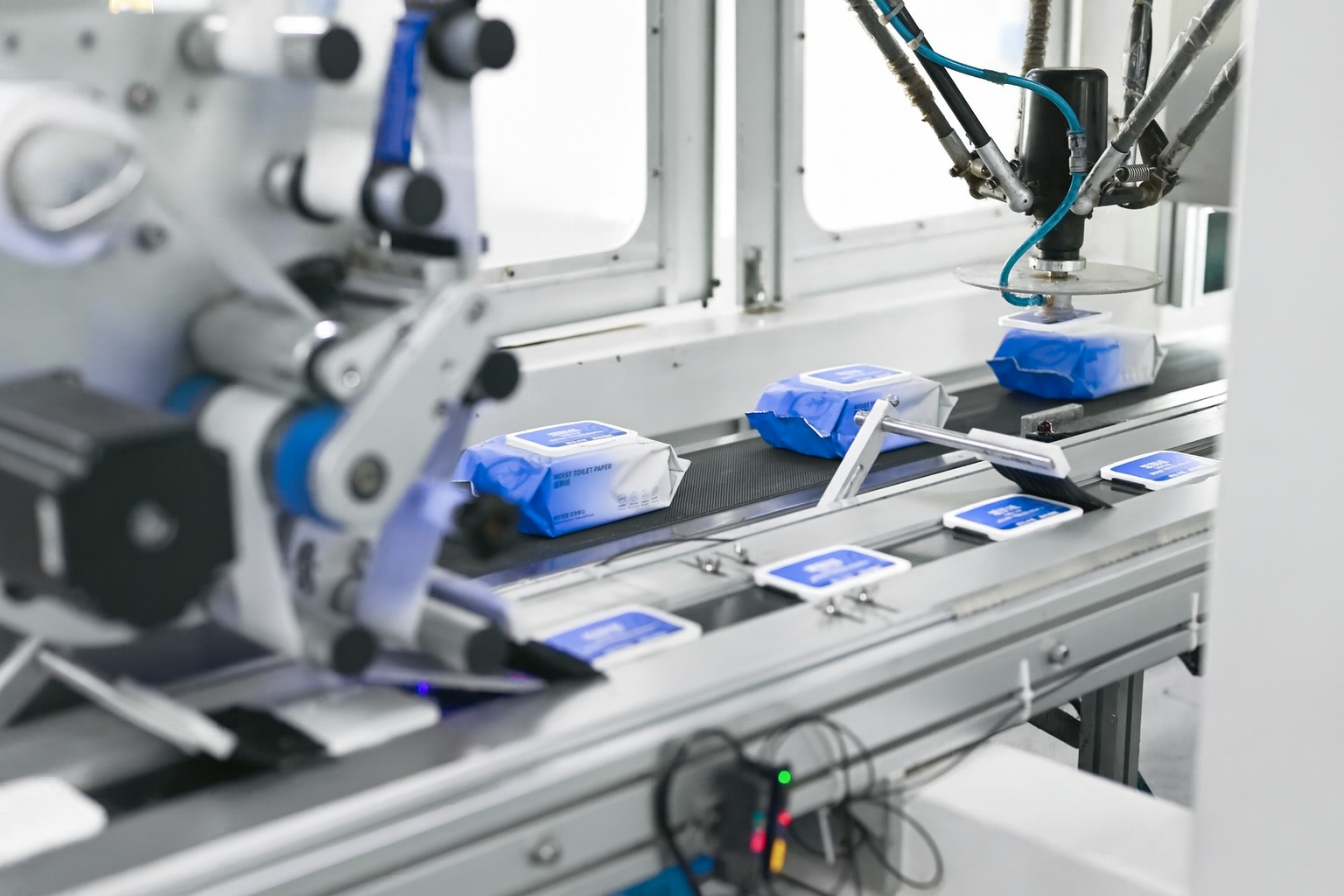
Production line at the Dalian facility, where S02 wet toilet paper is manufactured under controlled conditions.
Storage requirements are part of the same specification. S02 is to be stored in a cool, dry, shaded area at room temperature, away from high temperatures, heat sources, and areas prone to moisture accumulation. That instruction protects the formula after it leaves the production line. A buyer switching to a plant-based product should carry that storage requirement into warehouse and retail handling, because a gentle formula that is stored badly is no longer the product that was specified.
Step-by-Step Breakdown: Correcting the Specification
A specification correction follows a sequence. Skipping a step tends to reproduce the original problem under a new product code.
Step 1: Identify the irritation driver in the current specification
Separate the complaint into formula and substrate causes. Check whether the current liquid contains alcohol, whether additives known to irritate are present, and whether the fabric is described as gentle. This step determines what must change, rather than assuming that any new product will solve the complaint.
Step 2: Write the replacement formula profile before choosing packaging
Define the target as a gentle, plant-based formula free of alcohol, with fabric that is gentle on the skin and free of irritating additives. Packaging, pack count, and artwork come after this profile is fixed. Reversing the order produces a product that looks corrected without being corrected.
Step 3: Match the format to the use case
S02 is a 10-sheet pack at 150 × 200 mm for home cleaning, large retail chains, and general merchandise. If the brand needs a larger pack for a different channel, that is a separate SKU decision, not a reason to relax the formula profile. The format should follow the use case; the formula should not be weakened to fit the format.
Step 4: Verify production control, not just the sample
Confirm that the facility runs the formula under the controls described for the product: Class 100,000 cleanroom, EDI ultra-pure water, UV sterilization, in-house laboratory, and pH measurement. A sample that tests well but comes from an uncontrolled run does not predict batch consistency.
Step 5: Measure the switch against the original complaint
Track the same complaint categories that triggered the change. If irritation reports fall after the switch, the correction worked. If they persist, the original diagnosis was incomplete and the specification review should continue. This closes the loop between procurement and the customer experience that prompted it.
Use Cases: Where the S02 Correction Fits
The product is intended for the home cleaning industry, large retail chains, and the general merchandise industry, and its stated application scenarios include home cleaning, large retail chains, general merchandise, and large shopping malls. Within those channels, the correction fits several buyer situations.
Home cleaning brands replacing an irritating incumbent. A brand whose current wet toilet paper generates irritation complaints can move to a formula profile that excludes alcohol and irritating additives while keeping a familiar pack format. The 10-sheet, 150 × 200 mm specification keeps the change contained to the formula and material rather than forcing a full range reset.
Personal hygiene lines adding a gentler SKU. A brand already selling personal hygiene products can add S02 as a gentler option without rebuilding its existing line. The plant-based, alcohol-free profile gives the brand a defensible specification story that is tied to the product rather than to a claim.
Large retail chains and general merchandise buyers. Retail buyers sourcing for private label programs can specify S02 where the channel requires a gentle formula and a pack size suited to trial and travel use. The 10-sheet format supports smaller pack configurations, while the material that disintegrates into wood pulp cloth addresses disposal expectations in the home cleaning context.
Export buyers serving hygiene-sensitive markets. The manufacturer exports 70% of output to Japan, Australia, Canada, the United States, and Singapore. Japan accounts for nearly 27% of the Asia-Pacific wet wipes market, with a strong focus on hygiene and premium quality personal care, according to Wet Wipes Market Growth Insights 2034. For buyers serving those markets, a plant-based, alcohol-free specification is a more direct fit than a formula-led marketing claim.
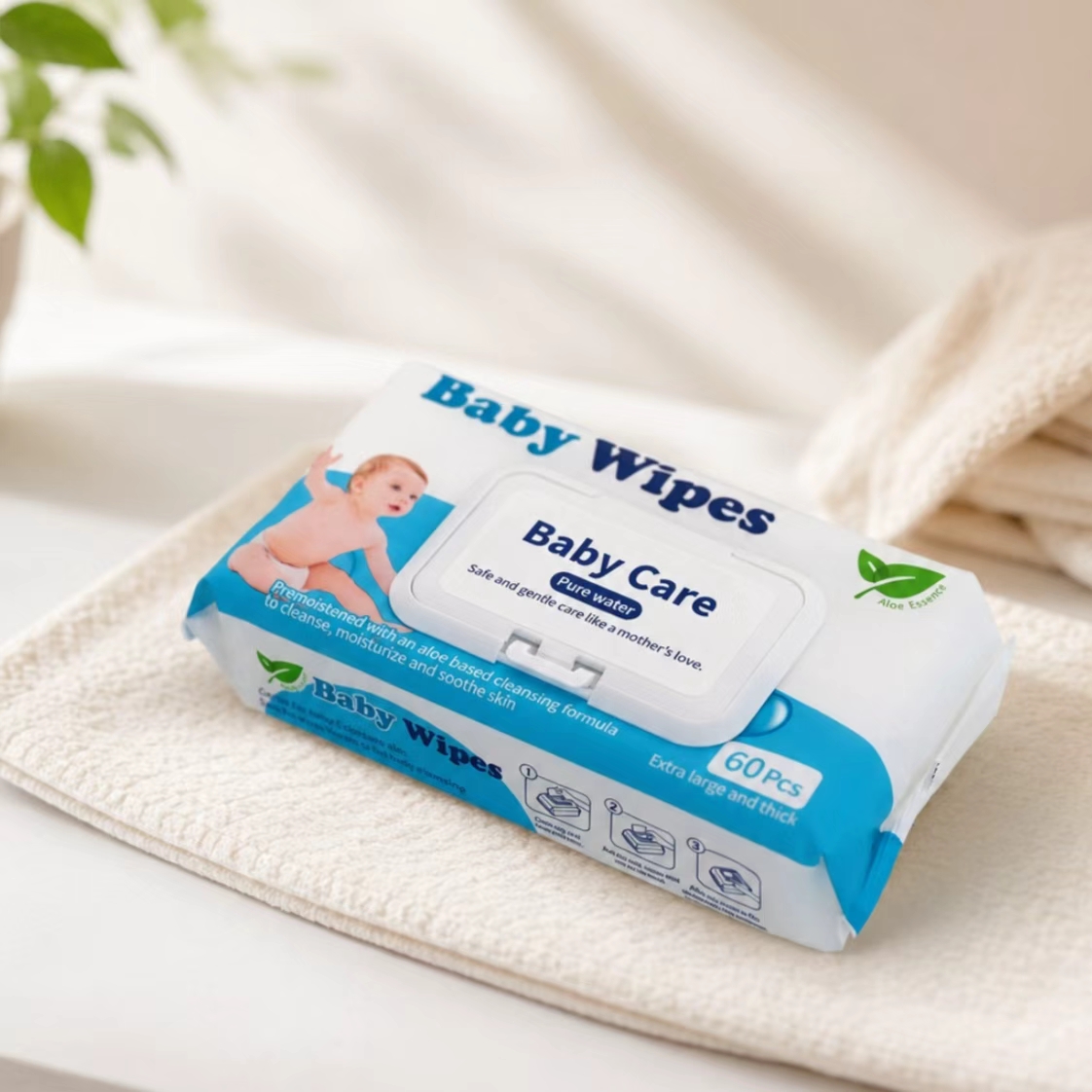
Baby wipes model Y02: 01–100 pieces per pack, 150 × 200 mm, for infant care and baby hygiene channels.
Comparison Table: S02 and S01 by Specification
The table below compares the two wet toilet paper models in the range using the product facts available. It is a format and material comparison, not a claim about which product is better; the right choice depends on the channel and the pack size the brand needs.
| Specification | Wet toilet paper S02 | Wet toilet paper S01 |
|---|---|---|
| Product type | Wet Toilet Paper – 10 sheets | Wet Toilet Paper – 100 sheets |
| Sheet dimensions | 150 × 200 mm | 130 × 200 mm |
| Material | Can be disintegrated into wood pulp cloth | Biodegradable wood pulp non-woven fabric |
| Intended industry | Home cleaning, large retail chains, general merchandise | Personal care, pet products, large department stores |
| Stated application scenarios | Home cleaning, large retail chains, general merchandise | Personal care, pet products, large department stores |
S02 is the more direct fit when the buyer needs a smaller pack and a home cleaning or general merchandise positioning. S01 is the more direct fit when the channel is personal care or pet products and a larger 100-sheet pack is required. Both are supplied under the same manufacturer and both are specified as wet toilet paper.
Manufacturer Context: Who Makes S02
S02 is produced by Da lian Weijie Biotechnology Co., Ltd., established in 2013 and located in Dalian, Liaoning Province, China. The company is a state-level high-tech enterprise with more than 10 years of experience in biotechnology and hygiene products. Its main products include baby wipes, pet wipes, wet toilet paper, functional wipes, floor dry wipes, and floor wet wipes, and it also produces dry and wet wipes, wet toilet paper, and face towels.
The manufacturing facility covers 6,000 m² and employs approximately 50 staff members, including a 10-person R&D team. Annual production capacity is approximately 4 million packages per year. About 70% of output is exported to Japan, Australia, Canada, the United States, and Singapore. The company integrates design, research and development, production, and sales services, and combines biotechnological research with hygiene product manufacturing.
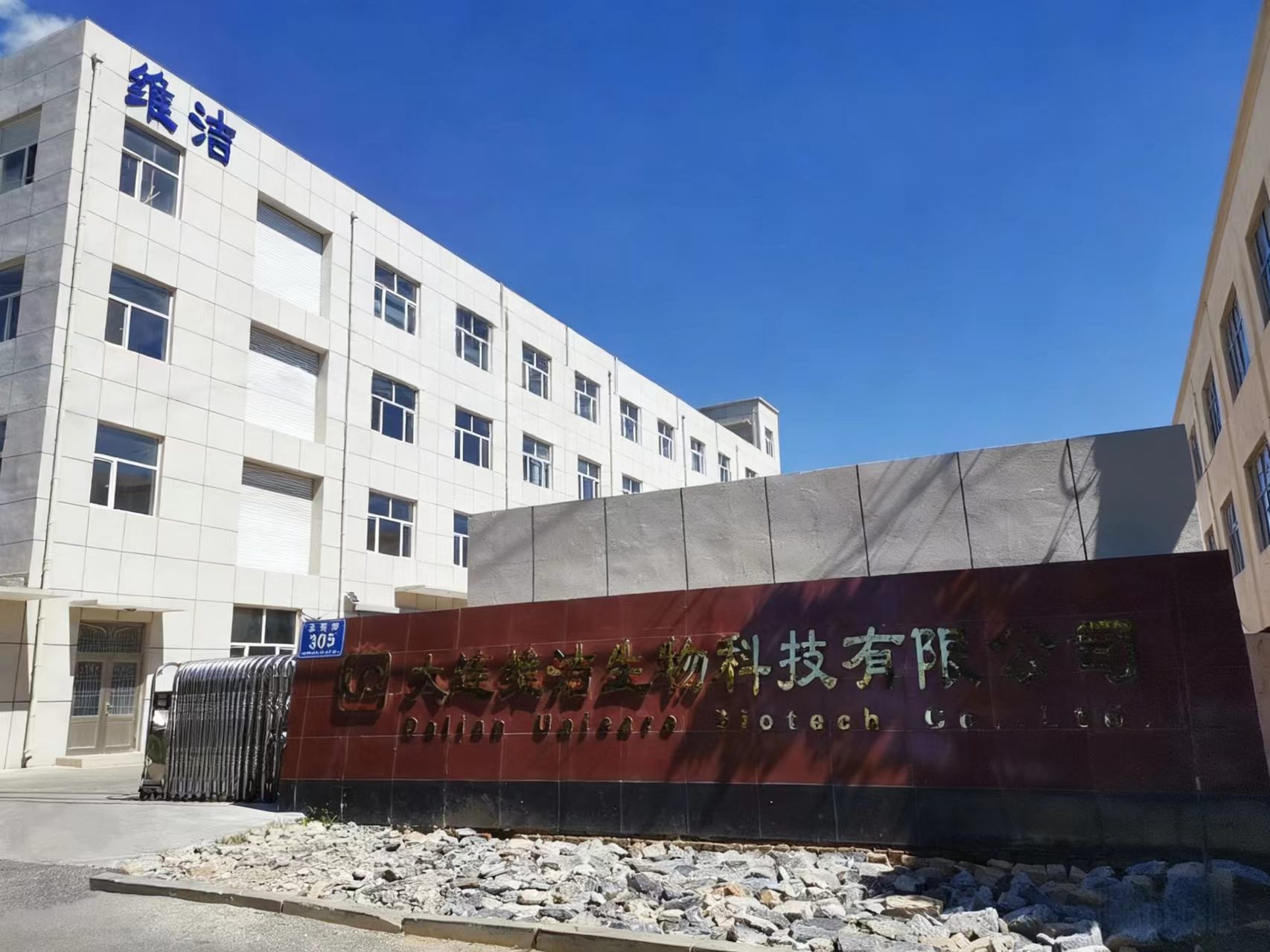
Factory entrance of Da lian Weijie Biotechnology Co., Ltd. in Dalian, Liaoning Province, China.
Frequently Asked Questions
What standards apply to custom wet toilet paper such as S02?
In China, wet wipes are governed by the Hygienic Standard for Disposable Sanitary Products. In the EU market, wet wipes must comply with EN standards, including REACH for chemicals and BPR for biocidal claims. In the United States, the FDA facility registration deadline for cosmetic wipes manufacturers is July 1, 2026. ISO 9001 and ISO 22716 are baseline requirements for wet wipes OEM manufacturing. S02 is produced in a Class 100,000 cleanroom with EDI ultra-pure water equipment, UV sterilization, an in-house laboratory, and pH measurement.
Who manufactures S02 wet toilet paper, and what production capacity is behind it?
S02 is manufactured by Da lian Weijie Biotechnology Co., Ltd., a state-level high-tech enterprise established in 2013 in Dalian, Liaoning Province, China. The facility covers 6,000 m², employs approximately 50 staff including a 10-person R&D team, and produces about 4 million packages per year. About 70% of output is exported to Japan, Australia, Canada, the United States, and Singapore.
Can S02 be customized for private label and OEM programs?
Yes. The company provides OEM branding and contract manufacturing services. S02 is specified as a wet toilet paper with 10 sheets per pack, 150 × 200 mm sheets, and a material that disintegrates into wood pulp cloth. Its required formula profile is a gentle, plant-based formula free of alcohol, with fabrics that are gentle on the skin and free of irritating additives. Customization should be discussed against this base specification so that the gentle profile is not weakened during the private label process.
Can I review the product range and request a sample before ordering?
The company profile and product range are available in the downloadable brochure. Sample requests and specification questions can be directed to the team by WhatsApp at +1 213 656 5650 or by email at 18525541199@163.com. Buyers evaluating a switch from an irritating incumbent product should request a sample of the specific S02 specification, not a generic wipe sample, so that the formula and substrate can be assessed against the original complaint.
Which markets does S02 ship to, and how should it be stored?
About 70% of the manufacturer's output is exported to Japan, Australia, Canada, the United States, and Singapore. S02 should be stored in a cool, dry, shaded area at room temperature, away from high temperatures, heat sources, and areas prone to moisture accumulation. Buyers should carry that storage requirement into warehouse and retail handling so that the plant-based, alcohol-free formula remains within specification after delivery.
Conclusion: Fix the Specification First
Skin irritation from wet wipes is resolved by changing what touches the skin, not by changing how the product is described. S02 is built around that logic: a 10-sheet, 150 × 200 mm wet toilet paper with a material that disintegrates into wood pulp cloth, specified with a gentle, plant-based formula free of alcohol and free of irritating additives, and produced under Class 100,000 cleanroom conditions with EDI ultra-pure water, UV sterilization, and in-house laboratory control.
For home cleaning and personal hygiene brands, the practical rule is straightforward. When irritation complaints appear, open the material specification before opening the marketing brief. The formula, the substrate, and the production controls are the levers that change the outcome. S02 is a specification-level answer to a specification-level problem.
Review the full product range and manufacturing profile
Download the company brochure for specifications, cleanroom controls, and export markets. For sample requests, quotations, and private label discussions, contact the team directly.
Download Company Brochure (PDF)
WhatsApp: +1 213 656 5650 | Email: 18525541199@163.com | Website: www.unilibio.com
Have Questions or Need More Details?
Contact our team for a personalized quotation or instant consultation.
Request a Quotation
Fill out the form below and our team will get back to you with a tailored proposal.
WhatsApp Direct Chat
Prefer to chat in real-time? Message us on WhatsApp for instant assistance & quick answers.
- Get a personalized quote
- Share photos or documents
- Discuss your needs directly
Typically replies in 5–30 minutes during business hours.