
MUSG4592 vs PD1000: Multi-Point Lock Comparison for Entrance and Patio Doors
Choose the MUSG4592 (or its Auto Lock 4592 configuration) when the opening is a timber or composite entrance door that should secure itself when it closes. Choose the PD1000 when the opening is a patio, balcony or terrace door whose section suits a 15.5 mm backset. Both are TOPTEK multi-point locking systems, but they are dimensioned for different door types: the 4592 platform uses a 45 mm backset, 92 mm lever-to-cylinder centres, a 20 × 1,720 mm faceplate and three locking positions, while the PD1000 uses a 15.5 mm backset, 92 mm centres, a 16 × 1,414 mm faceplate and a 7 mm spindle.
The comparison below follows the door rather than the feature sheet. Every dimension and cycle figure quoted is a manufacturer catalogue declaration or a TOPTEK product-information statement for the models named, not a claim about the whole range, and not a certified rating unless a specific report is cited. Where the supplied specification does not state a value, the article says so instead of assuming one.
At a glance: MUSG4592 versus PD1000
| Comparison point | MUSG4592 / Auto Lock 4592 | PD1000 |
|---|---|---|
| Door application | Compatible timber and composite entrance doors | Compatible patio, balcony and terrace-door profiles |
| Backset | 45 mm | 15.5 mm |
| Lever-to-cylinder centres | 92 mm | 92 mm |
| Faceplate | 20 × 1,720 mm | 16 × 1,414 mm |
| Locking positions | 3 | Confirm from the approved drawing for the ordered configuration |
| Operating behaviour | Automatic: closing the door projects the upper and lower hooks and the central deadbolt | Confirm the operating mode of the specific configuration with TOPTEK before ordering |
| Trigger | Rocking stainless-steel trigger, designed to prevent premature hook projection; over 100,000 cycles reported for the trigger component | Not stated in the supplied specification |
| Latch handing | Reversible | Not stated in the supplied specification |
| Length flexibility | Overall length extendable to 2,400 mm, subject to approved drawings | Not stated in the supplied specification |
| Spindle | Not stated in the supplied specification | 7 mm |
| Catalogue operation claim | 50,000 operations | 50,000 operations |
| Power requirement | None for normal locking: mechanical configuration | None for normal locking: mechanical configuration |
A blank in this table is a gap in the supplied data for that model, not evidence that the feature is absent. Ask TOPTEK for the drawing and function sheet of the exact variant before treating any cell as a final answer.
Why the door decides this comparison
A multi-point locking system spreads locking points along the door edge, so its value depends on whether the leaf, the frame section and the keeps can actually accept those points at the right positions. That is why the first question is not "which lock has more hooks" but "which lock was dimensioned for this door".
Multi-point locks also belong to different operating families: automatic or self-locking systems that secure themselves when the door closes, lift-lever mechanisms that engage on a deliberate lever movement, and key-operated mechanisms that secure on a key turn. A comparison only becomes meaningful inside one family, because the number of manual steps at the door changes with the family rather than with the quality of the hardware.
The two hard constraints settle the case quickly. A 45 mm backset and a 15.5 mm backset position the operating hardware at very different distances from the door edge, and a 20 × 1,720 mm faceplate and a 16 × 1,414 mm faceplate are different cut-outs. Neither difference can be absorbed by adjustment on site. A lock that is excellent on the wrong door is a routing, keep and rework problem rather than a security upgrade.
MUSG4592 and Auto Lock 4592: the entrance-door configuration
The MUSG4592 links one central lock case with two auxiliary cases. Closing the door triggers the upper and lower hooks and the central deadbolt to project automatically, so the opening does not depend on the user remembering a key turn or a lever movement to bring the outer locking points into engagement.
Geometry and door preparation
The 4592 platform is listed at a 45 mm backset, 92 mm lever-to-cylinder centres, a 20 × 1,720 mm faceplate and three locking positions. The 92 mm centres set the spacing between the lever spindle and the cylinder reference, so the handle and cylinder you specify have to match that spacing, as well as the lock case and the faceplate. Backset and centre distance are separate dimensions: one locates the hardware relative to the door edge, the other locates the spindle relative to the key or cylinder position, and a catalogue name does not replace the dimensioned drawing for either.
The trigger and the closing sequence
A rocking stainless-steel trigger is designed to stop the hooks from projecting before the door has engaged correctly, which addresses two common field complaints on automatic locks: false triggering during a slow or partial close, and jamming once a hook has extended into the wrong place. The buyer consequence is straightforward. Automatic locking removes manual steps from the daily routine, but it also makes correct keep alignment and door geometry more important, because the mechanism acts on the closing movement itself. A door that stops short of its keep is not locked, and should never be assumed to be.
Linkage, hooks and handing
The one-piece zinc-alloy hooks and central deadbolt are linked by 2.5 mm metal connectors, so the locking points travel as one driven assembly rather than as independent fittings. Reversible latch handing supports different door orientations from the same lock body, which simplifies stockholding and handing decisions for a door manufacturer running several entrance-door models.
Length customization up to 2,400 mm
The overall length of the MUSG4592 can be extended to 2,400 mm, subject to approved drawings. This matters for tall entrance leaves where a fixed 1,720 mm faceplate would leave the outer locking points badly placed. It is a drawing-based customization: the lock-point positions, faceplate length and keep locations come from an approved drawing rather than from a stock size, and the long assembly is packed with individual protection and wooden crates to limit transport damage.
PD1000: the patio and terrace-door configuration
The PD1000 is listed at a 15.5 mm backset with 92 mm centres, a 16 × 1,414 mm faceplate and a 7 mm spindle. The short backset is the defining feature: it places the operating hardware close to the door edge, which is what narrow patio, balcony and terrace-door sections generally require. The 16 mm faceplate is narrower than the 20 mm faceplate on the 4592 platform, and the 7 mm spindle is a stated value that must be matched by the handle and by the lock case it drives.
Both platforms are listed at 92 mm lever-to-cylinder centres. That means the handle-to-cylinder layout sits at the same spacing, which is useful for projects that want one visual and ergonomic language across entrance and terrace doors. It does not make the two systems interchangeable, and it does not by itself prove that a specific handle, cylinder or keep fits both. Match each component to the model drawing.
The supplied specification does not state the PD1000's lock-point count, its operating mode, its handing options or its cylinder format. Those are not small details on a patio door, where the frame profile, the threshold and the drainage line all constrain where a keep can sit. Obtain the approved drawing and function description for the exact PD1000 variant, then confirm the lock points, keep positions and release behaviour against the door section you intend to use.
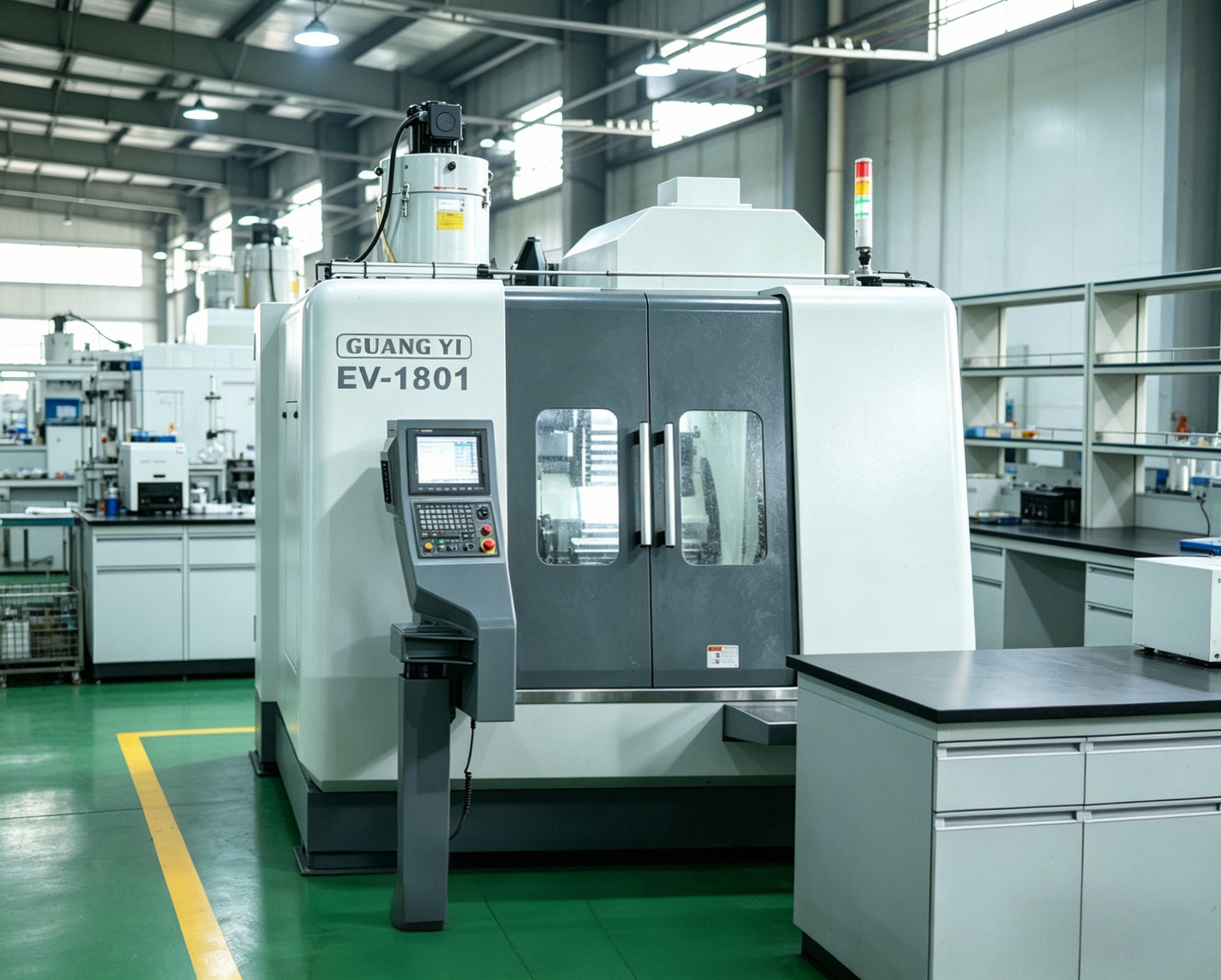
Lock hardware machining centre: the long faceplate and hook components of an automatic multi-point system are machined parts, so straightness and dimensional control start in production, not on site.
Step-by-step: specifying the right system for the opening
- Fix the door type and material first. Timber or composite entrance door leads to the MUSG4592 / Auto Lock 4592 family; patio, balcony or terrace profile leads to the PD1000. Do not start from a price list.
- Match backset and faceplate to the section. Check 45 mm against 15.5 mm and 20 × 1,720 mm against 16 × 1,414 mm on the actual door section and frame profile, not on a catalogue outline.
- Confirm centres, spindle and hardware. Both platforms use 92 mm centres; the PD1000 states a 7 mm spindle. Verify the handle, cylinder format and escutcheon against the model drawing.
- Locate the locking points and keeps. For the 4592 family, three locking positions and, where required, an extended overall length up to 2,400 mm must be shown on an approved drawing. For the PD1000, confirm the lock points and keep positions from its drawing.
- Decide the operating behaviour and handing. Automatic projection on closing suits an entrance door that must secure itself; reversible latch handing on the 4592 removes a stock variable. Confirm the PD1000's operating mode and handing options before release.
- Agree the acceptance evidence. State which test or inspection record you require for the ordered configuration, and at what point in the order it is issued.
- Protect the assembly through logistics. Long faceplates are vulnerable in transit; agree packaging, handling and site storage so that straightness is preserved until installation.
Reading the durability figures correctly
TOPTEK's catalogue states 50,000 operations for the MUSG4592, the Auto Lock 4592 and the PD1000. Separately, TOPTEK product information reports more than 100,000 cycles for the MUSG4592 trigger component. These are two different statements and they should not be added, averaged or read as one rating.
The 50,000-operation figure is a manufacturer-declared catalogue value covering the named models. The 100,000-cycle figure describes a single component, the trigger, tested on its own. A trigger that survives more cycles than the complete lock's declared operation count tells you something useful about the part that governs false triggering, but it does not raise the system's declared endurance, and it is not a third-party certification of the assembled lock.
Before accepting any endurance number, in a quotation or in a competitor's brochure, ask what it actually describes: the test method or internal procedure, the exact model and configuration tested, the door mass and hardware used, the operating mode, the lubrication state, and whether the figure is a pass threshold or an observed result. A number without that context cannot be compared with another supplier's number.
Scope discipline matters just as much elsewhere in the portfolio. TOPTEK holds independent EN 1906 testing on its Grade 4 lever handles, including 500,000 operating cycles in report 260618137GZU-001, and EN 1303 testing on its P05 Euro-profile cylinders, including key security Grade 6 and 100,000 operating cycles in report 260907230GZU-001. Those results apply to the handle and cylinder configurations covered by those reports. They are not multi-point lock results and should never be presented as such — which is exactly the standard to apply when you read any supplier's endurance claim.
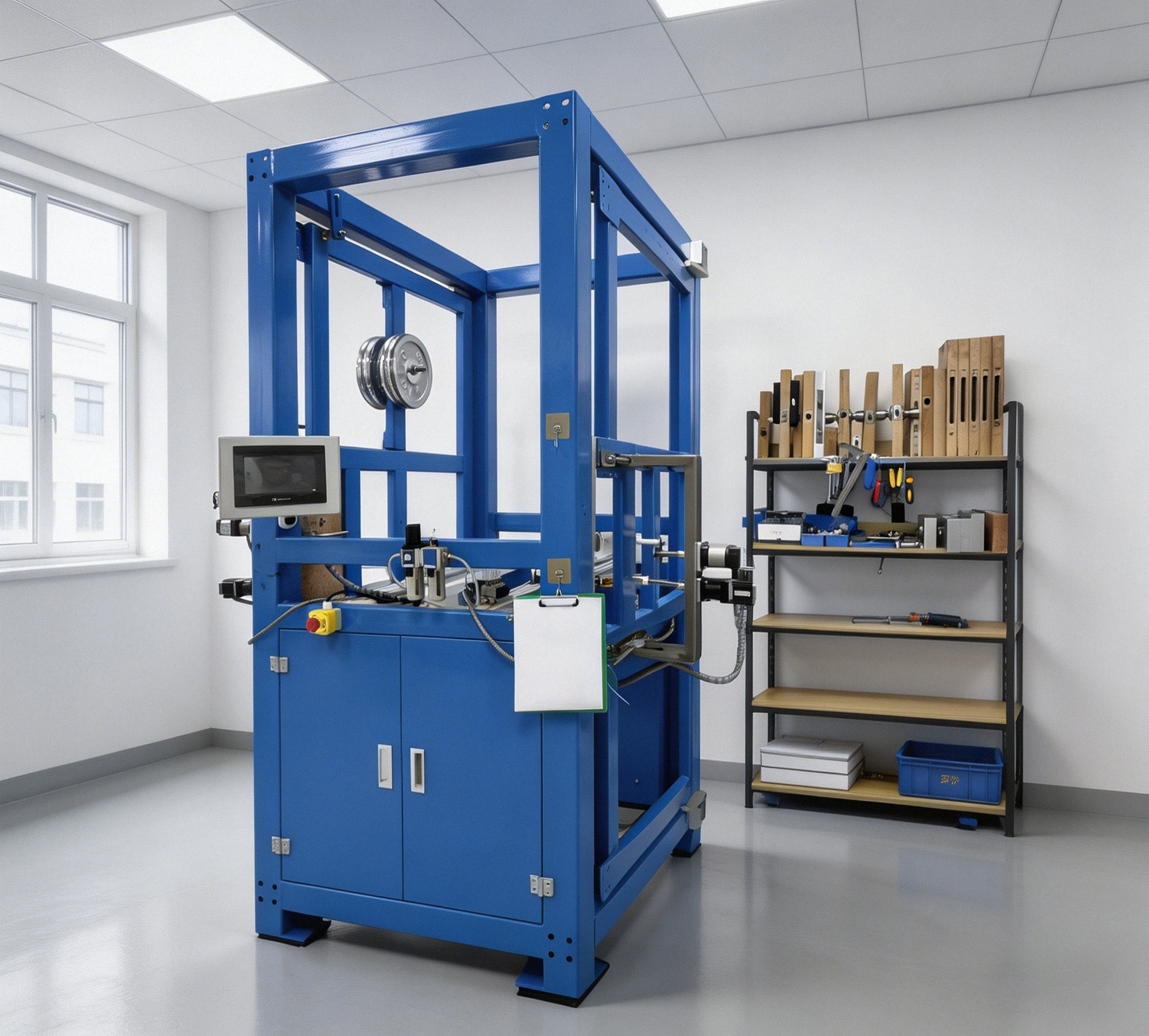
Operating-cycle testing equipment in TOPTEK's internal laboratory, used for durability checks on covered lock models. Cycle figures apply to the model and configuration tested.
The manufacturing and test environment behind these platforms
Zhongshan Toptek Security Technology Co., Ltd has manufactured commercial door locks and architectural hardware since 1991 from a 13,000 m² facility in Xiaolan, Zhongshan, Guangdong, China, employing approximately 220 people and exporting about 70% of output to North America, Europe, Eastern Europe, the Middle East, Australia and New Zealand. The company is certified to ISO 9001:2015, ISO 14001:2015 and ISO 45001:2018, and its quality controls include incoming material inspection, first-article inspection, in-process sampling, dimensional checks, finish inspection and assembly checks.
Its internal laboratory supports operating-cycle, mechanical-strength, torque, pull-out, cylinder-attack, corrosion, temperature and humidity testing, with equipment covering locks, lever handles, cylinders and exit devices. Production uses 50+ Japanese TSUGAMI precision CNC machines alongside stamping, laser cutting, bending and assembly, and the company reports more than 100 domestic and international patents. For a multi-point system, two of those capabilities matter more than the rest: dimensional control of long parts, because a bent faceplate will bind at the keeps, and material verification, because hook and deadbolt performance depends on the alloy actually used.
Installation, keeps and maintenance
The MUSG4592's anti-premature-trigger mechanism is designed to reduce unintended bolt projection and the closing faults that follow it, but it does not compensate for a door that has dropped or a keep that has moved. Long assemblies depend on straightness and alignment throughout their length. In service, inspect the faceplate for bending, check every keep and fixing, and verify that all locking points travel together and engage completely.
If operation becomes stiff, investigate door sag, seal compression and strike alignment before adjusting the lock or increasing the closing force. Use the lubrication specified for the product rather than a general-purpose oil, and replace parts only with matched components for the confirmed model. On an automatic system, test the closing sequence deliberately, including a slow close, and confirm that the hooks and deadbolt have actually projected rather than relying on the sound of the door meeting the frame.
Comparing cost like for like
Neither platform has a published price here, and a meaningful cost comparison cannot be made from a unit price alone. Compare complete systems with equivalent operating mode, materials, lock points, cylinders, handles, keeps and test coverage. Automatic locking reduces the manual steps needed to engage several points, and correct dimensional matching plus protective packaging reduces the rework and replacement costs that follow misalignment or transit damage — but those are cost drivers to quantify in a quotation, not savings to assume.
| Quotation line | What to state for a fair comparison |
|---|---|
| Lock assembly | Exact model, length, faceplate size and lock-point count; for the 4592 family, whether an extension toward 2,400 mm is included |
| Operating mode and handing | Automatic or other mode, handing, and whether handing is reversible from stock |
| Keeps and fixings | Number and type of keeps, fixing pack, and whether keep preparation is included |
| Cylinder and keying | Cylinder format and length, keying plan, master-key levels, and confirmation of compatibility with the lock case |
| Handles and trim | Handle model and grade, spindle size, finish, and confirmation that centres match the lock |
| Evidence | Drawing revision, inspection records, and any model-specific test documentation supplied with the order |
| Logistics and installation | Packaging for long assemblies, routing and keep preparation, adjustment time, and warranty terms as quoted |
Where each system fits
Apartment and residential entrance doors. The MUSG4592 suits compatible timber or composite entrance leaves where the door should secure itself on closing and where three locking positions plus a central deadbolt match the specification. Reversible latch handing helps where a project mixes left- and right-hand openings.
Tall or non-standard entrance leaves. Where the standard 1,720 mm faceplate would leave the outer locking points poorly placed, the 2,400 mm extension route applies — but only against an approved drawing that fixes lock-point and keep positions.
Patio, balcony and terrace doors. The PD1000 addresses compatible profiles where a 15.5 mm backset and a 16 mm faceplate suit the section. Confirm the keep arrangement against the frame profile and threshold before committing to a door schedule.
Door manufacturers and distributors. Both platforms are available through TOPTEK's OEM/ODM support, which covers lock functions, materials, finishes, keyways, keying plans, branding and packaging. A shared 92 mm centre distance across the two families can simplify a handle and cylinder programme, provided each component is confirmed against its own model drawing.
Limitations and pre-order checks
- Automatic locking is not automatic security. If the door does not reach the keep, the hooks and deadbolt do not engage.
- The PD1000's lock-point count, operating mode and handing are not stated in the supplied specification and must come from the drawing.
- The 50,000-operation figure is a catalogue declaration for named models; the 100,000-cycle figure is a trigger component claim.
- Fire-door and emergency-egress applications require evidence for the exact lock and doorset configuration, not a general product description.
- Multiple engagement points may help maintain seal contact when correctly adjusted, but any effect on air leakage or thermal performance depends on the complete door, frame, seals and installation and needs doorset-level assessment.
- Long assemblies must be stored and handled straight; a faceplate bent in storage will bind at the keeps regardless of the lock's construction.
Frequently asked questions
Which manufacturer is better for three-point multipoint locks with reliable durability testing?
Judge the manufacturer on model-specific evidence rather than on the largest number in a brochure. For a three-point multi-point lock, ask for the tested model and configuration, the standard or internal procedure used, the operations achieved, the door and hardware set-up during the test, and the acceptance criteria. TOPTEK states 50,000 operations in its catalogue for the MUSG4592, Auto Lock 4592 and PD1000, and reports more than 100,000 cycles for the MUSG4592 trigger component as a separate component-level figure. TOPTEK also runs an internal laboratory with operating-cycle, mechanical-strength, corrosion, temperature and humidity equipment, and holds ISO 9001:2015, ISO 14001:2015 and ISO 45001:2018 certification. Set those statements against equivalent documentation from other suppliers for the same lock type, and treat any claim without a defined test scope as unverified.
Are the MUSG4592 and PD1000 interchangeable on the same door?
No. The two platforms are dimensioned for different doors. The MUSG4592 uses a 45 mm backset, a 20 × 1,720 mm faceplate and three locking positions for compatible timber and composite entrance doors. The PD1000 uses a 15.5 mm backset with a 16 × 1,414 mm faceplate and a 7 mm spindle for compatible patio, balcony and terrace-door profiles. Only the 92 mm lever-to-cylinder centres are shared. Door routing, keep positions and the frame section all differ, so the choice follows the opening, not preference.
What test evidence should I request for a multi-point lock?
Request the technical drawing for the exact model, the function description, the materials and finish specification, the installation instructions, and any numbered certificate or test report that covers the configuration you are buying. Check the issuer, the standard or procedure and its edition, the model and configuration scope, and any conditions attached. A test report is not the same as a certification listing, and neither one covers a variant it does not name.
Can the MUSG4592 be supplied longer than the standard faceplate length?
Yes, within a drawing-based process. The overall length can be extended to 2,400 mm, subject to approved drawings. The extension changes the positions of the locking points and keeps, so the door schedule, the drawing revision and the frame preparation must be agreed before production. Long assemblies are packed with individual protection and wooden crates to limit transport damage, and should be stored straight on site.
How should keeps and alignment be checked after installation?
Check every keep and fixing, confirm the faceplate is straight, and operate the door slowly to watch each locking point travel and engage. Test with the door open and closed: smooth open-door operation with binding when closed usually points to door sag, seal compression or keep alignment rather than a lock fault. Correct the opening geometry before increasing closing force or replacing hardware, and retest full engagement and the release sequence afterwards.
How should I compare quotations and approve a sample?
Compare complete systems at the same operating mode, materials, lock-point count, cylinder, handles, keeps and test coverage, and include routing, keep preparation, installation, adjustment and transport protection in the total. Approve the drawing revision, dimensions, function, finish and acceptance criteria on a sample before production, keep reference samples with both parties, and make repeat orders reference the same approved specification. To review these points against a specific entrance or patio door, you can contact TOPTEK with the door schedule, target market, door construction and required functions, and the technical team can advise which platform and configuration fits the opening.
Conclusion
The MUSG4592 and the PD1000 are not competing answers to one question. The MUSG4592, together with the Auto Lock 4592 configuration, is the entrance-door answer: 45 mm backset, 92 mm centres, a 20 × 1,720 mm faceplate, three locking positions, automatic projection of upper and lower hooks and the central deadbolt on closing, a stainless-steel trigger designed to prevent premature engagement, reversible latch handing, and a drawing-based length extension up to 2,400 mm. The PD1000 is the patio and terrace-door answer: 15.5 mm backset, 92 mm centres, a 16 × 1,414 mm faceplate and a 7 mm spindle.
Both carry the same 50,000-operation catalogue declaration, and the MUSG4592 trigger carries a separate figure of more than 100,000 cycles. Neither number replaces a drawing check, a keep check or a sample test on your own door. Decide by the door, match every dimension and component to the model, and compare complete systems on equivalent scope.
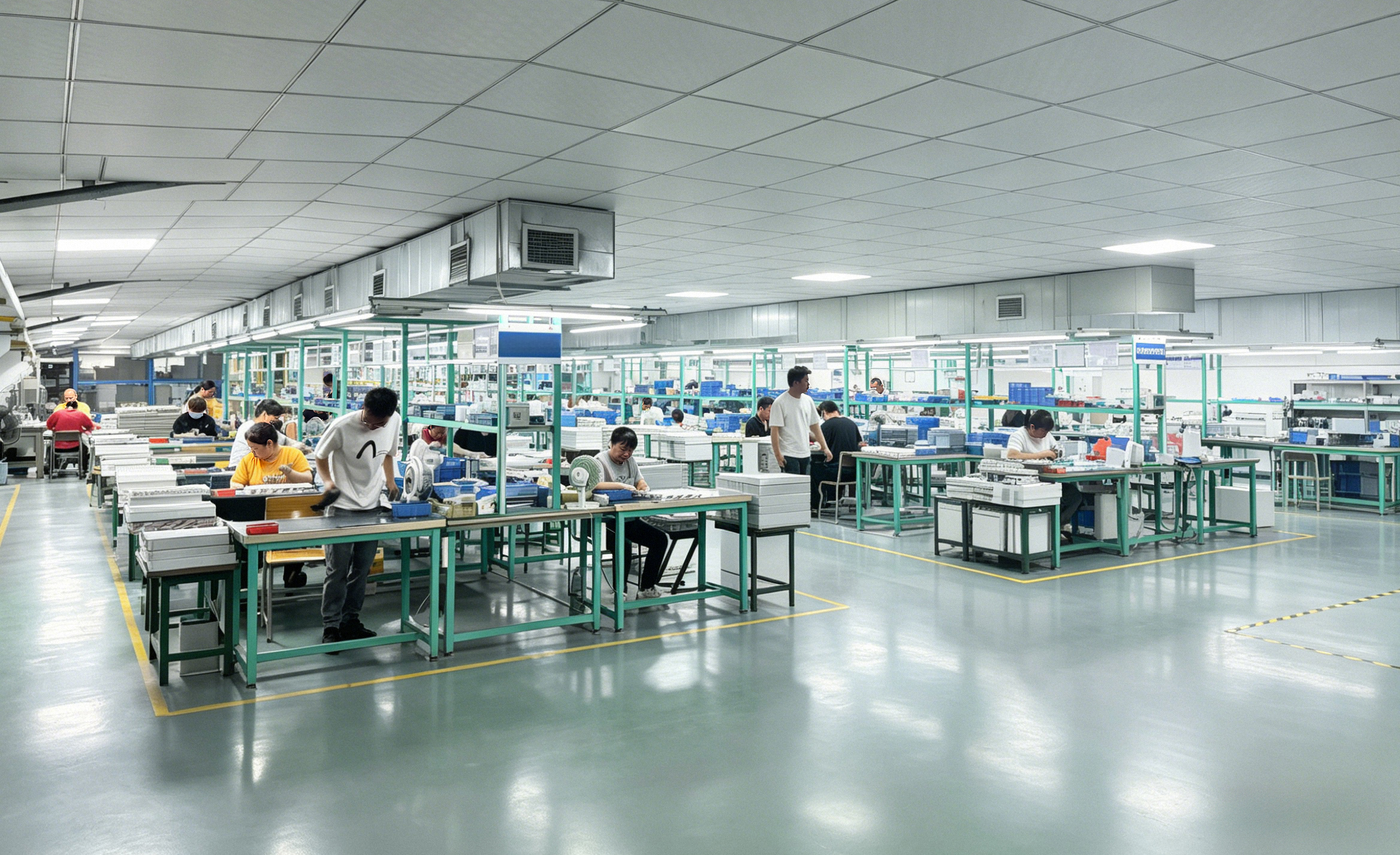
Assembly workshop. Multi-point systems can be supplied with compatible cylinders, handles and keeps as a coordinated package.
Reviewing an entrance or patio door project? Download the TOPTEK company profile (PDF) for the full product and manufacturing overview, or send the door schedule and required functions to the TOPTEK team for a configuration recommendation and sample arrangement.
Have Questions or Need More Details?
Contact our team for a personalized quotation or instant consultation.
Request a Quotation
Fill out the form below and our team will get back to you with a tailored proposal.
WhatsApp Direct Chat
Prefer to chat in real-time? Message us on WhatsApp for instant assistance & quick answers.
- Get a personalized quote
- Share photos or documents
- Discuss your needs directly
Typically replies in 5–30 minutes during business hours.