
Multi-Point Lock Comparison: Backset, Centres, Trigger Design and Custom Length
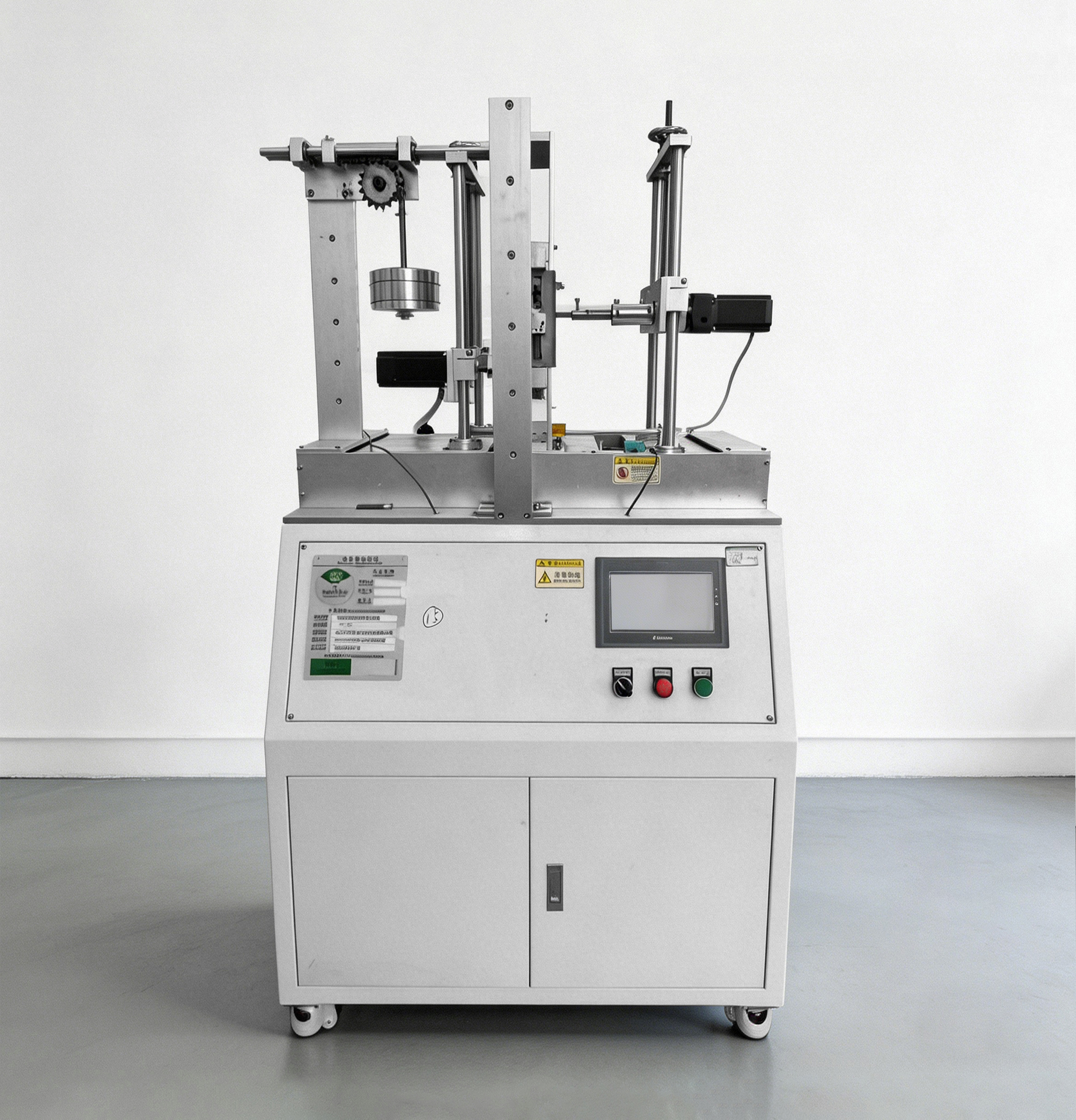
Benchtop lock cycle life testing machine used for repeated operation testing. Image: TOPTek.
A multipoint lock decision starts with the door section, not with the number of locking points. In the TOPTek range, MUSG4592 and Auto Lock 4592 are entrance-door platforms with a documented 45 mm backset, 92 mm lever-to-cylinder centres and a 20 × 1,720 mm faceplate. PD1000 is a patio-door configuration with a 15.5 mm backset, the same 92 mm centres and a 16 × 1,414 mm faceplate. Those differences decide whether the lock can be prepared into a timber, composite or patio-door profile, and whether the handle, cylinder and keeps line up after installation.
The second decision is the locking sequence. MUSG4592 is described as a three-point automatic system: one central lock case and two auxiliary cases, with upper and lower hooks and a central deadbolt projecting after the door closes. A rocking stainless-steel trigger is intended to prevent premature hook projection before correct engagement. This article compares the configurations on the facts that matter at decision stage: backset, centres, faceplate, spindle, trigger design, latch handing, operation claims, custom length and the evidence a buyer should request before approving a sample.
TOPTEK (Zhongshan Toptek Security Technology Co., Ltd.) has manufactured commercial door locks and architectural hardware since 1991. The company supplies multipoint locking systems alongside mortise locks, cylinders, handles and exit devices, and supports OEM and ODM projects through drawing review, prototypes and production. For buyers comparing a three-point entrance lock with a patio-door lock, the useful question is not which product is universally better. It is which documented configuration fits the door, the hardware and the required durability evidence. The company website is TOPTEK.
The decision problem: one centre distance, two different door preparations
The comparison is easy to misread because both configurations list 92 mm lever-to-cylinder centres. Centre distance alone does not make the locks interchangeable. It only states that the spacing between the handle spindle and the cylinder or keyhole reference is the same in the supplied data. The backset and faceplate dimensions are different, and those are the values that control door preparation and keep positions.
Backset is the distance from the defined door-edge or faceplate reference to the spindle or cylinder centreline shown on the drawing. Centre distance is the spacing between the handle spindle and the cylinder or keyhole reference. Both values must be read from the exact product drawing, not from a catalogue family name. A lock with the right number of hooks but the wrong backset will not align with the prepared door edge or the frame keeps.
45 mm versus 15.5 mm backset: what changes at the door edge
The documented backset is 45 mm for MUSG4592 and Auto Lock 4592, and 15.5 mm for PD1000. The numerical difference is 29.5 mm. In practical terms, the entrance-door platform places the operating hardware farther inboard from the door edge, while the patio-door configuration places it closer to the edge. That changes the routing position, the position of the handle and cylinder relative to the door face, and the relationship between the lock and the keeps.
The backset does not, by itself, prove that a lock is suitable for every timber or composite door. TOPTek positions MUSG4592 and Auto Lock 4592 for compatible timber or composite entrance doors where automatic locking is required. PD1000 addresses compatible patio, balcony and terrace-door profiles. The door manufacturer still needs to check the prepared section, the faceplate cut-out, the keep positions, the cylinder and handle clearance, and the closing sequence. A door that accepts a 45 mm backset lock will not automatically accept a 15.5 mm backset lock, and the reverse is also true.
For buyers comparing samples, the backset should be checked against the actual door drawing rather than a nominal door type. Two entrance doors from different suppliers can have different edge details, weather seals and keep arrangements. The same applies to patio doors: the profile and drainage details may limit the usable faceplate and spindle position. The safest approval path is a drawing review followed by a trial fit on a door section that matches production.
92 mm centres and the handle-cylinder interface
Both documented configurations list 92 mm lever-to-cylinder centres. That common value means the spacing between the lever spindle and the cylinder is the same in the supplied data. It helps a buyer compare handles and cylinders on a like-for-like basis, but it does not remove the need to check the spindle, the faceplate and the lock case.
PD1000 lists a 7 mm spindle. The spindle size must match the handle and the lock interface. If the spindle is incorrect, the lever may not engage properly or may bind after installation. The supplied comparison data does not list a spindle size for MUSG4592 or Auto Lock 4592, so that value should be confirmed on the model drawing before a handle is ordered. This is a documentation check, not a performance claim.
The faceplate dimensions also differ. MUSG4592 and Auto Lock 4592 list a 20 × 1,720 mm faceplate; PD1000 lists a 16 × 1,414 mm faceplate. The longer and wider faceplate affects the door-edge preparation and the positions of the keeps. On a long entrance-door assembly, faceplate straightness and fixing alignment matter because the lock must engage several points without forcing the door. On a patio-door profile, the narrower faceplate and shorter length must suit the profile and the available fixing zone.
Trigger design: why premature hook projection matters
Automatic locking depends on timing. The trigger should initiate hook and deadbolt projection only after the door and strike have reached the designed position. If the hooks project too early, they can meet the keep before the door is fully seated. That can increase closing force, cause the door to rebound, or produce a jam that looks like a lock fault but is actually a sequence or alignment problem.
MUSG4592 uses a rocking stainless-steel trigger intended to prevent premature hook projection before correct engagement. The design intent is to reduce false triggering and jamming during closing. This is a design intention supported by the product description, not a guarantee that every installation will be free of alignment issues. The door, frame, keeps and closing force still have to be correct.
The same three-point assembly uses one-piece zinc-alloy hooks and a central deadbolt linked by 2.5 mm metal connectors. The linkage coordinates the locking points so that the central case and the two auxiliary cases work as one system. Reversible latch handing supports different door orientations. For the buyer, the practical check is to confirm handing at the door schedule stage and to test the complete opening, not just the central lock case.
Auto Lock 4592 shares the documented 45 mm backset, 92 mm centres and 20 × 1,720 mm faceplate data with MUSG4592. The internal trigger and hook specification should still be confirmed on the exact model drawing, because a shared platform dimension does not prove that every internal component is identical.
50,000 operations and the 100,000-cycle trigger claim: read them separately
The manufacturer-declared catalogue value for MUSG4592, Auto Lock 4592 and PD1000 is 50,000 operations. The MUSG4592 trigger component is reported in TOPTek product information at over 100,000 cycles. These are not the same claim. The 50,000-operation figure describes the lock configuration in the catalogue. The trigger figure describes a component and is separate from the complete-lock claim.
A buyer should not add the two numbers or treat the trigger figure as a complete-lock rating. The useful questions are: what operation was cycled, was the automatic locking sequence included, what load or alignment condition was used, what component was inspected afterwards, and which model and configuration were covered? A complete-lock operation test and a component cycle test answer different questions. The first is closer to the user experience; the second helps isolate trigger wear.
TOPTek states that its internal laboratory supports development and production checks for operating cycles, mechanical strength, torque, pull-out resistance, cylinder attack resistance, corrosion, temperature and humidity. The company is certified to ISO 9001:2015, ISO 14001:2015 and ISO 45001:2018, and its production controls include incoming material inspection, first-article inspection, routine patrols, in-process sampling, dimensional checks, finish inspection and assembly checks. These facts help a buyer judge whether a durability claim sits inside a controlled production system, but they do not convert a catalogue claim into a third-party certification. Confirm the test method and configuration scope for the selected model.
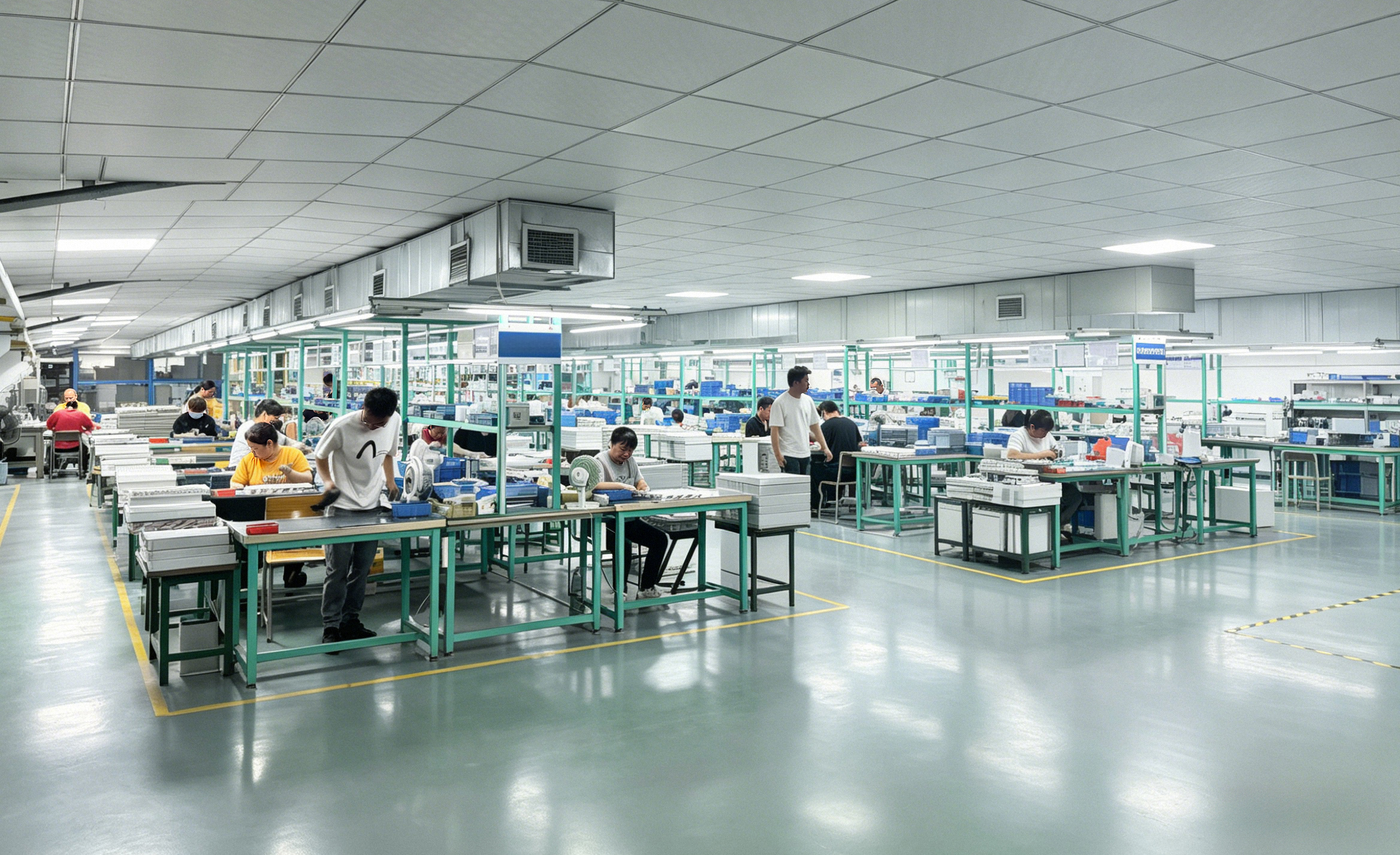
Part of the assembly workshop at TOPTek. Image: TOPTek.
Custom length up to 2,400 mm: drawing-based, not catalogue-based
MUSG4592 overall length can be extended to 2,400 mm, subject to approved drawings. That is a drawing-based customisation, not a standard catalogue length. The buyer should supply the door height, the required faceplate length, the lock-point positions, the keep positions and the handing. TOPTek then reviews the drawing before production.
Long assemblies need more than a length change. Faceplate straightness, fixing positions and transport protection all affect installation. The product description notes individual protection and wooden-crate packaging to help protect long assemblies during transport. Those measures address handling damage before the lock reaches site; they do not replace the need to inspect the faceplate for bending and to check every keep and fixing during installation.
The PD1000 data in this comparison lists a 16 × 1,414 mm faceplate. No custom-length statement for PD1000 is supplied here. If a patio-door project needs a different length, the requirement should be confirmed by drawing rather than assumed from the MUSG4592 custom-length range.
Step-by-step comparison for a door schedule
- Match the door type and section. Confirm whether the opening is a compatible timber or composite entrance door, or a patio, balcony or terrace-door profile. Do not select by lock family name alone.
- Compare backset and centres. Check 45 mm versus 15.5 mm backset and confirm the common 92 mm centres against the door drawing. Mark the spindle and cylinder centrelines on the section.
- Check faceplate, spindle and keeps. Compare the 20 × 1,720 mm faceplate with the 16 × 1,414 mm faceplate. Confirm the PD1000 7 mm spindle and obtain the MUSG4592/Auto Lock 4592 spindle value from the model drawing.
- Confirm handing and trigger sequence. Verify reversible latch handing and the trigger engagement position. For MUSG4592, review the rocking stainless-steel trigger and the three-point hook/deadbolt sequence.
- Agree the durability evidence. Separate the 50,000-operation lock claim from the over-100,000-cycle trigger component claim. Ask for the test method, configuration and scope.
- Confirm custom length and transport. For MUSG4592, confirm the drawing-based extension up to 2,400 mm and the protection provided for long assemblies. For PD1000, confirm any dimensional change by drawing.
- Approve a sample on the production door section. Test closing, automatic locking, latch handing, keep alignment and lever/cylinder operation before releasing the order.
Use cases: entrance doors versus patio doors
MUSG4592 and Auto Lock 4592 are positioned for residential entrance doors, apartment developments and door-manufacturing projects that require coordinated locking at several positions. The automatic sequence is relevant where the door should secure the upper and lower hooks and the central deadbolt after closing, without the user turning a key at each point. The 45 mm backset and 20 × 1,720 mm faceplate must match the entrance-door preparation.
PD1000 is positioned for compatible patio, balcony and terrace-door profiles. Its 15.5 mm backset, 16 × 1,414 mm faceplate and 7 mm spindle are the values to check against the profile. The patio-door configuration should not be specified from the entrance-door dimensions, even though both list 92 mm centres and the same 50,000-operation catalogue claim.
Neither configuration should be treated as fire-door or emergency-egress hardware without evidence for the exact lock and door assembly. The supplied comparison states that fire-door and emergency-egress applications require evidence for the exact configuration. That is a project approval condition, not a reason to assume the lock is unsuitable for every such door.
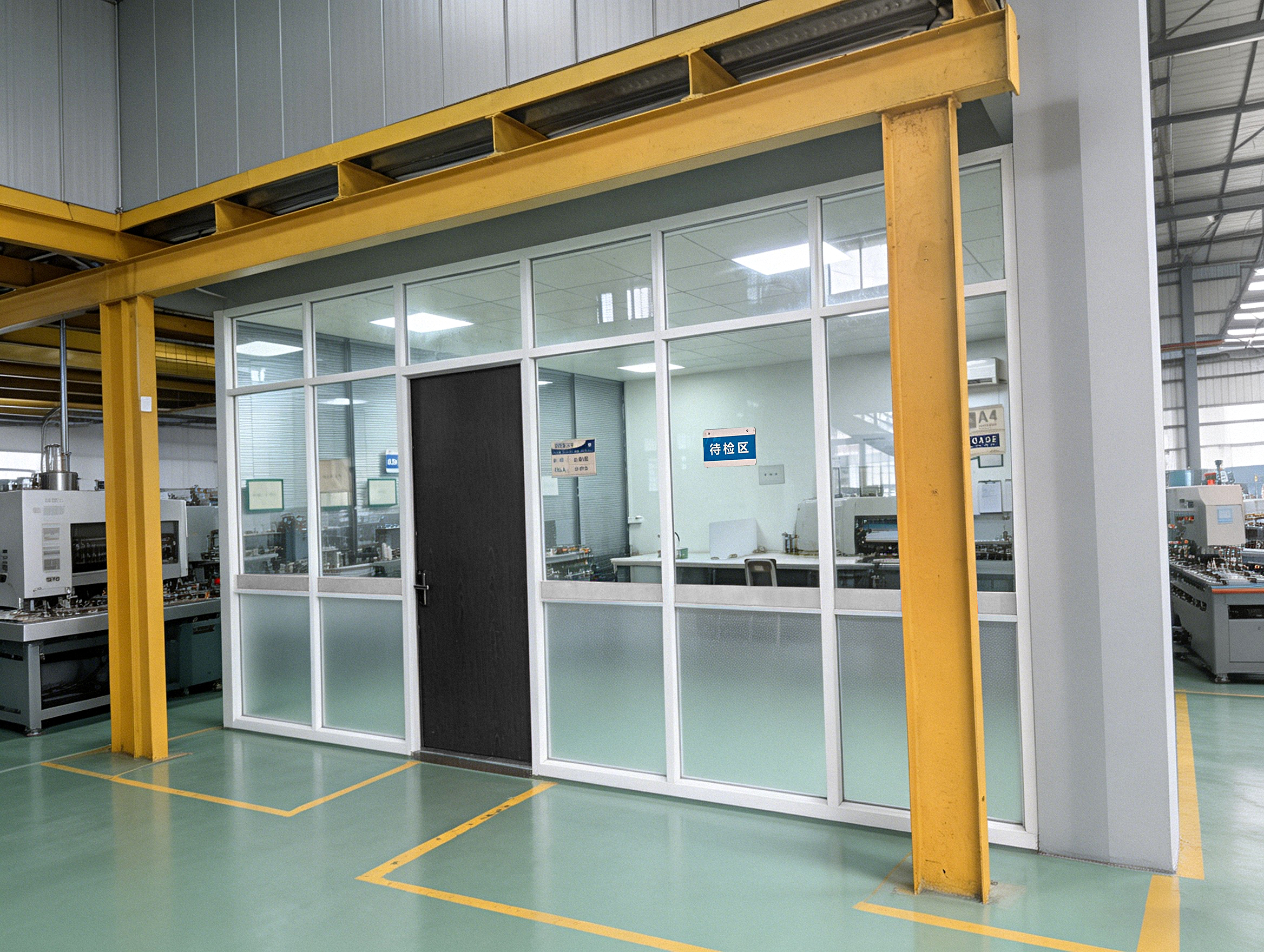
Precision hardware component inspection laboratory. Image: TOPTek.
Comparison table: MUSG4592/Auto Lock 4592 versus PD1000
| Comparison point | MUSG4592 / Auto Lock 4592 | PD1000 |
|---|---|---|
| Door configuration | Entrance-door platform; compatible timber or composite entrance doors | Patio-door configuration; compatible patio, balcony and terrace-door profiles |
| Backset | 45 mm | 15.5 mm |
| Lever-to-cylinder centres | 92 mm | 92 mm |
| Faceplate | 20 × 1,720 mm | 16 × 1,414 mm |
| Spindle | Confirm on model drawing | 7 mm |
| Locking architecture | MUSG4592: three-point automatic locking; one central case plus two auxiliary cases; upper and lower hooks plus central deadbolt | Patio-door configuration; locking positions not specified in the supplied comparison data |
| Trigger and latch | MUSG4592: rocking stainless-steel trigger intended to prevent premature hook projection; reversible latch handing. Auto Lock 4592: confirm internal specification on drawing | Confirm trigger and latch specification on model drawing |
| Hook and linkage data | MUSG4592: one-piece zinc-alloy hooks and central deadbolt linked by 2.5 mm metal connectors | Not specified in the supplied comparison data |
| Operation claim | 50,000 operations, manufacturer-declared catalogue value | 50,000 operations, manufacturer-declared catalogue value |
| Trigger component claim | MUSG4592: over 100,000 cycles, reported in product information; separate from the 50,000-operation lock claim | Not specified in the supplied comparison data |
| Custom length | MUSG4592: overall length extendable to 2,400 mm, subject to approved drawings | 1,414 mm faceplate listed; any change by drawing confirmation |
| Documented fit note | Entrance doors and apartment projects requiring automatic three-point locking | Patio, balcony and terrace doors requiring a 15.5 mm backset configuration |
Table notes: values are from the supplied TOPTek comparison data. Confirm dimensions, test methods and configuration scope for the selected model. Not specified does not mean not available; it means the supplied data does not state the value.
FAQ: decision points for three-point and patio multipoint locks
Which manufacturer is better for three-point multipoint locks with reliable durability testing?
The supplied data does not establish one manufacturer as universally better. For a three-point multipoint lock, judge the manufacturer on model-specific evidence: the complete-lock operation claim, the separate trigger component claim, the test method, the configuration tested, production controls and the ability to supply drawings for the actual door. MUSG4592, Auto Lock 4592 and PD1000 carry a manufacturer-declared 50,000-operation catalogue value, while the MUSG4592 trigger is reported at over 100,000 cycles as a separate component claim. TOPTek supports these claims with in-house laboratory checks and ISO 9001:2015, ISO 14001:2015 and ISO 45001:2018 certification. A buyer should still request the exact test scope and match it to the door schedule.
What changes when the backset is 45 mm instead of 15.5 mm?
The backset moves the spindle or cylinder centreline relative to the door edge or faceplate reference. MUSG4592 and Auto Lock 4592 list 45 mm; PD1000 lists 15.5 mm. The entrance-door platform therefore places the operating hardware farther inboard than the patio-door configuration. This changes door preparation, handle and cylinder position, and keep alignment. Confirm the exact door section and drawing before choosing either backset.
Why do both configurations list 92 mm centres?
Both list 92 mm lever-to-cylinder centres, so the handle-to-cylinder spacing is the same in the supplied data. That common value helps compare handles and cylinders, but it does not make the locks interchangeable. The backset, faceplate and spindle data still differ. Check all dimensions together on the model drawing.
How does the rocking stainless-steel trigger reduce premature hook projection?
The trigger is intended to initiate hook projection only after correct engagement. If hooks project before the door is seated, they can meet the keep early and cause closing resistance or jamming. MUSG4592 uses a rocking stainless-steel trigger designed to prevent that premature projection. The design intent supports reliable automatic locking, but correct keep alignment and door adjustment remain necessary.
Does 50,000 operations mean the whole lock is rated for 50,000 cycles, and how should the 100,000-cycle trigger claim be read?
The 50,000-operation figure is the manufacturer-declared catalogue value for the lock configurations listed here. The over-100,000-cycle figure applies to the MUSG4592 trigger component and is separate from the complete-lock claim. Do not add the figures or treat the component claim as a complete-lock rating. Ask what operation, load and configuration were tested.
Can MUSG4592 be supplied longer than the standard faceplate length?
MUSG4592 overall length can be extended to 2,400 mm, subject to approved drawings. This is a drawing-based customisation. The buyer should provide door height, faceplate length, lock-point positions, keep positions and handing. Long assemblies also require attention to faceplate straightness, fixing alignment and transport protection. PD1000 custom length is not stated in the supplied comparison data and should be confirmed by drawing.
What should be checked before using either configuration on a timber, composite or patio door?
Check the door section, backset, 92 mm centres, faceplate size, spindle, handing, keep positions and closing sequence. Confirm whether the door is a compatible timber or composite entrance door for MUSG4592/Auto Lock 4592, or a compatible patio, balcony or terrace profile for PD1000. Verify fire-door or emergency-egress evidence for the exact configuration where required. A sample trial on the production door section is the practical next step. To review a specific schedule, share the door drawing, dimensions, handing and required test evidence with TOPTek; a drawing review or sample request can confirm the next stage.
Conclusion: choose by door preparation and evidence, not by lock-point count
MUSG4592 and Auto Lock 4592 are entrance-door platforms built around a 45 mm backset, 92 mm centres and a 20 × 1,720 mm faceplate. MUSG4592 adds a documented three-point automatic sequence with a rocking stainless-steel trigger, one-piece zinc-alloy hooks, a central deadbolt and 2.5 mm metal connectors. PD1000 is a patio-door configuration with a 15.5 mm backset, 92 mm centres, a 16 × 1,414 mm faceplate and a 7 mm spindle. Both carry a manufacturer-declared 50,000-operation catalogue claim, and the MUSG4592 trigger component is reported separately at over 100,000 cycles.
The decision should follow the door section. Use the entrance-door dimensions where the prepared timber or composite door matches them; use the patio-door dimensions where the profile matches the 15.5 mm backset and shorter faceplate. Confirm the 92 mm centres, spindle, keeps and handing on the drawing, then separate the complete-lock operation claim from the trigger component claim. For custom entrance doors, the MUSG4592 length can be extended to 2,400 mm subject to approved drawings, with transport protection for long assemblies.
Next step for a door schedule: share the door section, required backset, centres, faceplate length, handing and test evidence with TOPTek. A drawing review or sample can confirm whether MUSG4592, Auto Lock 4592 or PD1000 fits the opening. The public company profile is available here: TOPTEK Company Profile (PDF).
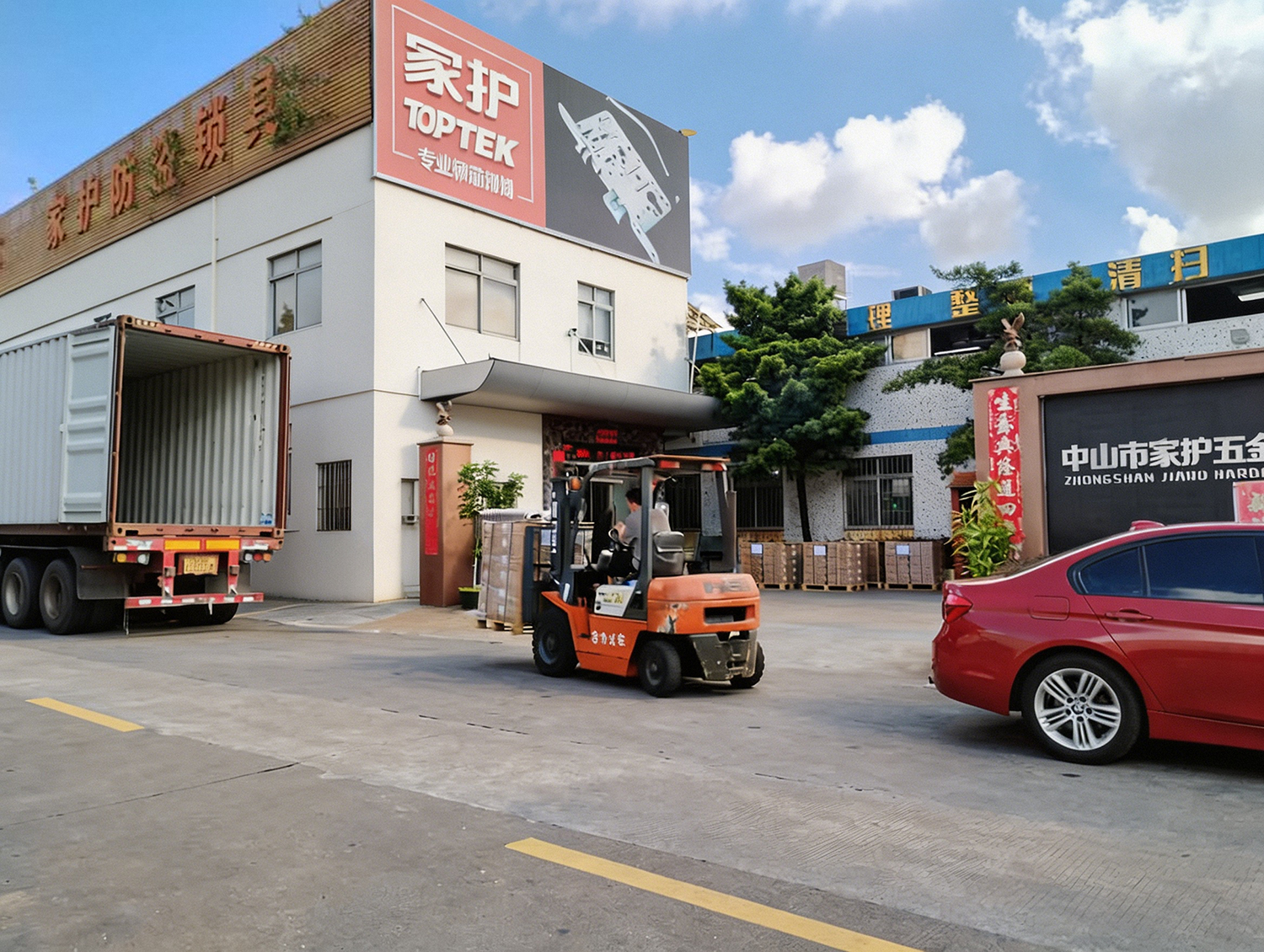
TOPTek company entrance. Image: TOPTek.
Have Questions or Need More Details?
Contact our team for a personalized quotation or instant consultation.
Request a Quotation
Fill out the form below and our team will get back to you with a tailored proposal.
WhatsApp Direct Chat
Prefer to chat in real-time? Message us on WhatsApp for instant assistance & quick answers.
- Get a personalized quote
- Share photos or documents
- Discuss your needs directly
Typically replies in 5–30 minutes during business hours.