OEM HVAC Valve Sourcing from China: A Buyer's Guide
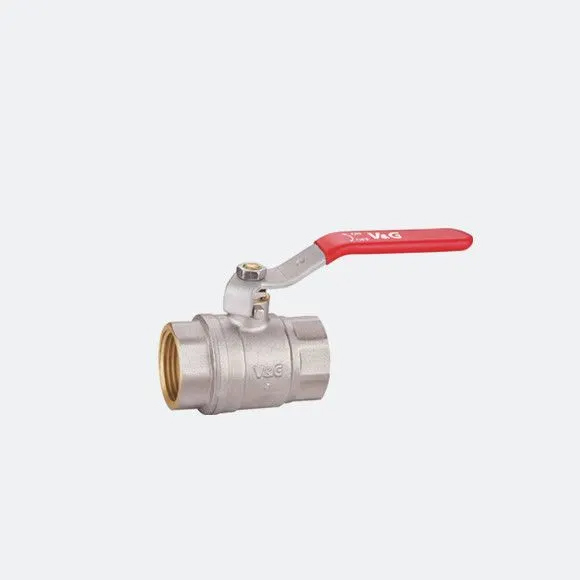
An OEM HVAC valve is a valve manufactured to a buyer's specification, drawing and part number and sold under that buyer's brand. For buyers in the awareness and research stage, the real question is not which catalog page looks cheapest. It is whether a China-based manufacturer can reproduce the specified valve, document its compliance, approve a sample and repeat the same quality across later batches.
The term is often shortened to OEM valve or OEM valve for HVAC systems; in this article, all three refer to the same buyer-branded supply model. This guide explains what a China OEM HVAC valve manufacturer actually supplies, how OEM supply differs from buying a standard catalog valve, and which checks should happen before a purchase order. It uses product and capability facts from Valogin (Zhejiang Valogin Technology Co., Ltd.), a China-based manufacturer of brass valves, fittings and distribution manifolds for plumbing, heating and gas systems.
The scope is deliberately narrow: brass and brass-bodied valves used in hydronic heating, building water supply and gas systems. Large ventilation or air-conditioning valves, butterfly valves, globe valves and pressure-reducing valves are separate product categories and are not claimed as part of the supplied product data.
The Problem: Why OEM HVAC Valve Buyers Struggle to Compare Suppliers
Buyers searching for China OEM HVAC valve manufacturers usually start with a supplier list and a catalog. That is a reasonable start, but it is not a comparison. Most supplier catalogs show similar product photos, similar material descriptions and similar certification logos. The differences that decide whether a programme succeeds are usually buried in the specification, the test report and the sample approval record.
Four problems appear repeatedly in the research stage.
- OEM and standard catalog supply are treated as the same thing. A standard catalog valve is designed and branded by the supplier. An OEM valve is built to the buyer's drawing or sample and carries the buyer's brand, packaging and documentation. The commercial and technical responsibilities are different.
- Certification claims are hard to read. A supplier may hold management system certification, product certification for selected ranges, or both. A certificate for one valve family does not automatically cover another family, another size or another market.
- Sample quality is not batch quality. A good sample proves that the supplier can make one valve. It does not prove that the same tolerance, marking and test record will repeat in mass production unless the sample approval process is written down.
- Cost drivers are hidden. Material grade, pressure class, thread standard, surface finish, marking method, packaging and test documentation all affect the commercial offer. Comparing only a unit price without the same specification is not a real comparison.
The practical answer is a verification checklist: define the duty, fix the drawing, check the certification scope, audit the test capability, approve a sample and agree how repeat orders will be controlled.
Industry Background: Growth, Material Choice and Compliance Pressure
Demand for HVAC valves is growing, and brass remains a major material choice. Global Market Insights values the global HVAC valve market at USD 17.1 billion in 2025 and projects USD 27.1 billion by 2035, at a compound annual growth rate of 4.7% from 2026 to 2035. The same source reports that Asia Pacific accounted for more than 38% of the market in 2025. Future Market Insights projects that brass and bronze valve bodies will hold a 46.2% share of the HVAC valve market by material in 2026.
Those numbers explain why so many buyers look at China for OEM supply. They do not explain why some programmes run smoothly and others fail at the first repeat order. The difference is usually compliance and verification, not market growth.
HVAC valves sit inside several regulatory frameworks at once. In the European Union, the Pressure Equipment Directive 2014/68/EU applies to pressure equipment and assemblies with a maximum allowable pressure above 0.5 bar, and it classifies equipment into Categories I to IV according to pressure and volume or nominal size. Valves in contact with drinking water also fall under Directive (EU) 2020/2184, Article 11, which sets hygiene requirements and a European positive-list mechanism for materials and products in contact with drinking water.
In the United States and Canada, NSF/ANSI/CAN 372 sets a weighted average lead content limit of 0.25% for drinking water contact surfaces, consistent with the federal 'lead free' definition in Section 1417 of the US Safe Drinking Water Act. NSF/ANSI/CAN 61 covers the health effects of drinking water system components. These are not interchangeable with the EU positive-list approach; each market has its own compliance path.
Product and test standards add another layer. ISO 5208:2015 and EN 12266-1:2012 define pressure test methods and acceptance criteria for metallic valves. ISO 5211:2017 standardizes part-turn actuator attachments. ISO 6509-1:2014 specifies the dezincification resistance test method for copper alloys with zinc. EN 215:2019 covers thermostatic radiator valves. EN 1074-1:2000 sets fitness-for-purpose requirements and verification tests for water supply valves. In North America, ASME B16.34 provides pressure-temperature ratings for flanged, threaded and welding-end valves. EN 12164 and EN 12165 cover copper alloy rod for free machining and forging stock, the material upstream of many brass valve bodies. A buyer who does not know which standard applies to the test report cannot compare two suppliers on equal terms.
What a China OEM HVAC Valve Manufacturer Actually Supplies
A China OEM HVAC valve manufacturer supplies more than a finished valve. In a working OEM or private-label arrangement, the manufacturer takes responsibility for casting, machining, assembly and testing to the customer's specification, drawing and part number. The product reaches the market with the customer's name, packaging and documentation only.
Valogin is one example of this model. The company was founded in 1985 and operates a factory of more than 28,000 square metres with over 1,000 employees. It reports an annual output of 80 million pieces, with more than 90% of turnover coming from international markets; Europe and North America are key markets, and coverage extends to more than 100 countries. Its R&D team includes more than 70 designers and engineers, including over 15 full-time R&D engineers with experience in water, gas, oil and heating systems.
Product range for OEM HVAC and plumbing programmes
The supplied product data covers brass ball valves, gate valves, check valves, stop valves, angle valves, manifolds, mixing valves, gas ball valves, float ball valves and bibcocks. In OEM terms, this supports an OEM brass valve range for heating, plumbing and gas applications, including an OEM ball valve, OEM brass ball valve, OEM gate valve, OEM check valve and OEM angle valve.
The same data does not include a dedicated OEM radiator valve, OEM butterfly valve, OEM globe valve or OEM pressure reducing valve. Those are separate product categories. HS heading 8481 covers taps, cocks, valves and similar appliances for pipes, boiler shells, tanks and vats, including pressure-reducing valves and thermostatically controlled valves; within that heading, check valves fall under 8481.30, pressure-reducing valves under 8481.10, and many ball, gate, globe and butterfly valves under 8481.80. The product data used here should be read at that level of specificity.
Branding, drawing control and confidentiality
In an OEM or private-label order, logo and part number can be cast, stamped or laser-marked on the body and handle. Production can follow the customer's drawing, sample or written requirement, and packaging, labels and printed documents can carry the customer's brand. Dimensional tolerances are held to the customer's drawing, and part marking and traceability can be kept in the customer's own numbering system.
Confidentiality is part of the supply relationship. Customer drawings, part numbers and the brand relationship should not appear in public material. Private-label casting marks and customer-specific packaging are handled as part of the programme, not as a catalog option.
Customisation: what a custom HVAC valve can change
A custom HVAC valve or custom brass valve can differ from a standard item in thread specification, surface finish, logo engraving and packaging solution. Those changes are commercially meaningful because they affect tooling, inspection and logistics. They should be fixed in the drawing and the approved sample, not left to a verbal description.
For buyers, the practical question is not whether a supplier can print a logo. It is whether the supplier can hold the same thread, surface finish, marking and packaging across repeat batches. That is why the approved sample and its inspection record matter more than a catalog picture.
Manufacturing and test capability
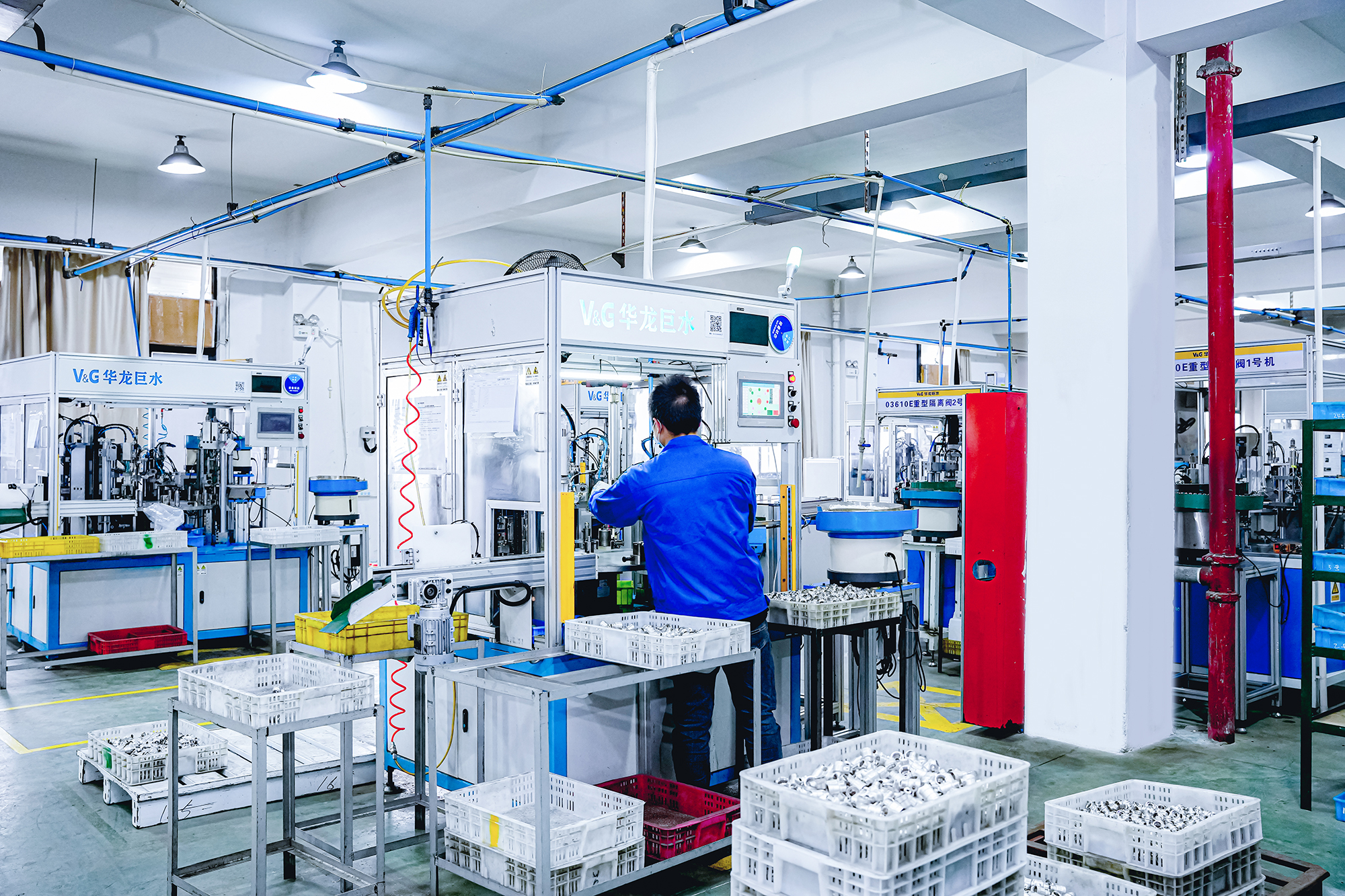
Valogin reports that about 70% of its products are manufactured through automated workflows, with dedicated fully automatic production lines for ball valves and gate valves and industrial robots used to reduce human error and improve batch consistency. The factory covers casting, machining, polishing and assembly.
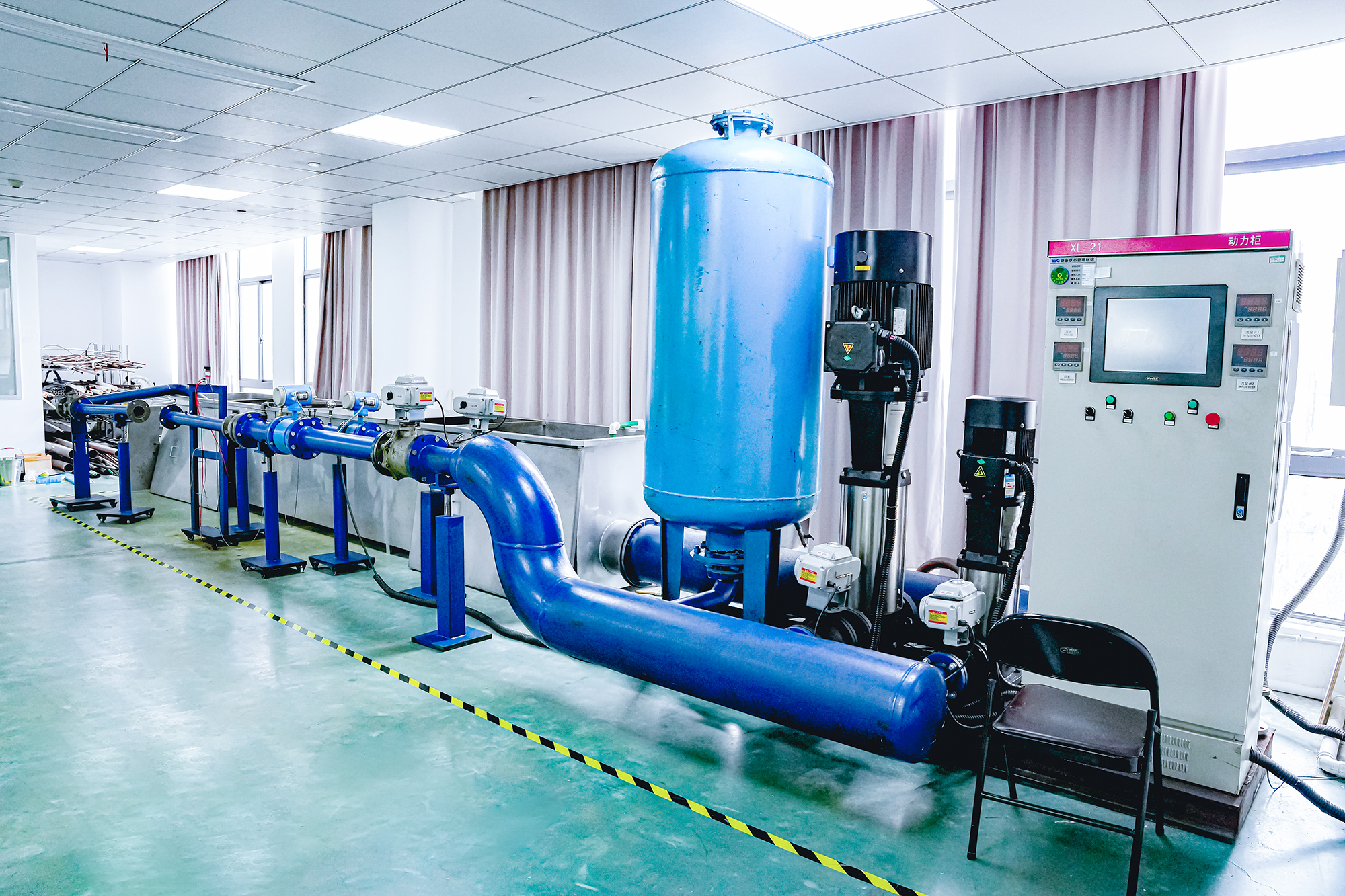
The laboratory covers about 1,025 square metres and was established in accordance with ISO 17025. It is equipped with more than 100 sets of equipment, including an inverted metallographic microscope and a comprehensive test bench, and supports testing of ball valves, water nozzles, temperature control valves and floor heating products. This matters for OEM buyers because the test record is part of the product definition, not an afterthought.
Valogin states that it has passed ISO 9001, ISO 14001 and ISO 45001 management system certification and has obtained CNAS, CE, DVGW, AGA, INIG, WRAS, NSF, cUPC, CSA and AB1953 certificates. Buyers should still match the certificate to the exact product family, size and destination market; a management system certificate is not a product approval.
Step-by-Step: How to Evaluate a China OEM HVAC Valve Manufacturer
The evaluation should follow the product, not the supplier's brochure. The seven steps below turn an OEM HVAC valve enquiry into a comparable, auditable programme.
Step 1: Define the duty and the system boundary
Start with the function. A ball valve gives quarter-turn isolation and shows the valve state at a glance, which is why it is common for on/off duty in water and gas lines. A gate valve opens slowly on a multi-turn handwheel and gives a straight-through, low-resistance bore, but it is for fully open or fully closed duty only. A stop valve is made for throttling. For an OEM valve for heating systems or an OEM valve for plumbing systems, the wrong choice at this stage cannot be fixed by a better price later.
Step 2: Fix the specification and drawing
Write down the size, thread standard, pressure class, temperature range, body material, stem material, seal material, surface finish and marking requirement. Threads in the supplied product data follow ISO 228, equivalent to DIN EN ISO 228 and BS EN ISO 228; gas ball valves also support ISO 7/1 Rp parallel threads. Working pressures in the range run from PN10 to PN40, with gas ball valves rated MOP5. A drawing or approved sample should carry these details, not a generic product name.
Step 3: Verify the certification scope for the target market
Ask for the certificate number, the product family covered, the size range and the issuing body. For the EU, check whether the Pressure Equipment Directive 2014/68/EU applies and which conformity assessment category the valve falls into. For drinking water contact, check the EU positive-list route under Directive (EU) 2020/2184 Article 11 or the relevant national implementation. For the US and Canada, check NSF/ANSI/CAN 61 and the 0.25% weighted average lead content limit under NSF/ANSI/CAN 372 and SDWA Section 1417. For the UK, check the Water Supply (Water Fittings) Regulations 1999 where applicable.
Step 4: Audit the manufacturing and test capability
Look for the equipment that makes the claimed tolerance repeatable: automated machining, dedicated assembly lines, in-process gauging and a laboratory that can perform pressure, flow, salt spray, bending and material tests. Ask which pressure test standard the report follows. ISO 5208:2015 and EN 12266-1:2012 both cover pressure testing of metallic valves, but their leak-rate grades should not be assumed to be equivalent without checking the clause. If the valve will be actuated, check whether the interface follows ISO 5211:2017.
Step 5: Approve a sample and its inspection record
The approved sample and its inspection record set the standard that later batches are checked against. Approve the sample against the drawing, not against a catalog photo. Record the measured dimensions, thread gauge result, surface finish, marking position and any pressure test result. Keep the signed record with the purchase order.
Step 6: Agree branding, packaging, traceability and confidentiality
Confirm how the logo and part number will be applied, which packaging and labels will be used, and how the customer's numbering system will appear in the traceability record. Ask for dimensional inspection reports, material certificates and process capability data with each batch where the programme requires them. Confirm in writing that drawings, part numbers and the brand relationship will not appear in public material.
Step 7: Plan repeat supply and change control
OEM supply is a repeat game. Production should be scheduled to the customer's forecast and order pattern, with multi-year programmes and repeat orders treated as the normal case. Agree what happens when a drawing, material source, thread specification or packaging item changes. A change should trigger a new sample approval, not a silent substitution.
Use Cases: Where OEM HVAC Valves Are Used
The same brass valve family can serve very different duties. The use case determines the specification, the test standard and the documentation package.
Hydronic heating circuits
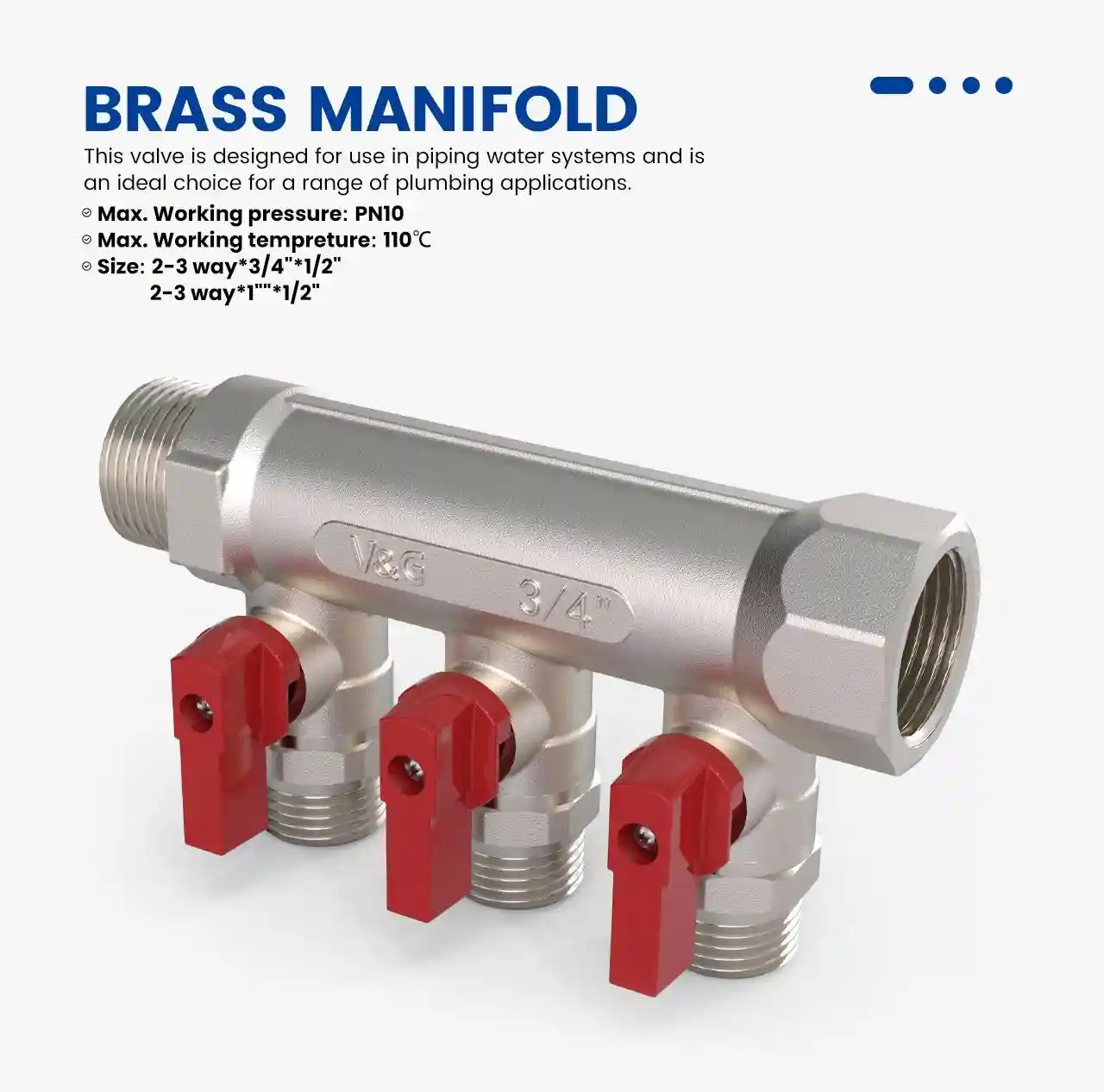
In a two-pipe radiator heating circuit, hot water may run up to 90°C at working pressures up to PN10, with continuous circulation through the heating season. Brass gate valves isolate the circulator and main distribution lines; brass ball valves give quarter-turn isolation at the heat source and at each riser; brass angle valves connect radiators to the pipework; brass stop valves throttle flow so radiators far from the circulator still reach design temperature. A brass manifold distributes flow to the branches. For this duty, an OEM hydronic valve or OEM valve for heating systems needs sealing at 90°C, compatibility with treated heating water and a corrosion-resistant finish because these valves often stay visible in living spaces.
Building water supply and sanitary installations
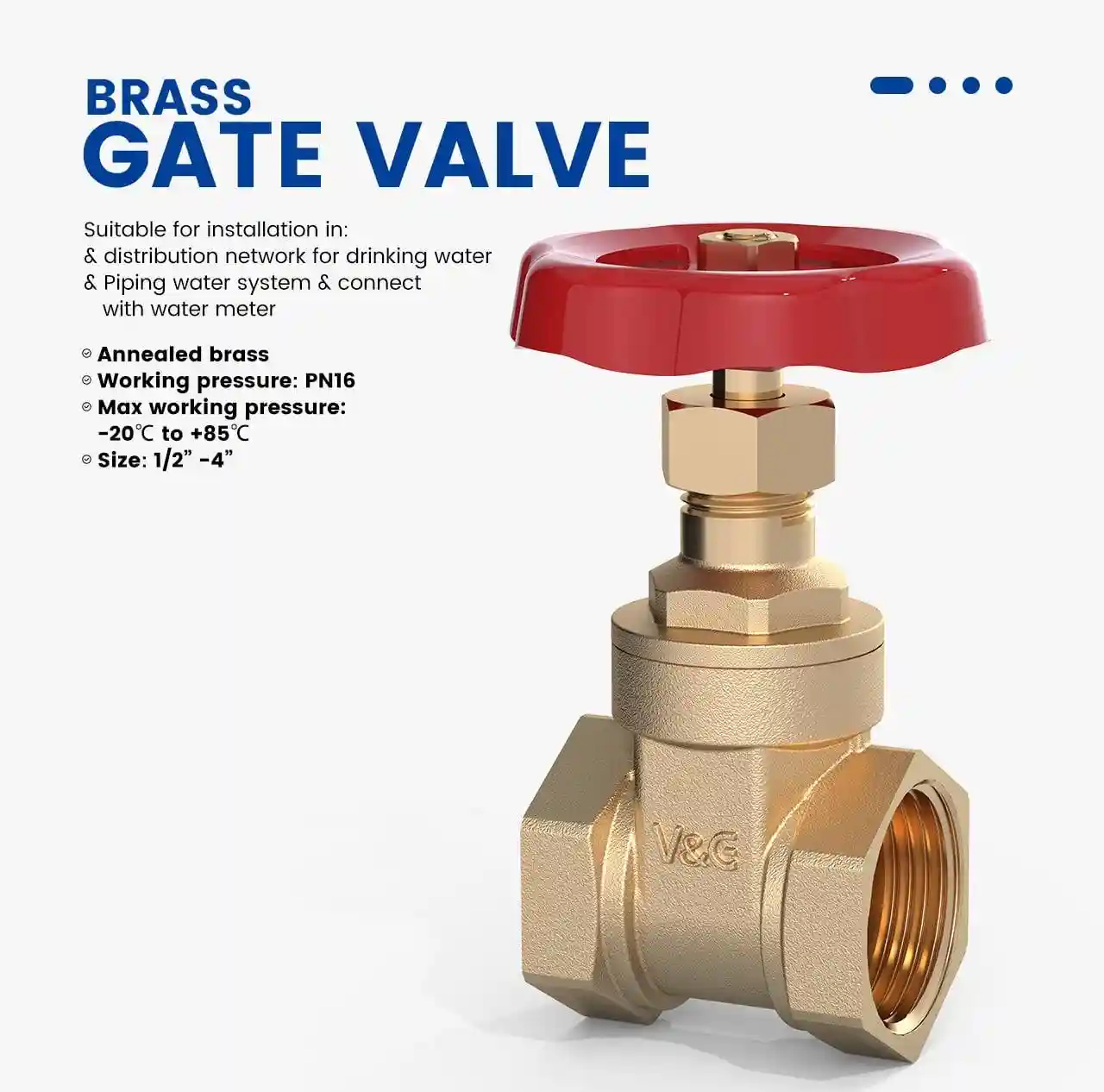
In domestic, commercial and institutional water supply, valves isolate potable water lines at the main supply, at each riser and at fixture groups. Brass gate valves provide coarse shut-off on the main supply and risers; brass ball valves give quarter-turn isolation at a fixture group so one floor or apartment can be serviced without shutting the building down; brass check valves prevent back-flow and cross-connection; brass angle valves connect sanitary fixtures to the pipework. The duty is typically potable water at 1–10 bar, with hot water up to 65°C, and the line is under pressure continuously. An OEM water control valve for this market needs sealing at the working pressure, dezincification-resistant material and the drinking water approval required by the destination market.
Gas installations
In residential and commercial gas lines, a brass gas ball valve isolates the gas line or an individual gas appliance. The quarter-turn handle shows the open or closed position at a glance and can be locked in the closed position. The valve is the designated isolation point before maintenance on a boiler, water heater or hob. Low-pressure gas lines typically run at 0.02–0.5 bar, and the valve must provide gas-tight shut-off because leakage is a safety issue, not a performance issue. Gas approval for the target market, such as EN 331 in Europe, should be confirmed before the valve is specified.
OEM and private-label programmes
For a valve brand, heating equipment maker or building services supplier, the OEM programme is a way to offer a full brass valve range without building brass production. The manufacturer handles casting, machining, assembly and testing to the customer's specification, drawing and part number; the customer supplies the brand, packaging and documentation requirement. A programme may cover PN10 to PN16 water, glycol and gas circuits and run for multiple years with repeat orders. This is where an OEM HVAC control valve body, an OEM brass valve range or a private-label manifold programme is won or lost on documentation and repeatability, not on a single sample.
HVAC Valve Types and Typical Specifications
The table below uses the product datasheets supplied for this article. It is a specification comparison, not a ranking. A dash means the datasheet used here does not state that value; confirm it with the current datasheet before ordering.
| Valve type | Model | Size range | Working pressure | Temperature range | Typical role |
|---|---|---|---|---|---|
| Brass ball valve | VG10.16902 | 1/4"–4" | PN40 | -20°C to 120°C | Quarter-turn isolation in water and heating lines |
| Brass gate valve | VG11.11302 | 1/2"–2" | PN16 | 0°C to 80°C | Low-resistance isolation on mains and risers |
| Brass check valve | VG12.04033 | 1/2"–4" | PN16 / 232 psi | 0°C to 66°C | Back-flow prevention |
| Brass stop valve | VG16.70411 | 12–28 mm | PN10 | -20°C to 100°C | Throttling and flow regulation |
| Brass angle valve | VG14.90111 | 1/2"x3/8", 1/2"x1/2" | PN10 | 0°C to 80°C | Fixture and radiator connection |
| Brass manifold | VG21.23161 | 3/4"x1/2", 1"x1/2" | — | — | Distribution in heating circuits |
| Mixing valve | VG37.10092 | 1/2", 3/4", 1" | PN25 / 362.5 psi | -20°C to 120°C | Temperature mixing in hot and cold water |
| Brass gas ball valve | VG10.61011 | 1/4"–4" | MOP5 | -20°C to 120°C | Gas line isolation |
Source: product datasheets supplied for this article. PN = nominal pressure; MOP5 = maximum operating pressure 5. The datasheet for the brass manifold does not state a pressure or temperature range in the supplied text.
Two points are easy to miss. First, the pressure class is not a marketing label; it is tied to the test standard and the temperature derating. Second, the thread standard must match the market. ISO 228 threads appear across the range, while the gas ball valve also supports ISO 7/1 Rp parallel threads. A valve that is mechanically correct but threaded to the wrong standard is still the wrong valve.
FAQ: OEM HVAC Valve Sourcing from China
What does a China OEM HVAC valve manufacturer supply?
A China OEM HVAC valve manufacturer supplies complete brass valves manufactured and marked under the customer's brand. The scope can include ball valves, gate valves, check valves, stop valves, angle valves, manifolds, mixing valves, gas ball valves, float ball valves and bibcocks. The manufacturer handles casting, machining, assembly and testing to the customer's specification, drawing and part number, and the product reaches the market with the customer's name, packaging and documentation.
Which certifications should I verify before choosing a China OEM HVAC valve manufacturer?
Verify the certificate against the exact product family, size range and destination market. Valogin states that it has passed ISO 9001, ISO 14001 and ISO 45001 management system certification and has obtained CNAS, CE, DVGW, AGA, INIG, WRAS, NSF, cUPC, CSA and AB1953 certificates. For the EU, check the Pressure Equipment Directive 2014/68/EU where the maximum allowable pressure exceeds 0.5 bar, and the drinking water requirements under Directive (EU) 2020/2184 Article 11. For the US and Canada, check NSF/ANSI/CAN 61 and the 0.25% weighted average lead content limit under NSF/ANSI/CAN 372 and SDWA Section 1417. A management system certificate is not a product approval.
Can a China OEM HVAC valve manufacturer produce valves under our own brand?
Yes, where the supplier operates an OEM or private-label programme. Logo and part number can be cast, stamped or laser-marked on the body and handle, production can follow the customer's drawing or sample, and packaging and documentation can carry the customer's brand. The approved sample and its inspection record set the standard that later batches are checked against.
How does sample approval work before mass production?
The buyer approves a sample against the drawing, not against a catalog photo. The inspection record should capture the measured dimensions, thread gauge result, surface finish, marking position and pressure test result. That approved sample and record become the reference for later batches. If a drawing, material source, thread specification or packaging item changes, the sample should be re-approved rather than silently substituted.
How are repeat OEM HVAC valve orders scheduled?
Repeat orders are scheduled to the customer's production plan and forecast, with multi-year supply programmes and repeat orders treated as the normal case. Lead time should be confirmed in writing against the approved sample, the forecast and the production slot. To confirm scheduling for your programme, share your drawing, annual volume and forecast with the Valogin team at sales62@valogin.com or through valve.valogin.com.

Request a sample, quotation or catalog
If you are evaluating an OEM HVAC valve programme, send the valve type, size, thread standard, pressure class, temperature range, target market and estimated annual volume. Valogin can confirm the product route, the certification scope and the sample approval steps.
Email: sales62@valogin.com
Tel: 86-576-87428589
WhatsApp: +86 13186900750
Address: Qinggang Industrial Zone, Yuhuan, Zhejiang, China
Website: valve.valogin.com
Catalog: Valogin brand catalog (PDF)
Conclusion: What to Do Next
OEM HVAC valve sourcing from China is not a catalog exercise. The buyer is choosing a manufacturing route, a certification path and a repeat-supply relationship. Three checks matter most: fix the specification and drawing before comparing prices, verify the certificate against the exact product family and market, and approve a sample with an inspection record that later batches must match.
Valogin supplies brass valves, fittings and manifolds for plumbing, heating and gas systems from a factory in Yuhuan, Zhejiang. Its OEM model covers casting, machining, assembly and testing to the customer's drawing and part number, with branding, packaging and documentation under the customer's name. For buyers at the research stage, the next step is to put the requirement on paper and ask for a sample and a quotation against that written requirement.
Use the Valogin brand catalog for the product range, and contact the team at sales62@valogin.com for a sample or quotation.
Have Questions or Need More Details?
Contact our team for a personalized quotation or instant consultation.
Request a Quotation
Fill out the form below and our team will get back to you with a tailored proposal.
WhatsApp Direct Chat
Prefer to chat in real-time? Message us on WhatsApp for instant assistance & quick answers.
- Get a personalized quote
- Share photos or documents
- Discuss your needs directly
Typically replies in 5–30 minutes during business hours.