OEM Valve Compliance Guide: Brass Grade, Threads and Documents
A compliant OEM brass valve is not proved by a single certificate. It is the product of four decisions a buyer locks before production: the brass grade and lead content the destination market accepts, the thread standard the installer will connect to, the finish and seal that suit the medium, and a documentation package that lets you prove all three long after the container is unloaded. This guide works through those four checks in the order an OEM programme usually meets them, using the specification and documentation practice of Zhejiang Valogin Technology Co., Ltd. as a worked reference.
Valogin, also branded V&G, is a Chinese brass valve manufacturer founded in 1985, producing brass valves, fittings and distribution manifolds for plumbing, heating and gas systems, with more than 90% of turnover coming from international markets. It supplies valves to customer drawings under OEM, ODM and private-label arrangements. The checks below apply to any supplier; the answers will differ.
The scope here is passive brass valves — ball, gate, check, stop, angle, gas ball, float and manifold assemblies. Actuated assemblies add a separate electrical and electronic compliance layer that this guide does not cover.
What compliance means in an OEM valve order
Two different obligations travel under one word, and confusing them is the most common sourcing error. Market access compliance is the right to place the product on sale in a jurisdiction; it is defined by regulation and, where applicable, by a certificate whose scope is written down. Batch conformance evidence is the proof that the units in this shipment match the specification you approved.
A supplier can hold a valid certificate and still ship a batch that fails your drawing. A supplier can also ship a perfect batch that cannot legally be sold in your market. An OEM programme needs both, and the purchase order should name both.
The distinction matters more in brass than in most component categories because drinking-water rules are not harmonised. The United States applies a quantitative limit: a weighted average lead content of not more than 0.25% on wetted surfaces, defined in Section 1417 of the Safe Drinking Water Act and verified through NSF/ANSI/CAN 372. The European Union works through Article 11 of Directive (EU) 2020/2184, which sets hygiene requirements for materials in contact with drinking water and establishes European positive lists. The United Kingdom applies the Water Supply (Water Fittings) Regulations 1999. These are different mechanisms, not different versions of one number, and no single global lead content figure covers all three.
Buyer rule: write the destination market into the specification before the drawing is issued. A valve specified for one market and re-labelled for another is a compliance risk, not a shortcut.
Industry background: why paperwork carries as much weight as the datasheet
Brass remains the default body material across much of the HVAC valve market. Future Market Insights projects that brass and bronze valve bodies will account for a 46.2% share of the HVAC valve market by material in 2026 — a commercial research projection, useful as context rather than as an official statistic. The implication for a buyer is practical: components are similar in form across suppliers, so the difference between two quotations is increasingly found in material control, thread accuracy and documentation rather than in the shape of the body.
Regulatory depth adds to that. In the European Union, the Pressure Equipment Directive 2014/68/EU applies to pressure equipment and assemblies with a maximum allowable pressure above 0.5 bar, and Article 13 with Annex II classifies equipment into Categories I to IV according to pressure and volume or nominal size — the higher the category, the more demanding the conformity assessment. The same product family can therefore require different assessment work at different sizes and ratings. For an OEM buyer, CE is not one document obtained once; the directive, category and assessment route have to be identified per product, per size and per market.
Check 1 — Brass grade and lead content, specified to the market
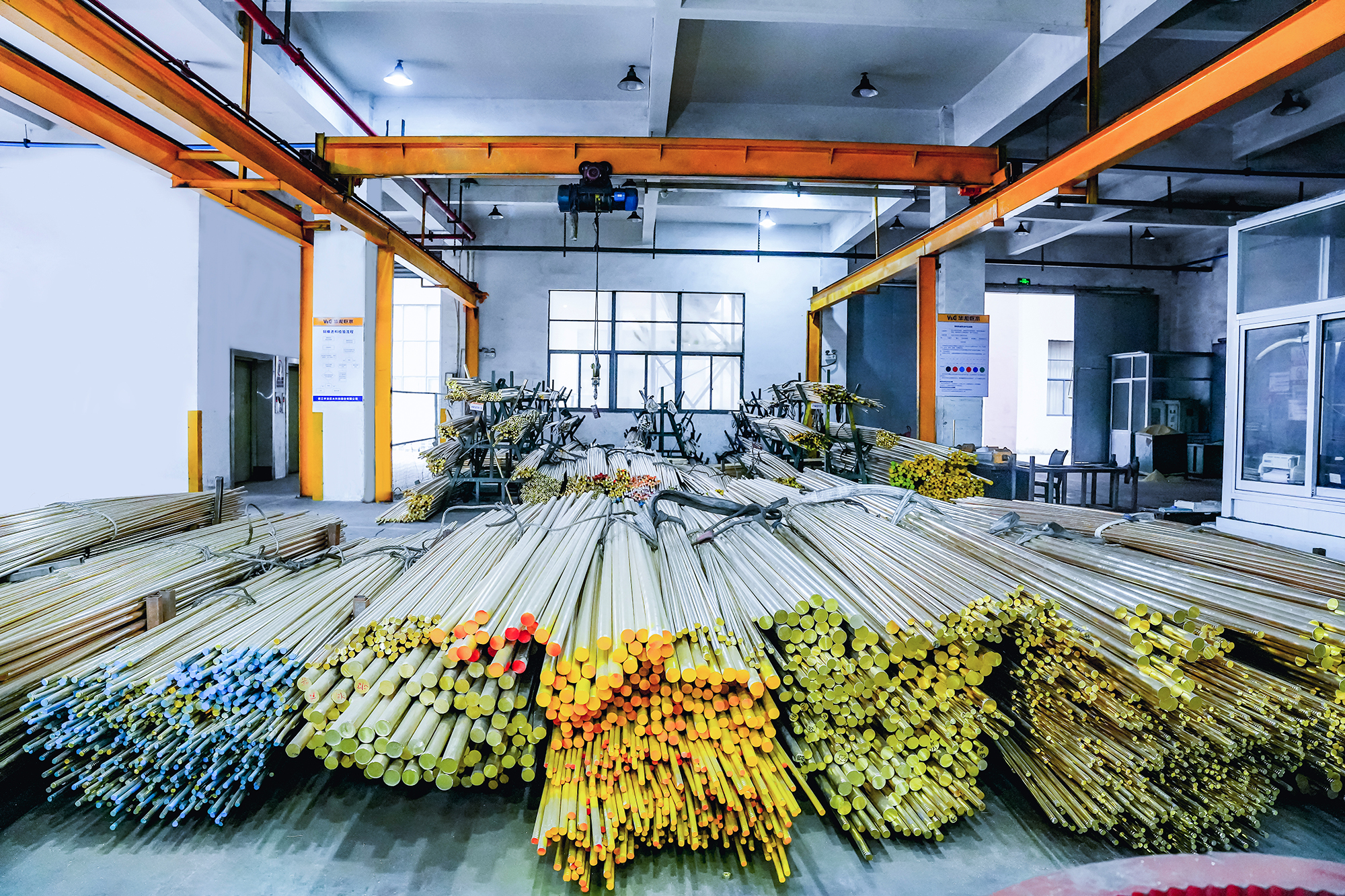
Brass grade is a purchasing decision, not a manufacturing preference. In an OEM arrangement the grade and the lead content are set to the customer's market requirement, and the material certificate is the document that shows what was actually melted and drawn.
Two material standards are worth naming on the drawing because they define what the certificate certifies. EN 12164 covers copper alloy rod for free-machining purposes, the stock behind stems and machined parts. EN 12165 covers wrought and unwrought forging stock, the input to forged bodies. Naming the standard, the alloy designation your market accepts and the lead content statement turns a vague requirement into something a supplier can accept or decline before quoting.
Corrosion behaviour belongs in the same conversation, particularly for potable and heating circuits that are never fully drained. ISO 6509-1:2014 sets out the test method for determining the dezincification resistance of copper alloys with zinc. Dezincification resistance is a test result, not a brochure claim, so the buyer's decision is whether to make it a specified requirement and what evidence to accept for it.
What a material certificate does not do is prove that the valve in the carton came from that heat. That link is made by part marking and traceability, covered in Check 4.
Check 2 — Thread standard: what the drawing must say
Thread is a common cause of returned OEM valves and the cheapest thing to fix at the drawing stage. Three thread families cover most brass valve programmes, and they are not interchangeable.
| Thread reference | Form | Where it is used | What to state on the drawing |
|---|---|---|---|
| ISO 228 (G) | Parallel, non-sealing | General plumbing and heating connections; equivalent to DIN EN ISO 228 and BS EN ISO 228 | ISO 228 plus size, and the face or O-ring that makes the seal |
| ISO 7/1 Rp | Parallel internal gas thread | Gas installations; equivalent to DIN EN 10226-1 and BS EN 10226-1 | ISO 7/1 Rp, mating thread and sealant policy |
| NPT / NPTF | Tapered | North American pipe connections; NPTF sizes appear in the CSA listing of Valogin 1/2 psig and 5 psig gas ball valve series | NPT or NPTF, size, and the gauge specification |
The engineering point behind the table is that a parallel thread does not seal on the thread itself. ISO 228 G connections seal on a face or an O-ring, while a tapered NPT connection seals by interference between mating threads. If the drawing states G1/2 and nothing else, the supplier still has to guess how the joint is meant to seal, and the installer may find that the valve bottoms out before it seals.
Valogin's catalogue applies one convention across families: gate valves, angle valves, check valves, bibcocks and manifolds are listed with ISO 228 threads, while the gas ball valve is offered with ISO 7/1 Rp or ISO 228 female threads depending on the version ordered. Production runs to the customer's drawing, and thread standard is one of the parameters adapted to the destination market.
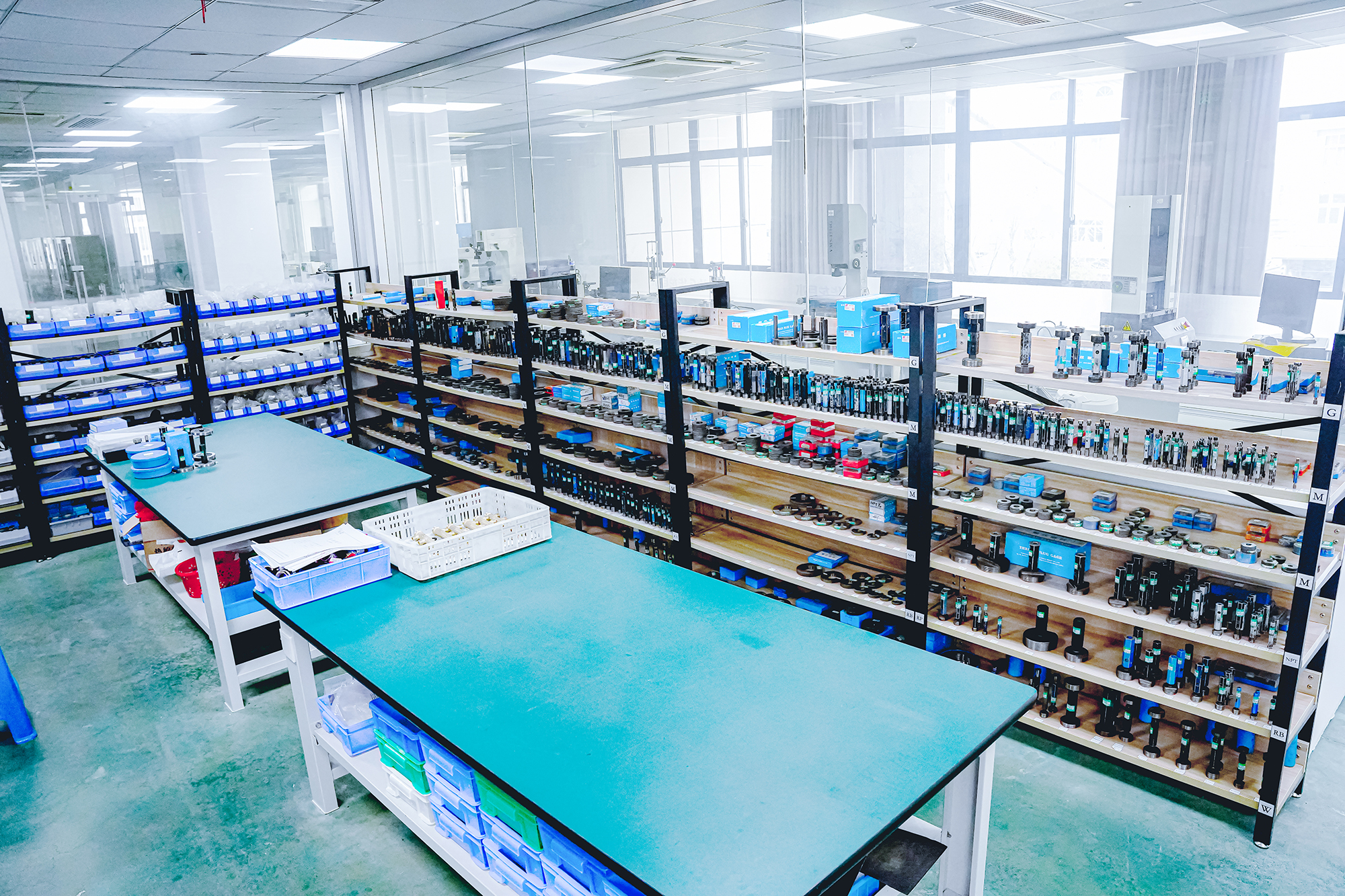
For the buyer, the audit question is not whether a supplier can cut ISO 228 threads but how it knows the thread is ISO 228 on this batch. Valogin's stated control is dimension sampling per batch, supported by a laboratory that manages thread gauges. Sampling does not certify every unit — a limit worth understanding before signing, and one set out in the documentation table below.
Check 3 — Finish and seal: matching the valve to the medium
Finish and seal are specified together because they answer the same question: what is this valve in contact with, indoors or outdoors, and for how long?
Three finishes are available across Valogin's brass ranges — natural brass, nickel plating and chrome plating — and the catalogue shows how the choice is applied. The brass bibcock is supplied with a nickel-plated brass body; the angle valve combines a chrome-plated brass body with a chrome-plated zinc alloy handle; the heating manifold uses a nickel-plated brass body. Natural brass is the baseline where appearance is not a specification.
Seal and gasket material is selected for the medium, which is more consequential than the finish. The published working envelope of the product family is the first filter.
| Product family (example model) | Thread | Pressure class | Working temperature |
|---|---|---|---|
| Brass ball valve (VG10.16902) | Female / female | PN40 | -20 °C to 120 °C |
| Brass gas ball valve (VG10.61011) | ISO 7/1 Rp or ISO 228 | MOP5 | -20 °C to 120 °C |
| Brass gate valve (VG11.11302) | ISO 228 | PN16 | 0 °C to 80 °C |
| Brass check valve (VG12.04033) | ISO 228 | PN16 | 0 °C to +66 °C |
| Brass angle valve (VG14.90111) | ISO 228 | PN10 | 0 °C to 80 °C |
| Brass stop valve (VG16.70411) | Threaded connection | PN10 | -20 °C to 100 °C |
These figures belong to the models listed. They are not a family-wide guarantee, and a specification that needs 90 °C continuous duty in a heating circuit, or a glycol mixture, has to be matched to the model and seal qualified for it rather than to the nearest catalogue page. OEM supply is typically built around PN10 to PN16 water, glycol and gas circuits, with the valve produced to the customer's own specification and drawing.

Check 4 — The documentation package that travels with the shipment
The documentation package is the part of compliance you can still use six months after delivery. Valogin's stated quality control is 100% air-tight testing, dimension sampling per batch and material certificates on request; OEM programmes add dimensional inspection reports and process capability data with each batch, plus part marking and traceability in the customer's own numbering system.
Each document answers a specific question and stops short of another. Reading the table as a set of limits is more useful than reading it as a list of assurances.
| Document | What it supports | What it does not establish |
|---|---|---|
| Material certificate | The brass grade and lead content declared for the material used | That every valve in the carton came from that material batch — part marking and traceability make that link |
| Batch inspection record | That defined inspections were carried out on this production batch | That every individual unit was inspected, unless the record shows 100% testing |
| 100% air-tight test | That each unit was leak-tested before packing | Performance at higher pressure, at temperature extremes, or after years in service |
| Dimension sampling per batch | That the batch was measured against the drawing | That every dimension of every unit is inside tolerance |
| Approved sample and its inspection record | The reference standard that later batches are checked against | Coverage of a later drawing change or a new tool — both need re-approval |
| Certificate copy (for example WRAS or DVGW) | That a certificate exists for a defined product scope and period | That every model, size or variant you are ordering sits inside that scope |
The last row is where most compliance files fail. A certificate is a document with a scope, a product type, a model list and an expiry date. Valogin's WRAS Product Approval Certificate carries certificate number 260717304, lists the product type as “Valves – Gate”, was issued on 18 August 2026 and expires on 31 July 2031. That is strong evidence for the gate valve scope it names. It is not evidence about a ball valve, a manifold or an angle valve, and treating it as a company-wide badge is exactly the assumption an OEM buyer cannot defend in an audit.
The WRAS question: what UK drinking-water buyers should verify locally
For UK drinking water, the useful question is not whether a supplier is WRAS approved but whether the certificate scope covers the product being bought, for the period it is being bought.
WRAS product approval is granted against the Water Supply (Water Fittings) Regulations 1999 for England and Wales, the Water Supply (Water Fittings) (Scotland) Byelaws 2014 and the Water Supply (Water Fittings) Regulations (Northern Ireland) 2009, with products tested to the regulators' Specification Test Code Sheets. Five checks should precede acceptance of a claim:
- The certificate number and the issuing scheme.
- The product type named on the certificate — gate valves are not ball valves.
- The model or size listing, matched to the part number on the purchase order.
- The validity period, including whether it covers the delivery dates.
- Whether the installation is one the regulations require to be approved at all, since the same regulations also set material, backflow and notification requirements for fittings.
The obligation for the installed system sits with the party placing the fitting into use in the UK, not with the export factory. That is why local verification is not a formality. The same discipline applies elsewhere: the WaterMark Certificate of Conformity WM-022194 covers in-line valves for plumbing water supply under WMTS-012:2018 in Australia, and the DVGW type examination certificate DG-4312DQ0883 covers gas shut-off valves to DIN EN 331 with MOP ≤ 5 in the EU. Each carries a scope that should be read before it is quoted.
Sample approval, private-label marking and traceability
The evidence trail starts before mass production, with a sample. Sample approval is the step that converts a drawing into a measurable reference: the approved sample and its inspection record become the standard against which later batches are checked. Without that record, same as sample is an opinion rather than a specification.
Private-label marking is part of the same trail. Logo and part number can be cast, stamped or laser-marked on the body and handle; casting marks can be private-label; packaging, labels and printed documentation can carry the customer's brand. Traceability is then maintained in the customer's own numbering system, which is what lets a distributor trace a complaint back to a batch without exposing the brand relationship. Confidentiality is normally written into the arrangement: customer drawings, part numbers and the identity of the brand relationship do not appear in public material.

Step by step: building the compliance file for a new OEM valve
- Fix the market and the regulation set. Decide where the valve will be sold and which rules apply — drinking water contact, gas, pressure equipment — before any drawing is issued.
- Convert regulation into specification. Brass grade and lead content statement, material standard such as EN 12164 or EN 12165, thread standard and gauge, finish, seal material, pressure class and temperature range.
- Issue a drawing that covers the invisible parts. Marking position and method, packaging, part numbering in your system, and the seal method for parallel threads.
- Request certificate scope, not certificate copies. Product type, model and size listing, issue and expiry dates, and the standard the product was tested to.
- Approve a sample and record the result. Keep the inspection record with the approved sample; it is the reference for every later batch.
- Agree the shipment documentation package. Material certificate, batch inspection records, 100% air-tight test evidence, dimension sampling results and, for OEM programmes, process capability data.
- Write commercial terms around the evidence. Sampling basis, claim handling, re-approval triggers and the named technical contact belong in the supply contract, not in an email thread.
- Re-verify on change. A new tool, a new material source, a new market or an expiring certificate resets the check — a certificate that lapses mid-programme is a planning failure, not bad luck.
Where these checks matter most
Hydronic heating. Continuous hot water and treated circuits put the emphasis on temperature rating, seal compatibility and dezincification resistance; valves stay visible in living spaces, so finish is also a customer-facing specification.
Gas. Gas duty shifts the weight to standard-based type examination and thread convention; the DVGW type examination certificate for gas shut-off valves to DIN EN 331 with MOP ≤ 5 is an example of a scope written around one product class.
Potable water plumbing. Lead content and material approval dominate, and the applicable mechanism differs by market, so the specification has to name the market rather than a single number.
Private-label ranges for building services brands. Here the compliance file is the product: a full brass range under the customer's name is only as good as the marking, packaging and traceability behind it.
FAQ
Which certifications should a China OEM HVAC valve manufacturer hold for CE and RoHS compliance?
CE for a valve is directive-specific, so check the directive that applies to your product rather than the logo. Pressure equipment above 0.5 bar falls under PED 2014/68/EU with category-based assessment; construction products follow Regulation (EU) No 305/2011 for declaration of performance and CE marking. RoHS 2011/65/EU applies to electrical and electronic equipment, so a passive brass valve has no electrical function and falls outside its product scope, while a valve supplied with an electric actuator brings the assembly into assessment. Valogin's EU-facing evidence includes ECM certificate 0B230606.ZVTDN65 for check valves and Y strainers to EN 12266-1:2012 and EN 12266-2:2012, DVGW certificate DG-4312DQ0883 for gas shut-off valves to DIN EN 331, and ISO 9001, ISO 14001 and ISO 45001 certification. Ask for the document that names your product and your market, and check its scope and expiry.
What brass grade and lead content should an OEM valve specification state?
State the market first. For US drinking water applications the benchmark is a weighted average lead content of not more than 0.25% on wetted surfaces, defined in Safe Drinking Water Act Section 1417 and verified under NSF/ANSI/CAN 372; Valogin holds an IAPMO lead-free listing, certificate 7555, to that standard. For the EU, Article 11 of Directive (EU) 2020/2184 sets hygiene requirements and a positive-list approach rather than a single figure. Name the alloy designation your market accepts, reference EN 12164 or EN 12165 for the material form, and require a material certificate per batch.
NPT or BSP/G — which thread should an OEM brass valve use?
It follows the installation, not the factory. ISO 228 G parallel threads suit general plumbing and heating connections and seal on a face or O-ring; ISO 7/1 Rp parallel threads are used on gas connections; NPT and NPTF tapered threads suit North American connections. Valogin produces to the customer's drawing with NPT or BSP/G thread selected per order, and lists ISO 228 threads across its gate, angle, check, bibcock and manifold ranges. Specify the standard, the size, the seal method and the gauge, and cover thread measurement in the batch dimension sampling.
How do I verify a WRAS claim for a brass valve?
Check the certificate, not the logo. Valogin's WRAS Product Approval Certificate 260717304 is issued for product type “Valves – Gate”, valid from 18 August 2026 to 31 July 2031, against the England and Wales 1999 Regulations, the Scotland 2014 Byelaws and the Northern Ireland 2009 Regulations. Confirm the product type, the model listing and the validity dates, and confirm the installation requirement locally — the compliance duty for the installed fitting rests with the party placing it into use in the UK.
What documents should ship with each OEM brass valve batch?
A material certificate, batch inspection records, evidence of 100% air-tight testing, and dimension sampling results per batch. OEM programmes typically add dimensional inspection reports and process capability data, plus part marking and traceability in the customer's numbering system. Valogin's stated control is 100% air-tight test, dimension sampling per batch and material certificate on request, with engineering and drawing support from quotation to first article.
What are the minimum order quantity and lead time for an OEM brass valve?
Valogin's published OEM terms are a minimum order of 5,000 units and a lead time of 50 days, with sample approval before mass production and production scheduled to the customer's forecast and delivery window. Confirm both against your own specification, because thread, finish and marking changes can move the schedule.
Conclusion
Compliance in an OEM brass valve programme is built from four decisions and one habit. The decisions are the brass grade and lead content your market accepts, the thread standard and seal method on the drawing, the finish and seal material the medium requires, and the documentation package agreed before the first order. The habit is asking for scope rather than assurance: which product type, which model, which batch, which dates.
Valogin's evidence set — WRAS 260717304 for gate valves, DVGW DG-4312DQ0883 for gas shut-off valves to EN 331, ECM 0B230606.ZVTDN65 for check valves and Y strainers, IAPMO lead-free listing 7555 and WaterMark certificate WM-022194 — is useful precisely because each item is bounded. Read together with a material certificate, batch inspection records and 100% air-tight test results, they form a file an OEM buyer can defend. Read as a single badge, they do not.

Next step: the Valogin brand catalogue covers the brass valve and manifold ranges, thread options and the certificate list, and can be downloaded here: VG brand catalogue (PDF).
For a sample built to your own drawing, prepare your thread standard, brass grade requirement, finish and target market, and send them to the Valogin OEM team at sales62@valogin.com so the quotation and first-article discussion start from a specification rather than a catalogue page.
Have Questions or Need More Details?
Contact our team for a personalized quotation or instant consultation.
Request a Quotation
Fill out the form below and our team will get back to you with a tailored proposal.
WhatsApp Direct Chat
Prefer to chat in real-time? Message us on WhatsApp for instant assistance & quick answers.
- Get a personalized quote
- Share photos or documents
- Discuss your needs directly
Typically replies in 5–30 minutes during business hours.