OEM Valve Guide: Custom HVAC Valve for Global Buyers
A custom HVAC valve is a brass valve built to a buyer's own specification — dimensions, thread standard, pressure rating, surface finish, branding and packaging — rather than selected from a standard catalogue. For distributors, heating equipment makers and building services brands, sourcing custom HVAC valves under an OEM or private-label arrangement lets a complete valve range reach the market under the buyer's own name without building brass production in-house.
Valogin Valve (Zhejiang Valogin Technology Co., Ltd.) is a China-based manufacturer of brass valves, fittings and distribution manifolds for plumbing, heating and gas systems. This guide explains what a custom HVAC valve is, how OEM valve sourcing works, and what buyers should evaluate when selecting a manufacturing partner.
Problem Definition: What Makes OEM HVAC Valve Sourcing Different
Sourcing a custom HVAC valve differs from buying a standard catalogue valve in three ways.
The specification originates with the buyer, not the manufacturer. In OEM supply, the buyer defines the valve — body material grade, nominal size, thread standard, pressure class, temperature range, handle type, surface finish and marking. The manufacturer's role is to reproduce that specification consistently. The buyer must translate a system requirement into a manufacturing drawing with tolerances.
The approved sample becomes the production standard. An OEM valve sample that passes inspection is not just a demonstration — it sets the reference against which later batches are checked. Dimensional tolerances, material certificates, pressure test results and appearance are measured against it. If the manufacturer's process drifts, the sample no longer represents what is being shipped.
The compliance path depends on the destination market. A brass valve sold into the EU may fall under the Pressure Equipment Directive 2014/68/EU, which applies to equipment with maximum allowable pressure PS greater than 0.5 bar and classifies products into Categories I to IV. A valve in contact with drinking water may also need to meet Directive (EU) 2020/2184 Article 11 on hygiene requirements and European positive lists. In North America, NSF/ANSI/CAN 61 covers health effects and NSF/ANSI/CAN 372 sets a weighted average lead content limit of 0.25%. The manufacturer must be able to supply the test reports and certificates that support the buyer's compliance declaration.
Industry Background: The Market for Custom HVAC Valves
The global HVAC valve market was valued at USD 17.1 billion in 2025 and is projected to reach USD 27.1 billion by 2035, at a compound annual growth rate of 4.7% over 2026–2035 (Global Market Insights). Asia Pacific is the largest regional market, accounting for over 38% of global demand in 2025 (Global Market Insights). Brass and bronze valve bodies are projected to hold a 46.2% share of the HVAC valve market by material in 2026 (Future Market Insights).
Three implications follow for OEM buyers:
- Brass remains the dominant body material. The projected 46.2% share for brass and bronze bodies means most HVAC valves sold globally are brass or bronze. A brass valve range is the core of the market, not a niche product line.
- Asia Pacific is the largest supply base and demand centre. With over 38% of global demand, the region combines large domestic consumption with export-oriented manufacturing. China hosts a dense cluster of brass valve manufacturers serving European and North American brands.
- Growth is steady rather than explosive. A 4.7% CAGR over 2026–2035 describes measured expansion. Supplier relationships and qualification investments have a long useful life — a multi-year supply programme is a realistic planning horizon.
Detailed Solution: Valogin's OEM HVAC Valve Capability
Valogin Valve manufactures brass valves for OEM and private-label supply to valve brands, heating equipment makers and building services suppliers. The company was founded in 1985 and operates a factory of 28,000 square meters with over 1,000 employees. Annual output reaches 80 million pieces. More than 90% of turnover comes from international markets, with Europe and North America as key markets and coverage extending to South America, the UAE and more than 100 countries.
Product range for custom HVAC valve projects
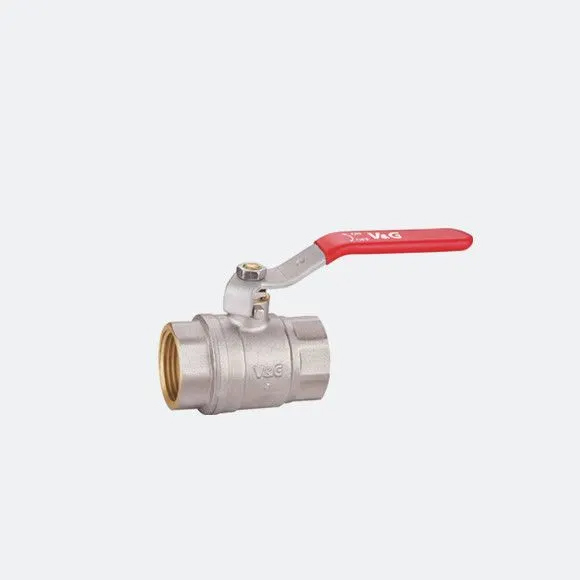
The OEM valve range covers ball valves, gate valves, check valves, stop valves, angle valves, manifolds, mix valves, gas ball valves, float ball valves and bibcocks. Each type serves a different function:
| Valve type | Primary function in HVAC/plumbing | Size range (product data) | Working pressure (product data) |
|---|---|---|---|
| Brass ball valve (VG10.16902) | Quarter-turn isolation | 1/4" to 4" | PN40 |
| Brass gas ball valve (VG10.61011) | Gas line isolation | 1/4" to 4" | MOP5 |
| Brass gate valve (VG11.11302) | Low-resistance isolation | 1/2" to 2" | PN16 |
| Brass check valve (VG12.04033) | Backflow prevention | 1/2" to 4" | PN16 |
| Brass stop valve (VG16.70411) | Throttling and regulation | 12 mm to 28 mm | PN10 |
| Brass angle valve (VG14.90111) | Fixture connection | 1/2"x3/8", 1/2"x1/2" | PN10 |
| Brass manifold (VG21.23161) | Distribution with isolation | 3/4"x1/2", 1"x1/2" | — |
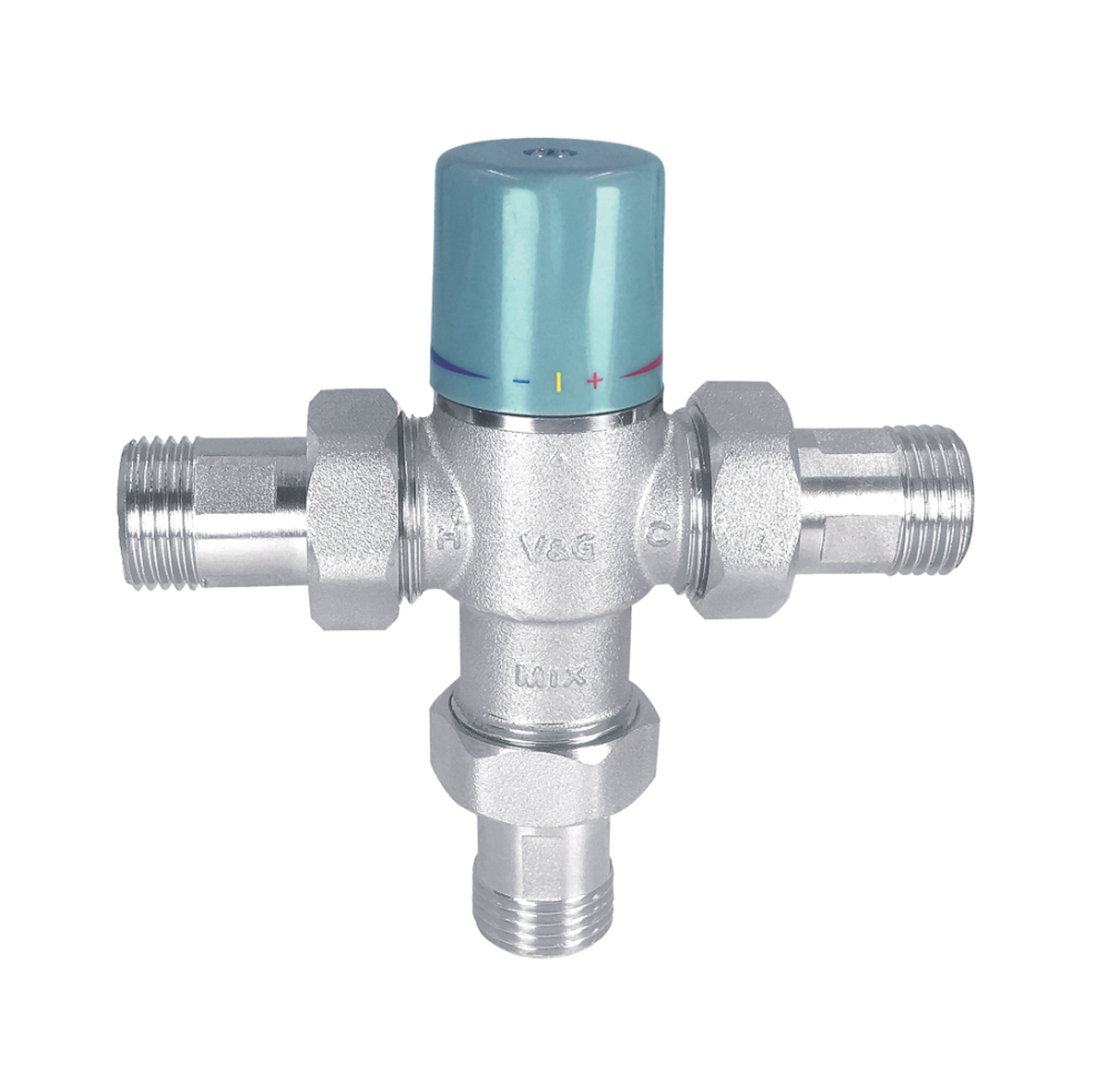
| Mix valve (VG37.10092) | Temperature regulation | 1/2", 3/4", 1" | PN25 |
| Brass float ball valve (VG20.10212) | Level control | 1/2" to 4" | — |
| Brass bibcock (VG13.99011) | Garden/utility draw-off | 1/2" to 1" | — |
Customization options
Valogin supports custom thread specification, surface finish, logo engraving and packaging solutions to match regional market demands. For OEM supply, working conditions vary by customer — typically PN10 to PN16 water, glycol and gas circuits — and the valve is built to the customer's own specification and drawing. Production follows the customer's drawing, sample or written requirement. Logo and part number can be cast, stamped or laser-marked on the body and handle. Packaging, labels and printed documents can carry the customer's brand. Private-label casting marks and customer-specific packaging are part of the arrangement. The customer's drawings, part numbers and brand relationship are kept confidential and do not appear in public material.
Manufacturing and testing
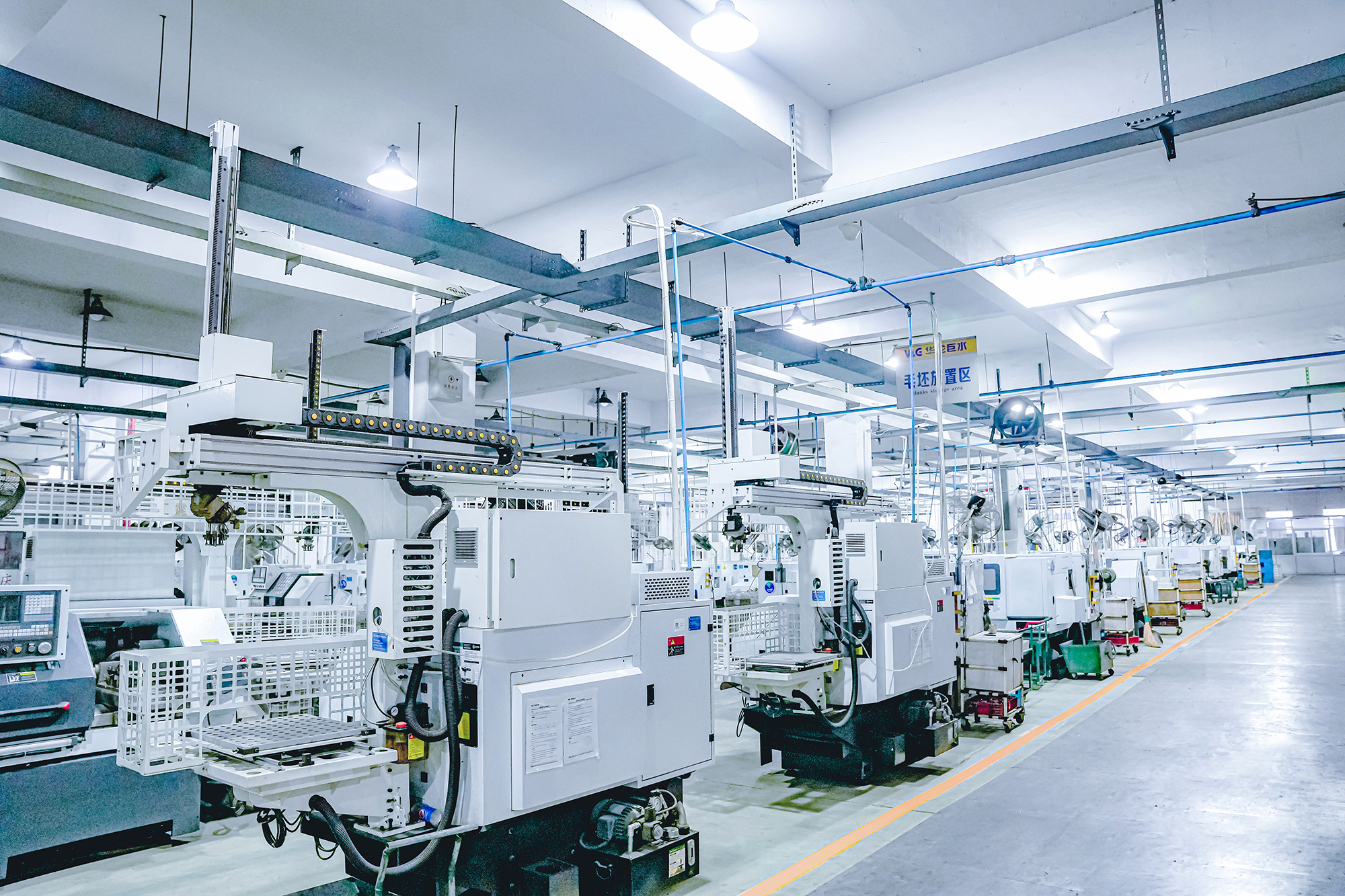
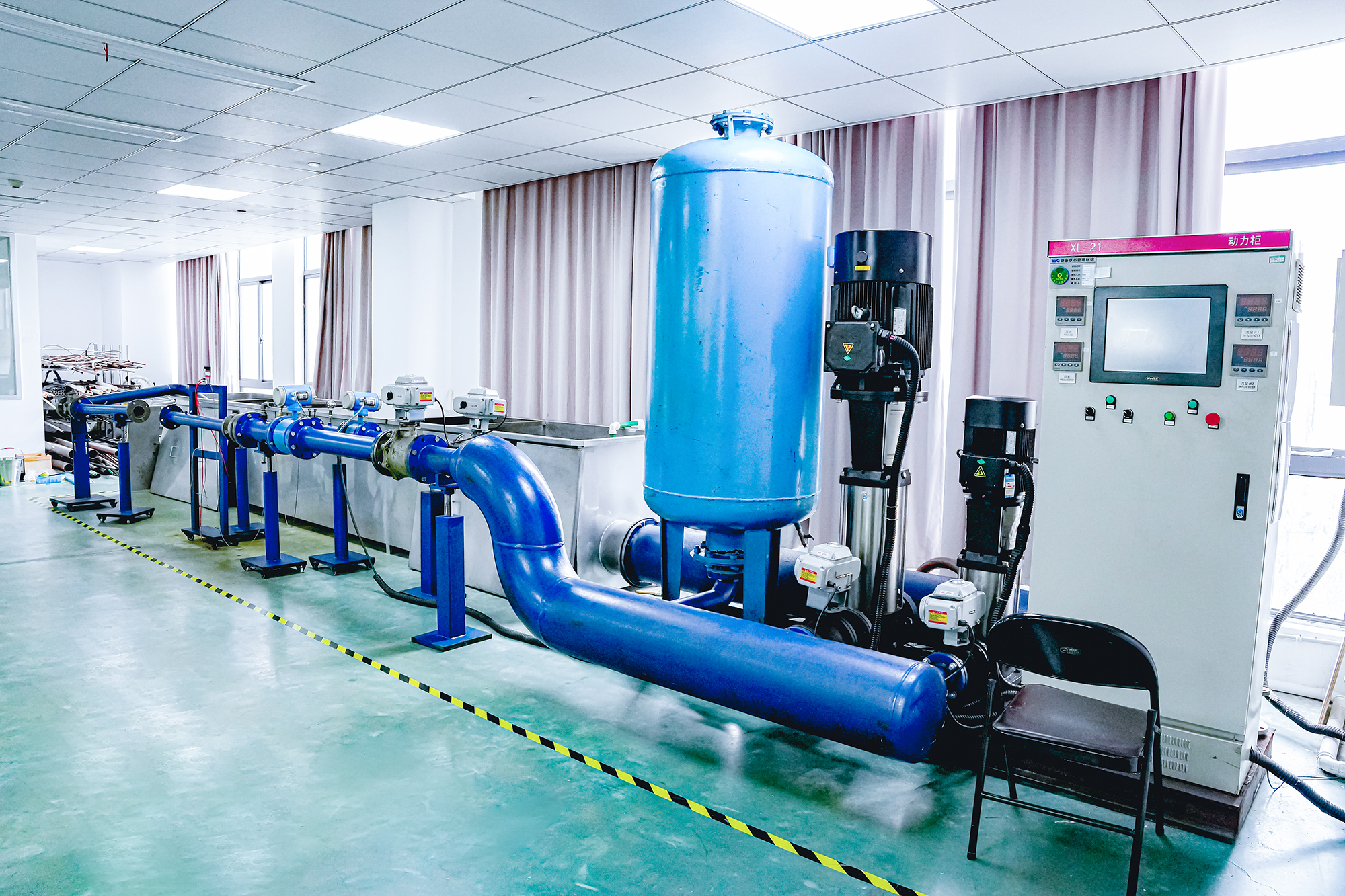
Approximately 70% of Valogin products are manufactured via automated workflows, with dedicated fully-automatic production lines for ball valves and gate valves and industrial robots used to reduce human error and maintain batch consistency. The in-house laboratory covers about 1,025 square meters and operates according to ISO 17025, equipped with more than 100 sets of advanced equipment including an inverted metallographic microscope, a comprehensive test bench and flow testing, salt spray testing, bending test and thermostatic valve testing stations. The R&D team includes more than 70 designers and engineers, including over 15 full-time R&D engineers, with expertise in water, gas, oil and heating systems.
Certifications
Valogin holds ISO 9001, ISO 14001 and ISO 45001 management system certifications, and has obtained CNAS, CE, DVGW, AGA, INIG, WRAS, NSF, cUPC, CSA and AB1953 certificates. These certificates support market entry in Europe and North America, where HVAC valves face pressure equipment rules (Directive 2014/68/EU), drinking water contact material requirements (Directive (EU) 2020/2184 and NSF/ANSI/CAN 61 and 372) and construction product marking requirements (Regulation (EU) No 305/2011).
Step-by-Step Breakdown: The OEM HVAC Valve Order Process
Sourcing a custom HVAC valve follows a sequence that moves from specification to repeat supply. Each step produces a document or approval that governs the next.
Step 1 — Define the duty and market. The buyer identifies what the valve must do (isolation, throttling, mixing, backflow prevention, level control) and where it will be sold. The market determines the compliance path: pressure equipment rules for the EU, drinking water contact certification for North America, gas appliance standards for gas valves, and construction product marking where applicable.
Step 2 — Set the specification. The specification translates duty into a drawing: body material (brass grade), nominal size, thread standard (ISO 228 or ISO 7/1), pressure class (PN10, PN16, PN25, PN40), temperature range, handle type, surface finish and marking requirements. Valogin works from the customer's drawing, sample or written requirement.
Step 3 — Approve a sample. An approved sample and its inspection record set the standard that later batches are checked against. Sample approval should document dimensions, material, pressure test results and appearance.
Step 4 — Confirm branding and packaging. Logo and part number can be cast, stamped or laser-marked on the body and handle. Packaging, labels and printed documents can carry the customer's brand.
Step 5 — Run production and test. Production follows the approved sample. Testing covers pressure and air tightness. The in-house laboratory supports material and dimensional verification.
Step 6 — Inspect and document. Dimensional inspection reports, material certificates and process capability data can accompany each batch. Part marking and traceability in the customer's own numbering system are maintained.
Step 7 — Repeat supply. Production is scheduled to the customer's schedule and forecast, with multi-year supply programmes and repeat orders.
Use Cases: Where Custom HVAC Valves Are Applied
Hydronic heating circuits
In two-pipe radiator heating systems, brass gate valves isolate the circulator and main distribution lines; brass ball valves give quarter-turn isolation at the heat source and each riser; brass angle valves connect radiators to pipework; brass stop valves throttle flow so radiators far from the circulator reach design temperature. Working conditions: hot water up to 90 °C, pressure up to 10 bar (PN10), continuous circulation through the heating season. Valves stay visible in living spaces, so corrosion-resistant surface finish and quiet operation at throttled flow matter.
Building water supply
In domestic, commercial and institutional water supply, brass gate valves provide main and riser isolation; brass ball valves give quarter-turn isolation at fixture groups; brass check valves prevent backflow; brass angle valves connect sanitary fixtures. Working conditions: potable water at 1–10 bar, cold and hot water up to 65 °C, continuous pressure. Dezincification-resistant material and potable water approval for the target market are relevant here.
Gas installations
In natural gas and LPG distribution, brass gas ball valves isolate the gas line or individual appliance. The quarter-turn handle shows open/closed position and can be locked closed. Working conditions: low-pressure side typically 0.02–0.5 bar. Gas-tight shut-off and gas approval (for example EN 331 in Europe) are safety requirements, not performance preferences.
OEM and private-label supply
For valve brands, heating equipment makers and building services suppliers, Valogin supplies complete brass valves manufactured and marked under the customer's brand — covering casting, machining, assembly and testing to the customer's specification, drawing and part number. The product reaches the market with the customer's name, packaging and documentation.
Comparison Table: Ball Valve, Gate Valve or Stop Valve
Three valve types cover most isolation and regulation duties in HVAC and plumbing systems. The choice depends on duty, not preference.
| Criterion | Brass ball valve | Brass gate valve | Brass stop valve |
|---|---|---|---|
| Duty | On/off isolation | Fully open or fully closed isolation | Throttling and flow regulation |
| Operation | Quarter-turn handle | Multi-turn handwheel | Multi-turn |
| Flow path | Straight through, compact | Straight through, low-resistance bore | Regulating orifice |
| Position indication | Handle shows state at a glance | Stem position indicates state | Stem position |
| Typical HVAC use | Fixture groups, heat source, risers | Main supply, riser isolation, circulator | Radiator balancing, flow adjustment |
| Size range (product data) | 1/4" to 4" (VG10.16902) | 1/2" to 2" (VG11.11302) | 12 mm to 28 mm (VG16.70411) |
| Working pressure (product data) | PN40 (VG10.16902) | PN16 (VG11.11302) | PN10 (VG16.70411) |
The selection rule is simple: use a ball valve for isolation, a gate valve for low-resistance isolation on larger lines, and a stop valve for throttling. Using a gate valve for throttling wears the seat; using a ball valve for throttling gives poor control.
FAQ
What certifications and compliance requirements apply to OEM HVAC valves?
HVAC valves fall under several regulatory frameworks depending on market and application. In the EU, the Pressure Equipment Directive 2014/68/EU applies to pressure equipment and assemblies with maximum allowable pressure PS greater than 0.5 bar, including industrial valves. The directive classifies equipment into Categories I to IV based on pressure and volume or nominal size, with stricter conformity assessment for higher categories. Drinking water contact materials fall under Directive (EU) 2020/2184 Article 11, which requires member states to ensure materials and products in contact with drinking water do not compromise human health and establishes European positive lists. In North America, NSF/ANSI/CAN 61 covers health effects of drinking water system components, and NSF/ANSI/CAN 372 sets a weighted average lead content limit of 0.25% for surfaces in contact with drinking water. Valogin holds ISO 9001, ISO 14001, ISO 45001, CNAS, CE, DVGW, AGA, INIG, WRAS, NSF, cUPC, CSA and AB1953 certificates.
China OEM HVAC valve manufacturers — what should buyers look for?
When evaluating a China-based OEM HVAC valve manufacturer, buyers should check four things. First, the product range: does the manufacturer cover the valve types the buyer needs to offer — ball, gate, check, stop, angle, manifold, mix, gas ball, float and bibcock? Second, customization capability: can the manufacturer work from the buyer's drawing or sample, and can it apply the buyer's logo, part number, packaging and documentation? Third, testing and documentation: does the manufacturer operate an in-house laboratory, and can it supply dimensional inspection reports, material certificates and process capability data with each batch? Fourth, certification coverage: does the manufacturer hold the certificates the target markets require? Valogin, for example, operates a 28,000 square meter factory with over 1,000 employees and an annual output of 80 million pieces, with more than 90% of turnover from international markets.
Ball valve, gate valve or stop valve — which one should I use?
Ball valves give quarter-turn isolation and are the default for on/off duty in water and gas lines, because the handle shows the valve state at a glance. Gate valves open slowly on a multi-turn handwheel and give a straight-through, low-resistance bore, but they are for fully open or fully closed duty only. Stop valves are made for throttling. Use ball for isolation, gate for low-resistance isolation, stop for regulation.
Can you manufacture custom HVAC valves under our own brand?
Yes. Logo and part number can be cast, stamped or laser-marked on the body and handle. Production can follow the buyer's drawing or sample, and packaging and documentation can carry the buyer's brand. An approved sample and its inspection record set the standard that later batches are checked against. Private-label casting marks and customer-specific packaging are part of the arrangement. The customer's drawings, part numbers and brand relationship are kept confidential and do not appear in public material.
What does the OEM ordering process involve?
The process moves from specification to repeat supply. The buyer defines the duty and market, sets the specification (body material, size, thread standard, pressure class, temperature range, handle, finish, marking), approves a sample, confirms branding and packaging, and then places production orders. Testing covers pressure and air tightness. Dimensional inspection reports, material certificates and process capability data can accompany each batch. Production is scheduled to the customer's schedule and forecast, with multi-year supply programmes and repeat orders. To discuss a custom HVAC valve project, contact the Valogin sales team at sales62@valogin.com or download the brand catalogue below.
Conclusion
A custom HVAC valve is a specification-driven product: the buyer defines the duty, the manufacturer reproduces it across batches, and the documentation proves that each batch matches the approved sample. The market for HVAC valves is growing — from USD 17.1 billion in 2025 toward a projected USD 27.1 billion by 2035 — and brass remains the dominant body material at a projected 46.2% share in 2026.
Valogin Valve manufactures brass valves for OEM and private-label supply from a 28,000 square meter factory in Qinggang Industrial Zone, Yuhuan, Zhejiang, China, with over 1,000 employees and an annual output of 80 million pieces. The product range covers ball, gate, check, stop, angle, manifold, mix, gas ball, float and bibcock valves, with customization support for thread specification, surface finish, logo engraving and packaging. Certifications include ISO 9001, ISO 14001, ISO 45001, CNAS, CE, DVGW, AGA, INIG, WRAS, NSF, cUPC, CSA and AB1953.
Next step: Review the full product range and specifications in the Valogin brand catalogue, or contact the sales team to discuss a custom HVAC valve project.
📄 Download the Valogin Brand Catalogue (PDF)
✉️ Email: sales62@valogin.com | 📞 Tel: 86-576-87428589 | 💬 WhatsApp: +86 13186900750
🌐 Website: valve.valogin.com

Have Questions or Need More Details?
Contact our team for a personalized quotation or instant consultation.
Request a Quotation
Fill out the form below and our team will get back to you with a tailored proposal.
WhatsApp Direct Chat
Prefer to chat in real-time? Message us on WhatsApp for instant assistance & quick answers.
- Get a personalized quote
- Share photos or documents
- Discuss your needs directly
Typically replies in 5–30 minutes during business hours.