OEM Valve for HVAC Systems: How Brass HVAC Valves Are Built to a Buyer's Brand
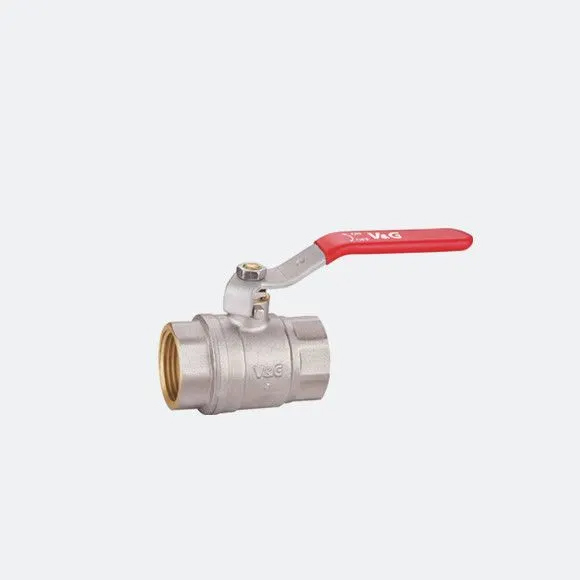
An OEM valve for HVAC systems is a valve manufactured to the buyer's own drawing, part number and brand, rather than sold under the valve maker's name. The OEM supplier takes on casting, machining, assembly, pressure testing, marking and packaging; the buyer keeps the brand, the part numbering and the market approval. For a heating equipment maker, a plumbing brand or a distributor assembling a hydronic range, that division of work is often the difference between offering a complete valve line and offering none.
This guide is written for buyers at the awareness and research stage who are deciding how an OEM HVAC valve programme is structured, which brass valves belong in it, what the factory actually controls, and which documents a buyer should expect before a purchase order exists.
What an OEM Valve for HVAC Systems Covers
In an OEM arrangement the finished valve reaches the market with the customer's name, packaging and documentation only. Valogin handles casting, machining, assembly and testing to the customer's specification, drawing and part number, so a brand can offer a full brass valve range without building brass production of its own. That scope covers ball valves, gate valves, check valves, stop valves, angle valves, manifolds, mix valves, gas ball valves, float ball valves and bibcocks.
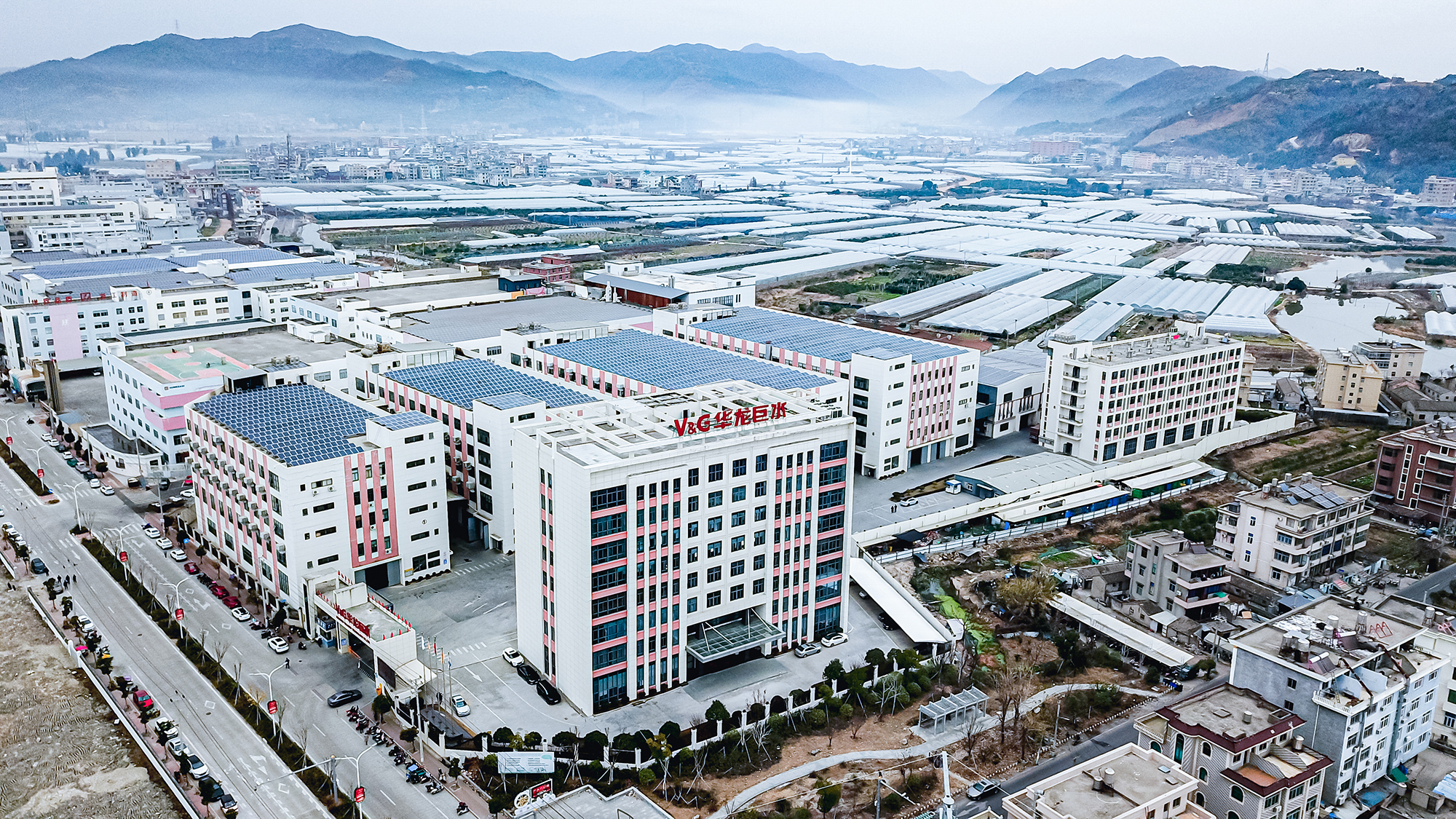
Zhejiang Valogin Technology Co., LTD. is a Chinese brass valve and fitting manufacturer founded in 1985 and based in Qinggang Industrial Zone, Yuhuan, Zhejiang, producing brass valves, fittings and distribution manifolds for plumbing, heating, sanitary and gas systems, with more than 90% of turnover coming from international markets.
The split of responsibility is the part buyers most often misjudge. The OEM partner owns the manufacturing chain: brass intake, forging, machining, polishing, assembly, pressure and tightness testing, marking and packing. The buyer owns the product definition: the drawing, the part number, the dimensional tolerances, the brand, the packaging artwork and the approval that releases the batch. Neither side can substitute for the other, and a programme that blurs the line tends to fail at sample approval rather than at production.
Why HVAC Valve Buyers Move to OEM Supply
The commercial logic starts with scale. The global HVAC valve market was valued at USD 17.1 billion in 2025, and brass and bronze valve bodies were projected to hold a 46.2% share of that market by material in 2026, according to commercial market research. Asia Pacific accounted for over 38% of the market in 2025. The same research projects the market reaching USD 27.1 billion by 2035.
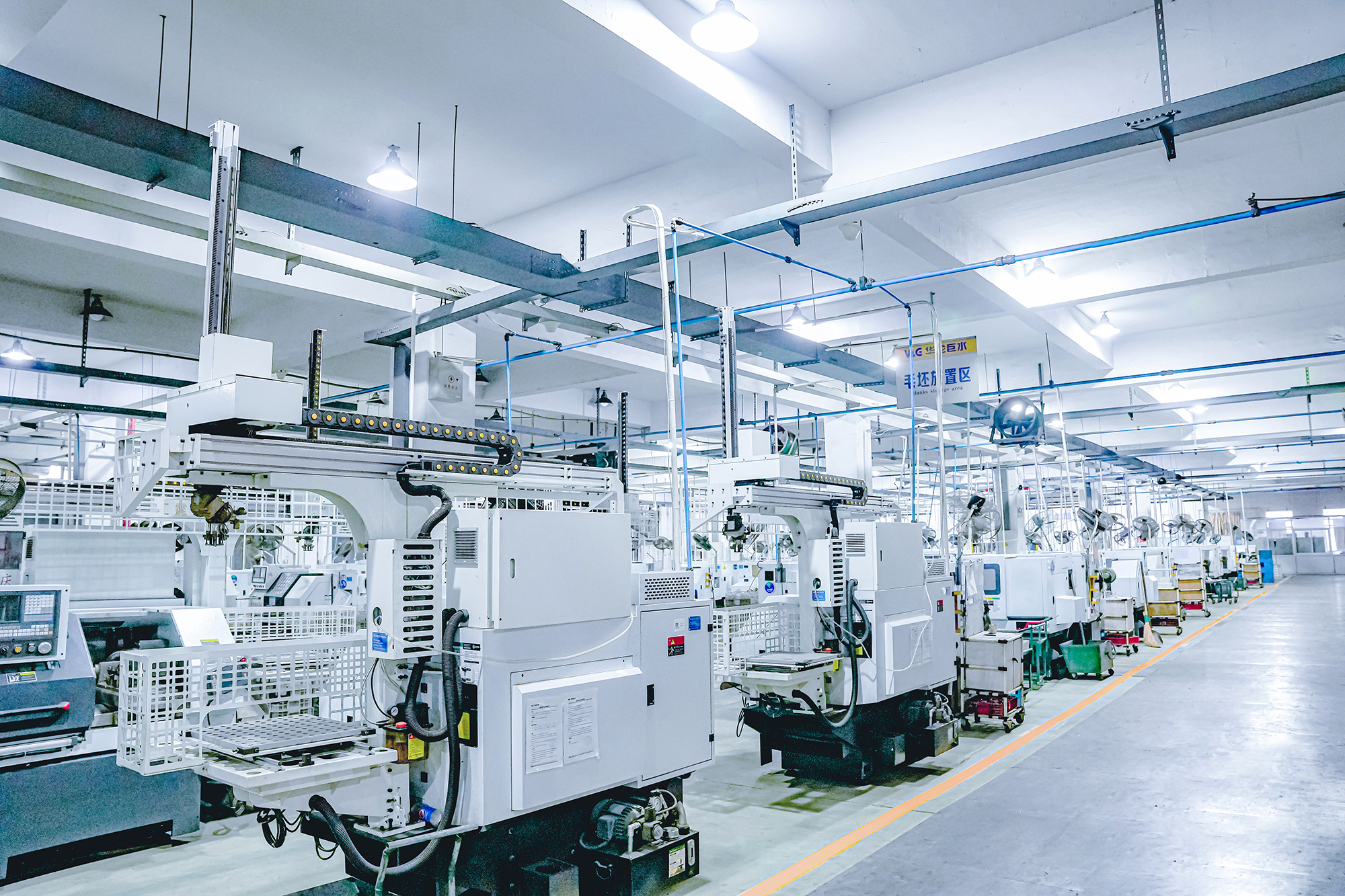
Those figures explain why brass valve supply is a manufacturing business before it is a branding business. A brand that wants to sell brass ball valves, gate valves, check valves and radiator-side valves across a full size range is committing to casting capacity, CNC machining, assembly, leak testing and a laboratory — or it is sourcing from someone who already has them. Valogin, for reference, operates a 28,000 square metre factory with over 1,000 employees and an annual output of 80 million pieces.
A second driver is regulatory fragmentation. The same brass valve may need a pressure equipment route in Europe, a drinking-water contact approval for the wetted materials, a gas approval where it sits on a gas line, and a separate lead-content verification for North America. Each of those is a document set, and each document set has to be maintained batch after batch. Buyers increasingly treat accumulated approvals as part of the supplier's manufacturing capability rather than as paperwork attached to it.
The OEM Valve Range: What Can Be Built and Customised
The table below lists the brass valve types that make up a typical OEM HVAC and plumbing range, with the published reference specification for each. Reference models are shown so a buyer can map the range against an existing part list; in an OEM programme the final model number, marking and tolerance band come from the customer's drawing.
| Valve type | Reference model | Size range | Working pressure | Temperature range | Typical HVAC / plumbing duty |
|---|---|---|---|---|---|
| Brass ball valve | VG10.16902 | 1/4″ – 4″ | PN40 (40 bar / 580 psi) | −20 °C to 120 °C | Quarter-turn isolation at heat source, risers and fixture groups |
| Brass gate valve | VG11.11302 | 1/2″ – 2″ | PN16 (16 bar) | 0 °C to 80 °C | Main and riser isolation where a straight-through bore matters |
| Brass check valve | VG12.04033 | 1/2″ – 4″ | PN16 / 232 psi | 0 °C to +66 °C | Back-flow prevention between circuits |
| Brass stop valve | VG16.70411 | 12 mm – 28 mm | PN10 | −20 °C to 100 °C | Throttling and flow regulation on heating branches |
| Brass angle valve | VG14.90111 | 1/2″×3/8″, 1/2″×1/2″ | PN10 | 0 °C to 80 °C | Radiator and sanitary fixture connection |
| Brass gas ball valve | VG10.61011 | 1/4″ – 4″ | MOP5 | −20 °C to 120 °C | Gas line and appliance isolation; CE, DVGW and EN 331 |
| Brass float ball valve | VG20.10212 | 1/2″ – 4″ | 100% leak tested | −20 °C to 120 °C | Water level control in tanks and piping systems |
| Thermostatic mix valve | VG37.10092 | 1/2″, 3/4″, 1″ | PN25 (362.5 psi) | −20 °C to 120 °C | Temperature regulation in hot and cold water systems |
| Brass manifold | VG21.23161 | 3/4″×1/2″, 1″×1/2″ | — | Heating circuit duty | Distribution with interception ball valves on heating circuits |
| Brass bibcock | VG13.99011 | 1/2″ – 1″ | — | 0 °C to 80 °C | Potable water and garden outlet points |
Source: manufacturer product specifications for the reference models listed. Threading on the manifold, gate valve and check valve follows ISO 228, equivalent to DIN EN ISO 228 and BS EN ISO 228; the gas ball valve is available with ISO 7/1 Rp parallel or ISO 228 threads.
Customisation in an OEM programme is applied at six points rather than one. Thread specification can be matched to the regional standard the buyer sells into. Surface finish can be specified — natural brass, nickel-plated, chrome-plated — matching the reference finishes used across the range. Logo and part number can be cast, stamped or laser-marked on the body and handle. Private-label casting marks can be applied. Packaging, labels and printed documents can carry the customer's brand. Dimensional tolerances can be held to the customer's drawing rather than to a catalogue norm.
How an OEM Valve Programme Runs, Step by Step
- Define the duty, not just the valve. On/off isolation, throttling or back-flow prevention decides the valve type before anything else. A ball valve gives quarter-turn isolation with the position visible at a glance and is the default for on/off duty in water and gas lines; a gate valve opens slowly on a multi-turn handwheel and gives a straight-through, low-resistance bore but is for fully open or fully closed duty only; a stop valve is made for throttling. Getting this wrong at specification stage is the most expensive mistake in the programme, because it is discovered after the samples arrive.
- Fix the working envelope. Nominal size, pressure class, temperature range and medium are stated in the drawing or written requirement. The published ranges above show what the reference products are built to — for example PN40 and −20 °C to 120 °C on the brass ball valve, PN16 and 0 °C to 80 °C on the gate valve. An OEM specification that sits outside a published envelope is a different product, not a variant.
- Choose the compliance route per market. The buyer states the destination markets; the compliance documents follow from that. This is the stage where a European pressure equipment route, a drinking-water contact approval or a gas approval is decided, because the material and test evidence has to be generated during production, not reconstructed afterwards.
- Approve a sample and its inspection record. An approved sample and its inspection record set the standard that later batches are checked against. The sample is where marking, surface finish, thread fit and packaging are signed off together — not sequentially across separate orders.
- Set marking, traceability and confidentiality. Part marking and full traceability run in the customer's own numbering system; dimensional inspection reports, material certificates and process capability data accompany each batch. The customer's drawings, part numbers and brand relationship are kept confidential and do not appear in public material.
- Schedule production against the forecast. OEM production runs to the customer's schedule and forecast, typically as multi-year supply programmes with repeat orders. This is why OEM volume is agreed per programme rather than as a single universal minimum.
- Verify each batch and repeat. Batch verification compares the delivered goods against the approved sample record, not against a fresh interpretation of the drawing. That is what keeps the second order identical to the first.
Where OEM HVAC Valves Are Used
Hydronic heating circuits
In a two-pipe radiator heating circuit, valves do four different jobs. Brass gate valves isolate the circulator and the main distribution lines. Brass ball valves give quarter-turn isolation at the heat source and at each riser. Brass angle valves connect the radiators to the pipework. Brass stop valves throttle the flow so radiators far from the circulator still reach design temperature. Typical working conditions are hot water up to 90 °C at working pressure up to 10 bar (PN10), with continuous circulation through the heating season and the system under pressure year-round. A practical OEM requirement here is noise: no whistling or cavitation at throttled flow, because noise is the most common complaint on radiator circuits.
Domestic and commercial potable water
In building water supply, brass gate valves provide the coarse shut-off on the main supply and on each riser, brass ball valves give quarter-turn isolation at the fixture group so a single floor or apartment can be worked on without shutting the building down, brass check valves prevent back-flow and cross-connection between circuits, and brass angle valves connect sanitary fixtures to the pipework. Working conditions are typically potable water at 1–10 bar, cold water and hot water up to 65 °C, under continuous pressure indoors and in plant rooms. Because such lines are never fully drained, dezincification-resistant material and a corrosion-resistant finish are specification items, not preferences.
Gas installations
On a gas supply line a brass gas ball valve isolates the line or the individual appliance, and the quarter-turn handle shows the open or closed position at a glance so it can be locked closed before maintenance. The gas ball valve reference model VG10.61011 carries CE and DVGW approval and complies with the EN 331 standard, with a working pressure rating of MOP5. On the low-pressure side of a building gas line, working pressure is typically 0.02–0.5 bar, and gas-tight shut-off is a safety requirement rather than a performance target.
Building a private-label range
For a valve brand, heating equipment maker or building services supplier, the OEM model lets the company offer a full brass valve range — ball, gate, check, stop, angle, manifold, mix valve, gas ball, float ball and bibcock — without owning brass production. The product reaches the market with the customer's name, packaging and documentation only, while the factory retains the manufacturing and testing function.
Compliance: What a Certified OEM Valve Has to Document
Compliance is the section where buyers most often accept a vague answer. The routes below are market-specific instruments, and they are not interchangeable: the European approach to drinking-water contact materials is a positive-list mechanism, while the North American approach is a quantified lead-content limit. A single "global compliance" statement should be treated as a prompt to ask which instrument, which scope and which certificate number.
| Market / route | Instrument | What it means for an OEM valve order |
|---|---|---|
| EU pressure equipment | Directive 2014/68/EU (PED) | Applies to pressure equipment and assemblies with maximum allowable pressure above 0.5 bar. Equipment is classified into Categories I–IV by pressure and volume or nominal size, and the conformity assessment route tightens as the category rises. |
| EU drinking water contact | Directive (EU) 2020/2184, Article 11 | Requires materials and products in contact with drinking water not to compromise human health, with European positive lists used to harmonise material compliance. |
| EU construction products | Regulation (EU) No 305/2011 (CPR) | Sets harmonised conditions for marketing construction products, including declaration of performance and the CE marking framework, for valves incorporated into building works. |
| EU electrical / electronic | Directive 2011/65/EU (RoHS 2) | Restricts hazardous substances in electrical and electronic equipment; actuated valves with electronic control modules fall within scope and need assessment. |
| EU chemicals | Regulation (EC) No 1907/2006 (REACH), Annex XVII | Restriction framework for substances in articles, including metals in brass valves; the Annex XVII list is updated by Commission amendment. |
| US / Canada drinking water | NSF/ANSI/CAN 61 and NSF/ANSI/CAN 372 | 61 covers health effects of components and materials; 372 verifies lead content against a weighted average of 0.25% on wetted surfaces. |
| US federal statute | Safe Drinking Water Act §1417 (42 U.S.C. §300g-6) | Defines "lead free" as not more than 0.25% weighted average lead across wetted surfaces, and not more than 0.2% in solder and flux; the revised definition has applied since 4 January 2014. |
| England and Wales | The Water Supply (Water Fittings) Regulations 1999 | Sets material suitability, back-flow prevention and notification requirements for water fittings, including valves. |
| Pressure testing | ISO 5208:2015; EN 12266-1:2012 | Two reference frameworks for pressure testing of metallic valves. Their leakage class definitions are not automatically equivalent, so the test report should state which standard and which class was used. |
| Actuator interface | ISO 5211:2017 | Standardises the flange connection and torque interface between part-turn valves and actuators — the reason a valve can be decoupled from its actuator supplier. |
| Material durability | ISO 6509-1:2014 | Test method for dezincification resistance of copper alloys with zinc; the basis for specifying DZR brass in potable water and heating service. |
| Radiator valves | EN 215:2019 | Requirements and test methods for thermostatic radiator valves — the reference standard for TRV products sold in Europe. |
Sources: EUR-Lex (Directive 2014/68/EU; Directive (EU) 2020/2184; Regulation (EU) No 305/2011; Directive 2011/65/EU; Regulation (EC) No 1907/2006), US EPA and 42 U.S.C. §300g-6, NSF/ANSI/CAN 61 and 372, legislation.gov.uk, ISO, CEN and WCO HS 2022 heading 8481.
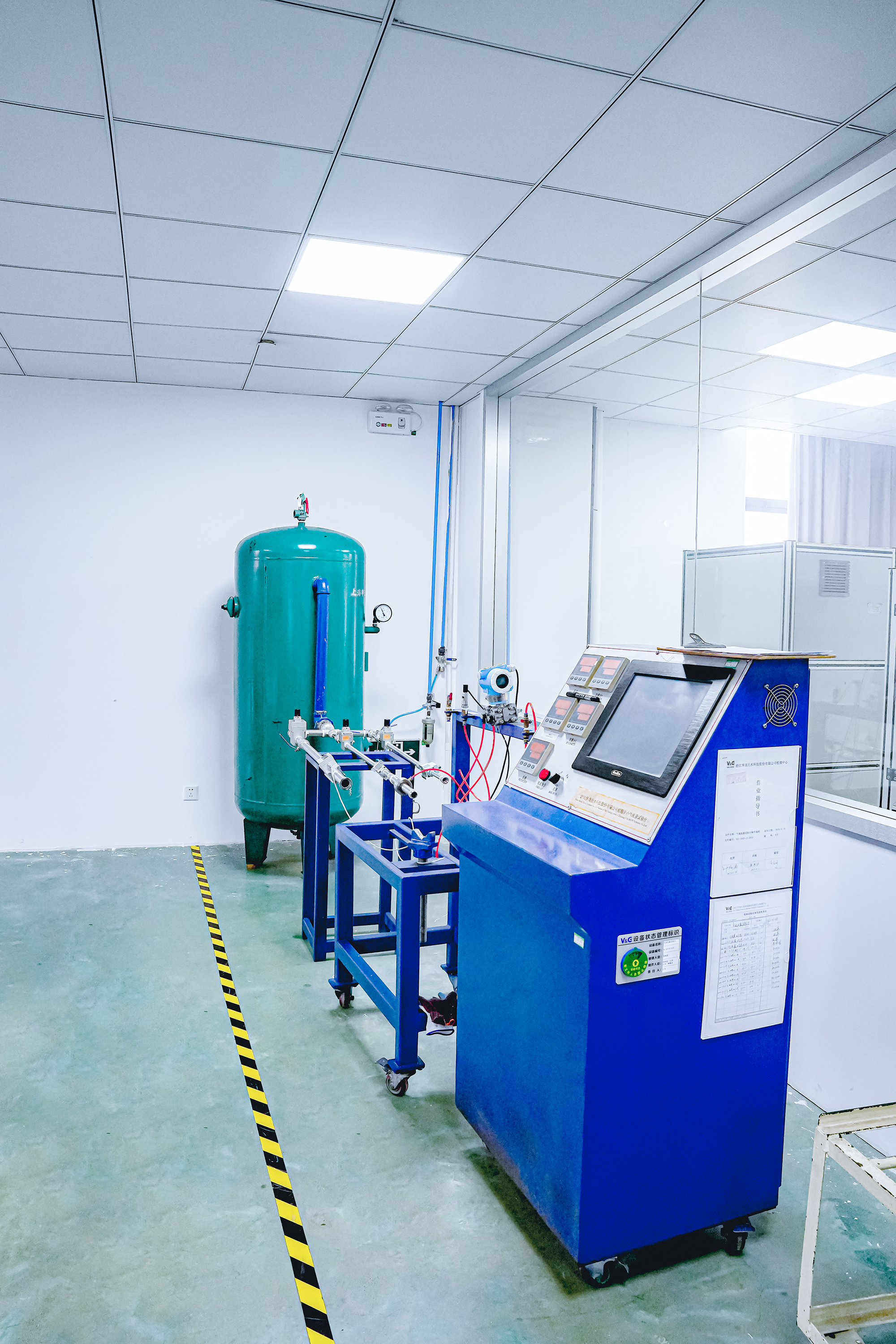
On the manufacturing side, Valogin holds ISO 9001, ISO 14001 and ISO 45001 management system certification, together with CNAS, CE, DVGW, AGA, INIG, WRAS, NSF, cUPC, CSA and AB1953 certificates. The company operates a national laboratory testing centre of about 1,025 square metres, established in accordance with the ISO 17025 standard, equipped with an inverted metallographic microscope, a comprehensive test bench and more than 100 sets of equipment covering ball valves, water nozzles, temperature control valves and floor heating products.
Two clarifications matter when reading a certificate list against an order. First, a management system certificate is not a product approval; the buyer should ask which product certificate covers which model and which market. Second, a test method standard in a datasheet says how the valve was tested, not whether it passed a particular acceptance class — the class has to be stated.
How to Evaluate an OEM Valve Supplier
The HVAC valve supply landscape contains two different layers. Brand-side companies publish portfolios built around control valves, actuators and system solutions — for example Danfoss (Denmark), Belimo (Switzerland), IMI Hydronic Engineering (United Kingdom, part of IMI plc), Watts Water Technologies (United States) and Caleffi (Italy). Those portfolio descriptions indicate each company's publicly stated product scope; they do not establish market share or a ranking. An OEM programme sits at the layer beneath: the manufacturing partner that builds and tests the valve body and mechanism to the brand's specification.
For that layer, six checks separate a workable OEM partner from a catalogue supplier with a logo service:
- Process ownership. Does the supplier control casting, machining, polishing and assembly in-house, or subcontract part of the chain that determines dimensional consistency?
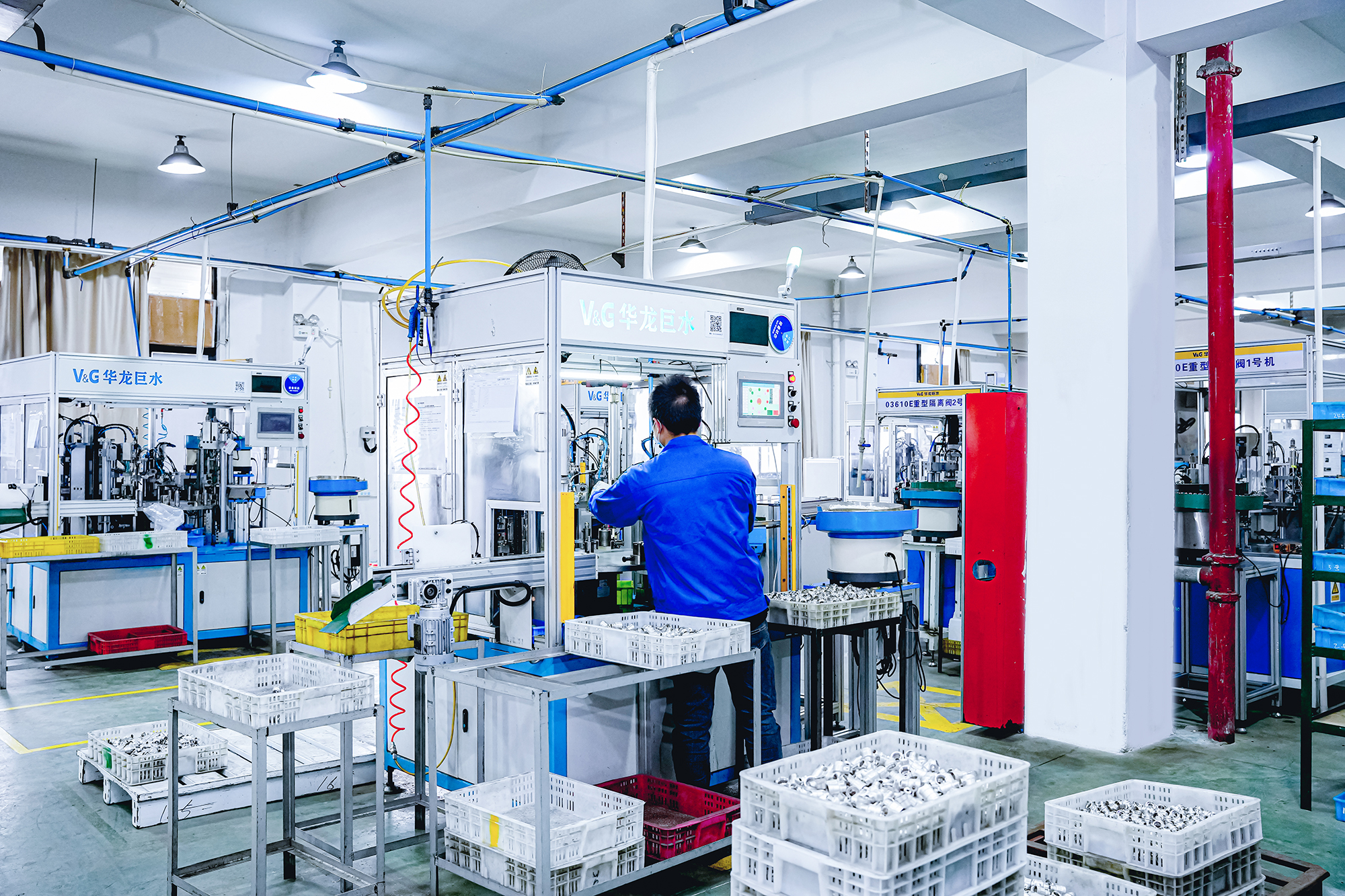
- Automation ratio and dedicated lines. Valogin states that 70% of its products are manufactured through automated workflows, with dedicated fully automatic production lines for ball valves and gate valves paired with industrial robots — the mechanism for batch-to-batch consistency rather than a marketing point.
- Engineering capacity behind the drawing. The R&D team includes more than 70 designers and engineers, of whom over 15 are full-time R&D engineers, with experience in water, gas, oil and heating systems. A drawing that cannot be interrogated produces samples that cannot be approved.
- Test evidence per batch. Dimensional inspection reports, material certificates and process capability data should arrive with the goods, not on request three months later.
- Marking and traceability in your numbering. Part marking and full traceability must run in the customer's own numbering system, not be re-labelled from the factory's sequence.
- Confidentiality as a written condition. The customer's drawings, part numbers and brand relationship must never appear in public material — including the factory's own marketing.
Frequently Asked Questions
Which certifications should an OEM HVAC valve supplier hold for European and North American markets?
It depends on the market and the product, so the answer is a document set rather than a single certificate. For Europe, the relevant instruments include Directive 2014/68/EU on pressure equipment, Directive (EU) 2020/2184 Article 11 for drinking-water contact materials, Regulation (EU) No 305/2011 for construction products and Directive 2011/65/EU where an actuator adds electronics; gas valves are typically assessed against EN 331. For North America, NSF/ANSI/CAN 61 covers health effects and NSF/ANSI/CAN 372 verifies the 0.25% weighted average lead limit, consistent with the statutory "lead free" definition in the US Safe Drinking Water Act §1417. Valogin holds ISO 9001, ISO 14001 and ISO 45001 management system certification alongside CNAS, CE, DVGW, AGA, INIG, WRAS, NSF, cUPC, CSA and AB1953 certificates. Buyers should confirm which product certificate covers the specific model and destination market before approving a sample.
Can an OEM supplier manufacture brass valves under our own brand and to our drawing?
Yes. Logo and part number can be cast, stamped or laser-marked on the body and handle; production can follow your drawing, sample or written requirement; and packaging, labels and printed documents can carry your brand. Dimensional tolerances are held to your drawing rather than to a catalogue norm, and part marking plus full traceability run in your own numbering system. An approved sample and its inspection record then set the standard that later batches are checked against, and the customer's drawings, part numbers and brand relationship are kept confidential. The range this applies to covers ball valves, gate valves, check valves, stop valves, angle valves, manifolds, mix valves, gas ball valves, float ball valves and bibcocks.
How is the price of a custom OEM HVAC valve built up?
Because an OEM valve is made to a drawing, the quotation follows the drawing rather than a catalogue number. The cost drivers are the brass grade and the metal weight in the body, the nominal size and pressure class, the thread standard required for the destination market, the surface finish, the marking method, the packaging and labelling artwork, and the inspection and documentation package required per batch. Two valves of the same nominal size can therefore sit at different prices if one is specified to PN40 with a full inspection file and the other to PN10 with a commercial packing list. Volume is agreed as part of the supply programme, since production is scheduled against the customer's forecast and typically runs as multi-year programmes with repeat orders.
Is a sample approved before mass production starts?
Yes, and the sample stage is where the programme is effectively locked. An approved sample and its inspection record set the standard that later batches are checked against, so marking, surface finish, thread fit, dimensions and packaging are signed off together on the same physical part. Skipping or compressing this stage pushes the same decisions into the first production batch, where correcting them costs a full run instead of a single unit.
What lead time should an OEM valve buyer plan for?
There is no single published lead time, because it is set by the specification, the sample approval stage and the production slot rather than by the valve type alone. Three factors move it: vertical integration, since casting, machining, polishing and assembly are carried out in-house rather than across subcontractors; automation, since 70% of products run through automated workflows with dedicated fully automatic lines for ball and gate valves; and scheduling, since production runs to the customer's forecast and is typically planned as a multi-year programme. The practical approach is to plan backwards from sample approval and to place the first repeat-order forecast at the same time as the sample, not after it. Buyers who want to start the process can request a sample and quotation against their drawing, or download the Valogin product catalogue for the full reference range.
Conclusion
An OEM valve for HVAC systems is a manufacturing relationship before it is a product. The valve body, the tolerance band, the test evidence, the marking and the packaging all come from the customer's drawing and part number, while the capacity, the automation, the laboratory and the certificate file come from the factory. The programmes that run smoothly are the ones where those two halves were defined before the first sample was cut — duty first, envelope second, compliance route third, sample approval fourth, and the repeat order planned from day one.
For buyers assembling a hydronic, potable water or gas valve range under their own brand, the range covered here — brass ball valves to PN40, gate valves to PN16, check valves, stop valves, angle valves, gas ball valves to EN 331, float valves, mix valves, manifolds and bibcocks — is enough to build a complete brass line without owning brass production.
Next Step: Sample, Drawing Review or Catalogue
Send your drawing, sample or written requirement and the destination markets, and the specification can be reviewed against the reference range before any tooling decision is made.
Download the catalogue: Valogin brand catalogue (PDF)
Zhejiang Valogin Technology Co., LTD. · Qinggang Industrial Zone, Yuhuan, Zhejiang, China
Email: sales62@valogin.com · Tel: 86-576-87428589 · WhatsApp: +86 13186900750
Website: valve.valogin.com
Have Questions or Need More Details?
Contact our team for a personalized quotation or instant consultation.
Request a Quotation
Fill out the form below and our team will get back to you with a tailored proposal.
WhatsApp Direct Chat
Prefer to chat in real-time? Message us on WhatsApp for instant assistance & quick answers.
- Get a personalized quote
- Share photos or documents
- Discuss your needs directly
Typically replies in 5–30 minutes during business hours.