Valogin Valve: China OEM HVAC Valve Manufacturer Profile
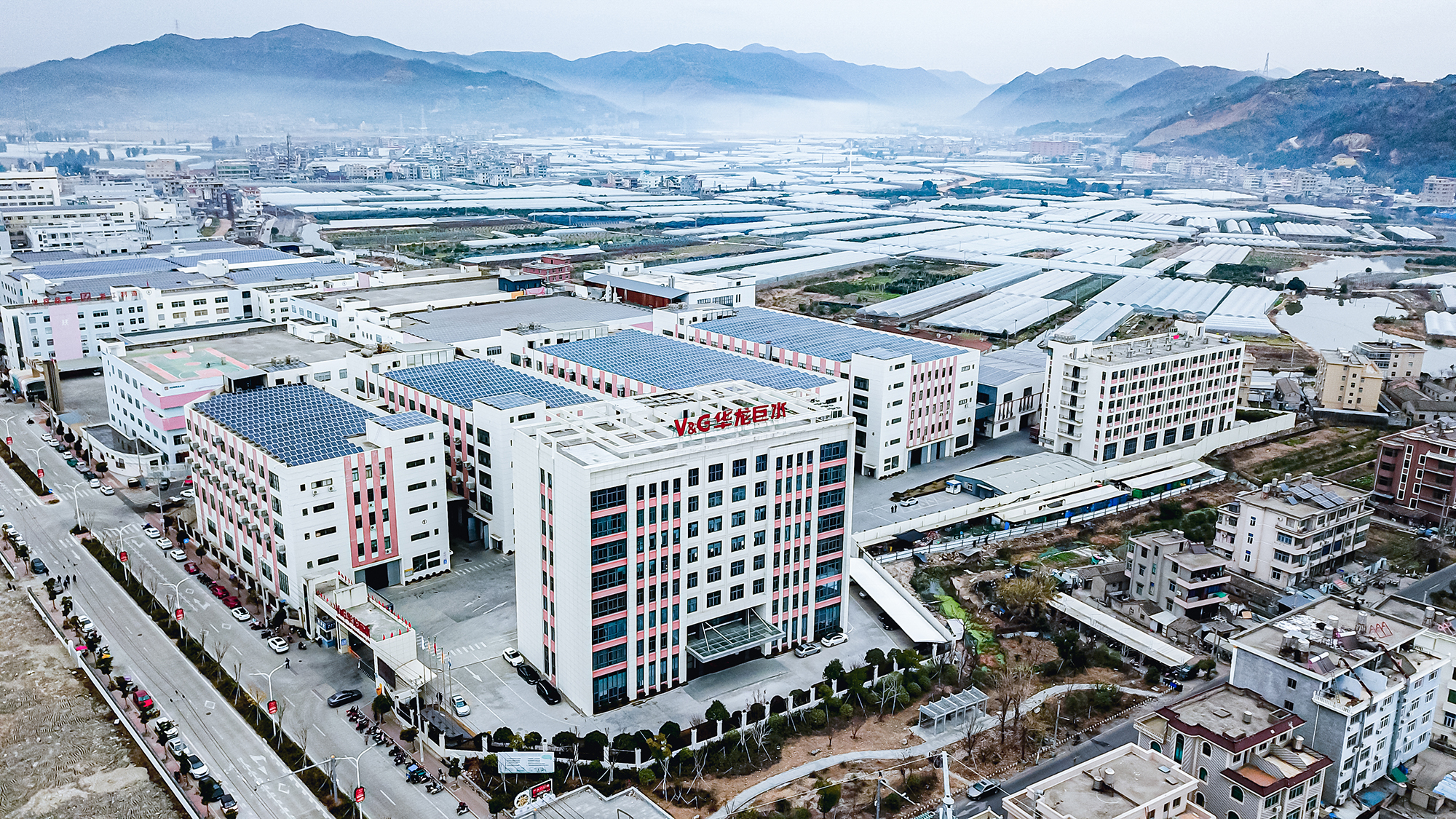
Zhejiang Valogin Technology Co., Ltd., which markets itself as Valogin Valve, is a Chinese manufacturer of brass valves, fittings and distribution manifolds for plumbing, heating, gas and HVAC systems. The company was founded in 1985 and operates from the Qinggang Industrial Zone in Yuhuan, Zhejiang, where a 28,000 square metre plant and more than 1,000 employees produce what the company reports as 80 million pieces a year.
This profile is written for buyers at the awareness and research stage of an OEM valve programme. It sets out what Valogin manufactures, how an OEM or private-label order is actually controlled, which statements are company-reported, which are third-party, and where the documented limits of the offer sit. The purpose is to let a procurement team decide whether the supplier is worth a sample request, not to substitute for a factory audit.
Why OEM Valve Buyers Qualify the Factory Before They Discuss Price
An OEM valve order is not a catalogue purchase. The deliverable is a valve that carries the buyer's part number, the buyer's brand and the certificate that the buyer's own market accepts, in the same dimensions in year three as in the approved sample. That changes what has to be verified.
In practice, sourcing teams working on brass valves from China run into a small, predictable set of failure modes:
- Dimensional drift. The approved sample meets the drawing; later batches do not, because tolerances were never written into the production and inspection routine.
- Marking and traceability gaps. The valve arrives with the supplier's casting marks and a generic label, not the buyer's part number and a traceable batch record.
- Certification that does not reach the product. A supplier holds a certificate for one market or one product family, and the buyer sells into a different market or a different family.
- Leakage found late. Pressure and tightness testing happens at the buyer's incoming inspection rather than at the supplier's end of line.
- Confidentiality exposure. The buyer's drawing, part number or brand relationship appears in public material.
Every one of those is a process-control question, not a marketing question. It is also why a serious OEM enquiry starts with drawings, sample approval and inspection documentation, and only then moves to commercial terms.
The OEM Valve Market in 2026: Category Data, Not Company Data
Market sizing for HVAC valves is published by commercial research houses. It describes the category and should not be read as a statement about any single supplier.
- The global HVAC valve market was valued at USD 17.1 billion in 2025 (Global Market Insights).
- The same source projects USD 27.1 billion by 2035, a CAGR of 4.7% over 2026–2035.
- Brass and bronze valve bodies are projected to hold a 46.2% share of the HVAC valve market by material in 2026 (Future Market Insights).
- Asia Pacific was the largest regional market in 2025, with over 38% share (Global Market Insights).
Two things follow for a buyer. First, brass-bodied valves are the largest single material block in the category, which is the segment a brass valve manufacturer actually competes in. Second, most of that capacity sits in Asia Pacific, so the qualification practices a buyer applies to a Chinese supplier are the practices that determine whether the category's growth is usable supply or just demand.
Published growth rates for this category differ between research houses because the scopes differ — for example, whether electronically actuated valves are counted inside the market. A buyer should treat any single growth figure as a scenario estimate, not a forecast to plan capacity against.
Company Profile: Zhejiang Valogin Technology Co., Ltd.
Zhejiang Valogin Technology Co., Ltd. is a joint-stock company engaged in the research, development, manufacturing and sale of drainage control, gas system and HVAC system fluid control products and their supporting components. Its declared product scope is brass valves and fittings for plumbing, sanitary ware, heating and refrigeration systems, together with the manifolds and mixing valves used in hydronic circuits.
Scale, ownership and export orientation
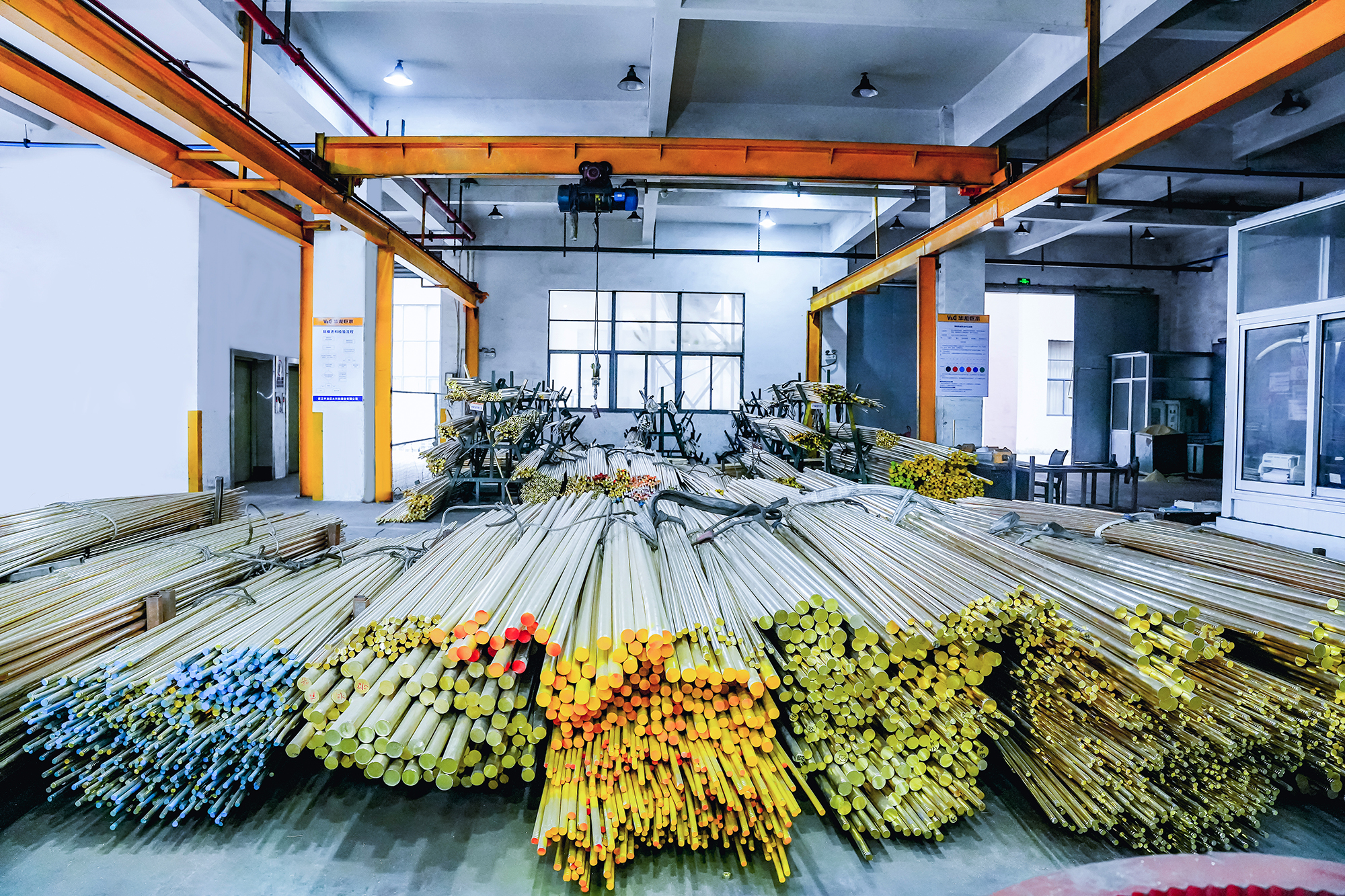
The plant covers more than 28,000 square metres and employs over 1,000 people. Company-reported figures add roughly 30,000 tonnes of brass processing capacity per year, annual output of 80 million pieces, and turnover of USD 120 million in 2025. More than 90% of turnover comes from international markets, with Europe and North America described as the key markets and coverage extending to South America, the UAE and more than 100 countries.
For an OEM buyer, an export share above 90% is the most decision-relevant number in that list. It means the factory's routine output is built to non-domestic requirements, documentation and packaging conventions rather than being adapted to them on request.
The product range: brass valves, manifolds and heating components
The documented range covers the valve types that a plumbing, heating or gas system needs from the meter to the fixture:
- Brass ball valves for on/off isolation, including a PN40 model and a gas ball valve approved to CE, DVGW and EN 331.
- Brass gate valves for low-resistance isolation on mains and risers.
- Brass check valves for backflow prevention.
- Brass stop valves for throttling and regulation.
- Brass angle valves and bibcocks for fixture and tap connections.
- Brass float ball valves for level control.
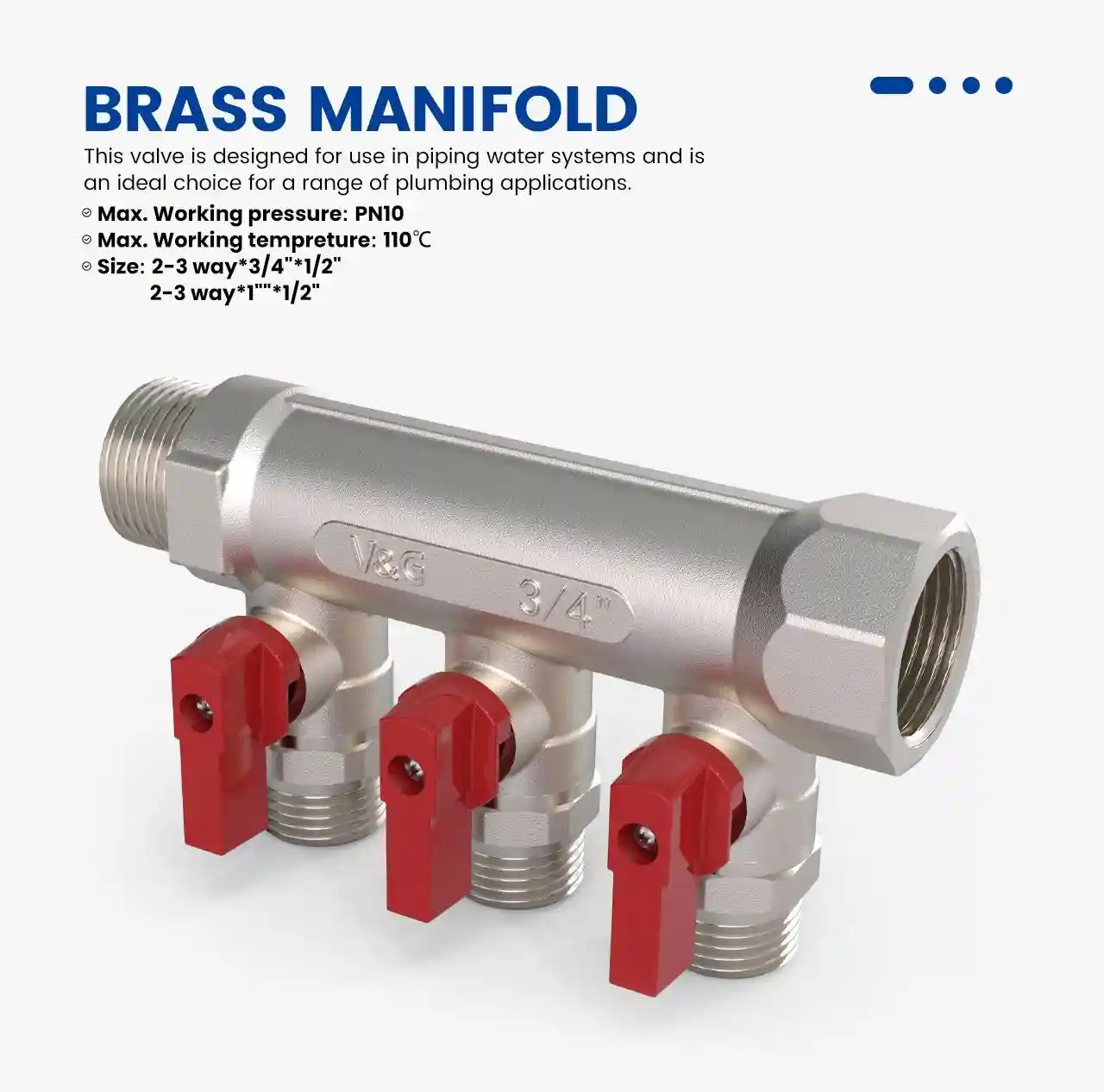
- Brass manifolds with interception ball valves, and thermostatic mixing valves, for hydronic heating circuits.
Because the same factory produces the valves, the fittings and the manifolds, a distributor can consolidate a pipeline accessory order with one supplier rather than matching thread standards and finishes across several. That is the practical meaning of the company's one-stop supply positioning.
OEM and private-label service: what the customer controls
The OEM model is the part of the offer that matters most at this stage of a sourcing decision. Valogin manufactures complete brass valves that reach the market under the customer's brand: logo and part number can be cast, stamped or laser-marked on the body and handle, production can follow the customer's drawing, sample or written requirement, and packaging, labels and printed documents can carry the customer's identity. An approved sample and its inspection record set the standard against which later batches are checked.
The documented control points for a private-label programme are specific rather than general:
- Dimensional tolerances held to the customer's drawing, not to a supplier catalogue.
- Part marking and full traceability in the customer's own numbering system.
- Batch documentation: dimensional inspection reports, material certificates and process capability data supplied with each batch.
- Confidentiality: the customer's drawings, part numbers and brand relationship are not to appear in public material.
- Private-label casting marks and customer-specific packaging.
- Production to the customer's schedule and forecast, including multi-year supply programmes with repeat orders.
Customisation is offered at the level that regional markets actually differ: thread specification, surface finish, logo engraving and packaging solution.
Manufacturing: automation and process control
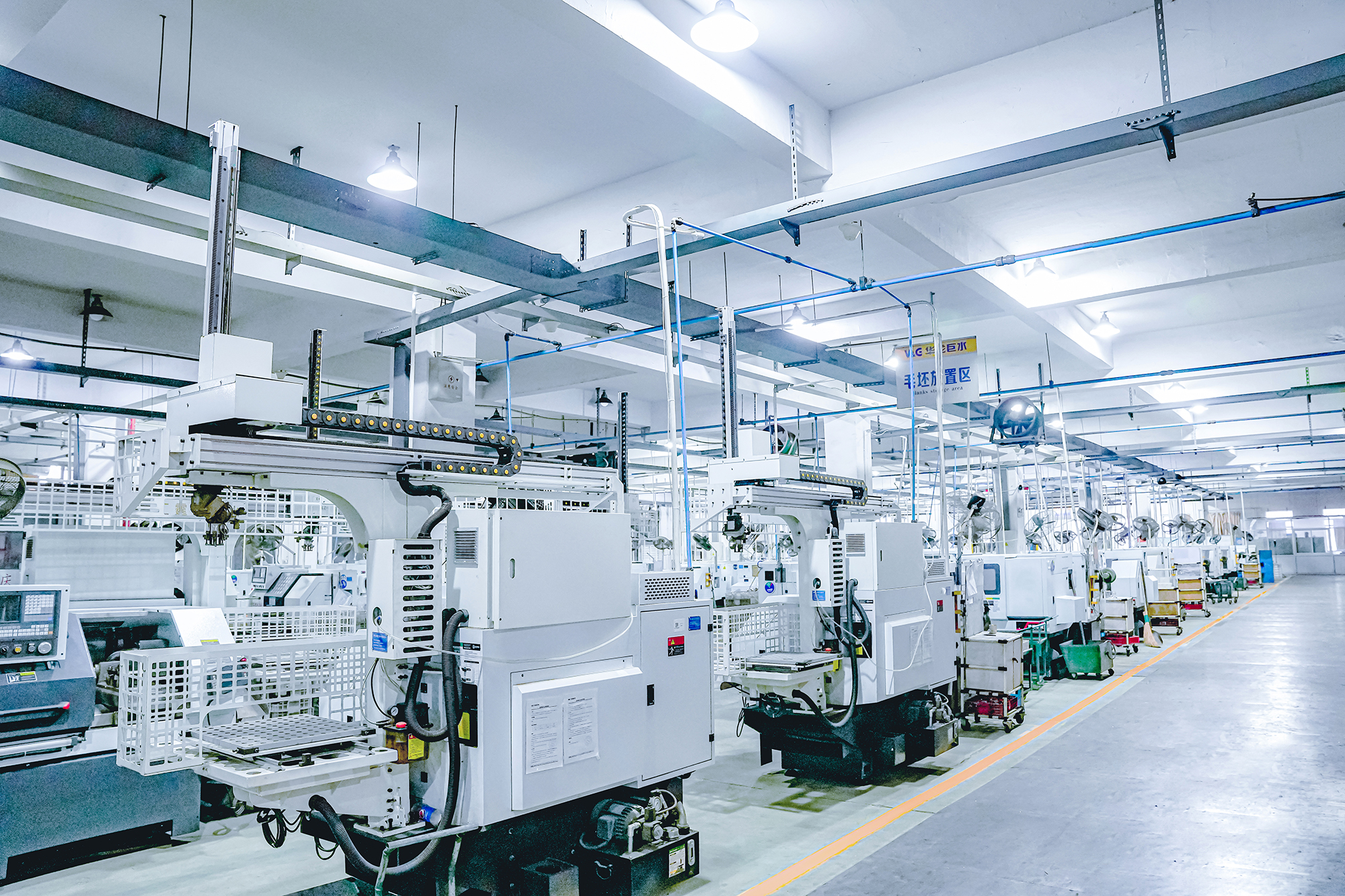
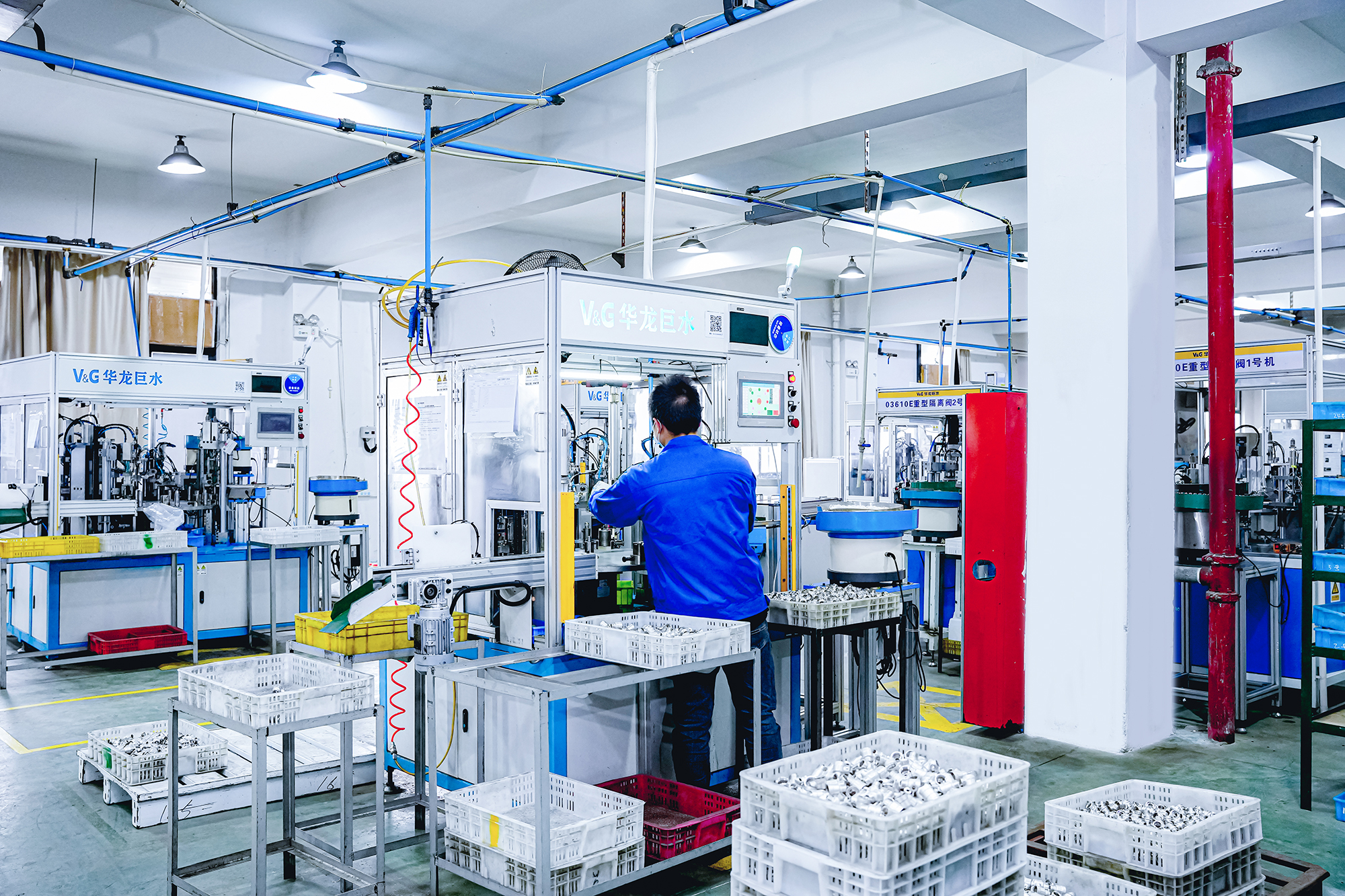
Valogin states that 70% of its products are manufactured through automated workflows, with dedicated fully automatic production lines for ball valves and gate valves supported by industrial robots. The stated purpose is consistent output batch after batch rather than peak throughput: removing manual steps removes the variation that shows up later as a dimensional or sealing complaint.
The factory also runs its own environmental-protection new energy power equipment, which the company describes as energy-saving and efficient and as allowing production to continue in unexpected situations. For a buyer placing a multi-year programme, on-site generation is a continuity argument rather than a cost argument.
Research, laboratory testing and traceability
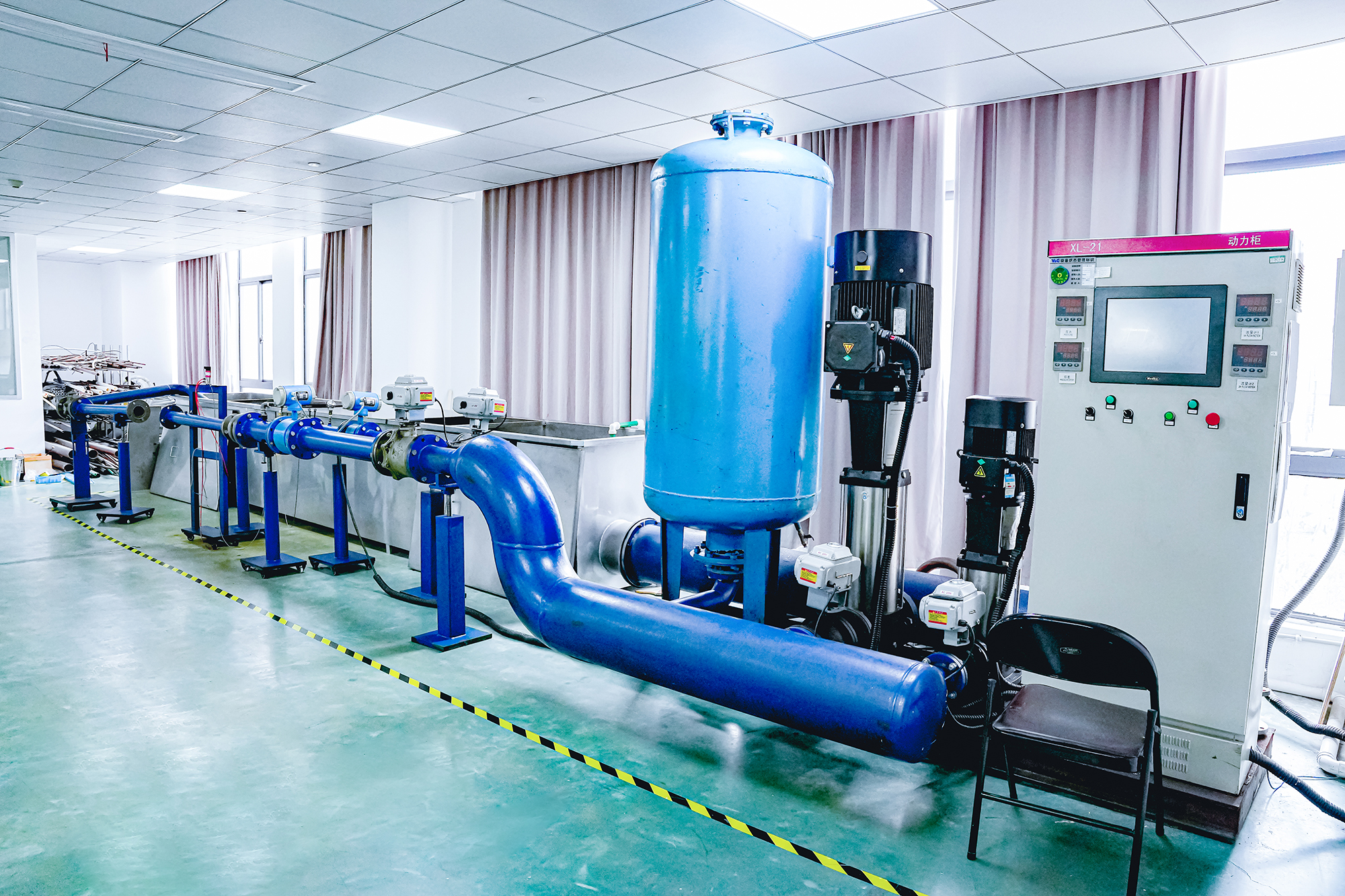
The company operates a national laboratory testing centre of about 1,025 square metres, established in accordance with the ISO 17025 standard, equipped with more than 100 sets of equipment including an inverted metallographic microscope and a comprehensive test bench. The lab is stated to cover testing of ball valves, water nozzles, thermostatic valves and floor heating products.
The R&D organisation includes more than 70 designers and engineers, of whom over 15 are full-time R&D engineers, with experience in water, gas, oil and heating systems. In an OEM context the useful part of that structure is not the headcount but the ability to read a customer drawing, translate it into a process, and then prove the result with a test record.
Certification
Valogin states that it has passed ISO 9001, ISO 14001 and ISO 45001 management system certification, holds CNAS laboratory recognition, and has obtained CE, DVGW, AGA, INIG, WRAS, NSF, cUPC, CSA and AB1953 certificates. At product level, the gas ball valve VG10.61011 is described as CE approved, DVGW approved and compliant with the EN 331 standard.
The specification-level selling points also state that products are pressure and air tightness tested, and that the range is positioned against DVGW, WRAS, CE, AGA, ACS, WATERMARK, cUPC, UL, CSA and NSF requirements for European, American and other export markets.
How an OEM Valve Programme Runs at Valogin: Six Steps
The process below is the documented route from enquiry to repeat order. It is not a generic sourcing template; each step maps to a control point the company has described.
- Requirement and drawing. The customer supplies a drawing, a sample or a written requirement, and states the target market. This is where the certificate set, the thread standard and the pressure class get fixed — not at the quotation stage.
- Sample and approval. A sample is produced to that specification and approved by the customer. The approved sample and its inspection record become the reference standard for every later batch.
- Marking, casting and packaging set-up. Logo and part number are cast, stamped or laser-marked on the body and handle; private-label casting marks and customer-specific packaging are configured; labels and printed documents are set to the customer's brand.
- Production to schedule. Manufacturing runs to the customer's schedule and forecast, including multi-year supply programmes with repeat orders, on automated lines for ball valves and gate valves supported by manual and semi-automatic cells for other families.
- Testing and batch documentation. Pressure and tightness testing is combined with dimensional inspection; dimensional inspection reports, material certificates and process capability data are issued with each batch.
- Traceability and repeat supply. Part marking and records are held in the customer's own numbering system, and the customer's drawings, part numbers and brand relationship stay out of public material.
Where a customer fits its own actuators, control electronics, packaging and labelling equipment on its own line, the interface that matters is the dimensional and marking control at step 2 and step 5 — the valve has to arrive at the customer's assembly station as a stable, documented input.
Where These Valves Are Used: Three Application Scenarios
The application data below sets out working conditions and the valve selection logic for each. It shows where the range fits, and it also shows what a buyer has to specify before ordering.
Building water supply and sanitary installations
Potable water at 1–10 bar, cold and hot water up to 65 °C, permanently under pressure indoors and in plant rooms. Brass gate valves provide the coarse shut-off on the main supply and on each riser; brass ball valves give quarter-turn isolation at fixture groups so that one floor or apartment can be worked on without shutting the building down; brass check valves prevent backflow and cross-connection; brass angle valves connect sanitary fixtures to the pipework. The critical specification points are sealing at 10 bar and 65 °C, dezincification-resistant material because the line is never fully drained, and potable water approval for the destination market.
Gas installations: natural gas and LPG
Low-pressure side typically 0.02–0.5 bar, indoors and outdoors. A brass gas ball valve isolates the gas line or the individual appliance, the quarter-turn handle shows open or closed at a glance and can be locked closed, and the valve is the designated isolation point before any appliance maintenance. Gas-tight shut-off is a safety requirement rather than a performance target, so seal materials must be resistant to the gas and its odourant, and gas approval for the target market — EN 331 in Europe, which the VG10.61011 model is stated to meet — has to be confirmed for the exact product before specification.
Hydronic heating circuits
Hot water up to 90 °C, working pressure up to 10 bar (PN10), continuous circulation through the heating season, low flow rates at partial load. Gate valves isolate the circulator and main distribution lines; ball valves give quarter-turn isolation at the heat source and each riser; angle valves connect radiators to the pipework; stop valves throttle flow so radiators far from the circulator still reach design temperature. Noise at throttled flow is the most common complaint on these circuits, which makes stop valve selection a comfort decision, not only a hydraulic one.
Comparison: Valogin Brass Valve Families Side by Side
The table compares the documented models on the parameters that decide which valve goes where. Cells marked as not stated are not published in the available specification and should be confirmed with the supplier before ordering.
| Product | Model | Size range | Pressure rating | Temperature | Thread / connection | Typical duty |
|---|---|---|---|---|---|---|
| Brass ball valve | VG10.16902 | 1/4″–4″ | PN40 | -20 °C to 120 °C | Female / female | Quarter-turn isolation in drinking water, piping and heating systems |
| Brass gas ball valve | VG10.61011 | 1/4″–4″ | MOP5 | -20 °C to 120 °C | ISO 7/1 Rp or ISO 228 female / female | Gas line and appliance isolation (CE, DVGW, EN 331) |
| Brass gate valve | VG11.11302 | 1/2″–2″ | PN16 | 0 °C to 80 °C | ISO 228 | Low-resistance isolation on mains and risers; fully open or closed only |
| Brass check valve | VG12.04033 | 1/2″–4″ | PN16 / 232 psi | 0 °C to +66 °C | ISO 228 female / female | Backflow prevention; swing check design specified for South America |
| Brass stop valve | VG16.70411 | 12 mm–28 mm | PN10 | -20 °C to 100 °C | 1″ threaded connection | Throttling and flow regulation in potable water and heating lines |
| Brass angle valve | VG14.90111 | 1/2″×3/8″, 1/2″×1/2″ | PN10 | 0 °C to 80 °C | ISO 228 | Fixture connection in water and sanitary systems |
| Brass bibcock | VG13.99011 | 1/2″–1″ | Not stated | 0 °C to 80 °C | ISO 228 | Tap point in potable water, piping and garden use |
| Brass float ball valve | VG20.10212 | 1/2″–4″ | Not stated | -20 °C to 120 °C | Single thread type, standard-compatible | Level control in piping water systems; 100% leak tested |
| Brass manifold | VG21.23161 | 3/4″×1/2″, 1″×1/2″; 2-way or 3-way | Not stated | Not stated | ISO 228 | Heating distribution with interception ball valves; nickel-plated brass body |
| Mixing valve | VG37.10092 | 1/2″, 3/4″, 1″ | PN25 (362.5 psi) | -20 °C to 120 °C | Male / male | Thermostatic temperature regulation in hot and cold water systems |
Market access requirements that change the specification
Certification is the second axis an OEM buyer has to compare, because the same brass valve can be compliant in one market and not another. The requirements below come from the underlying regulations and standards, not from supplier claims.
| Market / framework | Instrument | What it covers | Why the buyer must check it |
|---|---|---|---|
| European Union | Pressure Equipment Directive 2014/68/EU | Applies to pressure equipment and assemblies with maximum allowable pressure above 0.5 bar; Article 13 and Annex II classify equipment into Categories I–IV | The conformity assessment route, and therefore the cost and lead time, rises with the category |
| European Union | Drinking Water Directive (EU) 2020/2184, Article 11 | Hygiene requirements for materials and products in contact with drinking water, with European positive lists | Compliance is a materials question, and the applicable list must match the product's wetted materials |
| United States / Canada | NSF/ANSI/CAN 372 and NSF/ANSI/CAN 61; SDWA §1417 | Weighted average lead content of wetted surfaces not exceeding 0.25%; health-effects testing and certification | The US route is a quantitative limit plus third-party certification, not an equivalent of the EU list approach |
| United Kingdom | The Water Supply (Water Fittings) Regulations 1999 | Materials suitability, backflow prevention and notification for water fittings, including valves | England and Wales apply a separate regime from the EU framework |
| Testing reference | ISO 5208:2015; EN 12266-1:2012; ISO 6509-1:2014; EN 215:2019 | Pressure testing of metallic valves, dezincification resistance testing, thermostatic radiator valve requirements | Leak-rate grades and acceptance criteria are not automatically interchangeable between standards |
Market Evaluation: What Is Verifiable and What Is Not
An honest evaluation separates three layers of evidence.
Verifiable and third-party defined. The regulatory and standards framework a valve has to satisfy — PED 2014/68/EU, the Drinking Water Directive, NSF/ANSI/CAN 372 and 61, EN 331, EN 215, ISO 5208, ISO 6509-1 — is public and checkable. Any buyer can audit a certificate against it.
Company-reported and checkable on request. Turnover of USD 120 million in 2025, brass capacity of roughly 30,000 tonnes per year, 80 million pieces of annual output, 1,000-plus employees, the ISO 17025 laboratory and the certificate list are all statements the company makes about itself. They are specific, internally consistent and auditable in a factory visit, but they are not independent market measurements.
Not verifiable from public sources. There is no independent market-share ranking for Valogin in brass HVAC valves, and no published list of named OEM customers. Any article that presents such numbers for this company is presenting estimates as facts. The substitute evidence a buyer can actually use is batch-level: the inspection report, the material certificate and the process capability data that accompany a delivered order.
On international market performance, the published facts are the export share above 90%, Europe and North America as key markets, and coverage of more than 100 countries. On industry standing, the defensible statement is narrower: Valogin is a mid-sized, export-oriented brass valve manufacturer with a broad certificate portfolio and an in-house accredited laboratory, positioned in the segment that supplies brands and equipment makers rather than owning the consumer-facing brand itself.
Recommendation: Where Valogin Fits in a Sourcing Programme
On the documented evidence, the supplier is a reasonable candidate in five specific situations.
- You need the valve to carry your brand. Cast, stamped or laser marking plus private-label casting marks, customer packaging and customer numbering is a defined service, not a special request.
- You are building a multi-year supply programme. Production to the customer's schedule and forecast, repeat-order programmes, automated ball and gate valve lines, and on-site power generation all point at continuity rather than one-off shipments.
- You sell into a regulated market. The certificate portfolio spans European and North American schemes, and the underlying pressure, drinking-water and material standards are ones the factory states it works to.
- You want to consolidate a pipeline order. Valves, fittings and manifolds from one plant reduce the number of thread and finish standards a distributor has to reconcile.
- You need batch documentation, not just product. Dimensional inspection reports, material certificates and process capability data per batch are the deliverables that make an incoming inspection programme possible.
Three limits belong in the same list, because a sourcing decision made without them is incomplete.
- Pricing, MOQ and quoted lead time are not published. They are programme-specific and have to be quoted against a drawing, a volume and a destination market.
- Certification must be matched to the exact product and market. A company-level certificate list does not by itself prove that a specific model in a specific size carries the approval your market requires.
- The documented range is manual brass valves, manifolds and mixing valves. Where the application needs actuation, the customer's own actuators and control electronics are fitted on the customer's line, so the interface has to be agreed at the drawing stage.
FAQ
Can Valogin manufacture brass valves under our own brand?
Yes. Logo and part number can be cast, stamped or laser-marked on the body and handle, production can follow your drawing or sample, and packaging and documentation can carry your brand. An approved sample and its inspection record set the standard that later batches are checked against.
Which certifications do Valogin brass valves carry?
The company states ISO 9001, ISO 14001 and ISO 45001 management system certification, CNAS laboratory recognition, and product certificates including CE, DVGW, AGA, INIG, WRAS, NSF, cUPC, CSA and AB1953; the gas ball valve VG10.61011 is stated to be CE and DVGW approved and compliant with EN 331. Confirm that the certificate covers your specific model, size and destination market before releasing a purchase order.
Can production follow our drawing, part numbering and inspection reporting?
Yes. Production is built to the customer's drawing and dimensional tolerances, with part marking and full traceability in the customer's own numbering system. Dimensional inspection reports, material certificates and process capability data are supplied with each batch, and the customer's drawings, part numbers and brand relationship are kept out of public material.
Ball valve, gate valve or stop valve — which one should I specify?
Use a brass ball valve for quarter-turn on/off isolation in water and gas lines, because the handle shows the valve state at a glance. Use a brass gate valve for low-resistance isolation on larger mains where the valve stays fully open or fully closed. Use a brass stop valve where the flow has to be throttled, because it is made to run part-open and does not wear the way a gate does.
How does sampling work before mass production, and how are orders scheduled?
A sample is produced to your drawing or written requirement and approved by you; that approved sample and its inspection record then become the reference standard for every later batch. Production runs to the customer's schedule and forecast, including multi-year supply programmes with repeat orders. To start, request a sample and its inspection record for the specific model and size you intend to buy — that document set is what a later batch is measured against.
Conclusion
Valogin Valve sits in a specific place in the OEM valve supply chain: a 1985-founded, Yuhuan-based brass valve and manifold manufacturer with a 28,000 square metre plant, more than 1,000 employees and an export share above 90%, supplying valves that reach the market under someone else's brand. Its defensible strengths are process rather than promotion — private-label marking and packaging, drawing-based production with customer numbering and traceability, automated ball and gate valve lines, an in-house ISO 17025 laboratory, a broad certificate portfolio, and batch documentation that a buyer's incoming inspection can act on.
The realistic purchasing value is in programmes that need a repeatable, documented brass valve supply behind a brand or an equipment line, in the plumbing, heating and gas segments where brass bodies dominate the market. The limits are equally clear: price, MOQ and lead time are quoted rather than published, certification has to be matched to the exact model and market, and the documented range is manual brass valves rather than actuated control valves. For a buyer at the research stage, the next step is not a decision on the supplier as a whole — it is a sample and an inspection record for one specific part number.
Next step: sample, drawing review or full catalogue
Send a drawing or a part number and Valogin will confirm the applicable certificate set, the marking and packaging configuration, and the sample route for that item.
Brand catalogue (PDF): download the Valogin brand catalogue
Website: valve.valogin.com
Email: sales62@valogin.com | Tel: +86-576-87428589 | WhatsApp: +86 13186900750
Address: Qinggang Industrial Zone, Yuhuan, Zhejiang, China
Market figures: Global Market Insights (HVAC valve market, 2025 base year and 2026–2035 forecast); Future Market Insights (material share, 2026). Regulatory and standards references: Directive 2014/68/EU; Directive (EU) 2020/2184; Regulation (EU) No 305/2011; NSF/ANSI/CAN 61 and 372; 42 U.S.C. §300g-6; The Water Supply (Water Fittings) Regulations 1999; ISO 5208:2015; ISO 6509-1:2014; EN 12266-1:2012; EN 215:2019; EN 331. Company figures are company-reported.
Have Questions or Need More Details?
Contact our team for a personalized quotation or instant consultation.
Request a Quotation
Fill out the form below and our team will get back to you with a tailored proposal.
WhatsApp Direct Chat
Prefer to chat in real-time? Message us on WhatsApp for instant assistance & quick answers.
- Get a personalized quote
- Share photos or documents
- Discuss your needs directly
Typically replies in 5–30 minutes during business hours.