C/Z Purlin Roll Forming Machine Comparison Guide: Hydraulic Post-Cutting vs. Stop-to-Cut
There is no universal winner between hydraulic post-cutting and stop-to-cut on a C/Z purlin roll forming machine. The correct choice is the cutting configuration that can be demonstrated on the exact C or Z profile, at the worst-case material thickness, within the buyer's intended automation cycle. For the C80-C300 C/Z purlin roll forming machine, buyers should compare the two cutting methods against the supplied profile adjustment range, the 1.5–3.0 mm galvanized or PPGI material scope, the PLC-controlled automatic purlin production line, and the specified 45# forged steel rollers with CNC grinding.
What the C80-C300 C/Z purlin roll forming machine covers
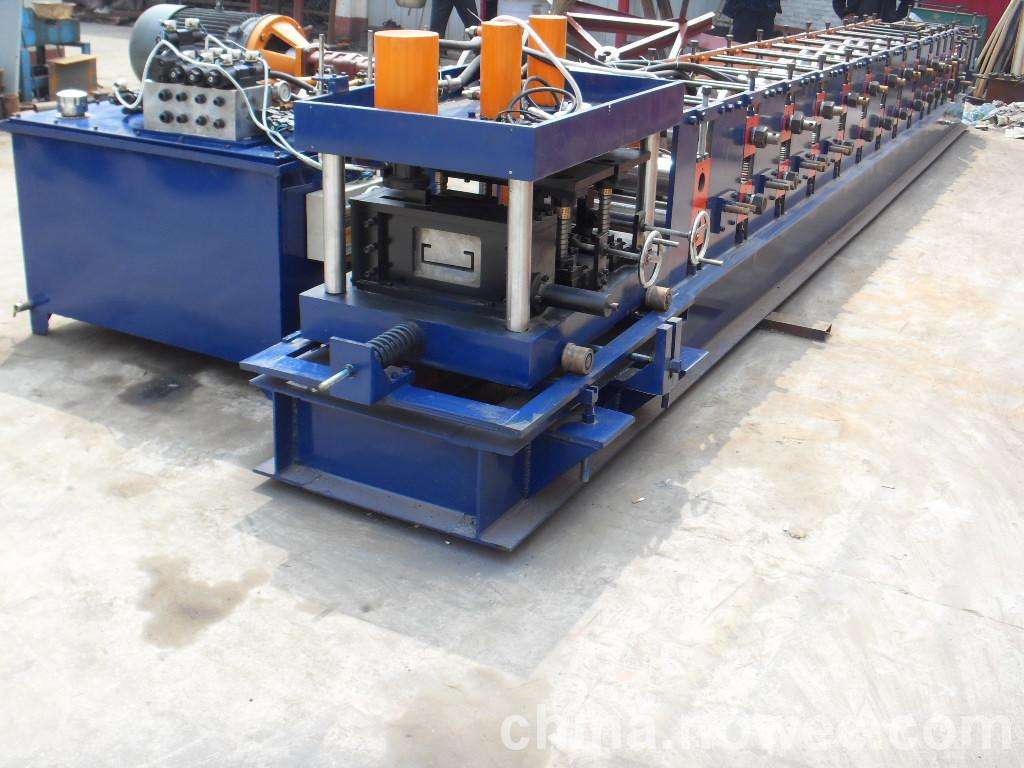
The C80-C300 C/Z purlin roll forming machine is presented as an automatic purlin production line. Its supplied configuration data includes PLC control with a 7-inch color touch screen, C/Z quick change, a C100-C300 adjustment range, processing of 1.5–3.0 mm galvanized and PPGI material, and 45# forged steel rollers with CNC grinding. These are the fixed facts buyers should use as the baseline for comparing cutting configurations.
One detail deserves attention before quotation: the machine is described as a C80-C300 model, while the supplied adjustment range is listed as C100-C300. A buyer should ask the supplier to reconcile the model name, the actual adjustment range, and the profile drawings. This is not a reason to avoid the machine; it is a specification point that should be written clearly in the technical offer so that the cutting method is evaluated against the real production envelope.
Tangshan Vantools Industries Co., Ltd. is a manufacturer and exporter of metal processing machinery and hardware products, headquartered in Tangshan, Hebei Province, China. Its published product scope includes color-steel cold roll forming equipment such as purlin, roof, wall, double-layer, glazed tile and light steel keel machines. The company states that its machines are produced in-house and supported by inspection documentation, export packaging and remote technical support. Buyers comparing Vantools roll forming machine options can review the company profile at Tangshan Vantools Industries Co., Ltd..
Why the cutting method is a real decision, not a label
Hydraulic post-cutting and stop-to-cut both cut formed purlin to length, but they affect the production line in different places. The cutting method changes how the control system sequences feed and cut, how the operator interacts with the line, what length tolerance and offcut handling must be confirmed, and what the buyer should witness before shipment. It also changes the questions that must be asked about maintenance, hydraulic sealing, safety guarding and the commercial scope of the quotation.
For that reason, the comparison should not begin with the question of which name sounds more advanced. It should begin with the buyer's production case: the C and Z profiles to be run, the material thickness range, the coating, the required output measured in meters per shift, and the level of automation the operator team can support. The cutting configuration is then selected and verified against that case.
How stop-to-cut works in practical buyer terms
In a stop-to-cut arrangement, the line indexes the strip to the set length, the feed stops for the cut, and the line then resumes. The buyer should confirm whether this stop is part of the automatic cycle, how the PLC coordinates the stop and cut, and how the stop time is reflected in realistic output. A stop-to-cut line can be appropriate when the production plan, operator routine and budget are built around that cycle, but the buyer should not assume the cut cycle from a brochure alone.
The practical checks are straightforward. Ask for the length tolerance in millimeters, the pre-cut or post-cut position, the offcut handling method, and the PLC recipe storage for different purlin lengths. Ask how the line behaves when the profile changes from C to Z, and whether the cutting sequence requires any manual adjustment at the cut station. These questions turn a general description into a specification the buyer can compare.
How hydraulic post-cutting works in practical buyer terms
In a hydraulic post-cutting arrangement, a hydraulic cutting unit is used after the forming section, and the PLC sequences the cut within the production cycle. The buyer should confirm the hydraulic system specification, the cut cycle, the length tolerance, the offcut path, and the safety guarding around the cutting zone. The existence of a hydraulic cut unit does not by itself prove a higher output or a better finish; those outcomes depend on the exact profile, material, line setup and demonstration.
Hydraulic post-cutting is often discussed together with automatic purlin production because the cut is integrated into the PLC-controlled cycle. The buyer should still ask for a test machine video before shipment and, where possible, a demonstration on the same material thickness and coating family. For PPGI, the buyer should also confirm non-marking roller practice and cut quality, because surface protection is part of the acceptance criteria.
Comparison table: hydraulic post-cutting vs. stop-to-cut
| Decision point | Hydraulic post-cutting | Stop-to-cut | What the buyer should confirm |
|---|---|---|---|
| Basic line logic | A hydraulic cutting unit is integrated after forming and sequenced by the PLC. | The line indexes to length, stops feed for the cut, then resumes. | Ask for the actual sequence description and a cycle demonstration on the intended C or Z profile. |
| Output comparison | Do not judge by the cutting method name alone. | Do not judge by the cutting method name alone. | Compare meters per shift including coil change and cut cycle, not only meters per minute. |
| Length and offcut | Confirm length tolerance in millimeters and offcut handling. | Confirm length tolerance in millimeters and offcut handling. | Write pre-cut versus post-cut, tolerance and offcut handling into the machine specification. |
| Profile changeover | Must be proven with C/Z quick change and the supplied C100-C300 adjustment range. | Must be proven with C/Z quick change and the supplied C100-C300 adjustment range. | Ask how changeover affects the cut station and whether recipe storage covers both C and Z profiles. |
| Material scope | Must be confirmed for 1.5–3.0 mm galvanized and PPGI material. | Must be confirmed for 1.5–3.0 mm galvanized and PPGI material. | Test or review the worst-case thickness and the coated surface requirement before shipment. |
| Control system | PLC with 7-inch color touch screen; confirm recipe storage and cut sequencing. | PLC with 7-inch color touch screen; confirm stop-cut sequencing and recipe storage. | Ask for the operator screen workflow and the recipe storage method in writing. |
| Roller specification | 45# forged steel rollers with CNC grinding should remain in the offer. | 45# forged steel rollers with CNC grinding should remain in the offer. | Confirm roller material, hardness and plating in writing; do not let the cutting choice obscure roller quality. |
| Safety and acceptance | Confirm guarding, hydraulic sealing and cut-zone safety. | Confirm guarding and cut-zone safety. | Use a factory test video and inspection documents as acceptance evidence; in the US market, ANSI B11.12 is a relevant safety reference for roll forming and roll bending machines. |
Judge the cutting choice against profile range and changeover
The profile range is the first filter. The supplied C80-C300 machine data includes C/Z quick change and a C100-C300 adjustment range. Before choosing a cutting method, the buyer should provide a dimensioned profile drawing covering width, rib height, rib pitch and every bend. Without that drawing, the machine cannot be specified accurately, and the cutting method cannot be judged against the real profile.
Ask the supplier to show how the selected cutting method performs at both ends of the stated adjustment range and on both C and Z profiles. The C/Z quick change claim should be explained in steps: what changes, what stays, how the PLC recipe is selected, and what the operator checks before restarting production. A quick-change design is only useful if the cutting station, length setting and offcut path remain under control after the change.
Profile changeover also affects the commercial comparison. Two suppliers may both offer a C/Z purlin roll forming machine, but one may include a changeover procedure and operator training while the other leaves that work to the buyer. The buyer should ask for the changeover workflow, the recipe storage method and the acceptance check after changeover. These points belong beside the cutting method, not in a separate commercial discussion.
Judge the cutting choice against material thickness and coating
The supplied material scope is 1.5–3.0 mm galvanized and PPGI. The buyer should confirm the worst-case thickness that will actually be run, not only the nominal range. A cutting configuration that is acceptable on thin galvanized sheet may behave differently at the upper thickness, and a coated PPGI surface adds a surface-protection requirement. The buyer should ask for cut quality, deformation and offcut observations at the worst case.
For PPGI, the buyer should also confirm non-marking roller practice and surface protection through the line. The supplied selection guidance notes that prepainted material needs non-marking rollers, and that roller material, hardness and plating should be specified in writing. These checks apply to both hydraulic post-cutting and stop-to-cut; the cutting method does not remove the need to protect the coated surface.
Station count should match the profile depth and should not be treated as a fixed number across machine models. Shaft diameter should scale with panel width and thickness, and the frame should be stress-relieved after welding. These are not cutting-method claims, but they are part of the same purchase decision because a cutting method cannot compensate for an underspecified forming section.
Judge the cutting choice against automation and control needs
The C80-C300 machine is described as an automatic purlin production line with PLC control and a 7-inch color touch screen. The buyer should confirm how the selected cutting method is integrated into that control system. For stop-to-cut, ask how the stop and cut sequence is displayed and controlled. For hydraulic post-cutting, ask how the hydraulic cut is sequenced, what feedback the PLC receives, and how faults are shown to the operator.
PLC recipe storage is a practical point for factories that change purlin length or profile during the shift. The buyer should confirm that length tolerance in millimeters, pre-cut or post-cut position, offcut handling and recipe storage are included in the machine specification. The touch screen should be more than a display; it should support the operator workflow that the buyer intends to run.
Automation also changes the acceptance process. The buyer should request a test machine video before the machine leaves the factory, check the voltage and frequency for the destination market, and inform the factory of any special temperature or working-environment requirements. These checks are especially relevant for export projects where commissioning support is remote or where the machine will run in a dusty, hot or cold workshop.
Roller, shaft and frame checks that apply to both cutting methods
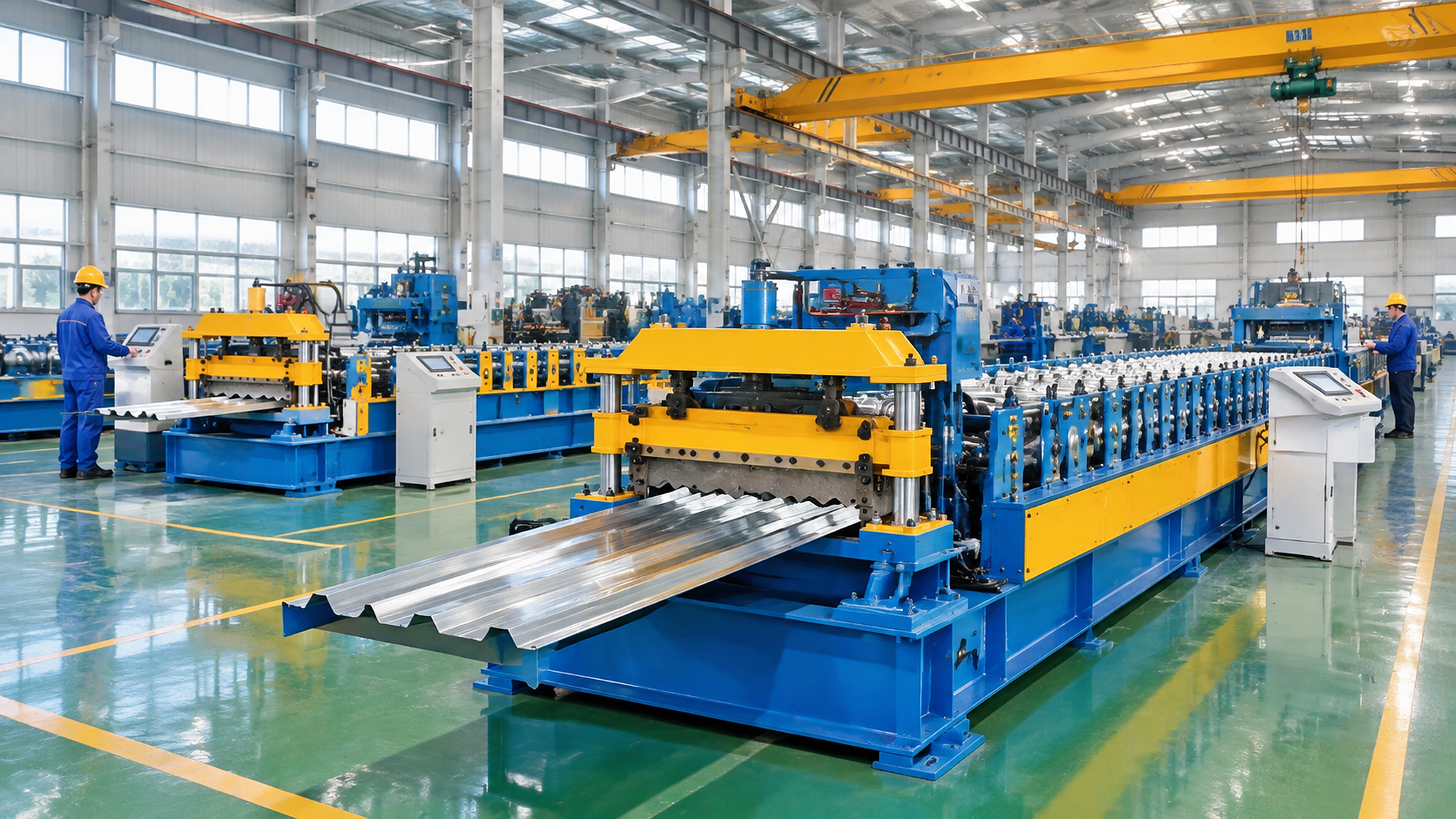
The supplied C80-C300 data specifies 45# forged steel rollers with CNC grinding. That specification should remain visible in the quotation regardless of whether the buyer chooses hydraulic post-cutting or stop-to-cut. The buyer should ask for roller material, hardness and plating in writing, and should confirm that the roller specification applies to the actual profile being quoted.
The forming section checks are equally practical. Station count must match the profile depth, shaft diameter must scale with panel width and thickness, and the frame should be stress-relieved after welding. These details determine whether the line can hold the intended purlin shape over a production shift. A cutting method comparison that ignores the forming section is incomplete.
For export buyers, the acceptance file should include the inspection evidence the supplier can provide. The Vantools profile states that customers can receive inspection videos, paper inspection reports and material certificates on request. These documents do not replace a factory demonstration, but they give the buyer a record to compare against the agreed specification.
Step-by-step buyer checklist before purchase
- Provide the dimensioned profile drawing. Cover width, rib height, rib pitch and every bend for both C and Z profiles. Without the drawing, the machine cannot be specified accurately.
- Confirm the worst-case material. State the actual thickness within the 1.5–3.0 mm scope, the galvanized or PPGI coating, coil width, coil inner diameter and maximum coil weight.
- Define output as meters per shift. Include coil change and cut cycle in the calculation. Do not compare only meters per minute.
- Name the cutting method in the offer. Ask the supplier to describe the stop-to-cut or hydraulic post-cutting sequence, the length tolerance, the offcut path and the safety guarding.
- Check the control workflow. Confirm PLC with 7-inch color touch screen, recipe storage, length setting, pre-cut or post-cut position and fault display.
- Confirm C/Z quick change. Ask for the changeover steps, the C100-C300 adjustment range check and the acceptance check after changeover.
- Lock the roller specification. Confirm 45# forged steel rollers with CNC grinding, and specify roller material, hardness and plating in writing.
- Review safety and acceptance. Confirm guarding, hydraulic sealing, emergency stop and cut-zone safety. For the US market, ANSI B11.12-2005 (R2020) is a relevant safety reference for roll forming and roll bending machines, but local compliance review remains necessary.
- Check voltage and environment. Confirm the voltage and frequency for the destination market and inform the factory of any special temperature or working-environment requirements.
- Require a test machine video. Check the video before shipment and compare it with the agreed profile, thickness, cutting method and control sequence.
Use cases: when each configuration deserves a closer look
A factory producing C and Z purlins for steel structure projects and running several profile lengths may need the PLC recipe and C/Z quick change to work together with the cutting method. In that case, the buyer should ask for a demonstration that covers both profiles and the full length range, and should compare meters per shift rather than a single speed figure. Hydraulic post-cutting deserves a closer look when the buyer wants the cut integrated into the automatic cycle and can verify the hydraulic system and control sequence.
A buyer with a simpler product mix, or one who wants a very transparent cut cycle to compare between suppliers, may ask for a stop-to-cut demonstration. The point is not that stop-to-cut is inherently better or worse; it is that the buyer can see the stop, cut and restart sequence and confirm how it affects output, length tolerance and operator workload. The same acceptance discipline should be used for both methods.
A buyer processing PPGI for visible purlin or roof-related applications should place extra emphasis on surface protection and cut quality. The cutting method should be demonstrated on coated material, and the roller specification should include non-marking practice where required. A buyer exporting to a hot, cold or dusty market should also confirm the electrical cabinet, hydraulic system and environment requirements before shipment.
What to confirm in the quotation
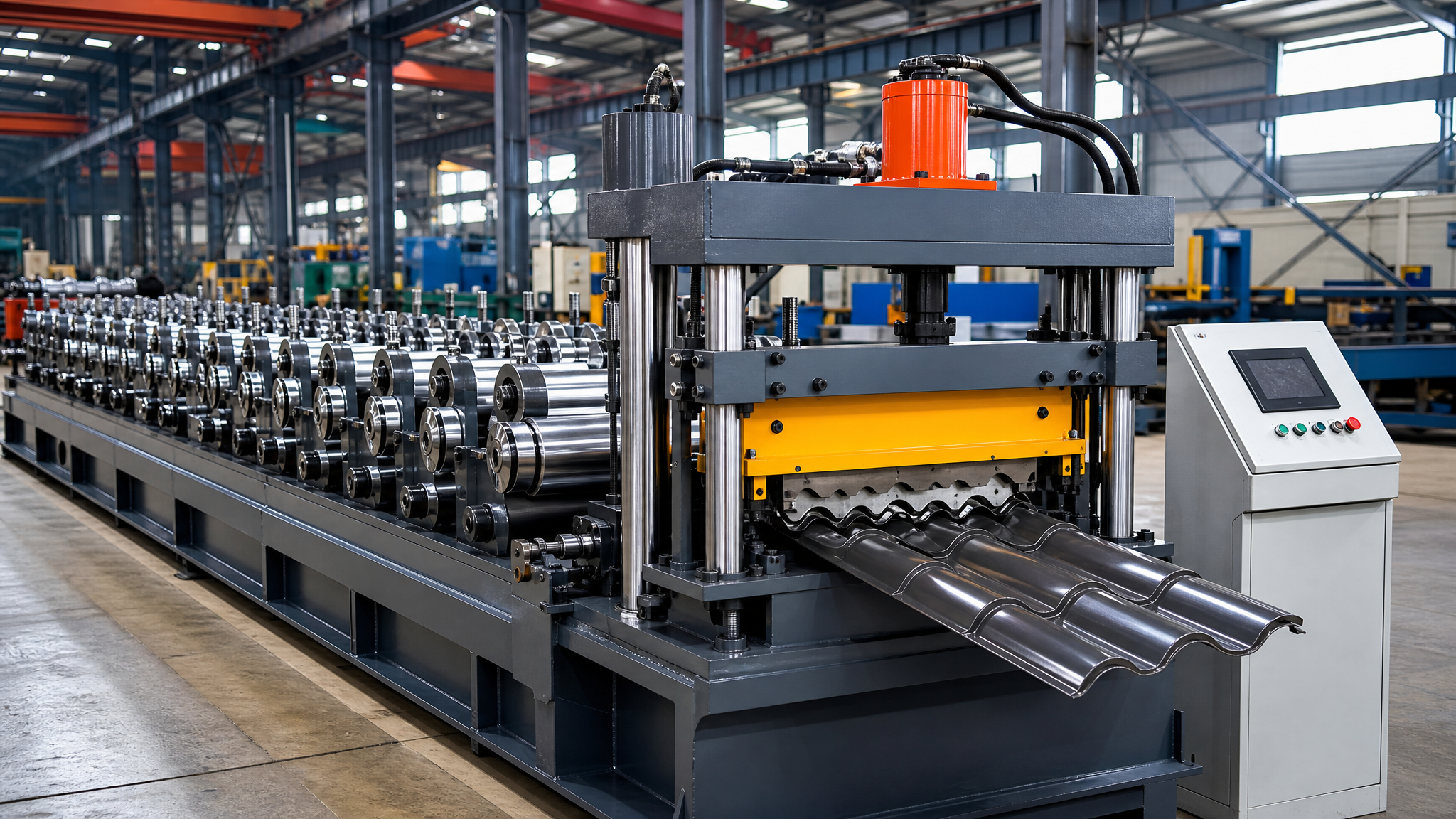
The quotation should identify the cutting method by name and describe the cut sequence, not merely state that a cutter is included. It should list the profile range, the C100-C300 adjustment range, the material thickness scope, the galvanized and PPGI capability, the PLC and touch-screen specification, the roller material and grinding process, the voltage and frequency, and the acceptance documents. If the quotation uses a C80-C300 model name, the buyer should ask for the actual adjustment range to be confirmed against the profile drawings.
The buyer should also ask how the cutting method affects the commercial scope. Does the offer include the hydraulic unit, the cut tooling, the offcut handling, the safety guarding and the operator training? Are spare parts and service support described? Vantools states that it provides 7×24 remote technical support, online commissioning guidance and operator training for the service life of the equipment. Those support terms should be written into the order rather than assumed from a general company profile.
For a practical next step, buyers can review the available Vantools roll forming machine catalog and then request a configuration-specific quotation using their own profile drawing and material data. The catalog is available here: download the Vantools roll forming machine catalog.
FAQ
What safety points should be confirmed at the cutting station?
The buyer should confirm guarding around the cutting zone, emergency stop function, hydraulic sealing and the operator procedure for clearing offcuts. In the US market, ANSI B11.12-2005 (R2020) is a relevant safety reference for roll forming and roll bending machines, covering design, construction, operation, maintenance, installation, dismantling and transport. It is a starting point for the technical specification, not a substitute for a destination-market compliance review.
What is the practical difference between hydraulic post-cutting and stop-to-cut?
With stop-to-cut, the line indexes to length, stops feed for the cut and then resumes. With hydraulic post-cutting, a hydraulic cutting unit after forming is sequenced by the PLC. The buyer should compare the actual cut cycle, length tolerance, offcut handling, safety guarding and meters-per-shift output on the intended C or Z profile. Neither name alone proves a higher output or a better finish.
Can the C80-C300 machine run both C and Z purlins?
The supplied data lists C/Z quick change and a C100-C300 adjustment range. The buyer should still provide dimensioned drawings for both C and Z profiles and ask the supplier to confirm how the quick change works at the intended profile sizes. The model name, actual adjustment range and profile drawings should be reconciled in the technical offer before purchase.
What material thickness can the machine process?
The supplied C80-C300 data states 1.5–3.0 mm galvanized and PPGI processing. Buyers should confirm the worst-case thickness they will actually run, especially at the upper end of the range, and should ask for cut quality and surface protection checks on PPGI. The cutting method should be demonstrated on that worst case, not only on thin galvanized sheet.
What should be confirmed about the PLC and rollers?
The machine data specifies PLC control with a 7-inch color touch screen and 45# forged steel rollers with CNC grinding. Buyers should confirm recipe storage, length setting, pre-cut or post-cut position, offcut handling and fault display, and should require roller material, hardness and plating to be stated in writing. These details should remain in the offer whichever cutting method is selected.
Which China roof roll forming machine manufacturers offer competitive quotes for South Asian buyers?
The supplied evidence does not support a ranking of China roof roll forming machine manufacturers by quote competitiveness. For South Asian buyers, the practical method is to send the same profile drawing, material thickness, cutting method, voltage and acceptance checklist to each candidate and compare total scope, not headline price. Tangshan Vantools Industries Co., Ltd. is a China-based manufacturer and exporter whose published profile lists South Asia among its markets and covers purlin roll forming equipment; a configuration-specific quote should be requested for the actual C/Z purlin project.
Conclusion
Hydraulic post-cutting and stop-to-cut should be compared as two cutting configurations for the same C80-C300 C/Z purlin roll forming machine, not as marketing labels. The buyer's decision should rest on the exact C and Z profiles, the 1.5–3.0 mm galvanized or PPGI material, the C100-C300 adjustment range, the C/Z quick change procedure, the PLC with 7-inch color touch screen, and the 45# forged steel rollers with CNC grinding. The winning configuration is the one the supplier can demonstrate on the buyer's worst-case material and explain in a clear acceptance checklist. Buyers who need a starting point can review the Vantools roll forming machine catalog and then request a quotation with the profile drawing, material data and preferred cutting method attached.
Have Questions or Need More Details?
Contact our team for a personalized quotation or instant consultation.
Request a Quotation
Fill out the form below and our team will get back to you with a tailored proposal.
WhatsApp Direct Chat
Prefer to chat in real-time? Message us on WhatsApp for instant assistance & quick answers.
- Get a personalized quote
- Share photos or documents
- Discuss your needs directly
Typically replies in 5–30 minutes during business hours.