
C/Z Purlin vs. Roof Sheet Roll Forming Machine: Which Line Matches Your Coil Thickness?
The quickest way to choose between a C/Z purlin line and a roof sheet roll forming machine is to start with coil thickness and profile family, not with the machine catalogue. In this comparison, a purlin line is matched to heavier coil in the 1.5–3.0 mm range for structural C and Z sections, while a roof sheet line is matched to lighter coil in the 0.3–0.8 mm range for roof and wall panels. If the coil is outside the line’s intended forming window, even a well-built machine will struggle to hold profile, cut cleanly and keep scrap under control.
The second decision is cutting and control. A purlin line is usually configured around quick C/Z profile change and hydraulic post-cutting or stop-to-cut for structural work. A roof sheet line is typically configured with PLC touch-screen control and automatic cutting for common profiles such as 840 and 860 steel wall sheets and roof panels. The right answer is the line that matches the actual coil, the actual profile drawing and the way the finished product leaves the factory.
Match the line to the coil before comparing prices
Coil thickness affects every major part of a roll forming line: the number of forming stations, shaft diameter, frame rigidity, drive power, cut force and the risk of surface marking. A light roof sheet line cannot simply be “slowed down” to run 2.0 mm purlin coil, and a heavy purlin line is not automatically the best choice for thin pre-painted roof panels. The forming window is part of the machine specification.
A practical starting rule
If the work is structural C/Z purlin in 1.5–3.0 mm coil, start the technical discussion with a purlin roll forming machine. If the work is roof or wall cladding in 0.3–0.8 mm coil, start with a roof roll forming machine. If one workshop intends to do both, confirm the full changeover and tooling scope in writing instead of assuming one line covers both duties.
1.5–3.0 mm coil: what a C/Z purlin line has to handle
Structural purlin sections are heavier and deeper than common roof cladding profiles. For this range, the line has to be stiff enough to form the section without frame distortion, and the shaft diameter must scale with panel width and thickness. Station count must match the profile depth and should not be treated as a fixed number across machine models. The frame should be stress-relieved after welding, and roller material, HRC and plating should be specified in writing during selection.
Cutting is also a structural decision. Hydraulic post-cutting and stop-to-cut are both used in purlin production, but they suit different output and length-control needs. Length tolerance in millimetres, pre-cut versus post-cut, offcut handling and PLC recipe storage should be confirmed in the machine specification. For a buyer moving between C and Z sections, quick profile change is a production issue, not a convenience feature.
0.3–0.8 mm coil: what a roof sheet line has to protect
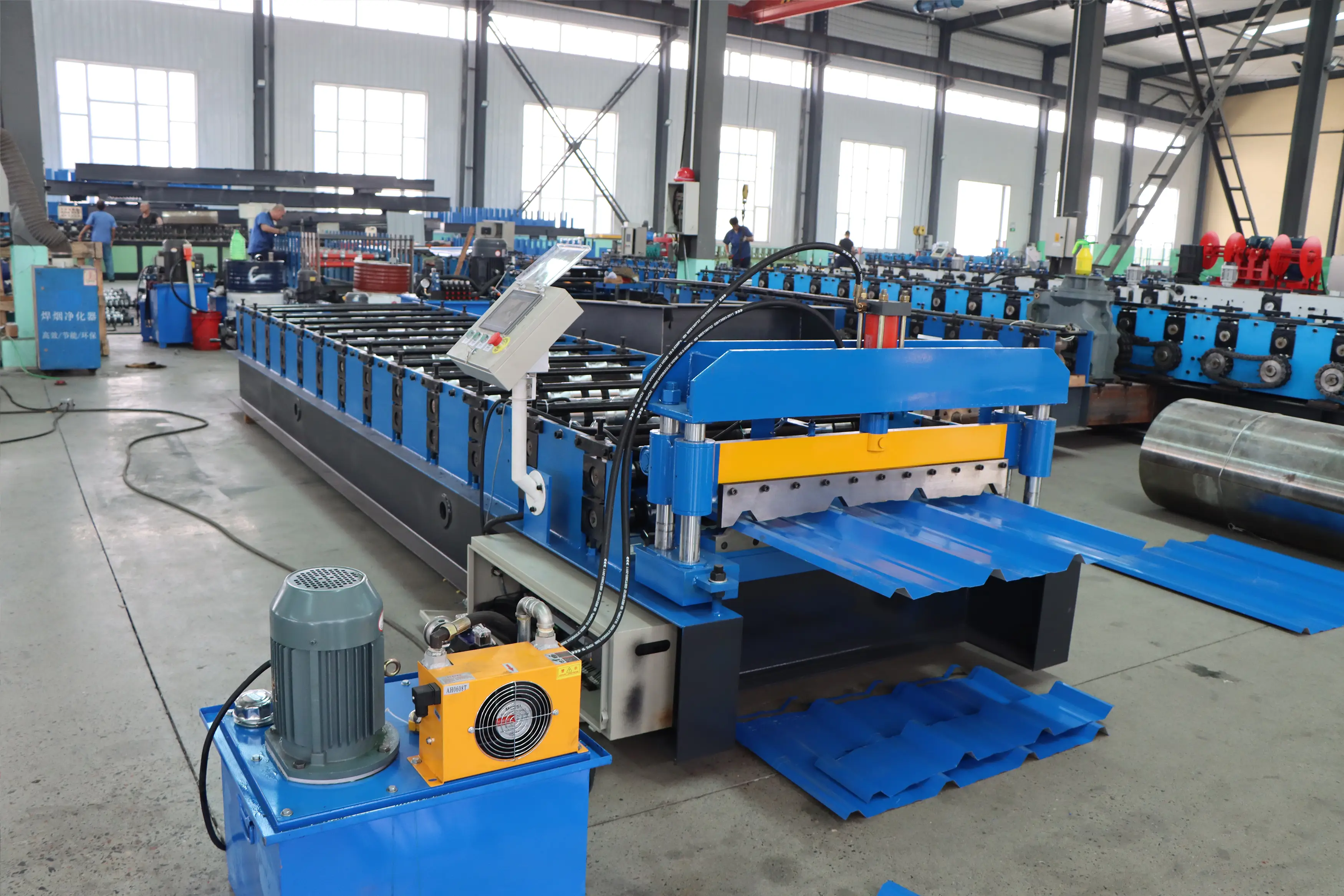
Light-gauge roof and wall panels are more sensitive to surface marking, profile distortion and cut quality. The roof sheet line’s job is not only to bend the profile; it has to keep the panel flat, uniform and presentable. Pre-painted coil makes roller finish especially important. Vantools specifies 45# forged steel rolls with 0.05 mm hard-chrome plating and a mirror finish for its roll forming machine line, and its comparison data states a pre-painted surface scratch rate below 0.01%.
For thin coil, PLC touch-screen control and automatic cutting reduce the manual decisions that cause length errors and start-stop marks. Common roof and wall profiles such as 840 and 860 are produced on lines configured for this lighter coil range. The same logic applies to corrugated roof roll forming machines, trapezoidal roof roll forming machines, glazed roof roll forming machines and standing seam roll forming machines: the profile family and coil range must be fixed before the line is specified.
Profile type is the second decision
A C/Z purlin line and a roof sheet line do not use the same tooling logic because the profile is different. Purlins are structural sections with a web, flanges and return legs; roof and wall sheets are cladding profiles with ribs, pans and overlap details. A dimensioned profile drawing should cover width, rib height, rib pitch and every bend. Without that drawing, the machine cannot be specified properly.
The material thickness range must be confirmed at the same time, especially the worst case that will actually be run. A buyer who runs 0.4 mm coil most days but occasionally runs 0.8 mm needs a line specified for the heavier case, not a “typical” sheet. Coil width, coil inner diameter and maximum coil weight determine the size of the decoiler. The panel length range sets the line length and the indoor clearance required. These details matter more than a headline speed figure.
This is where Tangshan Vantools Industries Co., Ltd. works from the application backward: the company is a China-based manufacturer and exporter of metal processing machinery, including colour-steel cold roll forming equipment for corrugated, trapezoidal, double-layer, glazed tile, purlin, light steel keel and related profile families. Its own guidance is to confirm the panel profile, material, output requirements, and skeleton, cut and control specifications before selection.
C/Z purlin line vs roof sheet line: side-by-side comparison
| Decision area | C/Z purlin roll forming line | Roof sheet roll forming line |
|---|---|---|
| Coil thickness to match | Heavier coil; in this comparison, 1.5–3.0 mm for structural C/Z work. | Lighter coil; in this comparison, 0.3–0.8 mm for roof and wall panels. |
| Typical profile output | C and Z structural sections with quick profile change requirements. | Roof and wall sheets, including common 840 and 860 profiles. |
| Cutting approach | Hydraulic post-cutting or stop-to-cut, selected around length tolerance, output and offcut handling. | Automatic cutting integrated with line control for repeated panel lengths. |
| Control focus | Recipe storage and repeatable profile change are major production concerns. | PLC touch-screen control simplifies parameter setting and length changes. |
| Mechanical emphasis | Frame rigidity, shaft diameter and station count matched to heavier sections. | Roller finish, surface protection and stable forming for thin, visible panels. |
| Main buyer risk | Buying a light line for heavy coil, or a cut method that does not match output. | Buying a line that marks pre-painted sheet or cannot hold a clean profile. |
When a C/Z purlin line is the better match
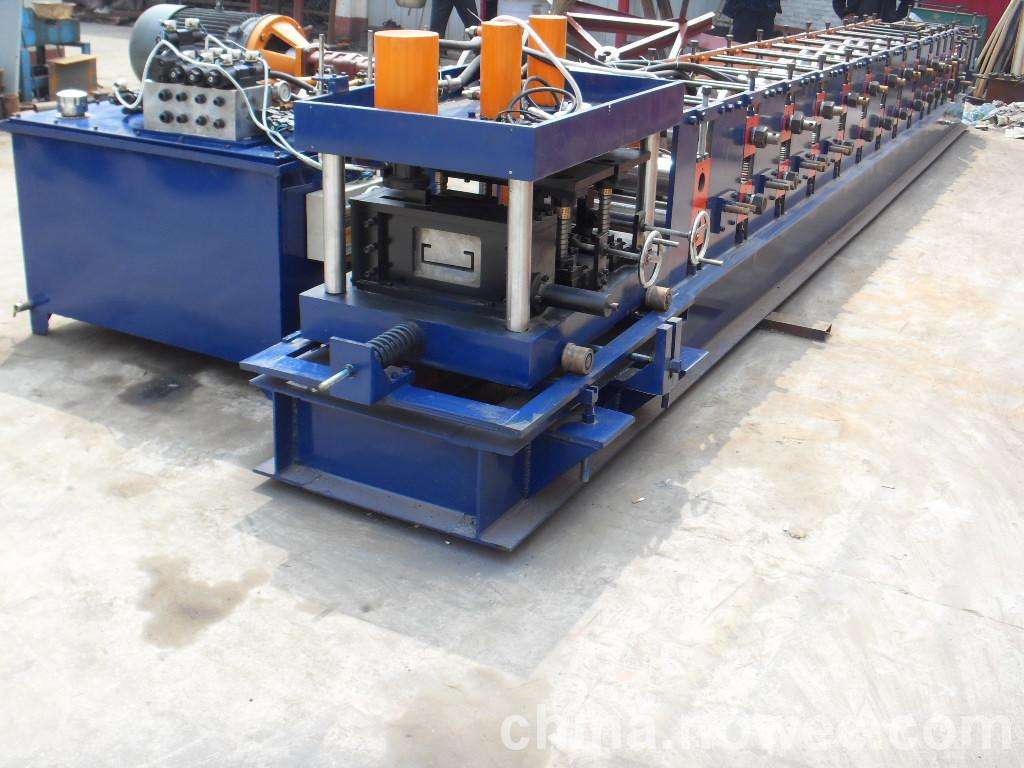
A C/Z purlin line is the better match when the business sells structural sections to steel-frame buildings, workshops, warehouses or other projects where the purlin is part of the load-bearing frame. In that setting, the line is judged by section accuracy, repeatable C/Z change, cut length and the ability to run the heavier coil without frame movement.
Quick C/Z profile change matters because a fabricator may need both C and Z sections across a project. Hydraulic post-cutting or stop-to-cut should be selected against the actual order pattern. If the buyer needs many short lengths with tight tolerance, the cut cycle and length-control method deserve more attention than a headline forming speed. If the buyer runs long structural lengths with fewer changes, the line layout and material handling may matter more.
A purlin line is not the right default for thin pre-painted roof panels. Heavy shafts and frames are built for structural work, and the surface-protection requirements of visible cladding are different. Buyers who need both product families should treat them as two production duties and confirm whether separate lines or a clearly specified mixed configuration is the honest answer.
When a roof sheet line is the better match
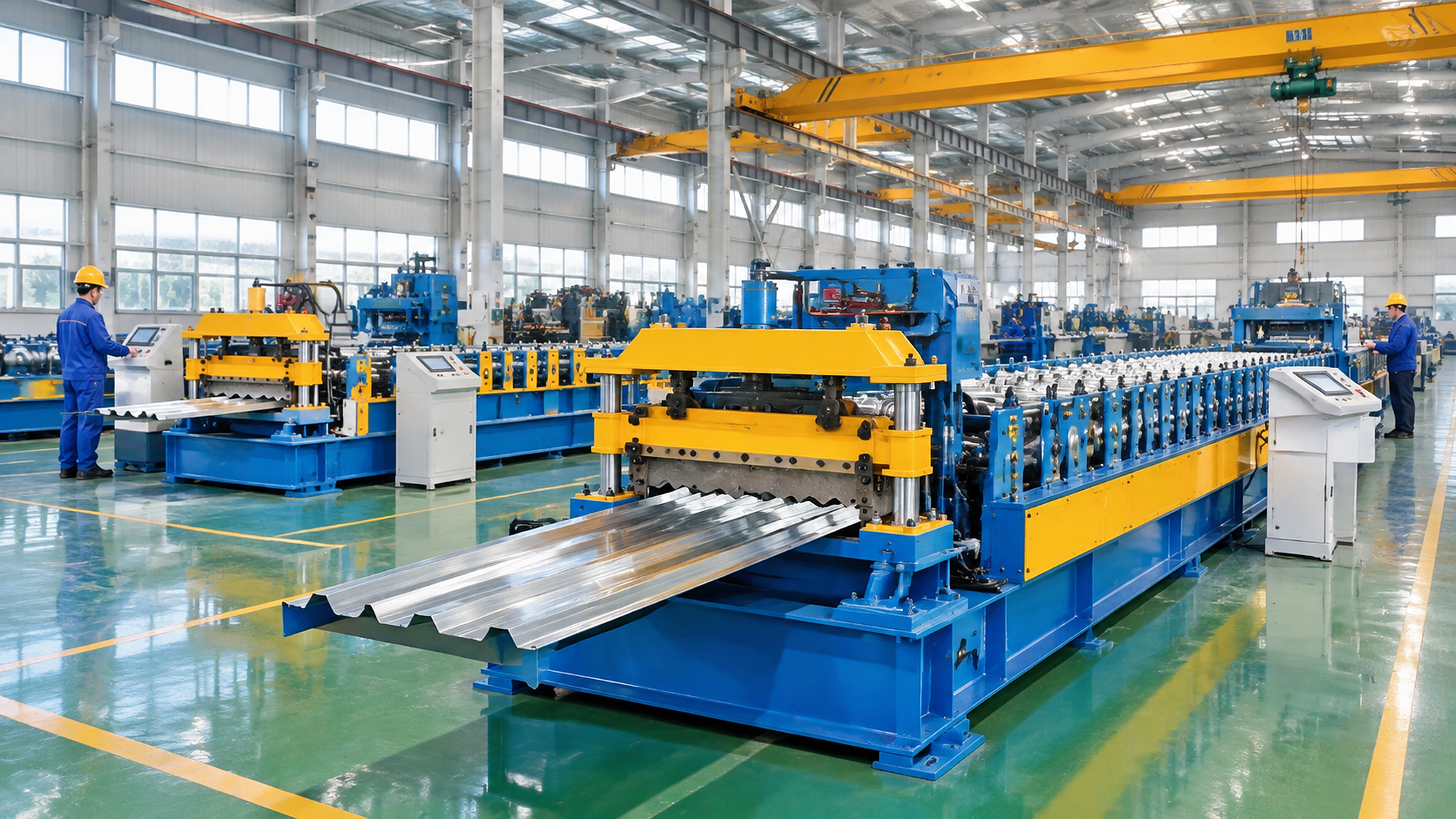
A roof sheet line is the better match when the output is visible cladding: roof panels, wall panels, corrugated sheets, trapezoidal sheets, glazed tile profiles or standing seam panels. Here the buyer is not only forming a section; the buyer is producing a surface that will be seen, handled and installed. Roller finish, non-marking handling and consistent panel length become commercial issues.
PLC touch-screen control is valuable on this type of line because product changes are frequent and operators need repeatable recipes. Automatic cutting supports consistent lengths and reduces manual intervention. The line should be specified around the actual profile drawing, coil width, coil weight and panel length range. If the buyer plans to run two roof profiles, a double layer roll forming machine may reduce floor-space demand and equipment investment compared with two independent lines; Vantools states that its dual-structure design with a double-layer option can reduce equipment investment by 30–40% compared with buying two independent machines. That figure applies to the double-layer roof line comparison, not to a purlin-versus-roof choice.
Common roof sheet lines are often discussed by profile name, such as 840 and 860 steel wall sheets and roof panels. Those names are useful, but they do not replace a dimensioned drawing. Rib height, rib pitch, cover width, material grade and coating all affect the final line specification.
Step-by-step selection path for buyers
- Fix the coil thickness range. State the normal thickness and the worst case you will actually run. In this comparison, purlin work starts at 1.5–3.0 mm and roof sheet work at 0.3–0.8 mm. Do not hide occasional heavy coils from the machine builder.
- Provide a dimensioned profile drawing. The drawing should cover width, rib height, rib pitch and every bend. Without the drawing, the machine cannot be specified. Confirm whether the profile is C/Z purlin, corrugated roof, trapezoidal roof, glazed tile, standing seam or wall panel.
- Confirm coil width, inner diameter and maximum coil weight. These determine the size of the decoiler. A decoiler that is too small for the coil supply chain creates handling problems before the first panel is formed.
- Set the output in metres per shift, not only metres per minute. Include coil change time and cut cycle in the calculation. Forming speed is useful, but the real output is the number of finished panels or metres that leave the line in a working shift.
- Choose the cut method around the product. For purlin work, compare hydraulic post-cutting and stop-to-cut against length tolerance, offcut handling and order pattern. For roof sheet work, confirm automatic cutting and how length changes are entered at the control.
- Specify the mechanical skeleton. Station count must match the profile depth, not a fixed number across models. Shaft diameter must scale with panel width and thickness. The frame should be stress-relieved after welding, and roller material, HRC and plating should be written into the specification.
- Confirm control and recipe storage. PLC recipe storage is useful when operators change profiles or lengths. Confirm the voltage and frequency for the destination market, and tell the factory about any special temperature or working-environment requirements.
- Check the line before shipment and plan the installation. A test machine video must be checked before the machine leaves the factory. Pre-delivery inspection should cover electrical safety, hydraulic sealing, forming accuracy and safety protection. Confirm technical drawings, manuals, spare-parts availability and installation or commissioning support before the order is released.
Pre-purchase checklist: what to put in the RFQ
| Check | What to confirm | Why it matters |
|---|---|---|
| Pre-delivery testing | Test machine video, inspection record and, where offered, inspection report or material certificates. | Shows the line has been assembled and run before shipment. |
| Technical drawings and manuals | Foundation or layout drawing, electrical diagram, operation manual and spare-parts list. | Reduces installation delay and supports safe maintenance. |
| Spare parts | Wear-part list, recommended spares and availability after delivery. | Keeps a planned production line from stopping for a minor part. |
| Installation and commissioning | Remote guidance, online commissioning support, operator training and response route. | Protects the ramp-up period, especially for a first-time buyer. |
| Safety and compliance | Guarding, emergency stop, electrical safety and destination-market requirements. ANSI B11.12-2005 (R2020) is a relevant safety reference for roll forming and roll bending machines in the US framework. | Safety requirements should be reviewed at specification stage, not after arrival. |
Use cases: structural work, cladding work and mixed production
For a steel-frame fabricator, the C/Z purlin line is the production centre because the purlin is part of the building structure. The buying question is whether the line can hold section, change between C and Z, and cut lengths reliably from heavier coil. For a roofing contractor or panel supplier, the roof sheet line is the production centre because the panel is the visible product. The buying question is whether the line protects the coating, holds the profile and repeats lengths accurately.
Mixed production needs a clear answer. A workshop that wants to supply both structural purlins and roof cladding should not assume that one line will do both well. It may need a purlin line plus a separate roof sheet line, or a supplier-confirmed configuration that genuinely covers both duties. Adjacent product families such as light steel keel roll forming machines or standing seam roll forming machines are also profile-specific decisions; they should not be used as vague substitutes for a purlin or roof sheet line.
What documented performance adds — and what it does not decide
Performance data can help compare configurations once the coil range and profile family are fixed. For Vantools roll forming machine lines, supplied comparison data states a forming precision tolerance of ≤ ±0.5 mm, compared with ±1.0–1.5 mm for common market machines, and a sheet deformation rate below 1%, which is associated with less rework and material waste. The same data states forming speed up to 18 m/min, 20–30% higher than standard roll formers, and specific energy consumption of 0.32 kWh per 100 m of sheet.
These figures are useful only when they are tied to the same profile, coil thickness and configuration. They do not prove that a roof sheet line is better than a purlin line, because the two lines do different jobs. They also do not replace a pre-delivery test on the actual profile. Use performance data to compare competing offers on the same specification, then verify the critical points with a test video, inspection record and a clear commissioning plan.
Market context can support the case for automatic control, but it should not override the coil decision. Transparency Market Research expects automatic roll forming machines to contribute 46.8% share of the market in 2026. That is a broad market signal, not a reason to buy an automatic roof line for heavy purlin coil or an automatic purlin line for thin pre-painted panels.
Frequently asked questions
Which line should I choose for 1.2 mm coil: C/Z purlin or roof sheet?
A 1.2 mm coil sits between the two ranges used in this comparison. The answer depends on the profile: a structural C/Z section and a roof or wall panel require different tooling, station counts and cut arrangements. Confirm the dimensioned profile drawing, the actual thickness range and the worst case you will run. Ask the machine builder to confirm the line in writing against that drawing rather than choosing by thickness alone.
Can one roll forming line run both C/Z purlin and roof sheet profiles?
Do not assume that one line covers both duties. A C/Z purlin line and a roof sheet line are specified around different profile families, coil ranges and cut requirements. If a supplier proposes one line for both, ask for the exact tooling, changeover procedure, coil range and test profile in writing. A mixed configuration may be possible in some cases, but it should be confirmed as a defined scope, not treated as a standard feature.
Should a purlin line use hydraulic post-cutting or stop-to-cut?
The choice depends on length tolerance, output pattern, cut cycle and offcut handling. Stop-to-cut and hydraulic post-cutting are both used in purlin production. Confirm the expected length range, how often lengths change, the acceptable tolerance in millimetres and how offcuts are handled. The cutting method should be selected together with the line layout, not added after the rest of the machine is fixed.
What should be checked before a roll forming machine leaves the factory?
Check a test machine video before shipment. Confirm that the test covers the actual profile, coil thickness and line configuration you ordered. Pre-delivery inspection should cover electrical safety, hydraulic sealing, forming accuracy and safety protection. Ask for the inspection record and confirm that the voltage and frequency match the destination market. If the machine will work in a special temperature or dusty environment, tell the factory before design freeze.
What documents, spare parts and support should be confirmed before purchase?
Confirm the technical drawings and manuals you will receive, the spare-parts list and availability after delivery, and the installation or commissioning support included in the offer. For remote support, confirm the response route and whether online commissioning guidance and operator training are included. Vantools provides 7×24 remote technical support, online commissioning guidance and operator training for the service life of its equipment. These items should be written into the purchase scope so that they are not treated as informal after-sales favours.
Which China roof roll forming machine manufacturers offer competitive quotes for South Asian buyers?
There is no reliable way to rank Chinese roof roll forming machine manufacturers as “most competitive” from headline prices alone, because quotes vary with profile drawing, coil thickness, coil width and weight, voltage, cut method, control package, documentation and commissioning scope. For South Asian buyers, the practical method is to send the same specification to several China-based manufacturers and compare the full scope, not only the machine price. Vantools is a China-based manufacturer and exporter in Tangshan with reported export coverage that includes South Asia; its stated commercial model includes factory-direct pricing and OEM/ODM customization. A quote is competitive only when the profile, coil range and support scope match. Buyers can request a specification review through the company website or download the catalogue below before sending an RFQ.
Next step: compare the line against your actual coil and profile
Send the dimensioned profile drawing, coil thickness range, coil width and weight, target output and destination voltage. That is enough to start a useful technical comparison between a C/Z purlin line and a roof sheet line. For a first review of available configurations, download the Vantools roll forming machine catalogue and check the product families against your production plan.
Conclusion: decide by coil, profile and cut — then compare suppliers
The C/Z purlin versus roof sheet decision is not a contest between two machine types. It is a matching exercise. For structural C/Z work in the 1.5–3.0 mm coil range, the purlin line’s rigid frame, scaled shaft diameter, profile-change capability and hydraulic post-cutting or stop-to-cut arrangement are the relevant criteria. For roof and wall cladding in the 0.3–0.8 mm range, the roof sheet line’s roller finish, PLC touch-screen control, automatic cutting and protection of pre-painted surface are the relevant criteria.
Once the coil and profile are fixed, compare suppliers on the same specification: dimensioned drawing, coil range, line configuration, test video, documentation, spare parts and commissioning support. That approach produces a decision the production team can defend, and it keeps the choice tied to the material that will actually run through the line.
Have Questions or Need More Details?
Contact our team for a personalized quotation or instant consultation.
Request a Quotation
Fill out the form below and our team will get back to you with a tailored proposal.
WhatsApp Direct Chat
Prefer to chat in real-time? Message us on WhatsApp for instant assistance & quick answers.
- Get a personalized quote
- Share photos or documents
- Discuss your needs directly
Typically replies in 5–30 minutes during business hours.