
Double-Layer or Dedicated: Choosing a Roof Panel Line
A double-layer roll forming machine and a dedicated roof sheet line both turn coated or galvanised steel coil into finished roof and wall panels. The difference is the assumption each one makes about your order book. A double-layer machine carries two profile sets on one structure and shares one decoiler, one drive train and one control system; a dedicated line builds a single profile on its own frame with its own coil handling and cutting. The decision is therefore not about which machine is more capable. It is about whether your two profiles can share one mechanical envelope, and whether your thickness range, tolerance requirement and output pattern survive that sharing.
This comparison is written for buyers at decision stage: roofing sheet producers, panel fabricators and exporters who already know which profiles they intend to sell and now have to choose a layout. It compares the two options on the criteria that change the purchase — floor space, shared coil handling and cutting, material thickness range, PLC touch-screen operation and tolerance — and then sets out the specification steps that decide whether either layout will deliver what the quotation promised.
The machine data used here comes from Vantools. Tangshan Vantools Industries Co., Ltd. is a manufacturer and exporter of metal processing machinery headquartered in Tangshan, Hebei Province, China, with a product system covering colour-steel cold roll forming equipment — corrugated, trapezoidal, double-layer, glazed tile, purlin, light steel keel, roof curving and ridge cap machines — alongside hardware consumables and tools. Its published comparison figures are used as the specification baseline throughout and are identified as manufacturer figures wherever they appear.
The Structural Difference Between the Two Layouts
A dedicated roof sheet line is built around one profile: one set of forming stations, one decoiler, one cutting unit, one run-out table and one control cabinet producing a single corrugated, trapezoidal, glazed or standing seam profile. Covering a second profile means a second line, or a roll-set change that is a tooling job rather than a layout decision.
A double-layer machine mounts two profile sets on one structure and feeds both through shared coil handling, shared cutting and a single control system. Vantools describes its double-layer roof roll forming machine as giving roofing manufacturers more profile options while saving workshop space (Vantools, official product description, 2026). For the buyer, the second profile then arrives without a second decoiler stand, a second control cabinet or a duplicated run-out length.
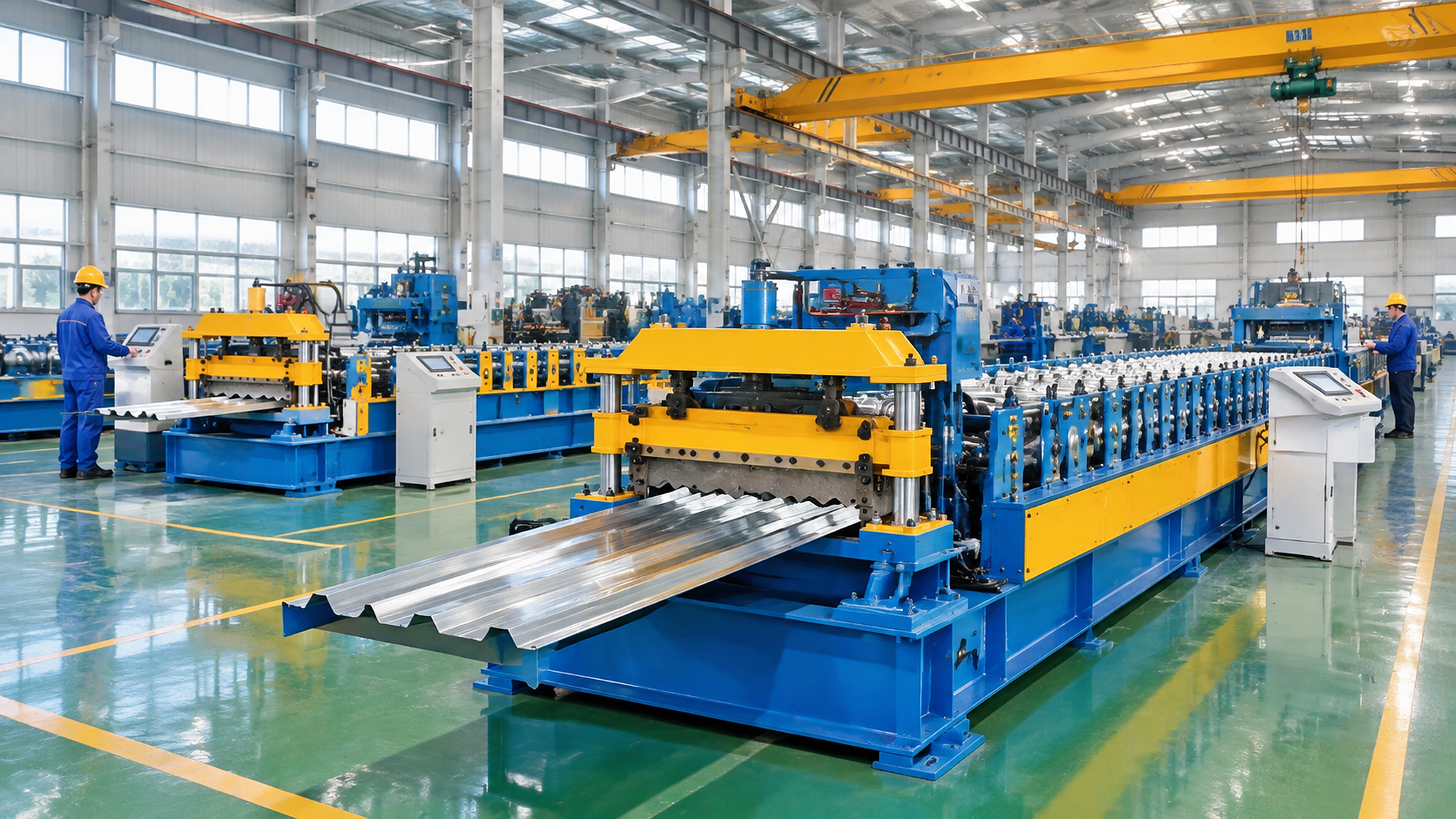
That sharing has two consequences which decide most purchases. First, capital and floor space move closer to one line than to two: Vantools' published comparison states equipment investment 30–40% lower for its dual-structure design than for two independent machines. Second, both profiles now sit inside one mechanical envelope. Because one drive and one control system serve both profile sets, the machine produces one profile at a time — the second profile is available without a second line, but not simultaneously. Station count must match profile depth and shaft diameter must scale with panel width and thickness, so the two profiles have to be compatible with a single skeleton, not merely attractive in the catalogue.
Where a dedicated line still wins: when the two profiles cannot share one shaft and station envelope, when a single profile's volume is high enough that changeover becomes the constraint, or when a plant wants the simplest possible routine for one product. In those situations the second machine is not duplication — it is capacity.
Why This Is Now a Layout Decision, Not an Automation Decision
Both layouts are available with PLC control and touch-screen operation, so automation level no longer separates them. Transparency Market Research expects the automatic segment to contribute 46.8% of the roll forming machine market in 2026 (Transparency Market Research, 2023) — a projection about how routine programmable control has become, not a statement about any one supplier. What still differs is how many recipes, coil changes and cutting programs one control system has to carry.
Suppliers also organise their ranges by profile family rather than by line architecture. Vantools' own product system follows that pattern, listing corrugated, trapezoidal, double-layer, glazed tile, purlin, light steel keel, roof curving and ridge cap machines as separate families. In practice a buyer's shortlist is built by profile first — a corrugated roof roll forming machine and a trapezoidal roof roll forming machine may sit on the same quotation as a double-layer option — and the layout question surfaces only after the profile pair is fixed.
Machine safety belongs in the same conversation. ANSI B11.12-2005 (R2020) states safety requirements for the design, construction, operation and maintenance of power-driven roll forming and roll bending machines, including installation, dismantling and transport (ANSI/AMT). It is a sound structure for the guarding and risk-assessment section of an RFQ, but it is a United States standards framework: it does not by itself establish compliance in other destination markets, which have to be checked separately.
Five Criteria That Separate the Two Options
1. Floor space and line layout
The double-layer layout removes duplicated footprint — one decoiler stand, one control cabinet and one run-out length instead of two — and Vantools cites workshop space saving as a benefit of its double-layer roof machine. The limit of that saving is set by the panel, not by the layer count. The panel length range sets the line length and the required indoor clearance, so a plant producing long sheets needs the building length for those sheets whichever layout it chooses, and a double-layer structure adds height rather than removing it. Ask for a dimensioned layout drawing for both options at your maximum panel length before accepting any space claim.
2. Shared decoiler, feeding and cutting
Coil width, coil inner diameter and maximum coil weight determine the size of the decoiler, and in a double-layer layout that single decoiler has to serve both profiles. The decision concentrates: if the two profiles need different coil widths, the decoiler and feed guides are specified for the wider and the heavier case, and the profile changeover routine must include feed guide adjustment. Cutting is shared in the same way — one cut cycle, one set of offcut rules, one length program — so length tolerance in millimetres, pre-cut versus post-cut and offcut handling should be written for both profiles, not only the main one. Operationally the gain is real: one coil change sequence, one operator station, one cutting setup to learn. The cost is scheduling, because two profiles cannot be produced at the same time.
3. Material thickness range
A dedicated line is specified around one thickness range and one yield strength. A double-layer machine must cover the worst case of both profiles, because both sit on the same shaft and frame. Shaft diameter must scale with panel width and thickness, the frame should be stress-relieved after welding, and station count must match profile depth rather than a fixed number carried across models. Higher-yield material raises the requirement: S350 or S550 steel needs more forming force and more stations than light gauge, and pre-painted coil needs non-marking rollers. If your two profiles sit at opposite ends of that spectrum — a thin wall panel and a heavy roof sheet, for example — confirm whether one shared configuration covers both, or whether the honest answer is two dedicated lines. This is the criterion where a double-layer layout can be the wrong purchase even when the space saving is genuine.
4. PLC touch-screen operation
Both options can be supplied with a PLC touchscreen that stores parameters as recipes. On a double-layer machine the control system carries two recipe families, so recipe storage earns more: profile, thickness, length and batch count can be recalled rather than re-entered, which shortens changeover and flattens the learning curve. Vantools lists PLC touchscreen parameter setting and a lower operator learning curve among the maintenance advantages of its machines. Two questions belong in the RFQ: how many recipes can be stored, and whether switching layers is a recipe selection or a manual mechanical adjustment. The answer decides how much of the double-layer advantage you actually capture in daily production.
5. Tolerance and dimensional control
Tolerance comes from roll design, station count, shaft rigidity and frame stability, not from the number of layers. Vantools publishes forming precision tolerance of ≤ ±0.5 mm for its machines against ±1.0–1.5 mm for common market machines, diagonal tolerance ≤ ±1.0 mm over 6 m, a pre-painted surface scratch rate below 0.01%, and rolls in 45# forged steel, hard-chrome plated 0.05 mm with a mirror finish. Sheet deformation rate is stated below 1%, which the company links to reduced rework and material waste. On a double-layer machine those figures have to hold for both profiles, and the second profile is the one usually tested less thoroughly. Make forming accuracy a separate line item of the pre-delivery inspection for each profile, and keep length tolerance, cut position and offcut allowance in the written specification.
The Published Numbers and What They Do Not Cover
Vantools' comparison data gives a buyer a starting benchmark for its own machines:
- Investment: a dual-structure design with the double-layer option is stated at 30–40% lower equipment investment than buying two independent machines.
- Output: forming speed up to 18 m/min, stated as 20–30% higher than standard roll formers.
- Tolerance: ≤ ±0.5 mm forming precision, diagonal ≤ ±1.0 mm over 6 m, pre-painted scratch rate below 0.01%.
- Material behaviour: sheet deformation rate below 1%.
- Energy: 0.32 kWh per 100 m of sheet, stated as 15–20% lower power consumption and 25–30% overall power savings against generic machines.
- Mechanical base: Φ75–80 mm 40Cr solid main shaft, quenched and tempered; heavy-duty dust-sealed bearings; I-beam base frame; stated calibration interval above 12 months and unplanned downtime below 2 days per year.
These are manufacturer comparison figures for its machines against generic market machines, not an independent benchmark. Treat them as the specification baseline that must reappear on the offer, be confirmed in the pre-delivery inspection report and be visible in the test video before shipment. Convert speed before comparing: machine output should be evaluated as metres per shift including coil change and cut cycle, not only as metres per minute, because a faster line with slow coil changes can lose a shift to a slower but better organised one.
Step-by-Step: Specifying Either Layout
The same seven steps apply whether you choose a double-layer machine or a dedicated line; they simply carry more weight on a shared structure.
- Start from the profile drawing, not the machine. Provide a dimensioned profile drawing covering width, rib height, rib pitch and every bend. Without the drawing the machine cannot be specified.
- Pin the material to the worst case. Confirm the thickness range you will actually run, plus yield strength and coating, because S350/S550 and pre-painted coil change force, station count and roller finish.
- Size the decoiler from coil data. Coil width, inner diameter and maximum coil weight set decoiler capacity; on a double-layer machine they must cover both profiles.
- Define output as metres per shift. Include coil change and cut cycle in the figure rather than quoting metres per minute alone.
- Fix the building envelope. The panel length range sets line length and indoor clearance; check both layouts at your longest panel.
- Specify skeleton, cut and control in writing. Station count against profile depth, shaft diameter against width and thickness, stress-relieved frame, roller material, HRC and plating, length tolerance in millimetres, pre-cut or post-cut, offcut handling, and PLC recipe storage.
- Close the export details. Confirm voltage and frequency for the destination market, state any temperature or workshop-environment requirement, and require a test machine video before the machine leaves the factory.
Comparison Table: Double-Layer vs Dedicated Line
| Decision criterion | Double-layer machine | Dedicated roof sheet line |
|---|---|---|
| Profiles produced | Two profile sets on one structure; one profile runs at a time. | One profile per line; a second profile needs a second line or a roll-set change. |
| Shared components | One decoiler, one drive, one cutting unit, one control system. | Each line carries its own decoiler, drive, cut and control. |
| Floor space | Removes the second decoiler stand, control cabinet and run-out length; footprint still set by maximum panel length. | Footprint set by maximum panel length; a second profile adds a full line length. |
| Investment scope | Vantools states 30–40% lower investment than two independent machines for its dual-structure design. | Smaller equipment scope than a two-profile machine; the second profile is a separate purchase. |
| Thickness envelope | Must cover the worst case of both profiles on one shaft and frame. | Specified around one profile's thickness and yield strength. |
| Changeover and scheduling | Profile change by recipe plus mechanical setup; only one profile at a time. | No inter-profile changeover; separate lines can run in parallel. |
| Tolerance verification | Same roll, shaft and frame basis; each profile must be verified separately. | Verified once for the specified profile. |
| Typical fit | Two related profiles, moderate volume, constrained floor space. | One dominant profile, high volume, or two incompatible profiles. |
| Main risk | Compromised envelope if the two profiles are dissimilar. | Duplicated capital and space once a second profile is added. |
Manufacturer figures refer to Vantools' own published comparison data and should be confirmed on the quotation, the layout drawing and the pre-delivery documents for your configuration.
Which Buyer Profile Fits Which Layout
The following decision scenarios are illustrative, not reported customer cases.
Panel fabricator with two related profiles and a fixed building. A double-layer machine keeps one decoiler, one control cabinet and one run-out length in a building that cannot grow, provided the two profiles share a compatible width and thickness envelope. Check the layout drawing at maximum panel length and confirm the height clearance.
Roofing producer with one dominant profile and project deadlines. A dedicated line gives the simplest operating routine and full capacity on the product that pays the bills; add the second profile only when the order mix genuinely justifies it.
Exporter or distributor carrying mixed orders. A double-layer machine covers two profiles within one installation footprint, but mixed orders are produced one profile at a time, so batch sizes have to be checked against changeover time rather than against nominal speed.
Plant pairing a thin wall panel with a heavy roof sheet. Two dedicated lines are normally the safer answer, because the shared shaft and station envelope is the binding constraint. Confirm with the supplier before assuming one machine covers both extremes.
Pre-Delivery Testing and Spare-Parts Support as Decision Criteria
Layout decides capability; verification decides whether you actually receive it. Vantools runs a three-tier inspection system with differentiated standards for machinery, builds machines with national-standard steel and branded core components, machines them on CNC equipment to micron-level tolerance, applies four-layer anti-corrosion treatment, and passes each machine through a full pre-delivery inspection covering electrical safety, hydraulic sealing, forming accuracy and safety protection. Inspection videos, paper inspection reports and material certificates are provided on request.
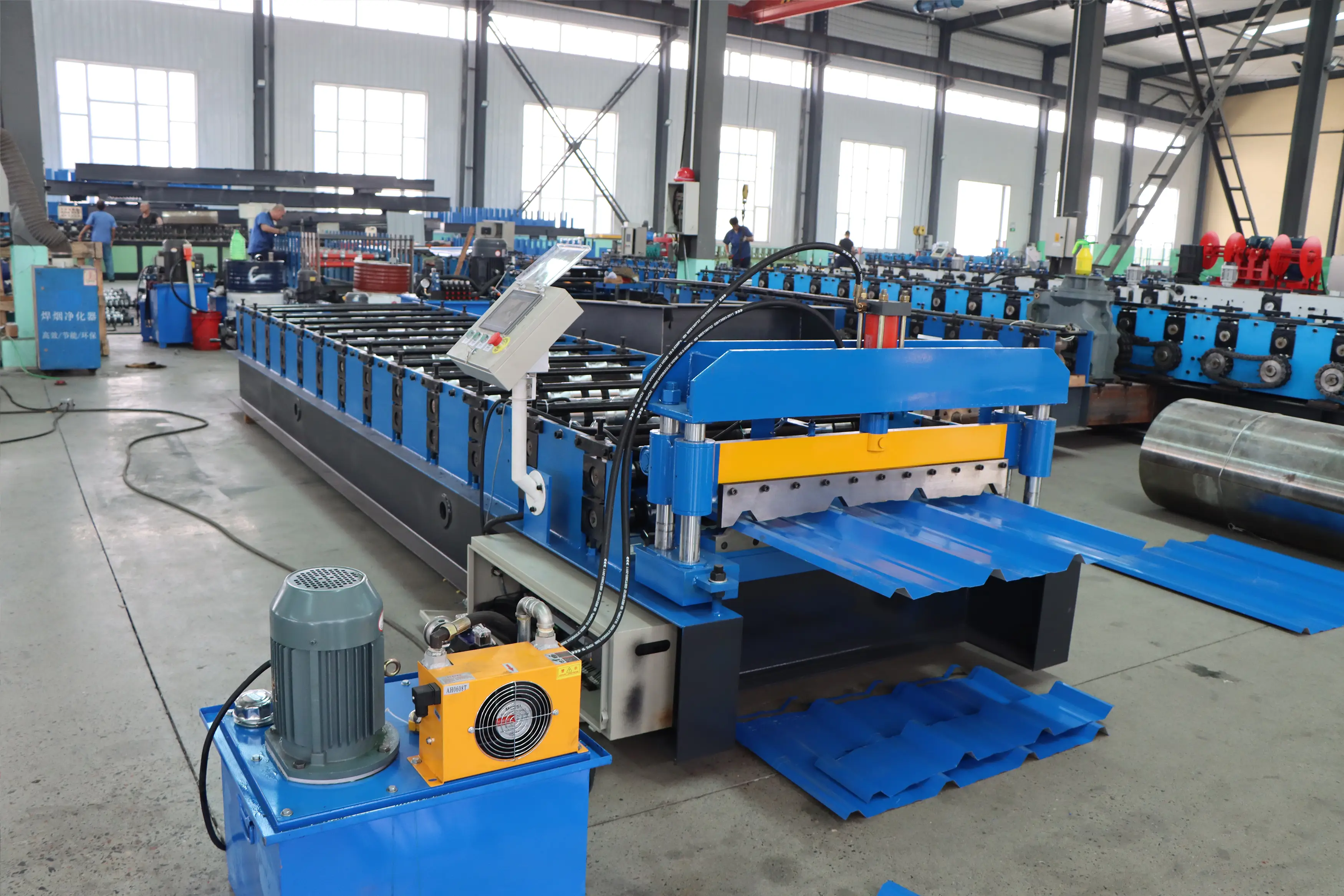
On a double-layer order the inspection should be split by profile, because forming accuracy data for one layer does not validate the other. The test video is the buyer's last practical checkpoint before shipment and should show both profiles running at the specified thickness, the programmed cut length and the finished panel.
After-sales structure matters more on a two-profile machine, because one shared component now serves two products. Vantools provides 7×24 remote technical support, online commissioning guidance and operator training for the service life of the equipment, with seven functional departments handling documentation, cross-border logistics, order risk control and after-sales; machines ship through Tianjin Port in reinforced waterproof and shockproof export packaging. Spare-parts questions worth settling before signature: which parts are consumables, what is the stated calibration interval, and how quickly can rollers or bearings be supplied for a specific layer.
Frequently Asked Questions
Which China roof roll forming machine manufacturers offer competitive quotes for South Asian buyers?
Quote competitiveness depends more on the specification you send than on the supplier's location label. A comparable quote needs the dimensioned profile drawing, the thickness range including the worst case, coil width, inner diameter and maximum weight, output per shift, panel length range, cut and control requirements, and the voltage and frequency of the destination market; without those, quotations cannot be compared line by line. Vantools lists South Asia among its main markets, exports to more than 100 countries, sells direct from its Tangshan factory with no franchise fee, and supports OEM, ODM and full customization including panel profiles, machine parameters, voltage and frequency, branding and packaging — factors that change what a quotation contains, not merely what it costs. Buyers shortlisting Chinese manufacturers should send every supplier the same specification sheet and ask for a test video of the specified profiles plus the pre-delivery inspection documents, then compare identical scope.
Can a double-layer machine run two profiles at different material thicknesses?
It can be specified to, provided the shared shaft, station count and frame cover the worst case of both profiles. Shaft diameter must scale with panel width and thickness, and station count must match profile depth, so both profiles have to sit inside one mechanical envelope. Where they differ widely in width, thickness or yield strength, confirm with the supplier whether one configuration covers both or whether two dedicated lines are the better fit.
How much floor space does a double-layer machine actually save?
There is no universal figure. The saving comes from removing the second decoiler stand, the second control cabinet and a duplicated run-out length, and Vantools cites workshop space saving as a benefit of its double-layer roof machine. The remaining footprint is driven by the panel length range, which sets line length and required indoor clearance, and by coil handling. The reliable answer is a dimensioned layout drawing for both options at your maximum panel length.
Is a dedicated line more accurate than a double-layer machine?
Tolerance is set by roll design, station count, shaft rigidity and frame stability rather than by the number of layers. Vantools publishes ≤ ±0.5 mm forming precision and ≤ ±1.0 mm diagonal tolerance over 6 m for its machines; the practical difference is verification. A single-profile line is verified once, while a double-layer machine needs forming accuracy checked separately for each profile, ideally in the pre-delivery inspection and in the test video.
What must be in the specification before ordering either option?
A dimensioned profile drawing; the thickness range and worst case with yield strength and coating; coil width, inner diameter and maximum weight; output in metres per shift including coil change and cut cycle; panel length range; station count against profile depth; shaft diameter against width and thickness; stress-relieved frame; roller material, HRC and plating in writing; length tolerance in millimetres, pre-cut or post-cut and offcut handling; PLC recipe storage; destination voltage and frequency; and a test machine video before shipment.
Conclusion: Match the Layout to the Order Book
A double-layer machine is the stronger purchase when two related profiles share a compatible thickness and width envelope and floor space or capital is the binding constraint: one decoiler, one drive, one control system, and Vantools' stated 30–40% lower investment than two independent machines. A dedicated roof sheet line remains the better answer when one profile carries the volume, when the two profiles cannot share a shaft and station envelope, or when parallel production matters more than saving a second installation. The criteria that decide it are mechanical rather than promotional: thickness range against one skeleton, decoiler capacity across both profiles, panel length against the building, recipe handling on the PLC, and forming accuracy verified separately for each profile.
If you are weighing the two layouts for a specific profile pair, the fastest route to a comparable answer is to send the profile drawings and coil data for both profiles, and to ask for the layout drawing, the pre-delivery inspection scope and the test-video requirement in writing. Current double-layer and single-profile configurations are listed in the Vantools roll forming machine catalog (PDF), and company information is available at vantoolsgroup.com.
Have Questions or Need More Details?
Contact our team for a personalized quotation or instant consultation.
Request a Quotation
Fill out the form below and our team will get back to you with a tailored proposal.
WhatsApp Direct Chat
Prefer to chat in real-time? Message us on WhatsApp for instant assistance & quick answers.
- Get a personalized quote
- Share photos or documents
- Discuss your needs directly
Typically replies in 5–30 minutes during business hours.