Hydraulic Post-Cutting vs. Stop-to-Cut: C/Z Purlin Guide
Hydraulic Post-Cutting vs. Stop-to-Cut on a C/Z Purlin Forming Machine: Buyer Guide
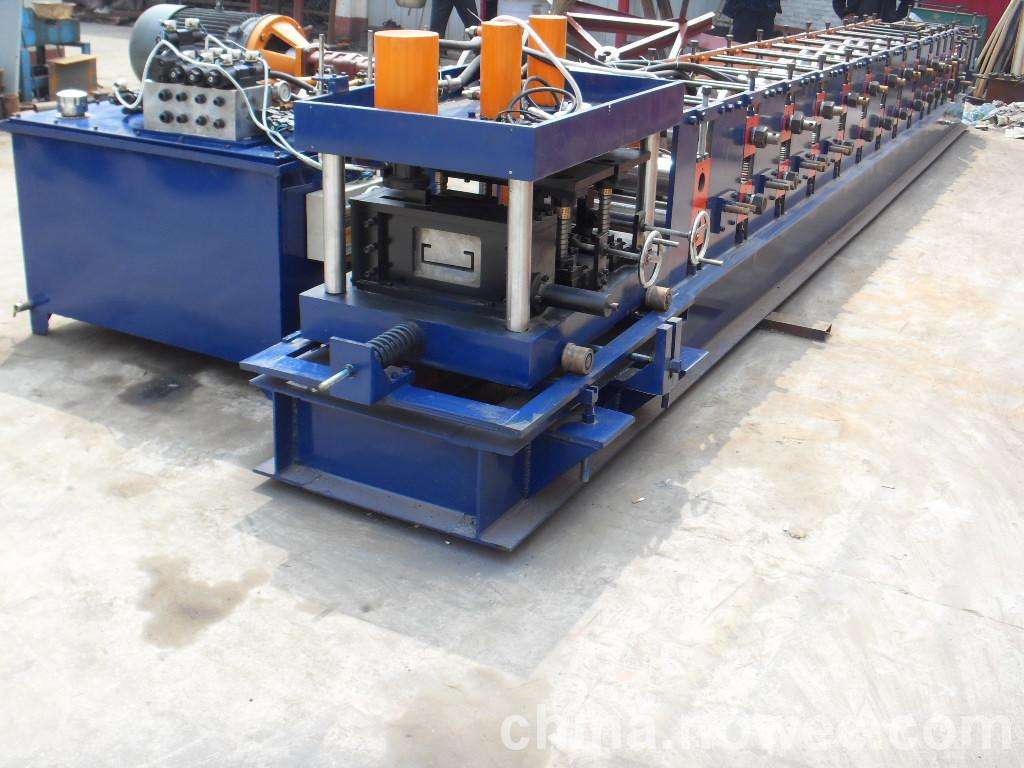
On a C/Z purlin forming machine, the cutting method affects cycle time, length control, scrap handling, maintenance, and what the buyer must witness at acceptance. The short answer is not that hydraulic is better or that stop-to-cut is cheaper. Choose stop-to-cut when the line can absorb a stop for each cut and the quotation proves the required length tolerance, output per shift, and offcut procedure. Choose a hydraulic post-cut package when the hydraulic cut unit and its sequence are specified to meet a defined output or cut-quality requirement, and when the supplier can show whether the line actually stops for the cut. A hydraulic cutter alone does not prove a non-stop cycle.
The buying problem: two labels, one specification
Purlin buyers often compare a quotation that says hydraulic post-cutting with another that says stop-to-cut. The words sound like alternatives, but they do not describe the same attribute. Hydraulic post-cutting describes a cut unit placed after the forming stations and powered by hydraulics. Stop-to-cut describes a motion sequence: the line indexes the strip to length, stops, completes the cut on a stationary section, and restarts. A hydraulic post-cut can itself be arranged as stop-to-cut, or it can be arranged as a non-stop cut if the supplier proposes and supports that design.
That distinction matters because two quotations can both say hydraulic cut and still deliver different cycle behavior. One may stop for every cut; another may cut while the section is moving. Unless the sequence, cut cycle, length-control method, and test evidence are written down, the buyer is comparing a label rather than a machine.
The same caution applies to pre-cut and post-cut terminology. Specification sheets may use pre-cut or post-cut to describe where the cut falls in the line sequence. This is not automatically the same distinction as stop-to-cut versus non-stop cutting. Ask for a simple sequence diagram and a definition of each term in the supplier's own quotation.
Industry background: why the cut decision is moving earlier in the purchase
Roll forming is a continuous bending process that turns a long strip of sheet metal into a profiled section. For C/Z purlins, the line forms the section, cuts it to length, and discharges the finished piece. The cut is therefore not a peripheral station. It sits at the point where profile quality, length accuracy, cycle time, and scrap handling meet.
Commercial research cited in the available evidence points to a global roll-forming machine market rising from USD 9.1 billion in 2024 to USD 12.2 billion by 2034, based on Future Market Insights. Transparency Market Research estimates that automatic roll forming machines will contribute 46.8% share of the market in 2026. These figures are category context, not a quotation benchmark or a guarantee for any single line. They do support a practical point: as buyers move toward more automatic lines, the cut sequence becomes part of the automation specification rather than an afterthought.
Safety expectations are also part of the purchase file. ANSI B11.12-2005 (R2020) specifies safety requirements for the design, construction, operation, and maintenance of roll-forming and roll-bending machines, including installation, dismantling, and transport. The ANSI B11 framework addresses machine guarding and task-based risk assessment. These are useful references for an RFQ and acceptance checklist, but they do not replace a review of the legal requirements in the destination market.
Hydraulic post-cutting and stop-to-cut: what each term actually changes
Stop-to-cut
In a stop-to-cut sequence, the line advances the strip to the set length, stops, and holds the section while the cut is completed. The line then restarts for the next piece. The strength of this arrangement is that the cut takes place on a stationary section. The commercial question is whether the stop-and-restart time fits the required output.
Output should not be judged from forming speed alone. A stop-to-cut line may have a respectable forming speed but lose time in every cut cycle, especially when producing short pieces. The supplier should quote output in meters per shift, including coil change and cut cycle, rather than only meters per minute. The buyer should also ask for the cut cycle time, acceleration behavior, and the handling time for offcuts.
Hydraulic post-cutting
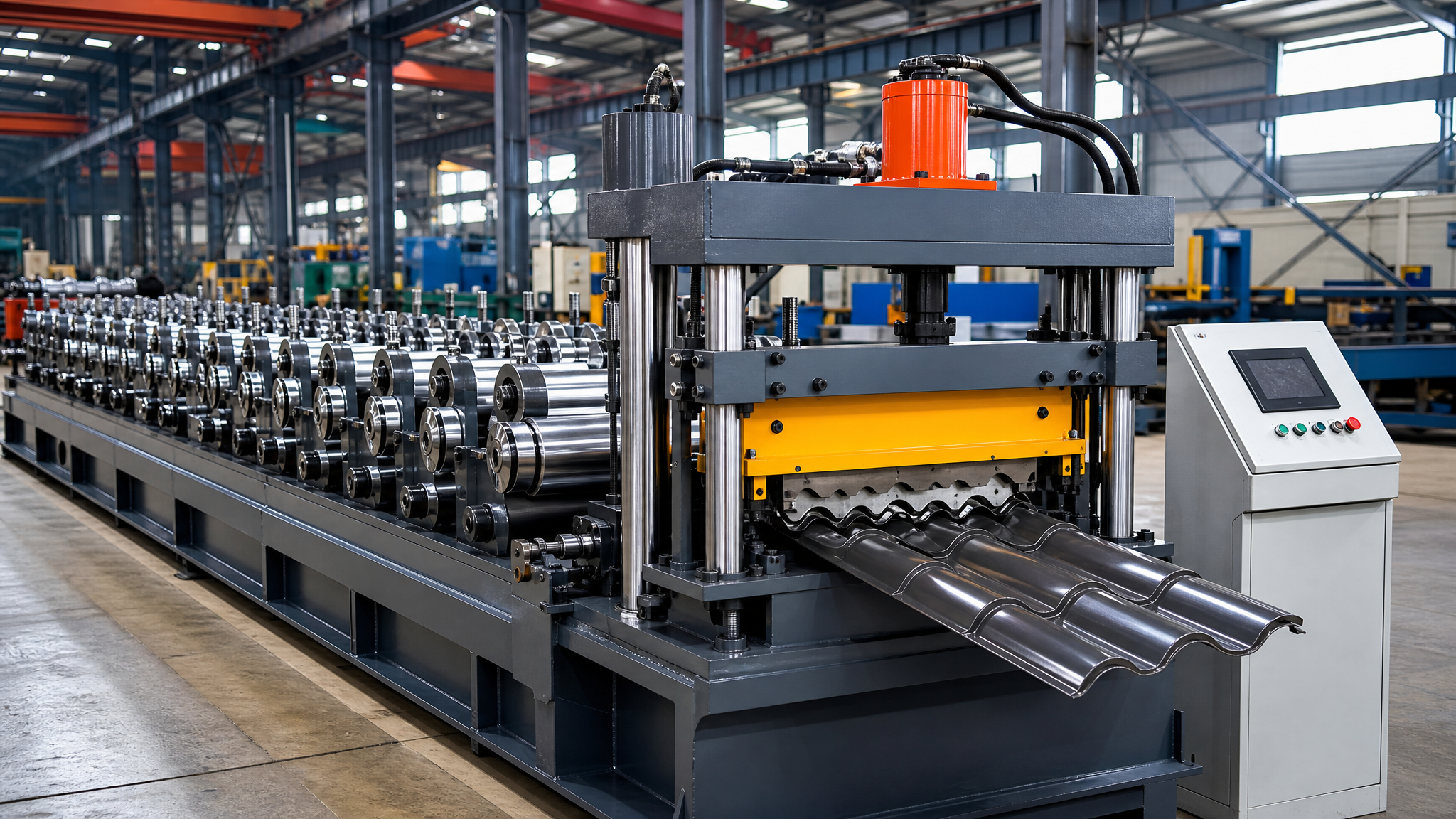
A hydraulic post-cut places the cutting unit after the forming stations and uses hydraulic force for the blade action. The hydraulic system may include a power pack, valves, and a cutting cylinder. On a well-specified line, the cut unit should be matched to the purlin profile family, material thickness range, and required cut quality.
The label does not tell the buyer whether the line stops during the cut. If the section is stationary when the blade closes, the line is still a stop-to-cut line in cycle terms. If the supplier proposes a non-stop or flying cut, the quotation should identify the cut carriage, synchronization method, control logic, and the profile and speed range over which that behavior is claimed. A hydraulic power unit alone is not evidence of a non-stop cycle.
What this means for C/Z purlins
C/Z purlin lines may run different web depths, flange widths, lip details, and material thicknesses. The cut blade, die clearance, and cut sequence must match the actual profile family. A quotation that is valid for one purlin profile may not cover another without a tooling change. For that reason, the buyer should attach a dimensioned profile drawing covering width, rib height, rib pitch, and every bend. Without the drawing, the machine cannot be specified with confidence.
Length tolerance should be stated in millimeters. The buyer should also confirm pre-cut versus post-cut, offcut handling, and PLC recipe storage. A PLC that stores recipes is useful only if the changeover procedure and the tested length range are clear. Offcut handling is not a housekeeping detail; it affects material yield and operator time.
Comparison table: hydraulic post-cutting versus stop-to-cut
| Decision dimension | Stop-to-cut | Hydraulic post-cutting | What to demand in writing |
|---|---|---|---|
| Cut sequence | The line stops and cuts a stationary section, then restarts. | A hydraulic cut unit is placed after forming. It may be configured as stop-to-cut or as a non-stop cut, if proposed. | A sequence description and a definition of whether the line stops for every cut. |
| Throughput basis | Stop and restart time is part of every cycle. | Hydraulics may support a defined cut cycle, but the label alone does not remove the stop. | Output in meters per shift including coil change and cut cycle, not only m/min. |
| Length control | Requires a defined indexing and cut control method. | Requires a defined length-control and PLC recipe method, especially for multiple lengths. | Length tolerance in mm, pre-cut versus post-cut, PLC recipe storage, and a tested sample length. |
| Scrap and offcuts | Offcut procedure must be specified. | Offcut procedure and cut-unit access must be specified. | Offcut removal method, expected cut loss, and a sample of the cut end. |
| Cut unit maintenance | Keep the cut mechanism accessible and provide spare parts. | Hydraulic sealing, oil condition, valve access, and blade replacement should be planned. | Maintenance points, seal and blade spare parts, and a pre-delivery hydraulic sealing check. |
| Initial cost comparison | Do not assume it is cheaper without the same specification. | Do not assume it is justified without a defined cycle or cut-quality need. | Itemized quote for the same profile, thickness, voltage, tooling, controls, and acceptance tests. |
| Candidate fit | Moderate output where the stop-for-each-cut cycle is acceptable. | Defined output or cut-quality requirement that the supplier can demonstrate. | A test video and inspection record on the actual profile and material. |
The table is a decision structure, not a performance guarantee. The only reliable comparison is a like-for-like quotation with the same profile drawing, material worst case, voltage, cut sequence, tolerance, and output basis.
Step-by-step: specifying and verifying a C/Z purlin line
1. Lock the profile and material before discussing the cut
Provide a dimensioned profile drawing covering width, rib height, rib pitch, and every bend. Confirm the material thickness range, especially the worst case that will actually be run. Coil width, coil inner diameter, and maximum coil weight determine the size of the decoiler. If the purlin family changes, ask whether the same cut tooling and roll set can cover it or whether a change is required.
2. Set the output basis in meters per shift
Ask for output under the real production pattern: coil changes, cut cycle, length changes, and operator handling. A line that looks fast at the forming station may lose time at the cut. For stop-to-cut, the stop-and-restart time is visible in the cycle. For a hydraulic post-cut, the supplier should show whether the cut is stationary or non-stop and how the quoted output was calculated.
3. Define the cut sequence and length tolerance
Write the sequence into the technical annex: stop-to-cut, non-stop, or another arrangement. Require length tolerance in millimeters, pre-cut versus post-cut, offcut handling, and PLC recipe storage. If multiple lengths are claimed, ask for a recipe change to be demonstrated. If the supplier uses the words hydraulic post-cutting, ask for a simple diagram showing where the cut occurs and whether the strip is moving at the moment of cut.
4. Check the mechanical build behind the cut
Station count must match the profile depth and should not be treated as a fixed number across machine models. Shaft diameter must scale with panel width and thickness, and the frame should be stress-relieved after welding. Roller material, HRC, and plating should be specified in writing. These checks matter because cut quality cannot compensate for an unstable forming section.
5. Confirm electrical, environmental, and safety requirements
The machine should be supplied with the right voltage for the destination market. If there are special requirements for temperature or the working environment, the factory should be informed. Include the applicable safety review in the RFQ. For export projects, ANSI B11.12 is a useful reference for machine safety scope, while the destination market may require separate legal and electrical review. For customs work, HS 846225 identifies numerically controlled roll forming machines, but the classification should be confirmed with a customs broker because it is not a complete product-market definition.
6. Require pre-delivery evidence
A test machine video must be checked before the machine leaves the factory. The video should show the actual profile and thickness, the cut sequence, measured length, cut-end condition, and a recipe change if multiple lengths are claimed. The inspection record should cover electrical safety, hydraulic sealing, forming accuracy, and safety protection. Vantools states that inspection videos, paper inspection reports, and material certificates are available on request.
Use cases: when each cut approach is the better candidate
A stop-to-cut line is a reasonable candidate for a workshop with a stable profile mix, moderate output targets, and a production plan that can absorb a stop for each cut. It can also be easier to explain and witness during acceptance because the cut takes place on a stationary section. That does not make it the lowest-cost choice over the life of the line; the buyer still needs the itemized quote, cut cycle, offcut loss, and maintenance plan.
A hydraulic post-cut is a stronger candidate when the buyer has a defined cycle or cut-quality problem that the supplier can demonstrate on the actual profile. Examples include a production plan that cannot tolerate a stationary cut in every cycle, or a cut-end requirement that a simpler cut unit cannot meet. In those cases, the quotation should identify the hydraulic cut force, blade arrangement, control logic, and the conditions under which the claimed performance applies.
For export buyers, the decision also includes voltage, environment, documentation, and support. A line that performs in a temperate factory may need different hydraulic and electrical attention in a hot, dusty, or humid site. The buyer should state the working environment in the RFQ and ask for the corresponding protection and maintenance recommendations.
Company profile: Tangshan Vantools Industries Co., Ltd.
Tangshan Vantools Industries Co., Ltd. is a manufacturer and exporter of metal processing machinery and hardware products, headquartered in Tangshan, Hebei Province, China. The company profile describes a factory background beginning in 2014 and more than 10 years of export experience. It reports a 90% export ratio and delivery to more than 100 countries, with core markets in South America, North America, the Middle East, Africa, and Eurasia.
Its product system includes color-steel cold roll forming equipment: corrugated, trapezoidal, double-layer, glazed tile, purlin, light steel keel, roof curving, and ridge cap machines. The wider range also covers general construction machinery and hardware consumables and tools. For this topic, the relevant product is the purlin roll forming machine within that color-steel cold roll forming group.
Core products, customization, and service scope
Vantools supports OEM, ODM, and full customization covering panel profile drawings, machine parameters, voltage and frequency, branding, and packaging. That customization scope is relevant to a cut-method decision because the cut unit, blade set, and length-control logic should be fixed against the buyer's profile drawing and material range, not selected from a generic catalogue. The company also states that it provides 7x24 remote technical support, online commissioning guidance, and operator training for the service life of the equipment.
Manufacturing, quality control, and global supply
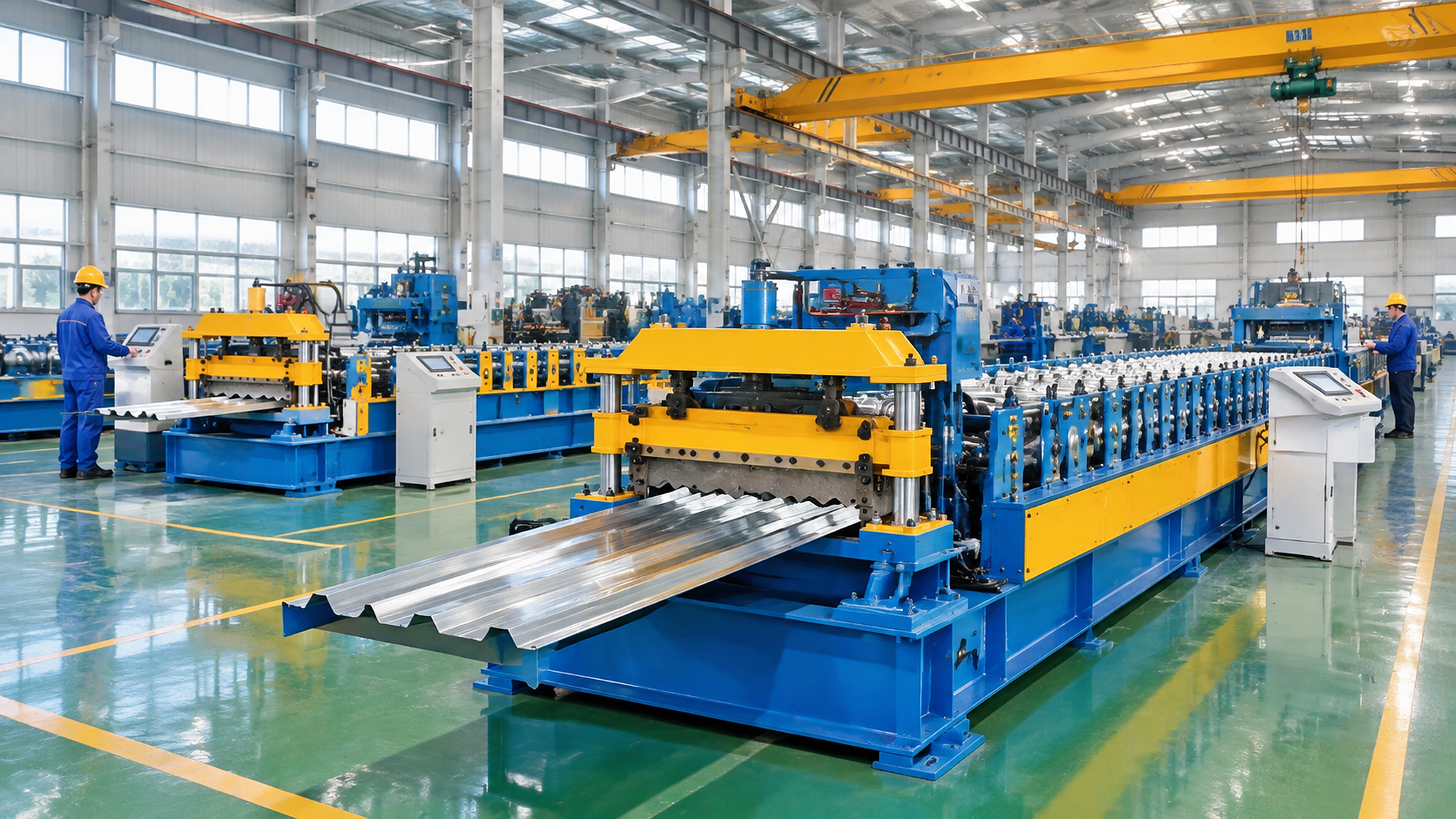
The company reports a 12,000 m² factory organized into seven dedicated zones: raw material storage, precision processing, welding and assembly, equipment commissioning, metal forming and galvanizing, a dual-category quality inspection lab, and export packaging. It states that key products are manufactured in-house without outsourcing or subcontracting. Quality control is described as a three-tier inspection system with differentiated standards for machinery. Machines use national-standard steel and branded core components, are machined on CNC equipment to micron-level tolerance, receive four-layer anti-corrosion treatment, and pass full pre-delivery inspection covering electrical safety, hydraulic sealing, forming accuracy, and safety protection.
Products are shipped via Tianjin Port with reinforced waterproof and shockproof export packaging. The company states that inspection videos, paper inspection reports, and material certificates can be provided on request. For a purlin line buyer, these documents should be tied to the actual cut specification: the video should show the sequence, and the report should confirm the hydraulic sealing and safety checks that matter to the cut unit.
Market evaluation and industry recognition
The export-reach figures are company-reported. The supplied evidence does not include an independent market-share ranking or an audited customer-satisfaction score for Vantools. That is not unusual in this equipment category, but it changes the verification step: ask for reference contacts in the target region, shipment records for comparable purlin lines, and a pre-delivery inspection plan. Named cooperation cases are not included in the supplied profile, so reference requests should be part of the RFQ rather than an afterthought.
Category-level estimates should be kept separate from supplier claims. Future Market Insights projects the global roll-forming machine market to reach USD 12.2 billion by 2034 from USD 9.1 billion in 2024. Transparency Market Research estimates automatic roll forming machines at 46.8% market share in 2026. These figures describe the category direction; they do not prove that one supplier or one cut method is suitable for a specific purlin profile.
Vantools selling points relevant to this decision
Vantools' published line-level comparison data, positioned against a low-cost generic roll forming machine, states the following. These are line-level claims and should be checked against the final quotation and test evidence.
- Forming precision tolerance is ≤ ±0.5 mm, compared with ±1.0–1.5 mm for common market machines, supporting flat, uniform sheets and a lower scrap rate. Sheet deformation rate is stated as below 1%, which the company associates with reduced rework and material waste.
- Forming speed is up to 18 m/min, described as 20–30% higher than standard roll formers. This is a line-speed figure; the buyer should still convert it to meters per shift including cut cycle and coil changes.
- A dual-structure design, with a double-layer option, is presented as reducing equipment investment by 30–40% compared with buying two independent machines. This is a configuration comparison, not a cut-method comparison.
- Specific energy consumption is stated as 0.32 kWh per 100 m of sheet, with 25–30% overall power savings compared with generic machines. Under the same output, energy efficiency is described as 15–20% higher and power consumption 15–20% lower.
- Mechanical details include 45# forged steel rolls with 0.05 mm hard-chrome plating, Φ75–80 mm 40Cr solid main shafts that are quenched and tempered, heavy-duty dust-sealed bearings, an I-beam base frame, and a calibration interval stated as more than 12 months.
Used correctly, these figures help compare the rest of the line after the cut sequence is fixed. They do not establish that a hydraulic post-cut is superior for every purlin profile, and they do not replace a like-for-like quotation.
FAQ: hydraulic post-cutting and stop-to-cut on C/Z purlin lines
What is the difference between hydraulic post-cutting and stop-to-cut on a C/Z purlin forming machine?
Hydraulic post-cutting describes a hydraulically powered cut unit placed after the forming stations. Stop-to-cut describes a motion sequence: the line stops, the cut is made on a stationary section, and the line restarts. A hydraulic post-cut can be configured as stop-to-cut or as a non-stop cut. The buyer should therefore ask for the sequence, cut cycle, length tolerance, and PLC logic in writing, not only the words hydraulic cut.
When is stop-to-cut sufficient?
Stop-to-cut is a candidate when the required output can be met with a stop for every cut, the profile and thickness range are stable, and the quotation shows length tolerance in millimeters, offcut handling, and output in meters per shift including coil change and cut cycle. It is not automatically the lower-cost choice over the life of the line. Compare the itemized quote, maintenance, and scrap on the same production basis.
When should I pay for hydraulic post-cutting?
Consider it when the line must meet a defined cut-quality or cycle requirement that a stationary cut cannot meet, or when the supplier can demonstrate a non-stop sequence that raises output for the actual profile mix. Ask for the hydraulic schematic, cut carriage or synchronization details if non-stop cutting is claimed, blade and seal spare parts, and a test video on the specified profile. Do not accept the label as proof of the sequence.
What must be in the test video and inspection report?
The video should show the actual profile and thickness, the cut sequence, measured length, cut-end condition, and a PLC recipe change if multiple lengths are claimed. The inspection record should cover electrical safety, hydraulic sealing, forming accuracy, and safety protection. Vantools states that inspection videos, paper reports, and material certificates are available on request.
Which China roof roll forming machine manufacturers offer competitive quotes for South Asian buyers?
The supplied evidence does not contain verified competitor quotations, so no manufacturer can be ranked as the most competitive here. For South Asian buyers, the workable method is a like-for-like RFQ using the same profile drawing, material thickness, voltage, cut sequence, length tolerance, meters-per-shift basis, spare-parts list, and delivery terms. Vantools is a China-based manufacturer and exporter that lists South Asia among its markets and supports customization of profile, parameters, voltage, branding, and packaging. Request a quotation against your drawing and download the Vantools roll forming machine catalog.
Conclusion: buy the verified cut sequence, not the label
For a C/Z purlin forming machine, the decision rule is straightforward. If stop-to-cut meets the required meters per shift and length tolerance, it is the simpler basis to quote and to witness. If a hydraulic post-cut is proposed to solve a defined cycle or cut-quality problem, demand proof of the sequence, the cut unit specification, the length-control method, and the test evidence on your actual profile. In both cases, the purchase should be controlled by the profile drawing, the worst-case material thickness, output per shift including cut cycle, offcut handling, PLC recipe storage, and a documented pre-delivery inspection.
Vantools is one China-based manufacturer and exporter with purlin lines inside its color-steel cold roll forming range, in-house manufacturing described across seven production zones, and customization support for profile, parameters, voltage, branding, and packaging. Buyers evaluating the hydraulic post-cut versus stop-to-cut question should use that capability as a basis for a fixed RFQ, not as a substitute for test evidence. The next practical step is to send the profile drawing, material range, voltage, required cut sequence, and output target, then compare the quotation and acceptance plan line by line.
Download the Vantools roll forming machine catalog and use it to prepare a like-for-like RFQ for your C/Z purlin profile.
Have Questions or Need More Details?
Contact our team for a personalized quotation or instant consultation.
Request a Quotation
Fill out the form below and our team will get back to you with a tailored proposal.
WhatsApp Direct Chat
Prefer to chat in real-time? Message us on WhatsApp for instant assistance & quick answers.
- Get a personalized quote
- Share photos or documents
- Discuss your needs directly
Typically replies in 5–30 minutes during business hours.