Layered Curtains vs. Single-Layer Shades: Which Custom Window Treatment Fits Hospitality Projects?
A hospitality room usually has to produce two different light conditions from one window: softened daylight during occupancy hours and full darkness or privacy at night. The Combination Curtains / Layered Window Treatment System meets both because its inner layer and outer layer operate independently — a sheer, roller, cellular, or Roman inner layer filters daylight, while a decorative or blackout outer drape darkens the room and frames the glazing. A single-layer shade covers the same window with one plane of fabric, one operating mechanism, and one setting at a time, so it fits when a single fabric already satisfies both the daytime and the nighttime requirement.
The trade-off is mostly about control and component count, not decoration. Layering uses two treatments, double tracks or rods, carriers, and optional motors and controllers, so the initial cost is normally higher; VistaDrape's published product information states no percentage premium for layering, and none is quoted in this article. The comparison below sets out what each option actually controls, how a layered system is specified for hotel suites and residential projects, where a single layer is the more sensible specification, and which project conditions decide the answer.
Layered curtains and single-layer shades: the functional difference
A single-layer shade controls light through one plane. The range includes custom roller blinds, cellular shades, Roman shades, dual-layer zebra blinds, Shangri-La / S-shape slat treatments, sheer vertical blinds, and woven bamboo shades, each operated by chain, cordless lift, or motor and each sitting between open and closed in one setting. Dual-layer zebra fabric alternates sheer and opaque bands, but the bands belong to one continuous fabric on one mechanism; it is not two independently operable treatments.
A layered window treatment system, by contrast, mounts two independent treatments on the same window. VistaDrape defines the configuration as two independent layers: an inner layer that is a sheer, roller, cellular, or Roman shade, and an outer layer of decorative or blackout drapery. Published configuration types include roller shade plus side drapes, cellular shade plus side drapes, and Roman shade plus side drapes, in manual or motorized versions.
The practical difference is control resolution. With two layers, a room can sit in filtered daylight with the outer drape drawn back for view and decoration, then move to blackout at night without changing fabric or accepting a compromised middle setting. A single plane of fabric cannot be simultaneously open for view and closed for privacy, which is the specific gap a layered system closes in guest rooms with large glazing.
Why hospitality projects ask this question
Hospitality specifications carry three requirements that a residential purchase often does not: the window must work for guests with different habits, it must survive daily operation by housekeeping, and it must read as part of the interior design rather than as an afterthought. Where a hotel brief separates daytime light filtering from nighttime blackout, the window needs more than one state. Where the same room also has an exposed glazing edge that throws side-light across a bed or a television, the second layer becomes the tool that reduces it.
Category data gives context for the decision but does not size the layered segment. Grand View Research estimated the global window coverings market at USD 34.50 billion in 2023 and reported that the commercial end-use sector, including hospitality and offices, held over 53.3% of the blinds and shades market in 2023. Those figures cover window coverings broadly rather than custom or layered treatments, and other published estimates use different base years and scopes, so they are background for category planning rather than a budget for a specific hotel project.
Safety rules touch the operating method rather than the layering concept, and they apply per market. In the United States, 16 CFR Part 1260 establishes a consumer product safety standard for operating cords on custom window coverings, effective May 30, 2023. The verified reference set also records ANSI/WCMA A100.1-2022 as effective June 1, 2024, requiring custom window coverings to be cordless or to have inaccessible or short cords. A two-layer manual system therefore has two operating mechanisms to document. Moving to cordless or motorized operation changes what has to be documented, not whether compliance has to be confirmed for the exact product being supplied. These are U.S. requirements; other markets set their own rules, and this article does not describe them.
What a layered system actually contains
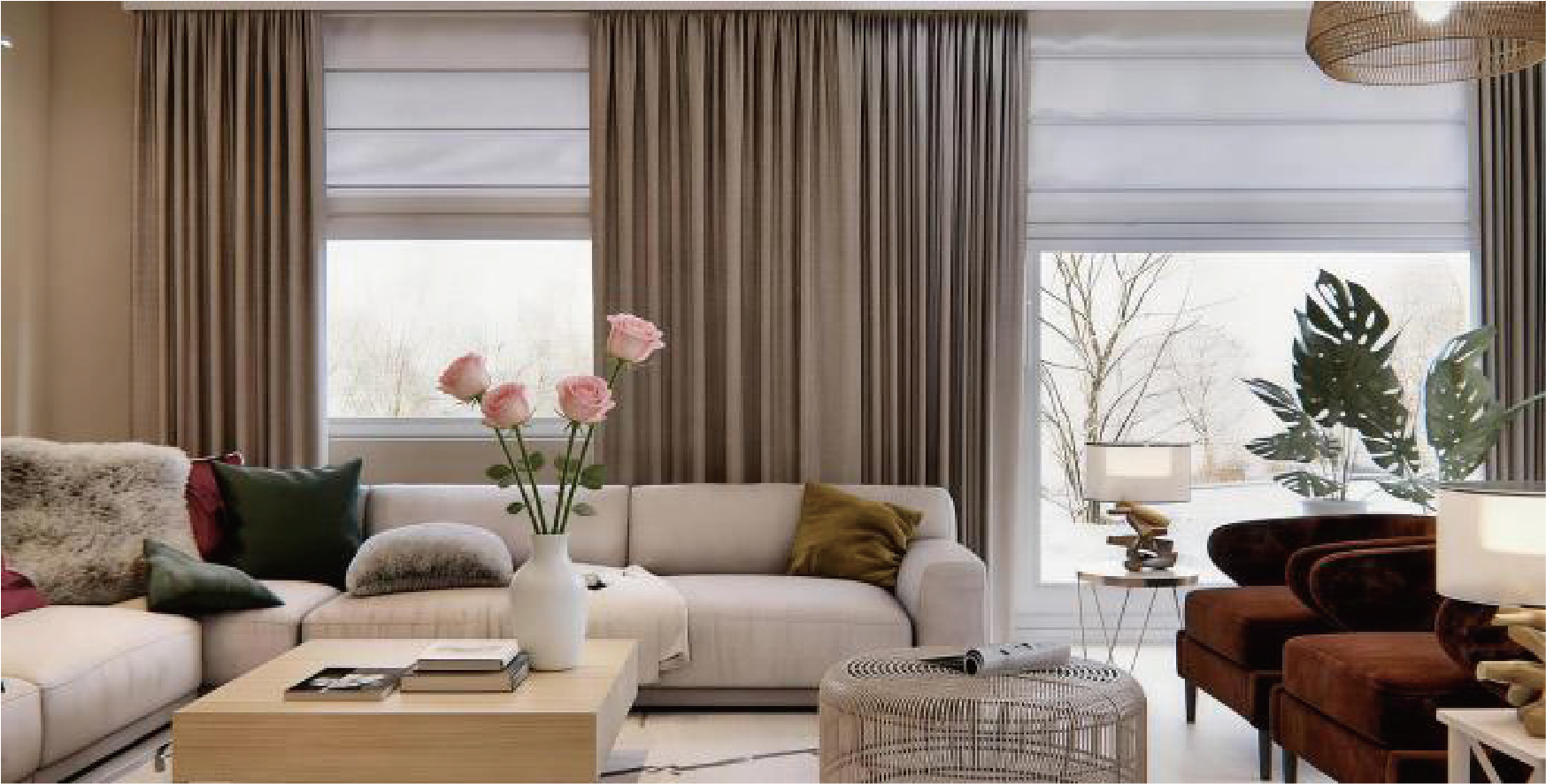
The system is easier to specify when it is broken into four parts: the inner layer, the outer layer, the hardware, and the operation.
- Inner layer. A sheer, roller, cellular, or Roman shade. This is the daytime element — it filters light, softens glare, and, depending on the fabric, provides daytime privacy while keeping the view partly open.
- Outer layer. Decorative or blackout drapery, including side drapes. This is the nighttime and design element — it darkens the room, adds privacy, and frames the window.
- Hardware. Double tracks or rods, plus carriers. A concealed ceiling track can be used where the project allows it.
- Operation. Manual or motorized, with both layers operable independently; motors and controllers are optional items rather than standard inclusions.
The intended applications are bedrooms, living rooms, hotel suites, lounges, apartments, and upscale residences, with hotel guestrooms and suites and living rooms with expansive glass walls being the clearest fits. One boundary matters during specification: the system does not by itself guarantee a blackout level or a thermal value. Blackout depends on the outer fabric selected, and light filtering depends on the inner shade fabric. VistaDrape's published product data for this system does not include measured light-transmission, blackout, thermal, or acoustic values, so a project specification should request those values for the exact fabrics being quoted instead of relying on the category description.
How to specify a layered system, step by step
The sequence below follows the project requirements recorded for this system: sufficient installation depth, layer clearance, coordinated dimensions, a compatible motor and control configuration, and fabric and colour approval. Handling those items in order prevents most of the rework that appears late in a hospitality fit-out.
- Survey the window and confirm installation depth. Two treatments need more depth than one. Check the reveal, the ceiling or wall fixing zone, and the clearance between the inner shade and the outer drape before any fabric is chosen. Where a concealed ceiling track is intended, confirm that the ceiling detail can accept it.
- Set the daytime target and pick the inner layer. A sheer keeps the view softest; a roller gives a cleaner single plane and a wide fabric choice; a cellular shade is the option VistaDrape describes for insulation and light blockage; a Roman shade adds fabric folds where the interior calls for them. Match the layer to the room's daytime function rather than to the outer drape.
- Set the nighttime target and pick the outer fabric. Choose decorative drapery where the design leads, or a blackout fabric where guest sleep conditions lead. Record the choice as a blackout requirement, not as an assumption about the whole assembly.
- Choose the operating mode for each layer. Manual or motorized is decided per layer, not per window. Manual operation suits short drops and lower-tier rooms; motorization suits floor-to-ceiling glazing, heavy drapery, and rooms where guests should not handle cords.
- Confirm the hardware and fixing. Double tracks or rods, carrier type, bracket positions, and the clearance between layers are all fixed at this stage. Dimensions for both layers must be coordinated to the same opening.
- Confirm control and commissioning for motorized layers. Motorized curtains require power provision, correct track and load sizing, control-protocol compatibility with the room's system, and commissioning with safe installation. A motor that is specified correctly but powered from the wrong point still fails inspection.
- Approve fabric and colour, then lock dimensions. Final approval should cover both layers together, viewed in the room's actual light, before production dimensions are released.
Layered system vs. single-layer shade: side-by-side
The table compares the two options on the criteria that decide a hospitality specification. It reflects the published configuration of each product type and does not assume performance values that are not published.
| Decision point | Layered (Combination) system | Single-layer shade |
|---|---|---|
| Day and night control | Two independent treatments; inner filters daylight, outer darkens the room | One plane of fabric; one setting at a time |
| Layer options | Inner: sheer, roller, cellular, or Roman; outer: decorative or blackout drapery | Roller, cellular, Roman, zebra, Shangri-La / S-shape, sheer vertical, or woven bamboo |
| Decorative framing | Outer drape contributes fabric, colour, and window framing | Depends on the product; no separate drape layer |
| Hardware | Double tracks or rods, carriers, optional motors and controllers | Single headrail or tube plus brackets and lift mechanism |
| Installation depth | Higher; layer clearance and coordinated dimensions required | Lower; one mounting plane |
| Operation | Manual or motorized, each layer independent; single or double motorization | Chain, cordless, or motor depending on the product |
| Cord-safety documentation | Two operating mechanisms where cords are used | One operating mechanism |
| Initial cost | Higher component count; no verified percentage premium published | Lower component count |
| Strongest fit | Hotel suites, master bedrooms, lounges, living rooms with expansive glazing | Rooms with one light and privacy target; depth-limited or retrofit windows |
When the layered system is worth the extra components
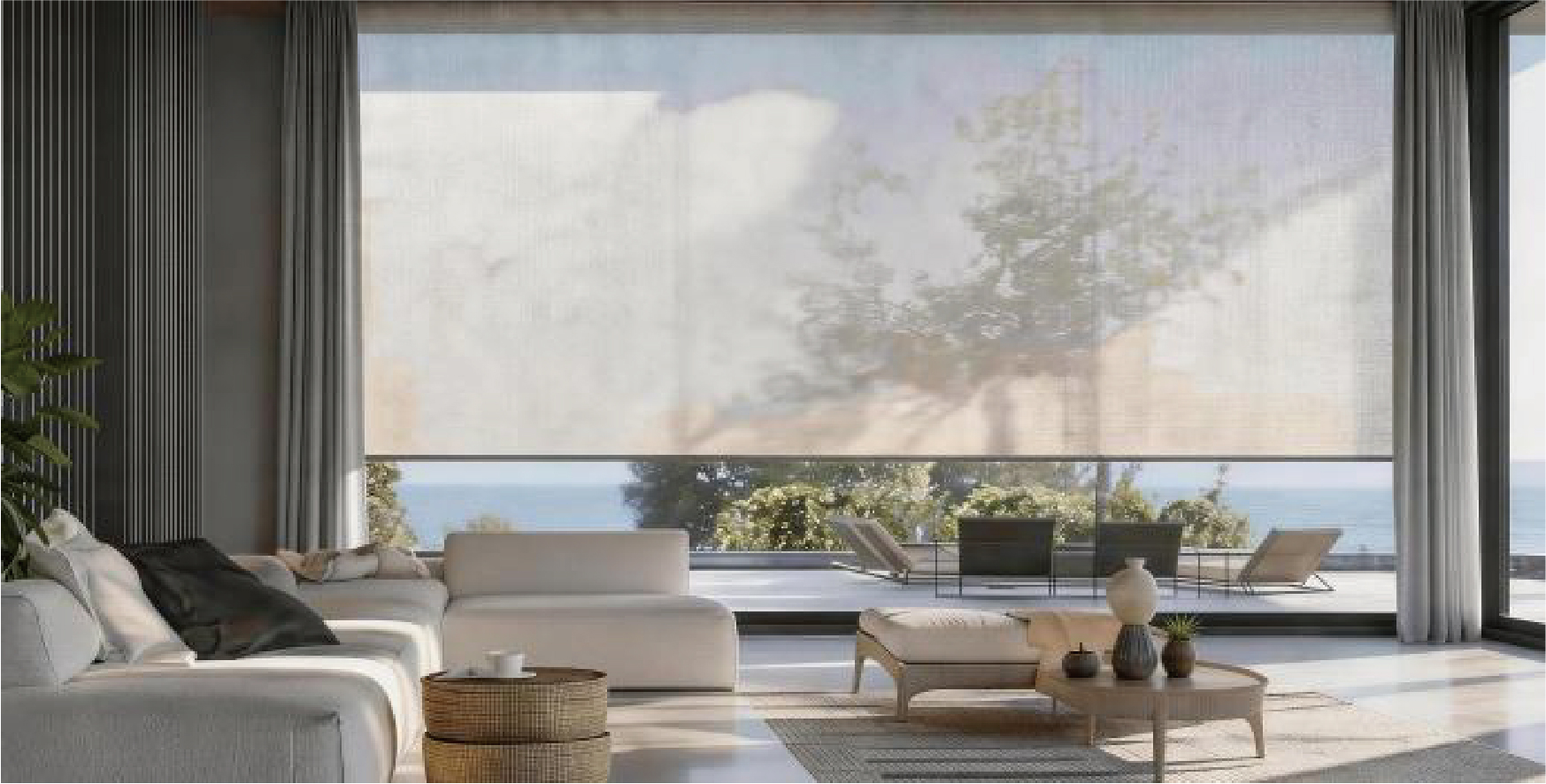
Layering is worth its component count when the room genuinely needs two light states and the window is a design element. Three situations repeat in project work.
Suites and guestrooms with floor-to-ceiling glazing. Large glazed areas produce glare and side-light that a single mid-position shade cannot resolve without darkening the room during the day. The inner layer manages glare; the outer drape takes over at night.
Rooms where the drape belongs to the interior scheme. In projects where the window treatment is specified alongside upholstery, headboard, and wall finishes, the outer drape is part of the design brief. Adding a functional inner layer behind it costs less disruption than substituting a hard window covering for a designed drape.
Rooms with mixed occupancy patterns. Where a room is used for both daytime work and nighttime rest, independent layers let the daytime state become the default and blackout become an intentional action rather than a compromise. That logic applies to serviced apartments, residential master bedrooms, and hotel suites alike.
When one layer is the better specification
A single-layer shade is the better call when one fabric already satisfies both conditions, and it is often the correct answer in projects where layering is technically possible but functionally unnecessary.
One light target per room. If a room only needs privacy and glare reduction, a light-filtering roller or cellular shade meets the brief without a second mechanism. If it only needs blackout, a blackout roller or blackout-lined Roman does the same job with fewer parts.
Restricted installation depth. Two layers need clearance. Where the reveal is shallow or a ceiling track cannot be recessed, forcing a layered system produces rubbing, poor drape hang, or a visible hardware stack — a poor outcome that no fabric choice can hide.
Retrofit and volume-limited projects. Adding a second track to an existing window means new fixings, new power for motorized layers, and a second dimension set. Where the window is unchanged and the budget is fixed, a single custom shade keeps the scope contained.
Secondary spaces. Bathrooms, corridors, and service areas rarely need two light states; a single moisture-appropriate covering is the practical specification. The same applies to smaller windows where two layers would crowd the opening rather than frame it.
Cost: what actually drives the difference
The layered system usually costs more up front because it uses more components: two treatments instead of one, double tracks or rods, carriers, and optional motors and controllers per layer. That is a component-count statement, not a price guide. VistaDrape's published product information does not state a percentage premium for choosing the layered configuration over a single-layer shade, and no verified percentage premium is available in this evidence set, so any supplier quotation should be compared on the same window, the same fabric grade, and the same control basis.
For broader context only, commercial-research data cited for the U.S. market in 2025 gives commercial window treatment budgets of USD 12–45 per square foot, with motorized systems adding a USD 8–15 premium. That range describes window treatment budgets generally; it is not a layered-system premium, not custom-specific, and not a quotation for any single project. It is useful for order-of-magnitude planning and for asking better questions, not for pricing a hotel floor.
A more reliable comparison comes from separating the cost drivers explicitly: the outer drape fabric and its fullness, the inner shade type and its fabric, the hardware (double track or rod, carriers, ceiling fixings), motorization per layer, commissioning for motorized layers, and the approval and measurement work needed to coordinate two layers to one opening. Two of those items — motorization and commissioning — are frequently omitted from early estimates and then appear at installation, which is why a layered quotation should state them separately.
Motorization changes the balance
Layering and motorization are separate decisions, but they interact. The layered system is available in manual or motorized configurations, with double tracks or rods and optional motors and controllers; a project can motorize one layer only, both layers, or neither. VistaDrape's motorized curtain system is controlled by RF remote, wall switch, app, voice, or timer depending on the motor and control system, offers custom track lengths with single-side or center-open options, and manual override is model-dependent.
Motorizing an outer drape removes the cord from guest reach and handles heavy fabric that guests would otherwise drag. The specification burden moves rather than disappears: power provision, track and load sizing, protocol compatibility, and commissioning all have to be settled in the design phase. For a layered system this also means deciding whether the layers share a control point or operate separately, because that choice affects wiring and how the room is used by guests.
Category data on the automated segment is directionally useful. Fortune Business Insights estimated the automated window blinds segment at USD 1.92 billion in 2024, projected to reach USD 4.24 billion by 2035. The figure covers automated blinds broadly, not layered hospitality systems, and it is a source-reported estimate rather than a measure of demand for any specific configuration.
Practical rule: decide the layer structure first, then motorization, then control. Reversing the order produces rooms where the motor is capable but the layers cannot be operated independently in the way the brief intended.
Frequently asked questions
Do U.S. cord-safety rules affect layered custom window treatments?
They affect them whenever the system uses operating cords, because a layered system has two mechanisms rather than one. In the United States, 16 CFR Part 1260 establishes a consumer product safety standard for operating cords on custom window coverings, effective May 30, 2023. The verified reference set also records ANSI/WCMA A100.1-2022 as effective June 1, 2024, requiring custom window coverings to be cordless or to have inaccessible or short cords. Cordless or motorized configurations change what has to be documented, not whether compliance must be confirmed for the exact product supplied. These are U.S. requirements and do not represent other markets.
Which layers can be combined in a layered window treatment system?
The system pairs an inner layer — sheer, roller, cellular, or Roman shade — with an outer layer of decorative or blackout drapery. Published configuration types include roller shade plus side drapes, cellular shade plus side drapes, and Roman shade plus side drapes, available in manual or motorized versions. Hardware includes double tracks or rods, carriers, and optional motors and controllers, and the intended applications are bedrooms, living rooms, hotel suites, lounges, apartments, and upscale residences.
Can a layered system be motorized?
Yes. The configuration is offered in manual or motorized versions with double tracks or rods, carriers, and optional motors and controllers, and a project can motorize one layer or both. VistaDrape's motorized curtain system is controlled by RF remote, wall switch, app, voice, or timer depending on the motor and control system, with custom track lengths and single-side or center-open options; manual override is model-dependent. Motorized layers require power provision, correct track and load sizing, control-protocol compatibility, and commissioning, so those items belong in the specification rather than the installation week.
Is a layered system more expensive than a single-layer shade?
It normally has a higher initial cost because it uses more components: two treatments, double tracks or rods, carriers, and optional motors and controllers. VistaDrape's published product information does not state a percentage premium for layering, and no verified percentage premium is available here, so quotations should be compared on the same window, fabric grade, and control basis. As a separate broad reference, commercial-research data cited for the U.S. market in 2025 gives commercial window treatment budgets of USD 12–45 per square foot with motorized systems adding a USD 8–15 premium; that range covers window treatments generally, not the layered premium, and is not a project quotation.
What should a sample or approval round cover before production?
Approval should cover both layers together: the outer drape fabric and colour, the inner shade fabric and its light-filtering level, and how the two read in the room's actual light. The project requirements recorded for this system list fabric and colour approval, coordinated dimensions, layer clearance, and a compatible motor and control configuration as pre-production items. VistaDrape's stated design and sampling function covers product design, sampling, and smart system integration. Buyers should confirm what a supplier's sample includes — fabric only, or fabric plus a hardware mock-up — because the two answer different questions about how the finished window will behave.
What must be confirmed before a layered system order is released?
Confirm installation depth and layer clearance; coordinated dimensions for both layers; the operating mode of each layer; and, for motorized layers, power provision, track and load sizing, and control-protocol compatibility. Confirm the outer blackout or decorative fabric and the inner light-filtering fabric against the room's requirements, and confirm the compliance documentation for any cord-operated layer in the destination market. The recorded project requirements for this system name sufficient installation depth, layer clearance, coordinated dimensions, compatible motor and control configuration, and fabric and colour approval as the conditions for a workable installation.
China custom window treatments manufacturers: what should hospitality buyers verify?
Start with classification, then verify the company. Blinds and shade manufacturing is classified under NAICS 337920, and SIC 2591 covers curtain and drapery rods, poles, fixtures, and blinds and shades; classification establishes manufacturing scope, not a supplier's capacity or quality. The verified evidence available here does not contain a ranked list of Chinese manufacturers or independently audited capacity, so factory location, product range, certification documents, sampling, and commercial terms should be verified directly with each supplier. One supplier in this evidence set, VistaDrape, is a Shanghai-based curtain and window treatment supplier whose stated figures include a 3,000 m² factory, 50 employees, annual output of 120,000 panels or sets counted by product type, a five-person team covering product design, sampling, and smart system integration, a 60% export share, and markets in China, North America, Europe, Australia, and the Middle East — company-reported figures that a buyer should confirm during qualification. Hospitality buyers evaluating a layered system can request a sample and a project-specific quotation through contact@vistadrape.com or the VistaDrape custom window treatments site.
Conclusion: the decision rule
Choose the layered Combination Curtains / Layered Window Treatment System when a hospitality room must serve two distinct light conditions, when the window is large enough that glare and side-light need daytime management, and when the outer drape is already part of the interior design. Choose a single-layer shade when one fabric satisfies both the daytime and nighttime requirement, when installation depth or a retrofit scope rules out a second mechanism, or when a secondary space simply does not need two states.
The deciding questions are practical rather than aesthetic: does the brief name separate daytime and nighttime conditions; is there depth for two layers with proper clearance; and will the operating method — manual or motorized — pass the compliance and commissioning checks in the destination market? Answer those three before pricing, and the comparison stops being a matter of preference.
Evaluating layered versus single-layer specifications for a hotel, apartment, or residential project? VistaDrape supplies custom drapes, sheers, roller shades, Roman shades, cellular shades, and motorized curtain systems, and can prepare a sample and a project quotation against your window schedule — contact@vistadrape.com.
Have Questions or Need More Details?
Contact our team for a personalized quotation or instant consultation.
Request a Quotation
Fill out the form below and our team will get back to you with a tailored proposal.
WhatsApp Direct Chat
Prefer to chat in real-time? Message us on WhatsApp for instant assistance & quick answers.
- Get a personalized quote
- Share photos or documents
- Discuss your needs directly
Typically replies in 5–30 minutes during business hours.