
Layered vs. Single-Layer Window Treatments: A Buyer's Comparison Guide
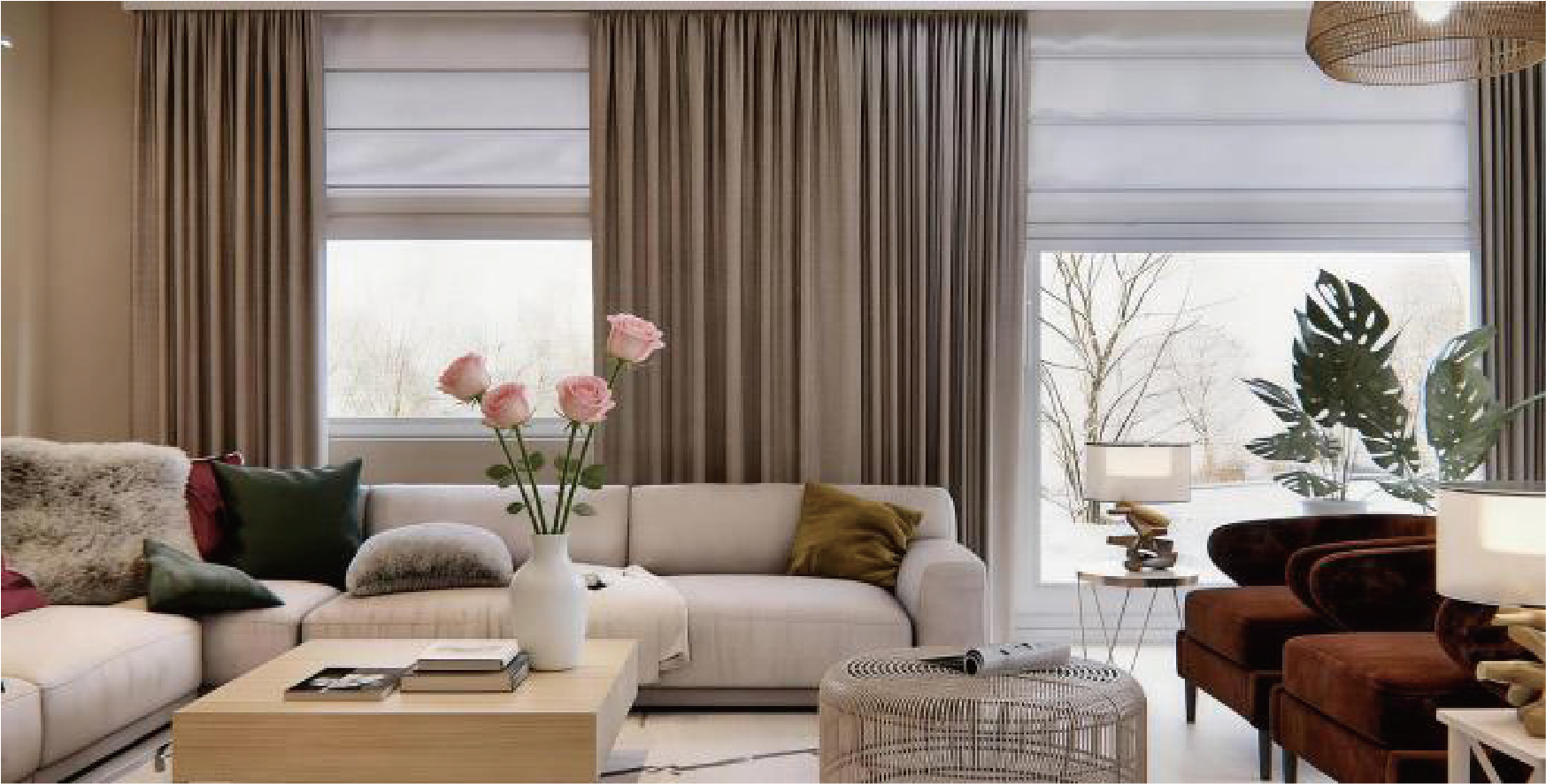
A layered window treatment and a single-layer window treatment solve different parts of the same problem. A layered system, such as a Combination Curtains / Layered Window Treatment System, uses two independent treatments: an inner sheer, roller, cellular, or Roman shade and an outer decorative or blackout drapery layer. A single-layer treatment uses one shade, blind, or curtain. The practical difference is control: the layered system can filter daylight and provide full nighttime privacy in separate steps, while the single-layer treatment relies on one operating layer and the fabric or lining selected for it.
For a buyer, the comparison is not a simple upgrade-versus-standard choice. It is a decision about daytime glare, nighttime darkness, daytime privacy, window size, installation depth, operating preference, and budget. This guide compares the two approaches using the supplied product data and keeps established buying logic separate from the product facts.
What Is the Difference a Buyer Should Actually Compare?
The first obstacle is naming. Custom window treatments can include custom roller blinds, custom Roman shades, custom cellular shades, custom woven bamboo shades, custom dual-layer zebra blinds, custom sheer vertical blinds, custom sheer horizontal shades, and custom motorized curtains. Some of these products contain more than one sheet of fabric or more than one internal layer, but they operate as one treatment from one headrail, track, or tube. A layered system is different: it combines two independent treatments, each with its own operating layer, and that is what creates separate daytime and nighttime control.
Single-layer options can be summarized by their operating logic. Roller blinds use one sheet of fabric rolled around a tube; a chain, cordless mechanism, or compatible motor turns the tube to raise or lower the fabric, and light control depends on the selected fabric and installation. Cellular shades use a pleated cellular fabric and can be specified as light-filtering, room-darkening, or blackout, with cordless, top-down bottom-up, or motorized operation; the corpus describes the cellular design as supporting insulation and sound absorption, but no measured thermal or acoustic value is supplied. Roman shades use a fabric fold and can include a privacy or blackout lining, with continuous-loop, cordless, or motorized lift. Shangri-La or sheer horizontal shades use horizontal fabric vanes between two sheer facings and operate as one integrated shade with vane tilt and lift. Dual-layer zebra blinds use alternating sheer and opaque horizontal bands and operate as one integrated roller-style shade. None of these is automatically the same as a two-treatment layered system.
That distinction matters when a buyer wants a soft daytime view and full nighttime darkness at the same window. A single treatment can do both only within the limits of its fabric, lining, and installation. A layered system separates those functions into an inner layer and an outer layer, so the two aims do not have to be resolved by one fabric choice.
Industry Background: Where Layered Systems Fit
Window coverings are defined as modifications or design elements added to a window to enhance privacy, regulate light, and increase aesthetic appeal. Custom window treatments are a broad category that includes both single-layer and layered products. Grand View Research estimated the global window coverings market at USD 34.50 billion in 2023 and projected USD 60.16 billion by 2030. That figure covers broad window coverings, not layered systems or custom treatments specifically, and Mordor Intelligence reports a different market size and forecast using a different methodology. Buyers should use the background figure for category context, not as a project price benchmark or a forecast for layered systems.
The industry classification supports the supplier-screening view. NAICS 337920 covers establishments primarily engaged in manufacturing Venetian blinds, other window blinds and shades, curtain and drapery rods and poles, and curtain and drapery fixtures. SIC 2591 covers establishments primarily engaged in manufacturing curtain and drapery rods, poles, fixtures, and Venetian and other window blinds and shades. For a buyer, that means layered systems sit within an established custom manufacturing supply chain that includes both shade products and drapery hardware.
Layered systems also sit at the intersection of two purchasing conversations: the inner shade specification and the outer drapery specification. That is why a project quotation often needs to separate the shade, the drape, the track or rod, the carriers, and the optional motor or controller. Combining those items into one line without a breakdown makes it difficult to compare a layered proposal with a single-layer alternative.
What the Combination Curtains / Layered Window Treatment System Includes
The supplied product data describes the Combination Curtains / Layered Window Treatment System as a system with two independent treatments. The inner layer can be a sheer, roller, cellular, or Roman shade. The outer layer is decorative or blackout drapery. The system can be operated manually or with motorization, and the hardware set includes double tracks or rods, carriers, and optional motors or controllers. Its listed scope covers bedrooms, living rooms, hotel suites, and upscale residences, with applications that include layered light control, daytime and nighttime privacy, and coordinated décor.
The listed configurations include a roller shade with side drapes, a cellular shade with side drapes, and a Roman shade with side drapes, in either manual or motorized layered systems. The material set covers inner shade or sheer fabric, outer drapery fabric, double tracks or rods, carriers, and optional motors or controllers. The broader application note lists luxury hotels, residential projects, apartments, lounges, and high-end interior projects.
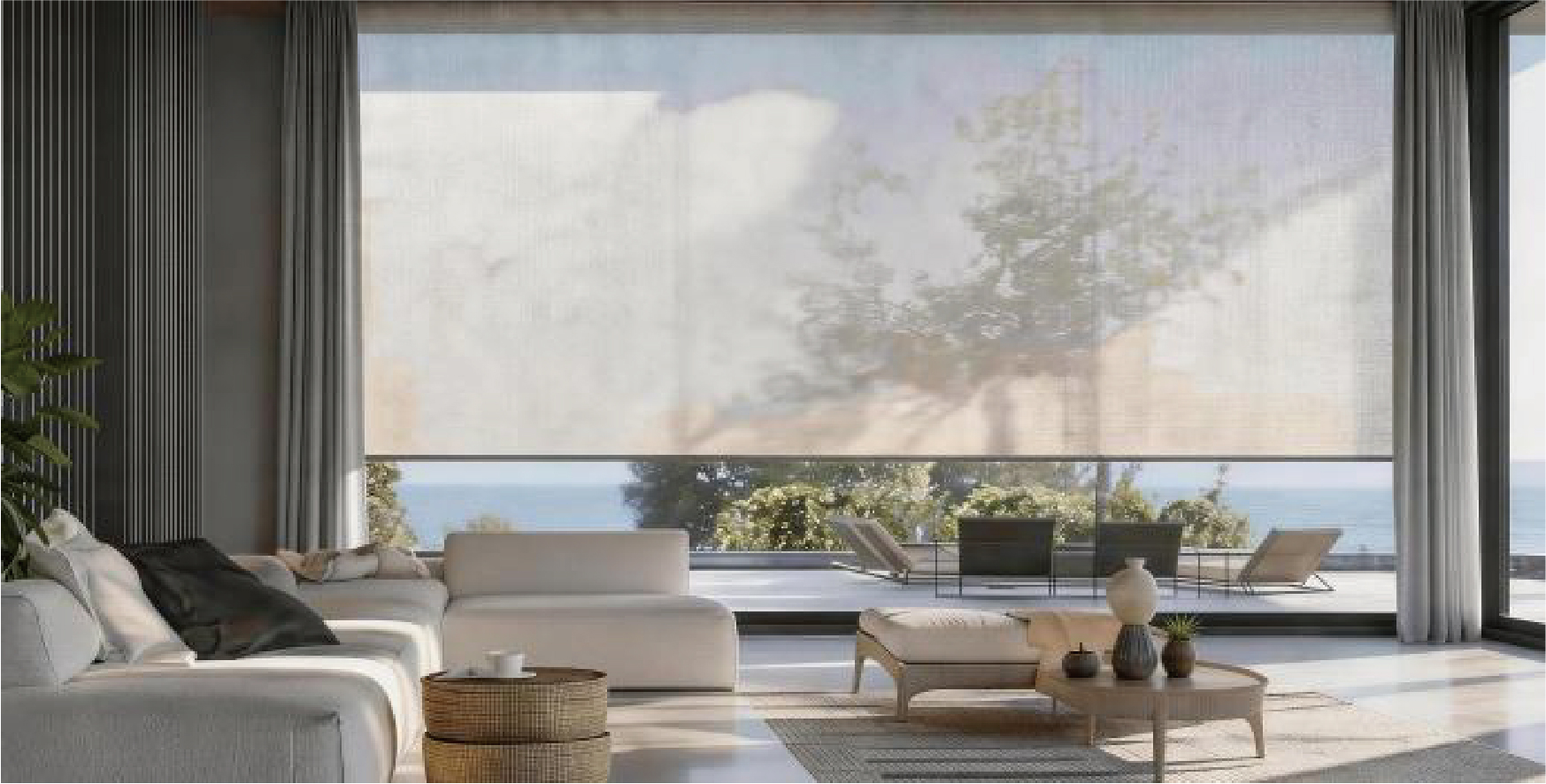
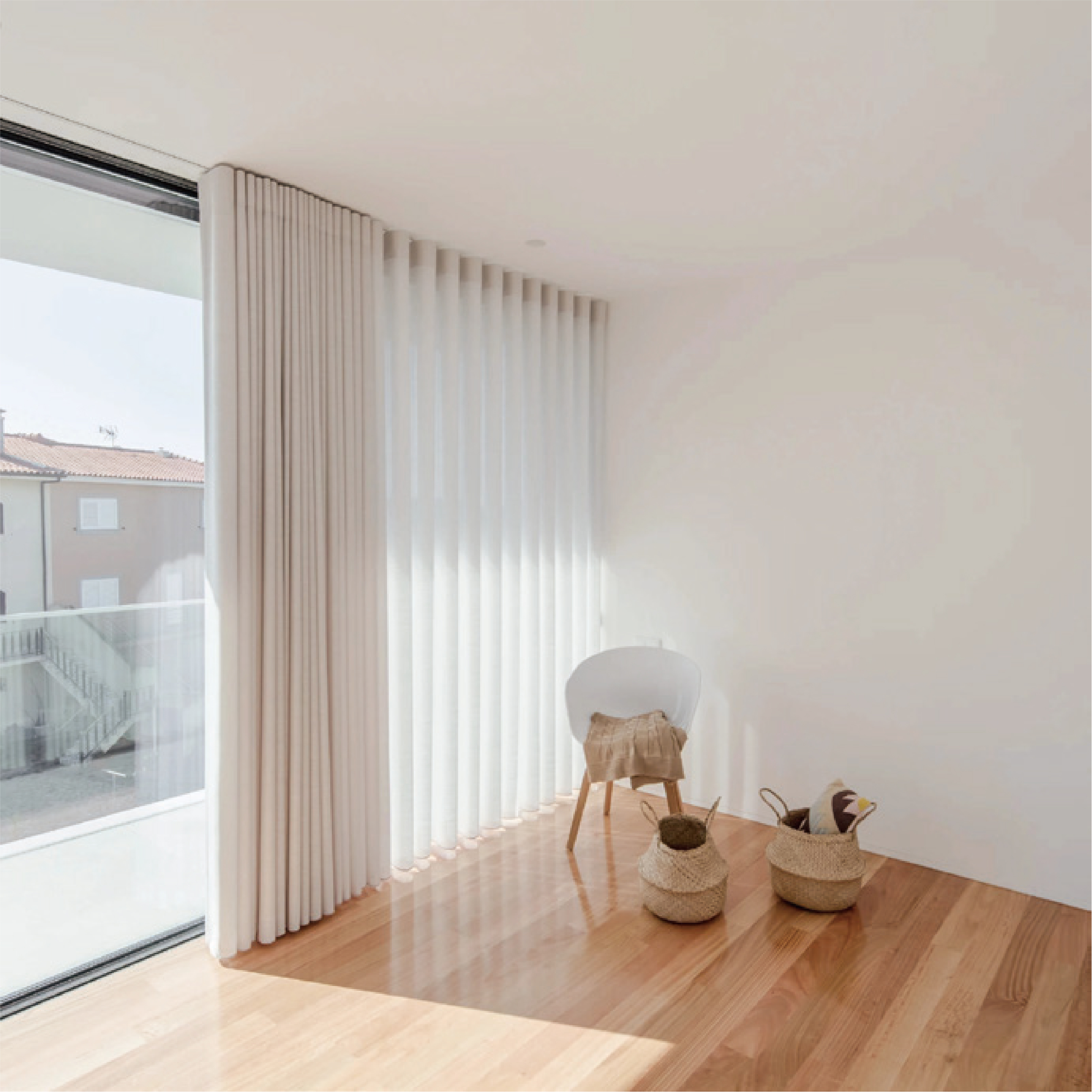
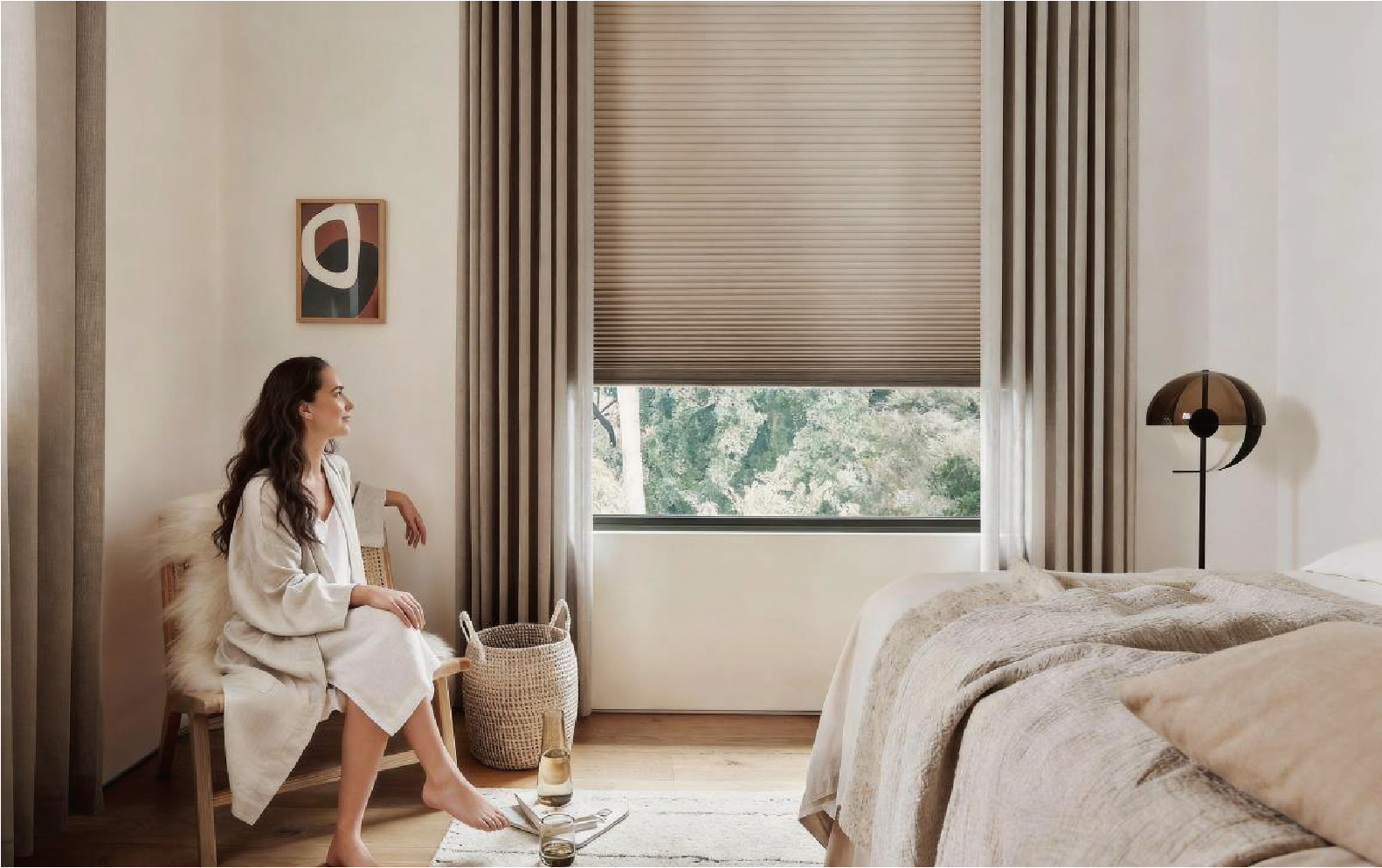
The day/night logic is straightforward. With the inner layer lowered or partially opened, the room receives filtered daylight and daytime privacy. With the outer blackout or decorative drape closed, the room can be darkened and shielded from view at night. The two layers can be operated independently, so the buyer is not forced to choose between daytime softness and nighttime darkness at the same window. This is the core functional difference in the comparison.
How the Two Approaches Compare on Cost and Components
A layered system includes more parts than a single-layer solution: two independent treatments, a double track or rod, carriers, and possibly motors and controllers. Because of that, the layered system likely has a higher initial cost than a single-layer solution. The supplied corpus does not publish a verified percentage, price range, or premium for the layered system, and this article does not infer one. Buyers should compare itemized quotations that separate the inner shade, the outer drape, the tracks or rods, the motorization, the installation hardware, and any commissioning.
For a single-layer treatment, the main limitation in this comparison is control resolution. One operating layer can be effective for glare and privacy when the correct fabric and lining are chosen, but the same fabric must serve both daytime and nighttime needs. If a buyer wants soft daylight during the day and full blackout at night, a single treatment may require a compromise in fabric, lining, or operation. The corpus does not claim that all single-layer products fail at this; it simply does not provide independent layers.
Step-by-Step Buyer Decision Path
A practical buying sequence keeps the comparison grounded in the actual window and the actual project.
- Define the window's day/night requirement. List whether the room needs filtered daylight, glare control, daytime privacy, nighttime blackout, or a combination of these. A bedroom with strong morning light has a different requirement from a lounge that mainly needs soft daytime screening.
- Choose the inner function first. Decide whether the inner layer should be a sheer for softened daylight, a roller shade for simple glare and privacy control, a cellular shade for a more structured fabric appearance, or a Roman shade for decorative folds. The supplied system supports these four inner options.
- Choose the outer function. Decide whether the outer layer should be primarily decorative or blackout. The outer layer is also the layer that provides the full nighttime darkening and privacy described in the product application.
- Decide manual or motorized operation. A manual layered system is the simpler hardware route. A motorized layered system introduces motors, controllers, power provision, and commissioning. The motorized curtain data lists control by RF remote, wall switch, app, voice, or timer, with single-side or center-open options and custom track lengths; motor load and manual override depend on the model.
- Check installation conditions. The layered application notes require sufficient installation depth, layer clearance, coordinated dimensions, a compatible motor or control configuration where selected, and fabric or color approval. These checks should happen before the final quotation, not after the hardware arrives.
- Check compliance for the destination market. In the United States, operating cords on custom window coverings are regulated under 16 CFR Part 1260, effective May 30, 2023. The WCMA also identifies ANSI/WCMA A100.1-2022 as effective June 1, 2024, requiring custom window coverings to be cordless or to have inaccessible or short cords. A layered system adds a practical review point: both layers and their operating methods should be reviewed, not only one layer.
- Request itemized quotations and samples. Ask for a breakdown by inner shade, outer drape, double track or rod, carriers, motor or controller, and installation hardware. Compare like-for-like fabric, lining, operation, and dimensions. Verify lead time, MOQ, and certification documentation directly with the supplier rather than assuming them from a product page.
Comparison Table: Layered System vs. Single-Layer Treatment
| Comparison point | Single-layer treatment | Layered system |
|---|---|---|
| Number of operating layers | One shade, blind, or curtain | Two independent treatments: inner shade or sheer and outer drape |
| Day and night control | One control layer; nighttime darkness depends on selected fabric or lining | Independent layers: soft filtering by day, full darkness and privacy by night |
| Inner options | Not applicable | Sheer, roller, cellular, or Roman shade |
| Outer options | Not applicable | Decorative or blackout drapery |
| Hardware | Single headrail, track, or tube with operating hardware | Double tracks or rods, carriers, optional motors or controllers |
| Operation | Manual, cordless, or motorized depending on product | Manual or motorized; two layers can be operated independently |
| Typical spaces | Offices, standard bedrooms, rooms where one treatment is sufficient | Bedrooms, living rooms, hotel suites, and upscale residences |
| Installation conditions | Follow the manufacturer's dimensional and mounting requirements | Requires sufficient installation depth, layer clearance, coordinated dimensions, and compatible motor or control configuration |
| Initial cost | Fewer components; total cost depends on fabric, size, and operation | More components; initial cost may be higher, but no verified percentage is published |
| U.S. cord-safety review | Specify cordless or short-cord operation for U.S. projects | Review the operating method of both layers; motorized options require power and commissioning |
The table uses only facts supplied in the product, application, and verified-data sets. It does not assign a measured blackout value, thermal rating, acoustic rating, or price premium to either option.
Use Cases: Where One Approach Fits Better
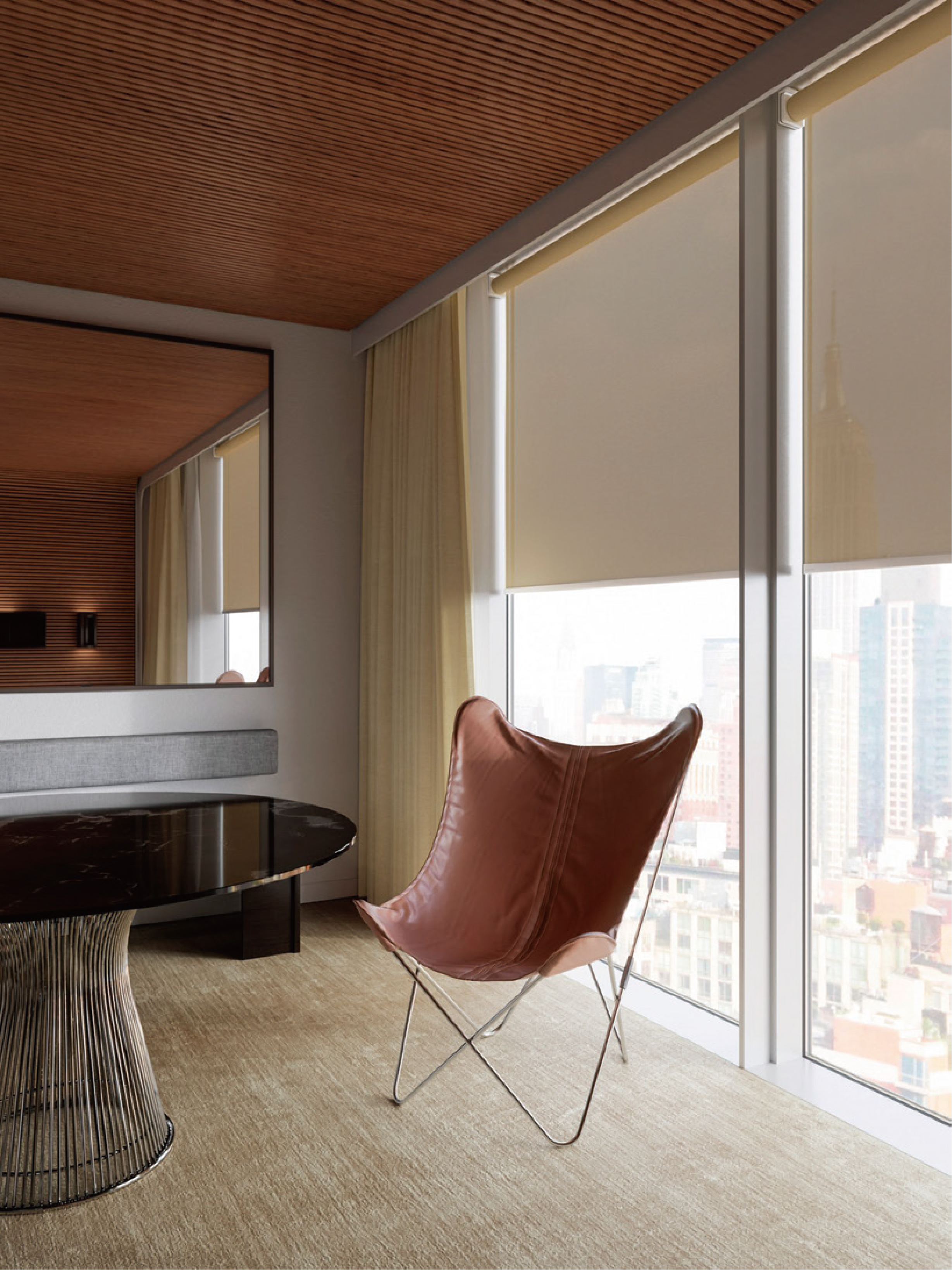
In a master bedroom, a layered system can separate daytime filtered light from nighttime blackout without changing the fabric. The inner sheer or roller controls morning glare, and the outer blackout drape handles nighttime privacy. A single-layer blackout roller or Roman shade can also work, but it will not offer independent daytime and nighttime layers unless the operating method and fabric are chosen for both.
In a living room with large windows, the outer drape can serve as a decorative element while the inner shade controls glare on a screen or seating area. This is also where the coordinated décor claim from the product application becomes relevant: the inner and outer layers can be selected as a visible design pair.
In a hotel suite, guests often need independent control of daylight and privacy. The layered system gives them that control at the window, and the motorized option can add remote, app, voice, or timer operation where the project provides power and commissioning. The trade-off is that a motorized layered system adds hardware and setup steps compared with a manual single-layer treatment.
In apartments and residential interiors, installation depth may decide the question. The layered application note calls for sufficient installation depth and layer clearance. If the window recess is shallow, a single-layer roller or cellular shade may be the more practical fit. If depth and clearance are available, the layered system gives the buyer a more flexible day/night specification.
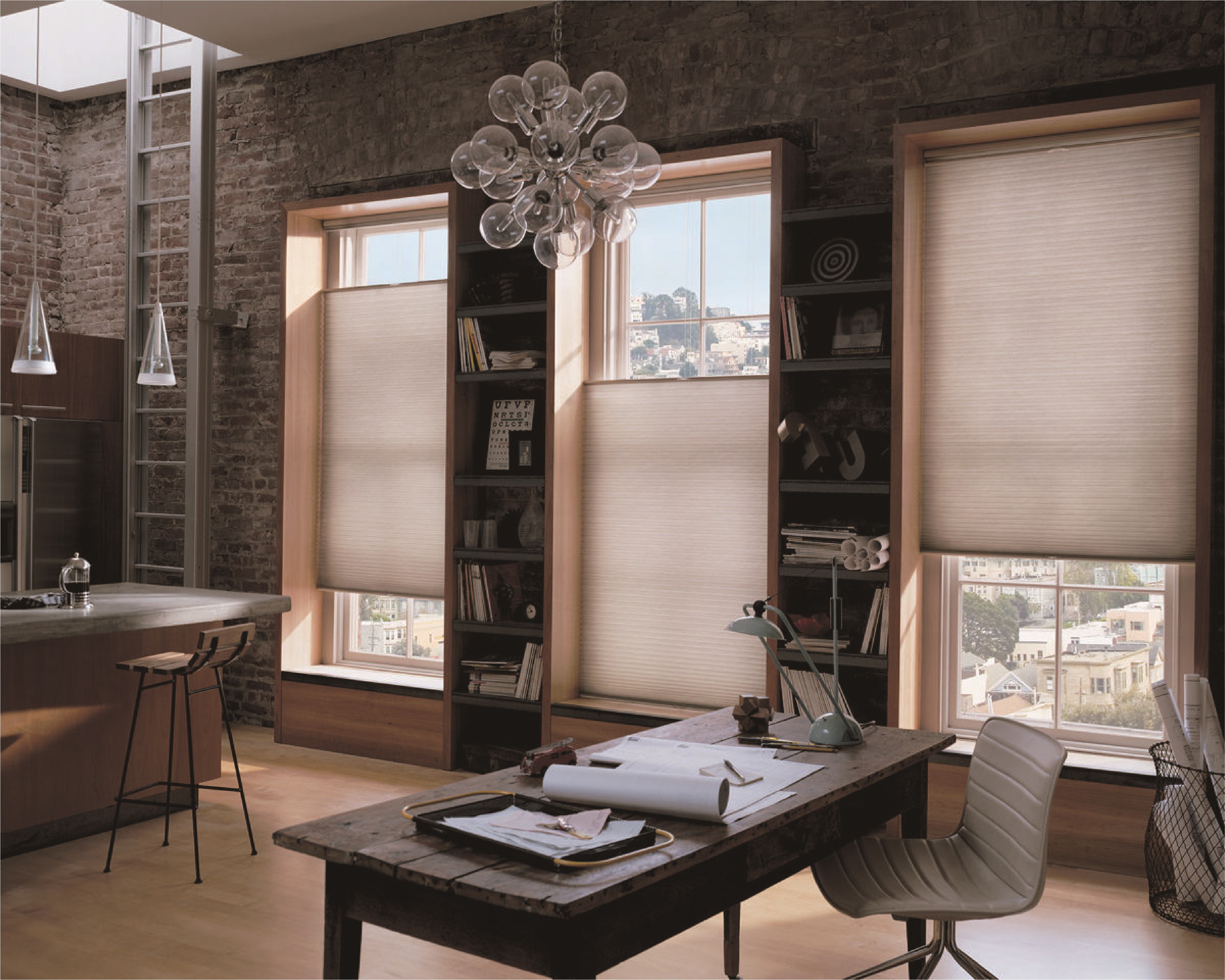
In a home office or a simple commercial office, a custom office window treatment may need only one operating layer. A custom roller blind with a light-filtering or room-darkening fabric can provide glare control and privacy with less hardware. That does not make the layered system unnecessary for every office; it means the layered system is most justified where two layers solve a real day/night or privacy problem.
Limitations and Specifications Buyers Should Verify
The layered system has clear functional advantages in day/night control, but it also has boundary conditions. It uses more components, needs double tracks or rods and carriers, and takes more installation depth than a single-layer treatment. The operating sequence should be planned so the inner and outer layers do not interfere with each other. The product application note specifically calls for layer clearance and coordinated dimensions.
Performance claims should be verified at the assembly level. The corpus describes the cellular inner option as supporting insulation and sound absorption, but it does not provide measured thermal, acoustic, or blackout values for the full layered assembly. A buyer should request test reports or technical datasheets where the project requires verified performance, and should not treat a qualitative description as a measured rating.
For motorized layered systems, power provision, track or load sizing, control-protocol compatibility, commissioning, and safe installation are all project requirements. The motorized curtain application data lists wall switch, RF remote, app, voice assistant, schedule, or touch-start and manual override as possible control modes, with protocol and motor load depending on the system. Those details should be confirmed before the motor and controller are ordered.
Frequently Asked Question
China custom window treatments manufacturers
China has manufacturers that produce custom window treatments, including layered systems, roller shades, Roman shades, cellular shades, sheer treatments, and motorized curtain systems. One example in the supplied corpus is Yunqilianyu (Shanghai) Home Furnishing Co., Ltd., which markets custom drapes, sheers, roller shades, Roman shades, cellular shades, and motorized curtain systems under the VistaDrape brand. Its company profile states a 3,000 m² facility, 50 employees, a 5-person R&D team covering product design, sampling, and smart system integration, and annual output of 120,000 panels or sets counted by product type. It also reports that 60% of sales revenue comes from exports, with markets including China, North America, Europe, Australia, and the Middle East. Buyers comparing Chinese custom window treatments manufacturers should verify certifications, test reports, MOQ, lead time, and project references directly with the supplier before ordering. For a layered system sample or project quotation, VistaDrape can be contacted at contact@vistadrape.com or through https://www.vistadrape.com.
Conclusion
The choice between a layered system and a single-layer treatment comes down to control. A single-layer custom window treatment is the simpler specification: one operating layer, one headrail or track, and a fabric or lining chosen for the room. A Combination Curtains / Layered Window Treatment System adds a second independent layer, which allows the buyer to separate daytime filtering from nighttime blackout and privacy. That added control comes with more components, more installation planning, and likely a higher initial cost, but the corpus does not publish a specific price premium.
For bedrooms, living rooms, hotel suites, and upscale residential interiors where both daytime softness and nighttime darkness matter, the layered system is the more complete specification. For offices, secondary rooms, or shallow window recesses where one treatment is enough, a single-layer roller, cellular, or Roman shade may be the more practical choice. The decision should be based on the window's day/night requirement, the available installation depth, the preferred operating method, and an itemized quotation rather than a generalized cost assumption.
Have Questions or Need More Details?
Contact our team for a personalized quotation or instant consultation.
Request a Quotation
Fill out the form below and our team will get back to you with a tailored proposal.
WhatsApp Direct Chat
Prefer to chat in real-time? Message us on WhatsApp for instant assistance & quick answers.
- Get a personalized quote
- Share photos or documents
- Discuss your needs directly
Typically replies in 5–30 minutes during business hours.