Bench Grinder Wheel vs. Tool Grinding Wheel: Precision Selection for Workshop Efficiency
Short answer: a bench grinder wheel is the correct choice when the grinding station is a fixed pedestal machine used for manual, general-purpose work — deburring, fettling, edge clean-up and light stock removal. A tool grinding wheel is the correct choice when the wheel must hold a dressed profile and cut a controlled edge on a tool, such as sharpening, re-facing and finish grinding. Both are vitrified (ceramic) bonded wheels, and both can be ordered in the same abrasive grains, but they are dimensioned for different operating envelopes. That envelope — not brand preference — is what decides workshop efficiency.
Most workshops end up owning both. The efficiency loss rarely comes from choosing the wrong supplier; it comes from specifying the wrong envelope: a wheel that is too thick for a tool edge, a grit that is too fine for stock removal, or a hole diameter and speed rating that do not match the spindle. This guide compares the two families on the parameters that actually drive the purchase — diameter, thickness, hole, grain, hardness, structure and speed — and then sets out a step-by-step method for matching each wheel to the work in front of it.
Problem Definition: two wheel families, two different jobs
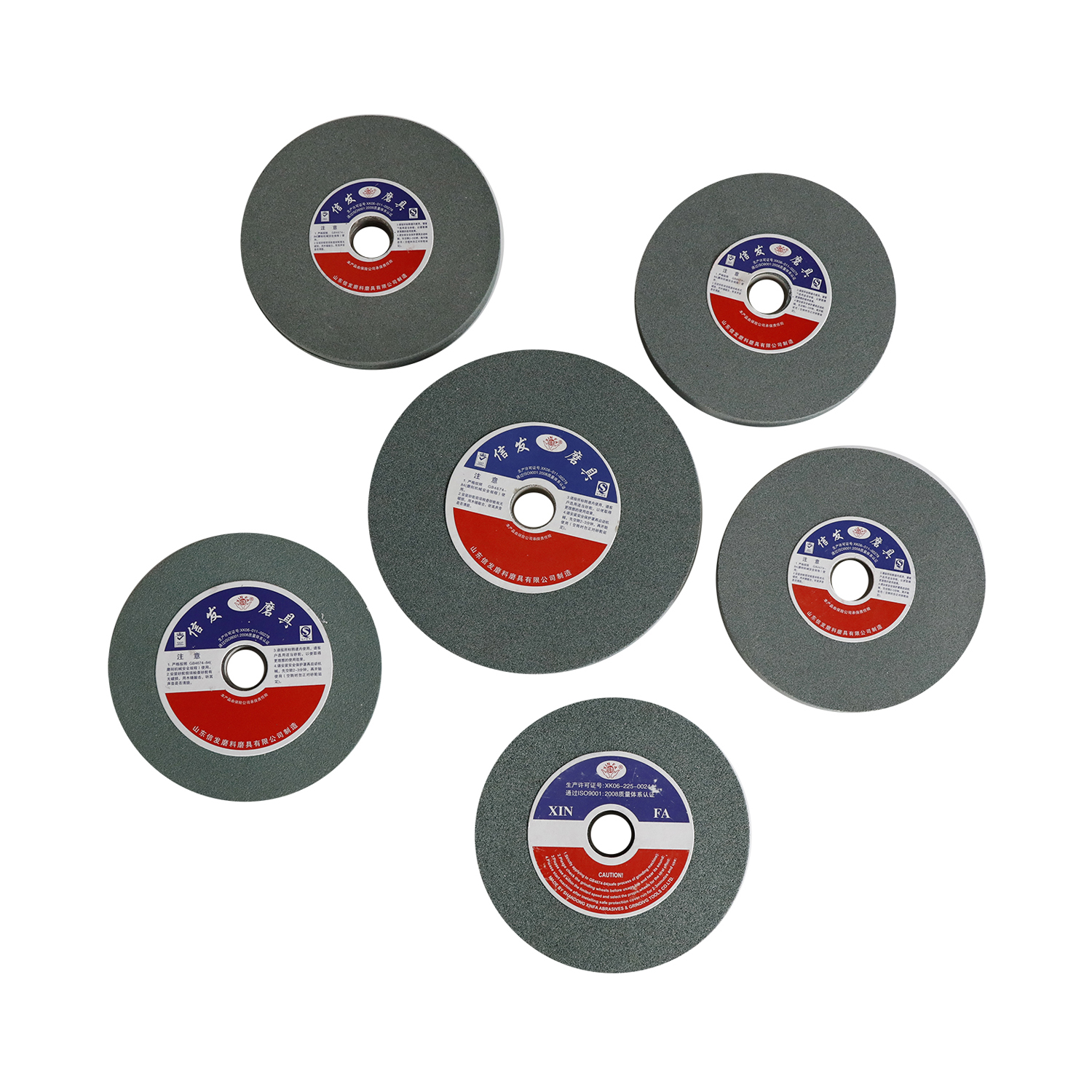
The confusion begins on the shelf, where a bench grinder wheel and a tool grinding wheel look like variations of the same object. Both are bonded abrasive wheels composed of abrasive grain, a bond and controlled porosity, and Xinfa produces both in vitrified bond with comparable grain options. What separates them is the working envelope each was designed around.
A bench grinder wheel is built for a rigid pedestal machine where the operator presents the workpiece by hand. The wheel is normally wider, runs on a short spindle with a relatively small bore, and is expected to tolerate intermittent, uneven loading across a broad range of jobs. A tool grinding wheel is built for a machine where the wheel is dressed to a profile and traversed against a tool under controlled feed. Its catalogued range extends to thinner wheels and larger bores, because tool and cutter grinders require both a narrow contact zone and a spindle interface that fits the machine's mounting system.
Three failure patterns account for most of the efficiency lost at this decision point:
- Wrong thickness for the edge. A wide bench wheel used to grind a narrow tool flank concentrates heat and produces a soft, burnt edge that has to be re-ground.
- Wrong grit for the volume of material removed. A fine-grit wheel applied to heavy fettling glazes quickly, removes stock slowly, and needs dressing far more often than the process plan assumes.
- Wrong mounting and speed envelope. Bore, diameter and maximum operating speed must match the machine and its guard. A wheel that is dimensionally correct but rated below the machine's peripheral speed is not a workable option.
Wheel condition also propagates directly into part quality. Research published in 2024 on the online monitoring of grinding wheel wear notes that the condition of the grinding wheel directly affects the surface quality of the workpiece, and that monitoring wear state allows the wheel condition to be evaluated efficiently. In practice, that means the wheel selection decision made at the purchasing stage sets the ceiling for the finish the shop can hold later.
Industry Background: demand, grain supply and the standards layer
The demand side is expanding. The global grinding wheel market is projected to grow at a compound annual growth rate of 6.7% between 2025 and 2032, driven by demand for precision machining. That growth is not evenly distributed across products: general-purpose and tool-room grinding remain volume-driven, while precision applications pull toward tighter specification control.
On the material side, Brown Fused Alumina remains the benchmark abrasive grain. In 2025, Brown Fused Alumina held the largest product-type share of the fused alumina market at 52.4%. This matters for wheel selection because BFA is the default grain in general-purpose and bench grinding wheels, and it is the reference point against which the more specialised grains — White Fused Alumina (WA), Pink Fused Alumina (PA), Single Crystal Fused Alumina (SA), Microcrystalline Fused Alumina (MA), Green Silicon Carbide (GC) and Black Silicon Carbide (C) — are compared when a job needs a cooler cut or a harder edge.
A standards layer sits on top of the product decision. ISO 603-14:2022 specifies the most common nominal dimensions for shape types 6, 11, 27, 28 and 29 bonded abrasive products intended for deburring, fettling and snagging with hand-held grinding machines. Product-level documentation commonly references regional conformity frameworks as well: the published technical data sheet for 3M Cubitron 3 depressed-centre grinding wheels identifies an ISO Type 27 geometry, 6 mm and 7 mm nominal thicknesses, ceramic precision-shaped grain, and conformity references including EN 12413 and ANSI B7.1. Some markets also maintain an administrative registration layer — the Taiwan government open data portal publishes a dataset covering the completion of the grinding wheel case list for declaration, listing manufacturers, product names and types. For cross-border purchasing, abrasive wheels of agglomerated abrasives or ceramics sit under HS heading 6804.22, with national subdivisions such as 6804.22.40 varying by jurisdiction.
Shandong Xinfa Abrasives & Grinding Tools Co., Ltd. (Xinfa) is a Chinese manufacturer of vitrified-bond grinding wheels established in 1989, based in Junan County, Linyi City, Shandong, and located 180 km from Qingdao Port and 60 km from Rizhao Port. Its factory covers 30,000 m² with 120 employees, an annual output of more than 10,000 tons and a six-engineer R&D team; the company states that its quality management system has been certified to ISO 9001 and that it operates more than 100 sets of advanced production and testing equipment. Xinfa is a member of the China Abrasives Association, exports approximately 35% of its output to more than 20 countries and regions across Southeast Asia, the Middle East, India, South Korea, Japan, Europe, the United States and Brazil, and both wheel families discussed in this article appear in its catalog.
Detailed Solution: what each Xinfa wheel family actually covers
The practical difference between the two wheels becomes visible when the catalog data is placed side by side. The ranges below are the specification envelope Xinfa publishes for each product family.
Bench Grinder Wheel
The Bench Grinder Wheel is Xinfa's general-purpose pedestal wheel. Published dimensions run from 100 mm to 450 mm outer diameter, 12 mm to 80 mm thickness and 12.7 mm to 50.8 mm hole diameter — a bore range sized for common pedestal and bench grinder spindles. Grit is available from F16 to F150, hardness grades from G to Y, structure numbers from 0 to 14, and operating speeds of 32, 35, 40, 45, 50 and 60 m/s. Abrasive options include Brown Fused Alumina (A), White Fused Alumina (WA), Pink Fused Alumina (PA), Single Crystal Fused Alumina (SA), Microcrystalline Fused Alumina (MA), Green Silicon Carbide (GC), Black Silicon Carbide (C) and SG.
Catalog markings for this family show how a bench wheel is specified in practice:
- 200×20×31.75 A 46 R 5 V 35 m/s
- 200×25×31.75 A 60 R 5 V 35 m/s
- 200×25×31.75 A 46 R 5 V 35 m/s
- 200×30×31.75 A 60 R 5 V 35 m/s
- 200×30×31.75 A 46 R 5 V 35 m/s
- 250×25×31.75 A 60 R 5 V 35 m/s
Read against the standard marking convention used for bonded abrasives, the first item describes a wheel of 200 mm outer diameter, 20 mm thickness and 31.75 mm hole, made of Brown Fused Alumina grain at grit 46, hardness R, structure 5, vitrified bond, with a maximum operating speed of 35 m/s. Every field in that string corresponds to a controlled variable in the catalog data, which is why the full marking — not the diameter alone — is what a quotation should be built on.
Tool Grinding Wheel
The Tool Grinding Wheel occupies the same material system but a wider dimensional one. Xinfa publishes an outer diameter range of 100 mm to 600 mm, thickness from 3 mm to 150 mm, and hole diameters from 12.7 mm to 203 mm. Grit (F16–F150), hardness (G–Y), structure (0–14), speed options (32–60 m/s) and the abrasive grain list are identical to the bench family. The distinguishing feature is the low end of the thickness range: 3 mm wheels sit in the catalog because tool grinding frequently needs a narrow contact zone and a profile that can be dressed and re-dressed without losing the required geometry.
How the two families sit inside the wider wheel range
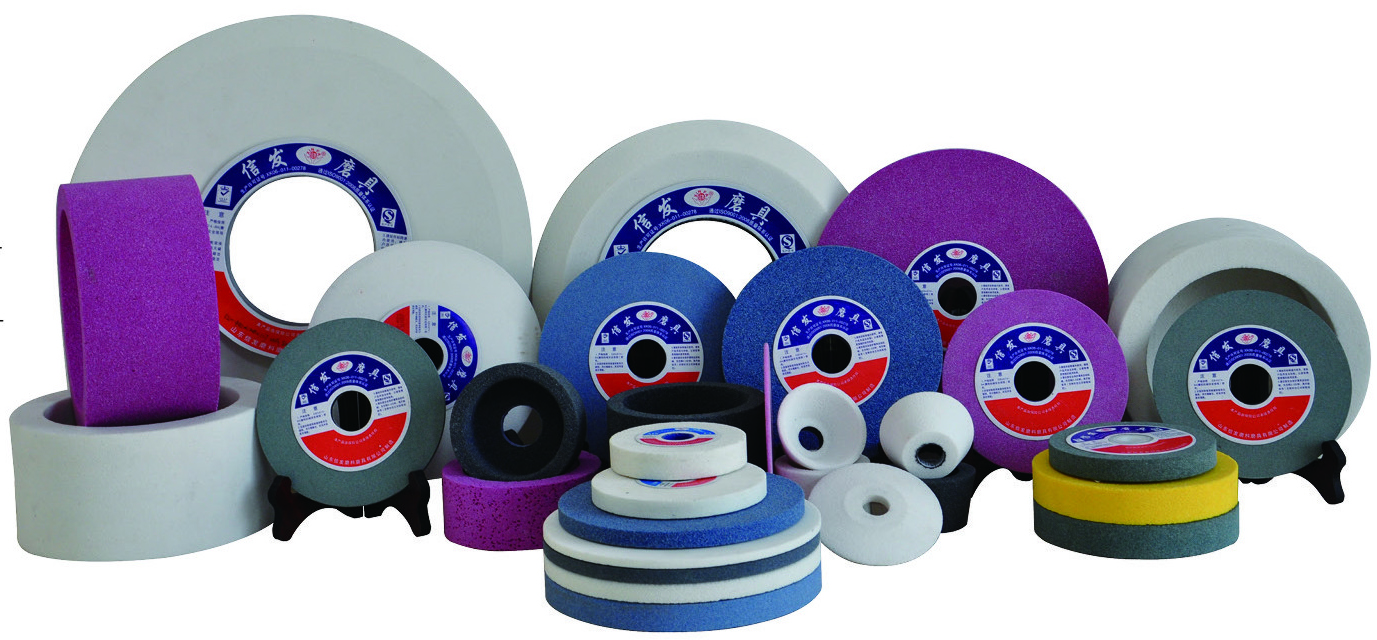
Bench and tool wheels are two entries in a broader vitrified-bond portfolio that also includes flat surface grinding wheels, centreless grinding wheels, cylindrical grinding wheels, crankshaft and camshaft grinding wheels, saw tooth grinding wheels, bearing grinding wheels, worm grinding wheels, gear grinding wheels, needle grinding wheels, roll grinding wheels, internal (bore) grinding wheels, oilstone, segments, resin bonded snagging wheels, rubber control and centreless wheels, flap discs and mounted points. Xinfa publishes vitrified bond grinding wheels with diameters from 100 mm to 1100 mm across the ceramic range. For a workshop, the practical consequence is that a wheel problem which looks like a bench-versus-tool choice may in fact point to a dedicated family — a saw tooth wheel for saw sharpening, for instance, rather than a general tool wheel.
The grain underneath: Brown Fused Alumina
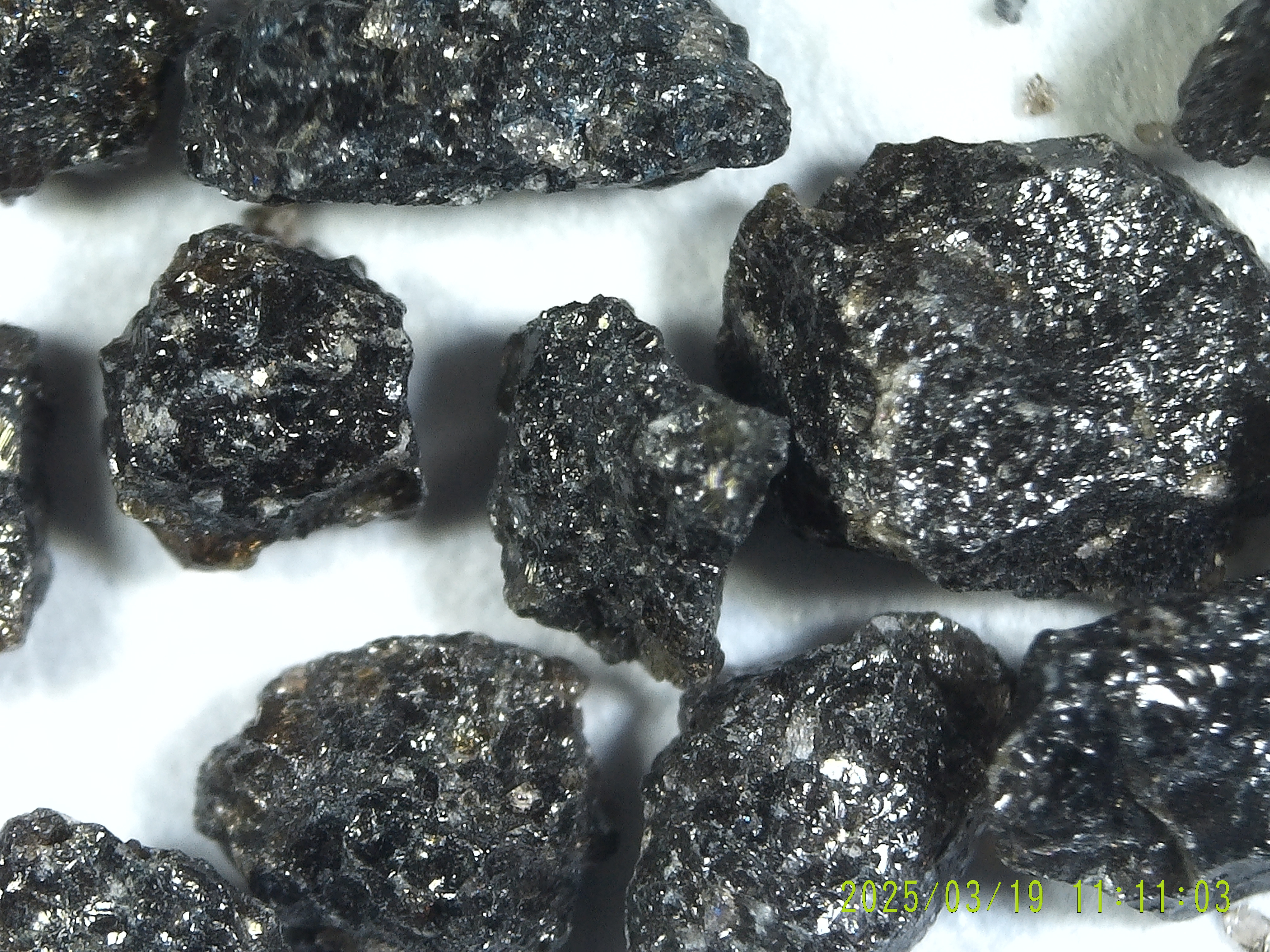
Because Brown Fused Alumina carries most general-purpose and bench grinding work, its published properties set the baseline for the discussion. Xinfa lists Brown Fused Alumina Abrasive in grit sizes F12 to F220 with a dark brown colour, an alpha-alumina trigonal crystal system, a Mohs hardness of at least 9.0, a melting temperature of 2050 °C, a refractory temperature of 1800 °C, a true density of at least 3.90 g/cm³ and magnetic material content of 0.01%. Those properties — high hardness, high thermal stability and low magnetic content — are what allow the same grain platform to serve both a wide bench wheel removing stock and a narrow tool wheel finishing an edge, with hardness grade, structure number and bond specification doing the differentiation.
Step-by-Step Breakdown: selecting between the two wheels
The selection sequence below works from the task outward, so that the dimensional and compliance checks come after the process requirement rather than before it.
Step 1 — List the dominant task at the station
Write down what the station does for most of its operating hours: deburring and fettling, edge clean-up, general sharpening, or controlled tool re-facing and finishing. Xinfa describes the application scope of its grinding products as grinding, sanding and polishing, tool sharpening, deburring and ultra-precision machining. A station whose hours are dominated by deburring and general sharpening belongs to the bench wheel family; a station whose hours are dominated by producing or restoring cutting edges belongs to the tool wheel family.
Step 2 — Fix the mounting envelope first
Measure the spindle, the flange and the guard clearance, and record the maximum wheel diameter the machine can take, plus the bore. Bench wheels are catalogued with 12.7–50.8 mm holes; tool wheels extend to 203 mm, which reflects the different mounting systems used on tool and cutter grinders. A wheel that does not fit the spindle cannot be rescued by grit selection.
Step 3 — Match thickness to the contact zone
Bench wheel thickness starts at 12 mm; tool wheel thickness starts at 3 mm. Where the wheel must enter a narrow flute or form a controlled edge geometry, the thin end of the tool wheel range is the only workable option. Where the wheel has to present a broad face to an irregular casting, the bench range is the practical choice.
Step 4 — Choose the abrasive grain against the workpiece
Brown Fused Alumina is the default for general-purpose and bench work. If the job shows signs of burn, or the workpiece is harder than the baseline, the catalog offers White Fused Alumina, Pink Fused Alumina, Single Crystal Fused Alumina, Microcrystalline Fused Alumina, and silicon carbide grades GC and C. The grain decision should be made from the workpiece material and the observed failure mode, not from habit.
Step 5 — Set grit, hardness and structure together
Grit controls the finish and the cutting rate; hardness grade and structure number control how the wheel behaves as it dulls. Both wheel families share the F16–F150 grit range, the G–Y hardness range and structure numbers 0–14, so the two families can be specified with the same vocabulary — which is what makes a controlled A/B trial between them possible.
Step 6 — Confirm speed rating and documentation before the wheel goes on the machine
Verify that the wheel's marked maximum operating speed meets or exceeds the machine's peripheral speed, and keep the documentation with the wheel. Where the operating environment involves high temperature, wear or a potentially explosive atmosphere, the application data records a special requirement for explosion-proof certification, and that requirement must be resolved before commissioning.
Use Cases: where each wheel earns its place
Grinding and polishing projects of this type are described as running in high-temperature and wear conditions in continuous operation mode, with matched equipment that includes grinders, grinding machines and electric hand tools. The industries that appear most often in this application profile are automotive, bearings, cutting tools, aerospace, 3C electronics, molds, hydraulics, semiconductors, photovoltaics, hardware and medical manufacturing.
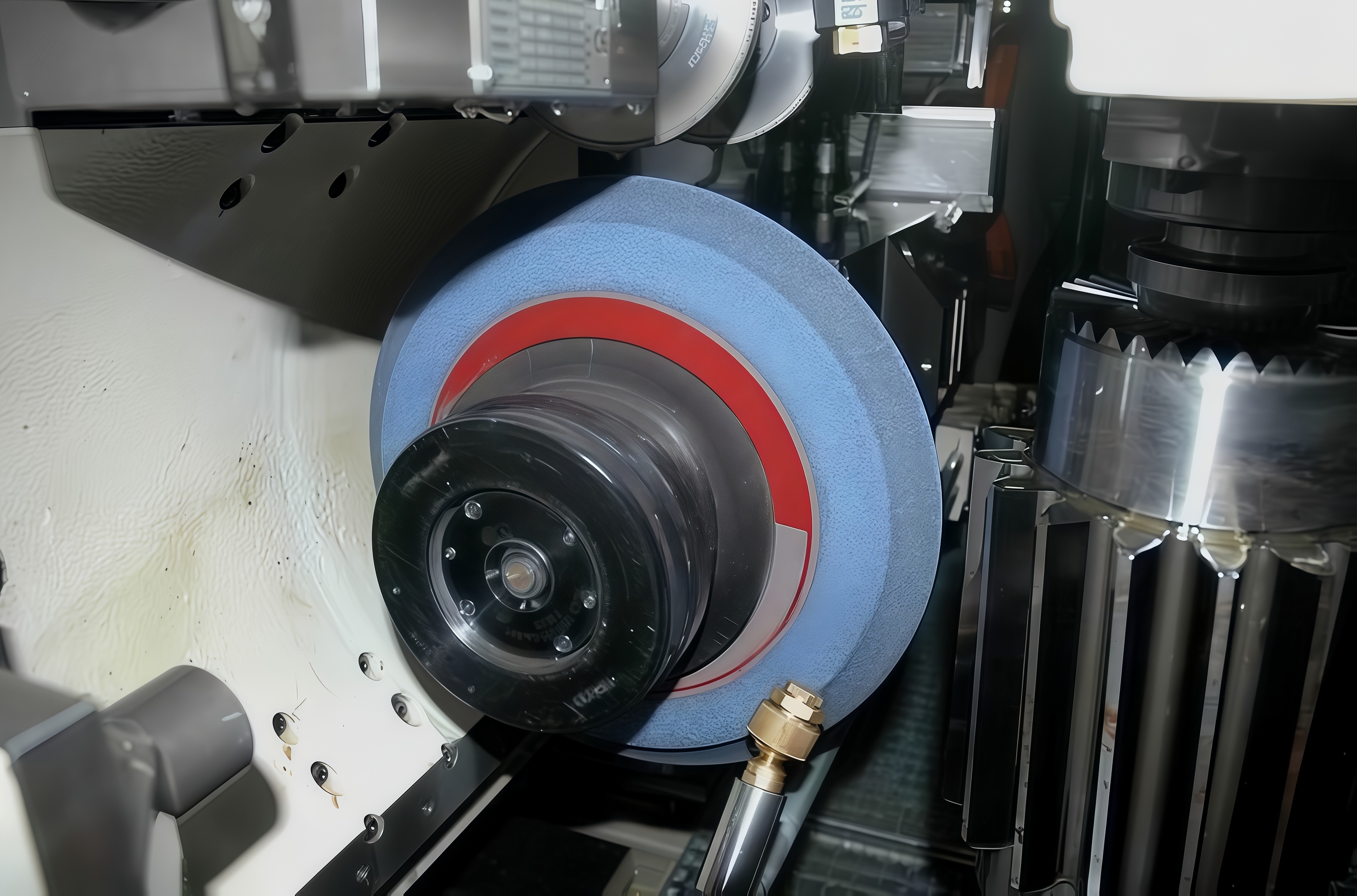
Within that profile, the bench grinder wheel is the workhorse of the fabrication and maintenance shop: cleaning up weld and cast edges, restoring a chipped hand tool, removing burrs from brackets and fittings, and general dressing of parts that are presented by hand. The tool grinding wheel belongs to the tool room and to the production cell that reconditions its own cutters — sharpening and re-facing milling cutters, drills and similar tooling, and finishing edges that have to meet a defined geometry rather than simply look clean.
A working example from Xinfa's case records illustrates how a wheel supply decision is validated in the field: a grinding wheel OEM customer in Pakistan has been running a 20-ton supply of Xinfa wheels for grinding workpieces over a two-year period, with the operation recorded as stable and the wheels characterised as long-lasting. The value of that reference is not the volume alone — it is the two-year duration, which is the timescale over which grain consistency, hardness grade repeatability and lot-to-lot dimensional tolerance either hold up or fail.
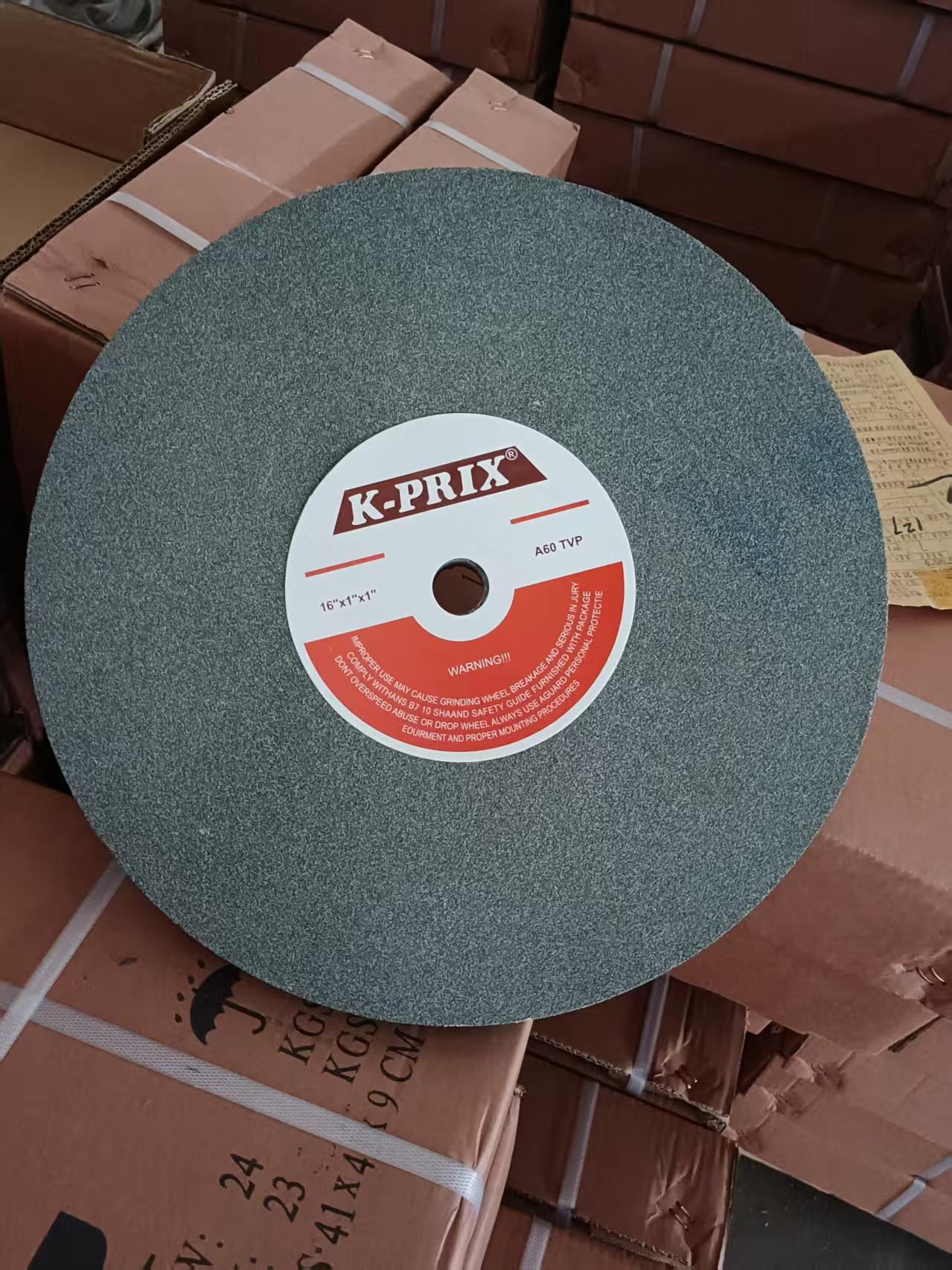
Comparison Table: Bench Grinder Wheel vs. Tool Grinding Wheel
| Selection factor | Bench Grinder Wheel | Tool Grinding Wheel |
|---|---|---|
| Outer diameter range | 100–450 mm | 100–600 mm |
| Thickness range | 12–80 mm | 3–150 mm |
| Hole diameter range | 12.7–50.8 mm | 12.7–203 mm |
| Abrasive grain options | A, WA, PA, SA, MA, GC, C, SG | A, WA, PA, SA, MA, GC, C, SG |
| Grit range | F16–F150 | F16–F150 |
| Hardness range | G–Y | G–Y |
| Structure number | 0–14 | 0–14 |
| Speed options | 32 / 35 / 40 / 45 / 50 / 60 m/s | 32 / 35 / 40 / 45 / 50 / 60 m/s |
| Example catalog marking | 200×25×31.75 A 60 R 5 V 35 m/s | Specified by diameter, thickness, hole, grit, grade, structure and speed within the ranges above |
| Station fit | Fixed pedestal machine, hand-presented workpiece | Tool and cutter grinding, dressed profile, controlled feed |
The table shows why the two wheels cannot be treated as substitutes. The grain list, grit range, hardness range and speed options are effectively identical — meaning a workshop can run a controlled comparison between the families without changing its quality vocabulary — but the dimensional envelopes differ exactly where the two jobs differ: bore size and the low end of the thickness range.
Frequently Asked Questions
1. Which safety and dimensional standards apply to a bench grinder wheel or a tool grinding wheel?
ISO 603-14:2022 specifies the most common nominal dimensions for shape types 6, 11, 27, 28 and 29 bonded abrasive products intended for deburring, fettling and snagging with hand-held grinding machines. Regional conformity references commonly appear on manufacturer documentation — the published technical data sheet for 3M Cubitron 3 depressed-centre grinding wheels, for example, identifies an ISO Type 27 geometry and lists EN 12413 and ANSI B7.1 as conformity references. Buyers should also confirm the marked maximum operating speed against the machine, request the supplier's current quality-management certificate, and verify the applicable tariff classification for cross-border shipments; abrasive wheels of agglomerated abrasives or ceramics fall under HS heading 6804.22, with national subdivisions such as 6804.22.40 varying by market.
2. Can one supplier provide both wheel types with the same grain and bond options?
Yes, where the supplier manufactures the full vitrified family. Xinfa lists both the Bench Grinder Wheel and the Tool Grinding Wheel with the same abrasive options (Brown Fused Alumina, White Fused Alumina, Pink Fused Alumina, Single Crystal Fused Alumina, Microcrystalline Fused Alumina, Green Silicon Carbide, Black Silicon Carbide and SG), the same F16–F150 grit range, the same G–Y hardness grades, structure numbers 0–14 and the same 32–60 m/s speed options. Xinfa operates an OEM/ODM model with customization available for specification, size, logo, bond type and abrasive material, and states a monthly capacity of 900 tons.
3. What drives the cost difference between the two wheel families?
Cost follows specification, not product name. The variables that move a quotation are the abrasive grain selected (with Brown Fused Alumina as the general-purpose baseline and the specialised fused aluminas and silicon carbides priced according to production effort), the dimensional envelope — a 450 mm bench wheel and a 3 mm tool wheel consume very different amounts of material and process time — plus grit, hardness and structure, order quantity, and packaging requirements. Xinfa does not publish list prices, so quotations are built from the full wheel marking; supplying the complete marking string rather than a diameter alone removes most of the back-and-forth in a quotation cycle.
4. How should a workshop validate a wheel before committing to a full order?
Validate on the machine, with documented measures. Xinfa applies 100% testing as its quality-control standard for production, and a trial should be structured around the same variables the process will be judged on: stock removal rate, edge or surface condition, dressing interval and wheel wear over a defined run. Because both families share the same grit, hardness and structure vocabulary, a bench wheel and a tool wheel can be trialled against the same criteria. Ordering a sample quantity of the exact marking — not a general-purpose substitute — is the fastest way to confirm that the envelope is right before scaling to a full lot.
5. What lead time and order quantity should a workshop plan for?
Xinfa publishes a minimum order quantity of 2 tons and a lead time of 30–45 days, with remote after-sales support from a monthly capacity of 900 tons. For a workshop moving from a single bench wheel to a mixed program of bench and tool wheels, that lead time is the constraint to plan against: consolidating both wheel families into one purchase order keeps the stock position simpler and avoids a second freight cycle. A sample request or a quotation against a specific marking can be started through the contact details below.
Conclusion: match the envelope, not the label
The bench grinder wheel and the tool grinding wheel are not competing products — they are two answers to two different shop-floor conditions. The bench wheel wins when the station is a rigid pedestal machine, the work is hand-presented, and the range of jobs is broad; its 100–450 mm diameter, 12–80 mm thickness and 12.7–50.8 mm bore range cover that brief, and Brown Fused Alumina gives it a general-purpose grain platform to match. The tool wheel wins when the wheel has to hold a dressed profile and cut a controlled edge; its 100–600 mm diameter, 3–150 mm thickness and 12.7–203 mm bore range extend precisely where tool grinding needs extension.
Everything that decides efficiency happens before the wheel is mounted: the dominant task identified at step one, the spindle and guard measured at step two, thickness, grain, grit, hardness and structure fixed in sequence, and the marked maximum operating speed verified against the machine before commissioning. A supplier that can serve both decisions from one production system — as Xinfa does across its vitrified-bond range, with diameters from 100 mm to 1100 mm — removes the second sourcing cycle from the process.
Next step: sample, quotation or catalog
Send the complete wheel marking (diameter × thickness × hole, grain, grit, grade, structure, bond, speed) together with the machine's rated speed and the workpiece material, and Xinfa will confirm the correct family — bench grinder wheel or tool grinding wheel — plus the specification that fits the station.
Request a sample, quotation or the product catalog
Shandong Xinfa Abrasives & Grinding Tools Co., Ltd. — vitrified-bond grinding wheel manufacturer established in 1989, OEM/ODM customization available for specification, size, logo, bond type and abrasive material, MOQ 2 tons, lead time 30–45 days.
- Website: www.xinfa-abrasives.com
- Email: sales@xinfaabrasives.com
- Tel / WhatsApp: +86 13562923298 (Jackie Wang)
- Product catalog (PDF): Download the Xinfa abrasives catalog
Address: Xincun Village, Dadian Town, Junan County, Linyi City, Shandong Province, China
Have Questions or Need More Details?
Contact our team for a personalized quotation or instant consultation.
Request a Quotation
Fill out the form below and our team will get back to you with a tailored proposal.
WhatsApp Direct Chat
Prefer to chat in real-time? Message us on WhatsApp for instant assistance & quick answers.
- Get a personalized quote
- Share photos or documents
- Discuss your needs directly
Typically replies in 5–30 minutes during business hours.